Hummingbird or Rivoli's Hummingbird?
Here's how to tell the difference
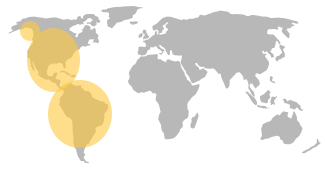
Hummingbird

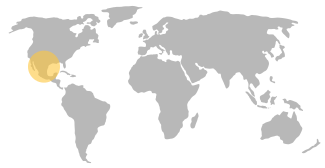
Rivoli's Hummingbird
Hummingbird
Trochilidae
General appearance
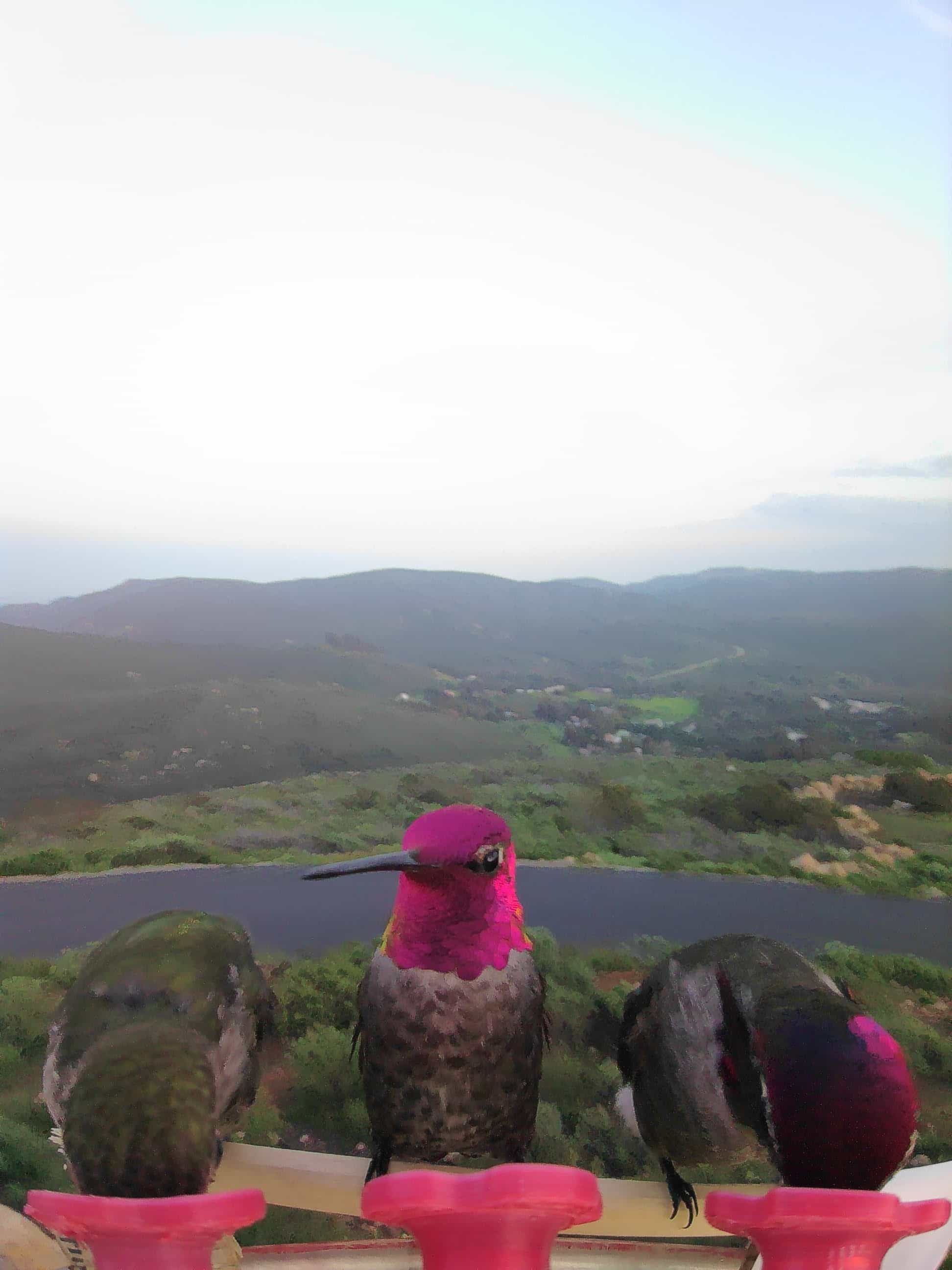
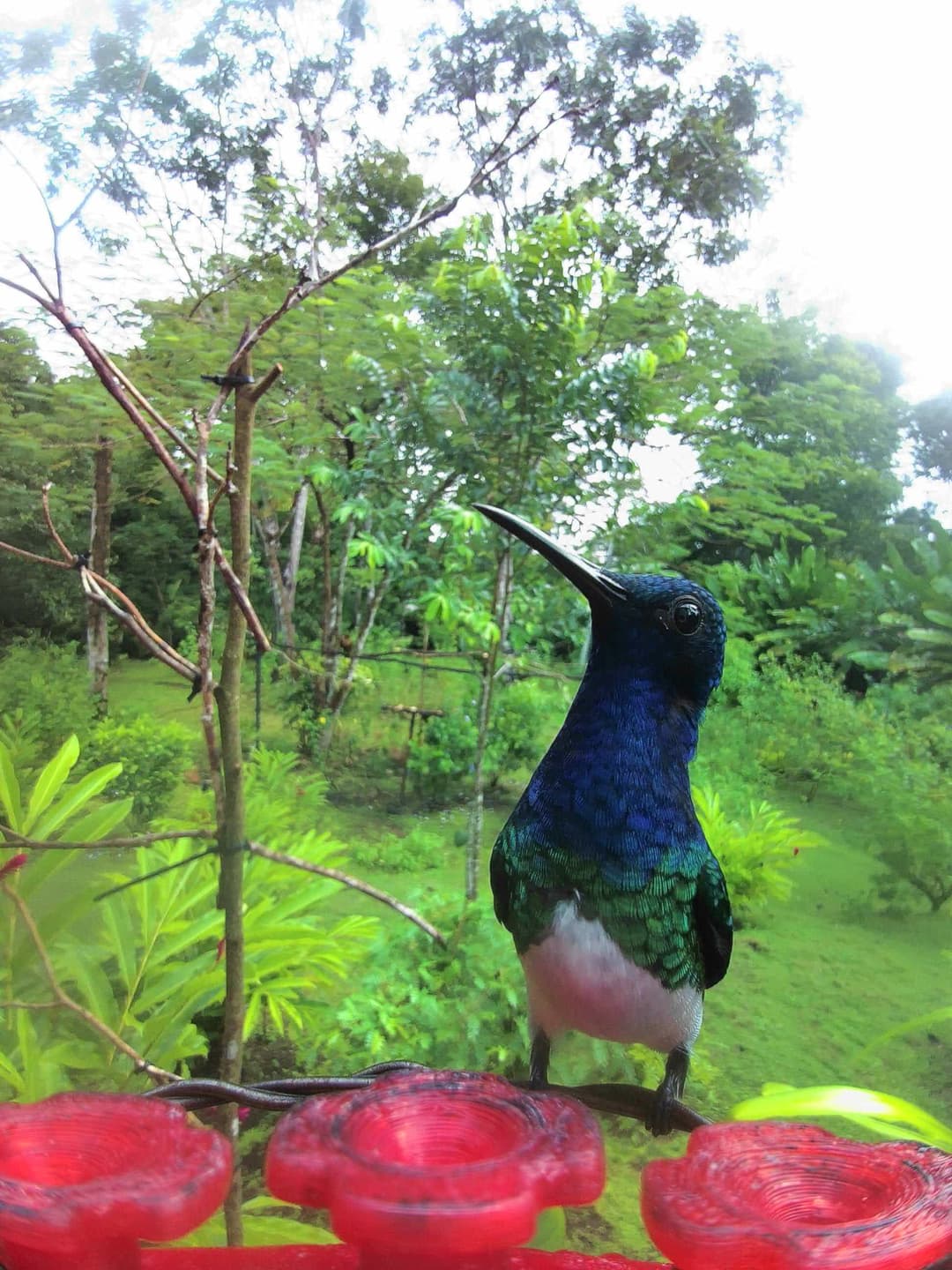
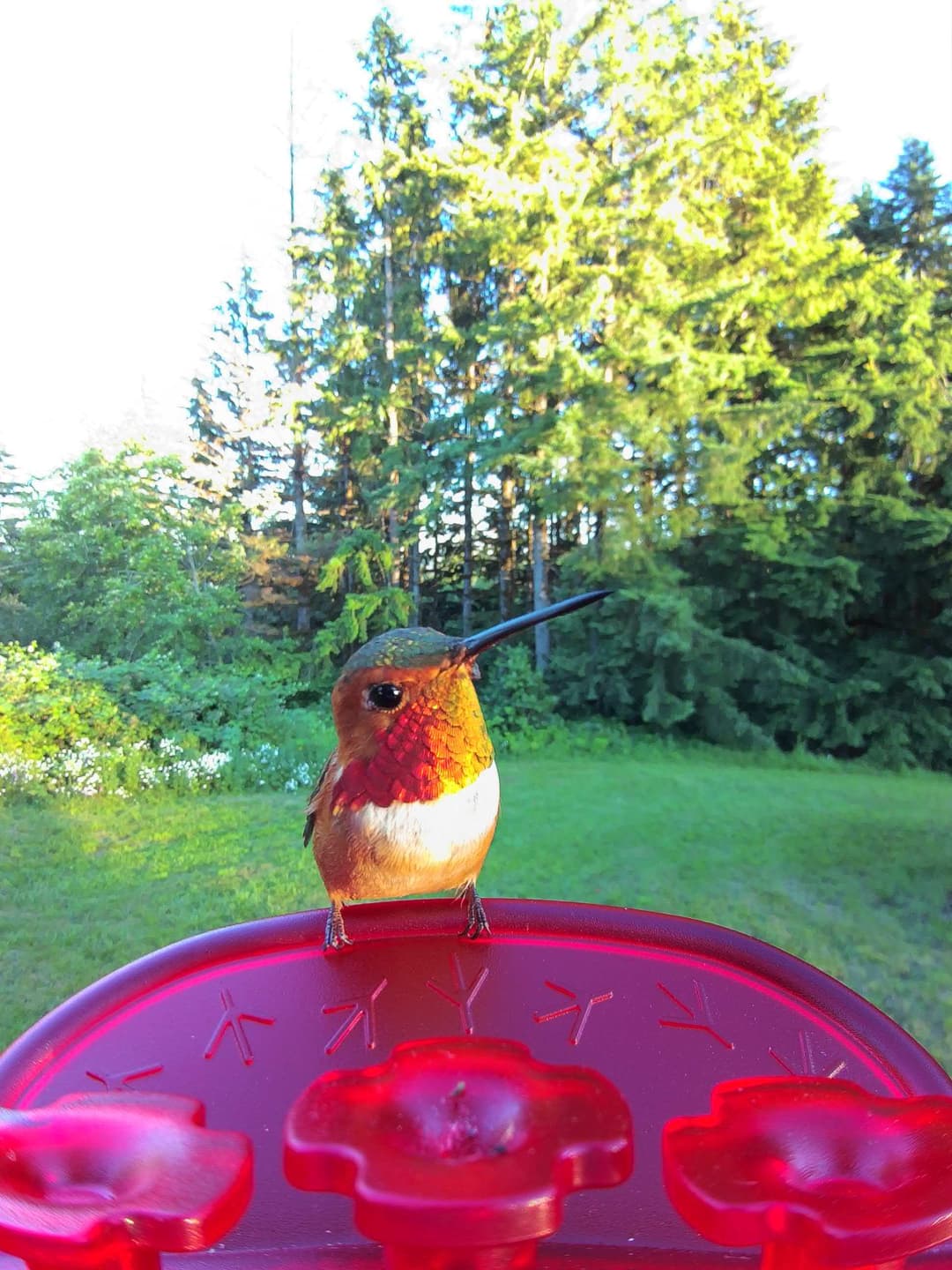
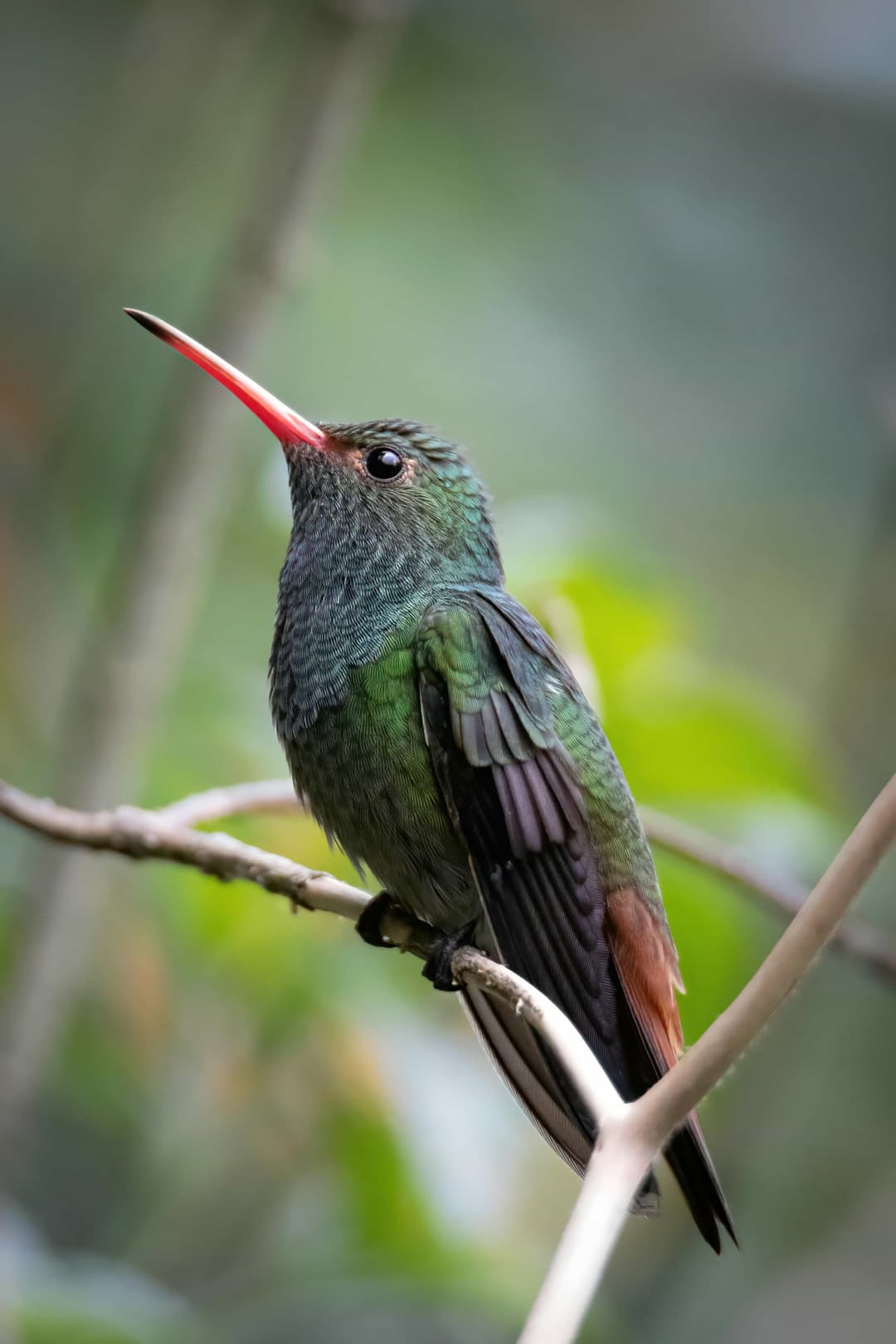
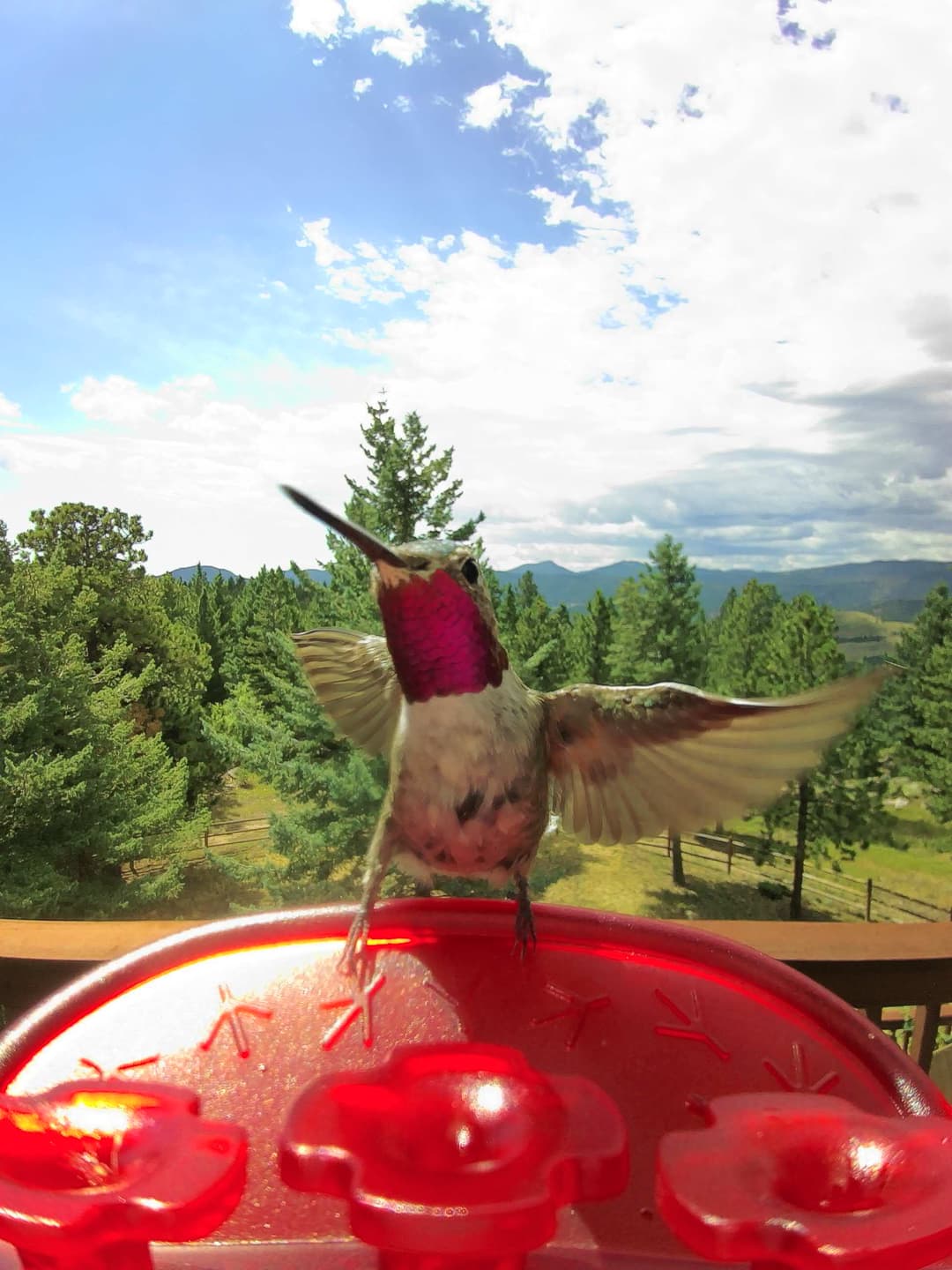
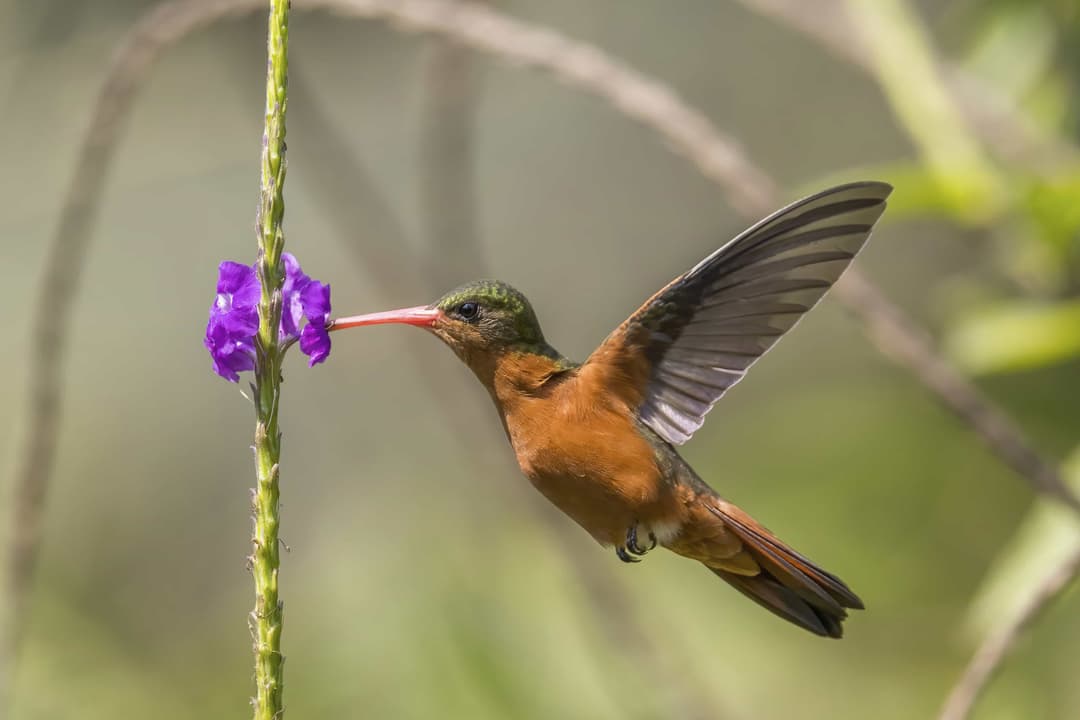
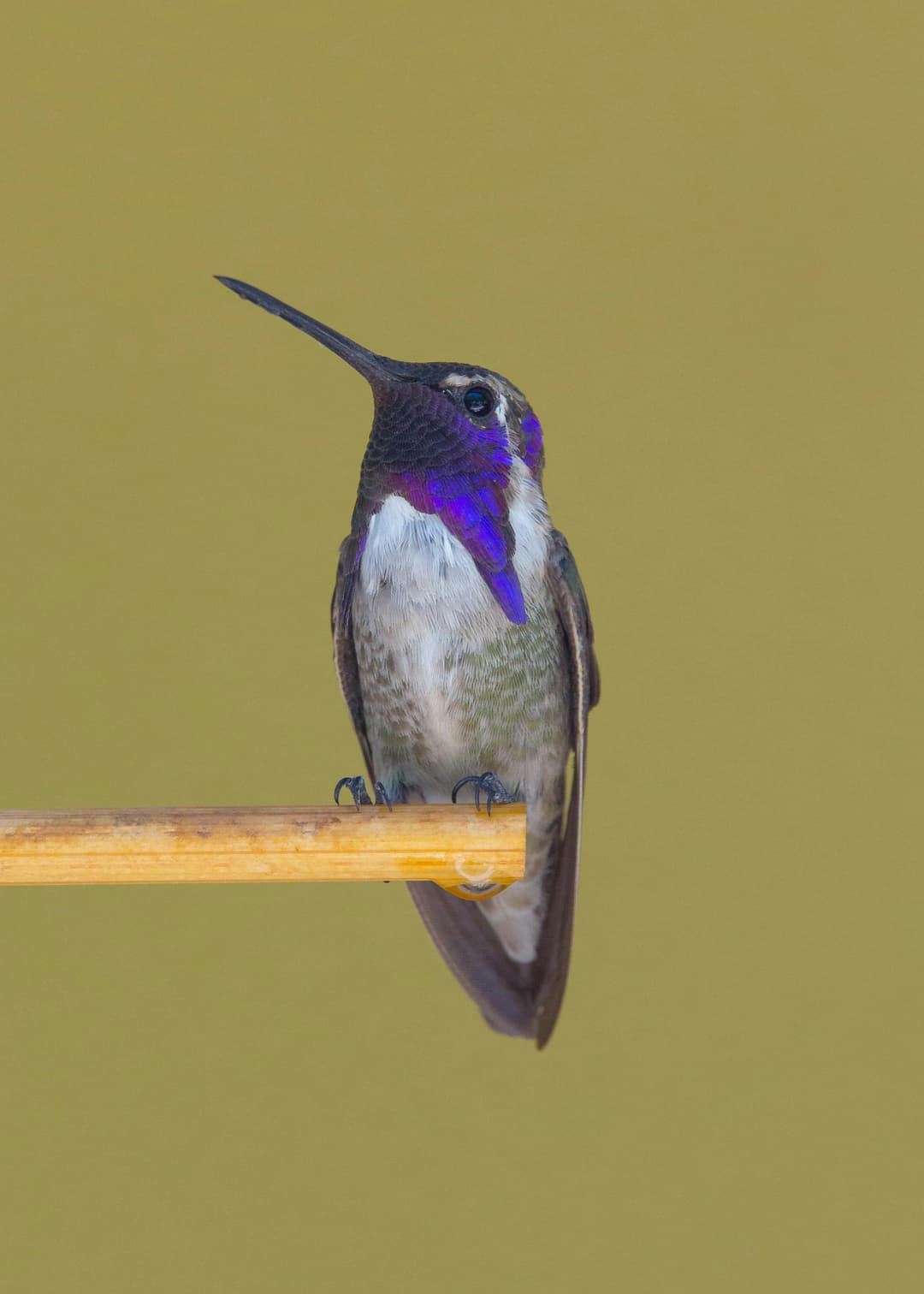
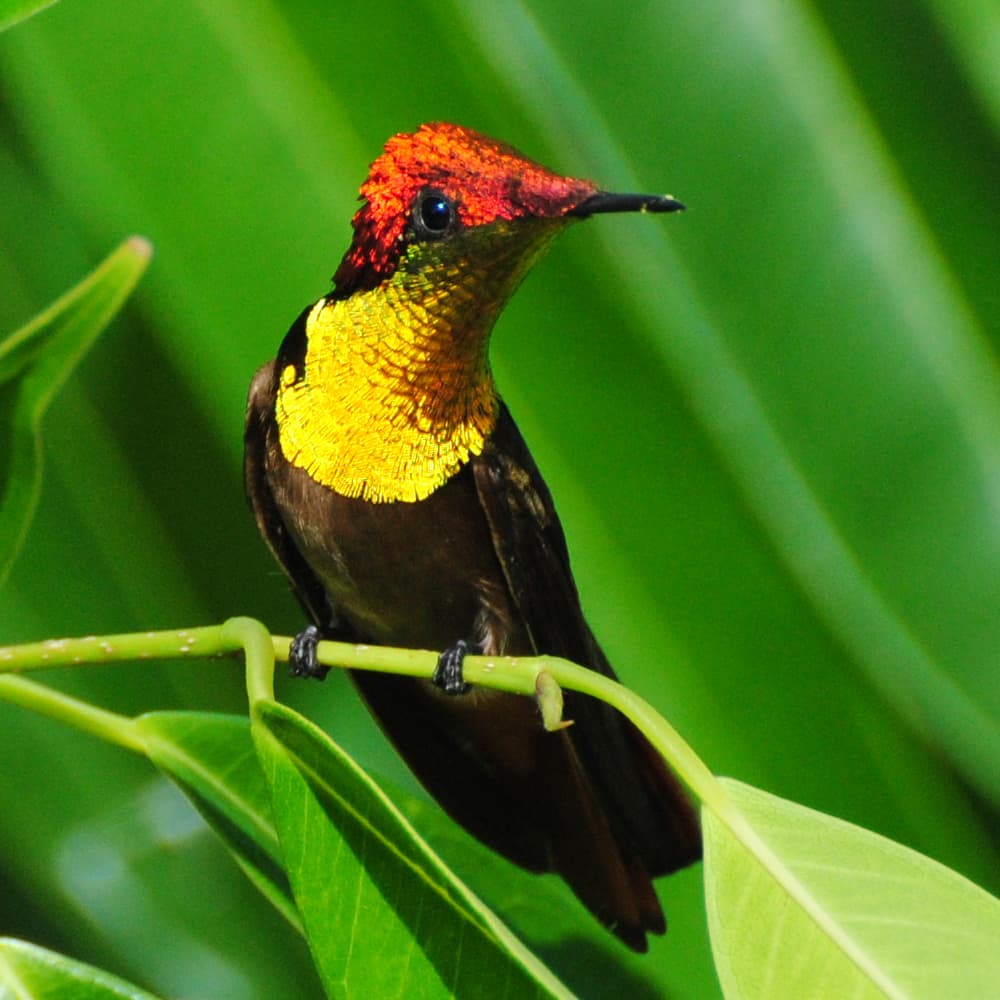
Hummingbirds are small, vibrant birds with iridescent feathers. They are most noticeable for their quick, darting flying style and ability to hover in mid-air. Colors range widely, including greens, blues, purples, reds, and whites, often with a metallic sheen. They possess a long, thin beak perfect for sipping nectar from flowers.
Male vs female
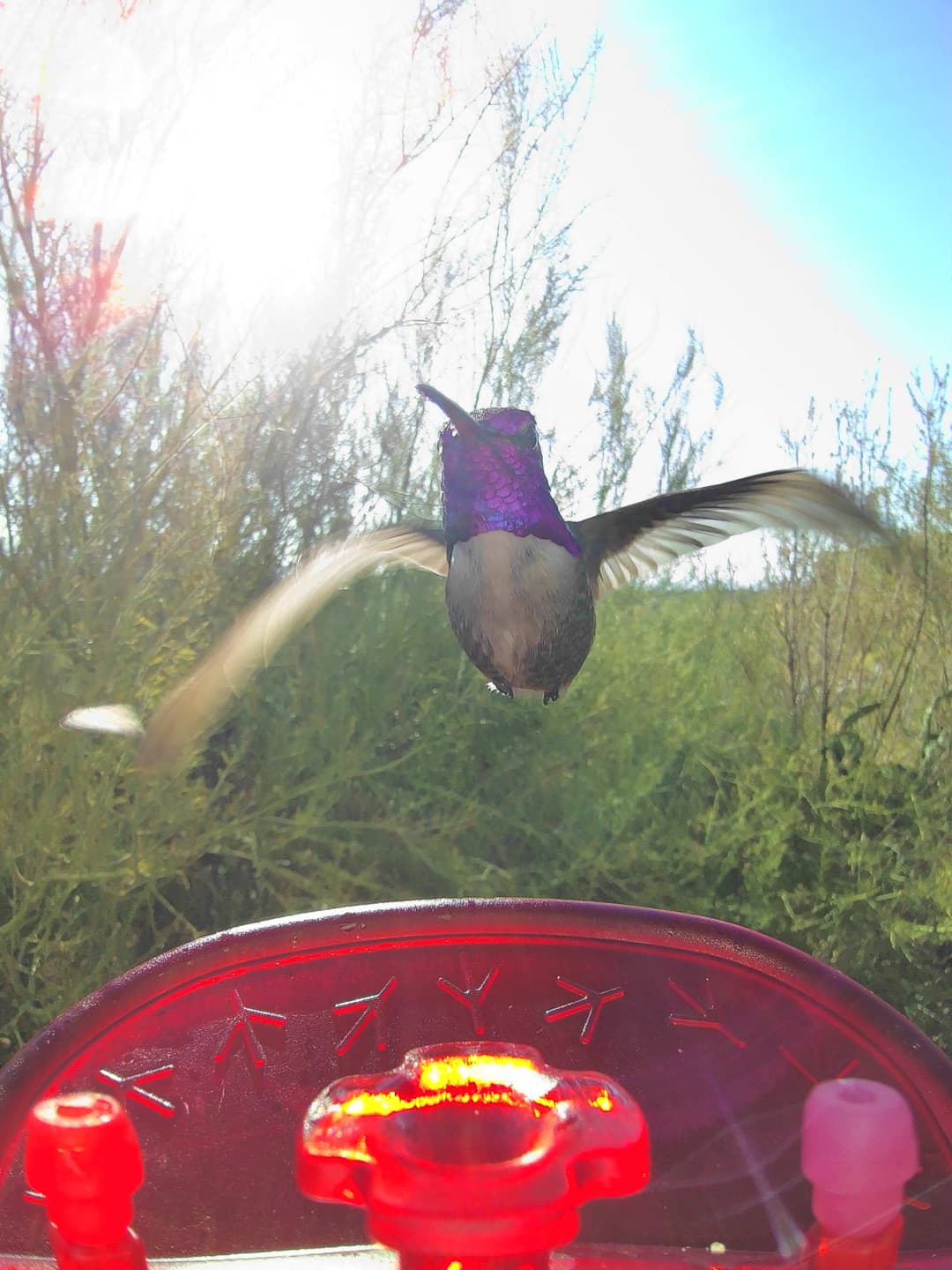
Males are typically brighter and more colorful than females, often with a ‘gorget’ or patch of bright, iridescent throat feathers that females lack. Female hummingbirds have softer, muted coloration for camouflage when nesting. Males are also slightly smaller on average.
Juvenile
Juvenile hummingbirds resemble their mothers in colouring to stay camouflaged. They lack the iridescent throat patch of adult males. As they mature, juvenile males begin to develop more vibrant feathers, particularly on their throats, and by their first winter, most will have at least a few bright feathers indicative of their gender.
Size
2.0 - 10.2 in/0.1 - 0.8 oz
There's more to learn about Hummingbird
View full detailsRivoli's Hummingbird
Eugenes fulgens
General appearance
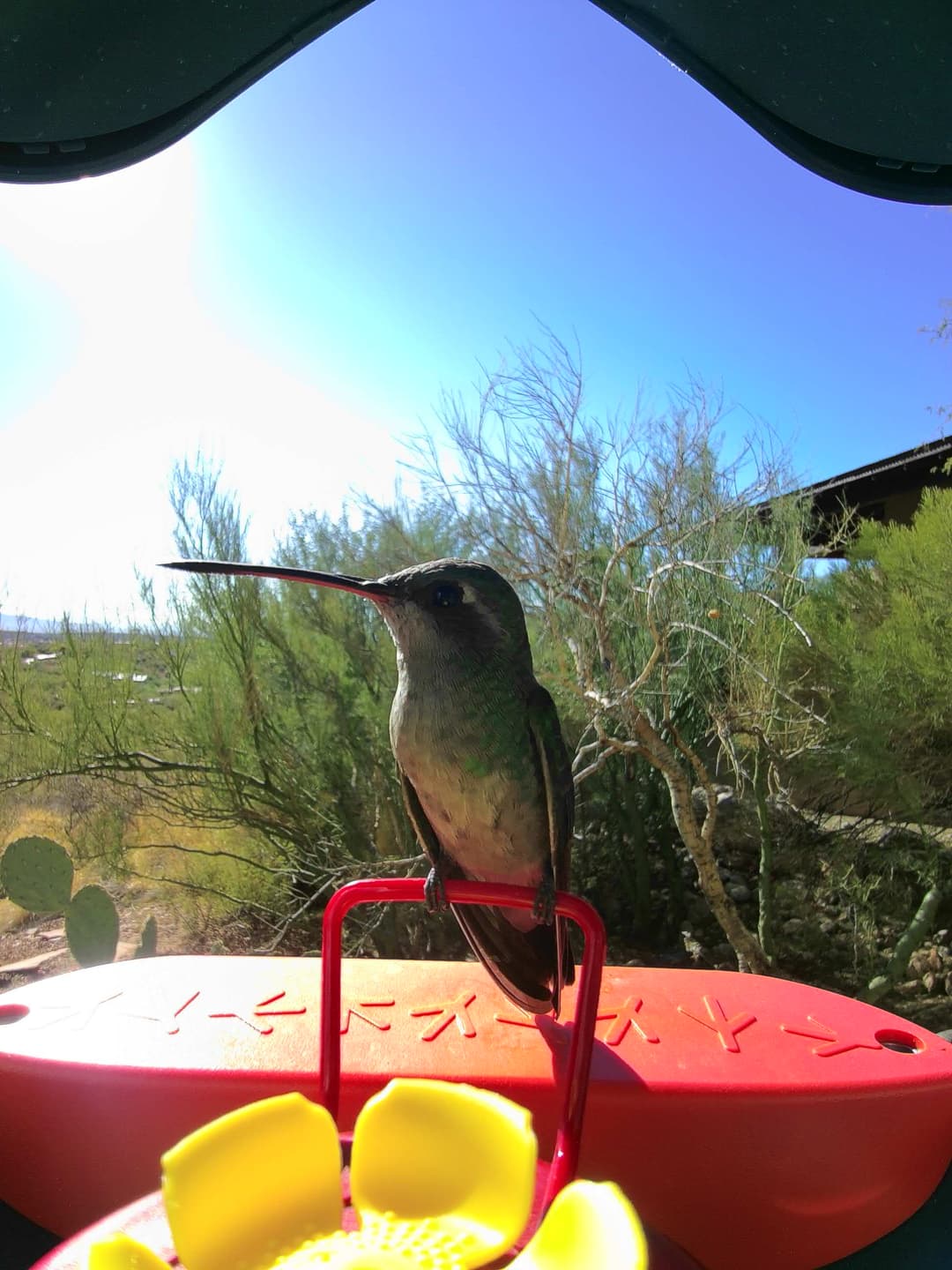
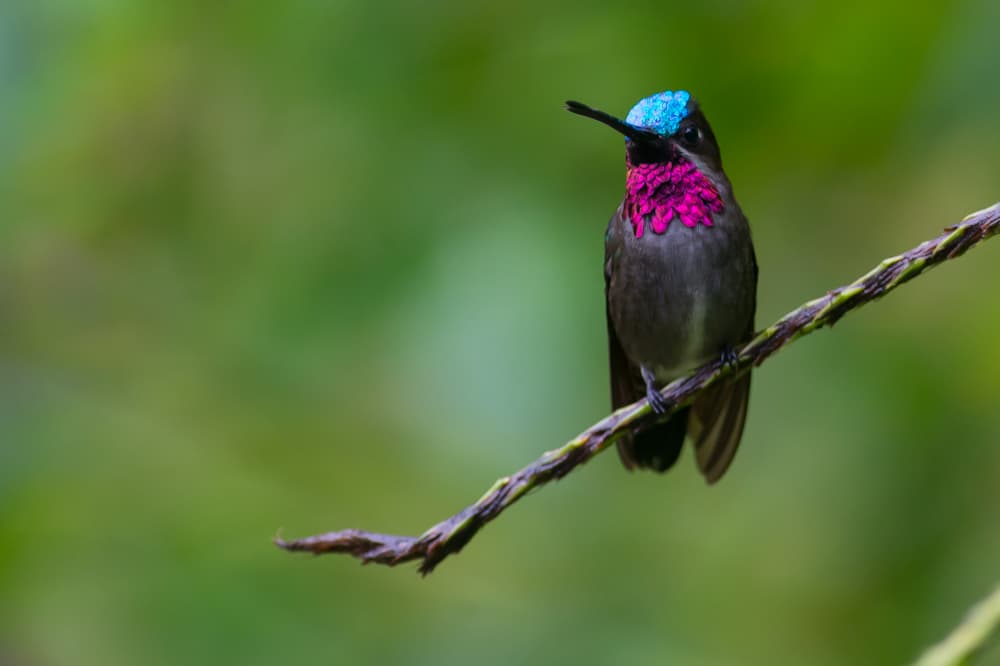
Rivoli's hummingbird is a large hummingbird with a straight, medium-length bill and vibrant plumage. Its deep green upperparts, combined with the iridescent emerald-purple crown, make it distinctive. The throat can appear black in dim light, which contrasts sharply with the rest of its vibrant plumage. When in flight, their wings beat rapidly, producing a unique humming sound.
Male vs female
Males are vividly colored with an emerald-green crown and throat, while their underparts are often darker. Females, on the other hand, have more muted colorations, lacking the vibrant green on the crown and throat; instead, they display a more subdued grayish-green. Both sexes have white spots behind the eyes. During the breeding season, males can be seen performing aerial displays to attract females.
Juvenile
Juvenile Rivoli's hummingbirds closely resemble females in coloration, typically displaying more subdued tones and less iridescence. They lack the striking crown feathers of the adult males. As they mature, the plumage becomes more vibrant. Juveniles might show gradual development of iridescent feathers typically as they transition into adulthood, especially noticeable during their first molting period.
Size
4.3 - 5.5 in/0.2 - 0.4 oz
There's more to learn about Rivoli's Hummingbird
View full detailsHow to tell the Hummingbird from the Rivoli's Hummingbird
Visual differences
Hummingbirds typically range from 2-10 inches (5-26 cm) in length and are lightweight at 0.06-0.85 ounces (1.6-24 grams). They display a spectrum of iridescent colors, including greens, blues, and reds. Rivoli's Hummingbird, larger at 4.3-5.5 inches (11-14 cm) and 0.2-0.35 ounces (6-10 grams), boasts a unique emerald-purple crown and deep green upperparts. The beak is medium-length and straight. Males have vibrant emerald crowns, while females exhibit more subdued grayish-green tones. Notable are their white eye spots and less vibrant throat.
Key differences and behavior
Both Hummingbirds (Trochilidae) and Rivoli's Hummingbird (Eugenes fulgens) are nectar feeders, engaging in rapid, hovering flight. However, while Hummingbirds span diverse habitats, Rivoli's prefer mountainous pine-oak forests. Rivoli's display "traplining," methodically visiting spaced flower patches, whereas general Hummingbirds may adapt to urban environments, attracted by brightly-colored feeders and flowers. Male Hummingbirds leave after courtship displays, while Rivoli's males engage in singing and rival chases before leaving. Hummingbirds tend to build nests closer to the ground than Rivoli's, which can nest at up to 60 feet. Diet-wise, both consume insects for protein but Rivoli's is noted for active foraging by perching and catching insects mid-air. Notably, Rivoli's is gentler and less assertive at feeders, despite its larger size (6-10g; 4.3-5.5 in.) compared to the broader Hummingbird family size range (up to 24g; 2-10.2 in.).
Still not sure? Here are more lookalikes!
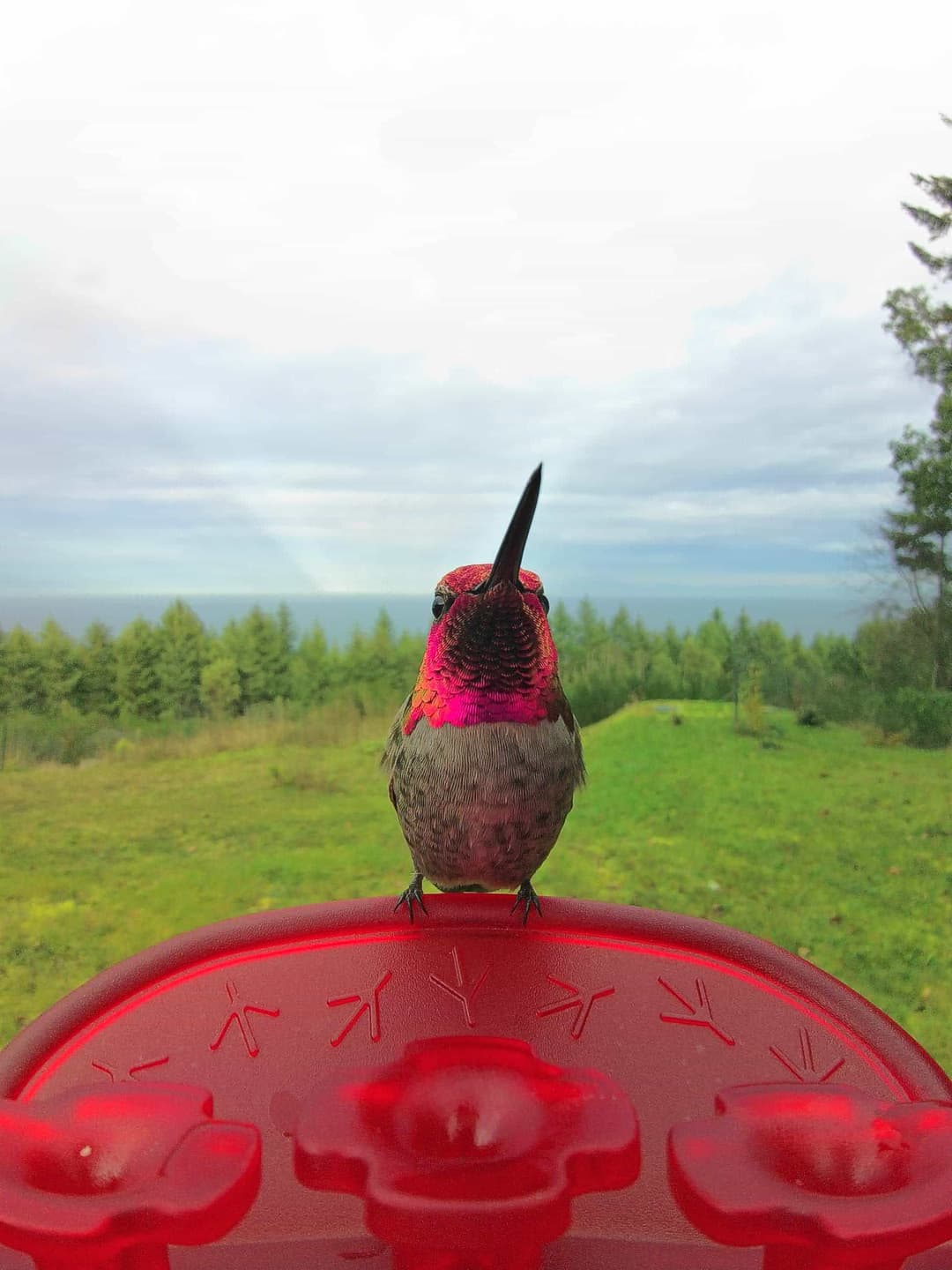
Hummingbird vs Anna's Hummingbird
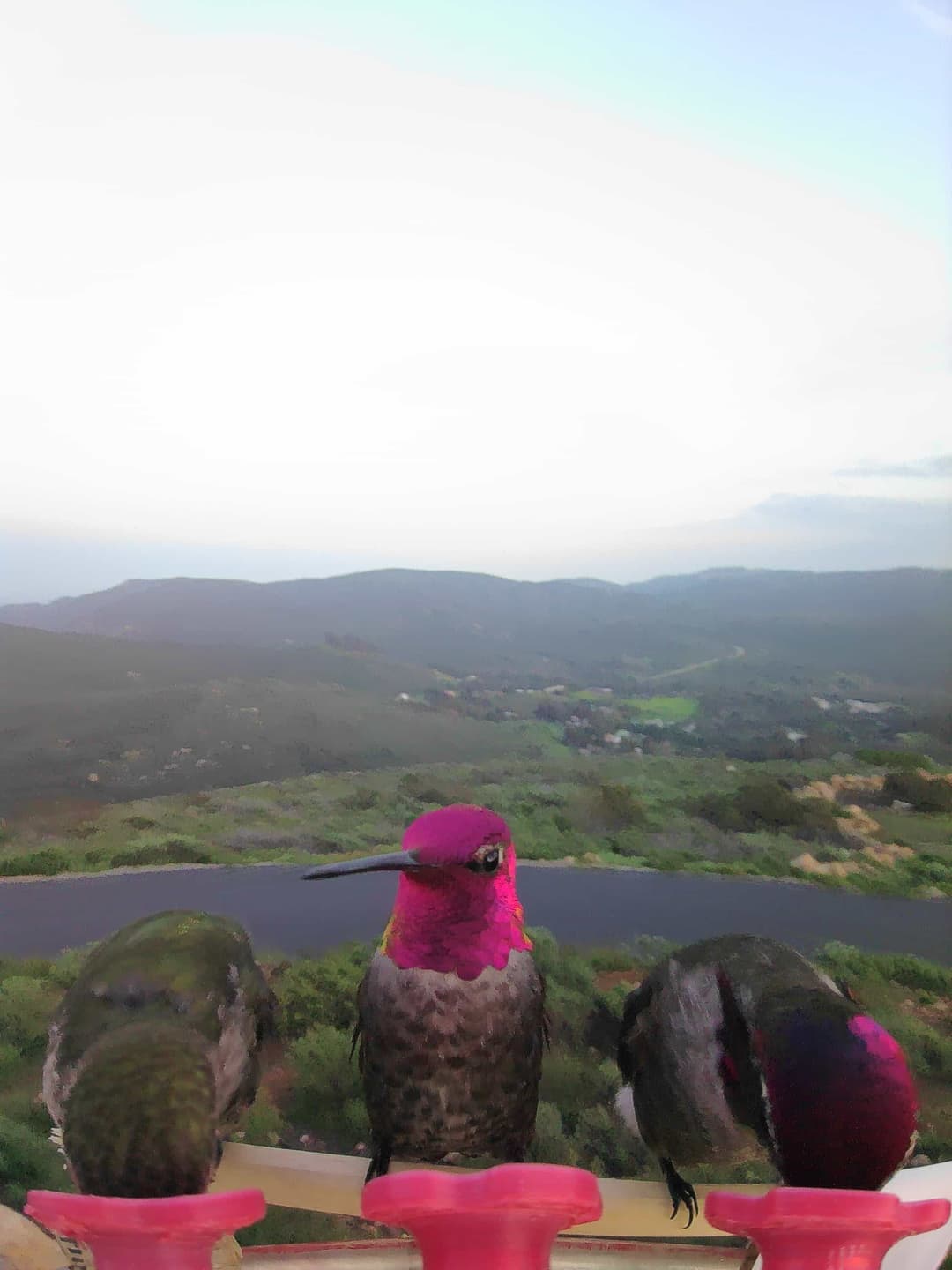
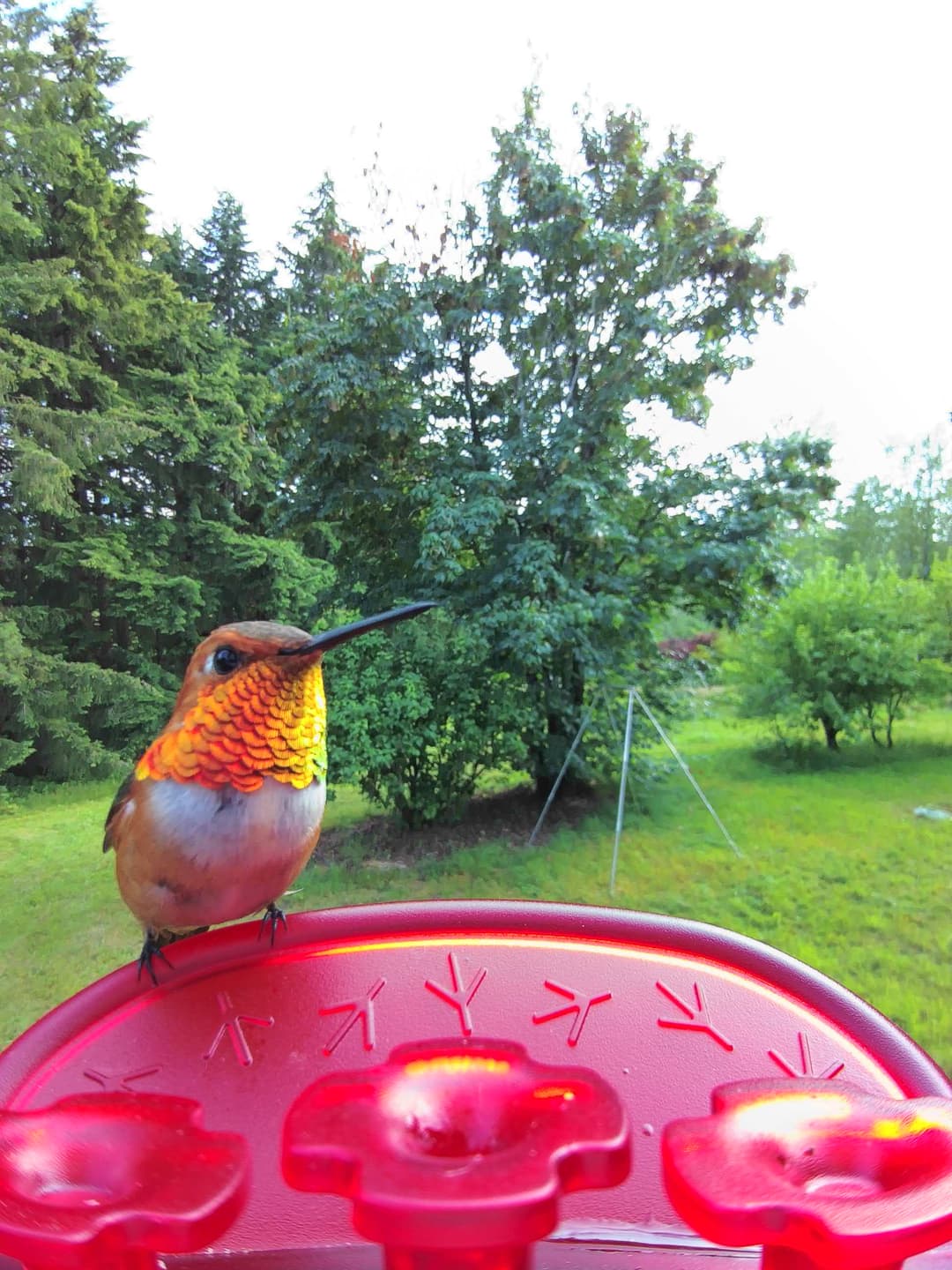
Hummingbird vs Allen's Hummingbird
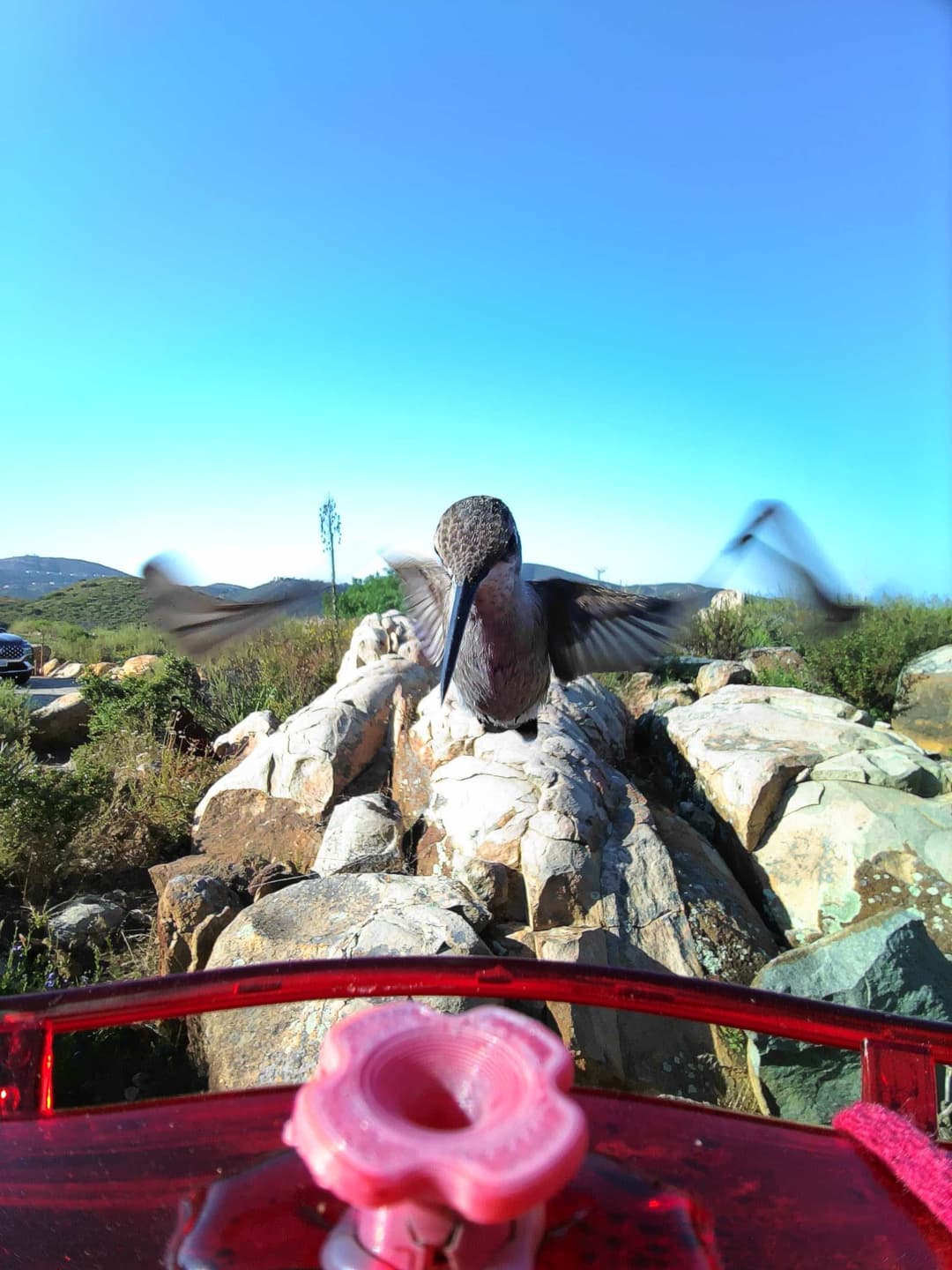
Hummingbird vs Black-Chinned Hummingbird
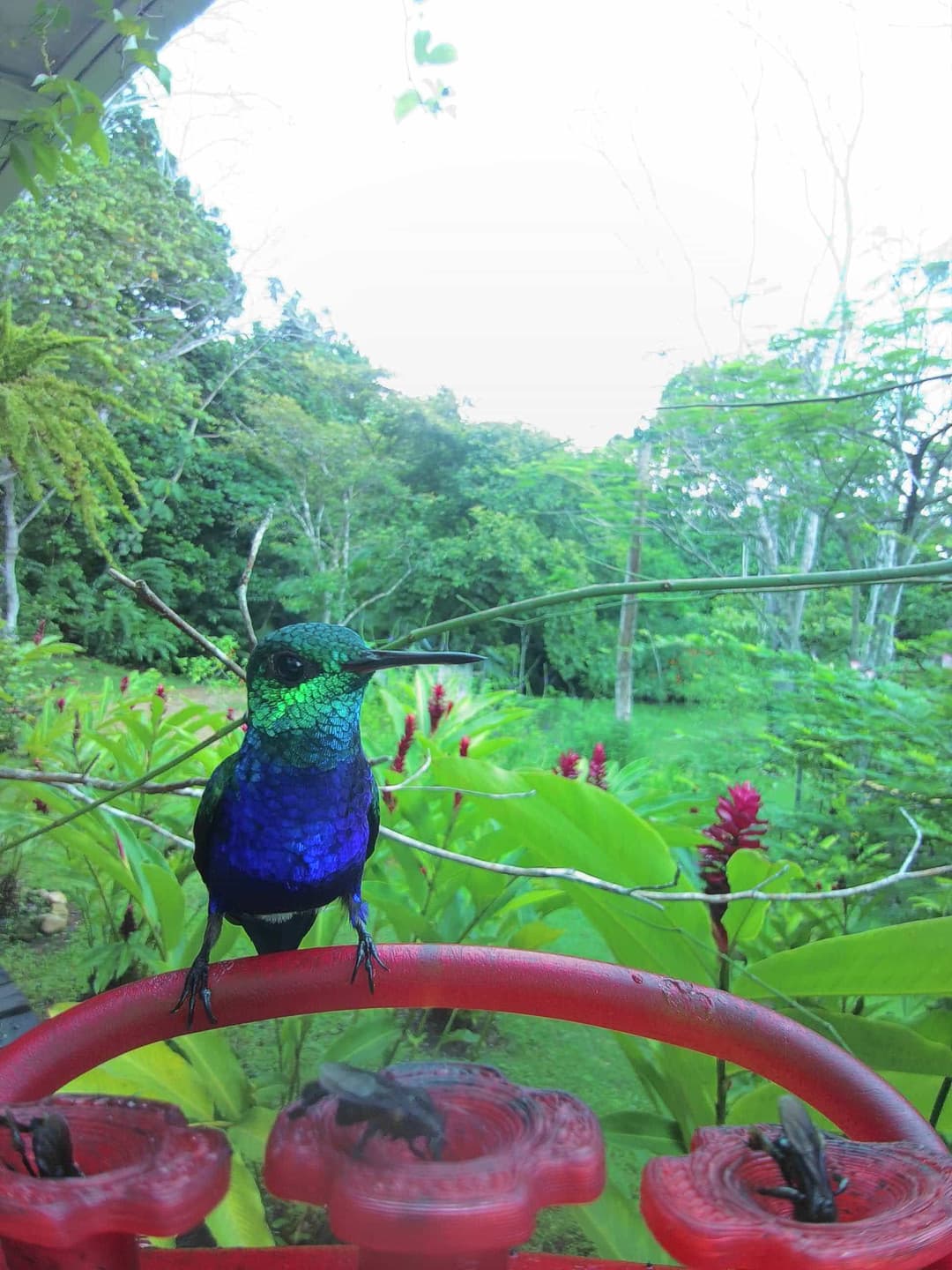
Hummingbird vs Blue-Chested Hummingbird
Hummingbird vs White-Necked Jacobin
Hummingbird vs Rufous Hummingbird
Hummingbird vs Swallow-tailed Hummingbird
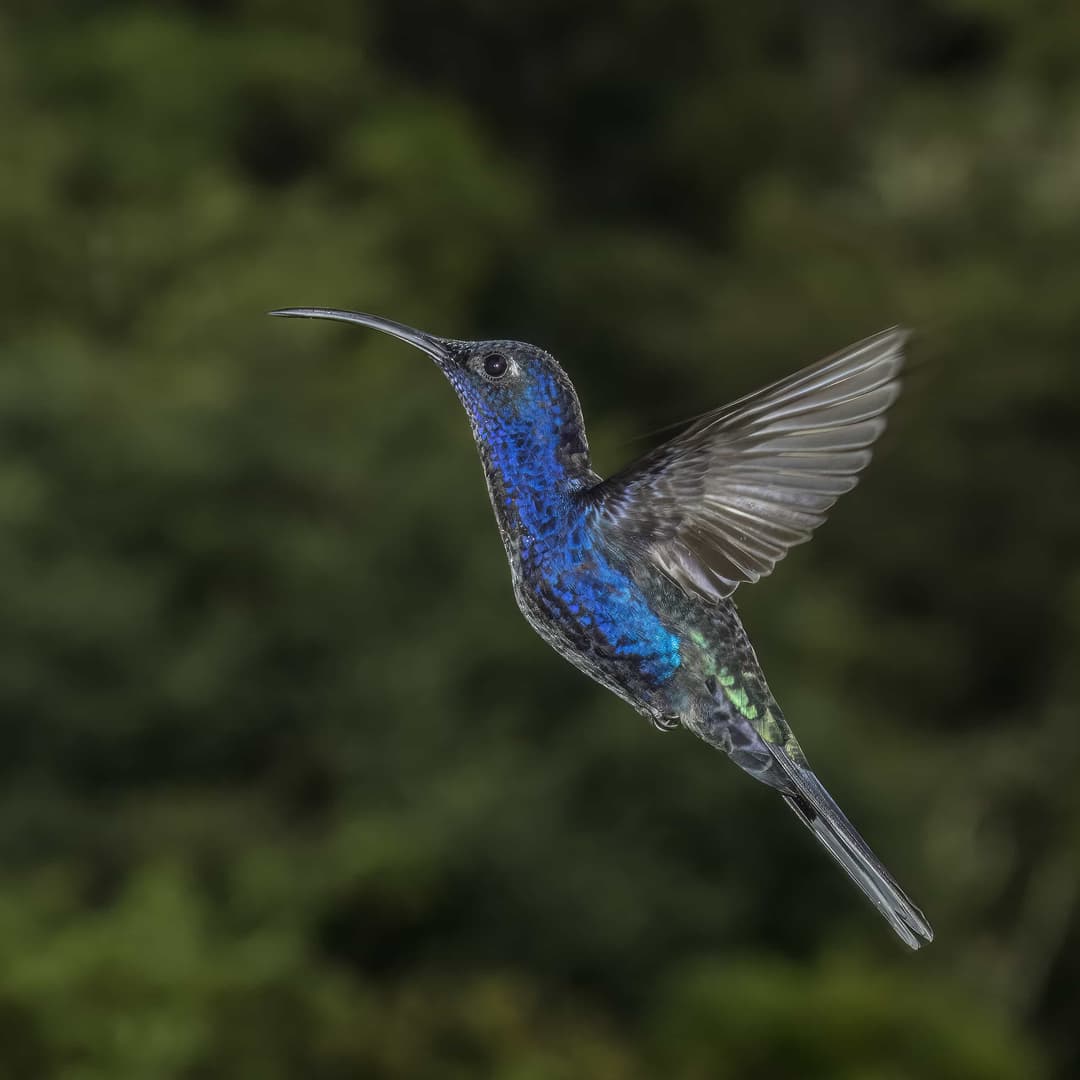
Hummingbird vs Violet-Crowned Hummingbird
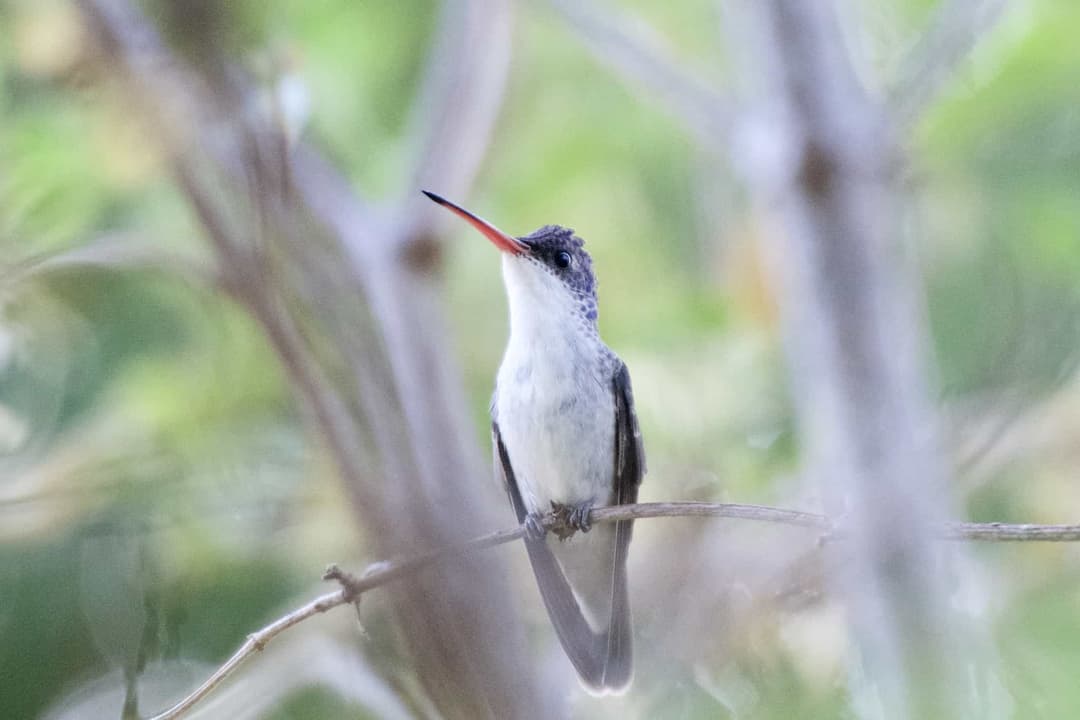
Rivoli's Hummingbird vs Blue-Throated Mountain-Gem
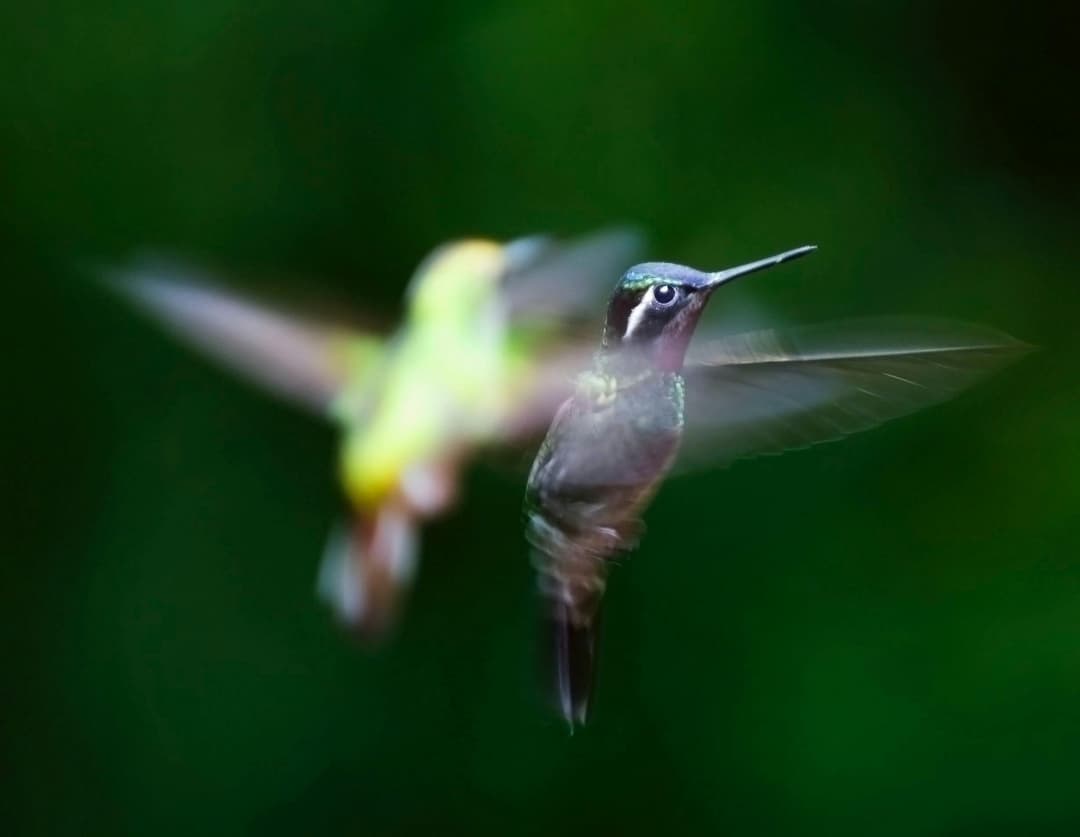
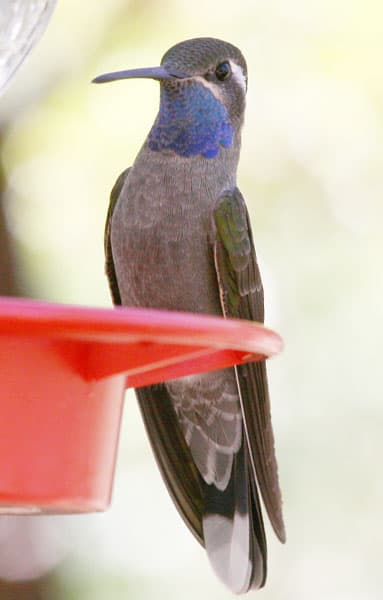
Rivoli's Hummingbird vs Black-Chinned Hummingbird
Hummingbird vs [Select a bird]

[Select a bird]
Pick a bird to compare
Rivoli's Hummingbird vs [Select a bird]
[Select a bird]
Pick a bird to compare