
Lucifer Hummingbird
Lucifer Hummingbird
Also known as: Lucifer sheartail
Calothorax lucifer
Quick Identification guide
Quick Identification guide
- •
Features a distinctive iridescent purple throat patch known as a gorget, particularly vibrant in males
- •
Exhibits a long, slightly curved beak that tapers to a fine point, ideal for nectar feeding
- •
Displays a slender body with green upperparts and pale undersides, complemented by a fairly long tail
Description
The adorable Lucifer Hummingbird, with its vividly purple throat, is predominantly found in northern and central Mexico. However, when it ventures into the United States, particularly in the extreme southern regions of Arizona, New Mexico, and west Texas, it becomes a prized sighting for passionate bird enthusiasts. Belonging to the charming group of hummingbird species known as "sheartails," they're distinguished by their deeply forked, narrow tails.
The Lucifer hummingbird can weigh between 2.6to3.3grams and be from10to10.5centimeters tall.
The typical lifespan of the lucifer hummingbird is unclear but is likely similar to other small hummingbirds which live for an average of 3-5 years. However, the oldest recorded individual of this species was 8 years old. Compared to the ruby-throated hummingbird, which can reach 9 years, and the black-chinned hummingbird, which can live up to 11 years, the lucifer hummingbird has a relatively shorter lifespan.
Did you know?
Most popular questions about Lucifer hummingbird
How to recognise a Lucifer hummingbird?
General appearance
The Lucifer Hummingbird is a small bird of around 3 3/4" or 10cm, roughly the size of a sparrow. It is distinctive for its heavy, curved bill, and a tail that can appear forked, notched, multi-pointed, rounded or square-tipped. It is black, green, purple, red, tan, and white in color with narrow, rounded, short wings.
Male vs female
There are slight differences between the male and female lucifer hummingbird. Males have longer black tails that can sometimes look forked and a vibrant, colorful throat area. The throat is typically purple in color. Females, on the other hand, have a warm pale buff appearance on their faces and undersides with a dusky patch near their ears.
Juvenile
As with most bird species, juvenile lucifer hummingbirds are not as brightly colored as adults. They are relatively plain with softer tones and less recognizable characteristics. As they mature, their colors and unique characteristics become more prominent.
Often mistaken for
Black-Chinned Hummingbird vs Lucifer Hummingbird
Lucifer Hummingbird's purple throat spreads to the neck, while Black-Chinned shows a thin strip of black below the chin. Lucifer has a slightly curved bill; Black-Chinned's is straighter.
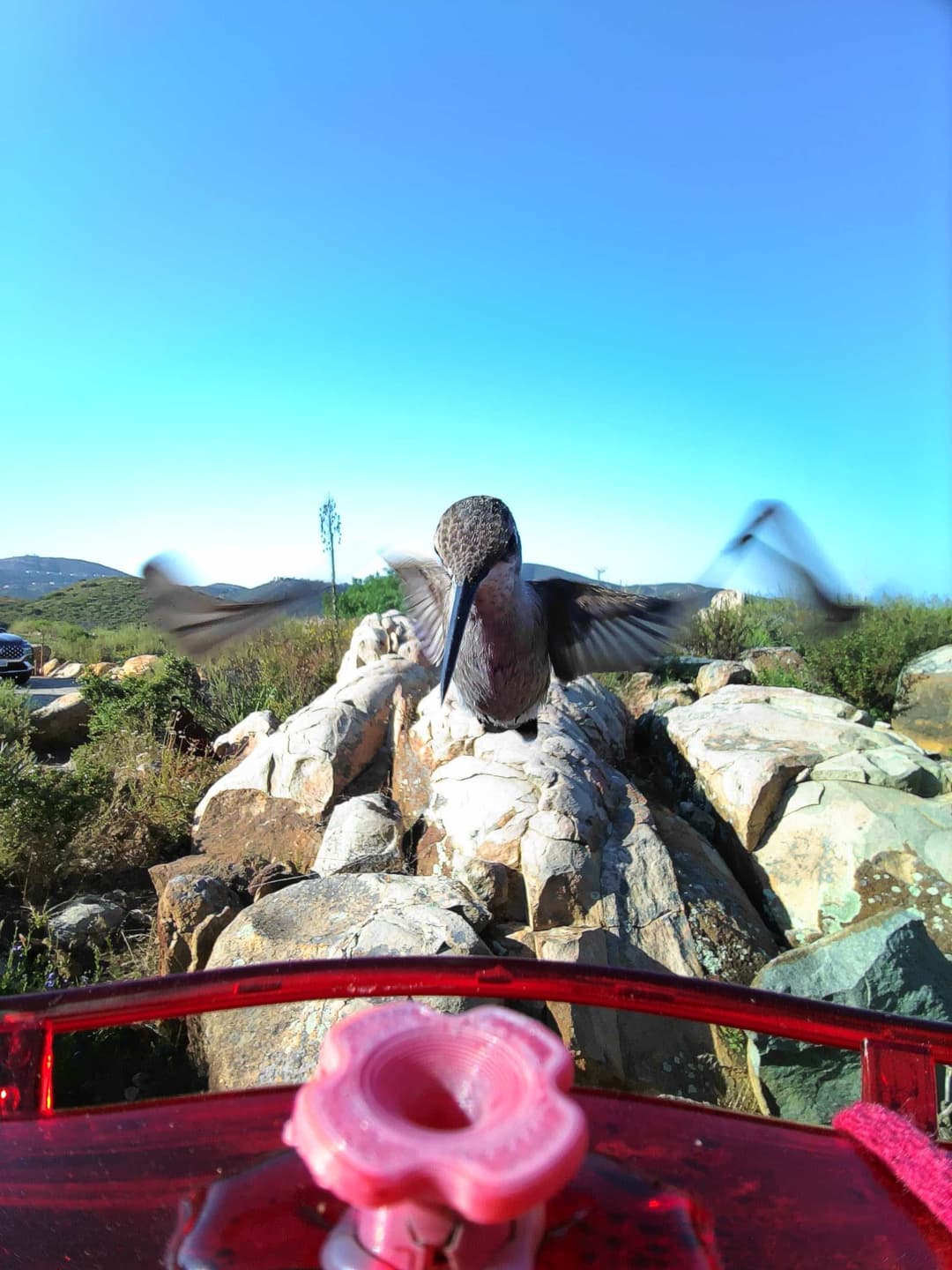
Costa's Hummingbird vs Lucifer Hummingbird
The male Lucifer has a more pronounced curved bill and a longer, forked tail compared to Costa's. The gorget of Costa's is larger and often extends to the crown.
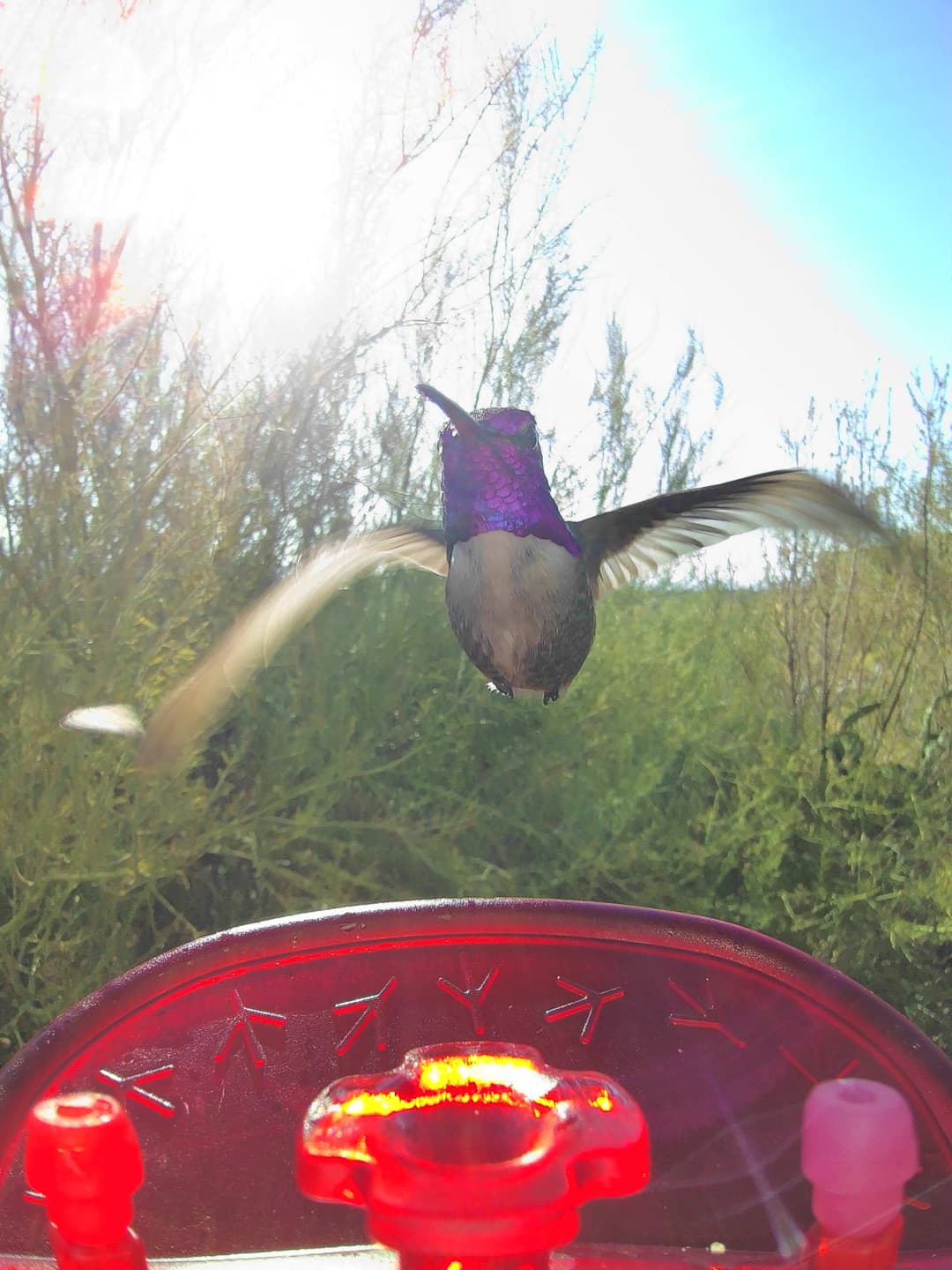
Broad-Tailed Hummingbird vs Lucifer Hummingbird
Lucifer Hummingbird is generally smaller with a distinctive purple gorget and curved bill, while Broad-Tailed has a rose-red throat and broad tail. The wing sound of Broad-Tailed is unique when flying.
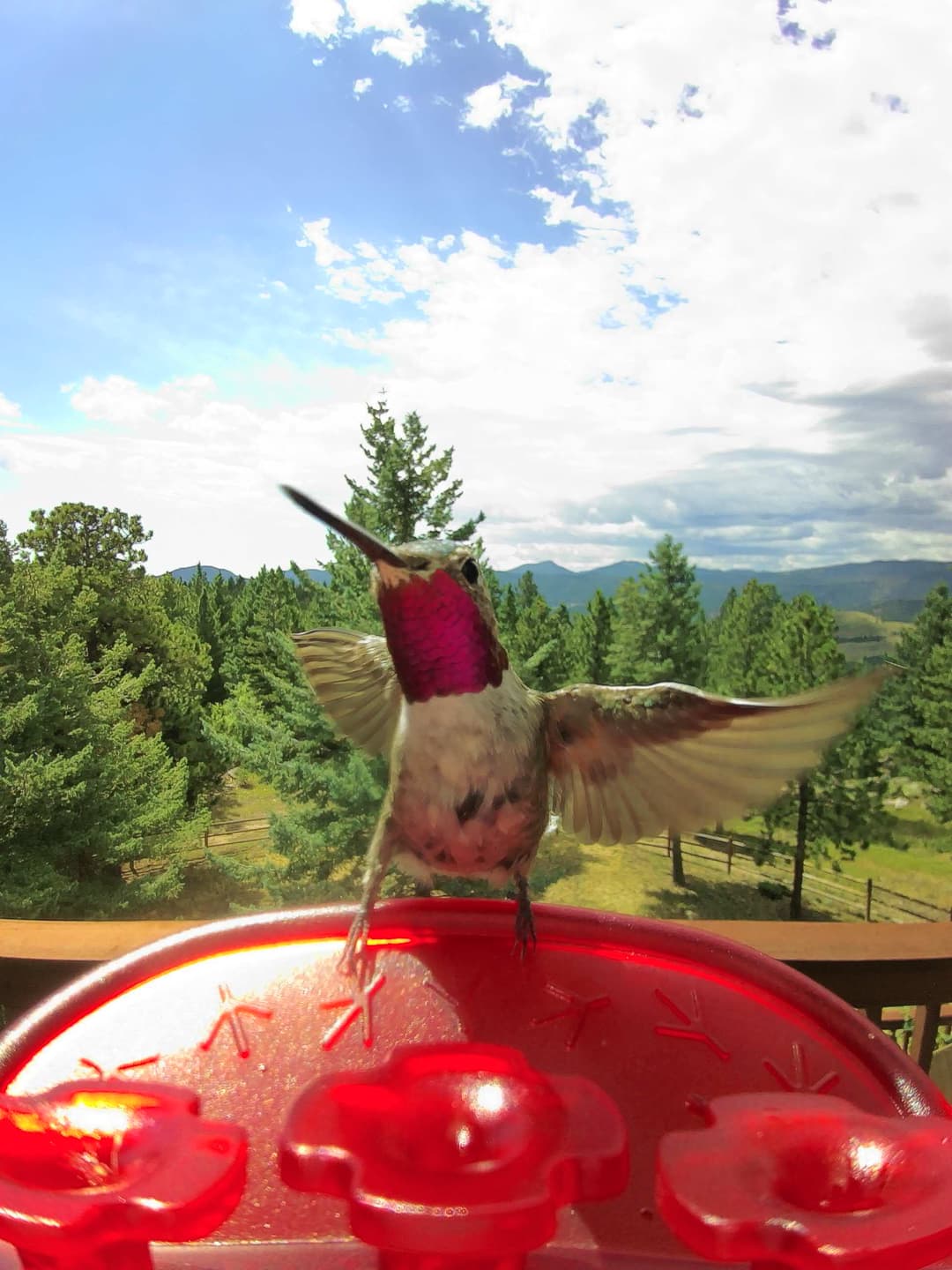
Allen's Hummingbird vs Lucifer Hummingbird
Lucifer has a distinctive curve to the bill and a purple gorget, while Allen's features a straight bill and a copper-colored back and green head.
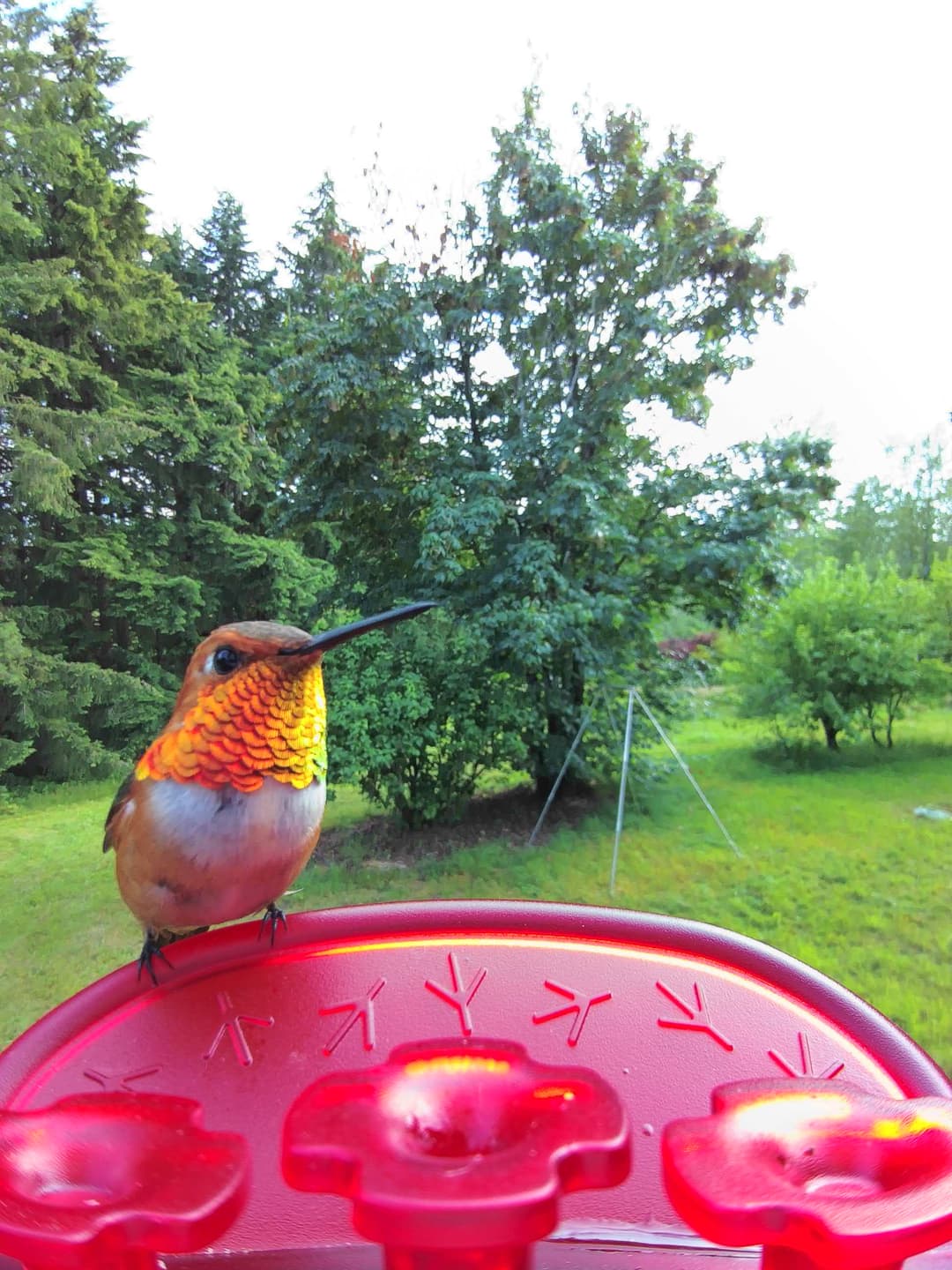
Rufous Hummingbird vs Lucifer Hummingbird
Lucifer Hummingbird is less rufous and has a more prominent purple throat, and a curved bill. Rufous is mostly rust-colored with extensive tail wound shape and behavior differences.
Breeding and nesting habits of the Lucifer hummingbird
Mating behaviors
The male performs a unique courtship display to the female during the nest-building or egg-laying stage. This involves shuttling back and forth in short flights near the nest with loud rustling wing sounds, followed by flying high and diving steeply past the nest.
Nesting details
Nests are located 2-10 feet above the ground, typically in open cholla cactus, on the stem of ocotillo, or on an agave stalk. The female builds a compact cup-shaped nest using plant fibers and spider webs, lining it with plant down. The exterior is camouflaged with bits of leaves or lichens.
Eggs and chick-rearing
The female lays eggs and is responsible for incubation and chick-rearing. Creating a garden habitat supporting this species involves planting native cacti and agave, providing a safe and natural nesting environment.
What does a Lucifer hummingbird like to eat?
Insects
Nectar
Natural diet
The dietary habits of the lucifer hummingbird primarily consist of nectar and insects. They are known to take nectar from various flowers and also consume tiny insects, which provide essential nutrients. The hummingbird often visits tubular flowers that are rich in nectar, such as agave, penstemon, and paintbrush.
Bird feeders
In addition to its natural diet, the lucifer hummingbird also feeds at bird feeders. They are attracted to sugar-water mixtures often found in hummingbird feeders, which mimic the nectar they consume from flowers.
Attracting lucifer hummingbirds: the basics
To tempt a Lucifer Hummingbird to pay a visit in your yard, you'll need to create an inviting environment. They are attracted to a variety of flowering plants that offer rich nectar. Aquilegia, Nicotiana, Agastache, and Penstemon are some of their favorites. Hummingbird feeders filled with sugar water can also help. Avoid using red dye or store-bought mixtures, instead, opt for a homemade solution of 1 part sugar to 4 parts water.
Choosing the right feeder
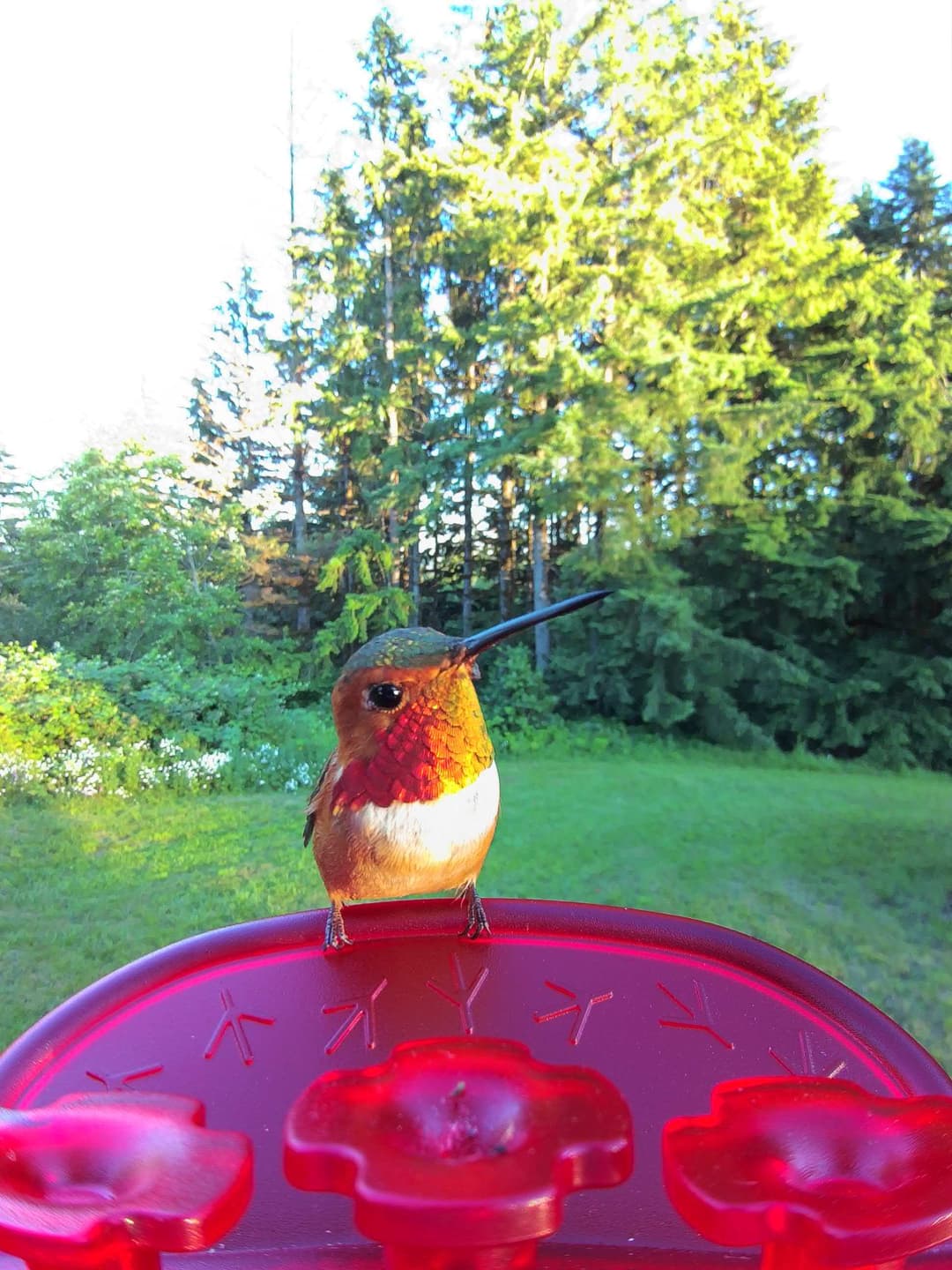
Consider using hanging feeders with perching options as Lucifer hummingbirds like to rest while they sip nectar. Red feeders can be more enticing than other colors since these birds are naturally attracted to the color red. A saucer-style feeder is preferred by these birds for easy and comfortable nectar sipping.
Introducing bird buddy seeds
To maximize your chances of attracting the lovely Lucifer Hummingbirds, we recommend the Bird Buddy seeds. Chosen by bird experts specifically for the season, these seeds provide the nutrients the birds need, and their flavor is irresistible to our feathery friends. Scatter these seeds in your garden area or bird feeders to draw in these delightful creatures.
Extra touches to keep them around
Aside from food, placing a hummingbird-friendly water source such as a bird bath or shallow fountain in your yard can encourage these little fellas to stick around. Evaporative coolers or misters are also greatly appreciated by these birds as they love to bathe and then preen their feathers. Adding bird-friendly plants and perching locations will provide them with a safe space to rest between feedings.
Where can you find lucifer hummingbirds?

Primary habitat
The lucifer hummingbird primarily resides in arid environments within the southwestern U.S. These habitats are characterized by very dry hillsides with scattered ocotillos, agaves, cacti, and thorny shrubs.
Additional range
Besides its preferred desert canyons and slopes, the bird also expands its range into some less arid areas, specifically grasslands with scattered oaks.
Do they migrate?
The lucifer hummingbird is known for its migration pattern. During the breeding season, it inhabits arid and semi-arid regions of the southwestern United States, specifically in areas like southeastern Arizona, southwestern New Mexico, and west Texas. As winter approaches, these hummingbirds migrate to their wintering grounds in south-central Mexico. The migration route typically follows a southward path from the breeding areas. Lucifer hummingbirds move towards central Mexico, where they find more temperate climates and abundant food resources for the winter season. Key locations in their winter range include areas such as the Sierra Madre Oriental and other suitable habitats in south-central Mexico's highlands. Migration timing is influenced by temperature and food availability, with birds generally starting their southward journey in late summer to early fall. They return to their breeding grounds in the spring, around March to April, coinciding with the blooming of desert plants that provide the nectar they rely on. This migration pattern highlights the lucifer hummingbird's adaptability and reliance on specific climatic and ecological conditions across different regions throughout the year.
What is the role of lucifer hummingbirds in nature and how to protect them?
Conservation status
The lucifer hummingbird is uncommon in its limited U.S. range but possibly increasing. Its conservation status is not well documented in Mexico, which makes it difficult to fully assess its vulnerability. While it is not currently classified as endangered, the lack of detailed knowledge about Mexican populations suggests potential concern. Key conservation efforts should focus on habitat preservation and further research into population trends. Potential threats include habitat loss due to urbanization and climate change, which could impact their feeding and breeding areas. More comprehensive studies are needed to determine the species' overall conservation status.
Ecological role of lucifer hummingbirds
Its role in the ecosystem
The ecological significance of the Lucifer Hummingbird is multifaceted and it contributes uniquely to the ecosystem. With a specialised diet of mostly nectar and small insects, it serves as both a pollinator and a form of pest control. When hovering at flowers to extract nectar, the bird aids in plant pollination as pollen sticks to its bill and feathers, and gets transported to subsequent flowers. This crucial role promotes plant reproduction, genetic diversity, and the survival of various flora. Moreover, by feeding on tiny insects, it contributes to pest regulation, helping to keep insect populations in check. In addition to this, it may also assist in the dispersal of seeds by carrying them on its body from one location to another. The Lucifer Hummingbird's nesting habits on various plants, like cholla cactus and agave stalk, may indirectly help these vegetation types by deterring certain pests or animals. Overall, these roles of the Lucifer Hummingbird make it an important player in maintaining balance in its ecosystem.
How to help protect lucifer hummingbirds
Preservation tips
Habitat preservation strategies
To support the conservation of the lucifer hummingbird, develop strategies to preserve their natural habitat. This includes advocating for policies that prevent habitat destruction, such as mining or intensive farming. Protect areas they frequent, like open woodlands or scrublands, by creating nature reserves. Implement sustainable forestry and agriculture practices to minimize impact on these environments.
Community science initiatives
Engage in community science initiatives like citizen science projects that track and monitor the hummingbird population. This data can inform conservation efforts. Educate the community about the importance of preserving the birds' habitat and how their lifestyles can affect the species. Promote the planting of native plants that hummingbirds prefer for nectar, as this will help to increase their food supply. Collaborate with local schools, universities, and conservation organizations to further these initiatives.