
Cinnamon Hummingbird
Cinnamon Hummingbird
Amazilia rutila
Quick Identification guide
Quick Identification guide
- •
The cinnamon-brown plumage on its back and underparts distinguishes it from other hummingbirds
- •
Features a metallic green head and upper chest, creating a stunning color contrast
- •
Possesses a slender, slightly decurved bill tailored to feeding on nectar
Description
This tiny, zippy bird is a burst of cinnamon-colored energy! With its warm, rusty plumage and dazzling green wings, the Cinnamon Hummingbird flits through tropical gardens, always on the hunt for sweet nectar. Fast, feisty, and full of charm, it's a real treat to spot one sipping from a flower!
The cinnamon hummingbird can weigh between 2.5to5grams and be from9to10centimeters tall.
The cinnamon hummingbird typically lives up to 10 years. This lifespan is somewhat shorter than related species such as the Ruby-throated hummingbird, which can live up to 12 years. Like most hummingbirds, the lifespan of the cinnamon hummingbird can be substantially reduced by harsh environmental conditions and predator attacks. As a migratory bird, it also faces risks during long-distance travel.
Did you know?
Most popular questions about cinnamon hummingbird
How to recognise a cinnamon hummingbird?
General appearance
The cinnamon hummingbird is notable for its medium size, averaging about 4 inches in length, and its distinctive cinnamon-rufous coloration, which gives the species its name. Their beaks are mostly straight, with a slight curvature towards the end. Their underbellies are a lighter, almost whitish color. Adult feathers shine with a metallic sheen when hit by light.
Male vs female
Males and females roughly resemble each other but can be distinguished by the iridescencent green patch or gorget on the male's throat, absent in the female. Females also tend to be slightly larger in size. The tail of the female is rounded with white tips, a feature that is absent in males, whose tail feathers are uniformly colored.
Juvenile
Juvenile cinnamon hummingbirds feature a speckled appearance, with scattered green and white feathers interspersed with their cinnamon coloration. As they grow, these flecks slowly fade until their full adult plumage takes over. Their beaks, initially darker in color, turn red-orange with maturity.
Often mistaken for
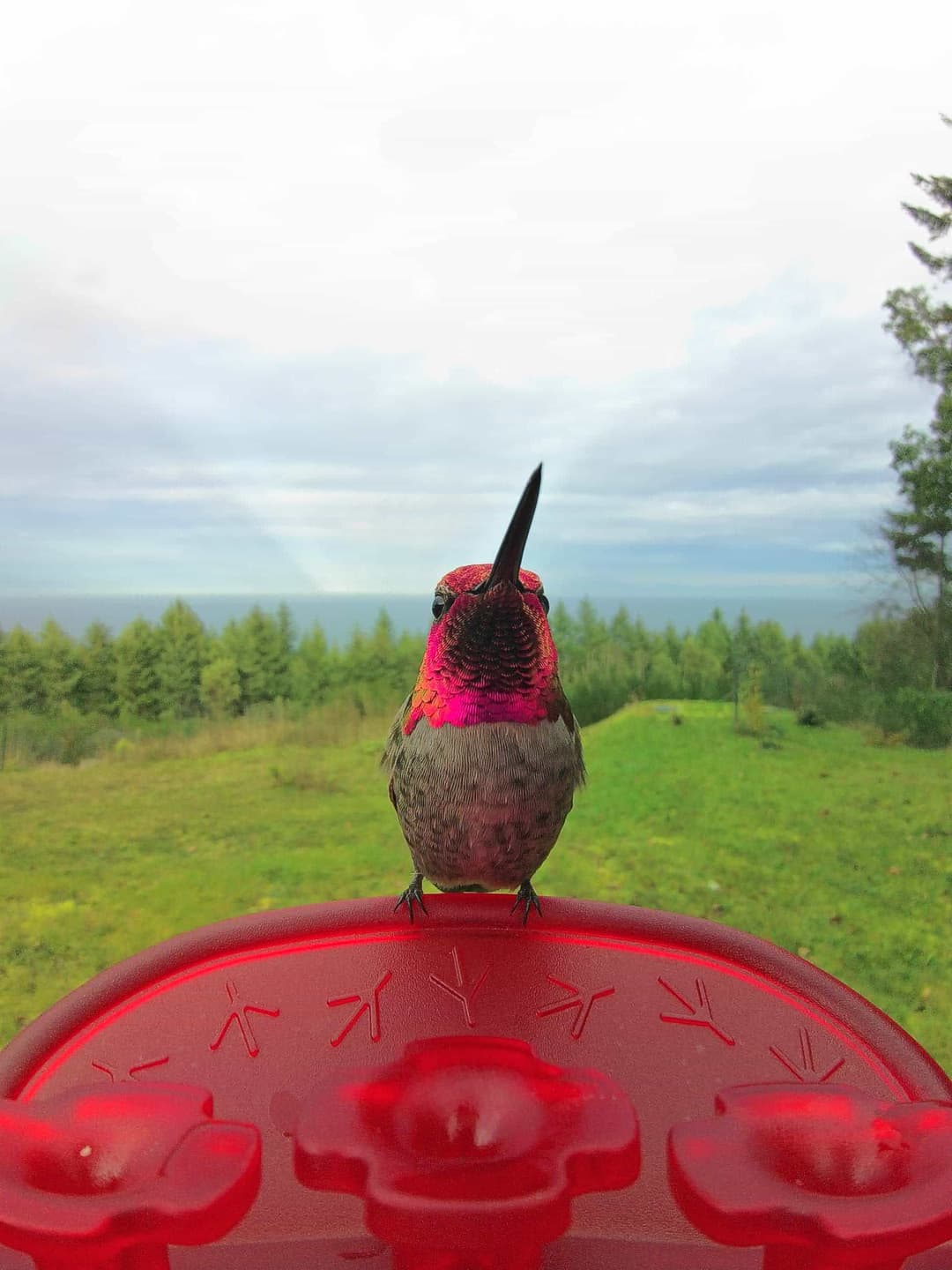
Anna's Hummingbird vs Cinnamon Hummingbird
While similar in shape and size to the Cinnamon Hummingbird, Anna's Hummingbird has a more iridescent coloration, particularly on the head and throat, which can exhibit vibrant pinks and greens.
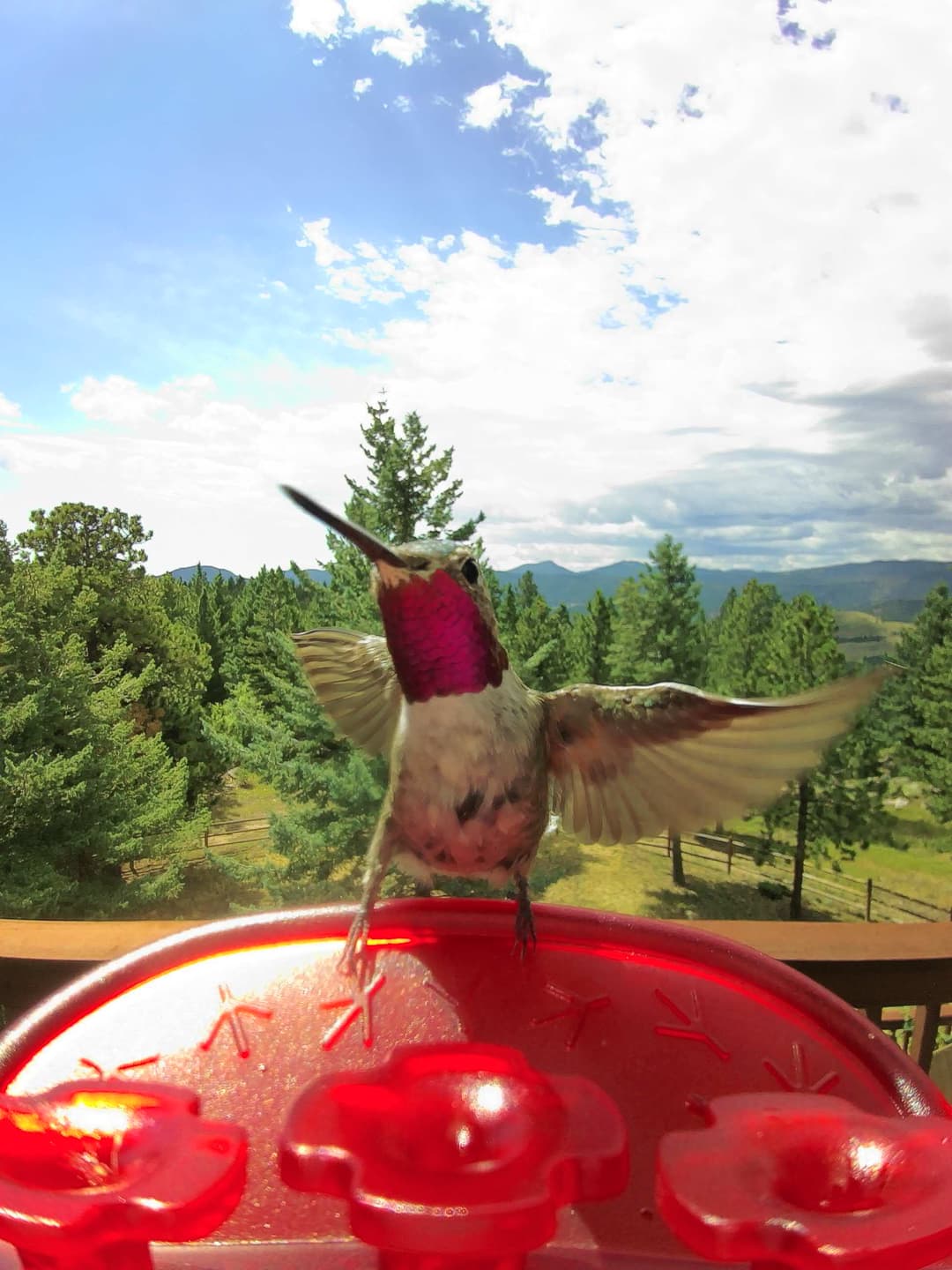
Broad-Tailed Hummingbird vs Cinnamon Hummingbird
The Broad-Tailed Hummingbird may resemble the Cinnamon Hummingbird in flight, but it is distinguished by its metallic green back and a broad, rounded tail with rufous edges.
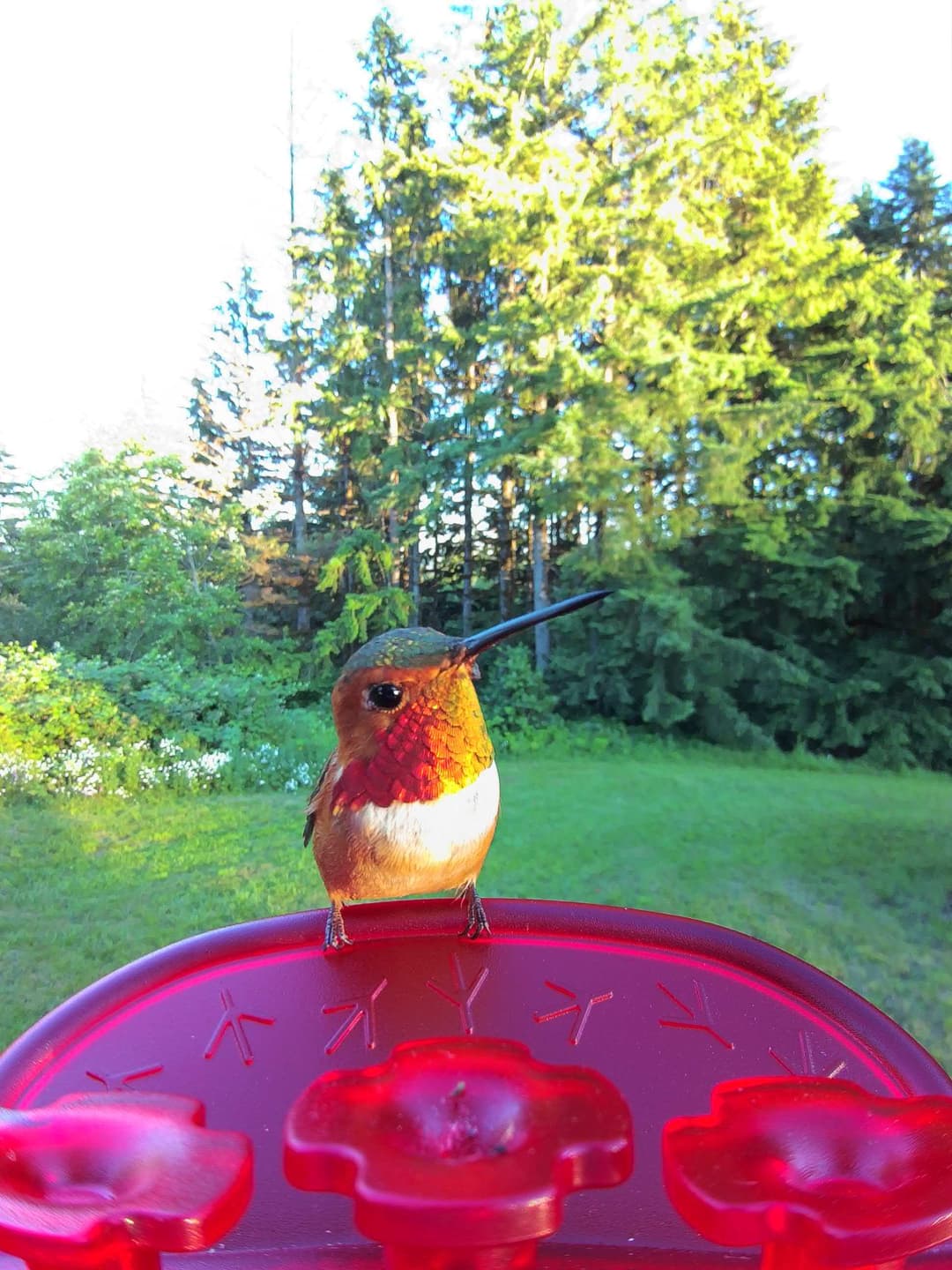
Rufous Hummingbird vs Cinnamon Hummingbird
The Rufous Hummingbird is often confused with Cinnamon Hummingbird due to its similar size and rufous color palette. However, the Rufous Hummingbird has a white chest and more pronounced rufous coloring on its back.
Breeding and nesting habits of the cinnamon hummingbird
Mating behaviors
Cinnamon hummingbirds engage in elaborate courtship displays where males perform aerial maneuvers and vocalize to attract females. They often choose prominent perches to show off their iridescent plumage.
Nesting details
Nests are built by females using plant fibers and spider silk, often found on tree branches or shrubs. In gardens, providing dense foliage and protecting from predators helps create suitable nesting habitats.
Eggs and chick-rearing
The female lays two small white eggs. She incubates them alone, and after hatching, she feeds the chicks with regurgitated nectar and small insects until they fledge.
What does a cinnamon hummingbird like to eat?
Flowers
Insects
Nectar
Natural diet
The cinnamon hummingbird feeds primarily on nectar from a variety of flowering plants. It favors flowers with tubular shapes that accommodate its long bill and enable it to consume the nectar efficiently. In addition to nectar, this hummingbird also consumes small insects and spiders, providing essential proteins and nutrients, especially during breeding season.
Bird feeders
Cinnamon hummingbirds are attracted to bird feeders that offer a sugar-water solution, mimicking the nectar they consume in the wild. The feeders should ideally provide a solution consisting of one part sugar dissolved in four parts water. Red-colored feeders tend to be more successful in attracting these birds, as they associate the color with nectar-rich flowers.
Plant flowers cinnamon hummingbirds love
Start by planting flowers that hummingbirds particularly enjoy. They are attracted to brightly colored, especially red, tubular flowers. Examples include trumpet vine, bee balm, and cardinal flower. Remember, always choose native plants over exotic ones as they are better suited for local bird species.
Choose the right bird feeder
Opt for a feeder that is red or decorated with bright, tubular flowers. Remember, hummingbirds are attracted more to the color of the feeder than the color of the nectar. The feeder should have enough feeding stations and a built-in ant moat to deter pests.
Prepare the ideal nectar mixture
Make a simple nectar mixture by bringing 4 parts water and 1 part sugar to a boil. Once cooled down, fill the feeder and change the mixture every 2-3 days, or sooner if it appears cloudy. Never add food coloring, honey, or artificial sweeteners, as these can harm the birds.
Invest in high-quality bird food
For best results, consider using Bird Buddy seeds. These seeds are chosen by experts depending on the season, ensuring your yard attracts a variety of birds, including the elusive cinnamon hummingbird.
Create a bird-friendly habitat
Lastly, ensure your yard provides a safe and friendly environment for the hummingbirds. Offer perches, provide a source of fresh water, and avoid using pesticides that inhibit the presence of insects – an essential protein source for hummingbirds.
Where can you find cinnamon hummingbirds?
Primary habitat
The cinnamon hummingbird favors tropical and subtropical forests, shrublands, and heavily degraded former forests. It predominantly exists in the lowlands.
Additional range
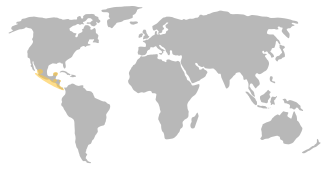
This bird species typically ranges from northwestern Mexico to Costa Rica. Unexpectedly, it also occupies mangrove forests and arid conditions like deserts and scrublands.
Do they migrate?
The cinnamon hummingbird does not migrate and is considered a resident species, remaining in its habitat year-round. It inhabits a range stretching from western Mexico through parts of Central America, including Guatemala, El Salvador, Honduras, Nicaragua, and Costa Rica. This species typically occupies lowland areas, favoring open and semi-open environments such as gardens, plantations, forest edges, and scrubland. While there is no migratory behavior, cinnamon hummingbirds may exhibit local movements in response to flowering cycles and rainfall patterns, adjusting their locations within their range to optimize feeding opportunities. They feed primarily on nectar from a variety of flowering plants and also consume small insects for protein. Thus, their movements are influenced by the availability of these food resources rather than long migratory patterns. Their ability to thrive in human-modified environments and diverse habitats helps them maintain stable populations without the need for migration. As a result, the cinnamon hummingbird remains predominantly stationary throughout the year, taking advantage of its rich native range in Central America.
What is the role of cinnamon hummingbirds in nature and how to protect them?
Conservation status
The cinnamon hummingbird is currently classified as "Least Concern" by the IUCN, indicating it is relatively common and not considered vulnerable or endangered. It inhabits a range that includes Mexico to Costa Rica. Significant threats include habitat loss due to deforestation and land conversion for agriculture. While not currently a major conservation focus, efforts to preserve tropical forests indirectly support their populations. Additionally, local initiatives promoting biodiversity-friendly farming practices can help mitigate habitat degradation and ensure the species’ continued stability in its natural habitat.
Ecological role of cinnamon hummingbirds
Its role in the ecosystem
The Cinnamon Hummingbird, endemic to regions of Mexico and Central America, has a significant role in its ecosystem. As pollinators, these birds help to promote plant diversity by moving pollen from one flower to another, enabling cross-fertilization. This is particularly important in tropical ecosystems where many plant species rely on birds for pollination. Their contribution towards plant reproduction consequently aids in seed dispersion, a crucial service for the growth and diversity of native plant populations. On the flip side, these hummingbirds also assist in pest control as they consume vast amounts of small insects for protein. Thus, they help to keep in check the populations of these pests, minimizing potential damage to plant communities. In sum, the Cinnamon Hummingbird helps to maintain biodiversity and balance in its ecosystem.
How to help protect cinnamon hummingbirds
Preservation tips
Habitat preservation strategies
Protect and preserve the dry tropical forests that the cinnamon hummingbird inhabits. This can be done by strict enforcement of habitat protection laws, avoiding deforestation, and integrating sustainable land-use practices. Planting and preserving native plant species, which provide essential food and nesting resources for these birds, are also crucial.
Community science initiatives
Raise community awareness and educate the public about the importance of the cinnamon hummingbird to the ecosystem. Engage individuals and communities in citizen science projects to monitor hummingbird populations and habitats. This can include bird watching groups or GPS tracking projects, with collected data used to inform conservation efforts. Acquiring funds through community fundraising or grants will also support the implementation of conservation measures.