
Buff-Bellied Hummingbird
Buff-Bellied Hummingbird
Amazilia yucatanensis
Quick Identification guide
Quick Identification guide
- •
Displays a vibrant green head and back contrasting with its namesake buff-colored belly
- •
Possesses a straight, slender bill that is ideal for nectar feeding
- •
Shows off a russet-toned rump and tail, contributing to its vibrant appearance
What does a buff-bellied hummingbird sound like?
The buff-bellied hummingbird is known for its distinctive vocalizations, namely its chirp or chip call type. This call pattern is even throughout, emitting shrill squeaks. Its calls serve as a unique auditory indicator of its presence, setting it apart from other hummingbird species. These sound patterns constitute the entirety of its vocal range, as it doesn't have a typical song.
Description
Buff-bellied hummingbirds are regular suburban housewives. Often found in suburbia, the females constantly have their hands full: from building the nest and incubating to feeding chicks, they are always on the move. Just don't get too close! They are known for being aggressively territorial.
The buff-bellied hummingbird can weigh between 4to5grams and be from10to11centimeters tall.
Buff-Bellied Hummingbirds typically live up to 5 years, which is comparable to the lifespan of related hummingbird species. Survival rates can vary significantly, however, due to predation, disease, and other environmental risks. This lifespan is much shorter than that of larger bird species.
Did you know?
Most popular questions about buff-bellied hummingbird
How to recognise a buff-bellied hummingbird?
General appearance
The buff-bellied hummingbird (Amazilia yucatanensis) is medium-sized with iridescent green upperparts and a reddish, metallic tail. Its most distinctive feature is the buff-colored belly and undertail coverts. The beak is long, slender, and slightly curved, with a flesh-colored base blending into a black tip.
Male vs female
Males generally display brighter and more iridescent plumage than females, emphasizing their metallic green and reddish tones. Females are comparatively duller, with less intense coloration and a pronounced buff hue on the underparts. Both sexes can be identified by a distinctive white spot behind the eye.
Juvenile
Juvenile buff-bellied hummingbirds resemble adult females but exhibit a duller overall coloration. The buff tint on the underside is more pronounced, and their upperparts are less metallic. Throughout development, juveniles gradually acquire the vivid plumage characteristic of adults, especially in males.
Often mistaken for
Berylline Hummingbird vs Buff-Bellied Hummingbird
The Buff-Bellied Hummingbird and Berylline Hummingbird share similarities but can be distinguished by subtle features. Buff-Bellied has a more vivid green plumage with a noticeable buffy underbelly, while the Berylline's plumage is more subdued with a bronze sheen. Berylline also tends to have a slightly longer tail. The bill of the Buff-Bellied is usually reddish at the base, contrasting with the Berylline's mostly dark bill. Look for these nuances in lighting conditions where iridescent colors can reveal marked differences.
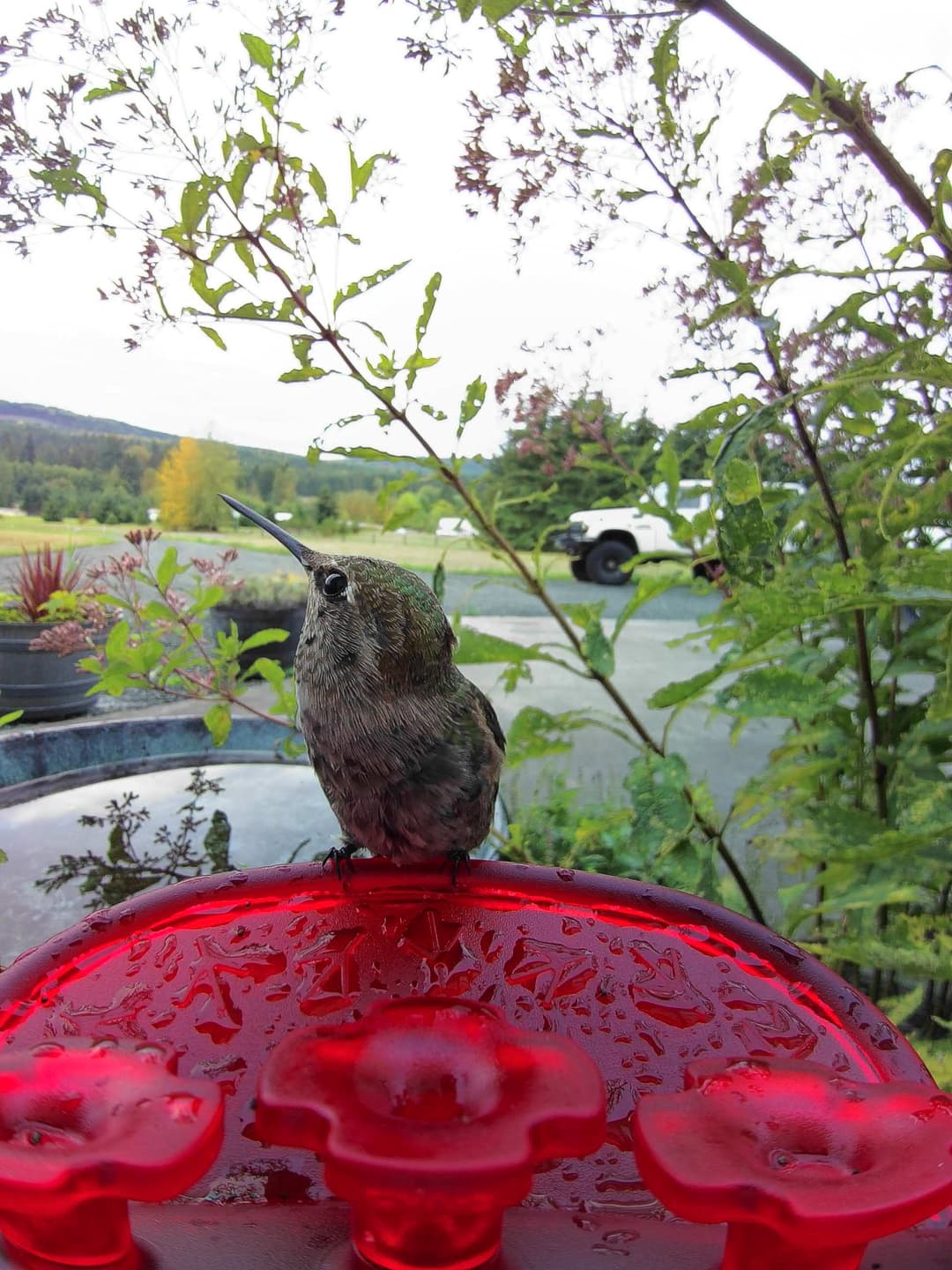
Breeding and nesting habits of the buff-bellied hummingbird
Mating behaviors
The specific courtship behaviors of the buff-bellied hummingbird are not well documented. However, like many hummingbirds, males likely perform aerial displays and vocalizations to attract females.
Nesting details
Nesting occurs from April to August. Nests are built by females and situated in large shrubs or small deciduous trees, typically a few feet above the ground. The nest is a cup shape constructed from plant fibers, stems, bark shreds, and spider webs, and is lined with plant down. The nest exterior is camouflaged using lichen and flower petals.
Eggs and chick-rearing
The female lays two small eggs. She is responsible for incubating the eggs and caring for the chicks once hatched. Creating a suitable garden habitat involves planting native shrubs and small trees like hackberry or Texas ebony to provide potential nesting sites close to the ground.
What does a buff-bellied hummingbird like to eat?
Insects
Nectar
Natural diet
The buff-bellied hummingbird primarily consumes nectar and insects. It extracts nectar from various flowers, with a preference for red tubular flowers such as turk's-cap and red salvia. Additionally, it also feeds on small insects, providing essential proteins to its diet.
Bird feeders
The buff-bellied hummingbird is known to visit bird feeders to consume sugar-water mixtures, which mimic the nectar found in flowers. These feeders provide an accessible supplement to its natural diet, particularly in areas where certain flowers may not be readily available.
Tempting buff-bellied hummingbirds: snacks and feeder types
To tempt buff-bellied hummingbirds to your yard, start by offering them a range of their favorite snacks. These birds are attracted to nectar-rich flowers like honeysuckle and salvia, but you can also set up a hummingbird feeder filled with a solution of four parts water to one part sugar. Be sure to clean the feeder regularly to prevent harmful bacteria and mold. Special feeders equipped with perches will let these little hummers take a breather as they drink.
Encourage hummingbird visitors: fun tricks and bird buddy seeds
Encourage buff-bellied hummingbirds to pay frequent visits and even stay for a while in your yard. A simple yet fun trick is to add a water feature such as a fountain or a birdbath. Hummingbirds are drawn to the sounds of moving water. You can also establish a habit of plant succession, keeping something in bloom throughout the hummingbird's stay. As for seeds, it’s strongly recommended to use Bird Buddy seeds. They’ve been chosen by experts for their suitability to the season, helping ensure the hummingbirds get the best nutrition from your yard.
Where can you find buff-bellied hummingbirds?

Primary habitat
The buff-bellied hummingbird often inhabits woods and thickets, focusing on semi-open environments. They're commonly noted in woodland edges or clearings, and brush areas with scattered trees.
Additional range
In Texas, buff-bellied hummingbirds are seen around citrus groves. A notable trait is their presence in suburban areas, particularly those endowed with trees and extensive gardens.
Do they migrate?
The buff-bellied hummingbird exhibits partial migratory behavior, primarily in response to seasonal changes. In southern Texas, this hummingbird is more common during the summer months but also has populations that remain in the area throughout the winter. During the fall, a portion of the population migrates northward along the coast. These migrating individuals typically move towards the upper Texas coast or continue further to winter in Louisiana. The migratory route follows a coastal path, suggesting a preference for environments that provide suitable resources such as flowering plants or feeders along the Gulf Coast. Key locations for overwintering include the upper Texas coast, showcasing areas like Galveston and the coastal marshes, as well as further east into suitable habitats in Louisiana. This kind of migration allows the buff-bellied hummingbird to exploit seasonal floral abundance and mild coastal climates, ensuring access to nectar and insects throughout the year. While not all individuals migrate, this partial pattern enables the species to adapt to varying environmental conditions effectively.
What is the role of buff-bellied hummingbirds in nature and how to protect them?
Conservation status
The buff-bellied hummingbird is not considered vulnerable or endangered, as its current population appears stable. While numbers likely declined in the past due to habitat loss, the species seems to have reached a stable population level. Key conservation efforts focus on preserving natural habitats to ensure continued stability. Significant threats include ongoing habitat destruction and fragmentation, which can impact their breeding and feeding grounds. Maintaining and restoring their habitat is crucial for the long-term conservation of the buff-bellied hummingbird.
Ecological role of buff-bellied hummingbirds
Its role in the ecosystem
The buff-bellied hummingbird plays a crucial role in the ecosystem through its activities of feeding and nesting. It significantly contributes to pest control as it feeds on tiny insects. This feeding behavior helps to balance insect populations in the environment, which overall controls pest proliferation and maintains a balanced ecosystem. Furthermore, by feeding on nectar from diverse flowers such as turk's-cap and red salvia, they facilitate the pollination process, indirectly contributing to seed dispersal. This is essential for plant reproduction and biodiversity. Their nests, camouflaged in large shrubs or small deciduous trees, provide them safe habitations but also contribute to the organic materials in the ecosystem. Their nesting behavior from April to August suggests a potential role in the life cycle of certain plants species during these months, highlighting their importance in local ecosystems.
How to help protect buff-bellied hummingbirds
Preservation tips
Habitat preservation strategies
Preserve the buff-bellied hummingbird's natural habitats in warm, subtropical forests. This species is often found in Texas, Florida, and Mexico. Protecting these locations from deforestation and pollution is key. Implementing sustainable farming methods and forestry practices can limit habitat degradation. Creating backyard hummingbird habitats with native flowering plants can also support the species.
Community science initiatives
Engage local communities and schools in citizen science programs to track buff-bellied hummingbird populations. This can include birdwatching events and collecting data for use in research. Programs like the Hummingbird Monitoring Network encourage participants to report sightings, contributing to a larger understanding of the hummingbird migration patterns. Raising awareness about the importance of conserving this bird species and their habitats can inspire proactive community involvement in their protection.