
Rufous-Tailed Hummingbird
Rufous-Tailed Hummingbird
Amazilia tzacatl

Quick Identification guide
Quick Identification guide
- •
Features a distinctive rufous tail that contrasts with its mostly green plumage
- •
Displays a straight, slender bill that is perfectly adapted for feeding on nectar
- •
Exhibits bronze-green upperparts and a subtly shimmering turquoise-green throat
What does a rufous-tailed hummingbird sound like?
The Rufous-tailed hummingbird often produces sharp, high-pitched, frequently repeated "tsip" calls primarily used as alarm sounds. Their songs are less common, consisting of a variety of twitters, buzzes, and chirps, usually repeated in sequences. Both the songs and calls are typically made while the bird is in flight.

Description
These beauties are one of the most common hummers in Central America and the ones you are most likely to see at your backyard feeder. They might like it so much that they will chase all other species away! Rufous-tailed hummingbirds are only greedy when it comes to food. When their bellies are full, they don't mind a bit of company and sometimes nest in loose colonies.
The rufous-tailed hummingbird can weigh between 4.5to5.5grams and be from9to11centimeters tall.
The Rufous-tailed Hummingbird typically lives up to 5-6 years. This lifespan, although not precise when compared to other species, is relatively average among hummingbirds. For instance, the Ruby-throated Hummingbird has a similar lifespan while the recorded lifespan for the Broad-tailed Hummingbird is up to 12 years. However, precision is limited due to the challenges of tracking these small birds for long durations.
Did you know?
Most popular questions about rufous-tailed hummingbird
How to recognise a rufous-tailed hummingbird?
General appearance
The Rufous-Tailed Hummingbird measures roughly 10 to 12 cm in length. Primarily bright green, it flaunts a reddish-brown and slightly forked tail, from which it gets its name. A white spot behind each eye adds to its allure. Its bill is straight and noticeably reddish in color.
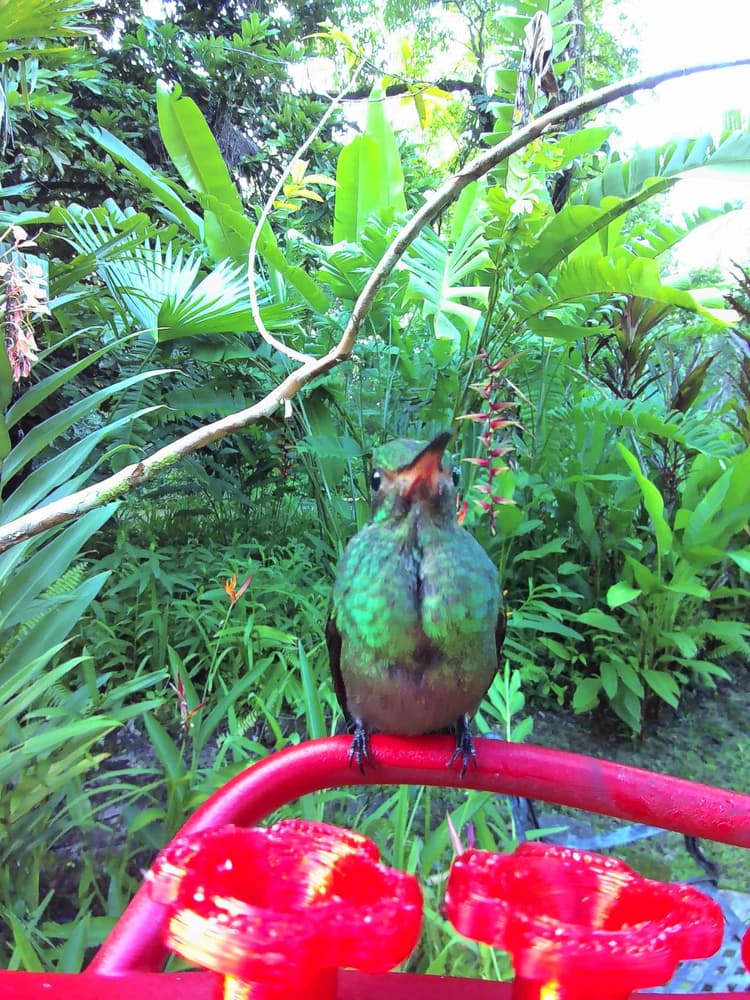
Male vs female
Males and females are indistinguishable by plumage, both boasting the same vibrant green and reddish-brown tones. However, females may be slightly larger in size. During mating seasons, males perform impressive airborne displays to appeal to females.
Juvenile
Juvenile Rufous-Tailed Hummingbirds sport similar coloration to their adult counterparts, making them difficult to distinguish. They might show a more uneven, fluffier feather arrangement and their tail feathers can be shorter. They gain full adult plumage within several weeks after leaving the nest.
Often mistaken for
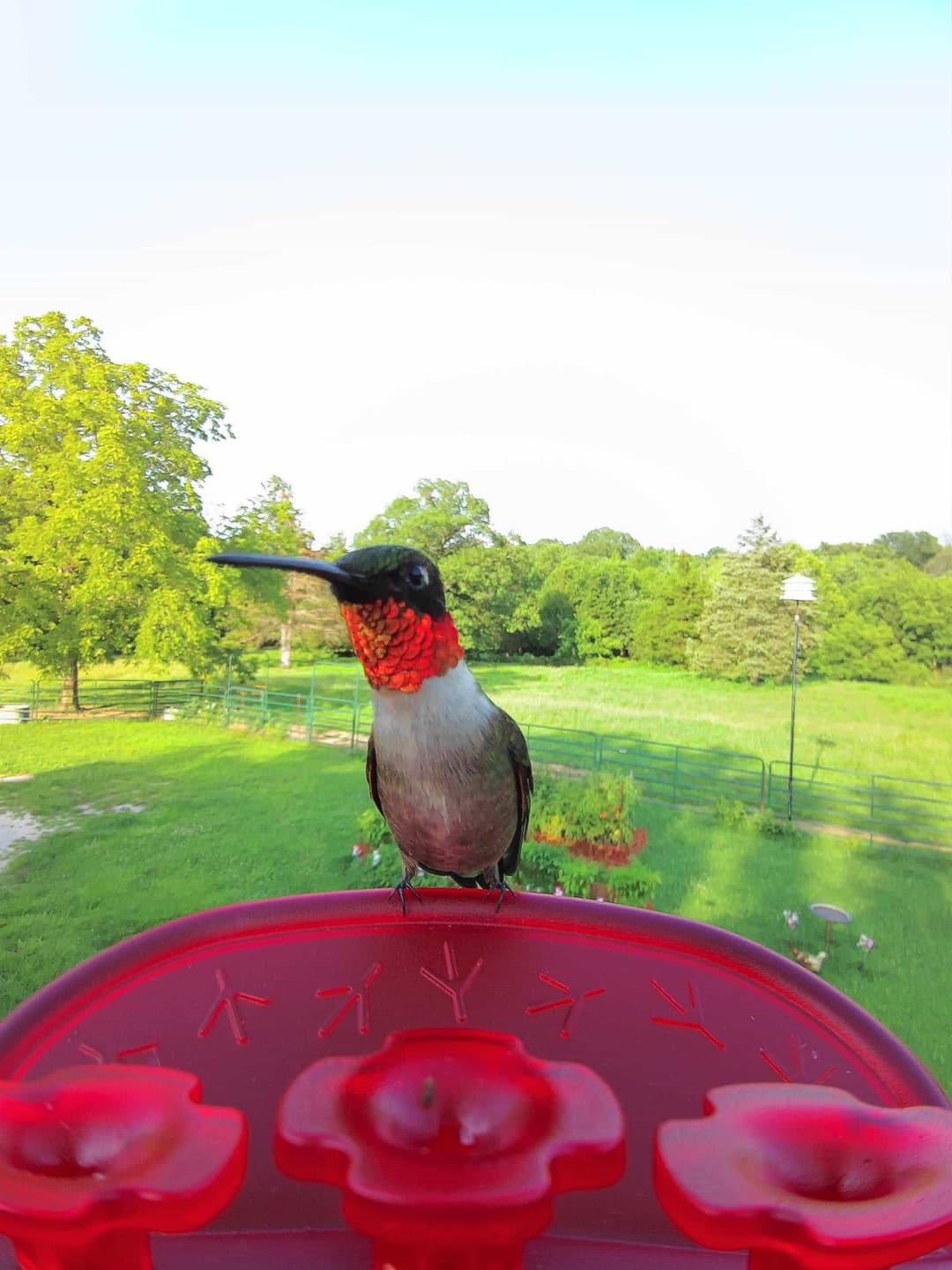
Ruby-Throated Hummingbird vs Rufous-Tailed Hummingbird
The Ruby-Throated Hummingbird can be mistaken for the Rufous-Tailed Hummingbird due to its similar size and shape, but it features a distinctly ruby-colored throat in males and lacks the rufous coloring on the tail.
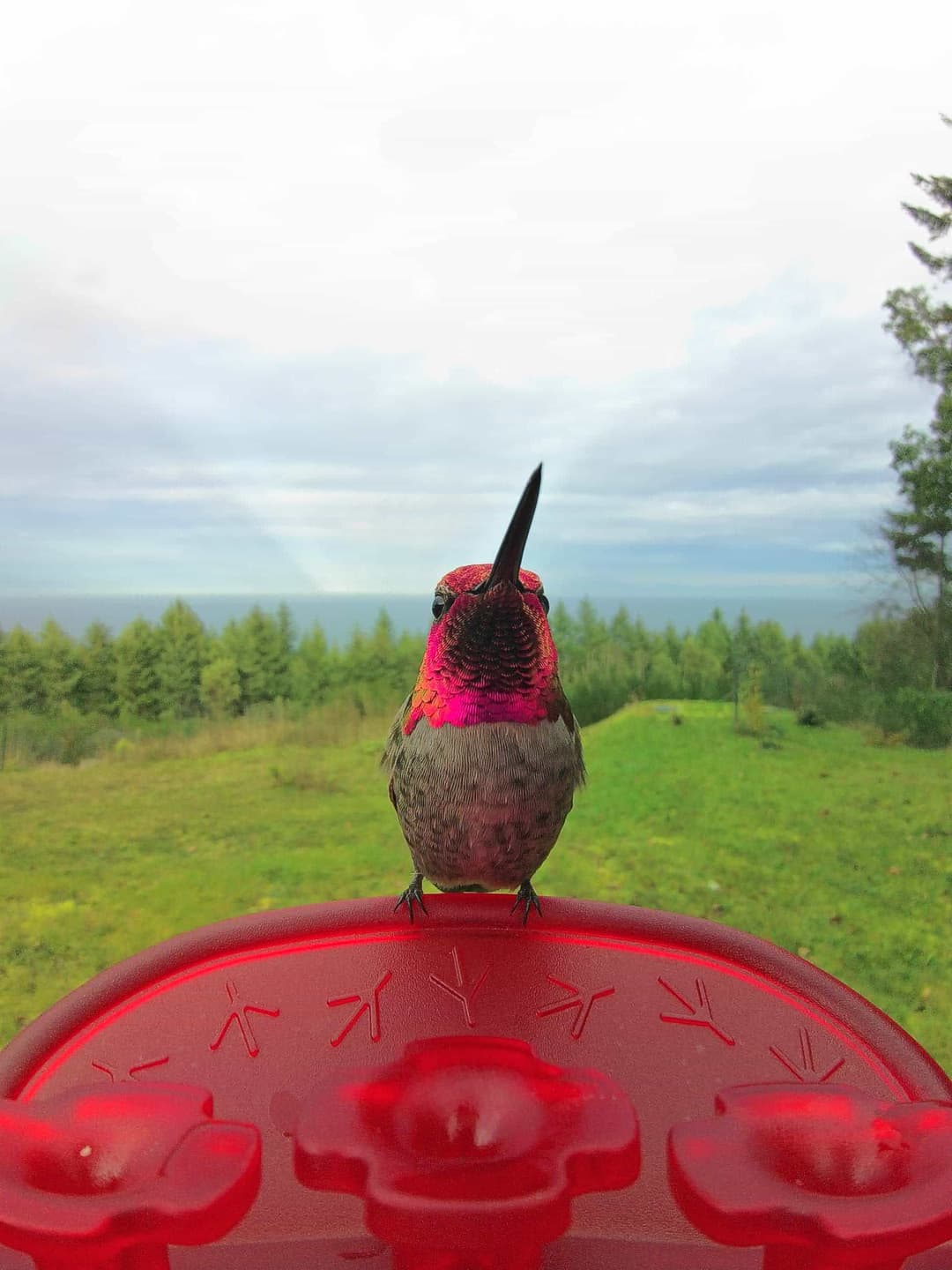
Anna's Hummingbird vs Rufous-Tailed Hummingbird
While Anna's Hummingbird has a similar shape, it can be differentiated by its iridescent green feathers and the lack of the Rufous-Tailed Hummingbird's distinctive rufous tail coloration.
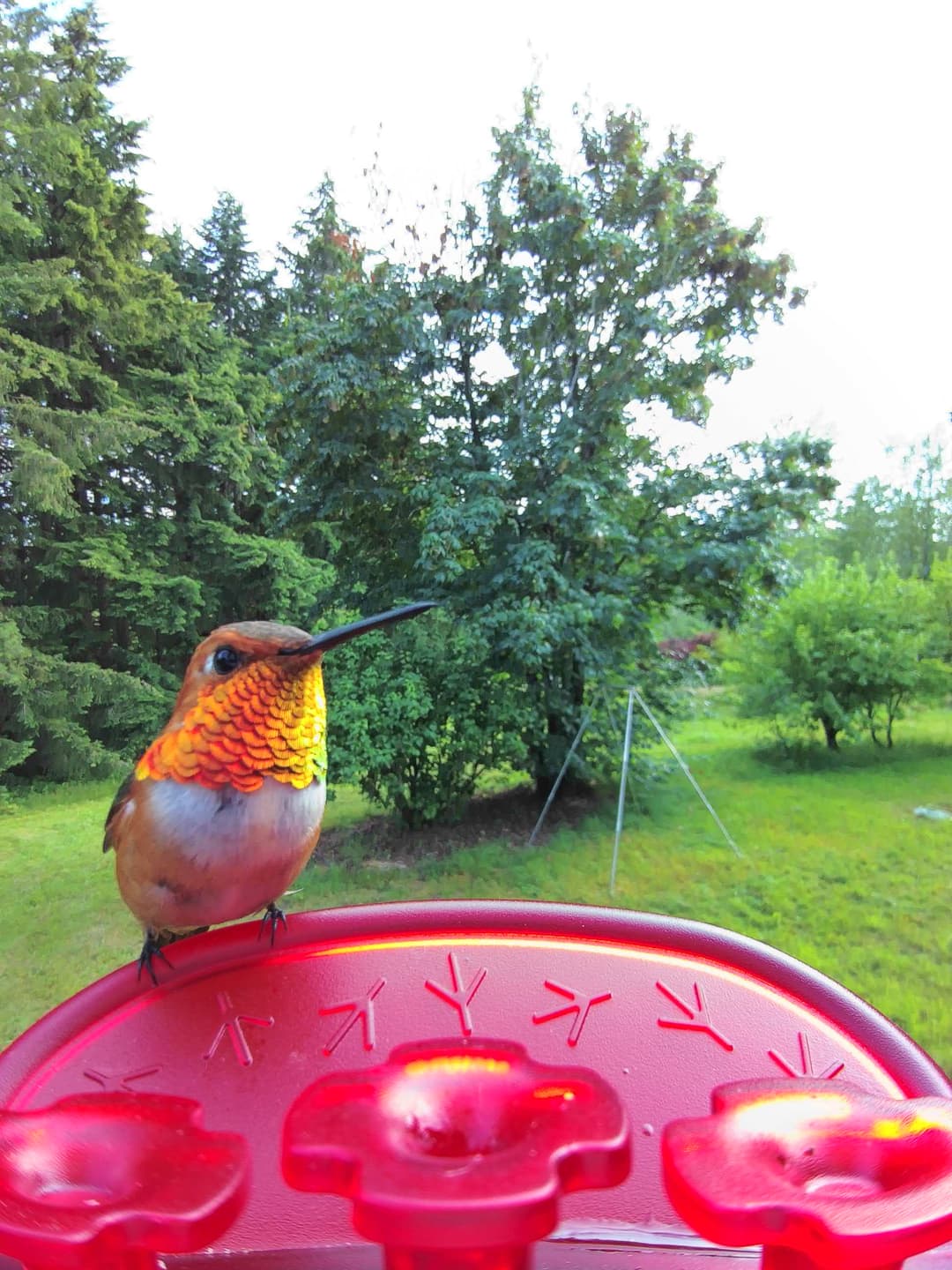
Allen's Hummingbird vs Rufous-Tailed Hummingbird
Allen's Hummingbird has similar vibrant colors but is distinguished by a narrower tail with more green and less rufous than the Rufous-Tailed Hummingbird.
Breeding and nesting habits of the rufous-tailed hummingbird
Mating behaviors
Rufous-tailed hummingbirds engage in dynamic courtship displays, often consisting of rapid flights and aerial displays. Males establish territories and use vocalizations to attract females.
Nesting details
Nests are built strategically on branches in shaded or semi-open areas, often in gardens. Made from plant down, fibers, and spider silk, the nests are compact yet resilient. Garden habitats can be enhanced by planting native flowering plants and maintaining shrubs and trees for cover.
Eggs and chick-rearing
Females lay two small, white eggs per clutch. Incubation lasts around 15-19 days. After hatching, chicks are fed a diet of nectar and insects by the female. Chicks fledge approximately 20-26 days post-hatching, well-prepared for independent life.
What does a rufous-tailed hummingbird like to eat?
Insects
Nectar
Natural diet
The rufous-tailed hummingbird primarily feeds on nectar from a variety of flowering plants, including heliconias, hibiscus, and morning glories. This diet provides them with the necessary sugars for energy. Additionally, they consume small insects and spiders, which offer essential proteins and nutrients for maintaining their health and supporting their high metabolism.
Bird feeders
At bird feeders, rufous-tailed hummingbirds are often attracted to sugar-water solutions. These feeders replicate the nectar found in flowers, providing an accessible food source for hummingbirds. The solution typically consists of one part sugar dissolved in four parts water, mimicking the composition of natural nectar. They may also visit feeders targeting other hummingbird species if the sugar concentration is suitable.
Inviting snacks
Hummingbirds, especially the Rufous-tailed ones, love sweet nectar. You can either make your own using 4 parts water and 1 part table sugar, or you can purchase ready-made nectar. Remember not to add food dye in the mixture. Another favorite snack is small insects. Hang Bird Buddy seeds in your yard. These seeds are particularly attractive to a variety of insects, making it a preferred spot for Rufous-tailed hummingbirds to snack.
Ideal feeders
Feeders should be easy to clean and have red parts. Avoid feeders with yellow color as it attracts bees. The feeder should also allow hummingbirds to perch while feeding. These small birds expend a great deal of energy feeding and appreciate the opportunity to rest. Be sure to clean the feeders every few days to prevent mold growth.
Fun tricks
To encourage the Rufous-tailed hummingbirds to stay, add a birdbath or a misting system for them to enjoy. Maintaining a garden with native flowers will also attract Rufous-tailed hummingbirds. You may also consider planting trees that provide shade and hummingbird-friendly nesting locations.
Where can you find rufous-tailed hummingbirds?

Primary habitat
The rufous-tailed hummingbird is predominantly found in Central America to northern South America and prefers tropical and subtropical humid lowland forests.
Additional range
This species can also thrive in heavily degraded habitats, plantations, and gardens.
Do they migrate?
The rufous-tailed hummingbird is generally a non-migratory species that remains in its habitat year-round. It is commonly found in habitats ranging from southern Mexico through Central America to northwestern South America, including Colombia, Ecuador, and northern Venezuela. These birds primarily inhabit lowland regions, often in open areas such as gardens, forest edges, and plantations, where flowering plants are abundant. While individual birds may exhibit altitudinal movements or short local dispersals in response to changes in food availability or environmental conditions, they do not undertake long-distance migrations characteristic of some other hummingbird species. The rufous-tailed hummingbird's adaptability to various environments and preference for diverse food sources make it well-suited to remain in stable, suitable climates throughout the year. As such, their presence is consistent in their range, and they can often be observed in the same areas, taking advantage of year-round blooming plants and feeders, thus ensuring their survival and reproduction without the need for extensive migratory journeys.
What is the role of rufous-tailed hummingbirds in nature and how to protect them?
Conservation status
The rufous-tailed hummingbird is classified as a species of Least Concern by the IUCN. This bird is common and widespread across its range in Central America and parts of South America. Its adaptability to various habitats, including gardens and plantations, supports its stable population. However, habitat loss due to deforestation remains a potential threat. Conservation efforts focus on habitat preservation and promoting biodiversity-friendly agricultural practices. These actions help ensure the hummingbird's continued abundance and resilience in the face of environmental changes.
Ecological role of rufous-tailed hummingbirds
Its role in the ecosystem
The Rufous-tailed Hummingbird plays an instrumental role in the ecological system. Being pollinators, these hummingbirds assist in the reproductive process of numerous types of flora by transferring pollen from one flower to another, facilitating cross-pollination. This allows for greater genetic diversity among plants and promotes their propagation. Besides, they help with seed dispersal, by consuming a large number of small insects and spiders, the Rufous-tailed Hummingbird also serves as a natural pest control, reducing the necessity for chemical pest control methods. This, in turn, can help limit damage to the environment and other species. Hence, the Rufous-tailed Hummingbird multiplies the biodiversity and contributes to the sustainability and balance of its ecosystem.
How to help protect rufous-tailed hummingbirds
Preservation tips
Habitat preservation strategy
Protect the rufous-tailed hummingbird's natural range by discouraging deforestation and promoting the planting of native flowering plants. Prioritize land-use policies protecting forest areas from development. Work towards establishing nature reserves where hummingbird populations can flourish undisturbed.
Community science initiatives
Engage community members through citizen science projects which monitor population numbers, distribution, and behavior of rufous-tailed hummingbirds. Additionally, educate communities about the importance of these birds for ecosystem health, for instance, their role in pollination. Encourage public participation in hummingbird-friendly practices such as the use of bird feeders with sugar water solution. Such initiatives foster collective responsibility towards the species’ conservation.