
Rufous Hummingbird
Rufous Hummingbird
Selasphorus rufus


Quick Identification guide
Quick Identification guide
Male
- •
bright orange-red plumage on the back and sides
- •
A brilliant iridescent red throat patch or "gorget"
- •
white-tipped tail feathers with a forked appearance
Female
- •
greenish back with rusty flanks
- •
A pale throat with possible faint spotting
- •
rufous wash on the sides of the tail feathers
What does a rufous hummingbird sound like?
The rufous hummingbird's vocalizations are characterized by a sudden, high-pitched 'zeee' sound, along with various thin, squealing notes. The call pattern presented by this bird is typically flat. Notable call types include chirp or chip notes and trills. These sounds present a distinctive and easily recognisable acoustic profile, a representative sonic signature of this unique bird species.


Description
Did you know these guys eat three times their body weight in food every day? Good thing they can remember where they saw feeders when migrating. Speaking of, they have one of the longest migrations of any hummingbird, travelling a whopping 2,000 miles! They are tough cookies and are known as the most aggressive of all North American hummingbirds.
The rufous hummingbird can weigh between 2.8to4.6grams and be from9to10centimeters tall.
The Rufous Hummingbird typically lives up to 5 years. This is comparatively shorter than the lifespan of some related species like the Ruby-throated Hummingbird and the Anna's Hummingbird, which can live up to 9 and 8 years respectively. Factors contributing to the Rufous Hummingbird's shorter lifespan include a strenuous migration route and risks from predators.
Where can you find rufous hummingbirds?
Based on Birdbuddy sighting data. Bubbles represent reported bird sightings over the past years.
Embed this mapPrimary habitat
The rufous hummingbird primarily inhabits forest edges, brushy second growth areas, and mountain meadows within northern coast and mountain regions.
Additional range
Additional habitats include streamsides and lowlands during spring migration. The bird winters mainly in pine-oak woods in Mexico, and is found in mountain meadows during late summer and fall migrations.
Do they migrate?
The rufous hummingbird is a migratory species, undertaking long-distance movements annually. In early spring, these birds begin their migration northwest, primarily traversing the Pacific lowlands. This typically involves traveling from their wintering grounds in the southern regions, such as Mexico and the Gulf Coast states, towards their breeding areas in the northwestern United States and southern Canada, particularly in the Pacific Northwest and along the coast of Alaska. By late June, the rufous hummingbird starts its return journey southeast, migrating predominantly through the Rocky Mountain region. This timing allows them to take advantage of late-season flowers blooming in these areas, providing essential food resources for their journey. During migration, adult males often depart slightly earlier than females or the young. Although their primary route follows the Western U.S., strays can be observed across a wide range in the east. In recent years, many rufous hummingbirds have adapted to wintering regularly in the Gulf Coast states, such as Texas and Louisiana, instead of migrating further south, reflecting a change in traditional patterns possibly related to climate variations.
Did you know?
Most popular questions about rufous hummingbird
How to recognise a rufous hummingbird?
General appearance
The rufous hummingbird measures about the length of 3 1/2 inches or 9 cm, similar to a sparrow. It boasts an array of colors: black, green, orange, red, and white. Its wing and tail shapes are varied, being narrow, rounded, and short, with multiple points, notches, rounded edges, and square tips.
Male vs female
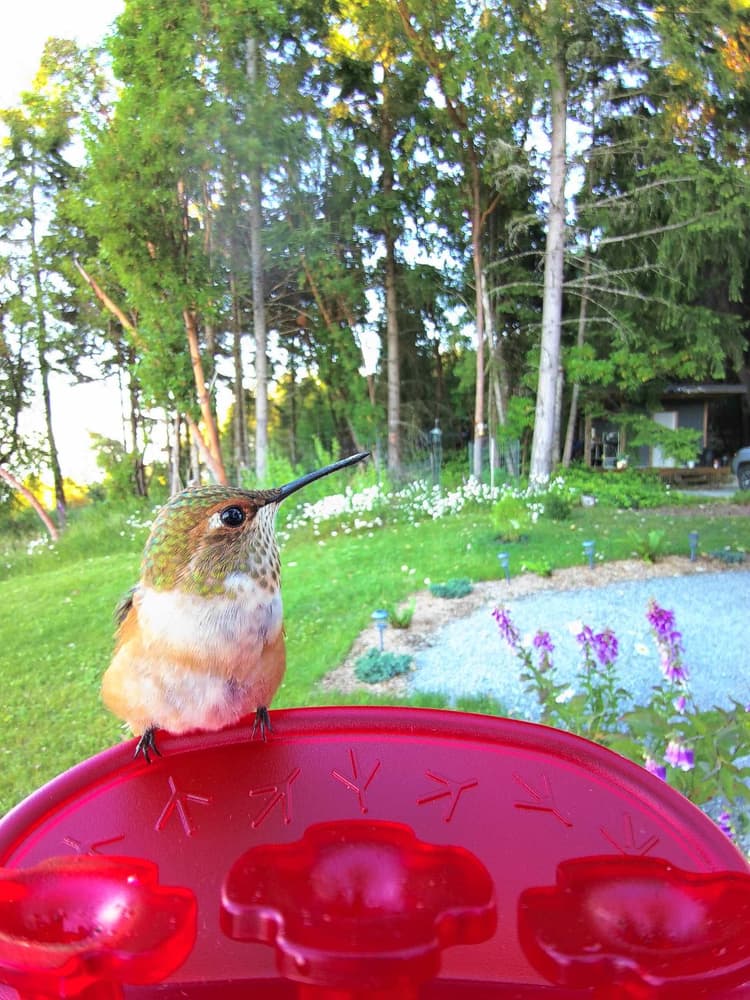
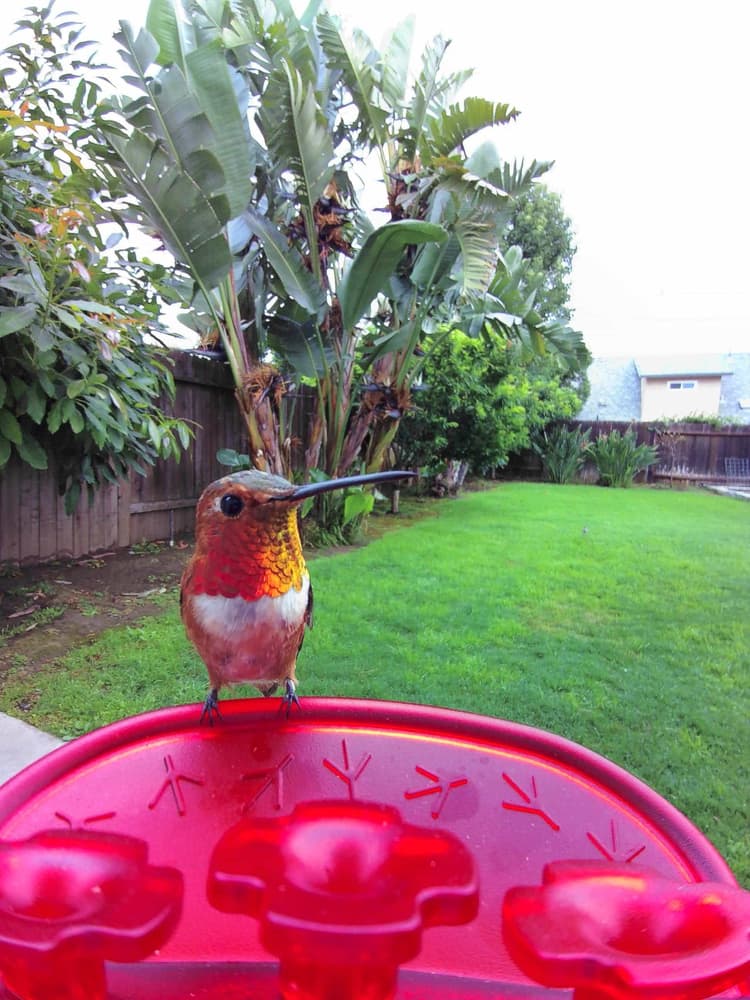
The adult male is distinguished by a bright coppery rufous color above with a dark throat that glistens red in favorable light. In contrast, females and young sport a green back, a spotted throat with an orange-buff wash on their sides and at the tail's base, presenting a more variegated look.
Juvenile
Juvenile rufous hummingbirds share similar physical attributes with the females, with a green back, a spotted throat, and an orange-buff wash on the sides and tail base. It is likely these colors help them blend into their surroundings for protection, since their eye-catching adult coloration is not yet developed.
Often mistaken for
Allen's Hummingbird vs Rufous Hummingbird
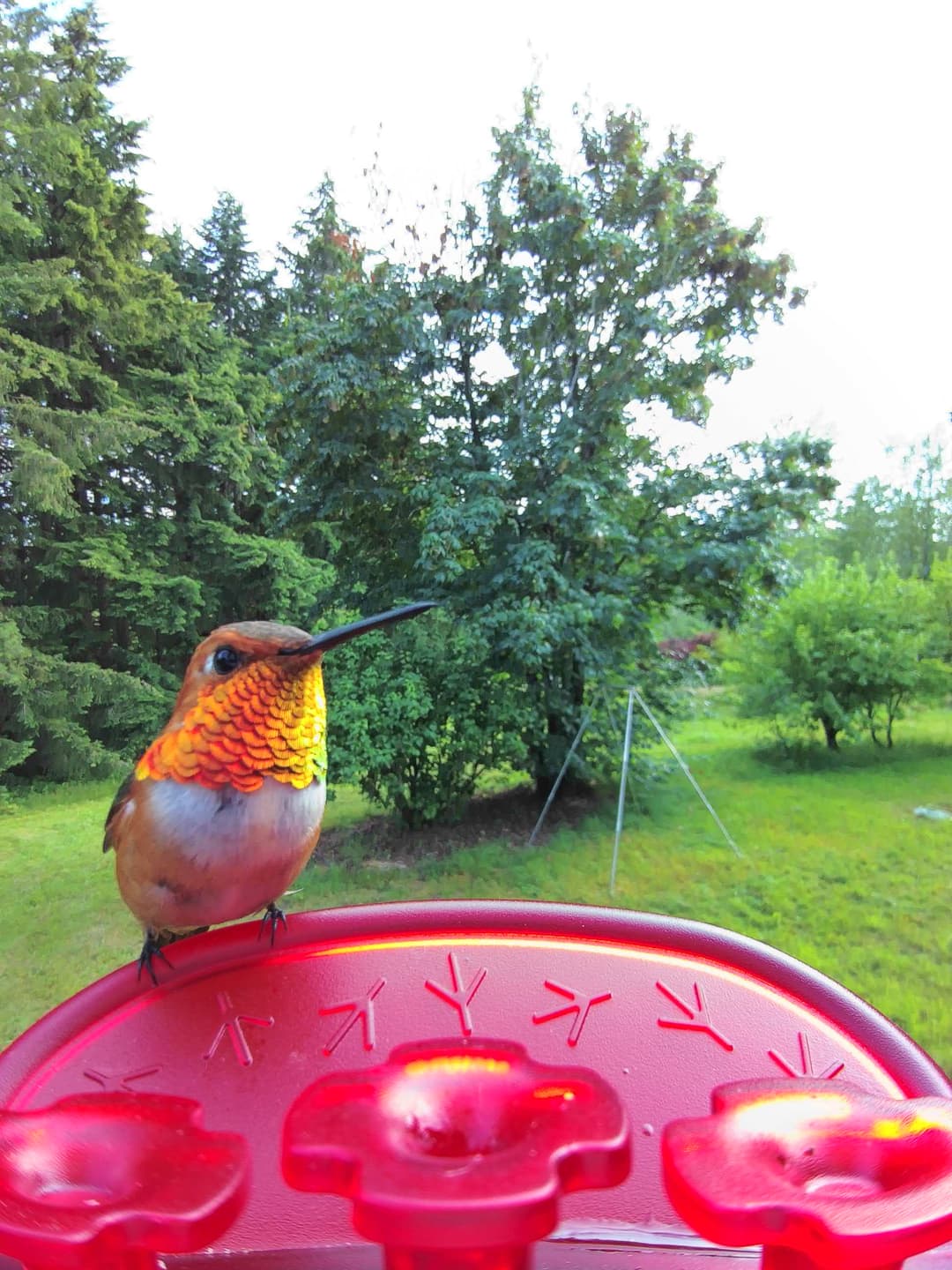
Rufous and Allen's males look similar with bright orange plumage, but Rufous has more extensive rufous coloring and a brighter back. Allen's shows a slightly greener back. Female Rufous birds have more rufous sides than Allen's.
Broad-Tailed Hummingbird vs Rufous Hummingbird
Rufous males are smaller with a bright orange belly compared to the Broad-Tailed's rosy throat and green body. Females can be even harder to distinguish but listen for Broad-Tailed's distinctive metallic trill in flight.
Calliope Hummingbird vs Rufous Hummingbird
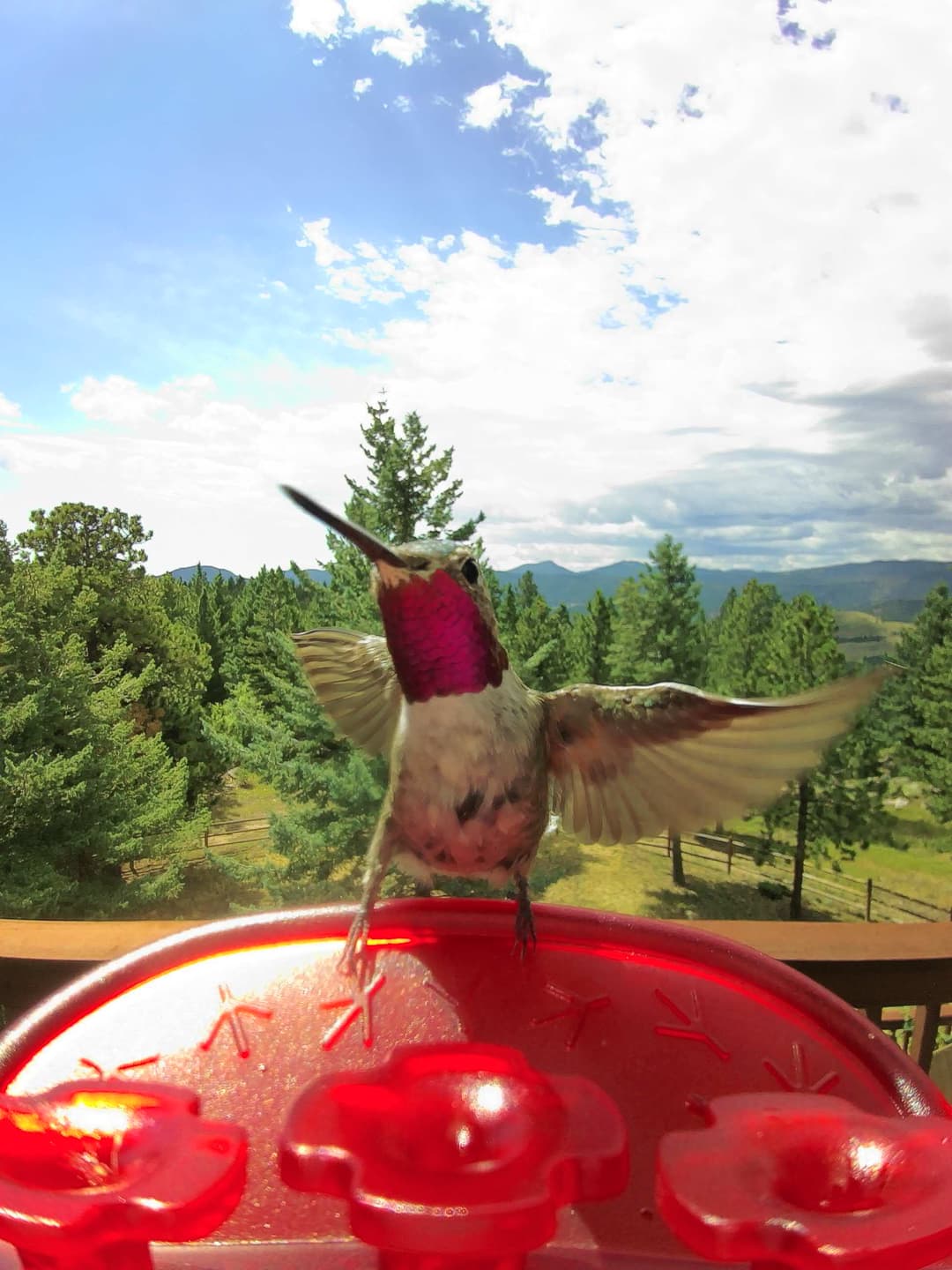
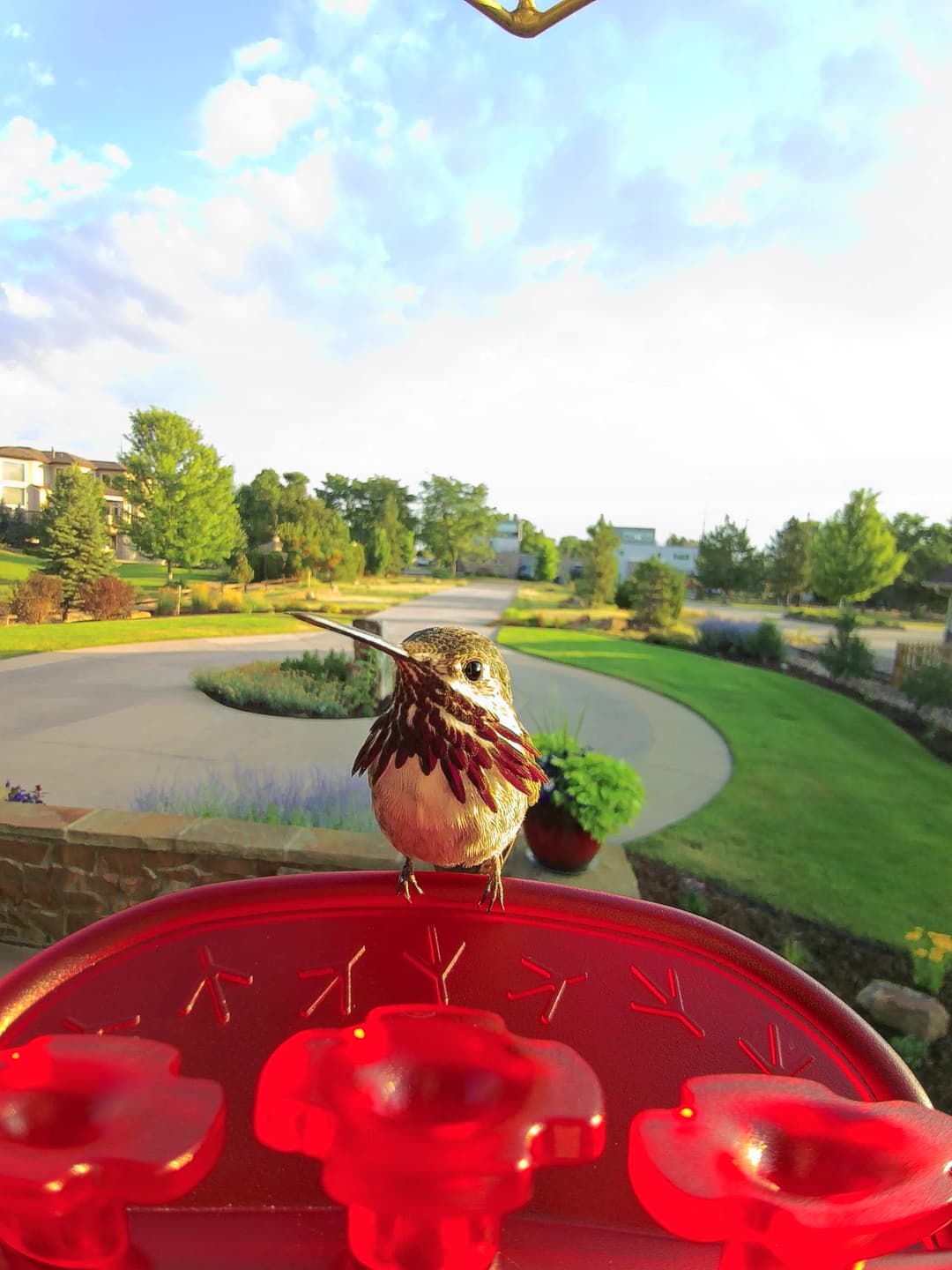
Rufous Hummingbirds are larger with orange coloring, whereas Calliope's males have distinct purple throat streaks on a smaller body. Females differ as Rufous is more orange, and Calliope is diminutive and paler.
Ruby-Throated Hummingbird vs Rufous Hummingbird
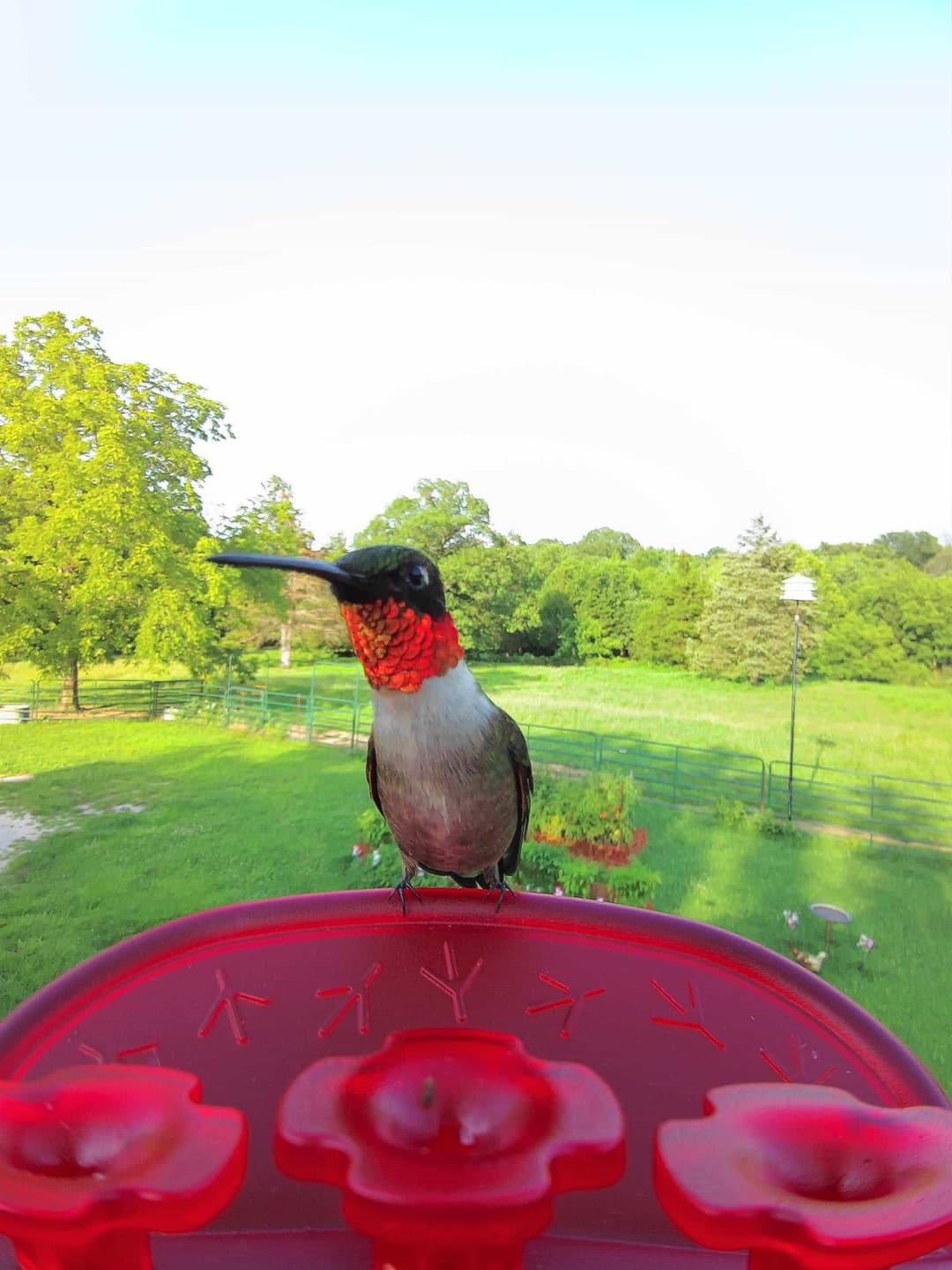
Rufous and Ruby-Throated have different throat colors; Rufous is orange, while Ruby-Throated has a sparkling red throat and greener back. Females of both species are challenging; note Rufous's orange hints.
Breeding and nesting habits of the rufous hummingbird
Mating behaviors
Male rufous hummingbirds perform a courtship display involving a steep U-shaped or vertical oval flight, accompanied by whining and popping sounds at the bottom of the dive. They may also buzz back and forth in front of a perched female. Males often mate with multiple females.
Nesting details
Nests are usually well-concealed within 3-30 feet above ground, typically in the lower part of coniferous trees, deciduous shrubs, or vines. The female builds a compact cup nest using grasses, moss, plant down, and spider webs, camouflaging the exterior with lichens and moss. Old nests may be refurbished and reused.
Eggs and chick-rearing
The female rufous hummingbird is responsible for incubating eggs and caring for chicks. She lays tiny white eggs and feeds the chicks a diet of nectar and small insects. The nesting site needs to be secure to protect the young from predators and environmental elements.
What does a rufous hummingbird like to eat?
Insects
Nectar
Sap
Natural diet
The rufous hummingbird primarily feeds on nectar and insects. It takes nectar from flowers and also feeds on tiny insects. Common flowers visited include red tubular flowers such as penstemons, red columbines, paintbrush, scarlet sage, and gilia.
Bird feeders
In addition to natural sources, the rufous hummingbird will also consume sugar-water mixtures provided in hummingbird feeders.
Attracting rufous hummingbirds with favorite snacks
Rufous Hummingbirds adore natural flower nectar and homemade sugar water. To boost appeal to these magnificent birds, consider planting flowers that attract hummingbirds. Red, pink, and orange flowers, especially those with tubular shapes, are the most popular. Additionally, you may replace the standard solution in the hummingbird feeder with a solution of one part white sugar to four parts water. Boil this solution before cooling and filling the feeder, this will help prevent yeast and mold growth. Bird Buddy seeds are a great choice to draw these birds as they are carefully chosen by experts for each season, ensuring they provide the best nutrients for the Rufous Hummingbirds.
Choosing the right feeder for rufous hummingbirds
Providing a feeder can bring Rufous Hummingbirds flocking to your garden. These vibrant creatures have a fondness for red so choosing a red-colored feeder can attractive them more. Additionally, opt for a feeder with 'bee guards' on the nectar outlets. This prevents bees or wasps from depleting the nectar meant for the hummingbirds. You can also go for feeders with perch rings which allow rest for the hummingbirds while they enjoy their meal.
Fun tricks to entice rufous hummingbirds to stay
If you want Rufous Hummingbirds to become regular visitors or perhaps stay longer, make your yard more tempting by providing fresh water in a misting sprinkler or shallow dish. Consider painting your yard furniture in bright, appealing colors that are known to attract hummingbirds, and grow native plants that not only provide food but also offer suitable spots for them to nest. They will also love a hummingbird swing - a simple perch from where they can guard their food source, or a nesting platform box.
What is the role of rufous hummingbirds in nature and how to protect them?
Conservation status
The rufous hummingbird remains widespread and common, but surveys indicate a steady decline in numbers over recent decades. Its dependence on finding specific conditions across various habitats throughout the year makes it particularly susceptible to climate change impacts. While not currently classified as endangered, this vulnerability underscores the importance of habitat conservation and climate change mitigation to ensure its survival. Key threats include habitat loss and shifting climate patterns affecting its migratory routes and breeding grounds. Conservation efforts focus on preserving critical habitats and monitoring population trends to prevent future decline.
Ecological role of rufous hummingbirds
Its role in the ecosystem
The Rufous Hummingbird plays a vital role in the ecosystem as both a pollinator and pest controller. With its feeding behavior of hovering over flowers and extending its long tongue to sip nectar, it facilitates the pollination of certain plant species, particularly red tubular flowers such as penstemons and red columbines - this helps in the continuation of these plant species. Additionally, the Rufous Hummingbird is invaluable in pest control. Its diet consists primarily of nectar but is complemented by tiny insects, which it skillfully captures midair or plucks from foliage. This diet not only sustains the bird but also helps to naturally control the insect population. Furthermore, insect remains from its eating habit may provide nutrients to the soil, contributing to soil fertility. Hence, the Rufous Hummingbird is a significant contributor to ecological health and biodiversity.
How to help protect rufous hummingbirds
Preservation tips
Habitat preservation strategies
Support the conservation of the rufous hummingbird by preserving and restoring their natural habitats. Avoid the use of pesticides that harm their food sources like flowers and small insects. Plant native flowering plants in your garden to provide food spaces for these birds. Keep undeveloped spaces, backyards, parks, and gardens safe and clean, preventing habitat fragmentation.
Community science initiatives
Participate in community science initiatives to track and monitor the rufous hummingbird population. Report sightings to local bird watching groups or online platforms. Promote awareness about the species and its conservation requirements in your community. This collective effort contributes to science and helps in planning more strategic conservation activities.