
White-Necked Jacobin
White-Necked Jacobin
Also known as: Great Jacobin, Collared Hummingbird
Florisuga mellivora

Quick Identification guide
Quick Identification guide
Male
- •
iridescent blue head and upper body, which can appear vibrant in sunlight
- •
distinctive white neck and belly, providing a striking contrast to the colorful head
- •
Medium-sized hummingbird with an all-dark, slightly forked tail
Female
- •
green upperparts with a white underside and faint streaking on the flanks
- •
Lacks the striking blue of the male but has an overall more muted coloration
- •
white-tipped tail feathers that set them apart from similar species

Description
These little guys are ingenious when it comes to nesting: their tiny nest is placed on a leaf, with another leaf acting as the roof! Though not otherwise territorial, they can get pretty feisty when food is concerned. Guess they just get hangry sometimes...
The white-necked jacobin can weigh between 6to9.5grams and be from11to12centimeters tall.
The white-necked jacobin typically lives for 5 to 7 years in the wild. Compared to other hummingbirds, this is on the higher end of the spectrum since most hummingbirds live for 3 to 5 years. Therefore, the white-necked jacobin has a relatively long lifespan by hummingbird standards.
Did you know?
Most popular questions about white-necked jacobin
How to recognise a white-necked jacobin?
General appearance
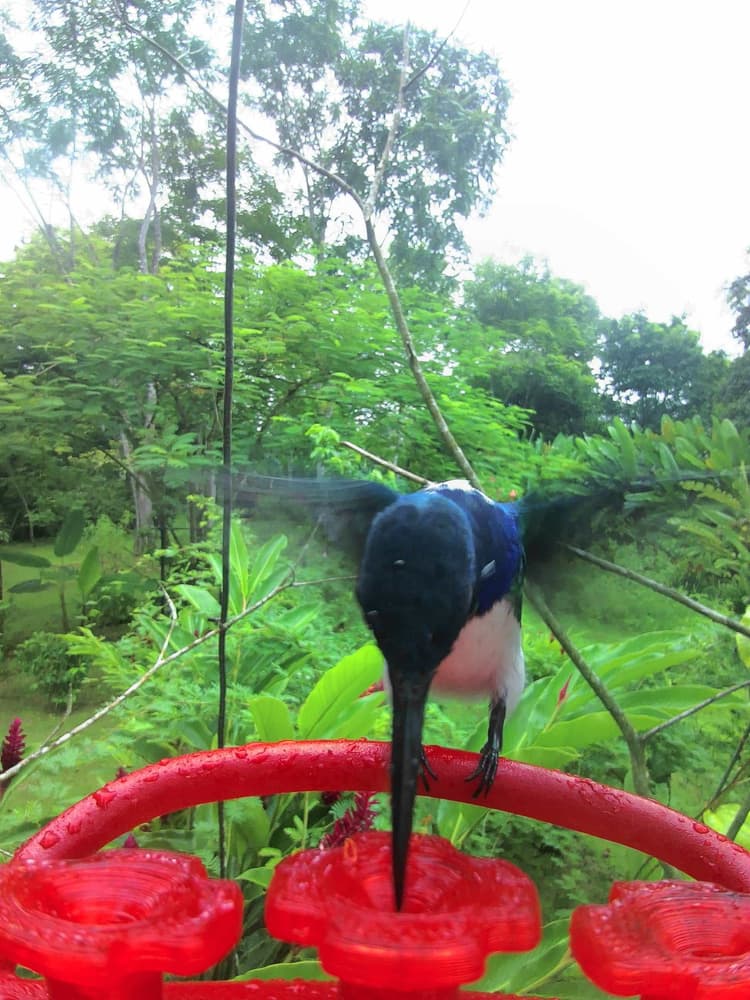
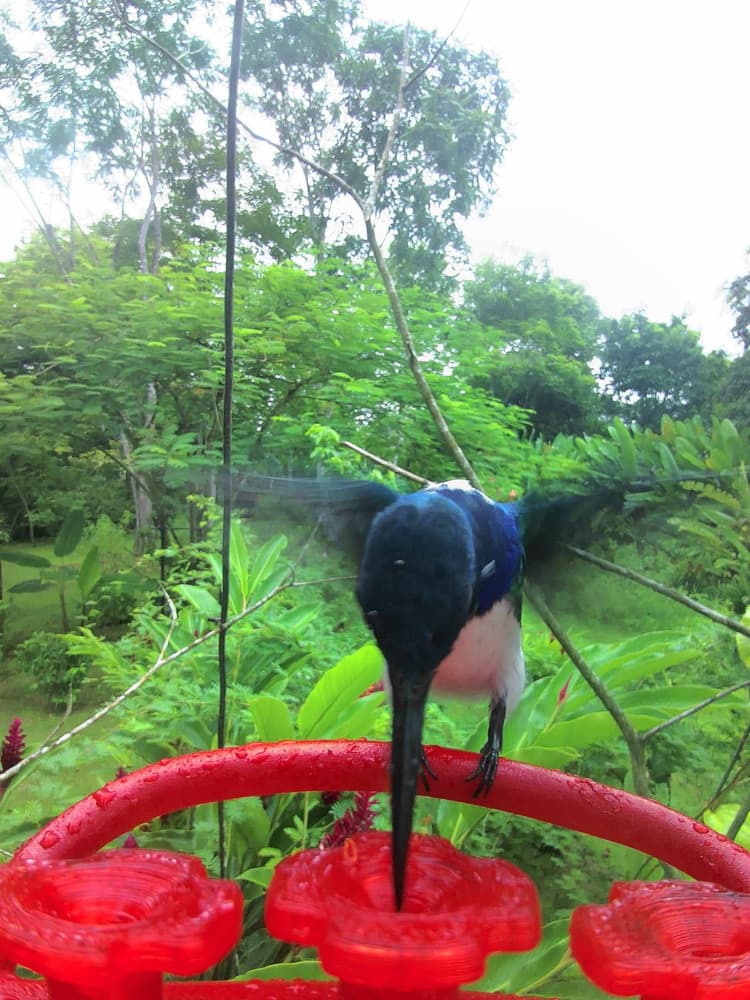
The white-necked jacobin is a hummingbird species known for its striking coloration. It has a bright, iridescent blue body, with contrasting pure white belly and tail feathers. The bird also showcases a distinguishing white band around its neck, lending it its common name.
Male vs female
The differences between males and females are significant in this species. Males have a deeper, more consistent blue upper body and a completely white lower half, with a clear demarcation at their neck. Females display a more modest appearance, possessing green upper parts, a less distinct white collar, and mottled blue on their lower half, looking somewhat gray.
Male White-Necked Jacobin
Juvenile
Juvenile white-necked jacobins, especially the males, look very similar to adult females. Over time, young males start to develop their unique adult colorations through a process called molting. This process can create a patchy, mixed appearance of green, blue, and white until they fully mature.
Breeding and nesting habits of the white-necked jacobin
Mating behaviors
The white-necked jacobin engages in vibrant courtship displays, where males showcase their iridescent plumage and perform aerial maneuvers to attract females.
Nesting details
Nests are built on slender branches or leaves, often in gardens or forests, using plant fibers and spider silk. Gardens can attract nesting by providing flowering plants and trees for shelter.
Eggs and chick-rearing
Females lay two white eggs per clutch, incubating them alone. The chicks are reared in a shallow cup-like nest for about 20 days, fed by the female until fledging.
What does a white-necked jacobin like to eat?
Insects
Nectar
Natural diet
The white-necked jacobin primarily feeds on nectar from a variety of flowering plants, which provides them with essential sugars for energy. They are also known to consume small insects and spiders, which supply necessary proteins. Their fast flight patterns facilitate quick and efficient feeding from multiple sources within their tropical habitat.
Bird feeders
At bird feeders, white-necked jacobins are commonly attracted to sugar water solutions, often placed in hummingbird feeders. They tend to prefer feeders with a consistent supply of fresh nectar, mimicking their natural nectar-rich diet. The feeders' vibrant colors are also known to attract these birds.
Choose their preferred treats
The white-necked jacobin birds are primarily nectar feeders. To attract them to your yard or feeder, set out a plentiful supply of Bird Buddy seeds. These seeds are carefully selected by experts for the season, providing the perfect blend of nutrients that these birds crave. Adding a hummingbird nectar feeder might also prove effective in enticing these beauties.
Provide the right feeder
Choose a feeder that's easy for the white-necked jacobin to access. They prefer feeders that are tube-shaped with feeding ports at the bottom. Ensure it is bright-colored, preferably red or orange, as these birds are attracted to vibrant colors. Once you have one, hang it in a shaded area as they prefer cooler places to feed.
Create a welcoming environment
In addition to food, white-necked jacobins are also attracted to water, so consider adding a birdbath or a water fountain into your garden. Planting flowers that they particularly relish like hibiscus, lilies and other brightly colored flowers can increase the chances of their visit. These birds are naturally curious, so fun additions like shiny wind chimes or moving garden decor could pique their interest and encourage them to explore.
Sing them a song
If you have an music instrument, use it. White-necked jacobins are big fans of melody and might be tempted to join in for a sing-along. If you don't play an instrument, playing gentle bird song recordings can also achieve the same result.
Where can you find white-necked jacobins?
Primary habitat
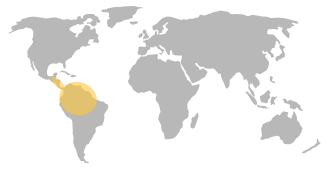
White-necked Jacobins typically inhabit tropical rainforests and moist lowland forests. They prefer areas with lush vegetation and heavy rainfall.
Additional range
They may also be found in human-altered environments such as plantations, gardens, and suburban areas. The bird's range extends from Mexico to Colombia and Venezuela.
Do they migrate?
The white-necked jacobin is a non-migratory species, meaning it typically stays in its range year-round. This hummingbird is found in a variety of habitats across its range in the Neotropics, which includes southern Mexico through Central America to western Ecuador, northern Bolivia, and parts of Brazil. It occupies both lowland and foothill regions, thriving in diverse environments such as forest edges, gardens, plantations, and coastal mangroves. Due to its non-migratory behavior, the white-necked jacobin does not engage in the extensive seasonal migrations seen in some other hummingbird species. Instead, it remains within its established territories, although it may engage in some altitudinal movements or regional shifts in response to changes in local food availability or breeding conditions. This stability in location allows the white-necked jacobin to maintain its position within its ecological niche, feeding on nectar from a variety of flowering plants and occasionally catching insects in flight. Its territorial behavior, bright plumage, and acrobatic flight make it a notable presence in the ecosystems it inhabits.
What is the role of white-necked jacobins in nature and how to protect them?
Conservation status
The white-necked jacobin is classified as "Least Concern" on the IUCN Red List, indicating it is relatively common with a stable population. Found in a range of habitats from Mexico to Brazil, this hummingbird adapts well to diverse environments, including gardens and plantations. Major threats include habitat destruction due to deforestation and land conversion. Key conservation efforts focus on preserving natural forest habitats and promoting biodiversity-friendly practices in agricultural areas. However, its adaptability currently supports stable population levels, and there is no immediate risk of significant decline.
Ecological role of white-necked jacobins
Its role in the ecosystem
The white-necked jacobin is a hummingbird species with notable ecological significance. It’s a vital participant in the ecosystem as a pollinator, contributing to the health and diversity of flora. By transferring pollen between plants, it helps in their reproduction process. As for pest control, while the white-necked jacobin's diet mainly consists of nectar, it occasionally catches small insects and spiders, providing natural pest control and maintaining the balance within the ecosystem. Additionally, while it is not directly linked to seed dispersal, its role as a pollinator indirectly supports this function of some plants. Its contribution towards pest control and pollination demonstrates the interconnectedness of species within ecosystems, underlining the importance of every creature's role in supporting biodiversity.
How to help protect white-necked jacobins
Preservation tips
Habitat preservation strategies
To conserve the white-necked jacobs, preservation of their natural habitats is crucial. These birds thrive in forests, therefore conservation organizations should aim stronger policies towards deforestation. Protection of existing parks, reserves, or forested areas where their population is known to exist is vital. Also, rehabilitation of destroyed habitats by planting native plants can encourage their return. Integrate sustainable land-use policies, promoting agroforestry ensuring both the bird's survival and the locals’ livelihood.
Community science initiatives
Community science initiatives play a key role. Organize educational programs to sensitize the community about the importance of these birds in the ecosystem. Citizen scientists should be trained to observe, record, and report the presence or behaviors of this species for better monitoring. Encourage local participation in 'bird-friendly' practices like regulated pesticide use. Create platforms for locals to report illegal activities like hunting or destruction of habitats. This inclusivity can fuel conservation efforts.