
Black-Chinned Hummingbird
Black-Chinned Hummingbird
Archilochus alexandri


Quick Identification guide
Quick Identification guide
Male
- •
iridescent green back and crown contrasting with a white breast
- •
Distinctive black throat bordered by a thin strip of iridescent purple
- •
Long, straight, and slender bill suited for nectar feeding
Female
- •
dull green upperparts with a grayish-white underparts
- •
Absence of the male's black throat, featuring a pale and plain throat area
- •
Similar long, straight bill as the male
What does a black-chinned hummingbird sound like?
The black-chinned hummingbird exhibits a variety of vocalizations. Its typical calls consist of a low 'tup'. It also exhibits a pattern flat call, used in different contexts. Other vocalizations include a 'buzz', a lively 'chirp/chip' or a distinct 'trill'. These different sounds constitute this hummingbird's complex vocal communication.


Description
Did you know a black-chinned hummingbird's eggs are the size of a coffee bean? At a resting heart rate of 480 beats per minute, you’d think coffee is exactly what this teeny bird has had too much of! Their chin isn't all black; it has a purple iridescent strip that, just to add to the flashy style, you can only see if the light is just right. Hear a humming? That's just the sound their wings make!
The black-chinned hummingbird can weigh between 2.5to5.1grams and be from9.5to10.5centimeters tall.
The black-chinned hummingbird typically has a lifespan of up to 10 years. Compared to other related species, this is relatively long, as most hummingbirds average three to five years. These birds' longevity is largely due to their agility and fast flight speed, which allow them to evade predators effectively, although juvenile mortality rates are high.
Where can you find black-chinned hummingbirds?
Based on Birdbuddy sighting data. Bubbles represent reported bird sightings over the past years.
Embed this mapPrimary habitat
The black-chinned hummingbird breeds in a variety of semi-arid, semi-open habitats, from suburbs to stream sides and brushy areas.
Additional range
In the southwest, it thrives along dense desert washes and rivers. Post-breeding, it can move to higher mountain elevations.
Do they migrate?
The black-chinned hummingbird is strictly migratory, meaning it does not stay in one place year-round. This species typically arrives in its breeding range across the western United States in the spring and departs in the fall. During the winter months, almost all black-chinned hummingbirds migrate to Mexico, where they find warmer climates and suitable feeding conditions. Their migration route primarily involves moving between North America and Central America. As they travel, they may stray eastward in the fall, and on occasion, some individuals might winter along the Gulf Coast, although this is less common. The black-chinned hummingbird's migratory behavior is driven by the need to find optimal conditions for feeding and breeding. In the spring, they head north to breed in areas that offer abundant flowers and insects, while in the fall, the move back to Mexico ensures they can avoid the cold and shortages of food during the winter months in their breeding range. This cycle allows them to take advantage of seasonal resources and environmental conditions in different regions throughout the year.
Did you know?
Most popular questions about black-chinned hummingbird
How to recognise a black-chinned hummingbird?
General appearance
The Black-chinned Hummingbird is about the size of a Sparrow, measuring approximately 3 3/4 inches (10 cm). Its most distinguishing colors are black, green, purple, and white. The bird's wings are narrow, rounded, and short, and its tail is multi-pointed, notched, rounded, and square-tipped.
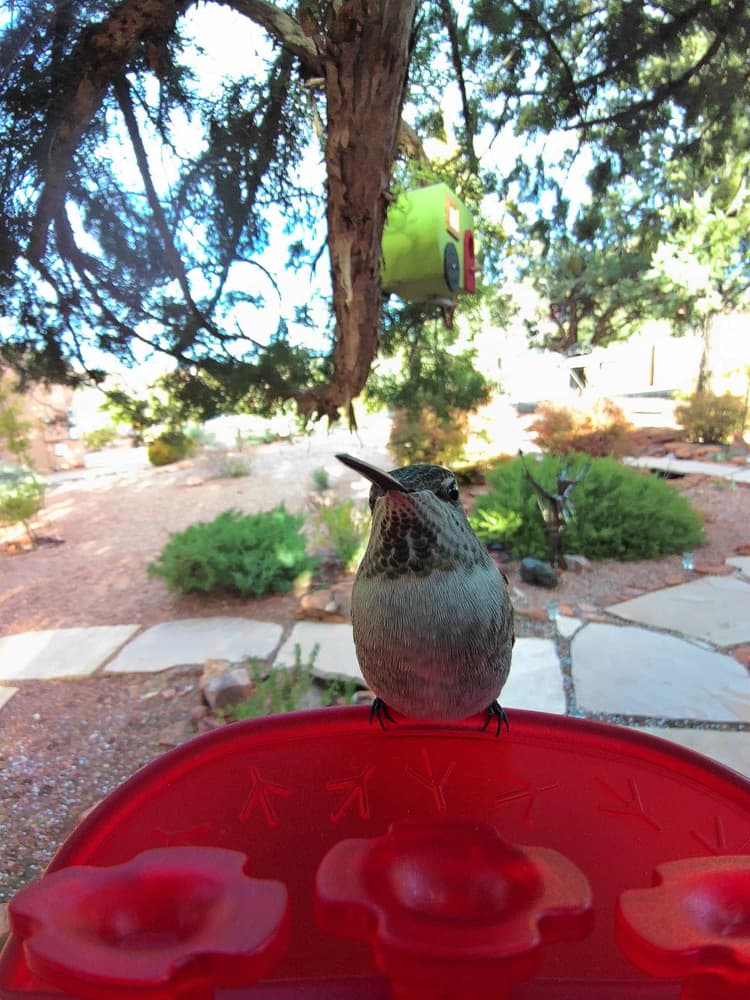
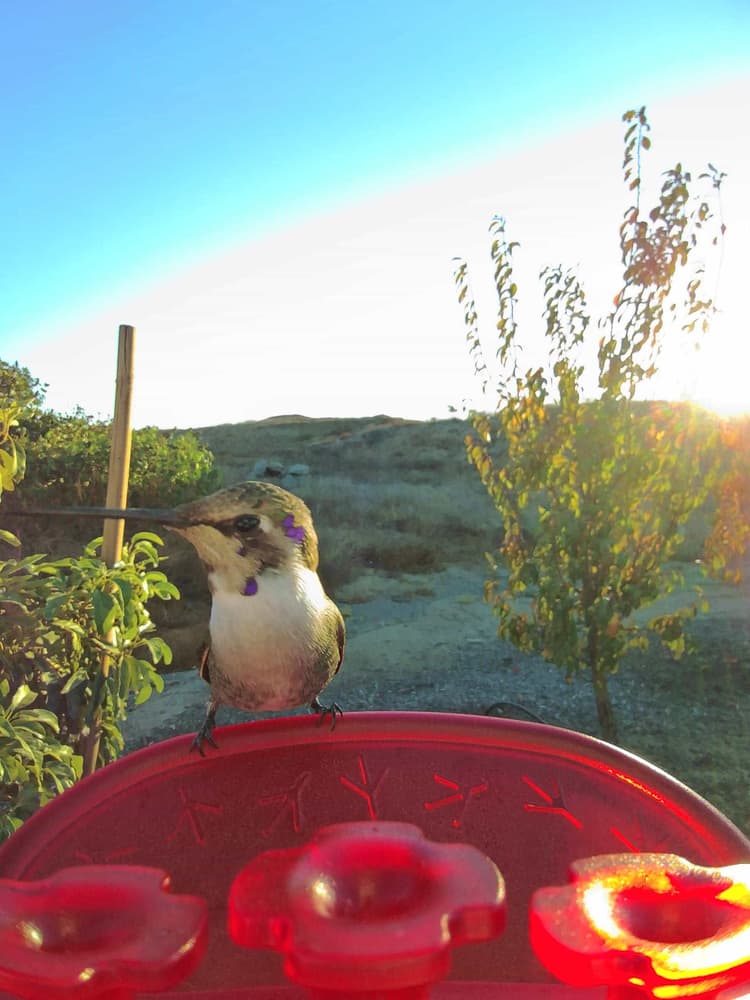
Male vs female
The male's distinguishing feature is a black chin which is difficult to see. Below the black chin, there is a more discernible white collar and a purple band. The female Black-chinned Hummingbird, on the other hand, is nearly identical to the female Ruby-throated Hummingbird. Distinguishing features include a long bill, pale underparts, and specific callnotes.
Juvenile
No specific information is available for the appearance of juvenile Black-chinned Hummingbirds. Considering hummingbirds as a species, juveniles often resemble the adult female until they achieve full adult plumage. Keep an eye out for the specific characteristics of the species, such as coloration and callnotes, when trying to identify juveniles.
Often mistaken for
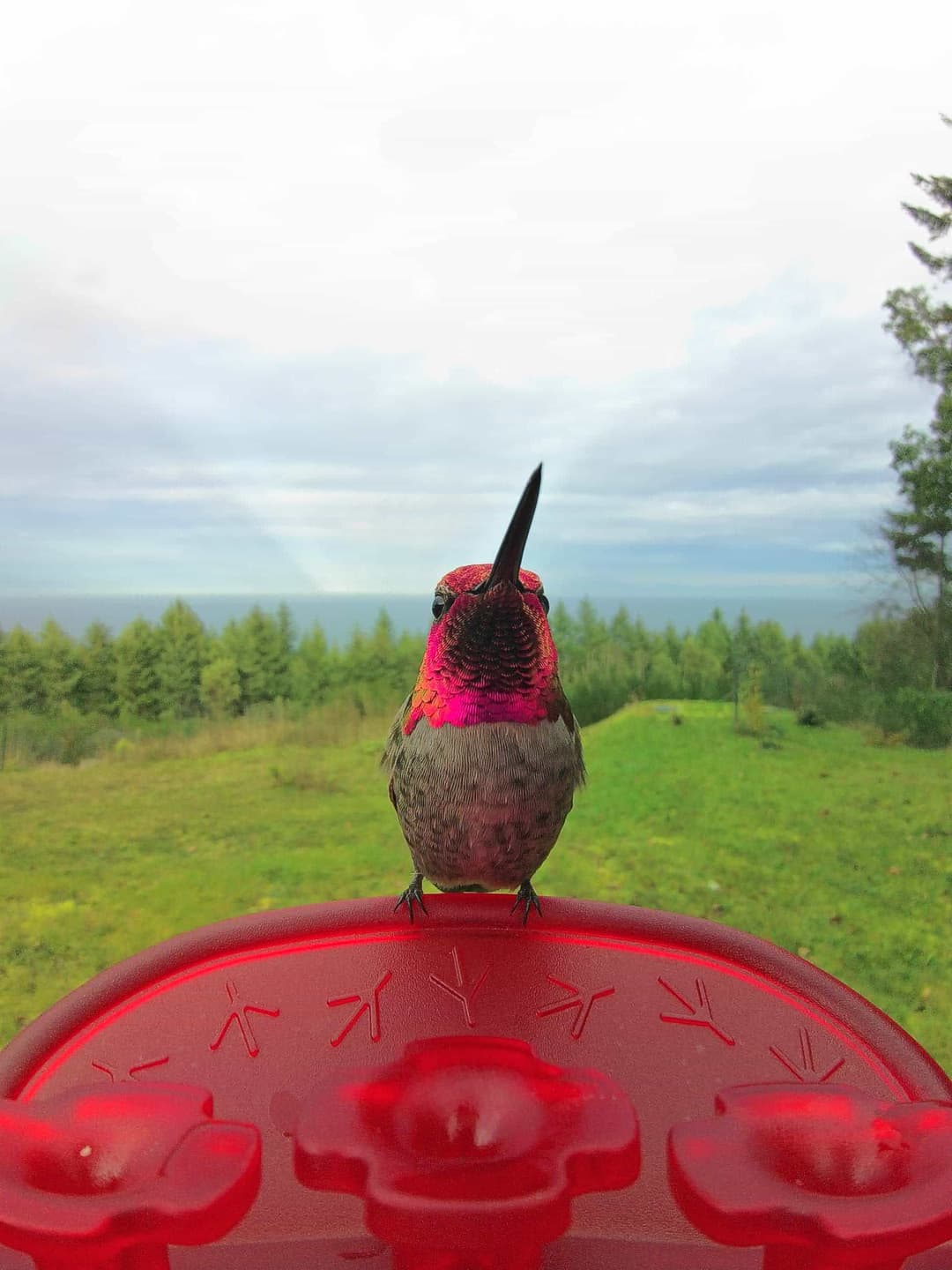
Anna's Hummingbird vs Black-Chinned Hummingbird
Black-Chinned Hummingbirds exhibit a distinct purple-black throat, while Anna's have a red-pink iridescent gorget. Anna's are bulkier and often show a greenish hue on the crown and back.
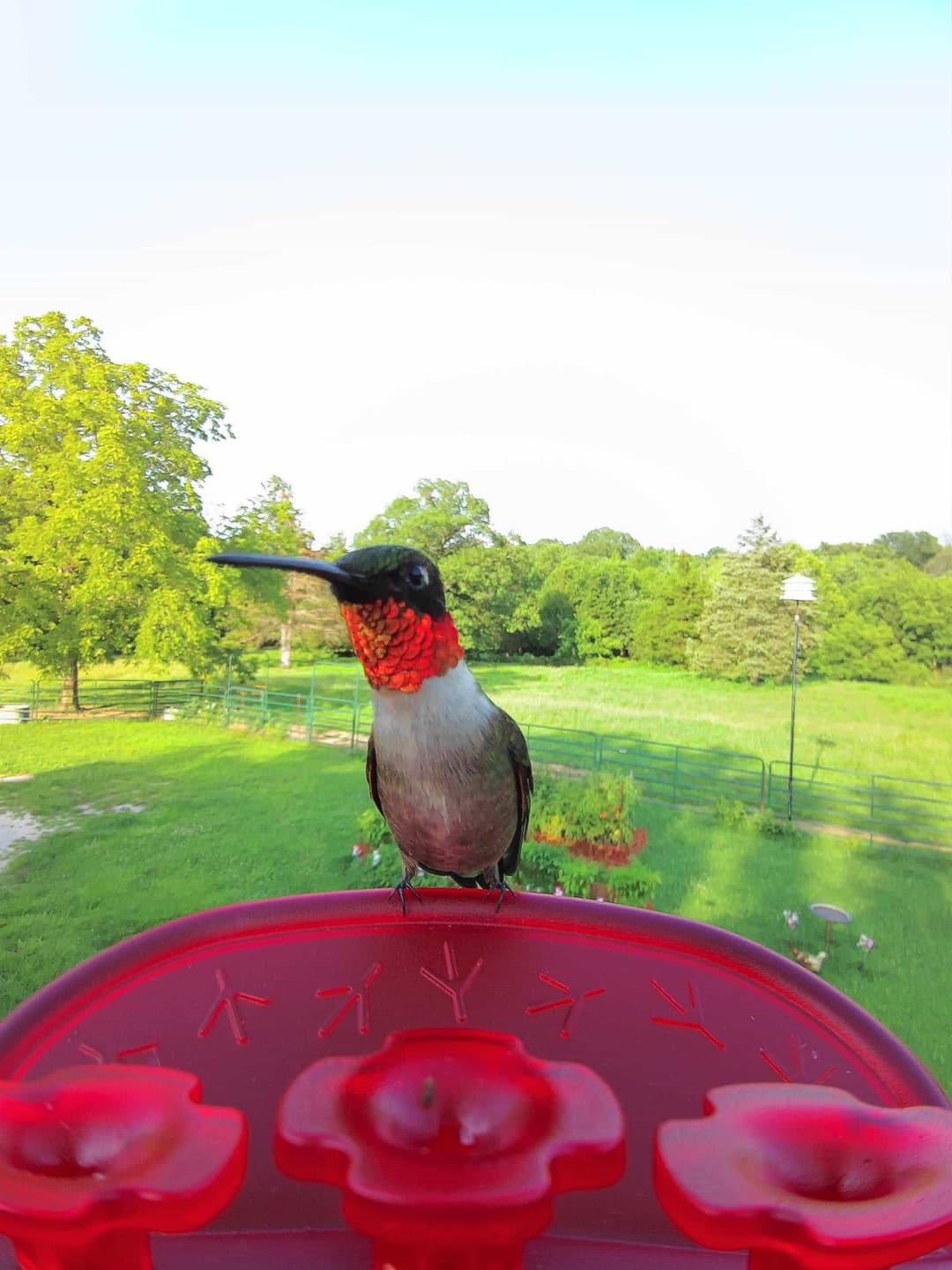
Ruby-Throated Hummingbird vs Black-Chinned Hummingbird
Ruby-Throated Hummingbirds have a vibrant red throat, contrasting with the Black-Chinned's purple-black one. They also have a slightly shorter bill and are primarily found east of the Rockies.
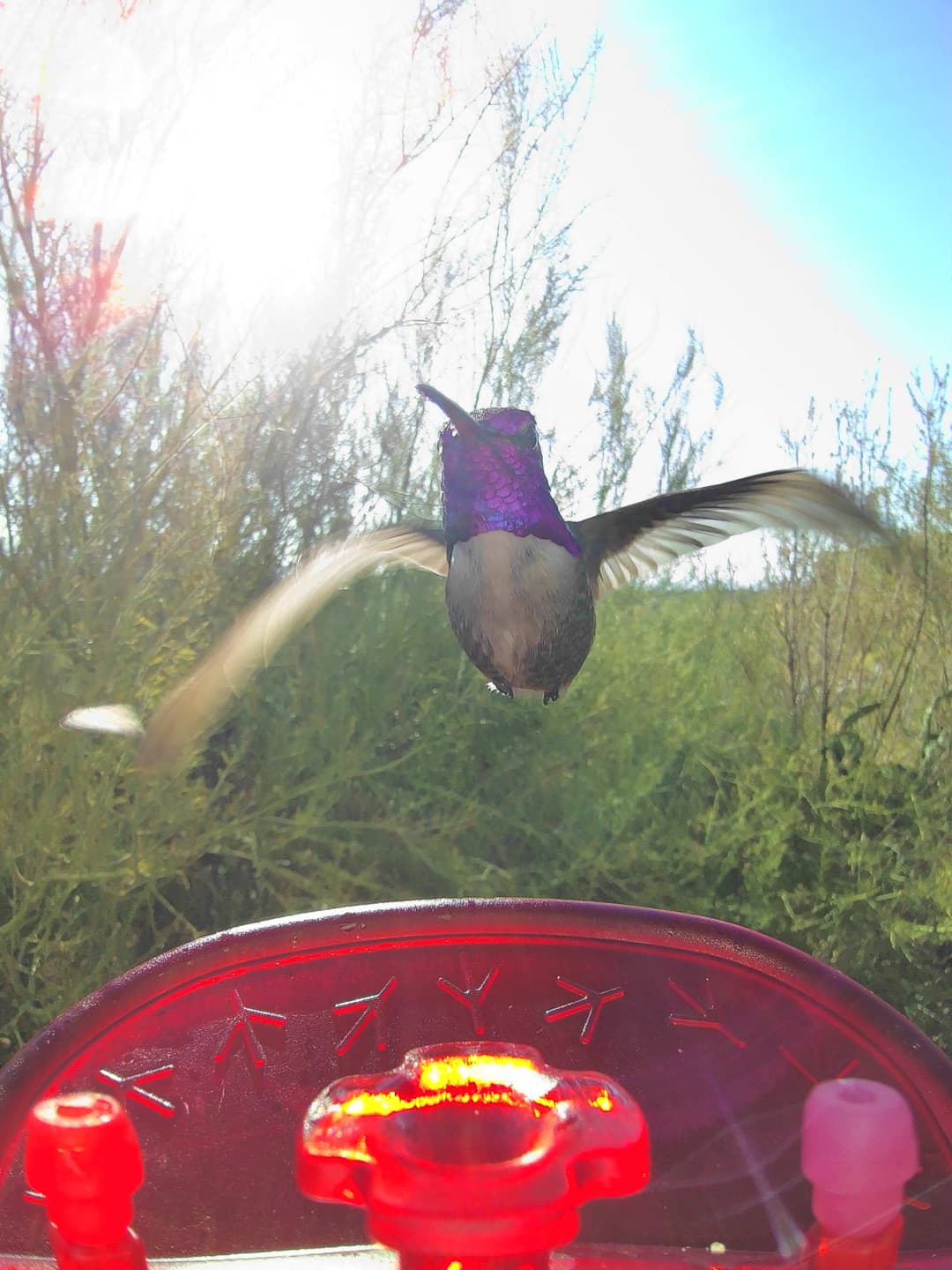
Costa’s Hummingbird vs Black-Chinned Hummingbird
Costa's Hummingbirds feature a vivid purple crown and throat, extending in streaks, differing from the Black-Chinned's subtle coloration. They are mostly found in desert habitats.
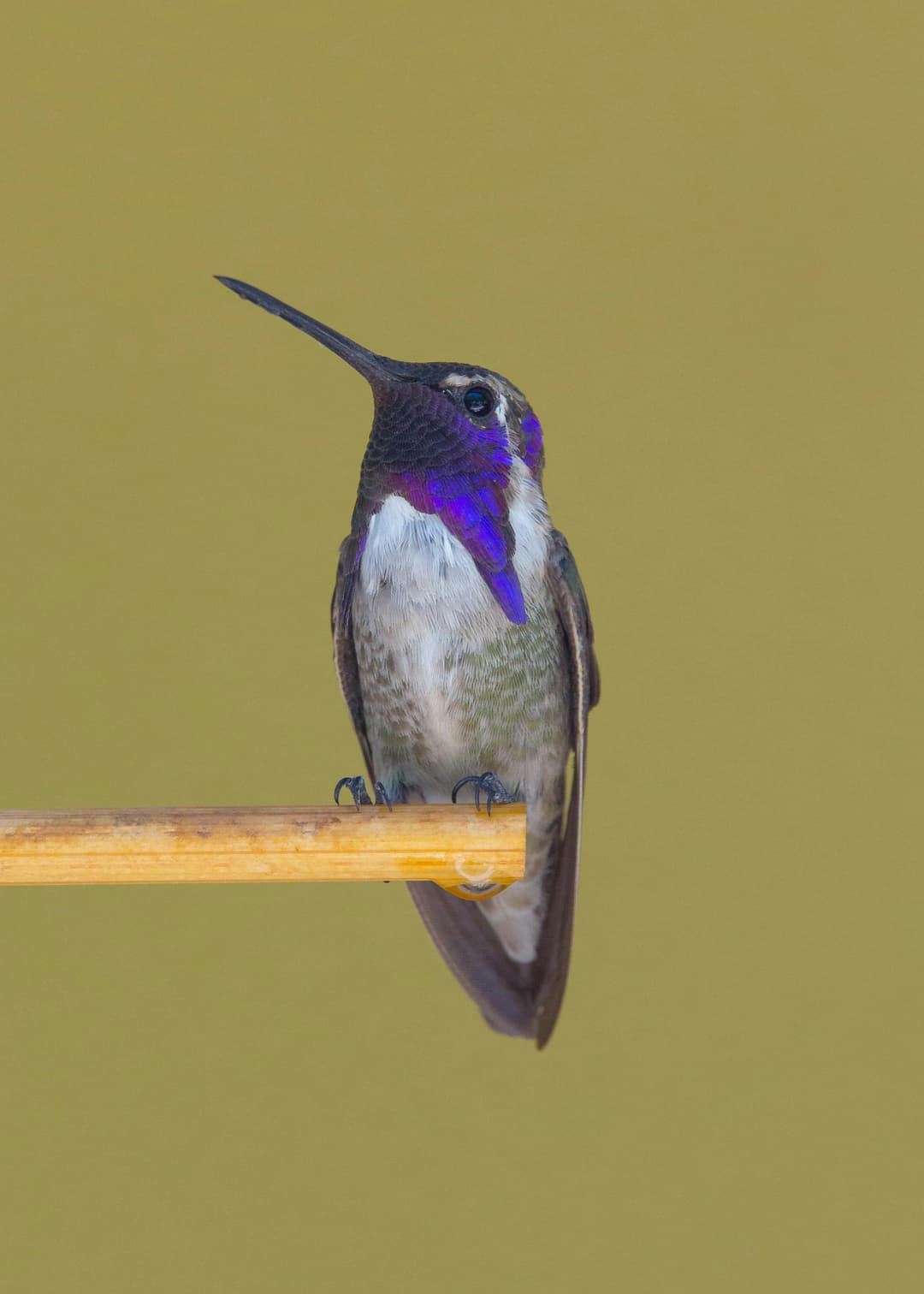
Lucifer Hummingbird vs Black-Chinned Hummingbird
Lucifer Hummingbirds are recognizable by their curved bill and magenta gorget. Their tails are longer and more forked than the Black-Chinned's. They prefer arid regions over riparian zones.
Breeding and nesting habits of the black-chinned hummingbird
Mating behaviors
During courtship, the male performs a pendulum display, flying in a wide U-shaped arc while making distinctive whirring sounds during each dive. Additionally, males buzz back and forth in short flights in front of the perched female as part of the courtship ritual.
Nesting details
Nesting sites are typically located in trees or shrubs, usually 4-8 feet above the ground but can be up to 30 feet high. Nests are placed on horizontal or diagonal branches. The female builds a compact cup-shaped nest using grasses, plant fibers, and spider webs, lining it with plant down. The exterior is camouflaged with lichens, dead leaves, and debris.
Eggs and chick-rearing
The female lays two eggs per clutch. She incubates the eggs and takes primary responsibility for feeding the chicks once they hatch. Chick rearing involves frequent feeding trips where the female provides small insects and nectar to the growing chicks.
What does a black-chinned hummingbird like to eat?
Insects
Nectar
Spiders
Natural diet
The black-chinned hummingbird primarily feeds on nectar obtained from various flowers. In addition to nectar, its natural diet includes tiny insects, which provide essential proteins and nutrients not found in nectar alone.
Bird feeders
At bird feeders, the black-chinned hummingbird often consumes sugar-water mixtures which mimic the nectar found in flowers. These feeders provide an additional food source, especially when flowers are less abundant.
Favourite snacks for black-chinned hummingbirds
Black-chinned Hummingbirds absolutely adore feeding on nectar, and they often prefer red or orange flowers. You can tempt them by growing native flowering plants in your garden such as honeysuckle and crimson sage. They’re also partial to tree sap, small insects and spiders. Using a nectar solution in your feeder can also attract them.
Choosing the right feeder and fun tricks to grab their attention
For Black-chinned Hummingbirds, tube feeders with red or orange elements are ideal. You can even enhance the attraction by tying a red ribbon around your feeder. A fun trick to encourage them to visit could be to place a bath nearby. Hummingbirds simply adore water! A shallow container with gently running water will make an irresistible bathing and drinking spot for them.
Why bird buddy seeds are the best choice
Not only are Bird Buddy seeds expertly chosen for the season, but they also contain an exciting variety loved by hummingbirds. The mix prompts a healthy diet and keeps our feathered friends happy and chirpy, rendering Bird Buddy seeds as top-notch novelty. Tempting the hummingbirds has never been easier with Bird Buddy!
What is the role of black-chinned hummingbirds in nature and how to protect them?
Conservation status
The black-chinned hummingbird is widespread and common, with a stable population, indicating it is not currently vulnerable or endangered. Its conservation status reflects a lack of immediate threats, allowing it to maintain its numbers across its habitat. Key conservation efforts focus on preserving natural habitats and promoting native plant growth to ensure adequate food sources. While there are no significant threats at present, habitat destruction and climate change could pose future risks. Monitoring these factors is crucial to maintaining its stable status.
Ecological role of black-chinned hummingbirds
Its role in the ecosystem
The Black-chinned Hummingbird has a few key roles in its ecosystem. As primarily nectar feeders, they play a crucial part in pollination by carrying pollen from one flower to another as they feed, thus contributing to plant reproduction. Their feeding method allows them to pollinate flowers that other larger bird species, or insects might not reach. Also, their diet includes small insects, which involves an aspect of pest control to the ecosystem. The hummingbird prey upon small insects, including those harmful to the plant life in their habitats, regulating their populations. Though they don't have a direct role in seed dispersal due to their diet, their pollination activities indirectly support the growth of new plants, which would eventually bear seeds. While feeding on sugar-water mixtures in hummingbird feeders, they potentially influence human engagement with nature promoting interest and conservation. Lastly, their nesting habits may aid in the breakdown and redistribution of plant materials and nutrients.
How to help protect black-chinned hummingbirds
Preservation tips
Habitat preservation strategies
Safeguard the black-chinned hummingbird by protecting and restoring its natural habitats. Conserve areas rich in flowers, particularly, red tubular ones, this bird's primary food source. Maintain healthy deciduous and riparian woodlands, as these hummingbirds find shelter and breed there. Regulatory measures restricting deforestation or habitat destruction can significantly contribute to preservation.
Community science initiatives
Encourage community involvement in scientific research efforts concerning the black-chinned hummingbird. Citizens can participate in monitoring programs, recording behavioral data, and tracking migration patterns. Adopt community educational programs to spread awareness about the importance of these birds to local ecosystems. Creating bird-friendly backyards, planting native flowers, and establishing feeders can also be promoted through local conservation campaigns.