
Allen's Hummingbird
Allen's Hummingbird
Selasphorus sasin


Quick Identification guide
Quick Identification guide
- •
The coppery-orange flanks and bright iridescent reddish-orange throat set Allen's Hummingbird apart
- •
Notice its slim, slightly curved black beak, perfect for sipping nectar
- •
The back and crown are a bronze-green color, creating a vivid contrast with its fiery throat and flanks
What does an Allen's hummingbird sound like?
The Allen's hummingbird has a distinctive chirping pattern that is both flat and undulating. Typical vocalizations include a soft, low "chup" sound, along with an excited "zeeee chuppity-chup". These calls are typically characterized as a chatter or chirp/chip. The bird's song is noted for its lively and energetic tone, often seen as an identifying feature of this hummingbird species.


Description
Did you know these guys eat three times their body weight in food every day? With all that eating, it’s a good thing they can remember which flowers are ready to eat and where they saw feeders when migrating. They are tough customers, and known as the most aggressive of all hummingbirds.
The Allen's hummingbird can weigh between 2to4grams and be from7.5to9centimeters tall.
Allen's hummingbirds typically live up to 5 years. Compared to related species like the Ruby-throated hummingbird, which has a similar lifespan of 5-6 years, and the Black-chinned hummingbird, known to live over 10 years, the Allen's hummingbird has a relatively average lifespan. These lifespans are subject to factors such as predation, disease and food availability.
Where can you find Allen's hummingbirds?
Based on Birdbuddy sighting data. Bubbles represent reported bird sightings over the past years.
Embed this mapPrimary habitat
The Allen's hummingbird prefers semi-open habitats such as brushy canyons, parks, gardens, open oak woods, and well-wooded suburbs. It can also be found in city parks.
Additional range
The bird migrates to Mexico's foothills and mountain forests during winter. Additionally, it visits high mountain meadows in late summer.
Do they migrate?
The Allen's hummingbird exhibits both migratory and nonmigratory behaviors, depending on the population. One subspecies, found on California's Channel Islands and parts of the adjacent mainland, such as the Palos Verdes Peninsula, is nonmigratory and stays in place all year. In contrast, the rest of the Allen's hummingbird population migrates seasonally. The migratory population winters as far south as southern Mexico. In late winter, these hummingbirds begin their northward movement up the Pacific Coast. During this migration, key stopping points likely include coastal areas where flowers and insects are abundant, providing essential nourishment for their journey. By late summer, at least some individuals reverse their course, moving southward through the mountains, navigating various terrains and microclimates, until they reach their wintering grounds in southern Mexico. This complex pattern of migration showcases the species' adaptability to different habitats and environmental conditions, allowing Allen’s hummingbirds to optimize their living conditions throughout the year, whether they remain resident in Southern California or undertake their remarkable migratory journey.
Did you know?
Most popular questions about Allen's hummingbird
How to recognise an Allen's hummingbird?
General appearance
The Allen's hummingbird is a small species, measuring between 3-3 1/2" (8-9 cm), roughly the size of a Sparrow. The bird displays a variety of colors including black, green, orange, red, and white. Its physical features consist of a multi-pointed, rounded, and wedge-shaped tail, with narrow, rounded and short wings.
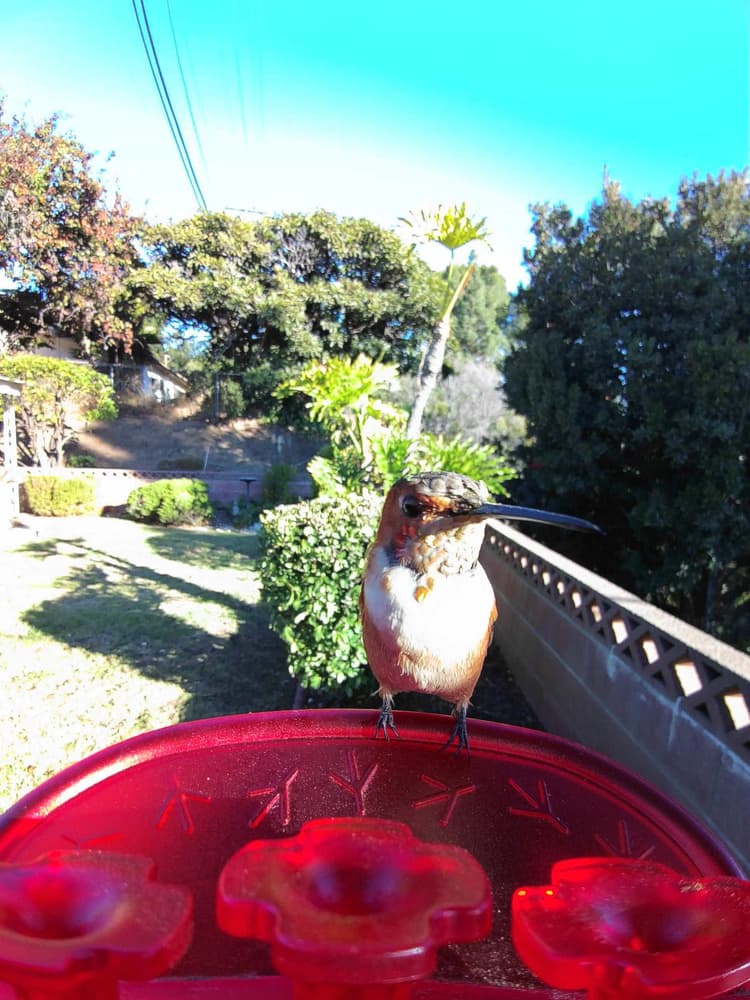
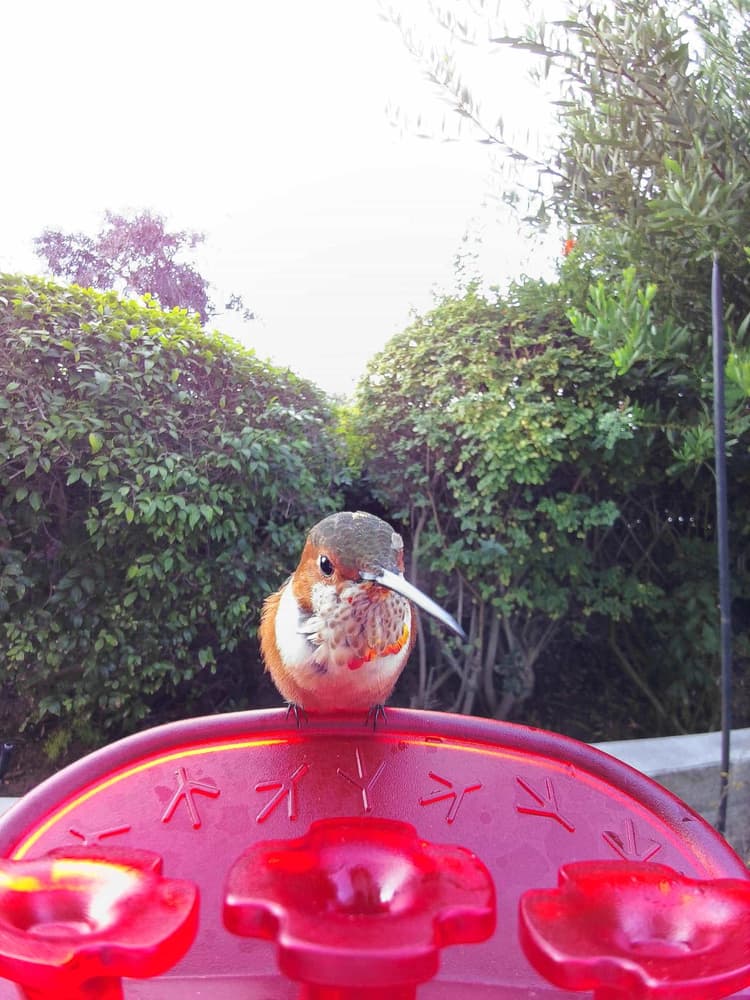
Male vs female
Mature males have coloration similar to a Rufous Hummingbird, with the notable distinction of a green back. However, Rufous Hummingbirds can also display green backs making identifying Allen's challenging outside of their typical range. The females and young of the species are completely identical to their Rufous counterparts.
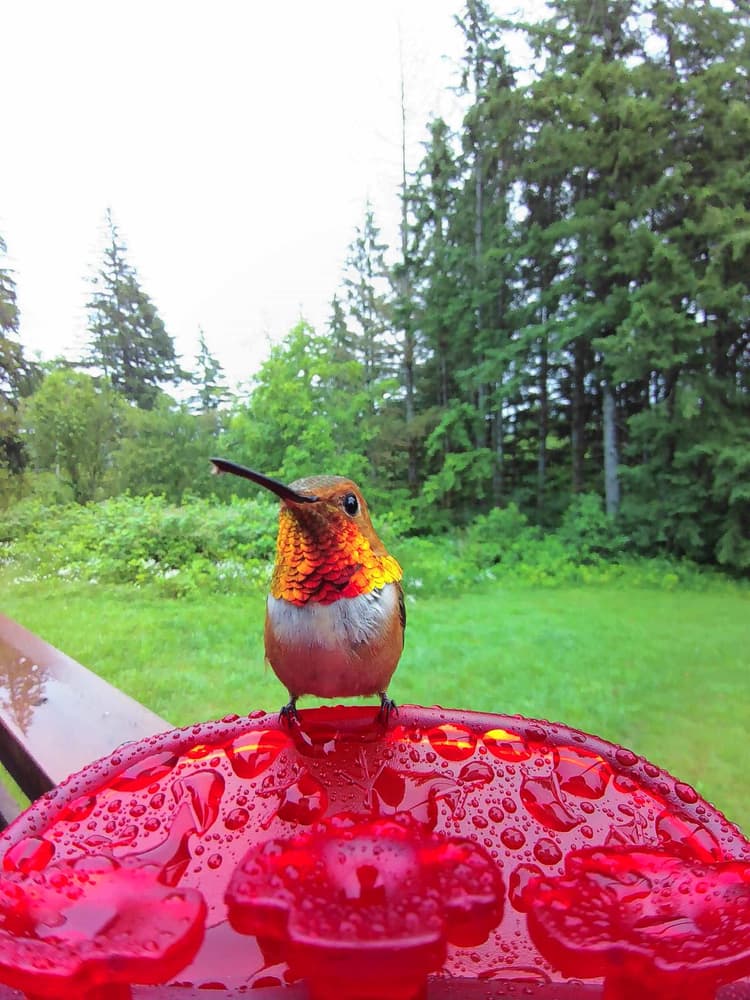
Male Allen's Hummingbird
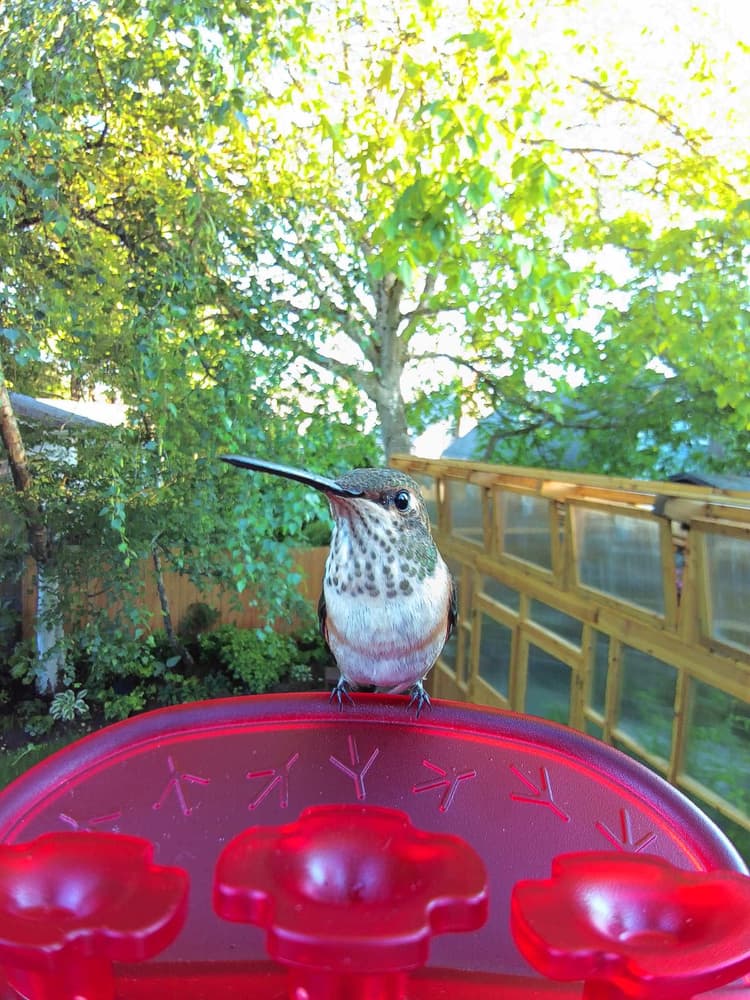
Female Allen's Hummingbird
Juvenile
The juvenile Allen's hummingbirds inherit the identical appearance of the female and are similar to Rufous younglings, so identifying them can potentially be difficult. Instead, their range of habitat can provide a decent clue towards proper identification.
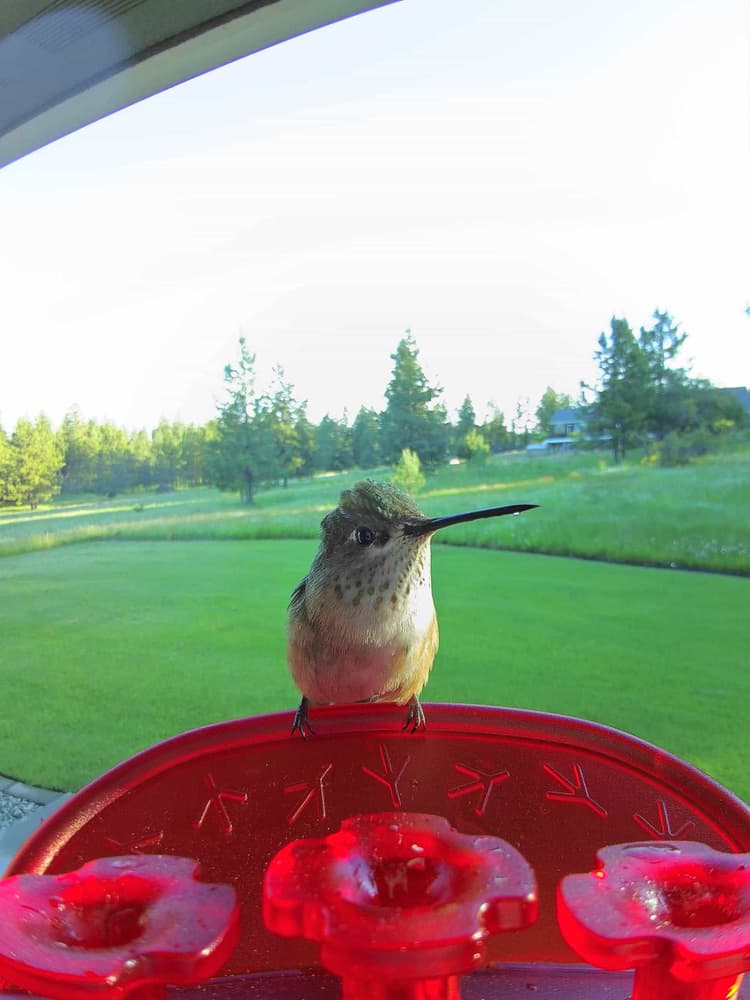
Often mistaken for
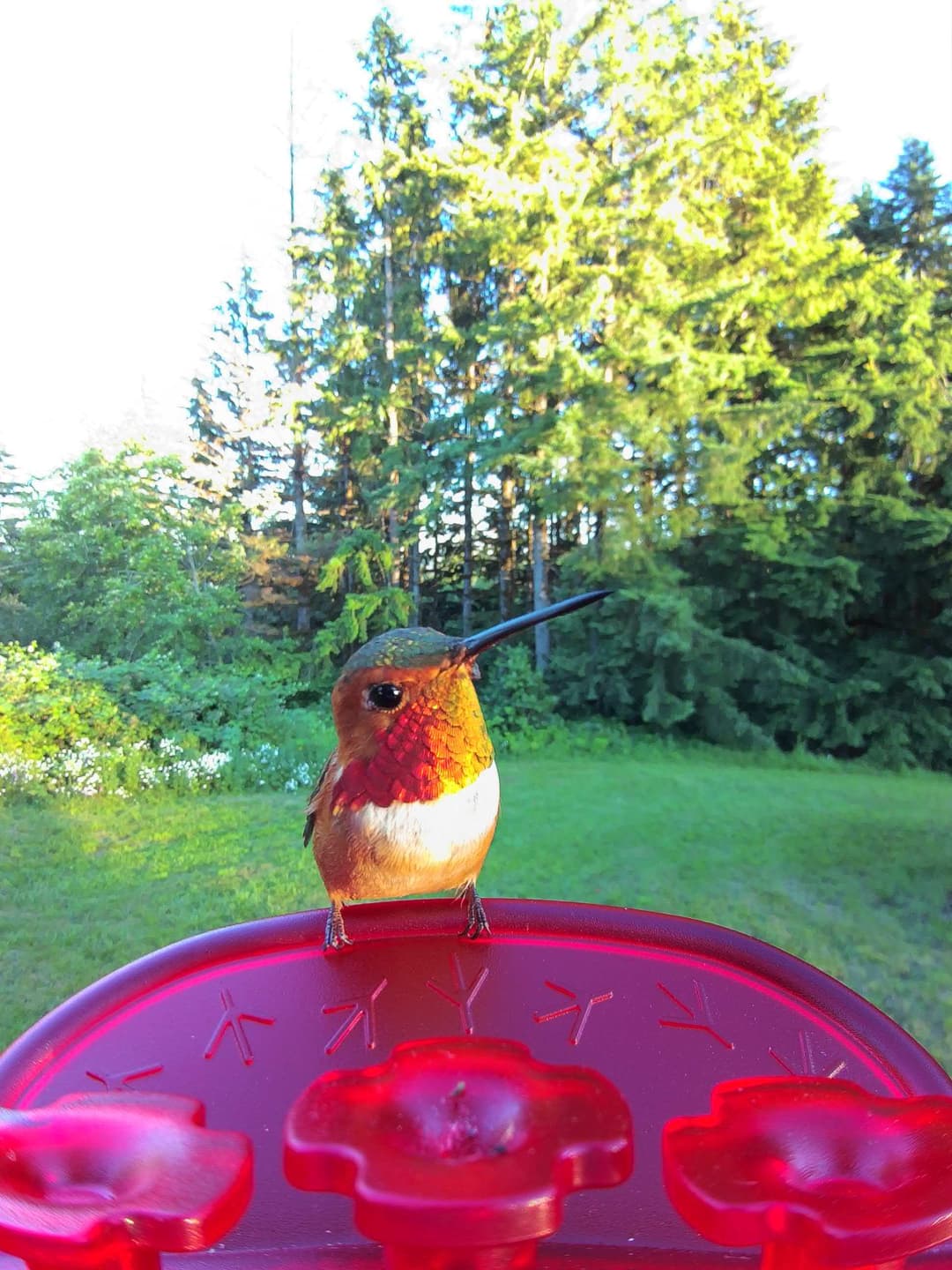
Rufous Hummingbird vs Allen's Hummingbird
Rufous Hummingbirds have a more vibrant rufous body and often lack the green back that is seen in Allen's Hummingbirds. While both males display rufous tails, Allen's tend to have a narrower outer tail feather. Watch for the green on the back and crown for a hint that it might be Allen's.
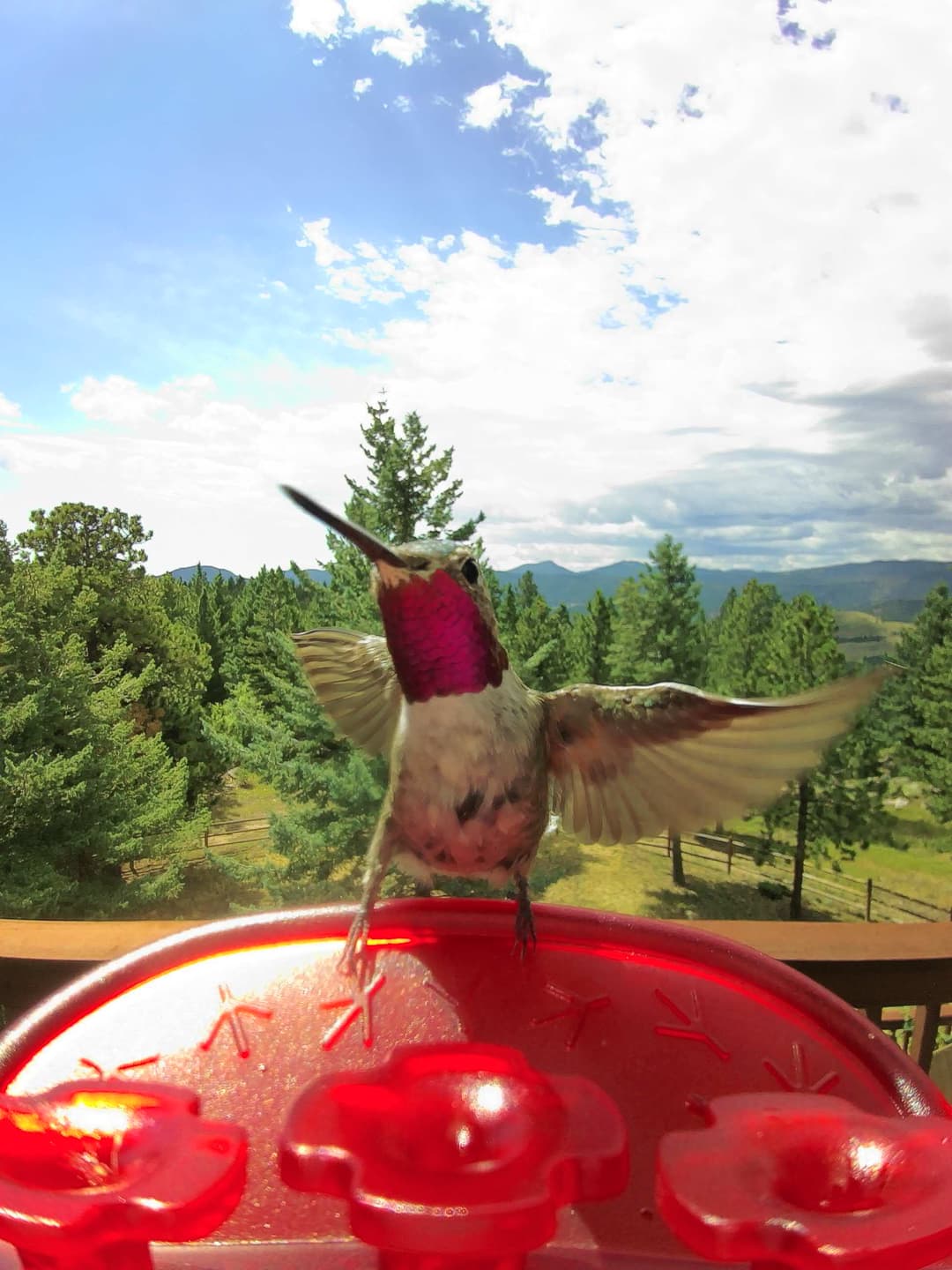
Broad-Tailed Hummingbird vs Allen's Hummingbird
Broad-Tailed Hummingbirds are generally larger and have a more metallic trilling sound in flight. Their gorgets display a more rosy color compared to the shiny orange of Allen's. Pay attention to the sound and size; if it's smaller with a silent flight, it could be Allen's.
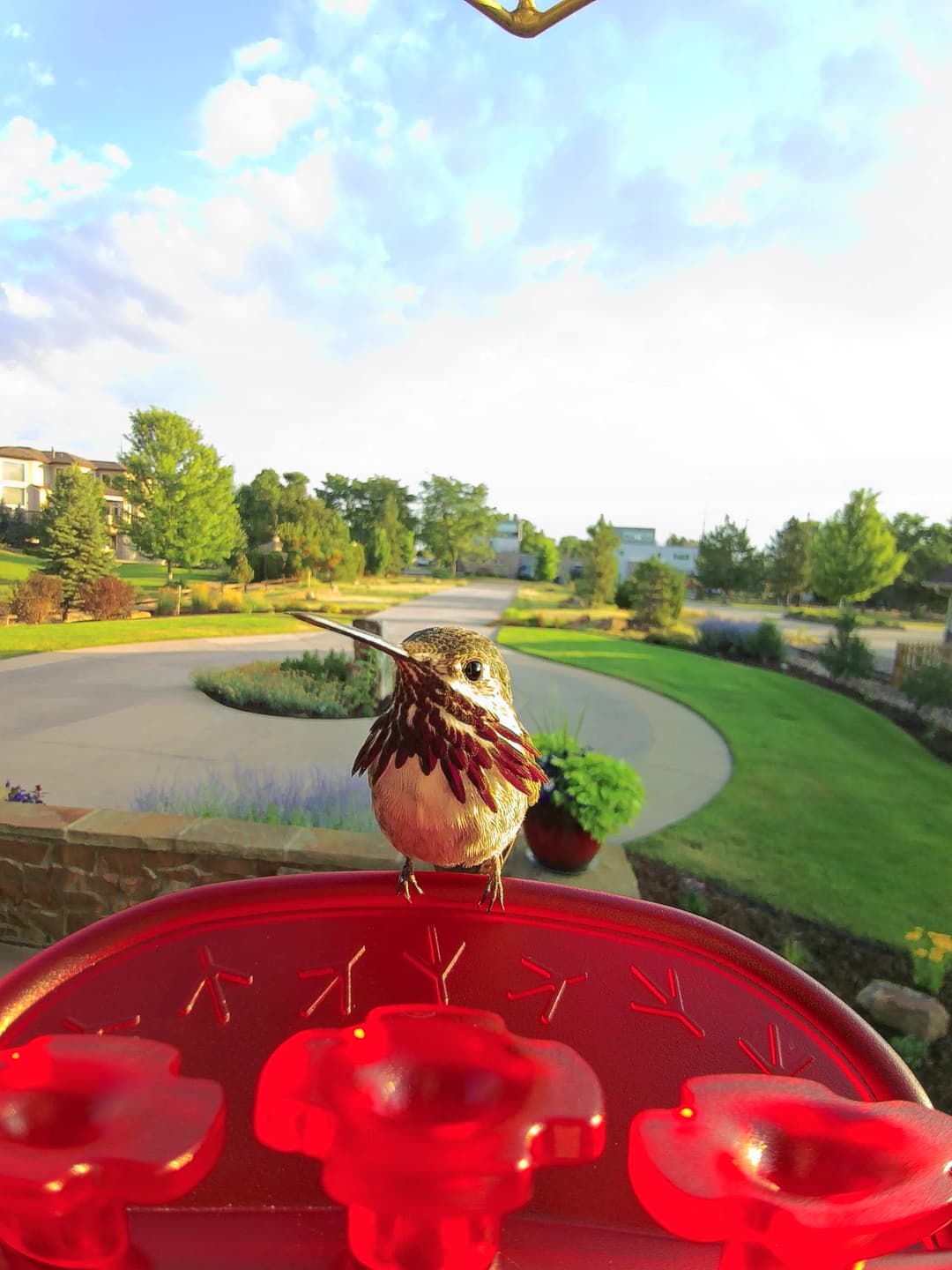
Calliope Hummingbird vs Allen's Hummingbird
Calliope Hummingbirds are smaller with distinctive magenta streaked gorgets. Allen's are slightly larger with a bronze-green back and orange-red throat. Look for the size and throat color differentiation to spot the true Allen's.
Breeding and nesting habits of the Allen's hummingbird
Mating behaviors
Male Allen's hummingbirds engage in a courtship display characterized by a J-shaped flight pattern. This includes flying high, diving sharply while producing a metallic whine, and then curving up to hover. The display often includes a pendulum flight back and forth in front of the female.
Nesting details
The nest is typically located in a tree or shrub, sometimes on a weed stalk. Nests are generally low but can be as high as 90 feet on a horizontal or diagonal branch. The female constructs a cup-shaped nest from green mosses and plant fibers bound with spider webs, camouflaged with bits of lichen.
Eggs and chick-rearing
Female Allen's hummingbirds lay two eggs, incubating and rearing the chicks alone. She provides all the care needed until they fledge. To attract these birds for nesting, gardens should include shrubs and trees of varying heights and provide safe nesting sites away from predators.
What does an Allen's hummingbird like to eat?
Insects
Nectar
Natural diet
The Allen's hummingbird predominantly feeds on nectar and insects. It seeks nectar from a variety of flowers, favoring red tubular ones such as penstemon, red monkey-flower, red columbine, paintbrush, and scarlet sage. Besides red flowers, it also visits flowers of other colors, like the yellow blooms of tree-tobacco. Additionally, the bird includes tiny insects in its dietary intake.
Bird feeders
At bird feeders, the Allen's hummingbird consumes sugar-water mixtures, which serve as an alternative to nectar found naturally in flowers.
Favorite snacks for allen's hummingbird
Allen's hummingbirds have a big appetite despite their small size. Their favorite treat is nectar, either from flowers or feeders. You can DIY a nectar solution at home, mix 1 part of white sugar with 4 parts of water. Please don't use honey or artificial sweeteners as these can be harmful to the birds. Feeders with red parts can especially attract these birds, as they are drawn by the color. Providing Bird Buddy seeds is a fantastic idea! They are carefully selected by experts for each season, guaranteeing great results.
Feeder types and tricks
Stick to feeders explicitly designed for hummingbirds. These are usually tube feeders that mimic the shape of flowers where they generally get nectar. Allen's Hummingbirds are also attracted to the color red. Therefore, a red feeder or even just tying a red ribbon around a clear feeder can do the trick. Keep your feeders clean and always filled with fresh nectar so hummingbirds will regularly return. You can also plant a hummingbird garden with flowers that they are known to love, like honeysuckles, bee balm, and azaleas. This will not only attract Allen's hummingbirds but also create an enchanting and vibrant spectacle in your yard!
What is the role of Allen's hummingbirds in nature and how to protect them?
Conservation status
Allen's hummingbird is currently classified as vulnerable due to declining populations despite adapting fairly well to suburban habitats. Surveys indicate a decrease in numbers over recent decades, primarily due to habitat loss and fragmentation. Conservation efforts focus on habitat restoration and protection, especially in breeding and wintering areas. Increasing urban development poses a significant threat, leading to further habitat degradation. Efforts to plant native flowering plants and maintaining green spaces are crucial in supporting their populations. While not yet endangered, active conservation measures are necessary to prevent further declines.
Ecological role of Allen's hummingbirds
Its role in the ecosystem
The Allen's hummingbird plays a critical role in the ecosystem in a number of ways. As a significant pollinator, the hummingbird contributes substantially to plant reproduction. By feeding on nectar, it inadvertently facilitates the transfer of pollen from stamen to pistil, aiding in the fertilization process. Notably, it favors red tubular flowers and aids in the propagation of plant species such as penstemon, red monkey-flower, red columbine, paintbrush, and scarlet sage. In addition, its role in pest control is essential. Through its diet, primarily consisting of nectar and small insects, it helps regulate the population of such insects thereby reducing potential damage to flora. Moreover, the Allen's hummingbird's preference for feeding on flowers and in midair means they don't impact the population of ground insects, maintaining the intricate balance of the ecosystem.
How to help protect Allen's hummingbirds
Preservation tips
Habitat preservation strategies for allen's hummingbird
Promoting the preservation of the Allen's Hummingbird can be achieved by implementing habitat preservation strategies. These strategies may involve planting native plant species, which provide food and shelter for these birds. Avoid using pesticides, as they can harm hummingbirds and their food sources. Preserve and restore habitats where these hummingbirds breed, particularly coastal and chaparral habitats. Support or participate in policies and initiatives that discourage habitat destruction.
Community science initiatives for allen's hummingbird conservation
Community science efforts play a crucial role in conservation. By participating in hummingbird count initiatives, local communities can contribute valuable data to assist in conservation strategies. This can include observing, identifying, and recording the presence of Allen's Hummingbirds in their area. Educate the community about this species and the importance of its conservation to enhance awareness and stimulate involvement. Encourage the use of hummingbird-friendly practices, such as maintaining bird feeders and planting hummingbird-friendly plants.