
Violet-Crowned Hummingbird
Violet-Crowned Hummingbird
Leucolia violiceps
Quick Identification guide
Quick Identification guide
- •
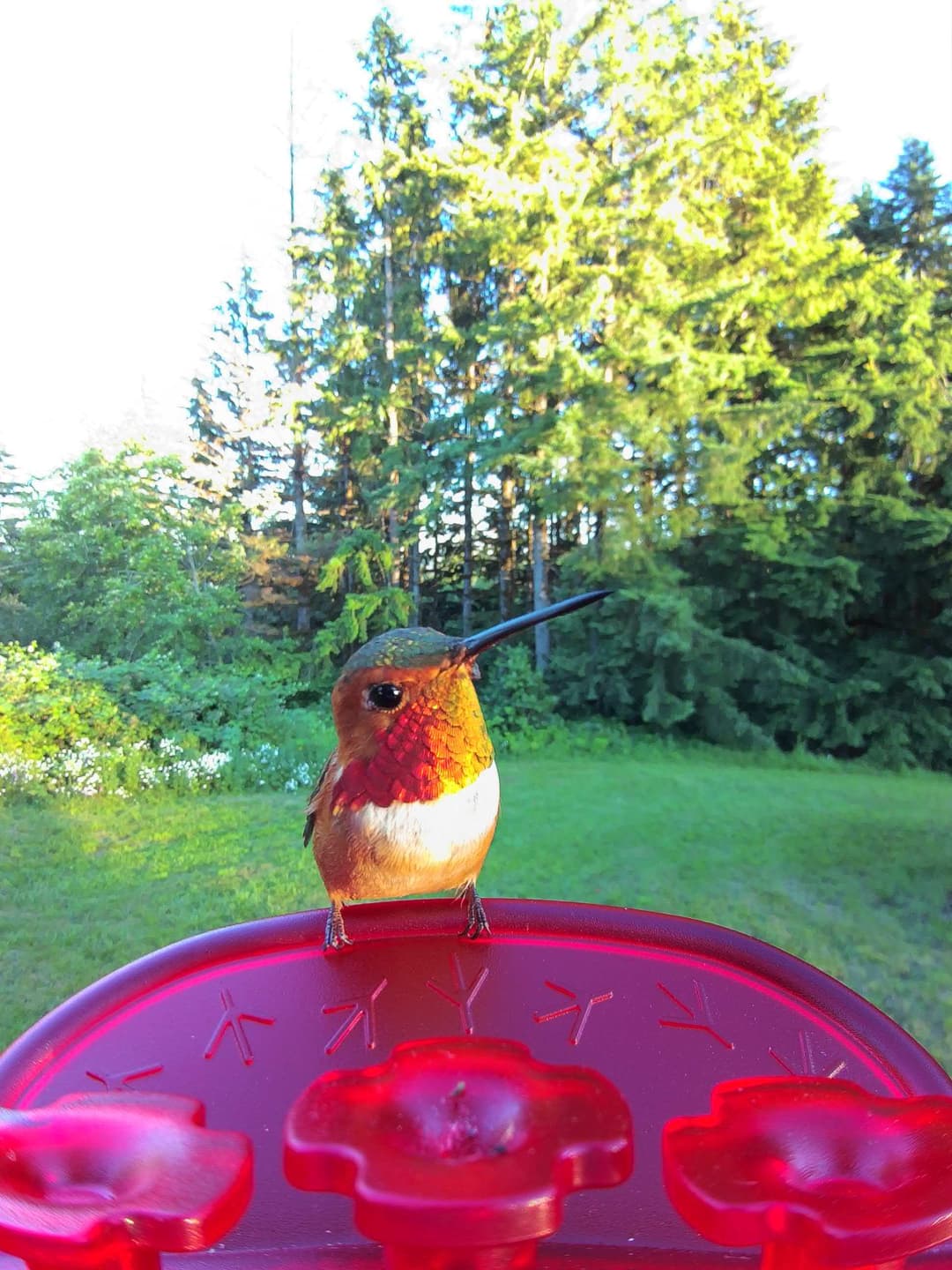
Distinctive violet crown atop its head contrasts with a white throat and underparts, making it easily recognizable
- •
Features a slim, slightly curved black beak, perfect for accessing nectar
- •
Presents with green upperparts that shimmer in sunlight, creating a vibrant display of colors
Description
The Violet-crowned Hummingbird has pristine white underparts complemented by a shimmering purple crown and a striking long red bill. This delightful species hails from Mexico and just barely makes its way into the southeastern U.S. Interestingly, it's the only hummingbird in the U.S. that doesn't sport a colorful gorget (the throat patch). You'll often find them flitting about at mid-elevations in canyons, especially around their beloved sycamore trees. They have quite a varied diet, enjoying nectar and small insects, and they're frequent visitors to hummingbird feeders. While some of these charming birds migrate south to Mexico for the winter, others decide to stick around all year long.
The violet-crowned hummingbird can weigh between 5.1to5.8grams and be from10to11.5centimeters tall.
The Violet-crowned Hummingbird usually lives up to 12 years. This is impressive for hummingbirds, as many species average life spans of 3-5 years, such as the Ruby-throated Hummingbird. Factors such as predatory threats and harsh weather conditions contribute to their relatively short lifespans. The longer life expectancy of the Violet-crowned hummingbird is attributed to its adaptive skills and behaviors.
Did you know?
Most popular questions about violet-crowned hummingbird
How to recognise a violet-crowned hummingbird?
General appearance
The violet-crowned hummingbird stands out for its vibrant violet-blue crown which contrasts brightly with its white underparts. Its back and tail are a shiny green, and its straight, slender bill is predominantly reddish with a black tip.
Male vs female
Both male and female violet-crowned hummingbirds share similar plumage, a rarity among hummingbirds. The main difference lies in size, with females being slightly larger, and in tail shape, with females having rounded tail feathers and males having forked ones.
Juvenile
Juvenile violet-crowned hummingbirds are similar to adults but their plumage is duller. Their crowns might not possess the distinctive violet hue until they mature. They can be recognized by the presence of buffy feather tips on their back and wing coverts.
Often mistaken for
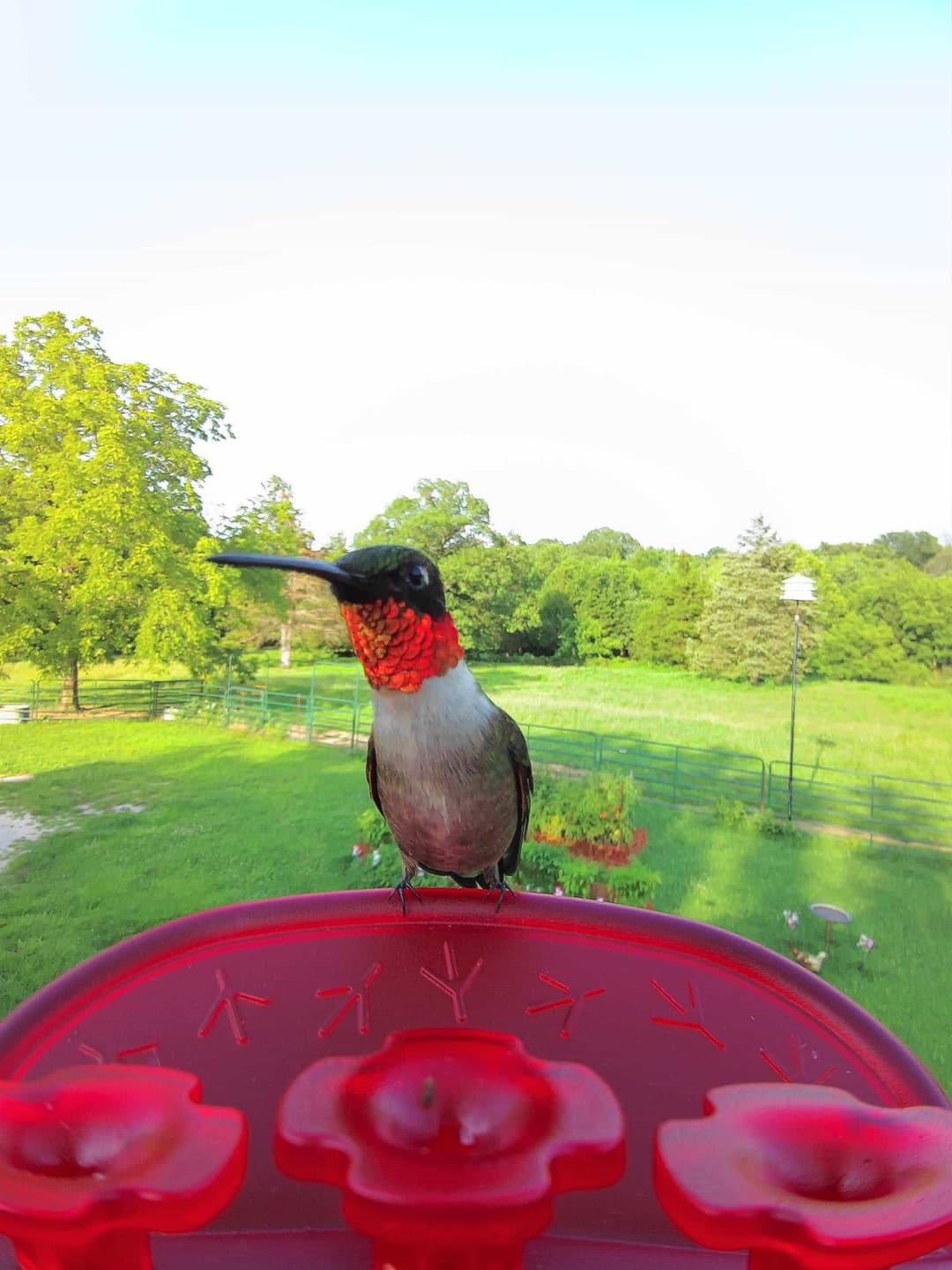
Ruby-Throated Hummingbird vs Violet-Crowned Hummingbird
The Ruby-Throated Hummingbird has a vibrant red throat which the Violet-Crowned Hummingbird lacks. Additionally, the Violet-Crowned Hummingbird features a distinctive white underpart that is not found in the Ruby-Throated Hummingbird.
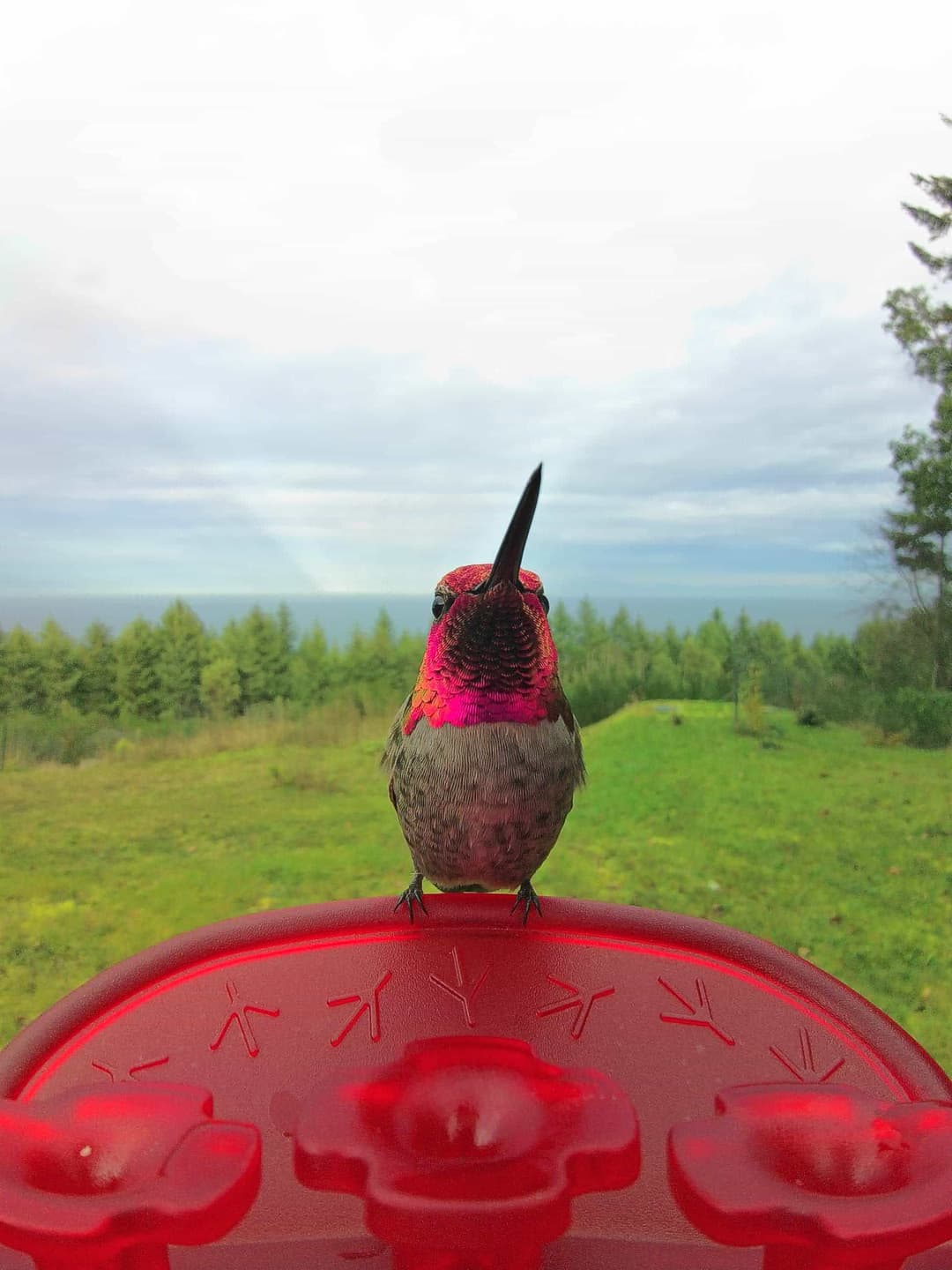
Anna's Hummingbird vs Violet-Crowned Hummingbird
Anna's Hummingbird possesses a glittering rosy-red crown and throat which differs from the Violet-Crowned Hummingbird’s violet crown. Moreover, Anna's Hummingbird generally appears greener on its body compared to the predominantly white underparts of the Violet-Crowned Hummingbird.
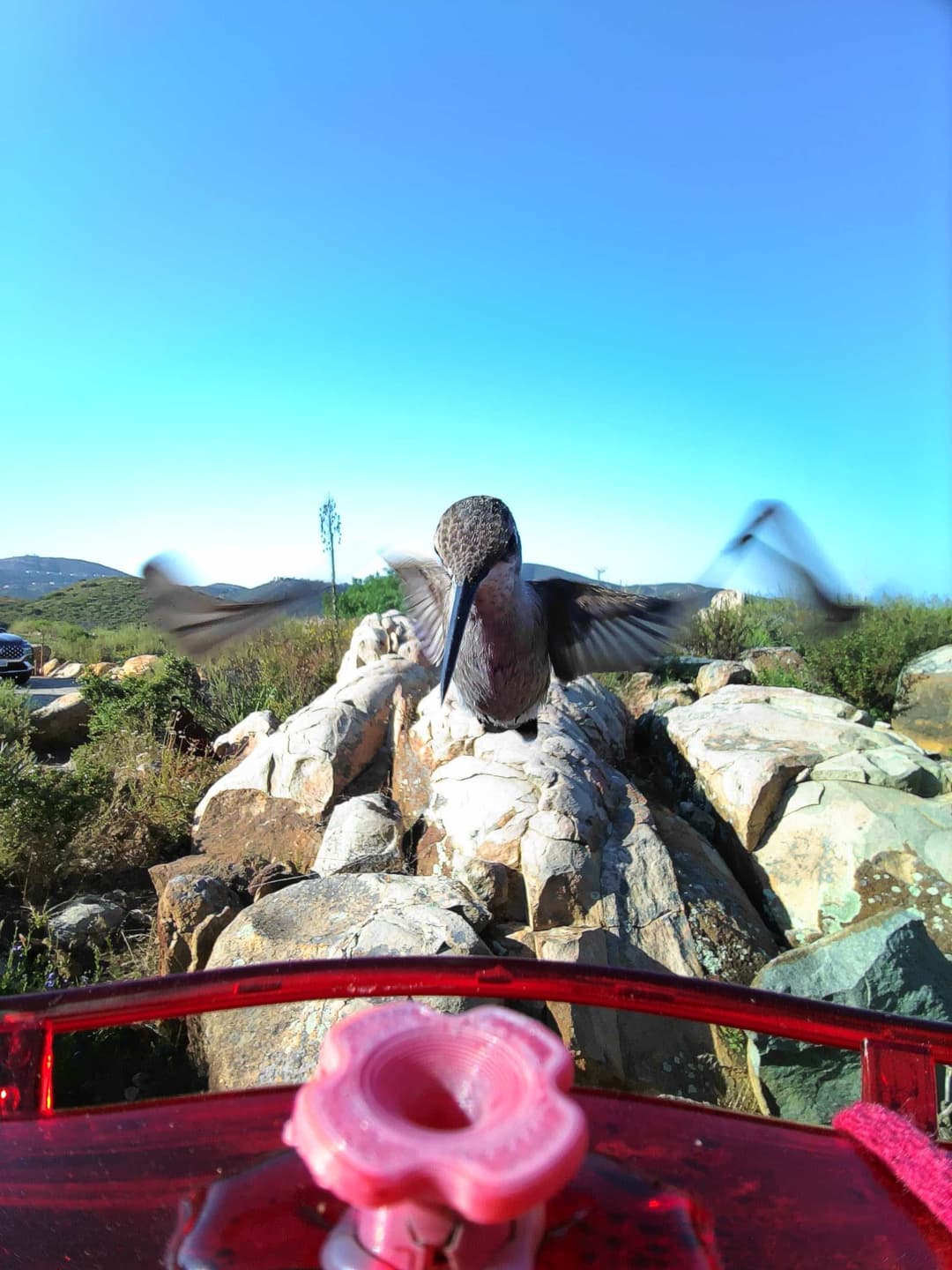
Black-Chinned Hummingbird vs Violet-Crowned Hummingbird
The Black-Chinned Hummingbird can be recognized by its distinct black chin and purple collar, traits absent in the Violet-Crowned Hummingbird which boasts a clear violet crown. Furthermore, the Black-Chinned Hummingbird tends to have more greenish shades in its plumage than the Violet-Crowned.
Allen's Hummingbird vs Violet-Crowned Hummingbird
Allen's Hummingbird has a rusty color on the sides and tail and an orange-red throat that the Violet-Crowned Hummingbird lacks. The Violet-Crowned, instead, features a contrasting coloration with a brilliant violet crown and white underparts.
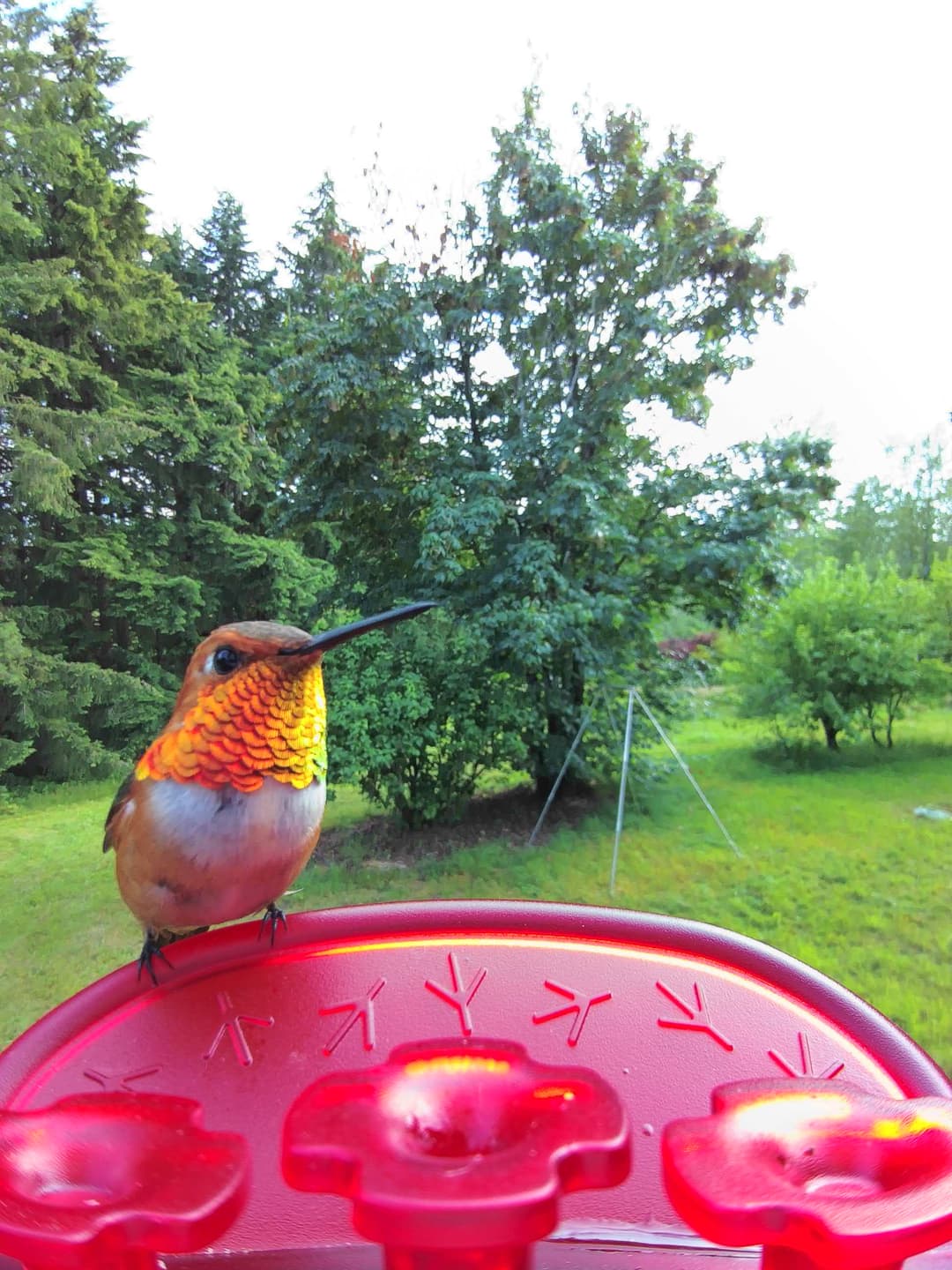
Rufous Hummingbird vs Violet-Crowned Hummingbird
The Rufous Hummingbird is primarily recognized by its rufous-colored body, tail, and back which are quite different from the Violet-Crowned Hummingbird's violet crown and more neutral-toned body and underparts.
Breeding and nesting habits of the violet-crowned hummingbird
Mating behaviors
The violet-crowned hummingbird demonstrates courtship through aerial displays and vocalizations. Males perform dives and rapid flights to attract females. These displays include unique sounds produced by wing and tail feathers.
Nesting details
Nesting sites are usually located on tree branches or shrubs, often near a water source. Nests are cup-shaped, constructed from plant down, spider silk, and lichen. In gardens, providing a mix of native plants and small trees can create suitable nesting habitats.
Eggs and chick-rearing
The female lays two white eggs, incubating them for about 14-17 days. She solely provides care, feeding chicks primarily with regurgitated nectar and insects. Chicks fledge approximately 20-25 days after hatching, continuing to receive parental care for a short period.
What does a violet-crowned hummingbird like to eat?
Insects
Nectar
Spiders
Natural diet
The violet-crowned hummingbird primarily feeds on nectar from various flowering plants such as agave, ocotillo, and desert willow. It also consumes small insects and spiders, which provide essential proteins and nutrients necessary for growth and energy.
Bird feeders
At bird feeders, this hummingbird commonly consumes a solution of sugar and water, which mimics the nectar found in flowers. They are attracted to brightly colored feeders, especially those in red and orange hues, as these colors resemble natural blooms.
Setting up the perfect feeder
To invite a violet-crowned hummingbird to your yard, the first thing you need to do is set up a hummingbird feeder. Go for feeders that are red in color since hummingbirds are attracted to the color red. Make sure your feeder is clean and filled with fresh nectar regularly to encourage frequent visits from the hummingbirds. Install it in a quiet and safe location, preferably near a window where you can enjoy watching these beautiful creatures.
Delicious snacks for violet-crowned hummingbirds
Violet-Crowned Hummingbirds love feeding on nectar from flowers. Besides nectar, they also feed on insects and spiders. But a classy feed mix like 'Bird Buddy' seeds will undoubtedly attract them more regularly. These seeds are chosen by experts for the season and loved by the Violet-Crowned Hummingbirds for their high nutritional value.
Creating a hummingbird-friendly environment
Planting native flowers in your yard can not only add beauty but also attract these delicate creatures. Flowers like honeysuckle and jasmine are quite popular with hummingbirds. Including a water source in your yard can also act as a hummingbird magnet. Bird baths or a simple shallow dish of water would be perfect.
Fun tricks to encourage visits
Consider stringing up a wind chime near the feeder. The soft noise and movement can attract curious hummingbirds. Also, if you gently play some humming sounds, you might tempt one or two to join in for a sing-along! Always remember to stay still and quiet while observing these birds to ensure they feel safe and welcome.
Where can you find violet-crowned hummingbirds?
Primary habitat
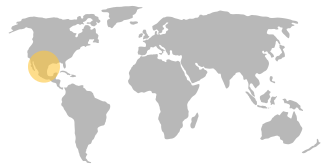
The violet-crowned hummingbird prefers broadleaf forests and scrublands in northwestern Mexico and south-western United States.
Additional range
Despite its preference for warmer climates, this bird has been spotted in unexpected areas, including cooler, mountainous regions.
Do they migrate?
The violet-crowned hummingbird (*Amazilia violiceps*) primarily resides in Mexico and parts of the southwestern United States. It is not a long-distance migrant like some other hummingbird species, but its movements can be characterized as partial migration or seasonal dispersal. In the United States, these hummingbirds are mostly found in southeastern Arizona, southwestern New Mexico, and occasionally in parts of west Texas during the breeding season, which spans from spring to early fall. As the temperatures begin to drop, most individuals retreat to Mexico for the winter months, particularly in regions like Sonora or along the Sierra Madre Occidental. The return migration to northern areas occurs typically in early spring. This movement aligns with the blooming of flowers, which provides essential nectar for the birds. The timing and extent of their movements can vary based on climate conditions and food availability. Since their range is relatively limited, they do not follow a fixed migratory route like some longer-distance migrants do. Instead, their movements are adaptive, focusing on areas with adequate resources throughout different times of the year.
What is the role of violet-crowned hummingbirds in nature and how to protect them?
Conservation status
The violet-crowned hummingbird is classified as "Least Concern" on the conservation status spectrum, indicating it is relatively common. It thrives in habitats spanning from the southwestern United States to Mexico. While generally not facing significant threats, local populations may be affected by habitat alteration due to agriculture and urbanization. Key conservation efforts focus on preserving its natural habitats, including riparian areas and woodlands. Promoting bird-friendly environments in human-dominated landscapes can also support their populations. Ongoing monitoring ensures any emerging threats can be swiftly addressed to maintain their stable status.
Ecological role of violet-crowned hummingbirds
Its role in the ecosystem
The violet-crowned hummingbird, routinely observed in forests, scrub, thorns, and gardens in Mexico, the Southwest USA, and Central America, holds substantial ecological significance. Its role in ecosystems is primarily as a pollinator. Due to their diet of nectar, they are responsible for transporting pollen from the male part of the flower to the female part, facilitating plant reproduction. This not only helps to increase the genetic diversity of plant life in their habitats but also indirectly impacts other animal species that depend on these plants for food and shelter. The violet-crowned hummingbird's specialty in monitoring pests—particularly insects, spiders, and other arthropods, which constitute a noticeable part of their diet, helps to regulate these populations and curtail their potential harm to plant life. Finally, the bird's metabolic waste products further enrich the soil, promoting plant growth. Collectively, the roles of the violet-crowned hummingbird in pollination, pest control, and nutrient cycling underline its importance in maintaining a balanced, thriving ecosystem.
How to help protect violet-crowned hummingbirds
Preservation tips
Habitat preservation strategies
The violet-crowned hummingbird predominantly inhabits woodland and forest edges. One crucial way to support their conservation is through habitat preservation. This includes protecting existing woodlands and forests from destruction, reforesting areas where these habitats have been lost, and integrating good forest management practices to maintain plant diversity and integrity of the habitats.
Community science initiatives
Community science initiatives can support the conservation efforts for the violet-crowned hummingbird. Participate and promote bird count programs and monitor their populations over time to detect any declines early. Reporting sightings of the hummingbird to local wildlife authorities can aid in mapping their habitats and improving preservation efforts. Additionally, creating awareness in the community about the importance of these birds can lead to local support in their conservation.