
Anna's Hummingbird
Anna's Hummingbird
Calypte anna


Quick Identification guide
Quick Identification guide
Male
- •
iridescent emerald green body with a spectacular rose-pink throat
- •
straight, slender bill perfect for sipping nectar
- •
Small, compact body with a slight metallic sheen in light
Female
- •
duller green upperparts with a greyish-white underpart
- •
lack of the male's bright throat patch, but may have subtle specks of pink
- •
A straight, slender bill similar to the male
What does an Anna's hummingbird sound like?
The vocalizations of the Anna's hummingbird include a sharp chip and a rapid chee-chee-chee-chee-chee pattern. This hummingbird uses a variety of call types such as buzzing, chirping, and high-pitched chipping. Its call patterns are generally flat, yet highly distinctive and identifiable. This unique combination of sounds forms the typical calls and songs of the Anna's hummingbird.


Description
Anna's hummingbirds are known for their amazing 12-second dive display. First, they fly 40 metres into the air before diving and explosively stopping half a metre in front of the hummingbird, or person, they are trying to impress. On a sunny day, they jazz it up even more by turning so the sun reflects their iridescent crown and head.
The Anna's hummingbird can weigh between 4to4.5grams and be from9.5to10.5centimeters tall.
The lifespan of Anna's hummingbird is between 8-9 years. When compared to other hummingbird species, this lifespan is relatively higher, with some species averaging only 3-5 years. Factors influencing longevity include access to ample food sources and favorable climatic conditions for breeding. Like most hummingbirds, the Anna’s hummingbird's lifespan is disproportionately affected by its first year of life due to high juvenile mortality rate.
Where can you find Anna's hummingbirds?
Based on Birdbuddy sighting data. Bubbles represent reported bird sightings over the past years.
Embed this mapPrimary habitat
Anna's hummingbird inhabits various biomes including gardens, chaparral, open woods, streamside groves, open oak woodland, and coastal sage scrub. It is typically found in city parks and lower mountain slopes.
Additional range
While the species is most common in lowlands, it can also be found in high mountain meadows during late summer.
Do they migrate?
Anna's hummingbirds display a range of migratory and resident behaviors, varying by region. Many Anna's hummingbirds are considered permanent residents, particularly those in coastal regions like California, where favorable conditions and abundant food sources exist year-round. In certain areas, such as Arizona, Anna's hummingbirds exhibit an east-west migration pattern. After nesting in mid-spring, some Arizona birds might move westward to California, where conditions are favorable. These hummingbirds return to their nesting areas in late summer, completing this migration route. Not all Anna's hummingbirds participate in these movements. Many remain year-round in their territories if adequate food sources are available, especially in urban areas where feeders are common. Therefore, their migratory patterns are not as pronounced or strictly defined as those of some other bird species, reflecting adaptability to local environmental conditions. Overall, while Anna's hummingbirds may migrate between Arizona and California, many are also permanent residents in regions with ample resources.
Did you know?
Most popular questions about Anna's hummingbird
How to recognise an Anna's hummingbird?
General appearance
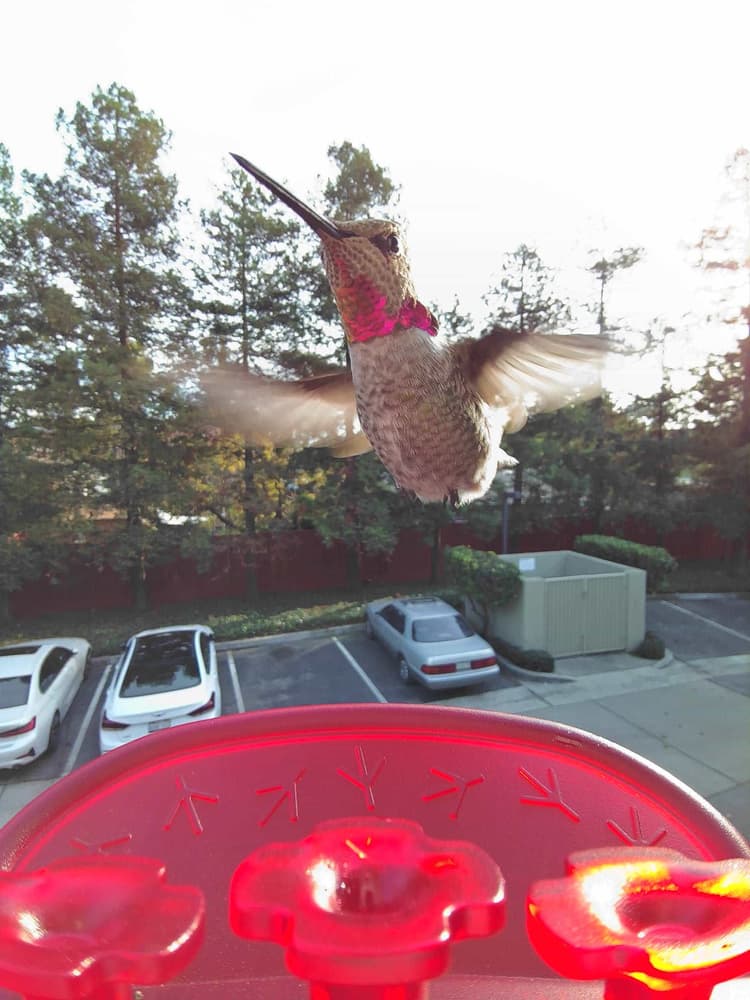
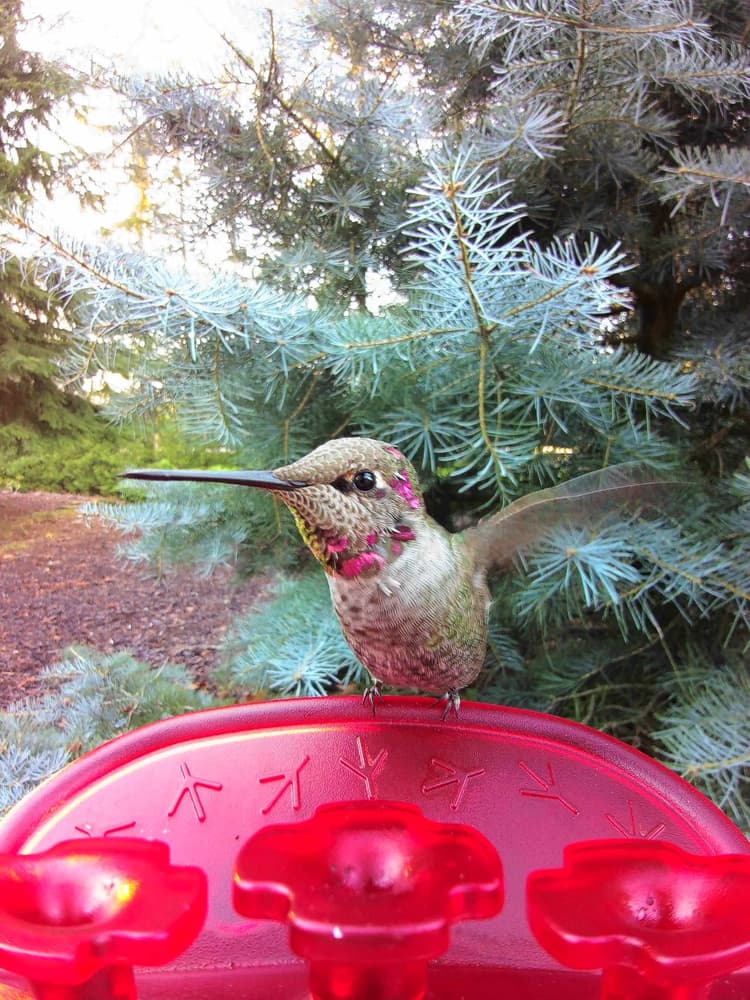
Feast your eyes on Anna's hummingbirds! These radiant beauties are a vibrant combination of elegant form and stunning color. Their body is adorned with green and grey shades, offering a subtle yet captivating sight. The lower body beams with a light grey-white color, balancing the otherwise rich tones. Despite their relatively small size of about 9cm, they own their presence, darting daringly through the skies.
Male vs female
Males and females of Anna's hummingbirds showcase a delightful color variation. The males steal the spotlight with their breath-taking iridescent crimson-red crowns and throats, shimmering brilliantly in direct sunlight. Their back is metallic green, a perfect contrast to their radiant front. The ladies, on the other hand, adorn a more modest attire of green on top and greyish white underneath. Some females may display a subtle touch of red marking on their throat, adding a dash of secret charm.
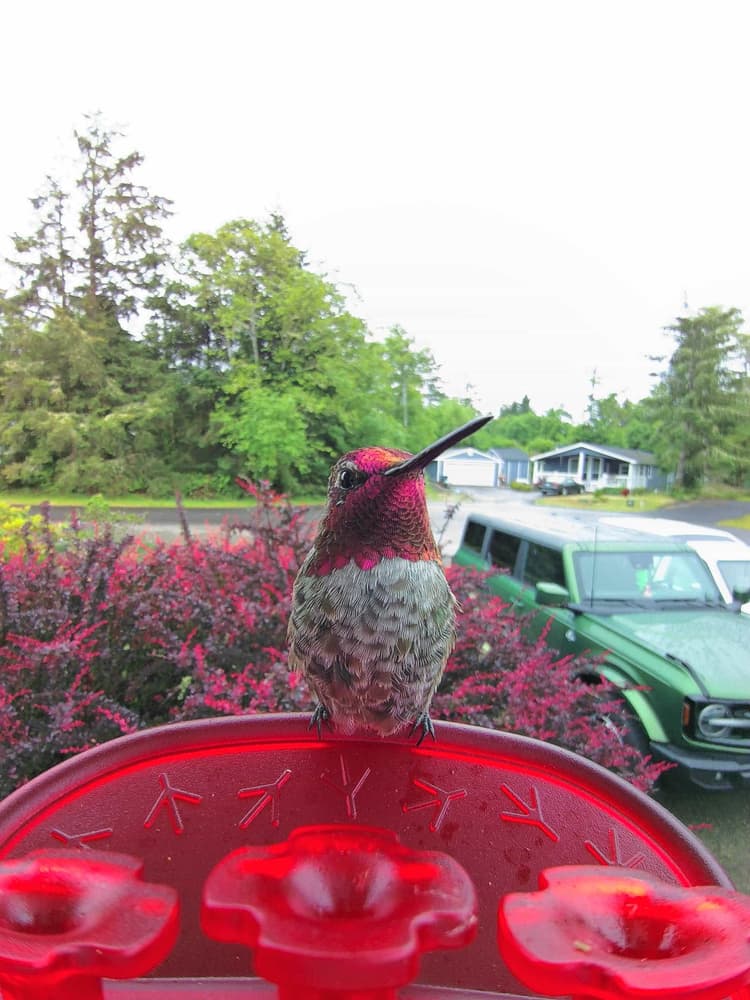
Male Anna's Hummingbird
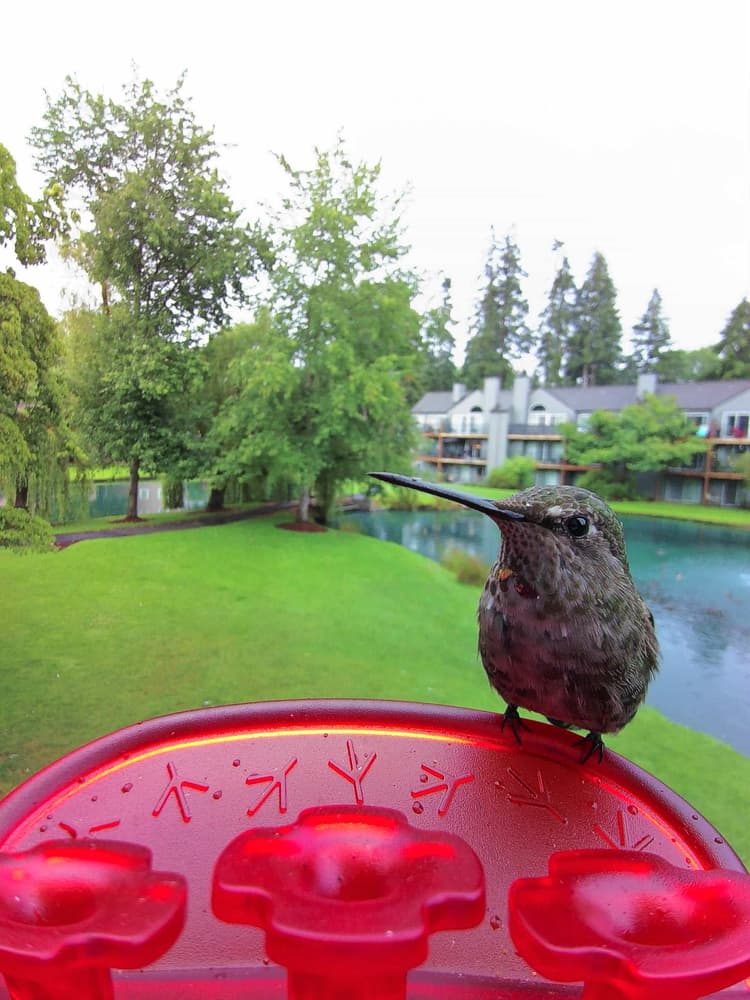
Female Anna's Hummingbird
Juvenile
The juveniles initially mirror the females in coloration carrying the green-grey theme. But as they grow, the young male Anna's hummingbirds start developing their glamorous red feathers that herald their entry into adulthood. A hint of this transformation is their first indicator of age. Regardless of age, the Anna's hummingbirds keep their vibrant energy, embodying the spirit of free flight throughout their life!
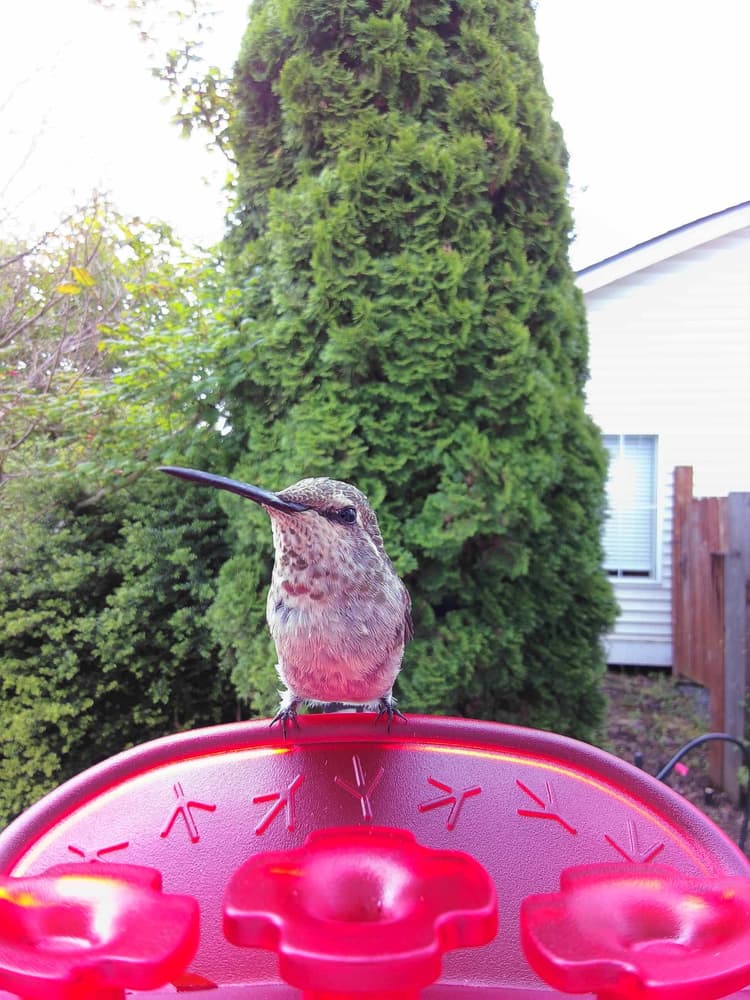
Often mistaken for
Broad-Tailed Hummingbird vs Anna's Hummingbird
Anna's Hummingbird males have a reddish-pink crown and throat, while Broad-Tailed males exhibit a pinkish-red throat but lack Anna's metallic crown. Females are more similar but listen for the metallic trill of the Broad-Tailed's wings.
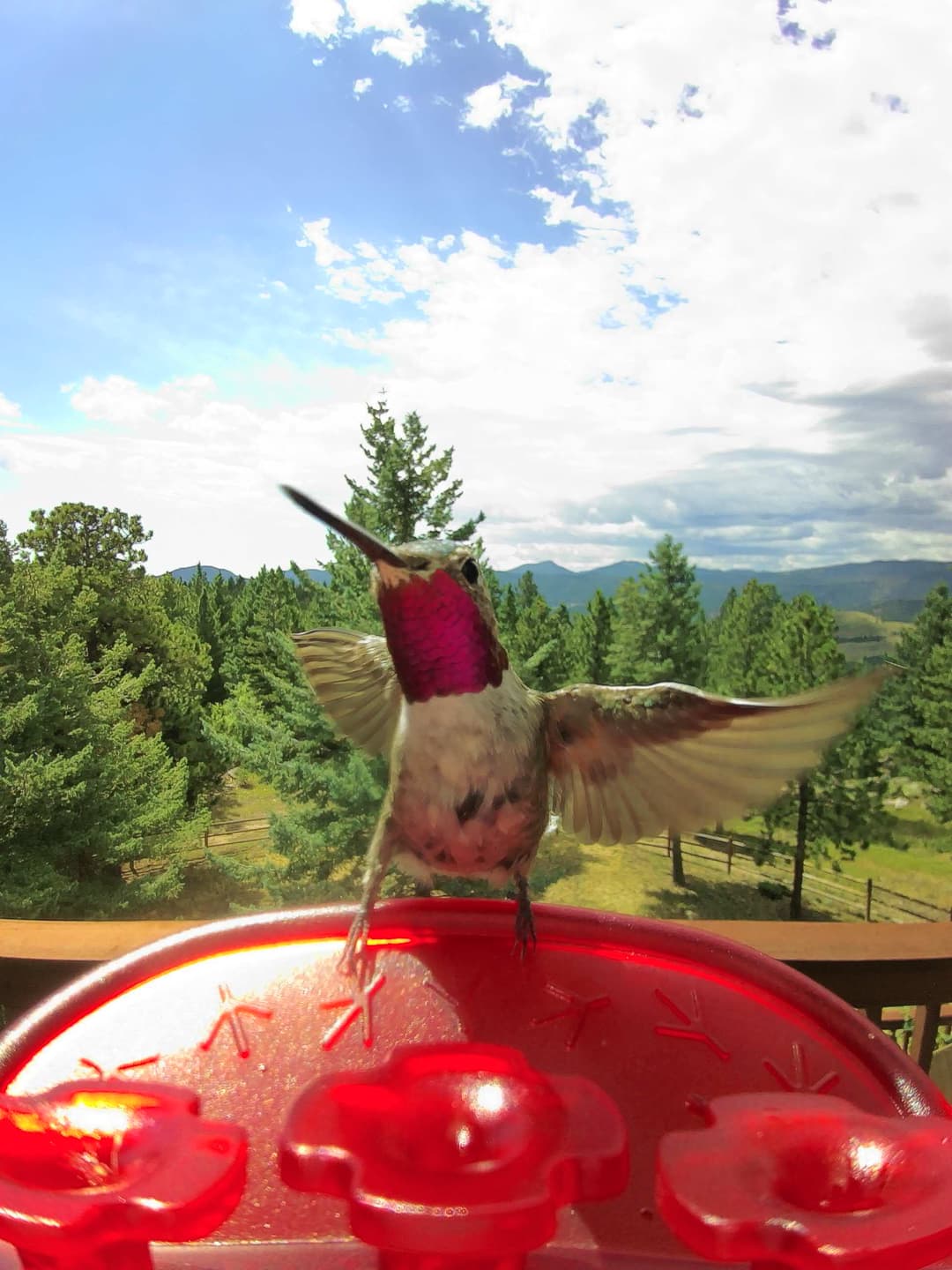
Black-Chinned Hummingbird vs Anna's Hummingbird
Anna's Hummingbird males have iridescent reddish-pink heads, while Black-Chinned males feature a velvety black chin with a violet band. Anna's also have a more robust and stocky build compared to the slender Black-Chinned.
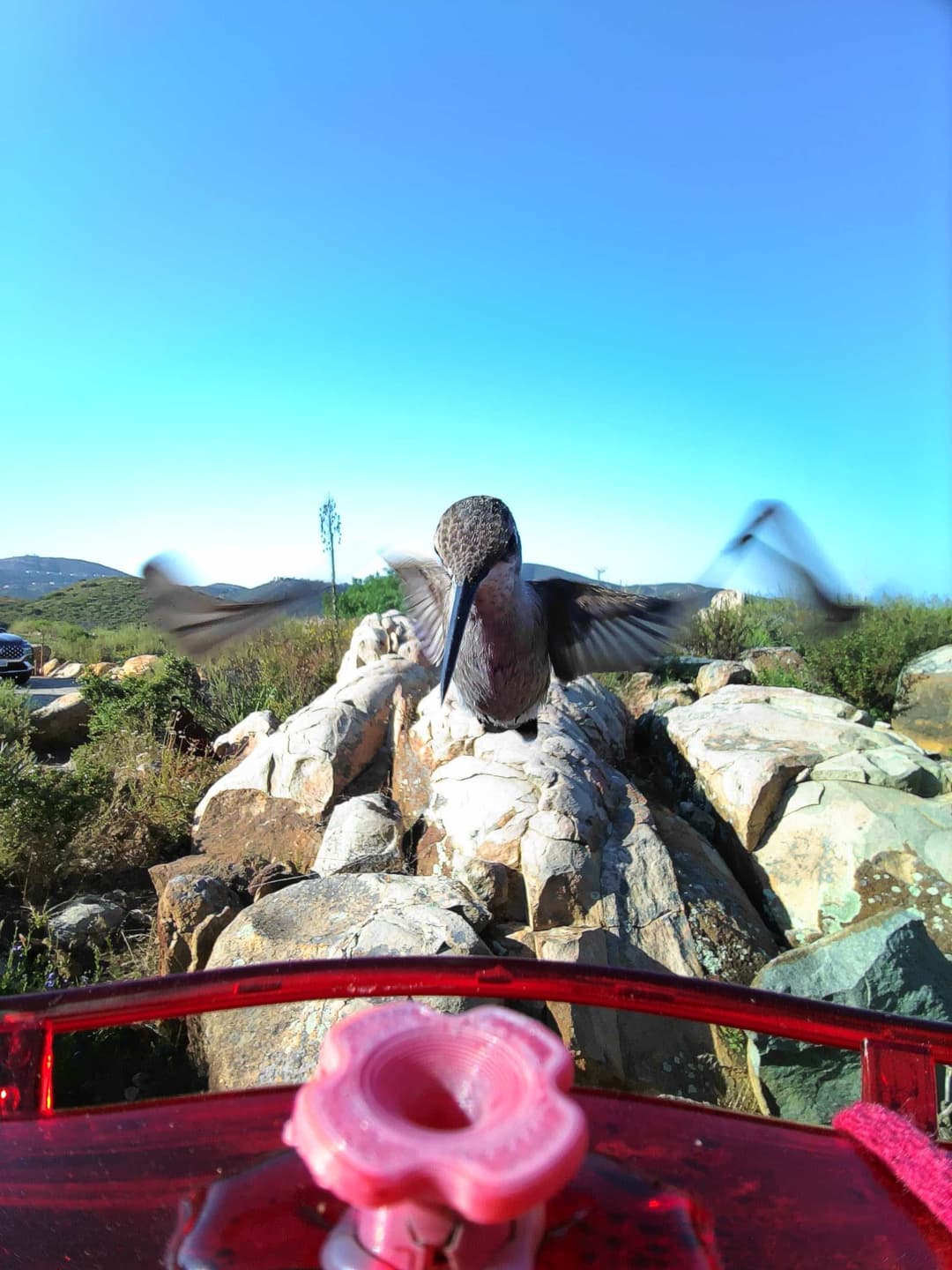
Costa’s Hummingbird vs Anna's Hummingbird
Anna's Hummingbird males boast a full magenta crown and throat, whereas Costa's males display a purple head and longer throat feathers creating a more distinct 'beard'. Females of both species can be tricky, but Costa's have slightly shorter tails.
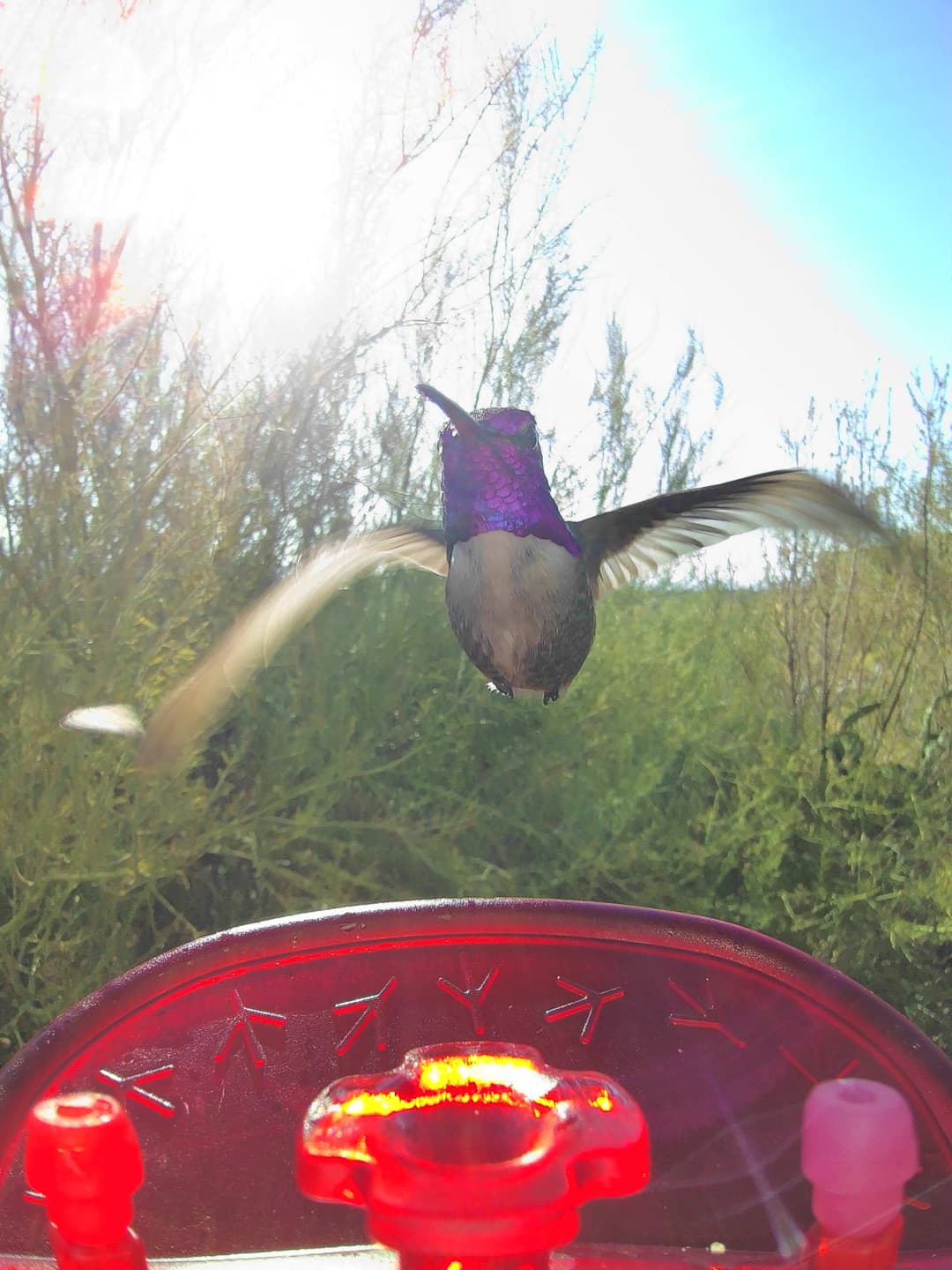
Rufous Hummingbird vs Anna's Hummingbird
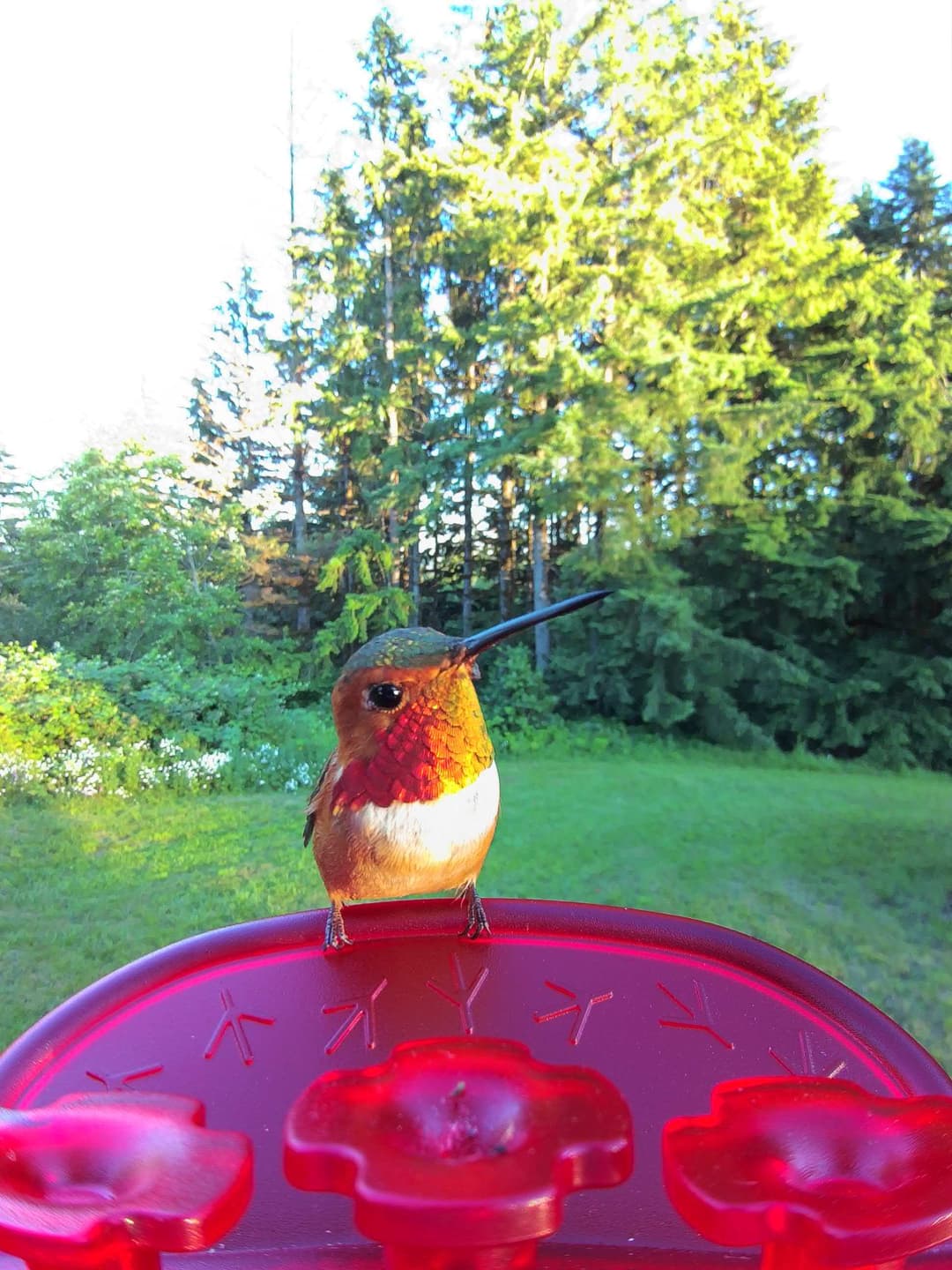
Anna's Hummingbird males have a rosy-red head and are more metallic green above, while Rufous males are recognizable by their intense orange-red plumage. Rufous females have more rufous-colored flanks, differentiating them from Anna's.
Breeding and nesting habits of the Anna's hummingbird
Mating behaviors
Anna's hummingbirds begin nesting as early as December. During courtship, the male hovers in midair, performing a buzzy song before ascending and diving steeply toward the female with a loud explosive popping sound at the dive's bottom. He also performs short shuttling flights, buzzing back and forth in front of the female.
Nesting details
Nesting sites vary and can be found on branches of trees or shrubs, in vines, on wires, or under eaves. Nests are typically 4-25 feet above ground but can be lower or higher. The female constructs a compact cup-like nest using plant fibers and spider webs, lining it with plant down and sometimes feathers, camouflaging the exterior with lichens.
Eggs and chick-rearing
The female lays and incubates the eggs alone. For those looking to attract nesting hummingbirds in their gardens, providing trees or shrubs for nesting, avoiding pesticide use, and ensuring a supply of nectar sources can create a suitable habitat.
What does an Anna's hummingbird like to eat?
Insects
Nectar
Sap
Spiders
Natural diet
The Anna's hummingbird primarily feeds on nectar from various flowers. This provides them with the necessary sugars to sustain their high energy lifestyles. In addition to nectar, they also consume tiny insects and spiders, which supply them with essential proteins and other nutrients.
Bird feeders
At bird feeders, the Anna's hummingbird is known to enjoy sugar-water mixtures, which mimic the nectar they find in flowers. These feeders are common in gardens and offer an alternative source of food, especially when natural sources are scarce.
Attract anna's hummingbirds with delicious snacks
Anna's Hummingbirds have an affinity for nectar, similar to that found in a variety of brightly colored flowers. To attract them to your yard, consider planting bloomers like salvia and sage. Hummingbirds are also known for their love of sweet liquid. A feeder filled with a homemade sugar solution is an excellent treat. Stir four parts water with one part table sugar until sugar is fully dissolved. Remember, Anna's hummingbirds are accustomed to Bird Buddy seeds, chosen by experts for the season, providing the best results for attracting these avian visitors.
Choose the right feeder and location
When selecting a feeder, opt for one that is red as it will draw in Anna's hummingbirds–and ensure it's easy to clean. Placement is crucial too. Place the feeder near a window to enjoy the air show, or position it near shrubby areas that offer a quick cover from predators. Elevate it above the ground so it's in a secure, elevated place to imitate their natural feeding habits.
Encourage regular visits with extra perks
Providing a constant source of water, a space to nest, and plenty of shaded areas can make your yard an ideal hummingbird oasis. These birds are attracted by the sound of moving water, like from a fountain or bubbling bird bath. Build a climate-friendly habitat with a variety of plants that flower at different times to provide a continuous food supply. As you show consistent care for their needs, Anna's hummingbirds will be encouraged to consider your yard as their own personal pit stop during their migration.
What is the role of Anna's hummingbirds in nature and how to protect them?
Conservation status
The Anna's hummingbird is considered very common and has successfully expanded its breeding range north and east since the 1950s. This species adapts well to suburban areas, indicating a stable and widespread population. It is not currently classified as vulnerable or endangered. While there are no significant conservation threats known, habitat preservation and protection from urban development remain important. Efforts to maintain native flowering plants and provide feeders also support their thriving populations.
Ecological role of Anna's hummingbirds
Its role in the ecosystem
Anna's hummingbird plays integral roles in ecosystems, including pest control and plant pollination. Its diet largely consists of small insects and nectar. As it consumes tiny insects, it helps control pest populations, therefore contributing to the balance of the ecosystem. Furthermore, while feeding on the nectar of flowers, the bird assists in pollination, a process critical for the reproduction of many plants. As the bird moves from flower to flower, it carries pollen on its bill and feathers, unintentionally aiding in cross-pollination. This role in plant reproduction significantly influences the structure and diversity of plant communities. Lastly, the bird's elaborate courtship and nesting behaviors, including the use of plant fibers and spider webs to build nests, may have indirect effects on the dispersal of plant materials and spiders. The varied nesting locations could also influence the structure of vegetation in certain areas.
How to help protect Anna's hummingbirds
Preservation tips
Habitat preservation strategies
Support the Anna's hummingbird conservation by planting native flowering plants which provide a natural food source. Avoid the use of pesticides which harm the birds. Create nesting spots by preserving shrubs and small trees. Keep the cats indoors to protect these birds from being preyed upon.
Community science initiatives
Join initiatives such as The Great Backyard Bird Count and Hummingbird Monitoring Network to collect data on hummingbird populations. Share sightings, particularly during migration periods, to eBird, an online bird monitoring program. Advocate for these birds by educating others about their importance and the threats they face.