
Broad-Billed Hummingbird
Broad-Billed Hummingbird
Cynanthus latirostris


Quick Identification guide
Quick Identification guide
Male
- •
vibrant green plumage on upperparts with a blue throat
- •
Prominent broad, red bill with a dark tip
- •
Compact body with a glittering green underside
Female
- •
metallic green upperparts with a grayish-white underside
- •
Similar broad, red bill as the male
- •
Less conspicuous throat without the blue shade
What does a broad-billed hummingbird sound like?
The broad-billed hummingbird's vocalizations are characterized by a rapid, scratching chi-dit sound comparable to the note of a Ruby-crowned Kinglet. This unique bird is known for a flat call pattern and usually employs a type of vocalization referred to as a buzz or chirp/chip. These calls and songs are part of their communication and mating rituals.


Description
Did you know the broad-billed hummingbird's intestine is the width of a single hair and only two inches long? These tiny and beautiful birds need to drink 1.7 times their own bodyweight in nectar every day! To save energy on a cold night, they will lower their body temperature and slow their metabolism.
The broad-billed hummingbird can weigh between 2to4grams and be from8to10centimeters tall.
The Broad-billed Hummingbird typically lives for up to 4 years. In comparison, related species like the Rufous Hummingbird can live up to 8 years, and the Ruby-throated Hummingbird up to 9 years. Factors affecting their lifespan include predation, disease, starvation, and harsh weather conditions.
Where can you find broad-billed hummingbirds?
Based on Birdbuddy sighting data. Bubbles represent reported bird sightings over the past years.
Embed this mapPrimary habitat
The broad-billed hummingbird predominantly inhabits semi-open habitats at altitudes of 3,000-5,000 feet in Arizona. Its preferred terrain features streamside groves of sycamore or cottonwood, dense mesquite thickets, and open oak woodlands in lower canyons.
Additional range
In winters, this species adapts to arid environments, commonly found along streams in desert regions.
Do they migrate?
The broad-billed hummingbird is a migratory species, primarily present in southern Arizona from March to September. During this period, they engage in breeding activities in this region. As the season changes, the species follows a migratory route to areas north and west of their breeding range. This includes central Arizona and southern California, where very small numbers can be found mainly in fall and winter. In their migratory behavior, the broad-billed hummingbird exhibits a southward movement as the temperatures drop in their breeding areas in southern Arizona. This migration helps them find favorable conditions and food sources during the colder months. Key locations during their migration and non-breeding seasons include central Arizona and southern California, regions that provide the necessary resources for their survival outside the primary breeding season. In summary, the broad-billed hummingbird migrates seasonally rather than residing in one location year-round. Its movement pattern ensures access to appropriate habitats and food sources throughout the year, maximizing its chances of survival and reproductive success.
Did you know?
Most popular questions about broad-billed hummingbird
How to recognise a broad-billed hummingbird?
General appearance
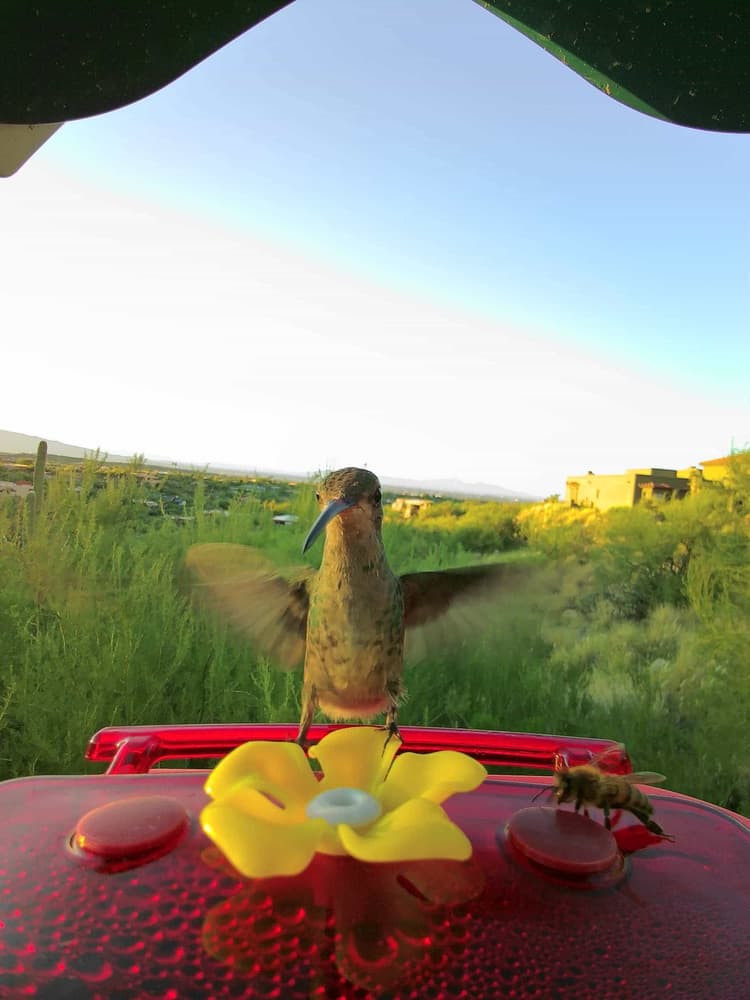
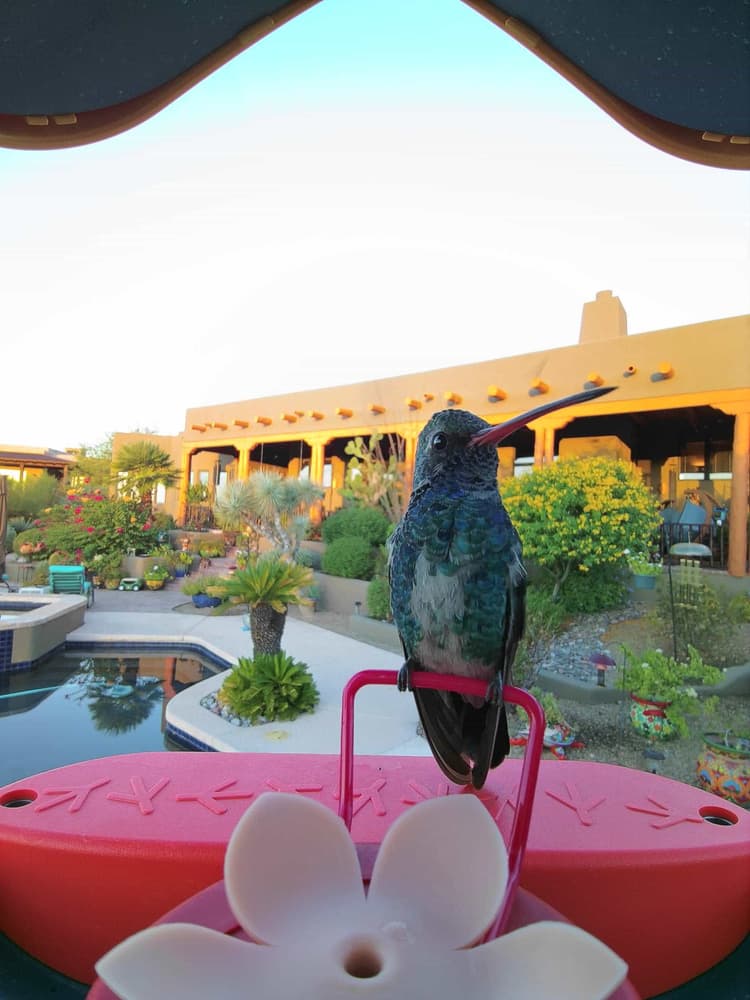
The broad-billed hummingbird is a small, vibrant bird known for its vivid coloration and striking bill. It features a broad, red bill with a dark tip, making it easily recognizable. The plumage showcases brilliant emerald green coloration that shimmers in sunlight, complemented by a bluish throat.
Male vs female
Males possess more vivid plumage compared to females, with a noticeable bright blue throat and shimmering green body. Females are less colorful, often displaying a duller green back and a white or greyish throat. Both sexes have the characteristic red bill, although females may exhibit a slightly shorter and less intensely colored beak.
Juvenile
Juvenile broad-billed hummingbirds typically exhibit a duller version of the adults’ plumage. They often lack the vivid blue throats seen in adult males and can display a grey or buff-colored throat. Identifying juveniles in the wild can be challenging due to their resemblance to females, with a less developed, muted color palette.
Often mistaken for
Blue-Throated Mountain-Gem vs Broad-Billed Hummingbird
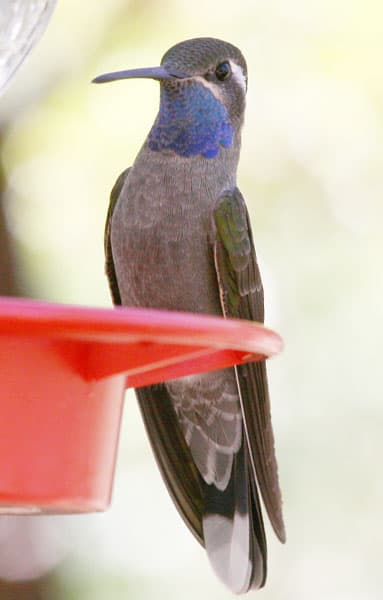
The Broad-Billed Hummingbird is smaller with a distinctive bright red bill with a black tip, compared to the Blue-Throated Mountain-Gem's larger size and mostly black bill. The Broad-Billed Hummingbird has a vibrant blue throat, whereas the Blue-Throated Mountain-Gem features a notable broad blue throat patch bordered by white streaks. The Broad-Billed Hummingbird's underparts are generally more green, while the Blue-Throated Mountain-Gem appears grayer overall. Their habitats can overlap, but take note that the Broad-Billed is more likely found in scrubby areas while the Mountain-Gem prefers forested regions.
Breeding and nesting habits of the broad-billed hummingbird
Mating behaviors
The broad-billed hummingbird male uses a soft, jumbled song, though it is infrequently heard. The male primarily defends its territory by perching at high vantage points to watch and chase away intruders.
Nesting details
The nest of the broad-billed hummingbird is typically constructed by the female in deciduous shrubs or low trees, around 3-9 feet above the ground. The nest is a loose cup made from grasses, plant fibers, and spider webs, lined with plant down. It is camouflaged with bits of leaves or bark, unlike other hummingbird nests which are often adorned with lichens.
Eggs and chick-rearing
The female broad-billed hummingbird lays eggs in the carefully constructed nest. She solely takes responsibility for incubation and chick-rearing. To support this species in gardens, plant low shrubs and small trees to provide suitable nesting sites.
What does a broad-billed hummingbird like to eat?
Insects
Nectar
Spiders
Natural diet
The broad-billed hummingbird primarily feeds on nectar from flowers, favoring red or orange tubular flowers like bouvardia and desert honeysuckle. Additionally, it consumes a variety of tiny insects.
Bird feeders
At bird feeders, the broad-billed hummingbird often feeds on sugar-water mixtures, which supplement its natural diet.
Favorite snacks of the broad-billed hummingbird
The Broad-billed Hummingbirds love nectar, and you can easily make your own by combining four parts water to one part sugar. You can also plant native flowers rich in nectar. However, to supplement their diet and attract them more, consider Bird Buddy seeds. These seeds are chosen by experts for the season providing the best results in attracting these delightful birds.
Ideal feeder types for broad-billed hummingbirds
When choosing a feeder for Broad-billed Hummingbirds, consider ones with bright red or pink colors, as they are naturally attracted to these. The feeders should have ample space for the birds to hover and feed. Tube feeders with multiple feeding ports can accommodate several birds at once. Ensure also that the feeders are easy to clean, as mold or bacteria can harm the birds.
Tricks to encourage visits from broad-billed hummingbird
Engaging in fun tricks can encourage these fascinating birds to visit your yard. One effective trick is to plant native trees and shrubs that bloom at different times of the year, providing a year-round food source. You can also consider placing your feeders near windows where you can observe them but make sure to keep them at a safe distance to prevent window collisions. Lastly, maintaining a quiet and peaceful environment will make these birds feel safe and make them sing along in your yard.
What is the role of broad-billed hummingbirds in nature and how to protect them?
Conservation status
The broad-billed hummingbird is considered very common within its limited range in parts of the U.S. and Mexico. Its conservation status is not currently classified as vulnerable or endangered. Being common in these areas suggests it faces fewer significant threats compared to species with broader ranges. However, habitat loss and climate change could pose future threats. Key conservation efforts focus on preserving critical habitats and monitoring population trends to ensure this species continues to thrive in its natural environments.
Ecological role of broad-billed hummingbirds
Its role in the ecosystem
The Broad-Billed Hummingbird plays a pivotal role in the ecosystem's functioning. Its primary diet consists of nectar and insects, making it an essential pollinator for various flower-rich plants. As it feeds from flowers extending its long tongue into them, it facilitates their cross-pollination, leading to genetic diversity. They specifically favor red or orange tubular flowers such as Bouvardia or Desert Honeysuckle, contributing to these plants' propagation in their habitats. Additionally, their insectivorous behavior aids in pest control. They are known to consume many tiny insects, often catching them in mid-air. This natural predatory behavior helps to regulate insect populations in their environment, controlling possible outbreaks. Furthermore, they also feed on insects from spider webs, reducing competition for spiders and preventing their overpopulation. In terms of nesting, the female's technique of camouflaging the nest with bits of leaves and bark assists in the diffusion of seeds and plant fibers, fostering plant growth and contributing to a healthy, diverse ecosystem.
How to help protect broad-billed hummingbirds
Preservation tips
Habitat preservation strategies
Preserve and restore natural ecosystems, focusing on those rich in flowering plants that the broad-billed hummingbird prefers. Reduce pesticide usage as it inhibits both the bird's food sources and habitat. Promote the planting of native flowering plants in urban settings to create additional feeding opportunities.
Community science initiatives
Encourage participation in bird count initiatives to monitor the broad-billed hummingbird population trends. Use platforms like eBird to record sightings. Host workshops educating the public about the importance of this bird's conservation. Promote responsible birdwatching practices to minimize human disturbance to these birds.