
Ruby-Topaz Hummingbird
Ruby-Topaz Hummingbird
Chrysolampis mosquitus
Quick Identification guide
Quick Identification guide
- •
The male Ruby-Topaz Hummingbird displays a stunning bright golden throat and crown, transitioning to a rich ruby-red nape and back
- •
Both sexes exhibit a straight, slender bill and a medium-sized body with a slightly forked tail
- •
Females have a more muted appearance with grayish underparts and a green back, lacking the vivid colors of the males
Description
The Ruby-topaz Hummingbird is a dazzling spectacle of nature, embodying the elegance of its gemstone namesakes. Its name hints at its luxury, with males flaunting ruby-red crowns and fiery orange throats that glisten in the sunlight. Small yet mighty, this hummingbird zips through open woodlands and gardens, a blur of color with its dazzling, iridescent plumage. They're quite the travelers, migrating across South America to the Caribbean, showcasing their beauty across continents. With a love for nectar, these birds are like nature's own jewelers, adding sparkle and splendor wherever they go.
The Ruby-topaz Hummingbird can weigh between 2.5to5grams and be from8to9.5centimeters tall.
The ruby-topaz hummingbird typically lives up to 5 years. This is shorter in comparison to other species like the Rufous hummingbird which can live up to 8 years. Factors influencing their lifespan include predation, weather conditions, and availability of food.
Did you know?
Most popular questions about Ruby-topaz Hummingbird
How to recognise a Ruby-topaz Hummingbird?
General appearance
The Ruby-Topaz Hummingbird is a small bird, typically 8-10 cm in length, with a hefty shape. They have a straight, medium-length bill, used to extract nectar from flowers. Their plumage varies during non-breeding season where they appear primarily green and brown, but during breeding season, males showcase a vibrant, ruby to orange-red throat and crown.
Male vs female
In most birds, males are more colorful and this hold true for the Ruby-Topaz Hummingbird. Males have a stunning show of bright ruby red and topaz coloration, from which their name is derived, that they sport during breeding season. Females, on the other hand, maintain a much simpler palette of green and brown all year round, with only a hint of red on their tail feathers.
Juvenile
Juvenile Ruby-Topaz Hummingbirds look much like the females with more subdued tones of green and brown. As they mature and approach their first breeding season, males will begin to develop their vivid colors.
Breeding and nesting habits of the Ruby-topaz Hummingbird
Mating behaviors
The ruby-topaz hummingbird engages in dynamic courtship displays. Males dive and perform aerial maneuvers to attract females, showcasing their vibrant plumage under sunlight as part of the mating ritual.
Nesting details
Nests are small cup-shaped structures constructed from plant fibers and spider silk, located on thin branches in shrubs or trees. They occasionally nest in gardens where suitable plants provide adequate cover and safe anchorage. Gardeners can support nesting by cultivating native flowering shrubs, reducing pesticide use, and ensuring a steady supply of nectar.
Eggs and chick-rearing
The female lays two jellybean-sized white eggs. Incubation lasts 16-18 days, with the female solely responsible for feeding through regurgitation. Chicks fledge about 20-26 days post-hatching, though the mother continues to provide food until they are fully independent.
What does a Ruby-topaz Hummingbird like to eat?
Insects
Nectar
Natural diet
The ruby-topaz hummingbird primarily feeds on nectar from a variety of flowers, including brightly colored and tubular-shaped blooms such as hibiscus and heliconia. It also consumes small insects and spiders, which provide essential proteins, during flight or while perched on leaves. These insects are often caught mid-air or picked from foliage.
Bird feeders
At bird feeders, the ruby-topaz hummingbird commonly consumes sugar water solutions. Bird enthusiasts often prepare these solutions with four parts water to one part sugar, mimicking the sugar concentration found in natural flower nectar. While visiting feeders, these hummingbirds may also sip commercially available nectar formulas designed for hummingbirds.
Choose the right feeder and location
Ruby-topaz hummingbirds are attracted to bright colors. Install a red or orange feeder, these colors are known to attract hummingbirds. Hummingbirds prefer feeders that are hung near flowering plants, as they associate the colorful flowers with food. Hang your feeder at least five feet off the ground to protect the birds from predators. Additionally, the feeder should be in a sheltered location to protect the birds from wind and rain.
Prepare the right food
For your feeder mixture, use one part table sugar to four parts water. Boil the solution for two minutes, let it cool before filling the feeder. Change the feeder content regularly every 2-3 days. Avoid using red dye, honey, and artificial sweeteners, as they can be harmful to the birds.
Include natural food sources
In addition to the feeder, cultivate plants in your garden that naturally attract ruby-topaz hummingbirds. They love nectar-rich tubular flowers. Coral honeysuckle, trumpet vine, and bee balm are among their favorites.
Extra tip: play some music
Hummingbirds might be attracted to the sound of running water or gentle wind chimes. You could try playing soft, gentle music in your garden to see if your ruby-topaz hummingbirds enjoy it. However, avoid loud noises as that could scare them away.
Buy quality seeds
And don't forget to supply seeds alongside your nectar feeders. Choose Bird Buddy seeds for the best results; they are chosen by experts for the season and can give your ruby-topaz hummingbirds the extra nutrition they need.
Where can you find ruby-topaz hummingbirds?
Primary habitat
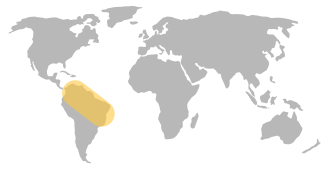
The ruby-topaz hummingbird primarily lives in the tropical and subtropical forests, savannas, gardens, and shrublands of northern South America.
Additional range
Unexpectedly, it can also be found in the fringes of mangroves and semi-desert regions, extending its range to Central America and the Caribbean islands.
Do they migrate?
The ruby-topaz hummingbird primarily resides in tropical and subtropical regions of South America and the Caribbean. Unlike some other hummingbird species, the ruby-topaz hummingbird does not undertake extensive long-distance migrations. Instead, its movements are more localized and influenced by the availability of food resources and breeding conditions. Generally, the species is found in a range extending from eastern Venezuela, Trinidad and Tobago, the Guianas, and parts of Brazil, extending to northern Colombia and western Ecuador on occasion. It primarily occupies open and semi-open areas, including savannas, gardens, and edges of tropical and subtropical forests. While some individuals may exhibit minor altitudinal shifts or short local movements within their range, these are typically not considered true migrations. These movements are often driven by changes in floral abundance or in response to environmental factors such as the dry and wet seasons. Therefore, the ruby-topaz hummingbird is best characterized as a largely sedentary species with only localized movements rather than migratory behavior.
What is the role of ruby-topaz hummingbirds in nature and how to protect them?
Conservation status
The ruby-topaz hummingbird is listed as "Least Concern" by the IUCN, indicating it is relatively common and not currently at risk of extinction. This bird inhabits a broad range across northern South America, thriving in open and semi-open landscapes such as savannas and gardens. Key conservation efforts are not extensively needed, but habitat preservation remains important. Significant threats include habitat destruction due to urbanization and agricultural expansion. However, this species adapts well to human-modified environments. Continued monitoring and habitat protection can ensure its stable status.
Ecological role of ruby-topaz hummingbirds
Its role in the ecosystem
The Ruby-Topaz Hummingbird, scientifically known as Chrysolampis mosquitus, plays a significant role in the ecosystem. It is a vital pollinator, transferring pollen from one flower to another as it feeds on nectar, thus aiding in cross-pollination. This supports plant biodiversity, as the seeds produced after pollination grow into new plants. Simultaneously, the hummingbird's feeding habits control pests by preventing overpopulation of insects; hummingbirds consume up to half of their body weight in bugs per day, including aphids, spiders, and mosquitoes. The Ruby-Topaz Hummingbird, like other hummingbirds, also influences local climates as a bio-regulator, controlling humidity and temperature by feeding on nectar and releasing it as water vapor. The ecological role of the Ruby-Topaz Hummingbird underscores the need for its habitat conservation.
How to help protect ruby-topaz hummingbirds
Preservation tips
Habitat preservation strategies
Protect and restore the habitats where ruby-topaz hummingbirds are found, particularly in forest edge environments and secondary forests. This can be done by imposing regulations against deforestation and supporting reforestation efforts in degraded areas. Developing sustainable agriculture practices, such as shade-grown coffee and cocoa cultivation, can also provide natural habitats for these birds.
Community science initiatives
Involve communities in monitoring the population trends and migration patterns of ruby-topaz hummingbirds. Provide training on data collection and species identification. Encourage citizen science initiatives to raise awareness and stimulate interest in bird conservation among local residents. Use data gathered to further research on climatic and ecological factors affecting the species and inform conservation strategies.