Thrush or Common Blackbird?
Here's how to tell the difference
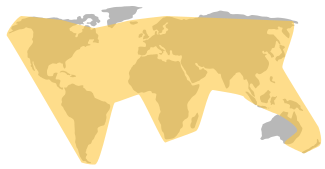

Thrush


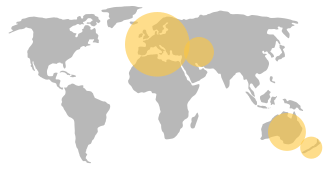
Common Blackbird
Thrush
Turdidae
General appearance
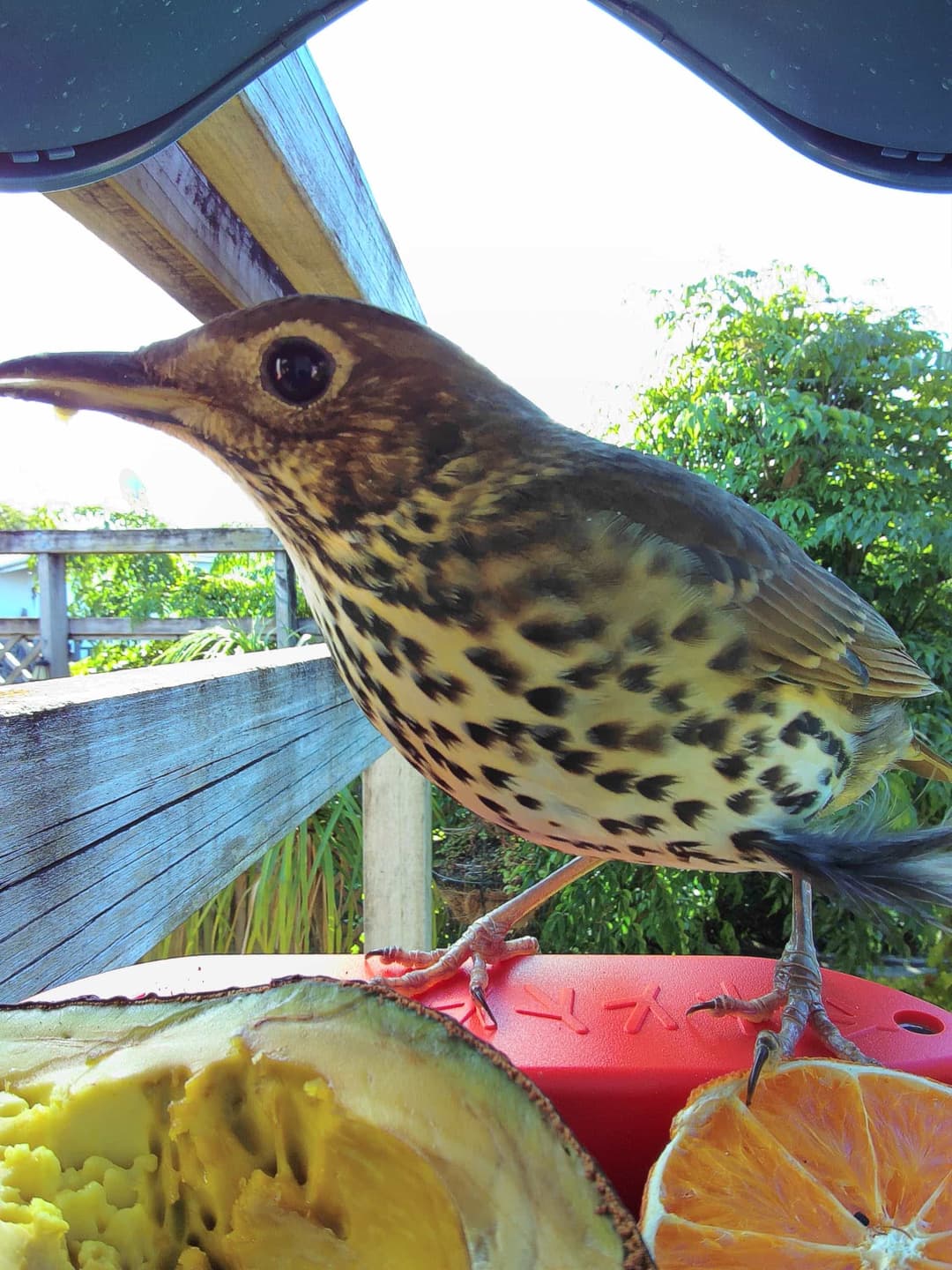
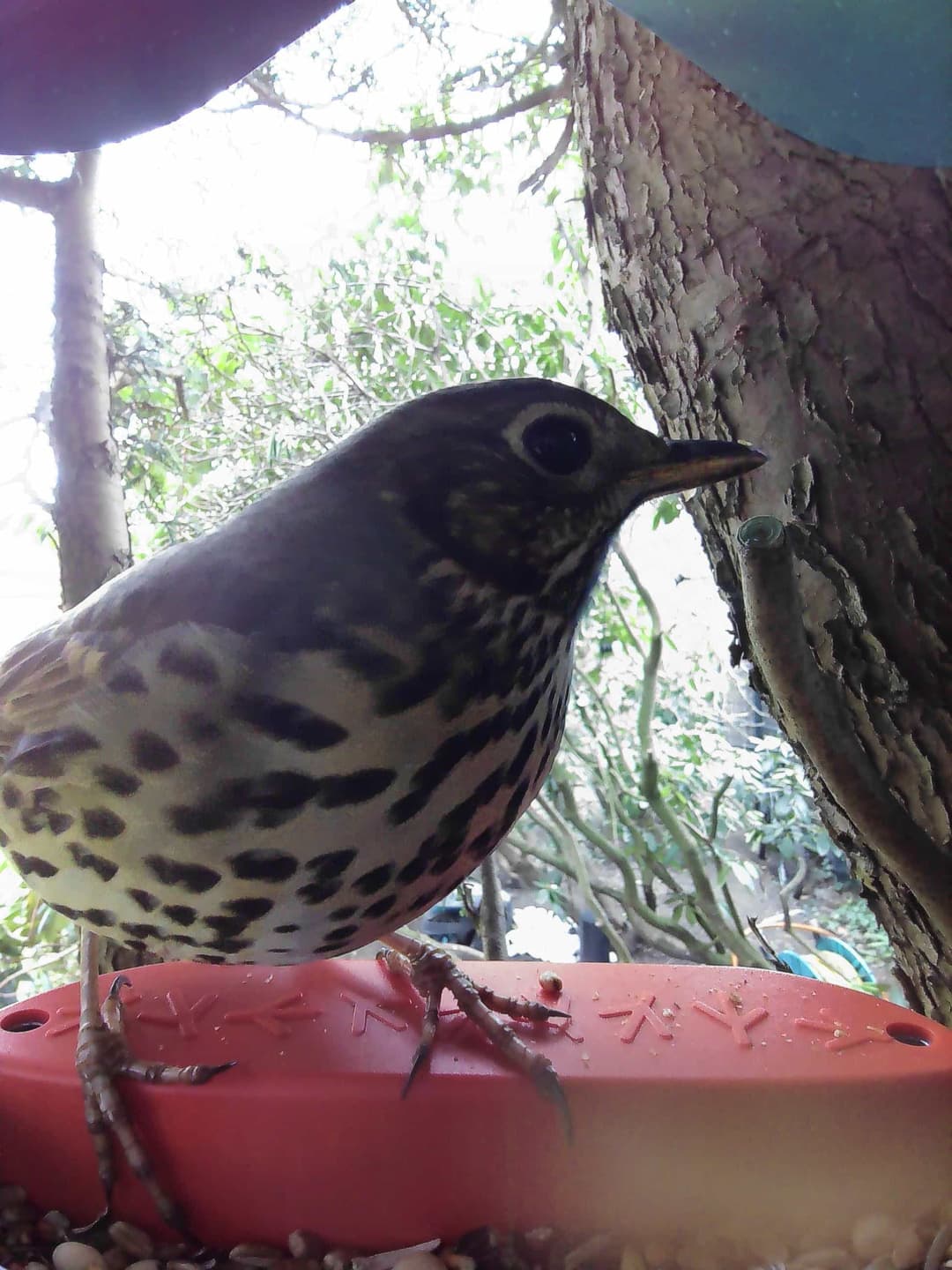
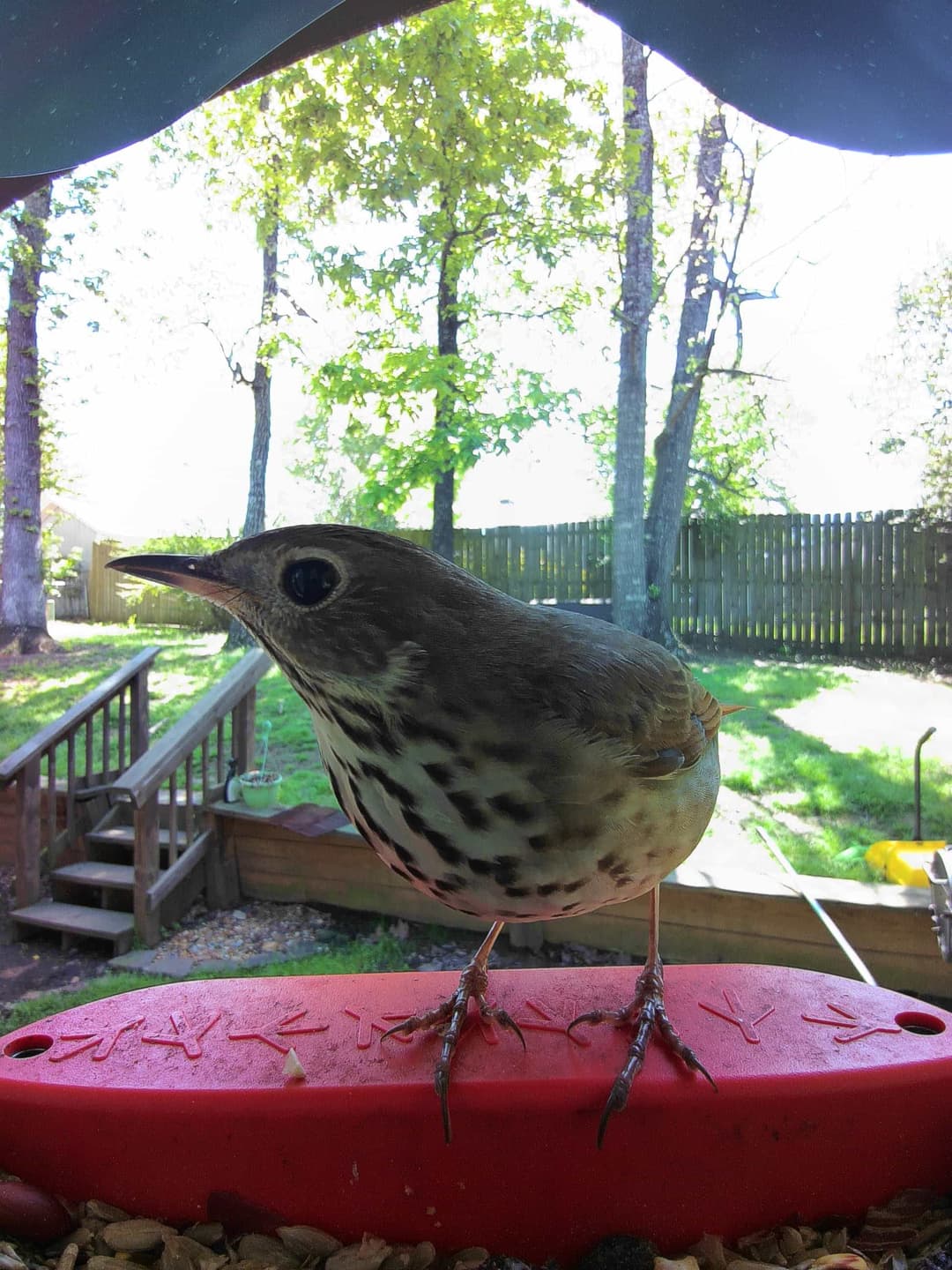
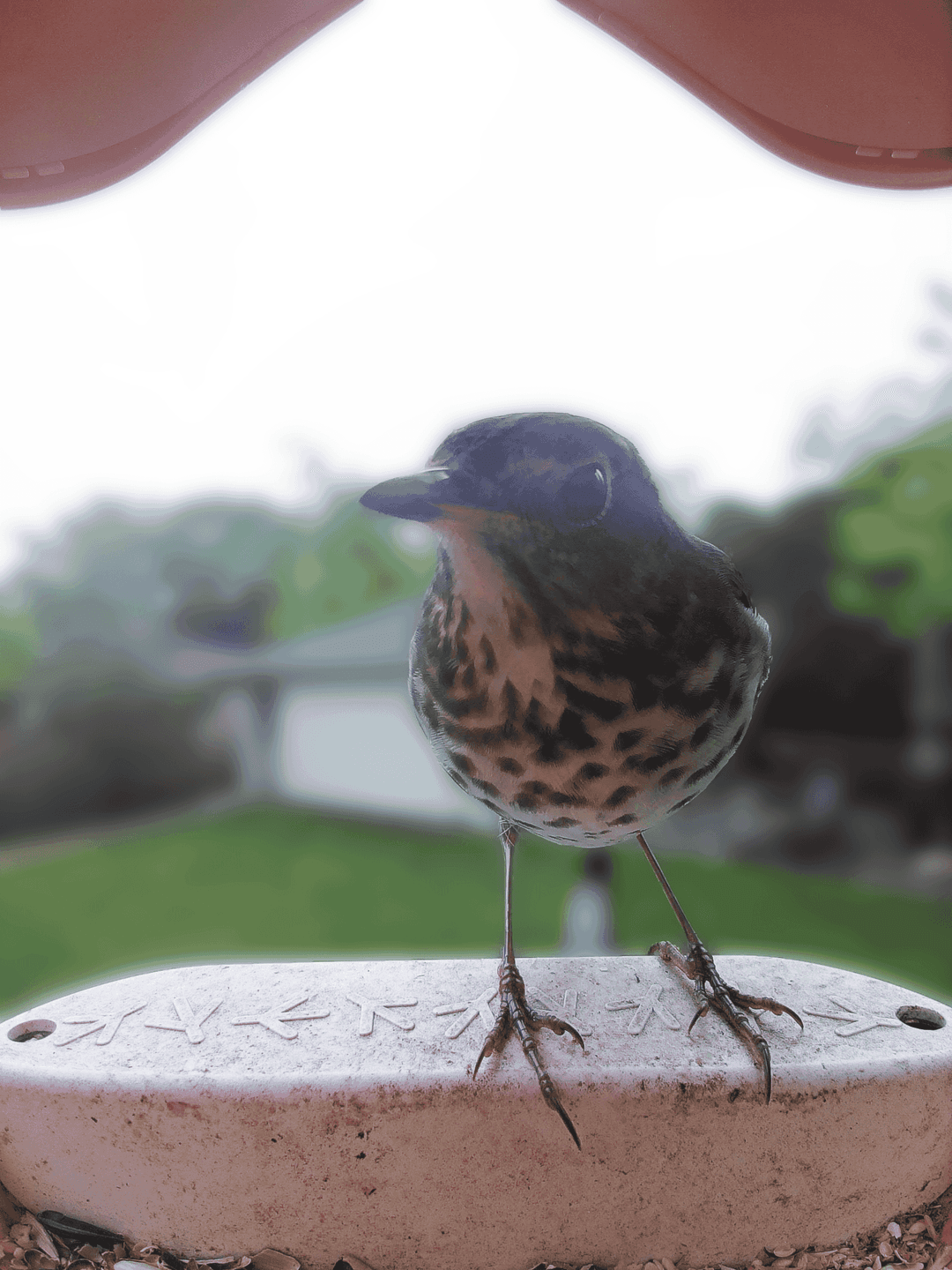
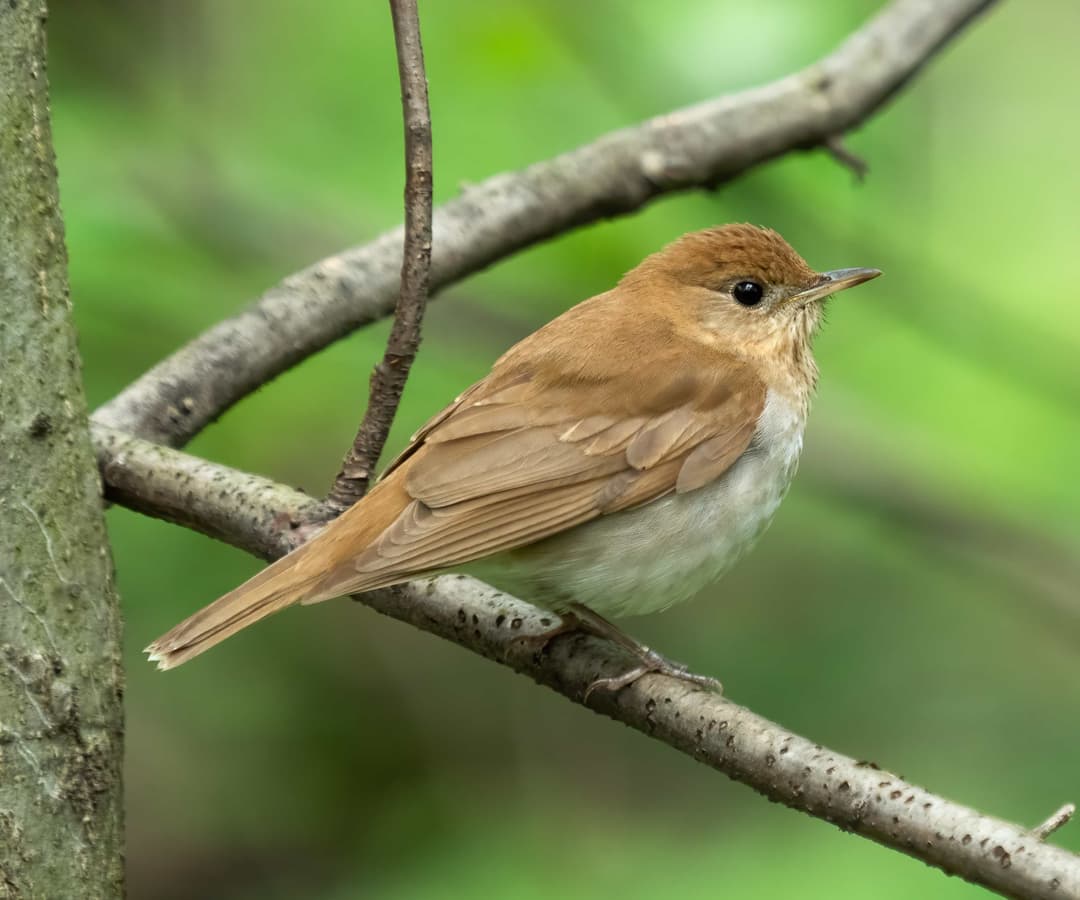
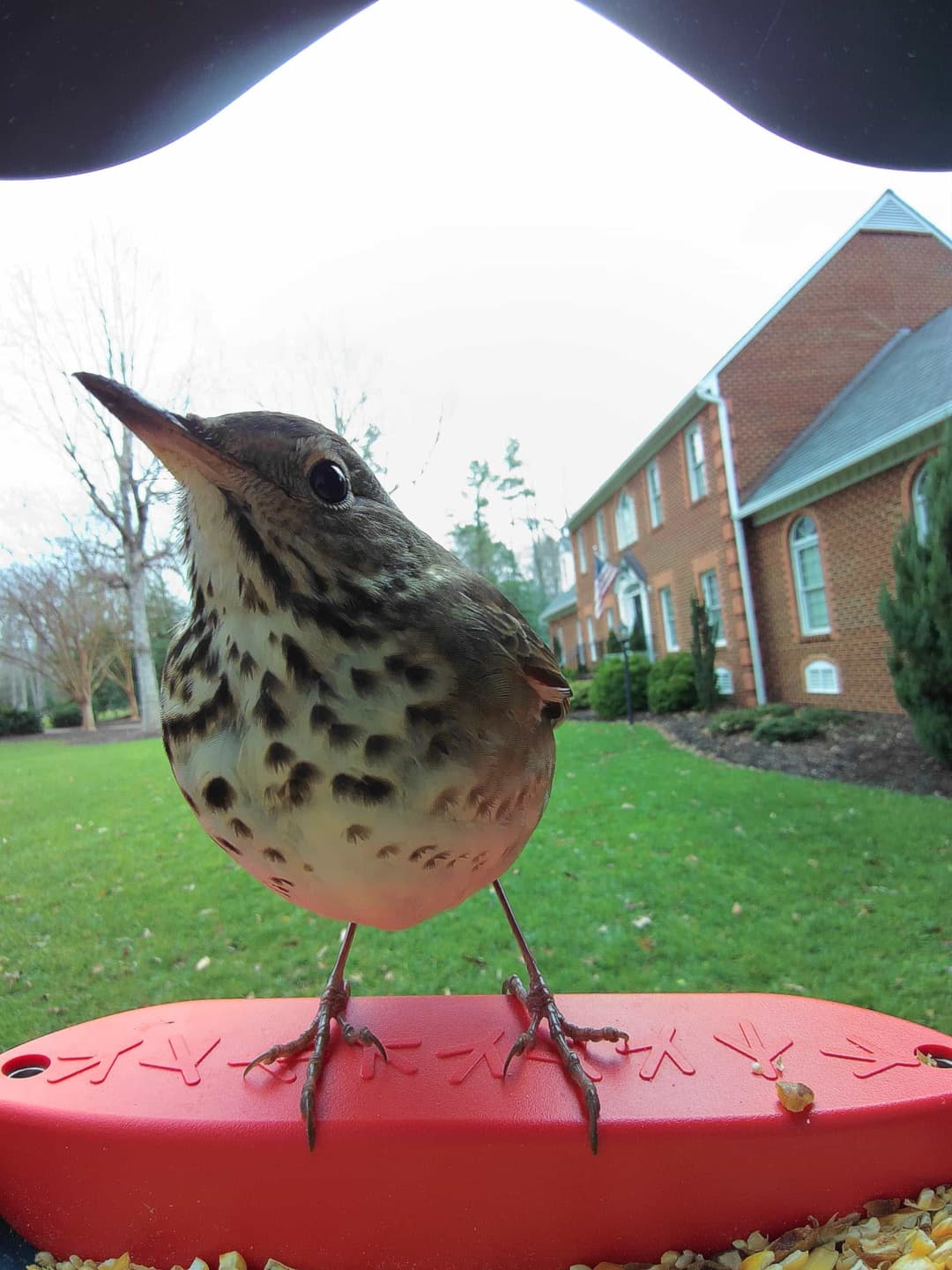
Thrushes are songbirds known for their brown to blue-grey upperparts and white underparts often with spots or markings. They have medium to long tails, and their size varies from small to medium. Some species have orange or red underwings, visible in flight.
Male vs female
In many thrush species, males and females have similar plumage, making it difficult to distinguish between them. However, in some species, males may have more vivid coloration or distinctive markings compared to females. There's often sexual dimorphism in size, with males being slightly larger.
Juvenile
Juvenile thrushes can resemble their parents, but they usually have duller plumage and less clear markings or spots. They may also be slightly smaller in size until full maturity. Their bills tend to be shorter and their feathers softer and fluffier.
Size
5.7 - 13.0 in/0.8 - 5.9 oz
There's more to learn about Thrush
View full detailsCommon Blackbird
Turdus merula
Also known as: Eurasian Blackbird
General appearance
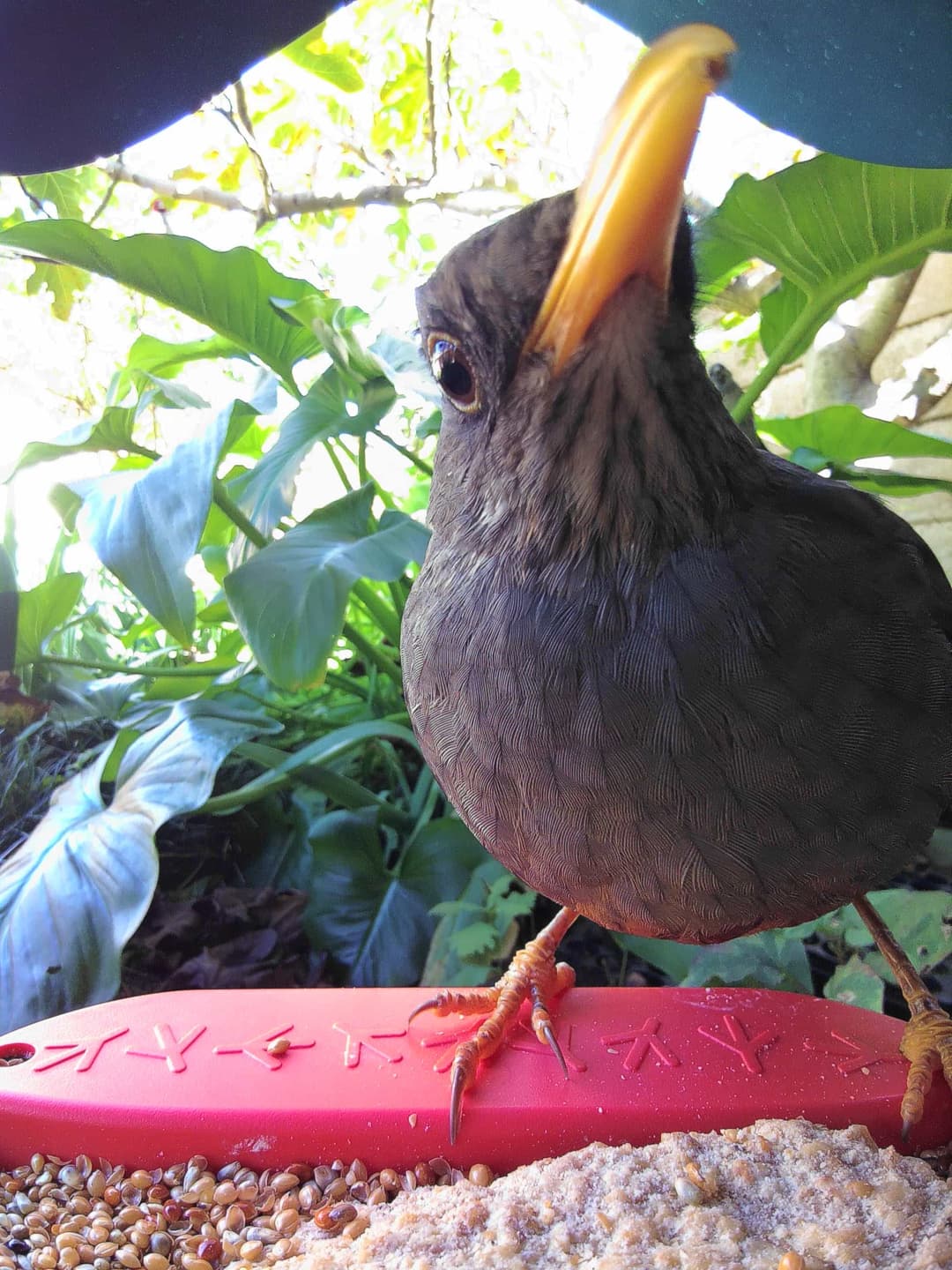
The common blackbird is medium-sized, measuring approximately 23-29 cm in length. They have slender bodies, long tails, and are known for their distinctive melodious songs. Their eyes are highlighted with a bright yellow ring, and they possess a sharp, pointed beak.
Male vs female
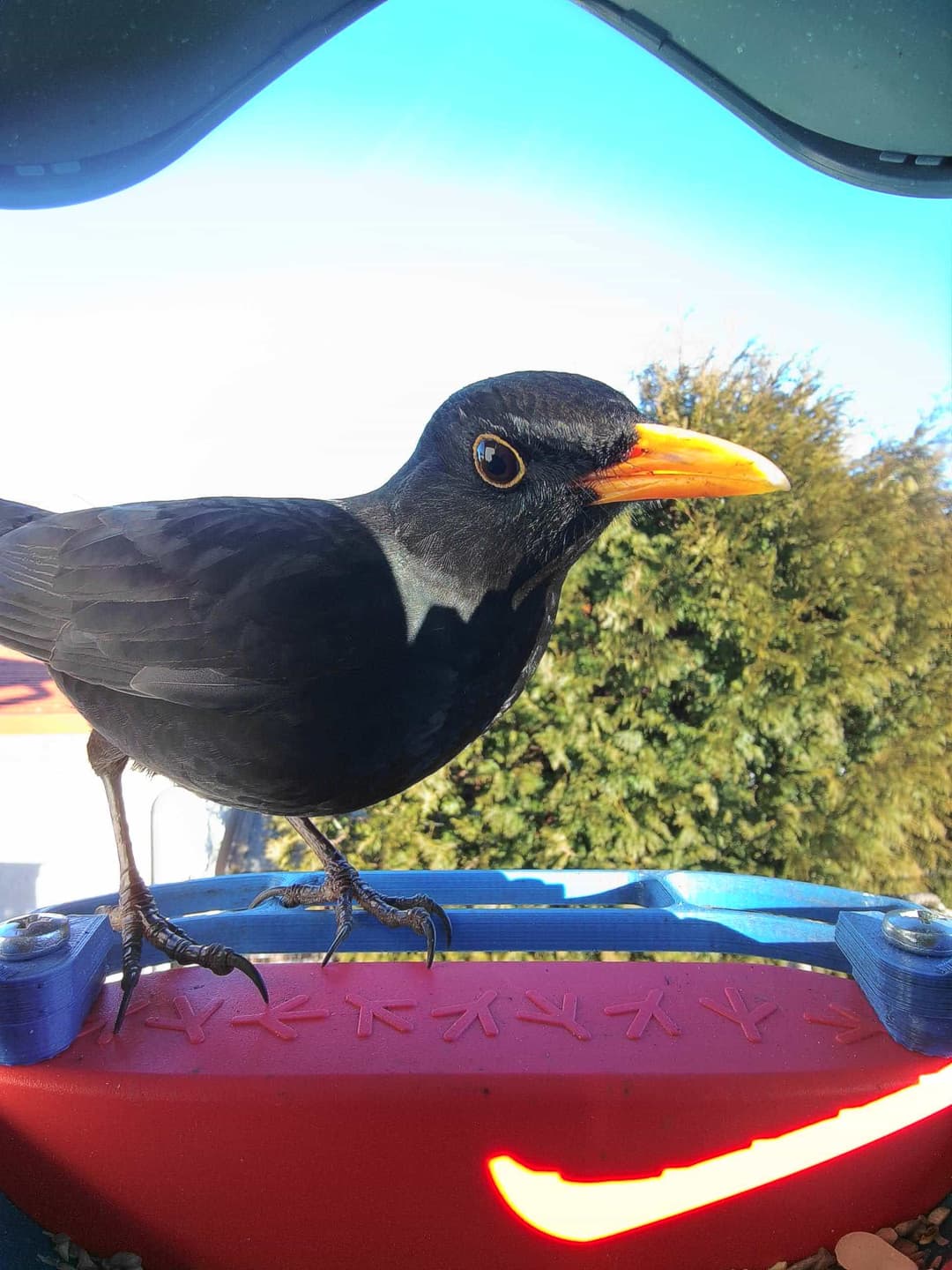
Males are predominantly jet black with a vivid orange-yellow beak, contributing to their striking appearance. Females, however, are brown with streaky plumage and a duller beak, serving as a form of camouflage during nesting. Both exhibit the characteristic yellow eye-ring, though it's more prominent in males.
Juvenile
Juvenile blackbirds have brownish plumage, often with speckled or mottled patterns, aiding in their camouflage. Unlike adults, they lack a yellow eye-ring and their beak is darker. As they mature, they'll gradually attain adult coloration. Observing them in woodlands or gardens, particularly in spring and summer, is easier when they are most active.
Size
9.3 - 11.4 in/3.0 - 4.8 oz
There's more to learn about Common Blackbird
View full detailsHow to tell the Thrush from the Common Blackbird
Visual differences
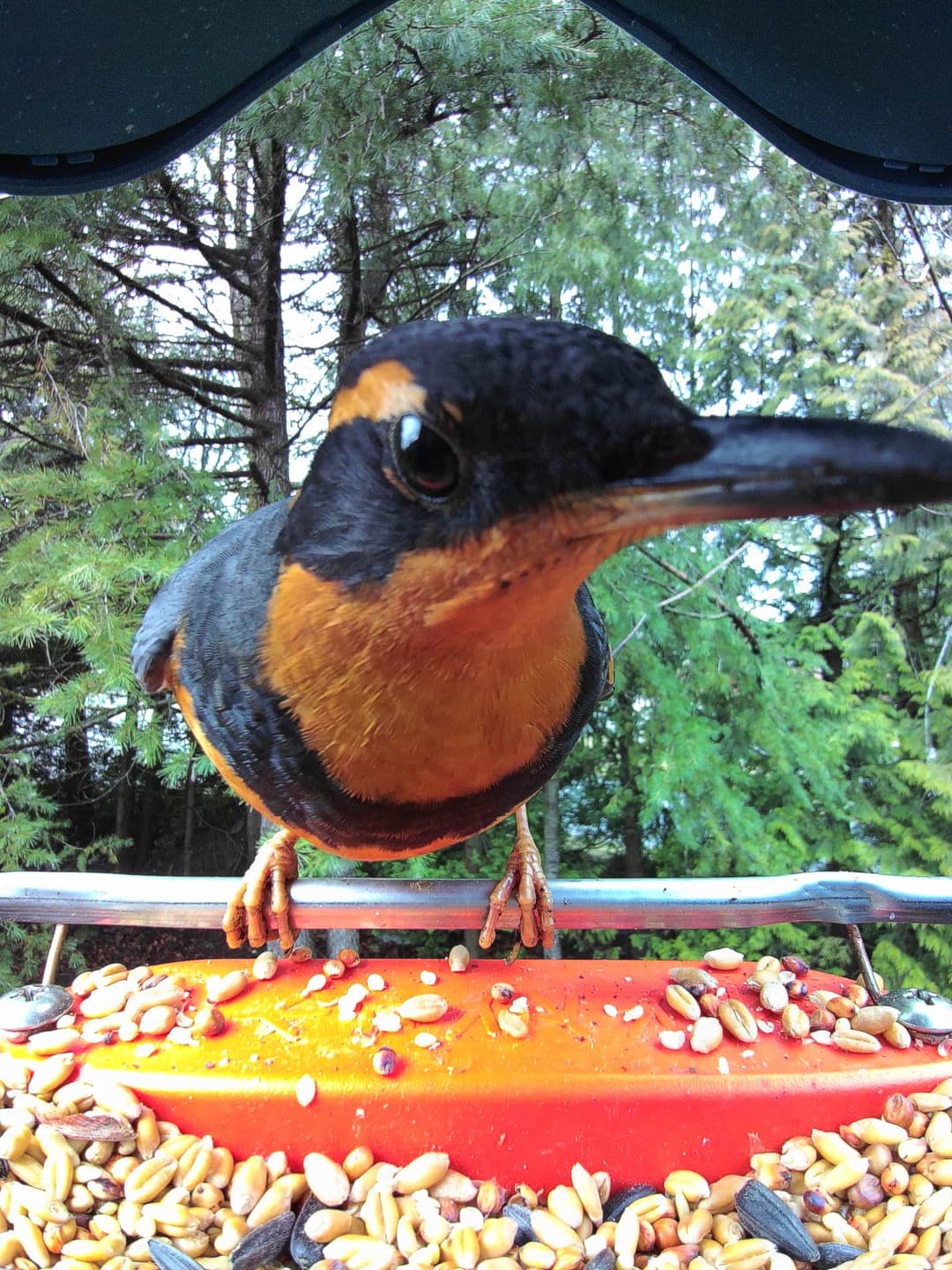
Thrushes generally have brown to blue-grey upperparts with white, often spotted underparts, and range from 5.7 to 13 inches in length. In contrast, common blackbirds are 9.3 to 11.4 inches long, with males displaying jet black plumage and vivid orange-yellow beaks, while females are brown with streaky patterns. Thrushes often have medium to long tails with red underwings visible in flight, whereas blackbirds have slender bodies with long tails and characteristic yellow eye-rings, more pronounced in males.
Key differences and behavior
Thrushes and common blackbirds both thrive in wooded and urban habitats, but thrushes favor denser undergrowth. Thrushes are notable seed dispersers and exhibit elaborate courtship displays with males offering food. In contrast, common blackbirds mate for life, with males primarily singing to attract females. Both species build cup-shaped nests, but thrush nests are more commonly in shrubs, while blackbird nests can be as low as 13 feet. Both species' diets shift seasonally; however, thrushes focus more on protein-rich insects and worms, whereas blackbirds also consume snails and seeds. At feeders, they both enjoy fruits, but blackbirds might eat mealworms, mirroring their natural diet. Thrush species have more varied migratory patterns and weight ranges (0.8-5.9 oz) compared to the more sedentary common blackbird (3-4.8 oz).
Still not sure? Here are more lookalikes!
Thrush vs American Robin

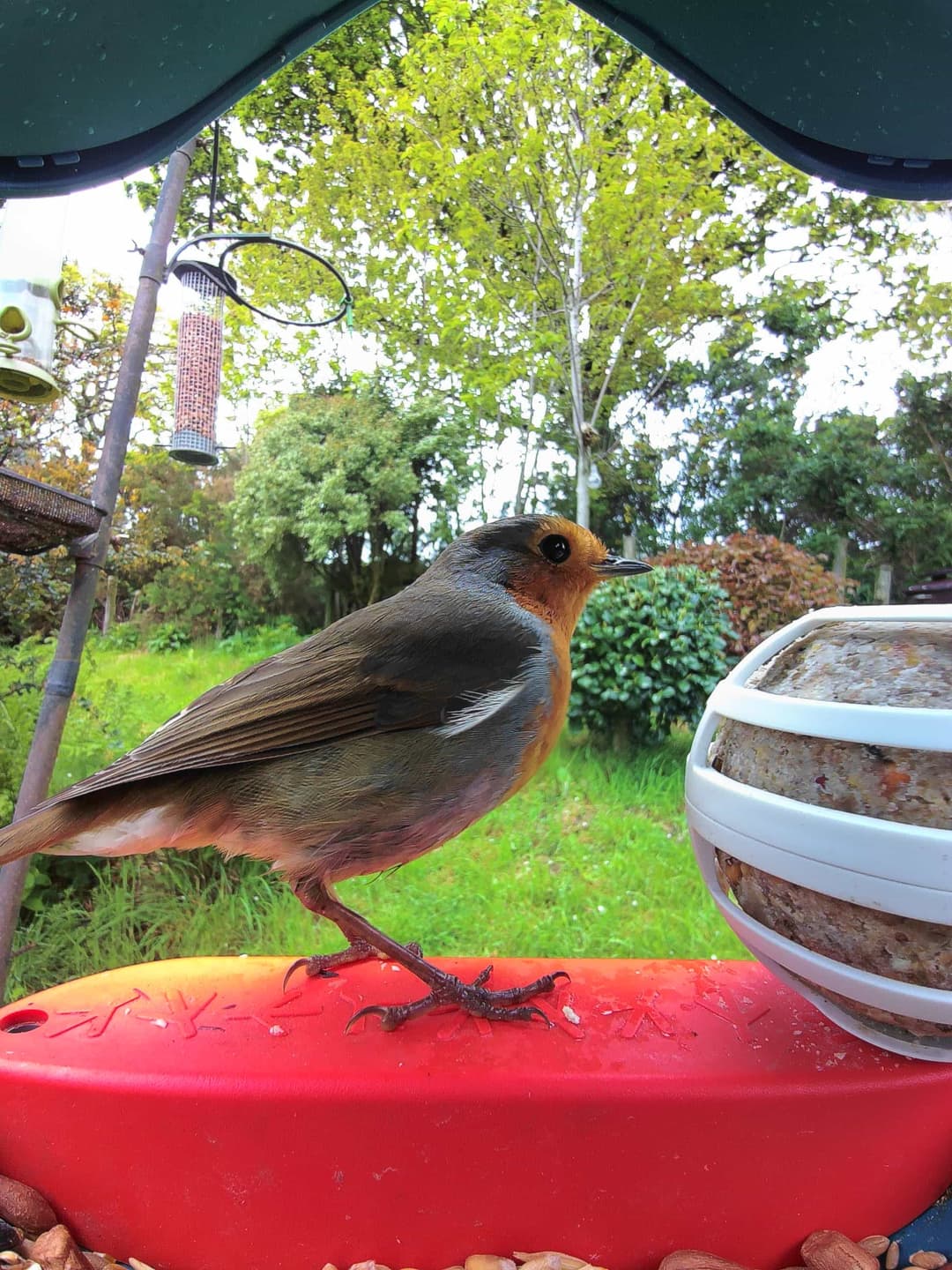
Thrush vs European Robin
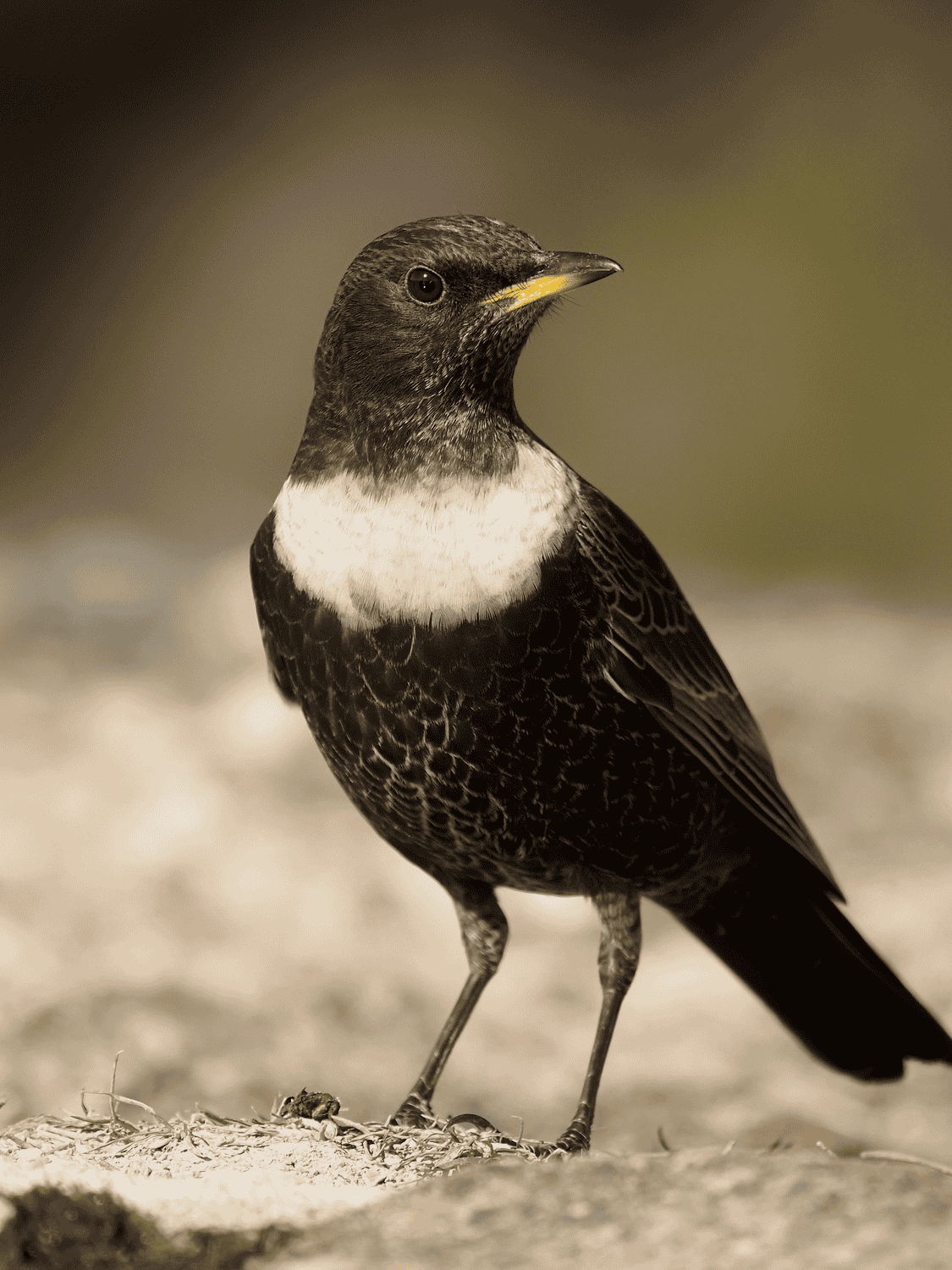
Common Blackbird vs Ring Ouzel
Thrush vs [Select a bird]

[Select a bird]
Pick a bird to compare
Common Blackbird vs [Select a bird]
[Select a bird]
Pick a bird to compare