
Hermit Thrush
Hermit Thrush
Catharus guttatus


Quick Identification guide
Quick Identification guide
- •
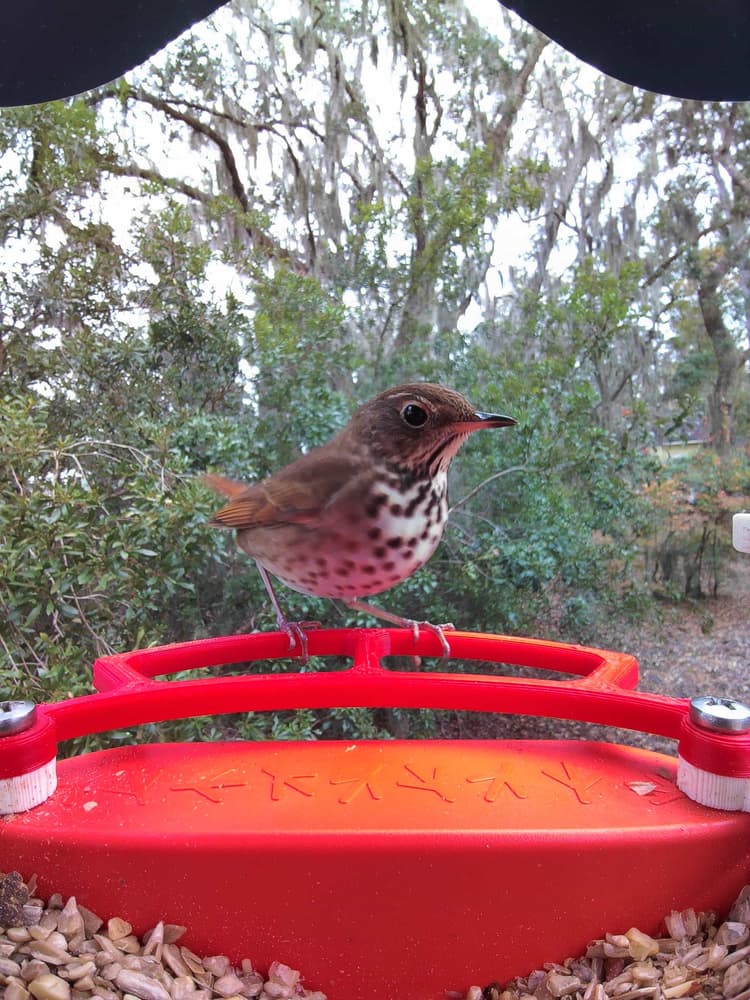
Shows a reddish-brown back and wings, setting it apart with a warm tone
- •
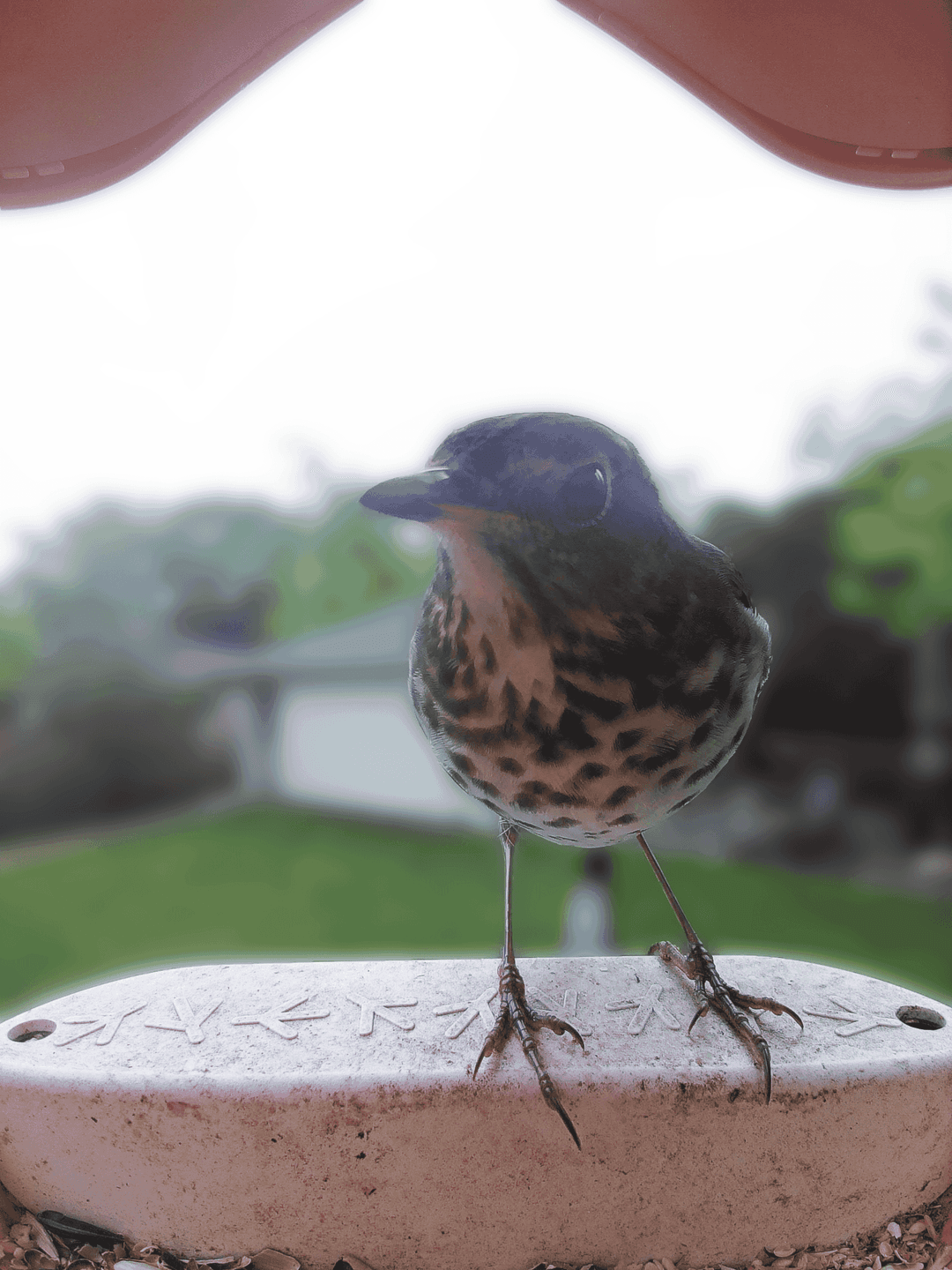
Features a white underbelly with distinct dark, round spots on the breast
- •
Has a slender, upright posture with a thin, straight beak suited for foraging
What does a hermit thrush sound like?
The hermit thrush's vocalizations consist of a series of clear, musical phrases, each on a distinct pitch. Its song begins with a piping introductory note followed by a reedy tremolo. Its call note is a low tuck. The dynamics of the calls vary, exhibiting flat, rising, and undulating patterns. The different call types sound reminiscent of a flute, a trill, or a whistle.


Description
These chunky little birds forage for food doing something called foot quivering; they shake the leaves under their feet with their feet to get to the insects underneath. They'd better find a whole lot of them because chicks can have quite the appetite and will even chow down on a salamander! They have a variety of calls, one of which can even sound like a miaowing kitten.
The hermit thrush can weigh between 23to37grams and be from14to18centimeters tall.
The typical lifespan of a Hermit Thrush is about 10 years, however, the longest-living recorded was 10 years and 10 months old. This is relatively long compared to other related thrush species. For example, the American Robin, a close relative, typically lives to around 6 years old. Robins share similar habitats and face the same predators, but their lifespan is comparatively shorter.
Did you know?
Most popular questions about hermit thrush
How to recognise a hermit thrush?
General appearance
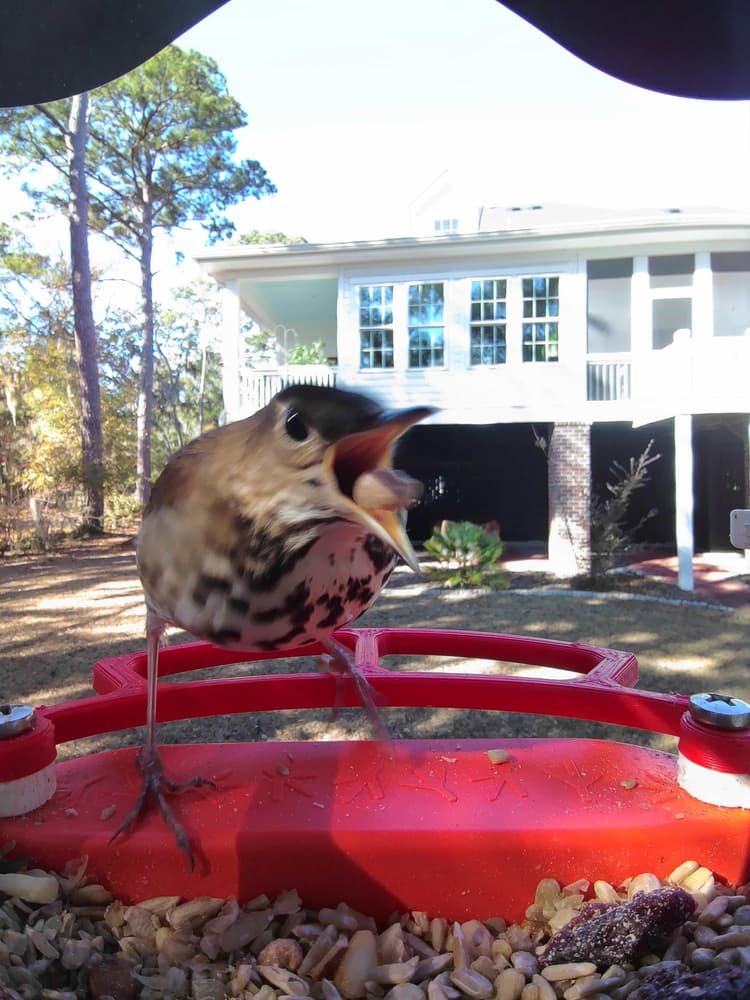
The hermit thrush is a medium-sized sparrow-like bird, measuring about 6-7 inches in length. Its plumage is mainly brown with a reddish-brown tail, distinct mottled spots on the breast, and a creamy underbelly. The throat area is white with dark spots. It has a pale eye ring and relatively long legs. Its pleasant, flute-like song makes it easier to identify during its singing season.
Male vs female
Males and females of the hermit thrush species are similar in appearance, with almost indistinguishable plumage. Both sexes share the same pattern and coloration, making it challenging to differentiate between them in the wild based solely on visual appearance.
Juvenile
Juvenile hermit thrushes resemble adults but with some differences. They generally have more pronounced streaking or spotting on their underparts, and their overall plumage may appear less crisp than that of mature birds. These birds gradually take on the adult coloration as they mature. During the transition from juvenile to adult, they can be identified by their less defined spots and slightly fluffier appearance.
Often mistaken for
Song Thrush vs Hermit Thrush
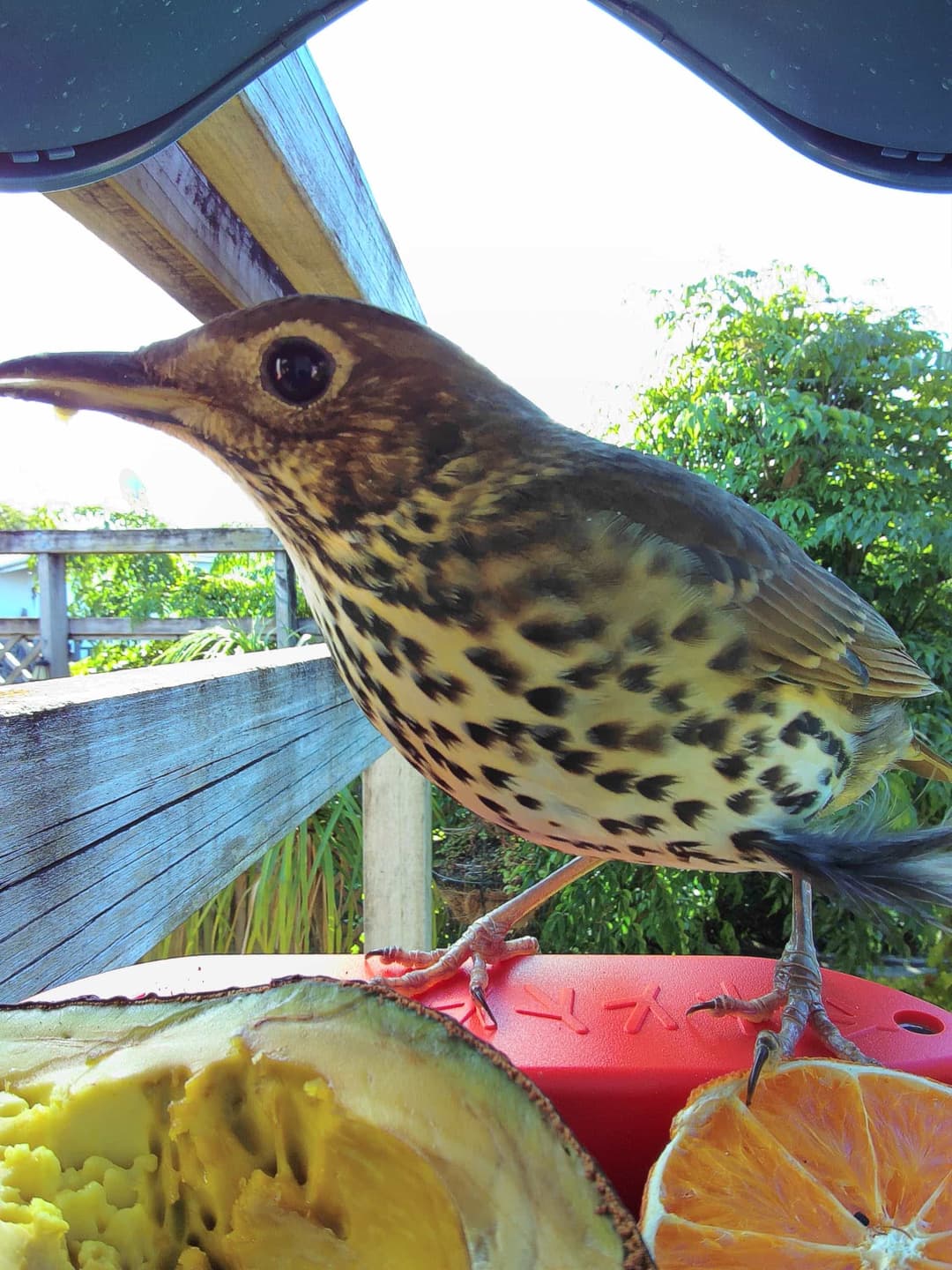
The Song Thrush is frequently mistaken for the Hermit Thrush due to their similar size and shape, but the Song Thrush has a more extensive spotting on its breast and a warmer, more uniform brown coloration.
Wood Thrush vs Hermit Thrush
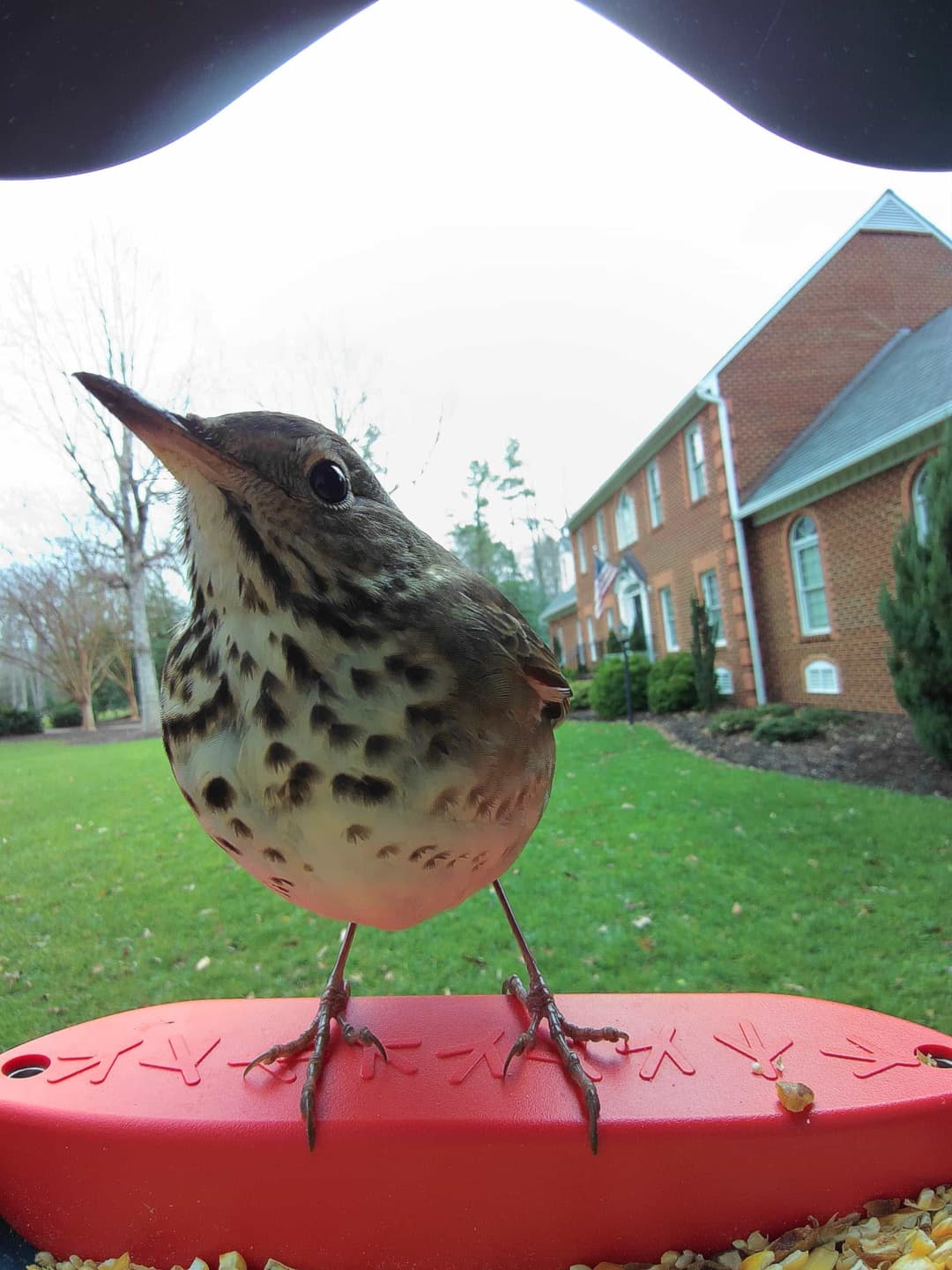
The Wood Thrush bears resemblance to the Hermit Thrush but can be distinguished by its larger size, more prominent spotting on the underparts, and a more reddish tone on the upperparts.
Swainson's Thrush vs Hermit Thrush
Similar in appearance, the Swainson's Thrush differs with its distinct eye ring and less defined spotting on the breast compared to the Hermit Thrush.
Varied Thrush vs Hermit Thrush
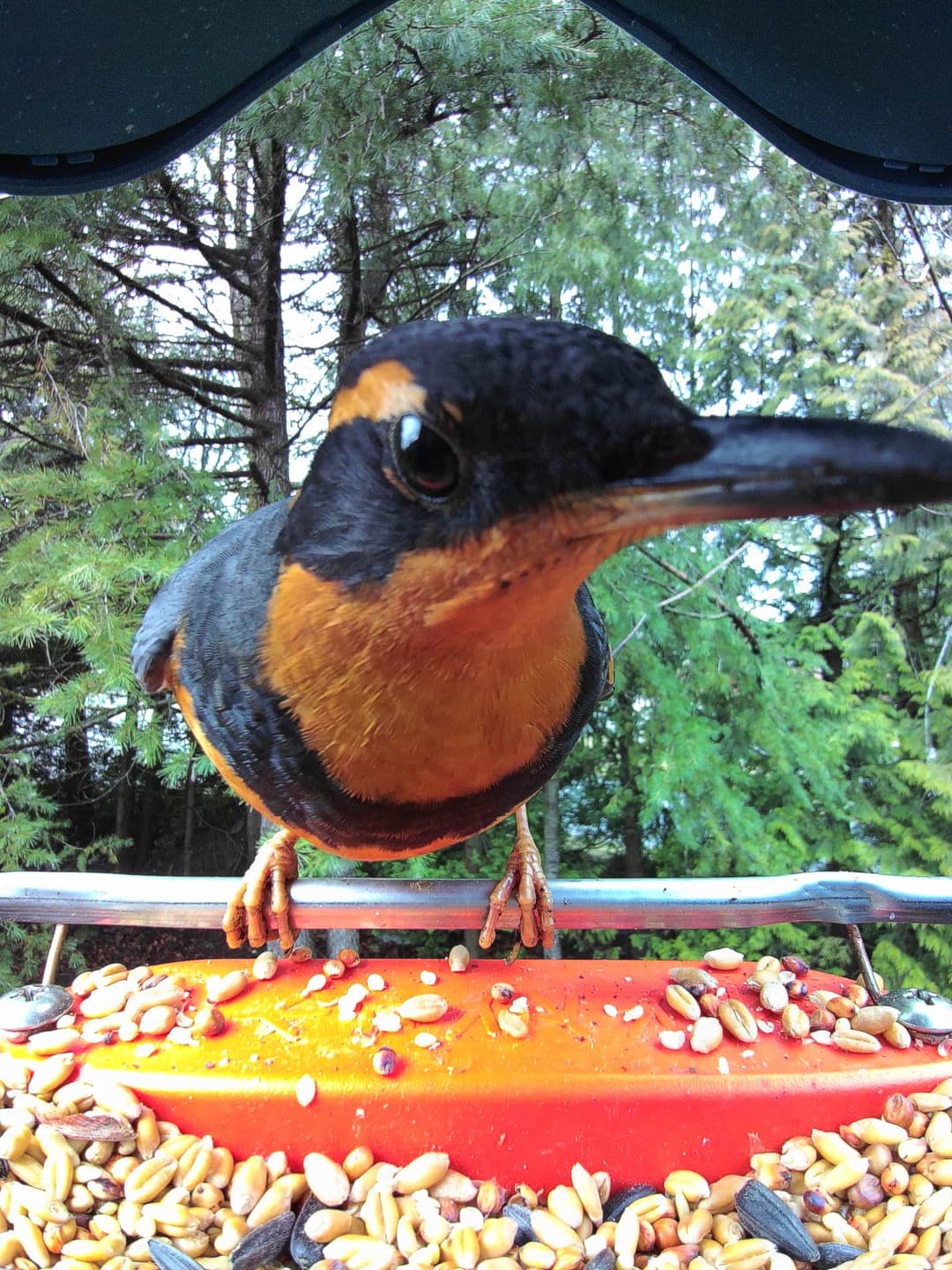
The Varied Thrush can be mistaken for the Hermit Thrush, but it features a more prominent dark breast band and brighter orange coloring on the underparts and wing bars.
Veery vs Hermit Thrush
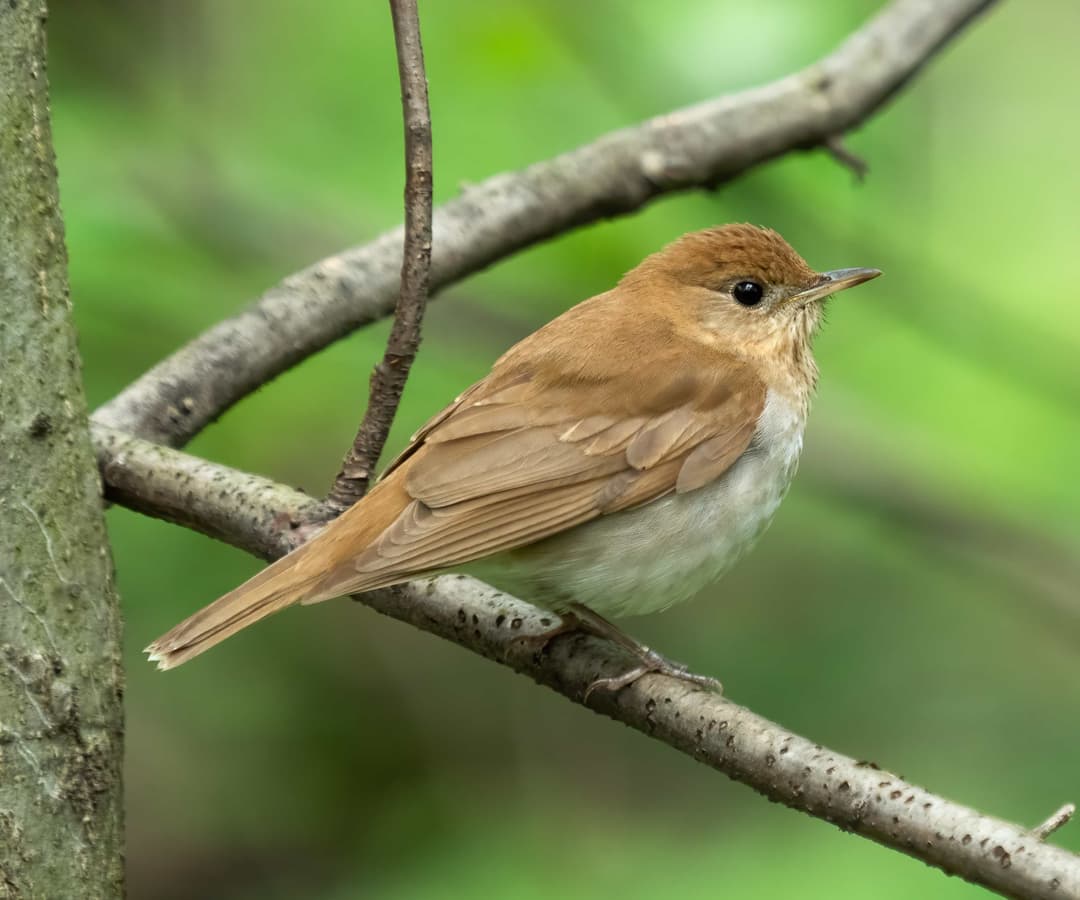
The Veery may resemble a Hermit Thrush but can be identified by its less pronounced spotting on the breast and a more uniform brown color overall.
Breeding and nesting habits of the hermit thrush
Mating behaviors
The hermit thrush engages in subtle mating behaviors. Males sing melodic songs from elevated perches to attract females. Singing is most prominent at dawn and dusk. Courtship involves the male flying around the female and performing fluttering displays.
Nesting details
Hermit thrushes build cup-shaped nests using grass, leaves, and twigs. Nests are typically situated in low shrubs or young coniferous trees, 3-10 feet off the ground. They occasionally nest on the ground among dense undergrowth, preferring areas with ample cover.
Eggs and chick-rearing
Females lay 3-4 pale blue eggs. Incubation lasts about 12-14 days, primarily performed by the female. Both parents feed the chicks, which fledge roughly 10-15 days after hatching. To support garden nesting, provide dense shrubs and avoid frequent disturbances.
What does a hermit thrush like to eat?
Fruits
Insects
Small animals
Spiders
Worms
Natural diet
The hermit thrush primarily feeds on a wide variety of insects and berries. Its insect diet includes beetles, ants, caterpillars, true bugs, grasshoppers, crickets, spiders, and earthworms, with an occasional small salamander. In winter, it shifts towards consuming more berries, such as elderberries, pokeberries, serviceberries, grapes, and mistletoe berries.
Bird feeders
The hermit thrush is less commonly seen at bird feeders compared to other birds, as it usually forages on the ground for its natural food sources of insects and berries.
Attracting hermit thrush: feeders and sites
Hermit thrushes are more likely to visit your yard if they detect familiar elements from their natural habitat. Opt for a platform or ground feeder, as these birds prefer to forage at low levels. Keep the feeder in a quiet, sheltered spot, preferably near dense shrubbery or low trees, as this mimics their favored forest floor surroundings.
Tasty treats: hermit thrush favorites
Hermit Thrushes enjoy a diet rich in insects, berries, and fruits. Consider filling your feeder with a mix of raisins, currants, chopped fruits and mealworms to attract them. Also, Bird Buddy seeds have proven to be a great favorite. Chosen by birdcare experts according to the season, these seeds provide the vital nutrients that the birds require, making them an ideal choice.
Extra efforts: encouraging the hermit thrush tour
In addition to providing suitable feeders and their favorite food, you can tempt the Hermit Thrush to stay by creating bird-friendly landscaping. Install a bird bath or a small pond for them to drink from and bathe in. Also, since hermit thrushes are known for their beautiful melodious songs, maybe your backyard can become the next big concert venue for these charming birds!
Where can you find hermit thrushes?

Primary habitat
The Hermit Thrush primarily resides in conifer or mixed woods, spruce woods, dry pine woods, sphagnum bogs, and forest floors. It can be found in mountains and thickly wooded canyons.
Additional range
The bird shows adaptability by occupying secondary habitats like burnt areas with standing dead trees. Throughout migration and winter periods, it can be found in various types of woodland.
Do they migrate?
The hermit thrush is a migratory bird, moving between its breeding grounds in the northern forests and its wintering areas in the southern United States and parts of Central America. It undertakes its migration earlier in the spring and later in the fall compared to other brown thrushes, with minimal overlap in timing. This species typically migrates at night. In the spring, hermit thrushes leave their wintering grounds as early as March, heading northward to breed. They arrive at their northern breeding sites, which include forests across Canada and the northern United States, by late April to May. In the fall, the migration back south begins in September and can extend into November. Key locations during migration include forested areas that provide suitable stopover habitat, such as woodlands and dense shrubberies where they can find food and shelter. In the winter, hermit thrushes are found across the southeastern United States, in habitats ranging from coastal forests to southern swamps, and even into the highlands of Central America. Their distinctive migratory pattern and timing help them avoid competition for food and resources, supporting their survival and successful reproduction.
What is the role of hermit thrushes in nature and how to protect them?
Conservation status
The hermit thrush is considered common, with numbers remaining stable. This species winters farther north compared to other brown thrushes, relying less on tropical forests, which may contribute to its stable status. While there are no immediate significant threats, habitat protection remains important to ensure its continued well-being. Conservation efforts focus on preserving both breeding and wintering habitats to support this adaptable bird. Overall, the hermit thrush faces fewer threats than some other migratory birds, largely due to its flexible habitat use.
Ecological role of hermit thrushes
Its role in the ecosystem
The Hermit Thrush plays a beneficial role in pest control within its ecosystem due to the variety of insects it consumes, including beetles, ants, caterpillars, true bugs, grasshoppers, and crickets. By consuming these insects, it helps keep their numbers in check, mitigating possible infestations. The Hermit Thrush’s role in seed dispersal is also essential. It eats a wide array of berries, especially in winter. When these seeds pass through the bird's digestive system and are excreted, they help spread these plant species to different areas, thus contributing to the expansion of plant biodiversity in the areas where they inhabit. Additionally, by foraging on the ground and in shrubs and trees, it helps in the aeration of soil.
How to help protect hermit thrushes
Preservation tips
Habitat preservation strategies
Promote the conservation of the Hermit Thrush by maintaining its primary habitat, dense woodland areas. These include coniferous forests, mixed deciduous-coniferous forests, and mountainous regions. Prevent deforestation and habitat fragmentation, which compromise the bird's breeding and feeding areas. Participate in tree-planting activities to restore these habitats. Advocate for responsible forestry practices and stricter land development guidelines, minimizing human intervention.
Community science initiatives
Involve the community in monitoring Hermit Thrush populations by organizing bird-watching events and reporting observations to a centralized database. Promote educational programs to raise awareness about this species and promote conservation principles. Encourage citizen participation in bird counts, such as the Great Backyard Bird Count or the Christmas Bird Count, providing valuable data for scientists. Involve schools in nest box programs, facilitating habitat provision and fostering a sense of stewardship among young people.