
Ring Ouzel
Ring Ouzel
Turdus torquatus
Quick Identification guide
Quick Identification guide
Male
- •
black plumage with a striking white crescent on chest
- •
pale wing panel visible in flight
- •
slim, slightly curved beak suited for foraging berries
Female
- •
brownish-black feathers with a less distinct white crescent on chest
- •
less conspicuous pale wing panel compared to males
- •
delicate, slightly curved beak similar in shape to the male
What does a ring ouzel sound like?
The Ring Ouzel exhibits a repertoire of various sounds. Its typical call is a harsh, raspy "chack-chack" or "tuk", similar to a Blackbird's alarm call, often emitted during flight. Its song, often heard during twilight or at night, features a series of clear, melodious, flute-like whistles, mixed with distinct cackling notes. The song varies among individuals, but always with a melancholic tone. This thrush also mimics the songs of other bird species, and notably sings from high, prominent perches or during flight.
Description
Did you know that ouzel is an old name for a common blackbird? Like blackbirds, these are songbirds and males most like to show off their vocal chops at dawn and sunset. They are victims of common cuckoos, who should really reconsider their choice of foster parent in this case; if the cuckoo doesn't manage to evict the host's eggs, it doesn't stand a chance competing for food; and if it does, then the ouzel parents flat out refuse to feed it!
The ring ouzel can weigh between 90to138grams and be from23to24centimeters tall.
The Ring Ouzel typically lives for around 5 years. This lifespan is moderately shorter than related species such as the Blackbird, which usually lives for 6 years or longer. However, it's worth mentioning that the maximum recorded age for a Ring Ouzel is almost 9 years, showcasing individual variability within the species.
Did you know?
Most popular questions about ring ouzel
How to recognise a ring ouzel?
General appearance
The Ring Ouzel is a small bird relative to the blackbird family, with a length of about 24-26 cm. It has a short tail and long wings, useful for its migration habits. Its plumage is predominantly black or dark grey, with a distinctive white breast-band, giving it its 'ring' moniker.
Male vs female
There is slight sexual dimorphism within the Ring Ouzel's appearance. Males possess a starkly black plumage that adopts a blue sheen in direct sunlight, and their white breast-band is typically broad and clearly defined. Females, however, present a browner coloration with a thinner, sometimes indistinct, white band.
Juvenile
Juvenile Ring Ouzels bear a resemblance to adults but are more spotted in appearance. Their breast-band is blurry and less defined, and their plumage often contains buff-coloured edges. They adopt adult-like appearances after their first winter, yet young males may still exhibit spotted plumage on their underparts.
Often mistaken for
Common Blackbird vs Ring Ouzel
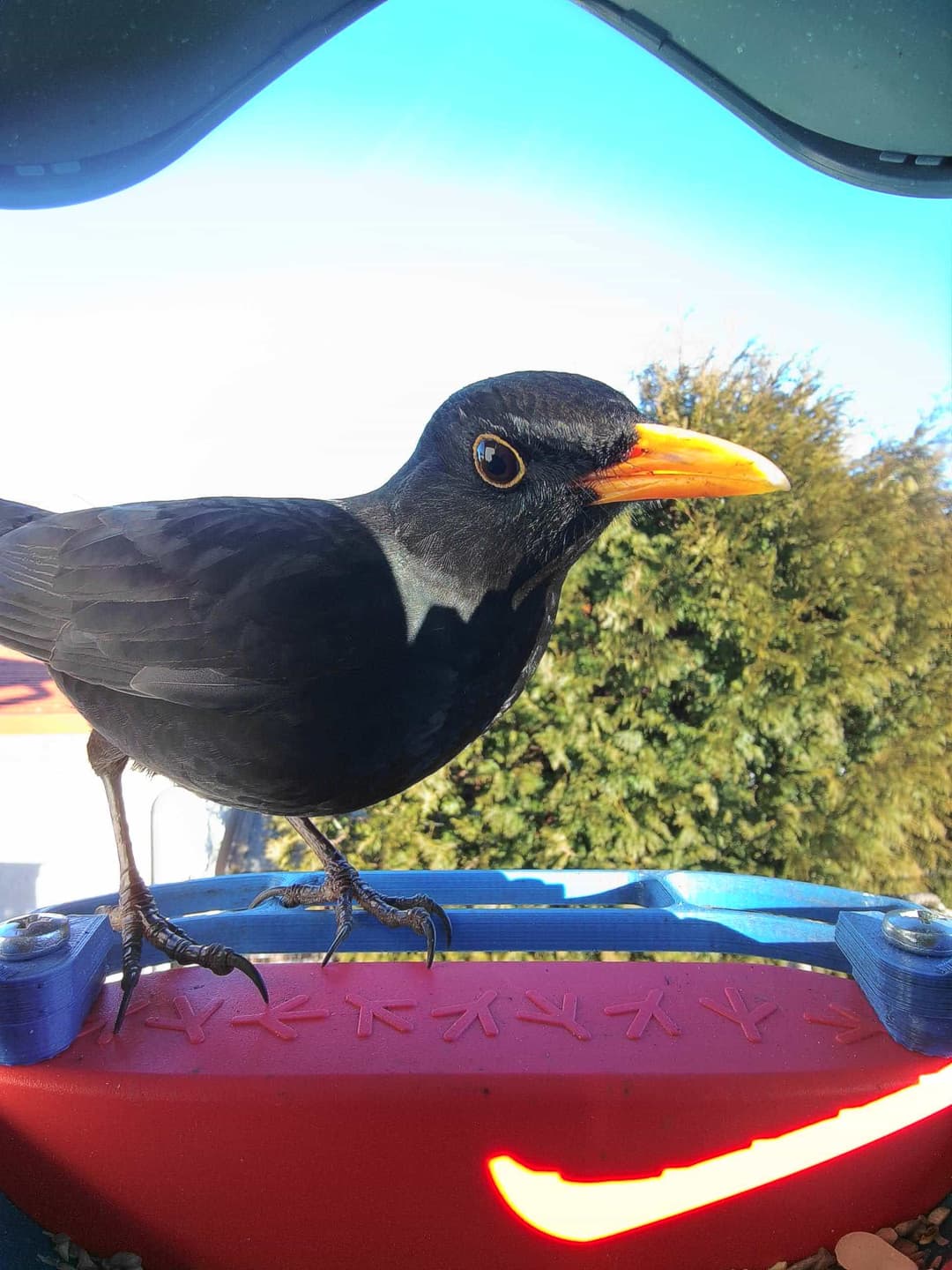
The Common Blackbird closely resembles the Ring Ouzel, but the male Common Blackbird is entirely black with a yellow bill, while the Ring Ouzel has a distinctive white crescent band across its chest.
Breeding and nesting habits of the ring ouzel
Mating behaviors
Ring ouzels engage in vocal displays to attract mates, with males establishing territories and singing from prominent perches to ward off rivals and attract females.
Nesting details
Nests are typically built on steep hillsides, in heather or low shrubs, and sometimes in trees. They are constructed using grass, moss, and twigs, lined with mud for stability.
Eggs and chick-rearing
Females lay 3-5 eggs, incubating them for about two weeks. Both parents participate in feeding the chicks, which fledge after roughly two weeks, although they remain under parental care until fully independent.
What does a ring ouzel like to eat?
Berries
Crustaceans
Fruits
Insects
Seeds
Small animals
Snails
Spiders
Worms
Natural diet
The ring ouzel primarily feeds on a variety of invertebrates during the breeding season, including earthworms, beetles, and other insects. It also consumes a significant amount of fruit and berries, such as rowan berries, hawthorn, and juniper, especially in the autumn and winter months.
Bird feeders
While the ring ouzel is not a common visitor to bird feeders, it may occasionally be attracted to offerings such as suet, mealworms, and various types of berries. Providing a naturalistic garden environment with native shrubs and trees can also support its dietary needs.
Favorite snacks for ring ouzels
Ring Ouzels are wild birds that love to snack on insects, berries, fruits, and seeds. You can particularly attract them using Bird Buddy seeds. Bird Buddy seeds are expertly chosen based on the season and are known to produce the best results. These seeds are nutrient-rich and attract a wide range of birds, making them a great choice for your feeder.
Ideal feeder types for ring ouzels
Ring Ouzels generally prefer feeders that are hung at a medium height with sloping roofs to protect them from weather elements. They are quite shy, so it's a good idea to place feeders in quieter areas of your yard, away from high traffic. Also, ensure there is a water source nearby as this tends to encourage them to stick around.
Engaging tricks to attract ring ouzels
Planting some of their favorite berry or fruit-bearing trees in your yard can entice Ring Ouzels. This way, the trees give them a sense of a natural habitat, offering them comfort and security. This not only attracts them but also encourages them to stay longer or even nest. A fun trick could be to play soft bird songs which can make them feel welcome in your yard.
Where can you find ring ouzels?

Primary habitat
The Ring Ouzel typically inhabits upland regions of Great Britain, especially rocky, heather-covered hills and moorlands.
Additional range
It also populates alpine regions throughout mainland Europe and Scandinavia. During winter months, the bird migrates to the mountainous regions of northern Africa and southern Europe.
Do they migrate?
The ring ouzel is a migratory bird. It breeds in Europe, mainly in mountainous regions such as the Scottish Highlands, the Scandinavian mountains, and the Alps. In autumn, typically from September to October, they migrate to southern Europe and North Africa for the winter. Their migration route includes traveling southwest from their breeding grounds. Key stopover locations during migration include coastal areas and mountain passes, where they can refuel on berries and insects. Significant stopover sites are found on the French coast and in parts of Iberia. During the winter, ring ouzels reside in countries such as Spain, Portugal, and Morocco, where they inhabit open woodlands, scrub, and rocky hillsides with abundant fruit resources. Some may reach as far as Algeria and Tunisia. In spring, between March and April, they reverse their route to return to their breeding habitats. The migration is driven by the need for food resources that are more readily available in the milder climates of their wintering grounds, allowing them to survive the harsh winters of their breeding areas.
What is the role of ring ouzels in nature and how to protect them?
Conservation status
The ring ouzel is currently classified as a species of conservation concern in various parts of its range, considered vulnerable rather than common or endangered. The primary threats include habitat loss due to changes in land use, especially in its upland breeding habitats, and climate change affecting its migratory patterns. Conservation efforts focus on habitat protection and restoration, as well as monitoring populations to better understand and mitigate key threats. Programs also aim to raise awareness among local communities to support conservation initiatives and protect critical nesting and feeding sites.
Ecological role of ring ouzels
Its role in the ecosystem
The Ring Ouzel, a member of the thrush family, fulfills an important role within its ecosystem that contributes to maintaining a balance in certain pest populations and aiding in seed dispersal. Specifically, these birds have a diet comprised mainly of invertebrates, caterpillars, earthworms, and various kinds of berries. Through their feeding habits, they aid in pest control by consuming insects that could potentially harm plant life in their habitat. Additionally, the Ring Ouzel helps facilitate seed dispersal in their given ecosystems, particularly through their consumption of various fruits and berries. By digesting these fruits and excreting the seeds in different locations, they contribute to plant biodiversity and spread the range of certain plant species. Thus, Ring Ouzels play a vital role in ecological balance and plant propagation.
How to help protect ring ouzels
Preservation tips
Habitat preservation strategies
To support ring ouzel conservation, start by preserving and managing their habitats. This includes upland areas with crags, gullies, and bilberry. Regularly thin woodland regions to ensure ample ground-level vegetation for feeding. Discourage human disturbance in these areas particularly during breeding season from April to July. Promote responsible walking and climbing activities to mitigate disturbances.
Community science initiatives
Involve the community in citizen science projects to monitor ring ouzel populations and their habitats. Educate the community about the importance of these birds and ways to protect them. Support national and local wildlife organizations that work towards ring ouzel conservation. Encourage reporting of sightings to relevant organizations to aid in monitoring and research efforts. Promote and participate in habitat restoration projects like reforestation.