
Swainson's Thrush
Swainson's Thrush
Also known as: Olive-Backed Thrush, Russet-Backed Thrush
Catharus ustulatus


Quick Identification guide
Quick Identification guide
Male
- •
olive-brown upperparts with a buff-colored eyering
- •
pale underparts with a faintly spotted chest
- •
Delicate slightly downcurved bill
Female
- •
olive-brown upperparts similar to the male with slightly lighter tones
- •
paler underparts and distinct buff eyering
- •
Shares the male's slightly downcurved bill shape
What does a Swainson's thrush sound like?
The vocalizations of the Swainson's Thrush include a series of reedy, spiraling notes that inflect upward, creating a melodious, flute-like song. The call's pattern has a characteristic rising, undulating nature, with the chirp, chip, hi, whistle sounds further adding to the bird's rich aural profile. These distinctive sounds make their song immediately appreciable, exhibiting an evocative charm and a serene rhythm.


Description
Sounds like summer whenever a Swainson's thrush is around! The sweet musical stylings of these songbirds are the beloved soundtrack of summer mornings and evenings. Good luck pinpointing where the songster is, though! Not only do these energetic birds move around a lot when they sing, they sometimes sing quietly, making it seem like the song is coming from somewhere far away.
The Swainson's thrush can weigh between 23to45grams and be from16to19centimeters tall.
The Swainson's thrush typically has a lifespan of 8-10 years in the wild. This is slightly longer than similar thrush species like the Hermit thrush and Wood thrush. As with most birds, lifespan can be influenced by a variety of factors including predation, disease, and environmental changes.
Did you know?
Most popular questions about Swainson's thrush
How to recognise a Swainson's thrush?
General appearance
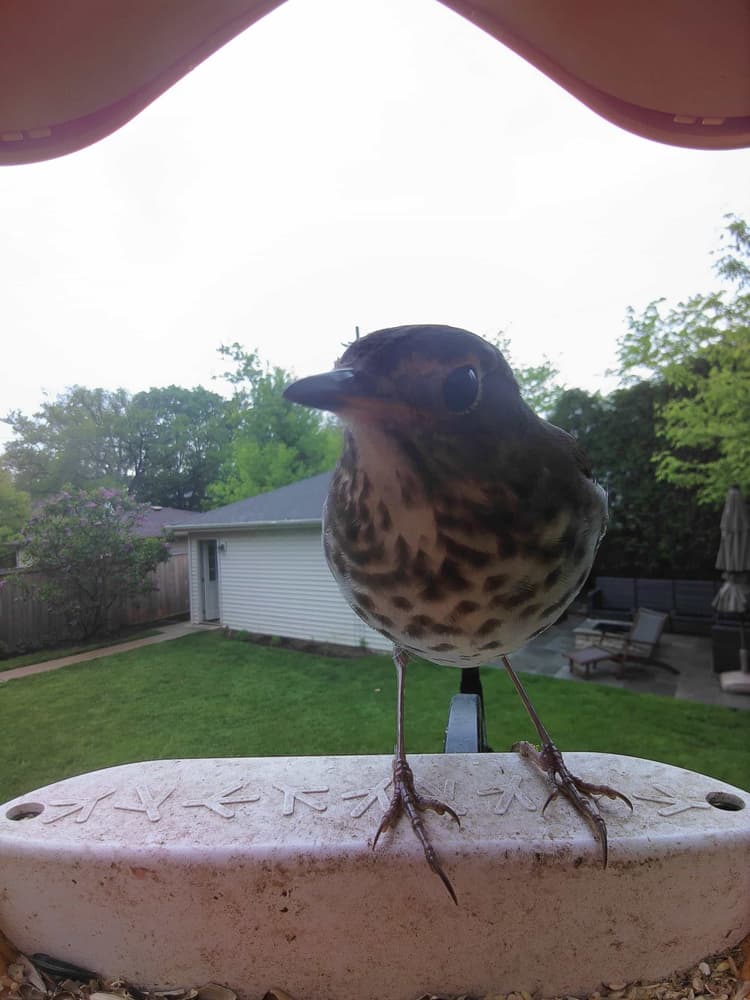
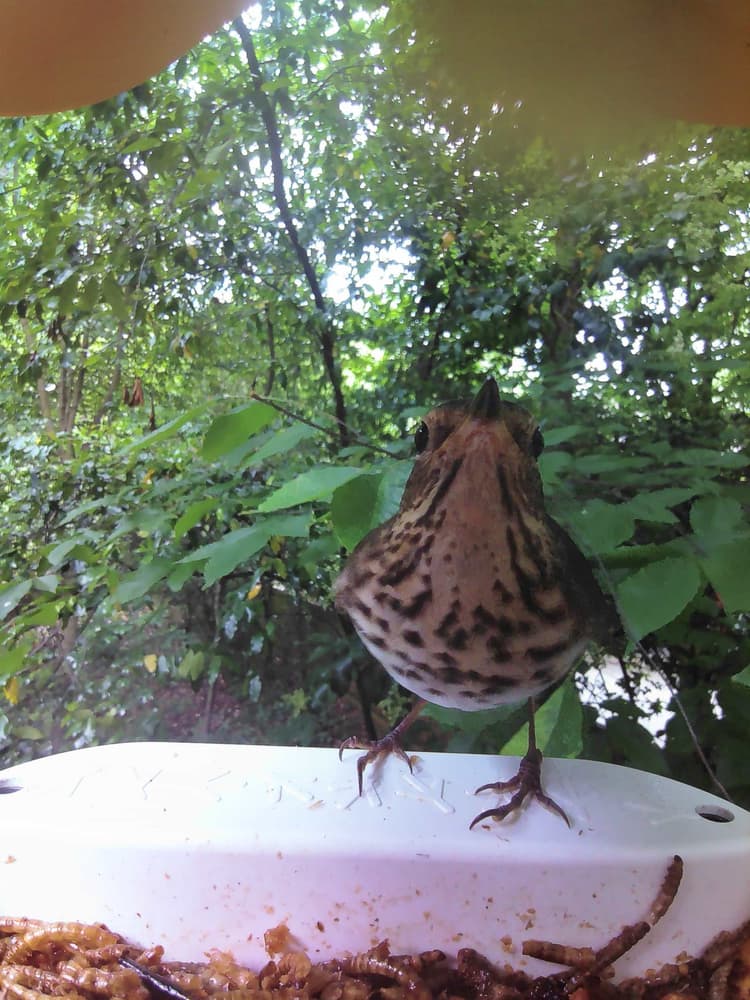
Swainson's thrush is a medium-sized thrush with a length of about 16-20 cm and a wingspan of 30-33 cm. It is characterized by olive-brown upperparts, pale underparts with a buffy wash on the breast, and distinct dark spots on the throat and chest. The bird features a pale, prominent eye-ring, giving it a spectacled appearance. The legs are pink, and the bill is relatively short and straight.
Male vs female
Males and females of Swainson's thrush appear similar, making them difficult to distinguish visually. Both sexes share the same coloration and markings. The slight size differences are not noticeable without direct comparison.
Juvenile
Juvenile Swainson's thrushes resemble adults but tend to have more rufous tones in their plumage. They may exhibit more pronounced spotting across the breast and a slightly duller appearance overall. The eye-ring remains noticeable in juveniles, aiding in identification.
Often mistaken for
Hermit Thrush vs Swainson's Thrush
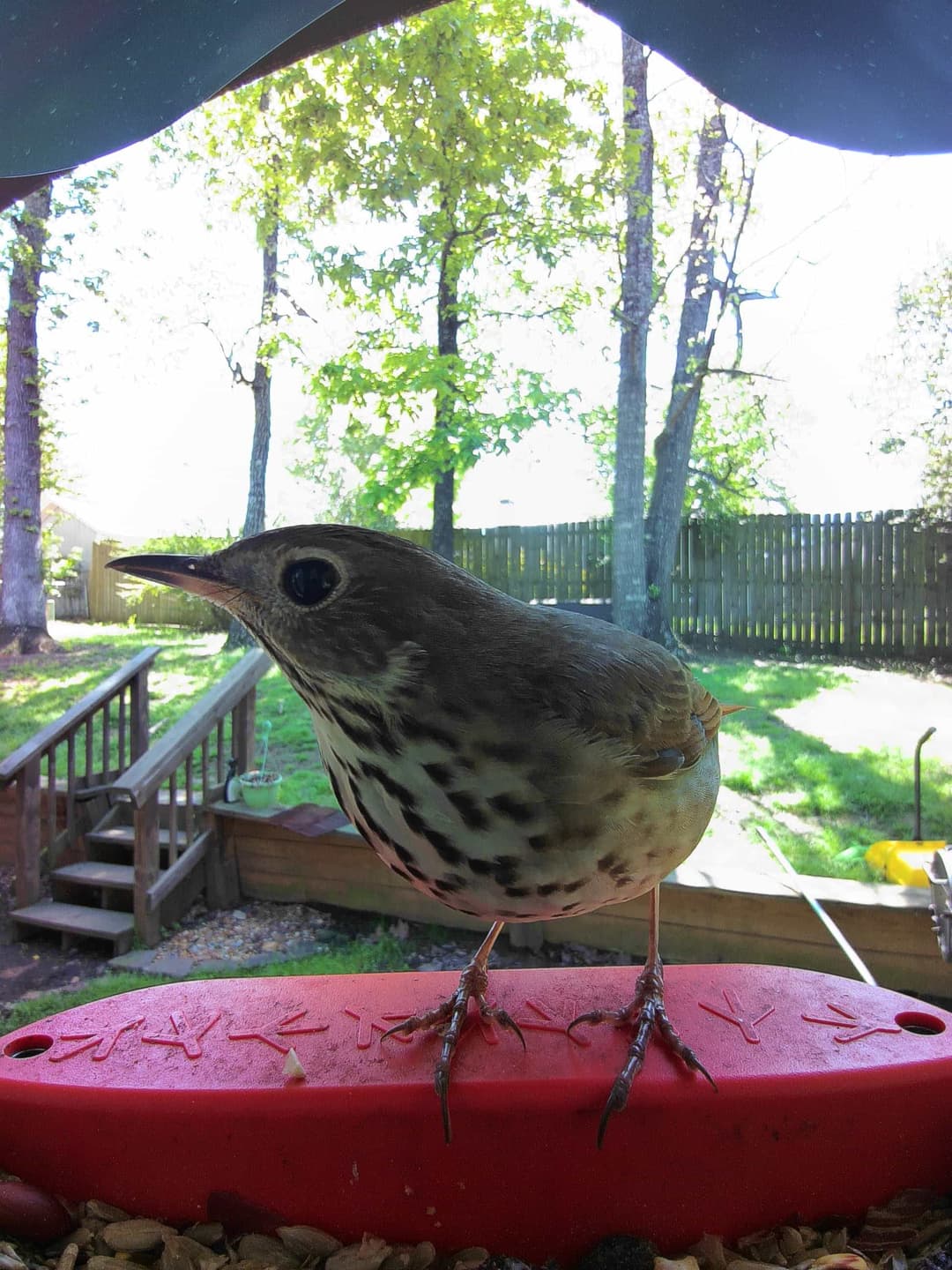
Swainson's Thrush has a buffy eye-ring and lacks the reddish tail of Hermit Thrush. Listen for Swainson's fluted song versus Hermit's sweet phrases.
Veery vs Swainson's Thrush
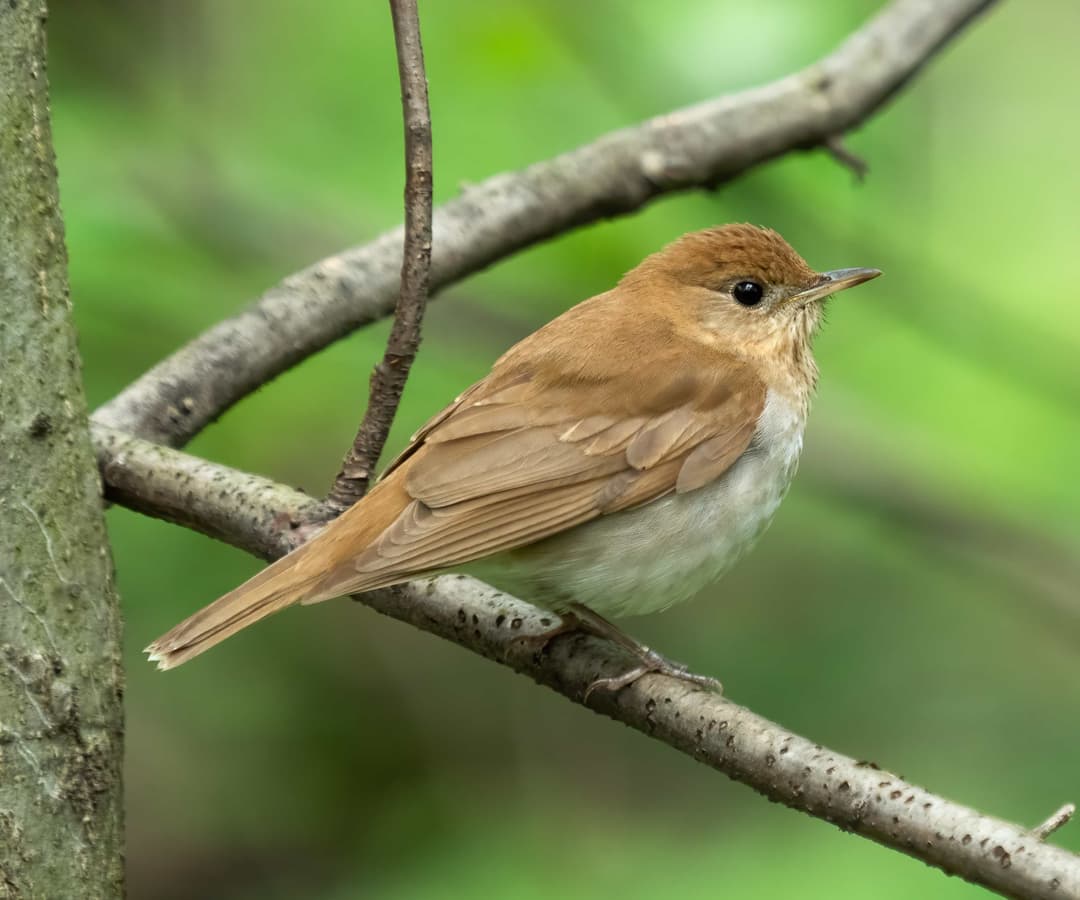
Veery is generally more rufous with a less distinct eye-ring compared to the buff tones and prominent eye-ring of Swainson's Thrush.
Gray-Cheeked Thrush vs Swainson's Thrush
Gray-Cheeked Thrush lacks the buffy eye-ring seen in Swainson's. The Swainson’s has a more distinct flutey call, Gray-Cheeked's song is harsher.
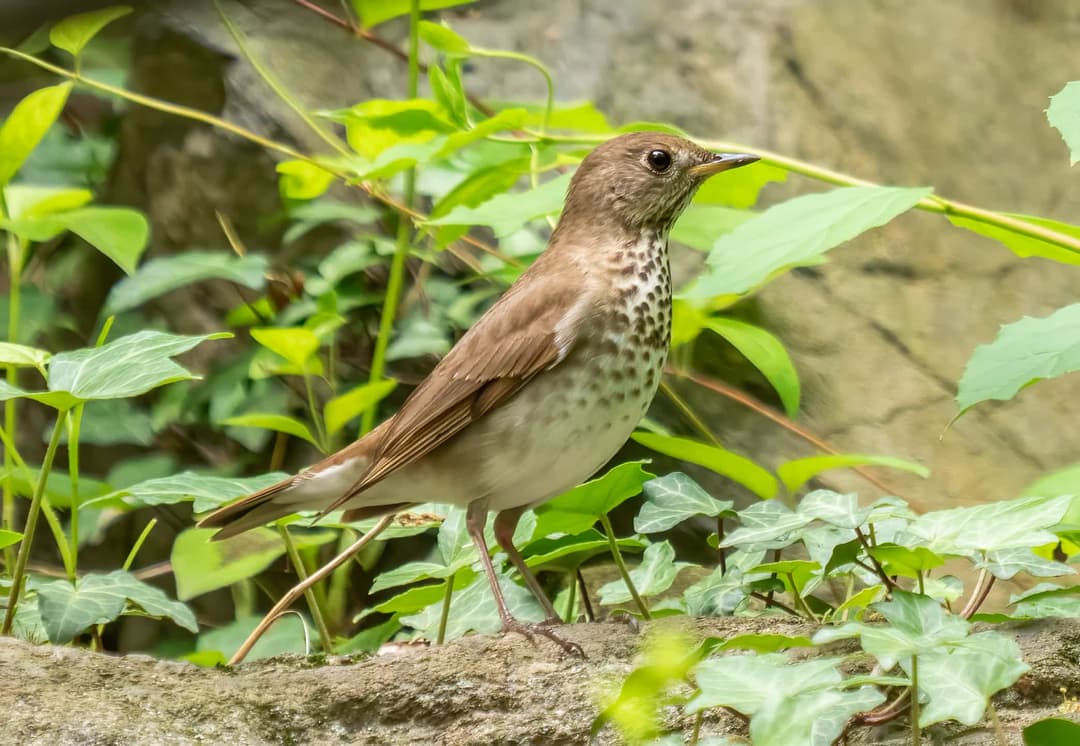
Wood Thrush vs Swainson's Thrush
Wood Thrush displays larger, bold black spots on its chest while Swainson's has smaller spots; listen for the ethereal song of Swainson's Thrush.
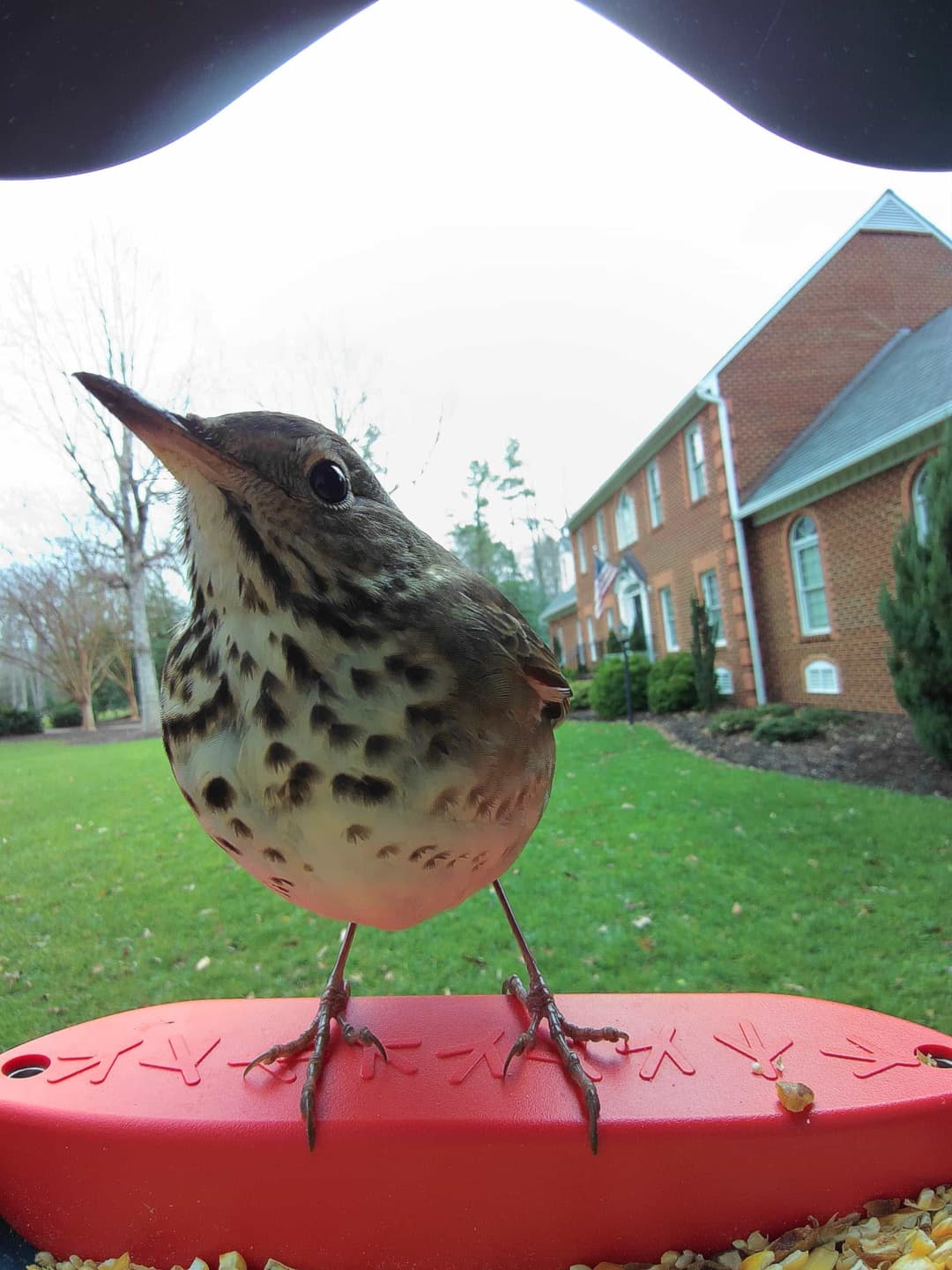
American Robin vs Swainson's Thrush
American Robin is larger with a bright orange-red breast, unlike the subtle brown and buffy tones of Swainson's Thrush. Robins have a cheerier song.

Breeding and nesting habits of the Swainson's thrush
Mating behaviors
Male Swainson's thrushes establish breeding territories upon arrival and defend these areas by singing. In encounters with intruders, males display aggression by sleeking down their feathers and pointing their bills upward.
Nesting details
Nests are usually positioned on horizontal branches, typically 2-10 feet above the ground but can range from lower to up to 30 feet. In the east and north, they prefer conifers, while in the west, they opt for deciduous trees or shrubs. The female constructs a bulky open cup nest made of twigs, bark strips, moss, grass, leaves, and sometimes mud, lined with bark fibers, lichens, and animal hair.
Eggs and chick-rearing
The female lays and incubates the eggs, with both parents involved in feeding the chicks. Creating a garden habitat for Swainson's thrushes involves maintaining a mix of trees, shrubs, and undergrowth to mimic their natural environment, offering both food and protection.
What does a Swainson's thrush like to eat?
Berries
Fruits
Insects
Spiders
Natural diet
In North America, the Swainson's thrush primarily consumes a wide variety of insects such as beetles, ants, caterpillars, crickets, wasps, flies, moths, and others, along with spiders and other invertebrates. Berries and fruits account for over one-third of its diet during the summer. Its winter diet in the tropics remains not well documented, but the bird is frequently observed in fruiting trees, suggesting fruits may play a significant role.
Bird feeders
The Swainson's thrush is not commonly observed at bird feeders, as it prefers to forage in natural habitats. However, it may occasionally visit gardens where berry bushes are present or if insects are abundant.
Provide the right foods
Swainson's thrushes love eating insects, fruits, and berries. To attract them to your yard, consider setting up feeders with a variety of fruits like apples, grapes, and raisins. It's also a good idea to add some Bird Buddy seeds. These seeds are expertly chosen for the season and thrive in attracting a variety of bird species, including the Swainson's thrush.
Create a bird-friendly habitat
Swainson's thrushes are woodland birds that enjoy habitats with dense low or medium-height vegetation. Plant native trees, shrubs, and grasses in your yard. Scatter a few logs or create a leaf litter area where the thrushes can forage. Ensure you have a water source like a birdbath or a shallow pond as Swainson's thrushes love to bathe and preen.
Make them feel safe
These birds like secluded areas. Place your feeders and birdbaths near these areas, but not too close to windows to prevent collisions. Try to keep pets indoors during peak bird feeding times, typically early morning and late afternoon.
Offer nesting materials
Help the Swainson's thrush set up shop by providing nesting materials like twigs, leaves, and grass clippings. You can also install nesting boxes that emulate their preferred nesting places.
Play swainson's thrush calls
Playing recorded calls of Swainson's thrush can sometimes entice these melodious birds to visit your yard for a sing-along. However, use this trick sparingly and at appropriate times to avoid causing stress or confusion for the birds.
Where can you find Swainson's thrushes?
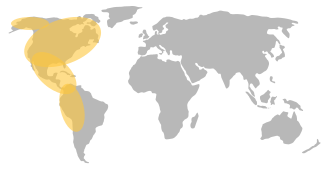
Primary habitat
The Swainson's thrush primarily breeds in the far north and mountainous coniferous forests with leafy undergrowth. It also breeds in deciduous trees and thickets along streams on the Pacific Coast.
Additional range
During migration, it can be found in many different types of woodlands. In winter, it resides in tropical forests.
Do they migrate?
The Swainson's thrush is a migratory bird known for its extensive seasonal movements. It typically breeds in North America, ranging from Alaska and Canada through the northern United States. During migration, this species undertakes a long journey to its wintering grounds in Central and South America, reaching as far as southern Brazil, Argentina, and Bolivia. The spring migration of Swainson's thrushes is noted for being relatively delayed and protracted. They begin traveling northward as early as March and sometimes continue to pass through the southern United States into early June. This extended migration period means that Swainson's thrushes can be observed in southern states for a significant duration during spring. In the fall, they begin their southbound migration as early as August, often following a more direct route. They usually travel at night, navigating using the stars and earth's magnetic field. Key stopover locations for resting and refueling include riparian areas, forests, and various wooded habitats throughout their migratory path. These stopover sites are crucial as they provide the necessary resources for the birds to complete their long journey to their wintering habitats.
What is the role of Swainson's thrushes in nature and how to protect them?
Conservation status
The Swainson's thrush has declined as a breeding bird along parts of the Pacific Coast, although overall populations are considered stable. It is not currently categorized as endangered but could become vulnerable due to habitat loss on its breeding grounds. Conservation efforts should focus on protecting these critical habitats to prevent further decline. Key threats include deforestation and urban development, which reduce the availability of suitable breeding areas. Maintaining stable population levels will depend on mitigating these threats through habitat conservation and restoration initiatives.
Ecological role of Swainson's thrushes
Its role in the ecosystem
The Swainson's Thrush plays a crucial role in the ecological system. Its diet includes a high proportion of insects like beetles, ants, caterpillars, and others, aiding in the control of these species, thus preventing pest infestation. Their feeding behavior on ground and trees also helps regulate the invertebrate population. Moreover, this bird species contributes to seed dispersal, as their summer diet consists of over one-third berries and fruits. They consume these fruits and excrete the seeds in different areas, thereby assisting in the propagation of various plant species. The Swainson's thrush also nests in a variety of trees, including conifers and deciduous trees or shrubs, contributing to the health and vitality of these plants. Not much is known about their winter diet in the tropics; however, they are often found in fruiting trees there, suggesting a possible role in tropical seed dispersal.
How to help protect Swainson's thrushes
Preservation tips
Habitat preservation strategies
Preserve key breeding and stopover habitats of the Swainson's thrush. This includes riparian woodlands, shores, boreal forests and scrubby undergrowth. Combat deforestation by encouraging sustainable logging practices and establishing protected areas. Support reforestation initiatives to help restore its habitats. Limit migration threats by minimizing light pollution and window collisions which can prove fatal to this species.
Community science efforts
Participate in bird count initiatives and report sightings of Swainson's thrush to bird conservation organizations. Host or join local educational workshops to raise public awareness about the plight of this songbird and ways to support its conservation. Advocate for keeping cats indoors as they're a major predator of the Swainson’s thrush. Lastly, support research initiatives studying the life cycle and migratory patterns of this species; this data is crucial for creating effective conservation strategies.