
Wood Thrush
Wood Thrush
Hylocichla mustelina


Quick Identification guide
Quick Identification guide
- •
Recognizable by its warm reddish-brown upperparts and bold, dark spots on a white chest, providing strong contrast when seen up close
- •
Features a straight, thin beak ideal for foraging insects and small invertebrates
- •
Possesses a plump body with a slightly rounded head, complemented by large, dark eyes that contribute to its alert appearance
What does a wood thrush sound like?
The wood thrush vocalizes rich, melodious, flute-like phrases, typically exhibiting a rising call pattern. Its songs intertwine with various calls such as a sharp 'pit-pit-pit-pit', creating a captivating soundscape. The thrush's repertoire also incorporates buzz, chirp or chip sounds, alongside trills and whistles, forming a unique auditory signature. These inimitable calls and songs display the wood thrush's complex and colorful vocal capabilities.


Description
The official bird of the District of Columbia is hailed as having one of the most beautiful songs in North America! They have a Y-shaped syrinx or voice box, which means they can sing a duet all by themselves. That's pretty impressive! They are often victims of brown-headed cowbirds that lay eggs in their nest. However, they accept the chicks and raise them as their own.
The wood thrush can weigh between 40to50grams and be from19to21.5centimeters tall.
The Wood Thrush typically has a lifespan of about 8 years in the wild. Their lifespan is comparable to other related species like the American Robin which can live up to 14 years, although however, many succumb to predation and harsh weather conditions in their first year. The longest recorded lifespan of a Wood Thrush is 10 years and 2 months.
Did you know?
Most popular questions about wood thrush
How to recognise a wood thrush?
General appearance
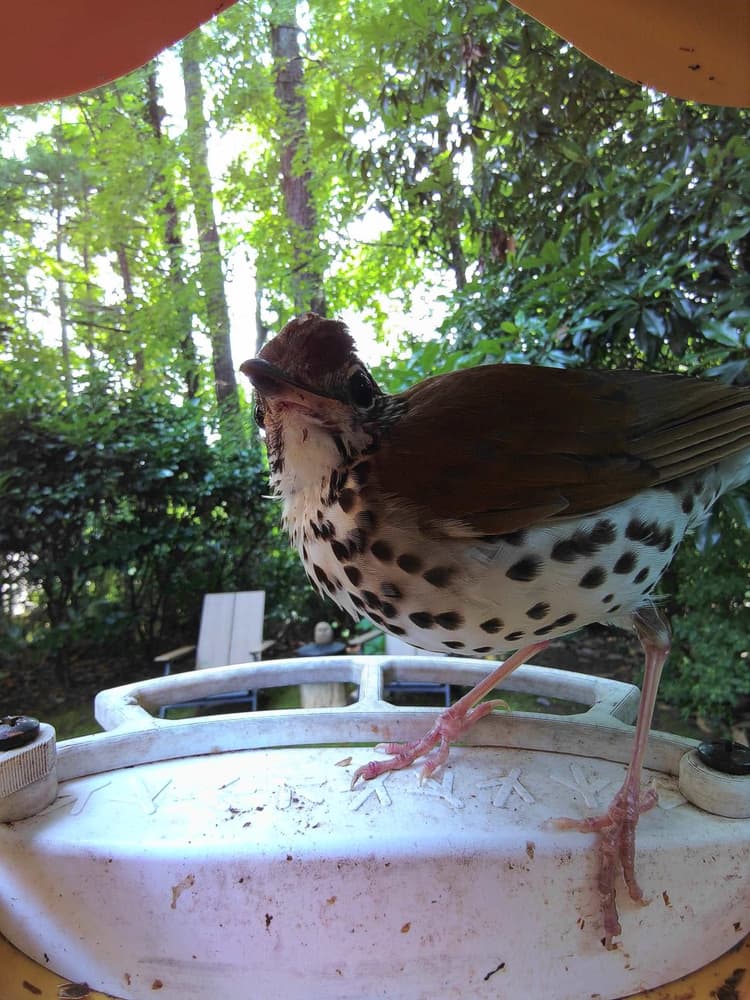
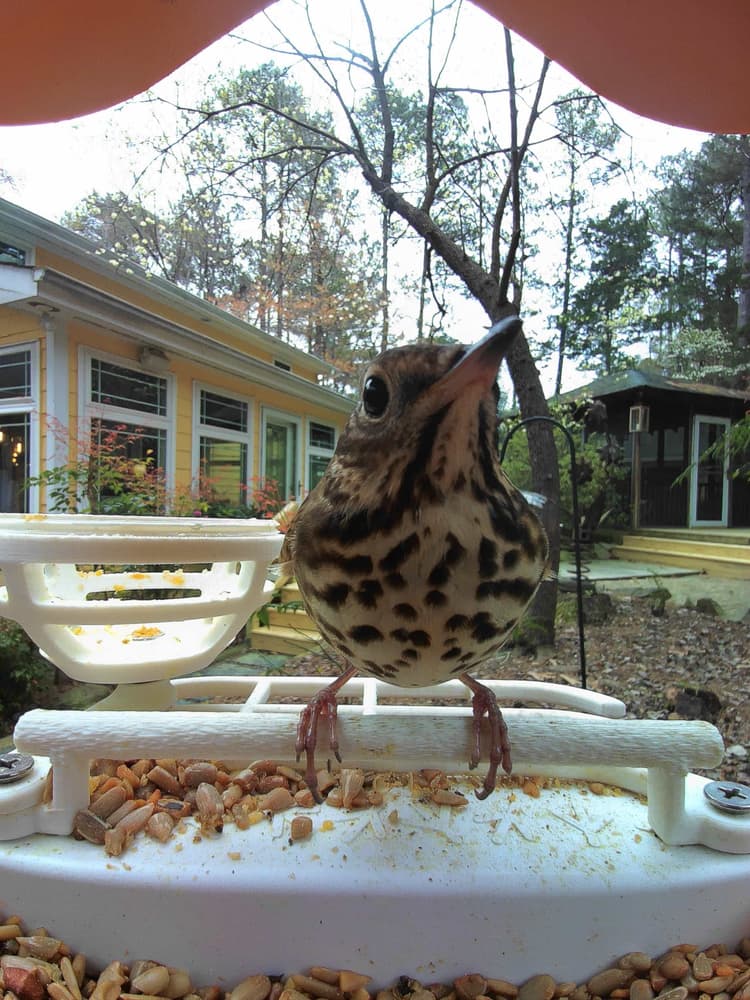
The wood thrush boasts a brown upper body that shades into a more vivid reddish-brown on the head. A stark contrast is formed by round black spots that adorn its white chest. This species flaunts a bold eye-ring and shows stronger markings than other brown thrushes. The variable tail can be notched, rounded, or squared-off, and the wings are pointed in shape. Its overall size is resemblant of a robin.
Male vs female
The wood thrush does not exhibit significant physical differences between genders. Both males and females share the same coloration and physical traits, including the brown upper body, reddish-brown head, black-spotted white chest, bold eye-ring, pointed wing shape, and notched or squared-off tail.
Juvenile
Juvenile wood thrushes maintain a similar appearance to adults, albeit with milder tones. Their brown coloration is lighter, and their black spots less pronounced. Notably, they differ from the brown thrasher species, which is striped rather than spotted, has yellow eyes, sports a longer tail, and exhibits colour akin to a sparrow.
Often mistaken for
Hermit Thrush vs Wood Thrush
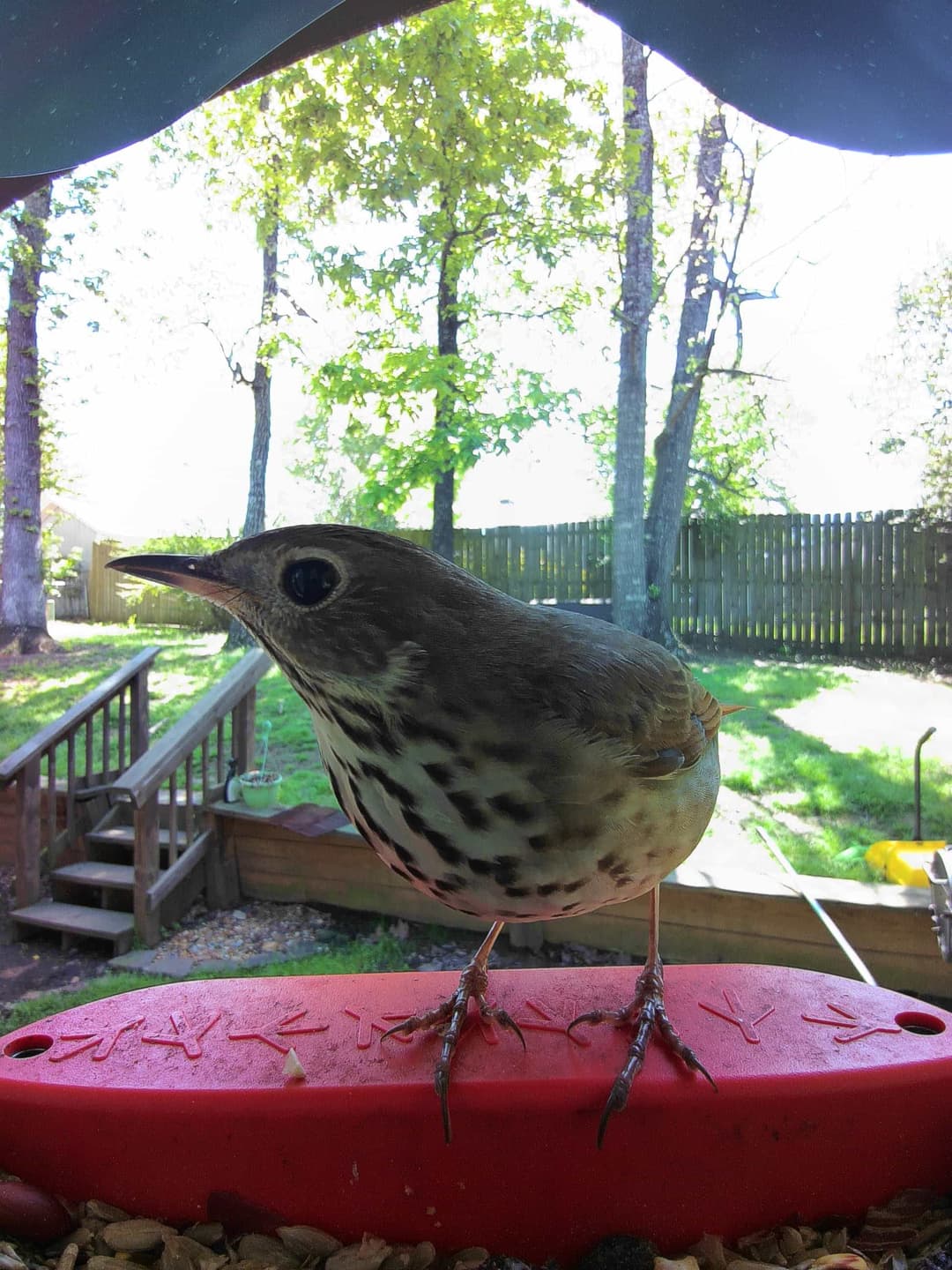
The Hermit Thrush is similar in size and shape to the Wood Thrush but has a more plain and reddish tail with a less pronounced spotting pattern on its chest.
Swainson's Thrush vs Wood Thrush
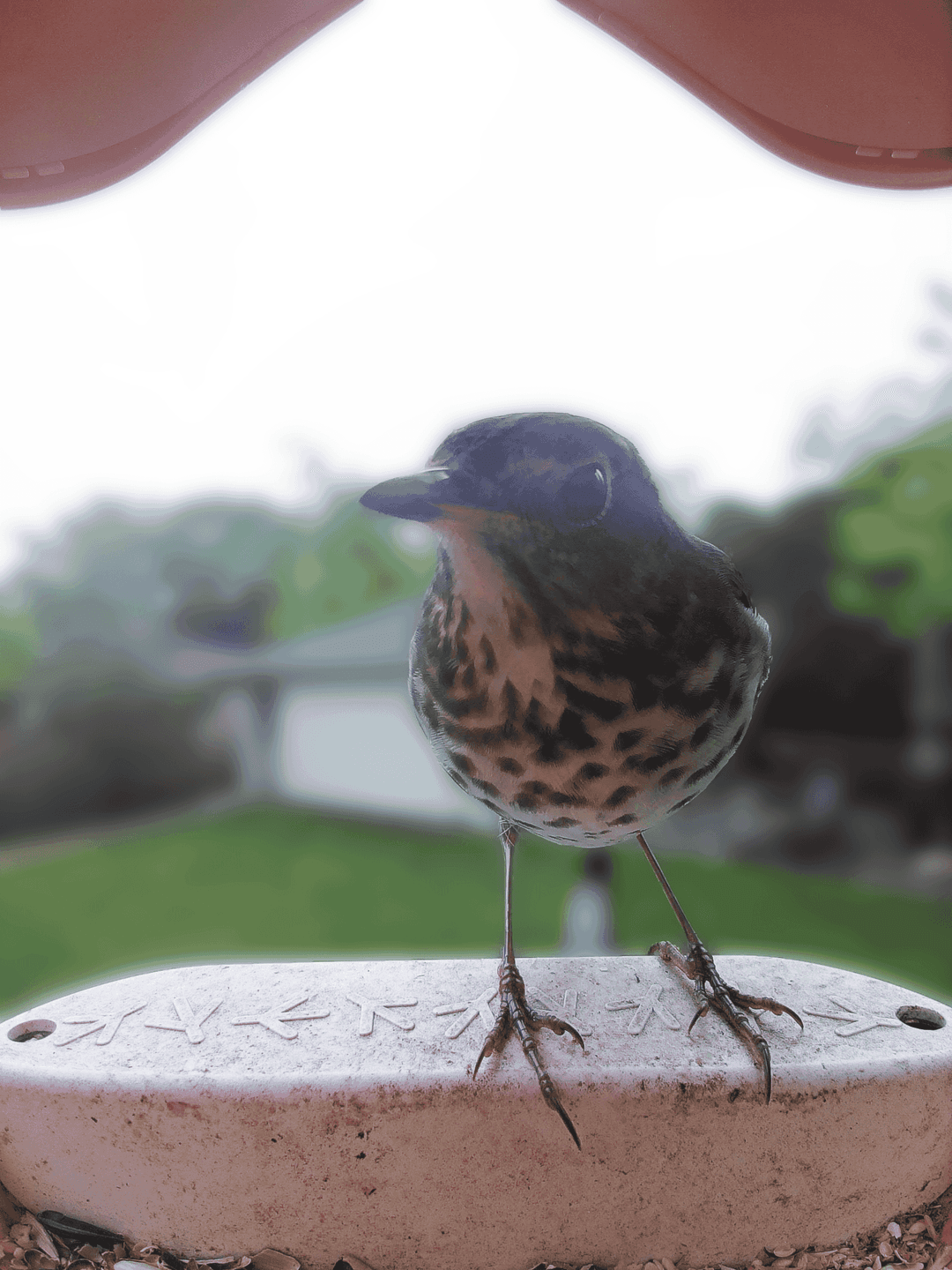
Swainson's Thrush shares a similar build but is generally more uniformly olive-brown above and lacks the distinct rusty tones and bold spots of the Wood Thrush.
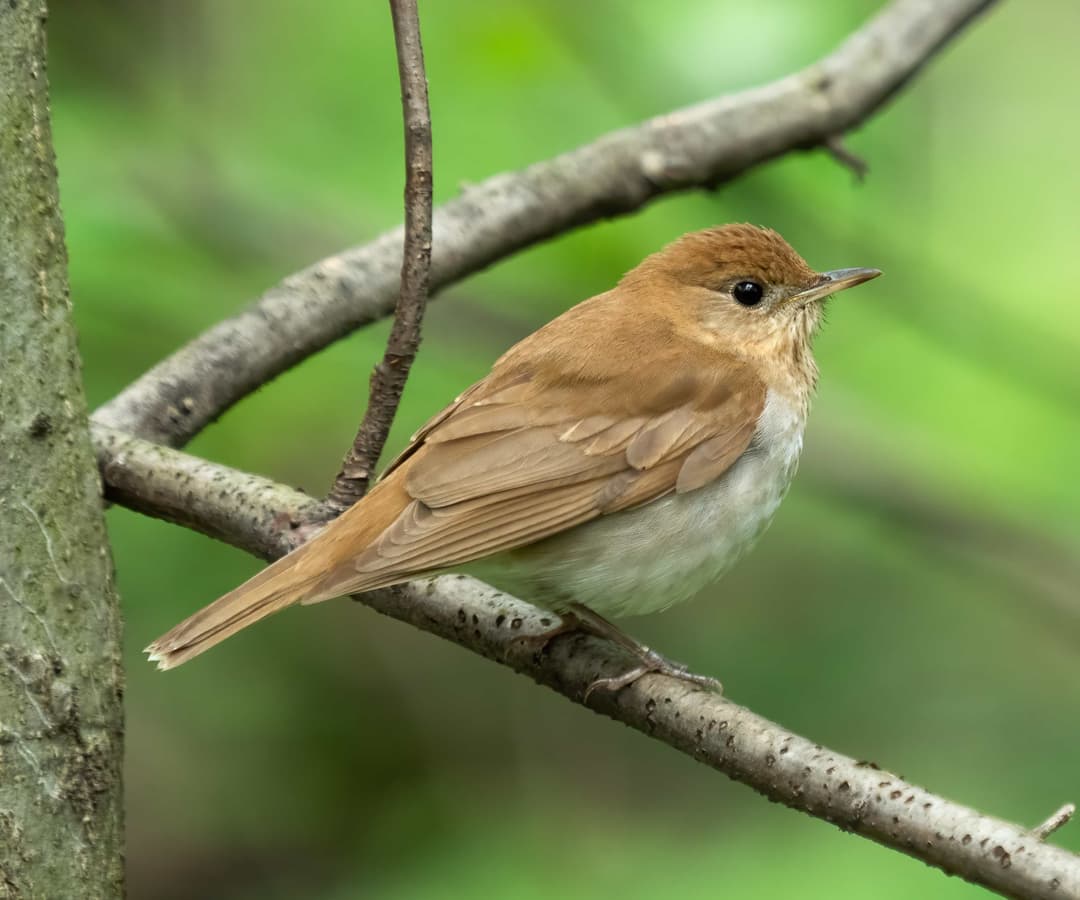
Veery vs Wood Thrush
The Veery has a more warm-toned back and fewer spots on the chest compared to the Wood Thrush, which has prominent black spots.
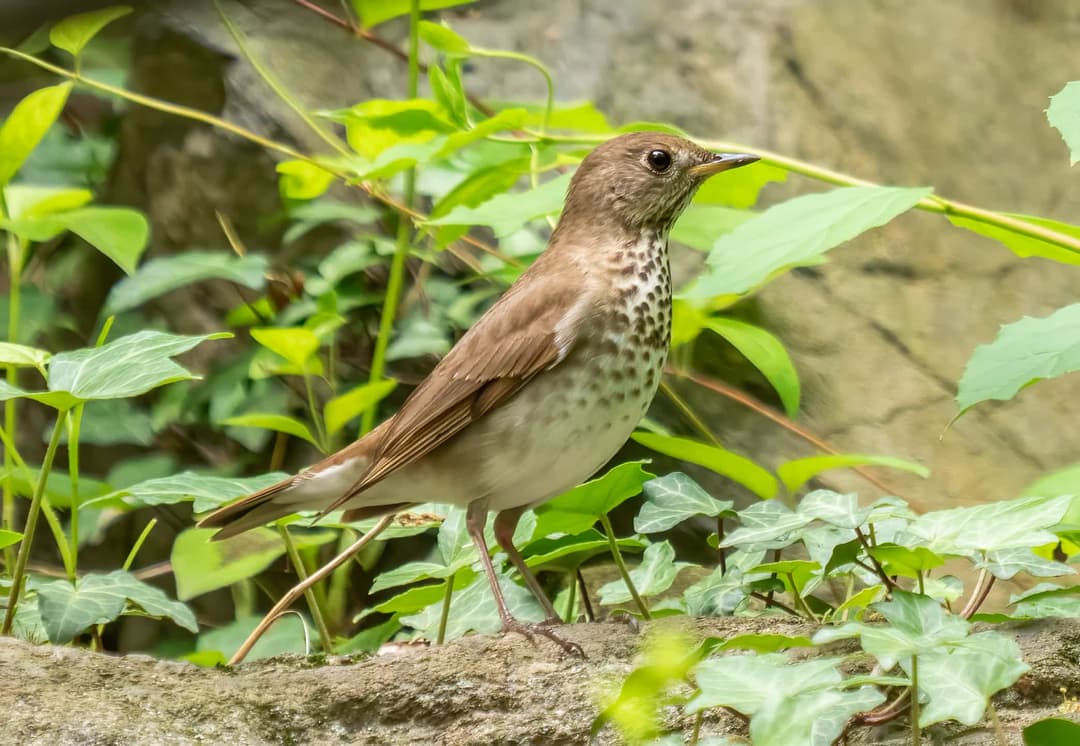
Gray-Cheeked Thrush vs Wood Thrush
This thrush has a similar general appearance but is less rusty compared to the Wood Thrush. It also lacks the vivid spotting and has a more grayish face.
Breeding and nesting habits of the wood thrush
Mating behaviors
The male arrives first to the breeding grounds, establishes and defends his territory by singing, and shows aggression towards other thrushes like Robins or Veeries. During courtship, he may chase the female rapidly among the trees.
Nesting details
Nests are built by females in a vertical fork or saddled on a horizontal branch of deciduous trees, usually 10-15 feet above ground. The open cup structure of nests is made from grass, leaves, moss, and bark strips mixed with mud, and lined with soft materials like rootlets, often incorporating pieces of white paper or trash.
Eggs and chick-rearing
Wood thrushes lay eggs in their well-crafted nests, and both parents typically engage in chick-rearing duties, providing food and protection. Creating garden habitats that mimic their natural forest environment—offering trees for nesting and natural materials—can encourage wood thrush nesting.
What does a wood thrush like to eat?
Berries
Fruits
Insects
Snails
Spiders
Worms
Natural diet
The wood thrush primarily consumes insects and berries. During the breeding season, its diet consists of a variety of insects including beetles, caterpillars, ants, crickets, and moths, among others. It also feeds on spiders, earthworms, and snails. Throughout the year, berries and small fruits form an essential part of its diet. Young wood thrushes are mainly fed insects, although they also consume some berries.
Bird feeders
Wood thrushes are not common at bird feeders. They prefer foraging in the forest underbrush where they can find their natural food sources such as insects and berries. Therefore, it is uncommon for them to rely on or visit bird feeders, unless these feeders offer fruits or food mimicking their natural diet.
Provide the right food
Wood Thrushes predominantly eat insects, fruits, and berries. Hence, these foods should be generously available in your yard. Bird Buddy seeds can work wonders, as they are expertly chosen for the seasons and cater perfectly to a Wood Thrush's diet.
Use the suitable feeder
While Wood Thrushes, being ground feeders, prefer to forage for food on the ground, they will enforce their diet on feeders that offer their preferred diet. A platform or tray feeder with low sides is more alluring to a Wood Thrush.
Create a bird friendly yard
Wood Thrushes prefer dense deciduous and mixed woodlands, suburban gardens, and parks. Landscaping your outdoor space with native plants, shrubs, and trees will create an ideal environment for these birds.
Offer clean water
Providing clean, fresh water will not only attract Wood Thrushes but will encourage them to stay longer. You can use a birdbath or water feature for this. Remember, birds are attracted to the sound of running water.
Play wood thrush songs
One fun trick to encourage Wood Thrushes to visit your yard is by playing their songs. These birds are known for their flute-like voices and they may be tempted to join the sing-along if they hear their melody.
Where can you find wood thrushes?
Primary habitat
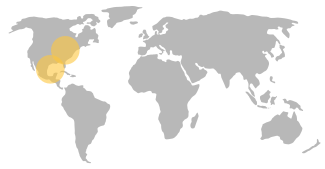
The Wood Thrush primarily lives in deciduous woodland understories and damp forest areas particularly near streams. It prefers regions where tall trees are plentiful.
Additional range
The bird also accommodates mixed vegetation areas, drier woods, and suburban locations with adequate large trees. While migrating, they inhabit varying woodland types. During winter, they reside in lowland tropical forest understory.
Do they migrate?
The wood thrush is a migratory bird that travels between its breeding and wintering grounds annually. It breeds in the deciduous and mixed forests of the eastern United States and southern Canada during the spring and summer months. In the fall, the wood thrush undertakes its migration to Central America, wintering in lowland tropical forests in countries such as Mexico, Belize, Honduras, Costa Rica, and Panama. Migration typically occurs at night, which helps the birds take advantage of cooler temperatures and reduced risk of predation. During their migration, many wood thrushes cross the Gulf of Mexico, a significant and challenging part of their journey. This large water crossing is done mostly in the spring and fall, aligning with their northbound and southbound migrations, respectively. The wood thrush begins its southbound migration in late summer to early fall, arriving on its wintering grounds by late October. The return journey typically starts around March, with birds reaching their breeding areas by late April to early May. This cyclical migration pattern is crucial for the wood thrush, as it relies on distinct habitats for breeding and wintering.
What is the role of wood thrushes in nature and how to protect them?
Conservation status
The Wood Thrush is considered vulnerable due to significant declines in recent decades. Key threats include habitat fragmentation, which facilitates cowbird parasitism, leading to fewer thrush offspring. Additionally, the species is losing wintering habitats in the tropics. Conservation efforts focus on protecting and restoring large forested areas to provide safe breeding grounds and maintain winter habitats. Reducing forest fragmentation may help decrease cowbird parasitism, while international cooperation is necessary to protect wintering environments in tropical regions.
Ecological role of wood thrushes
Its role in the ecosystem
The wood thrush serves several important roles that contribute to the vigor of its ecosystem. Its feeding behavior and diet have significant implications for pest control and seed dispersal. As part of its diet, the thrush consumes different types of insects like beetles, caterpillars, ants, crickets, moths among others, thus playing a crucial role in controlling pest populations in its forest habitat. Its predation on earthworms and snails also helps to control these soil-dwelling creatures and inhibit overpopulation. Additionally, the wood thrush supports the ecosystem through seed dispersal. Its consumption of berries and small fruits at all seasons indirectly aids in the propagation of these plant species. The thrush excretes the seeds in different locations, thereby facilitating the dispersal and growth of these plants, increasing plant diversity and health in its environment. Consequently, the Wood Thrush plays a dual role in maintaining a balanced ecosystem through its dietary habits.
How to help protect wood thrushes
Preservation tips
Habitat preservation strategies
Preserve and create quality habitats, with at least 70% forest cover. Manage forest habitats, limit clear-cut logging and maintain a diverse understory. Protect existing forest patches from urban expansion and engage in reforestation efforts to restore lost habitats. Buffer zones around breeding areas on private lands need to be created for the Wood Thrush.
Community science initiatives
Encourage community participation in monitoring Wood Thrush populations and reporting sightings to Bird Studies Canada. Promote citizen science programs like Project NestWatch and the Christmas Bird Count. Lobby local government for policies to protect and manage forests otherwise threatened by development and fragmentation. Educate the public about the importance of bird-friendly coffee and wood products to help reduce habitat loss in the Wood Thrush’s wintering grounds.