Thrush or Hermit Thrush?
Here's how to tell the difference
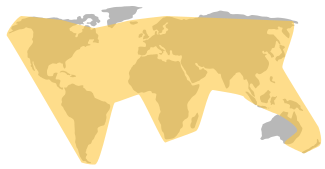


Thrush
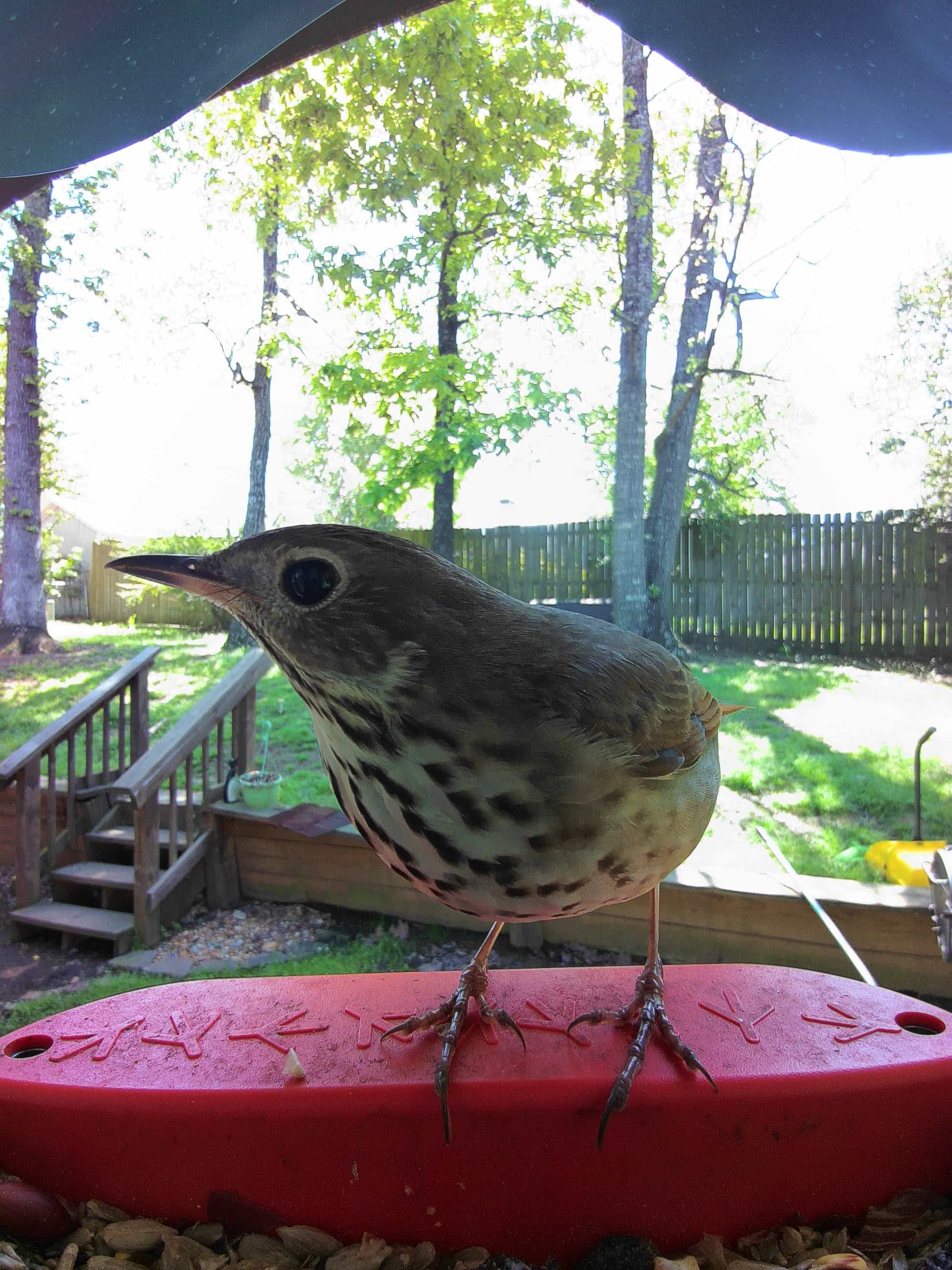


Hermit Thrush
Thrush
Turdidae
General appearance
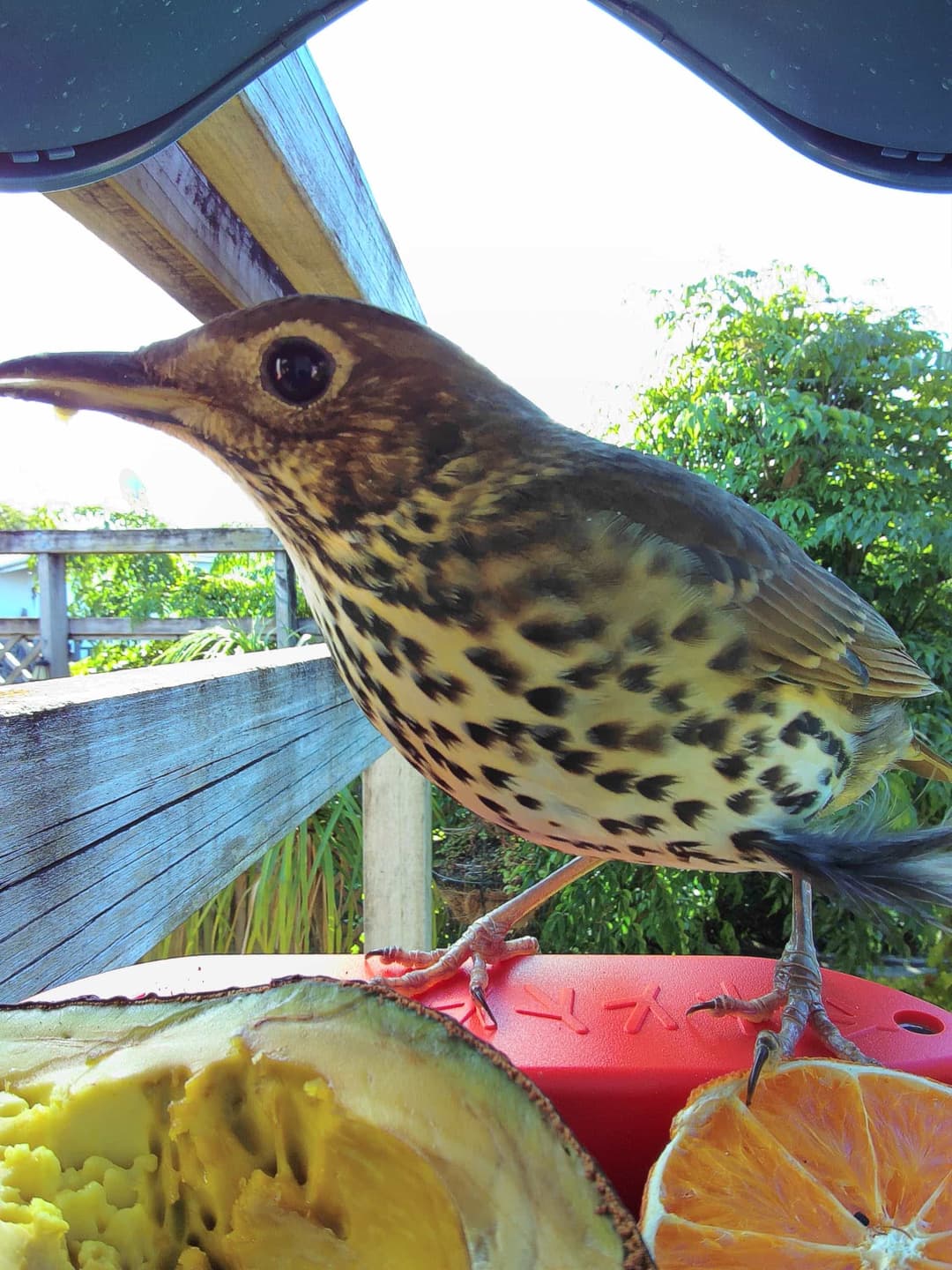
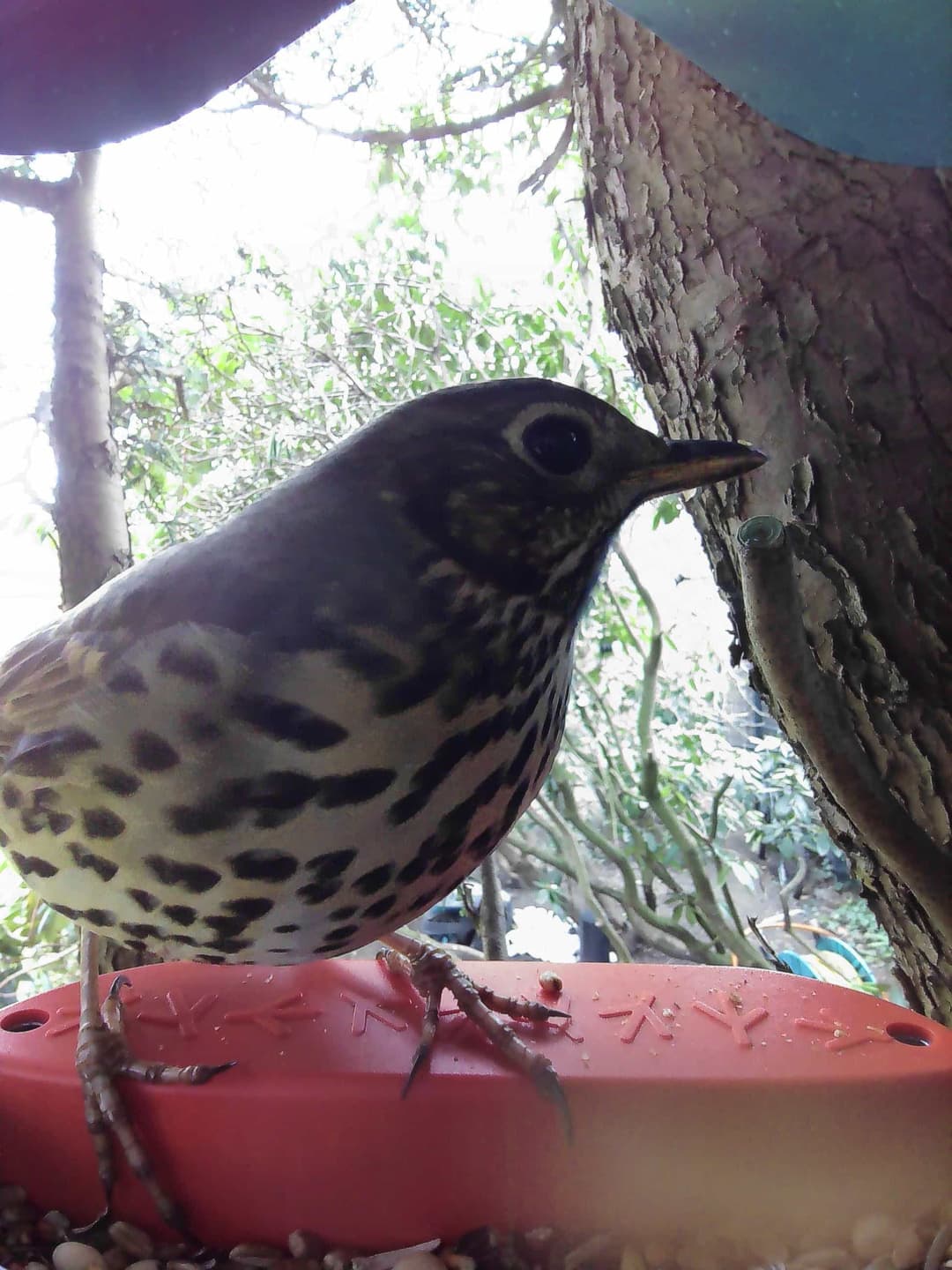
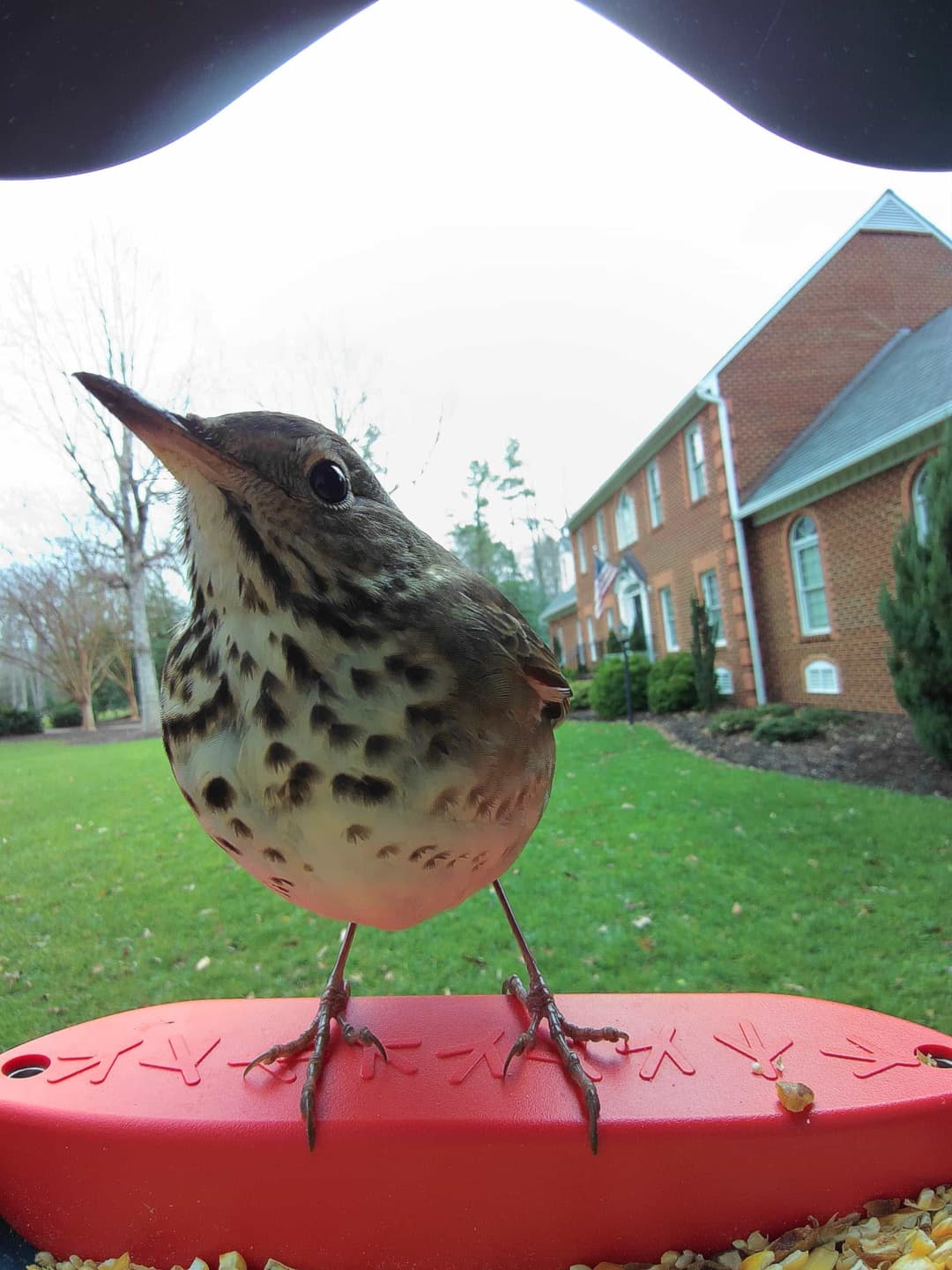
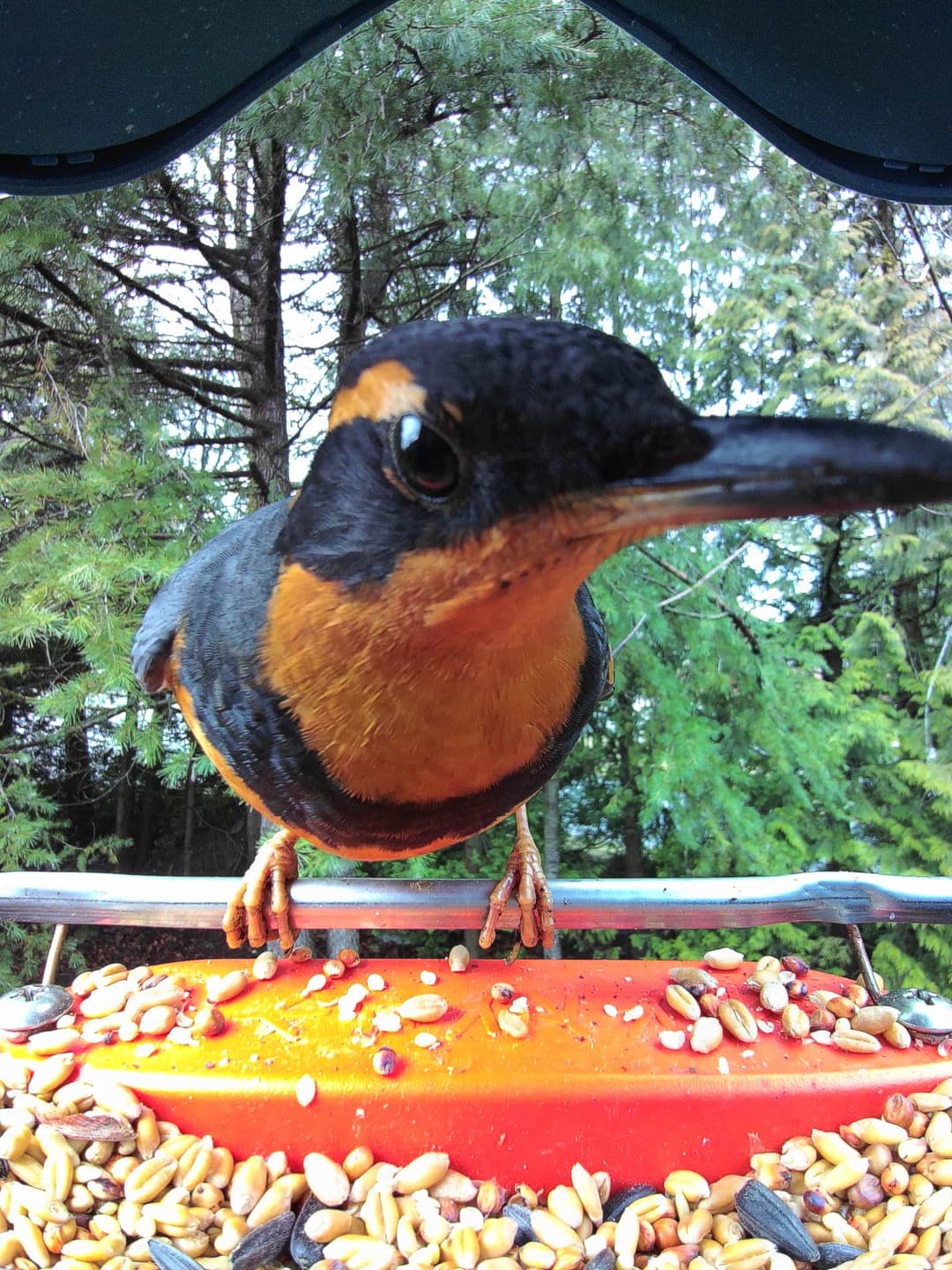
Thrushes are songbirds known for their brown to blue-grey upperparts and white underparts often with spots or markings. They have medium to long tails, and their size varies from small to medium. Some species have orange or red underwings, visible in flight.
Male vs female
In many thrush species, males and females have similar plumage, making it difficult to distinguish between them. However, in some species, males may have more vivid coloration or distinctive markings compared to females. There's often sexual dimorphism in size, with males being slightly larger.
Juvenile
Juvenile thrushes can resemble their parents, but they usually have duller plumage and less clear markings or spots. They may also be slightly smaller in size until full maturity. Their bills tend to be shorter and their feathers softer and fluffier.
Size
5.7 - 13.0 in/0.8 - 5.9 oz
There's more to learn about Thrush
View full detailsHermit Thrush
Catharus guttatus
General appearance
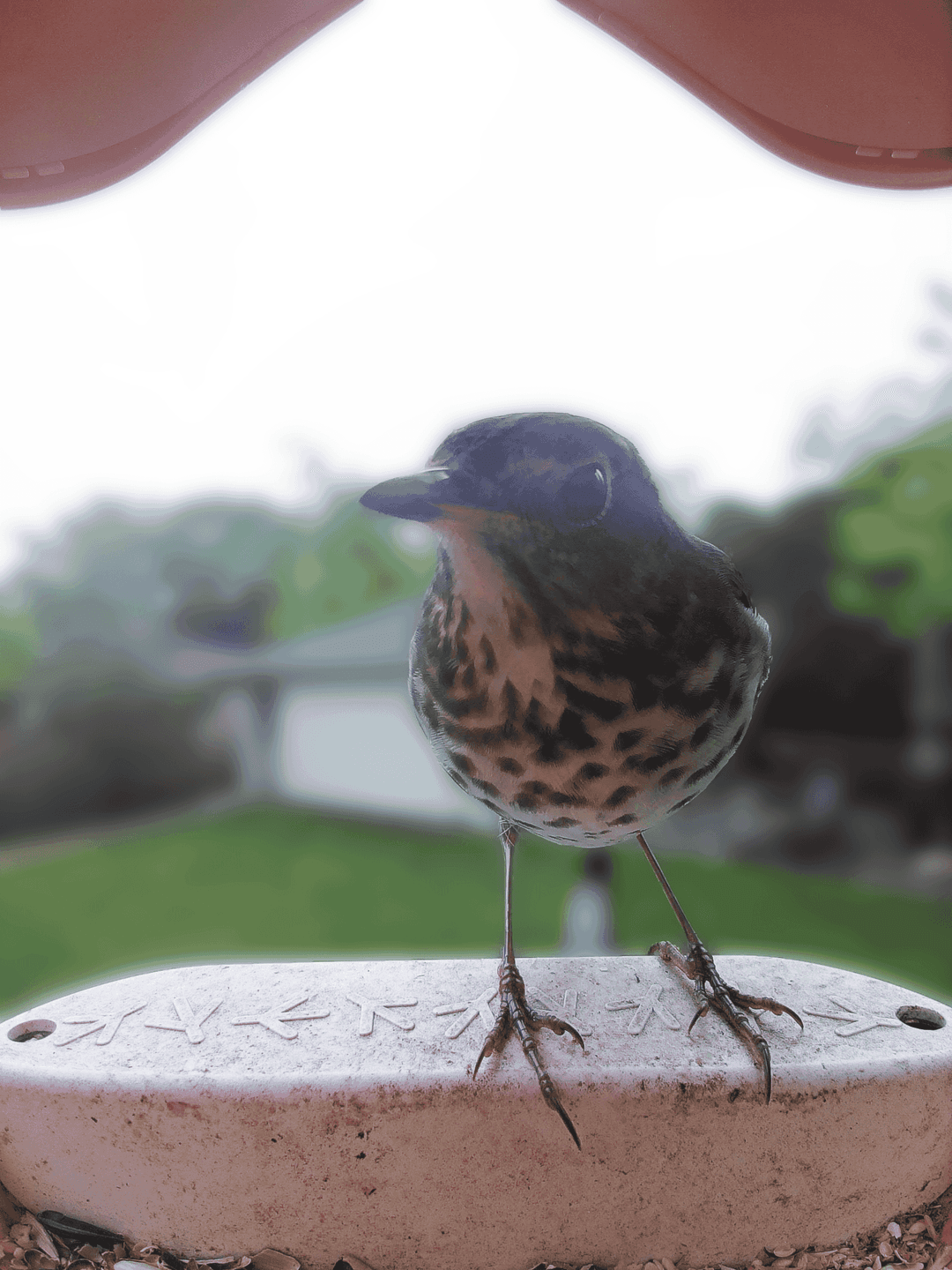
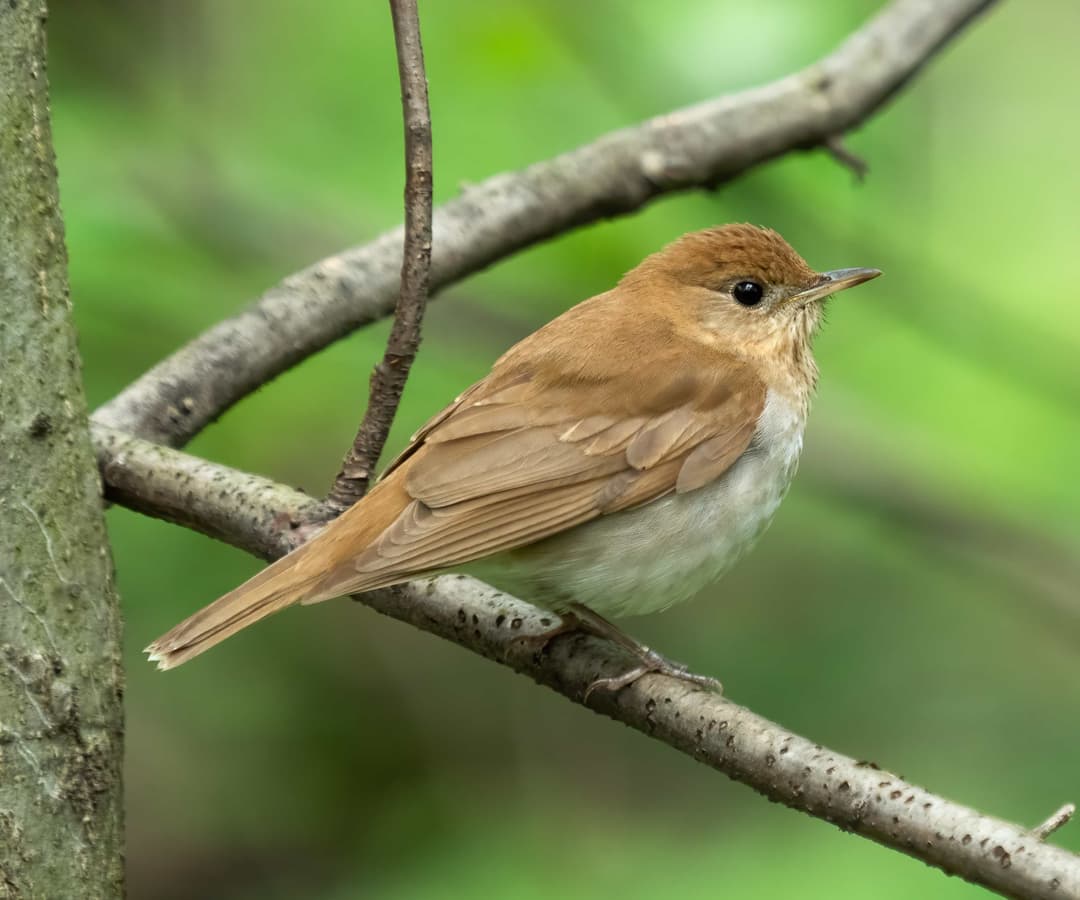
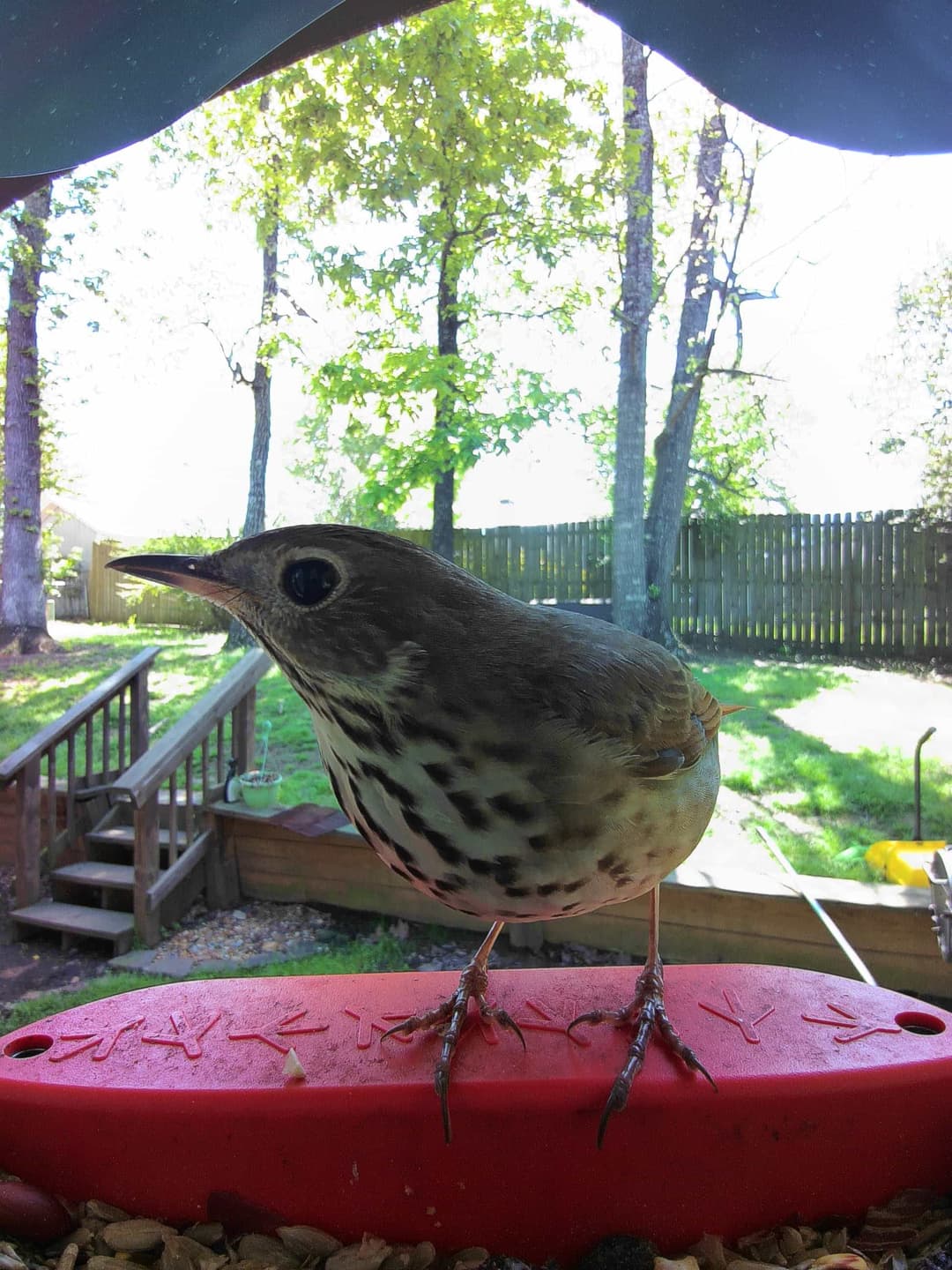
The hermit thrush is a medium-sized sparrow-like bird, measuring about 6-7 inches in length. Its plumage is mainly brown with a reddish-brown tail, distinct mottled spots on the breast, and a creamy underbelly. The throat area is white with dark spots. It has a pale eye ring and relatively long legs. Its pleasant, flute-like song makes it easier to identify during its singing season.
Male vs female
Males and females of the hermit thrush species are similar in appearance, with almost indistinguishable plumage. Both sexes share the same pattern and coloration, making it challenging to differentiate between them in the wild based solely on visual appearance.
Juvenile
Juvenile hermit thrushes resemble adults but with some differences. They generally have more pronounced streaking or spotting on their underparts, and their overall plumage may appear less crisp than that of mature birds. These birds gradually take on the adult coloration as they mature. During the transition from juvenile to adult, they can be identified by their less defined spots and slightly fluffier appearance.
Size
5.5 - 7.1 in/0.8 - 1.3 oz
There's more to learn about Hermit Thrush
View full detailsHow to tell the Thrush from the Hermit Thrush
Visual differences
The thrush (Turdidae family) displays a range of sizes (5.7-13 inches) with brown to blue-grey upperparts and spotted white underparts, whereas the hermit thrush (Catharus guttatus) is medium-sized (6-7 inches), with brown plumage, reddish-brown tails, and distinct mottled breast spots. Thrushes may show red/orange underwings, unlike the hermit’s reddish tail. Both have similar male and female plumage. Hermit thrushes feature a pale eye ring, relatively long legs, and creamy throats with dark spots, which differ from the typical thrush's uniform coloring and medium to long tail.
Key differences and behavior
Thrushes and Hermit Thrushes exhibit distinctive behavioral and habitat preferences. Thrushes generally thrive in wooded areas and are known for elaborate courtship displays involving singing and wing fluttering. They forage primarily for insects and berries, adapting to seasonal food availability. Nesting occurs in dense vegetation, with both parents partaking in chick-rearing. Hermit Thrushes, on the other hand, mainly reside in coniferous or mixed woods and display subtle courtship behaviors. They also forage for insects and berries, showing peculiar "foot quivering" behavior to uncover prey. Their nests are often closer to the ground, and males sing melodic songs prominently at dawn and dusk. Both are less common at bird feeders but share ground foraging habits. While both contribute to ecosystem recovery by spreading seeds, Hermit Thrushes have a varied call, sometimes reminiscent of a meowing kitten.
Still not sure? Here are more lookalikes!
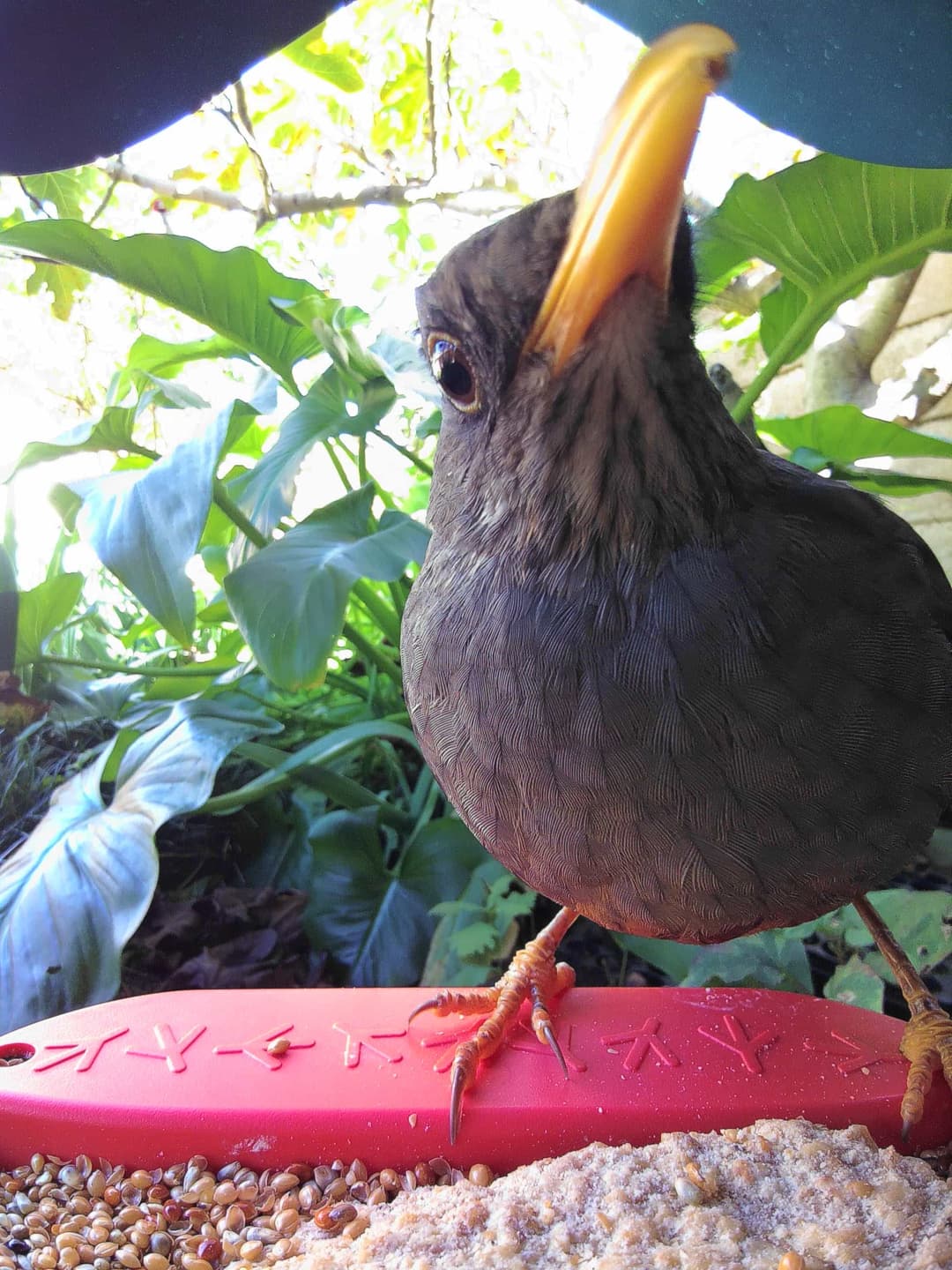
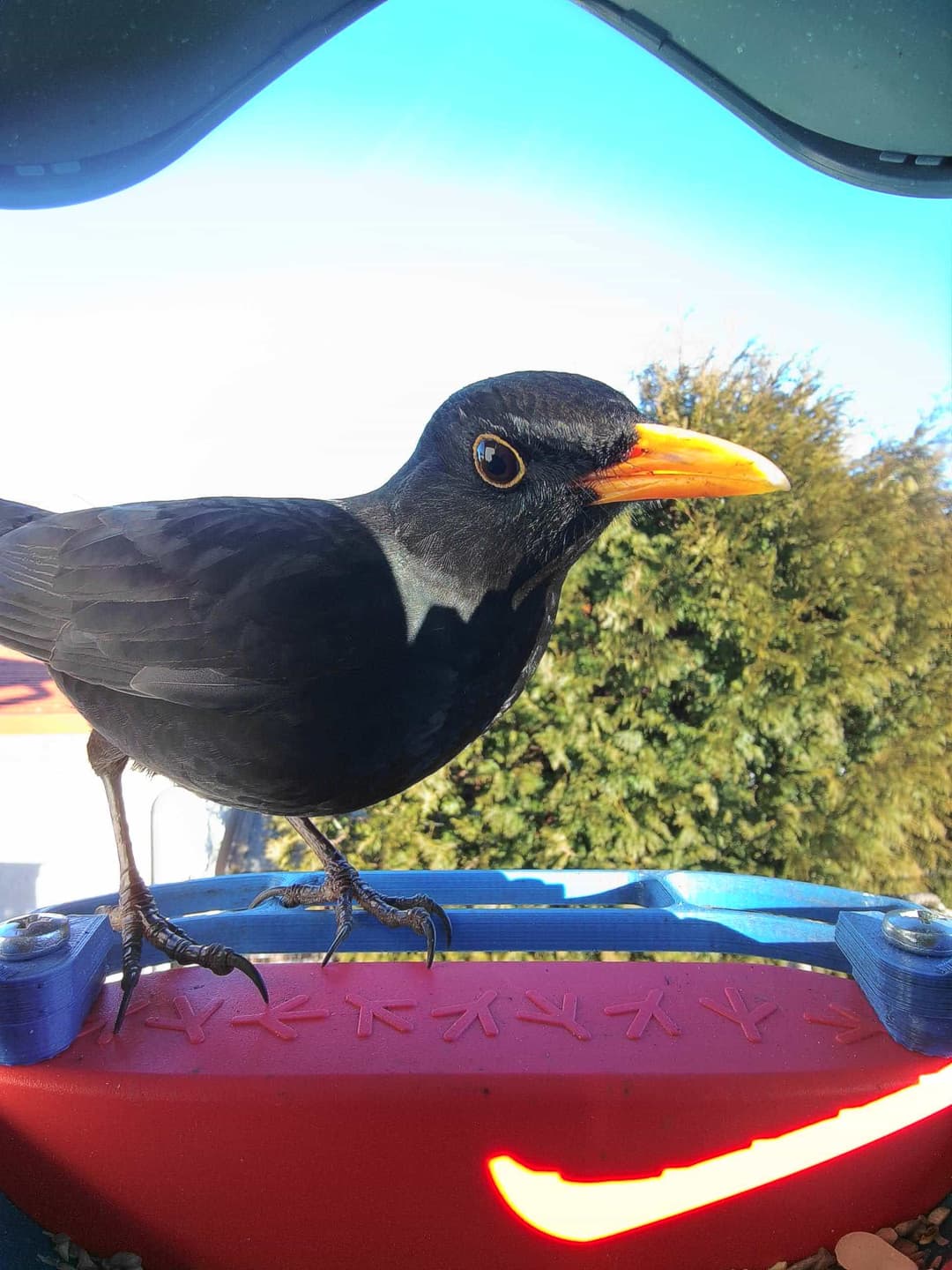
Thrush vs Common Blackbird
Thrush vs American Robin

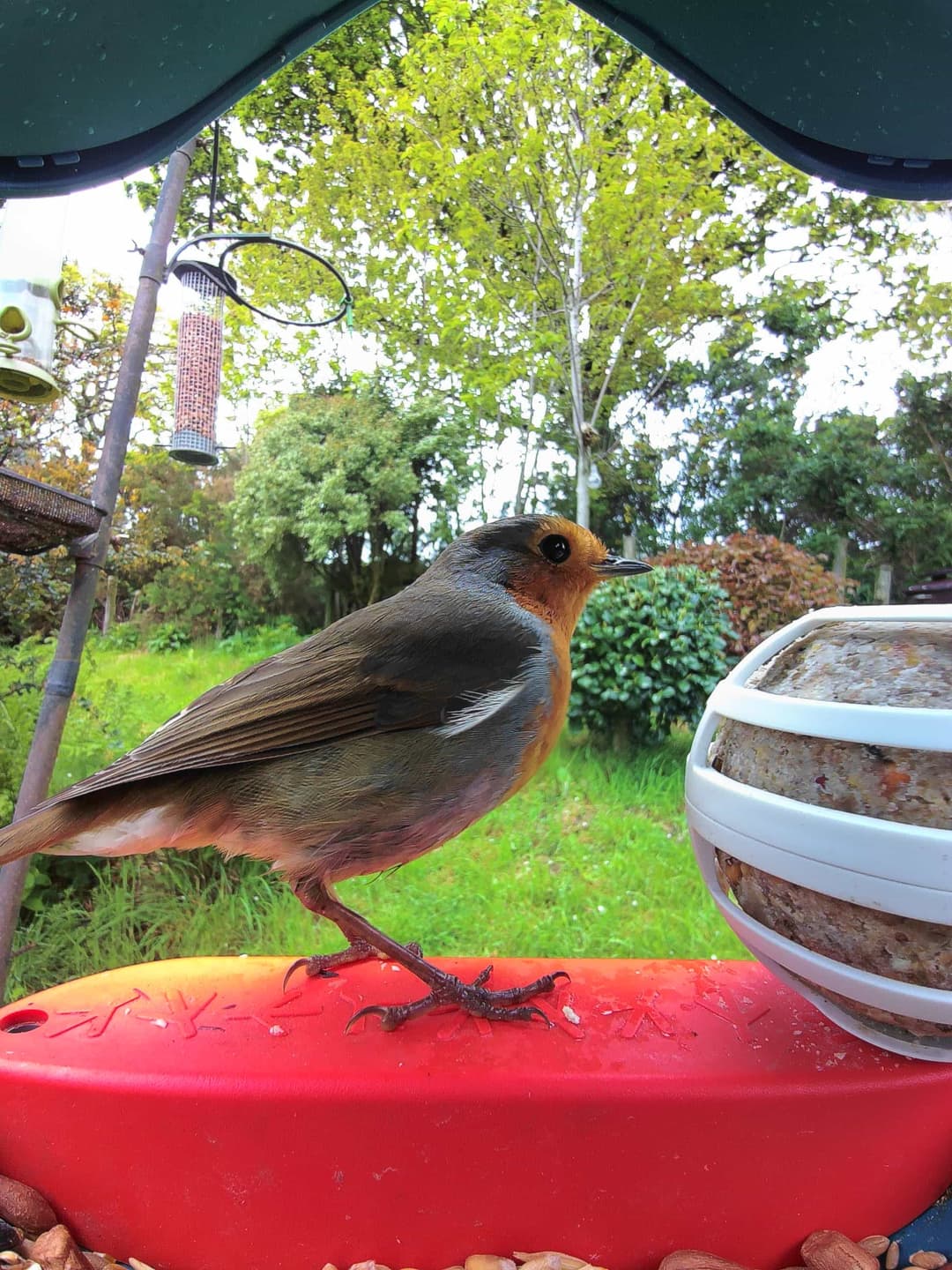
Thrush vs European Robin
Thrush vs [Select a bird]

[Select a bird]
Pick a bird to compare
Hermit Thrush vs [Select a bird]
[Select a bird]
Pick a bird to compare