
Common Blackbird
Common Blackbird
Also known as: Eurasian Blackbird
Turdus merula


Quick Identification guide
Quick Identification guide
Male
- •
glossy black plumage covering the entire body
- •
A bright yellow-orange beak and matching eye ring
- •
Medium-sized with a rounded body and long tail
Female
- •
brown plumage with a slight mottled appearance
- •
Features a duller, brownish beak compared to males
- •
Retains the same body shape and long tail
What does a common blackbird sound like?
The common blackbird produces a diverse range of vocalizations. Its song is a melodious flute-like sound, with varied pitch and rhythm, often incorporating mimicry. It uses alarm calls for potential threats, consisting of short, harsh, high-pitched notes. Other calls include "seee", "pink-pink", or a sharp "kit" sound, used for communication. Male blackbirds primarily sing at dawn and dusk, but sometimes throughout the night.


Description
These small and elegant birds are the most numerous breeding bird on the British Isles. They mate for life and like to sing after the rain. So it's no wonder their song is one of the most familiar and best loved of all British birds! They love to sunbathe and enjoy lying on the grass with their beaks open and heads back. Don't we all?
The common blackbird can weigh between 85to135grams and be from23.5to29centimeters tall.
The common blackbird typically lives for 2-3 years, though a lifespan of up to 20 years has been recorded in the wild. In comparison, related species such as the American robin and Eurasian thrush typically live 1.1 and 5 years respectively. Like many birds, blackbirds face high mortality in their first year but can live longer if they survive this period.
Did you know?
Most popular questions about common blackbird
How to recognise a common blackbird?
General appearance
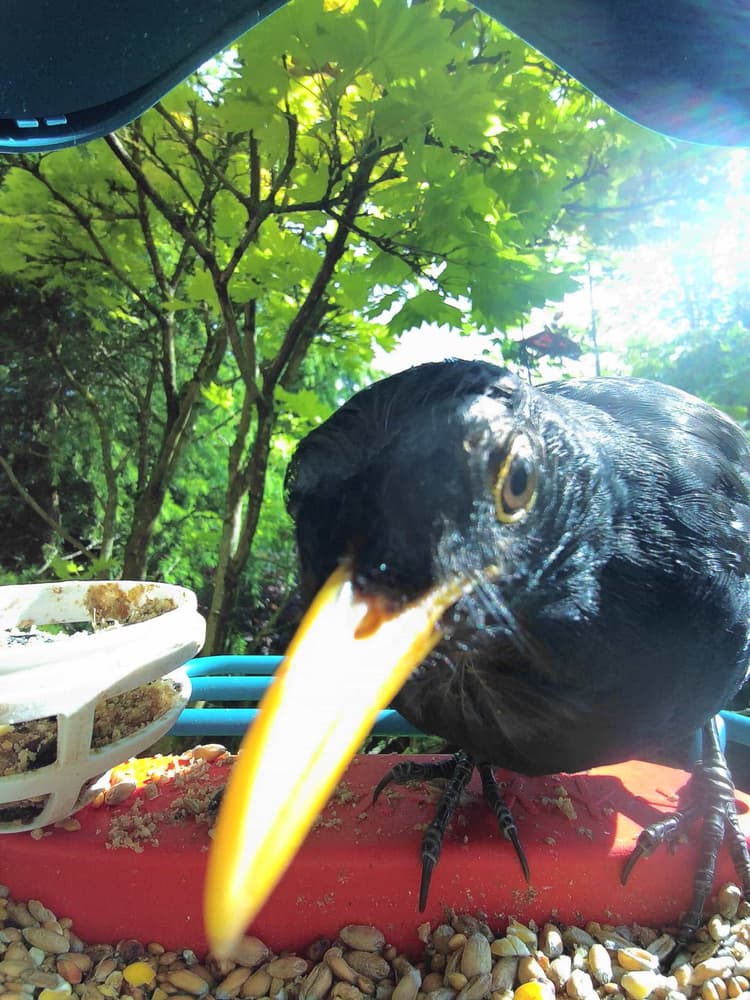
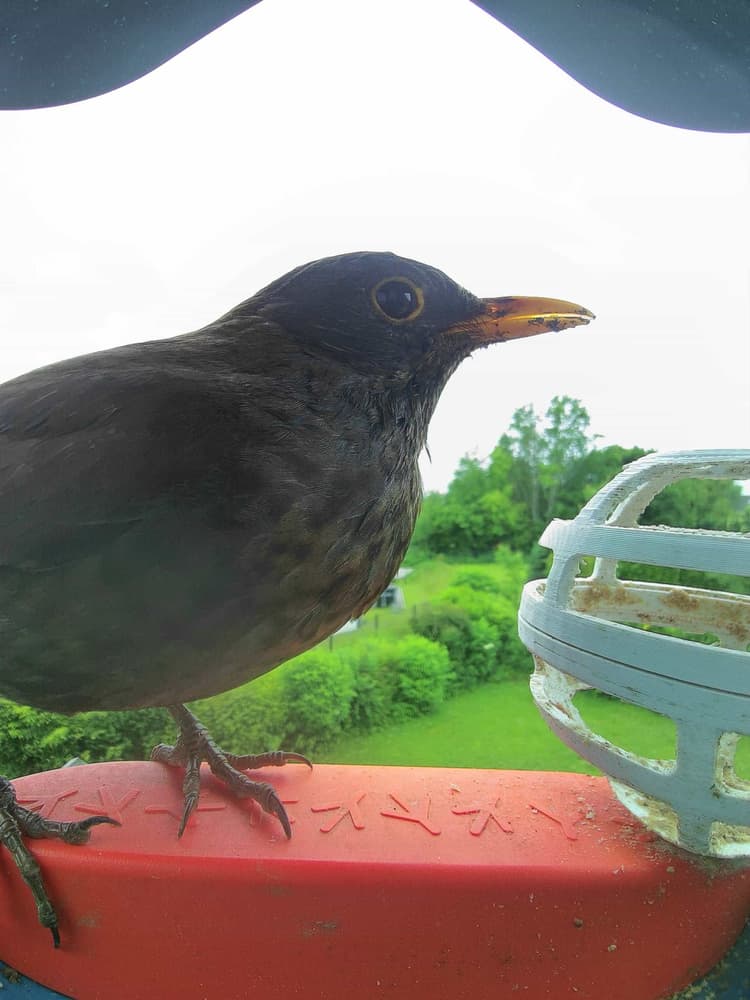
The common blackbird is medium-sized, measuring approximately 23-29 cm in length. They have slender bodies, long tails, and are known for their distinctive melodious songs. Their eyes are highlighted with a bright yellow ring, and they possess a sharp, pointed beak.
Male vs female
Males are predominantly jet black with a vivid orange-yellow beak, contributing to their striking appearance. Females, however, are brown with streaky plumage and a duller beak, serving as a form of camouflage during nesting. Both exhibit the characteristic yellow eye-ring, though it's more prominent in males.
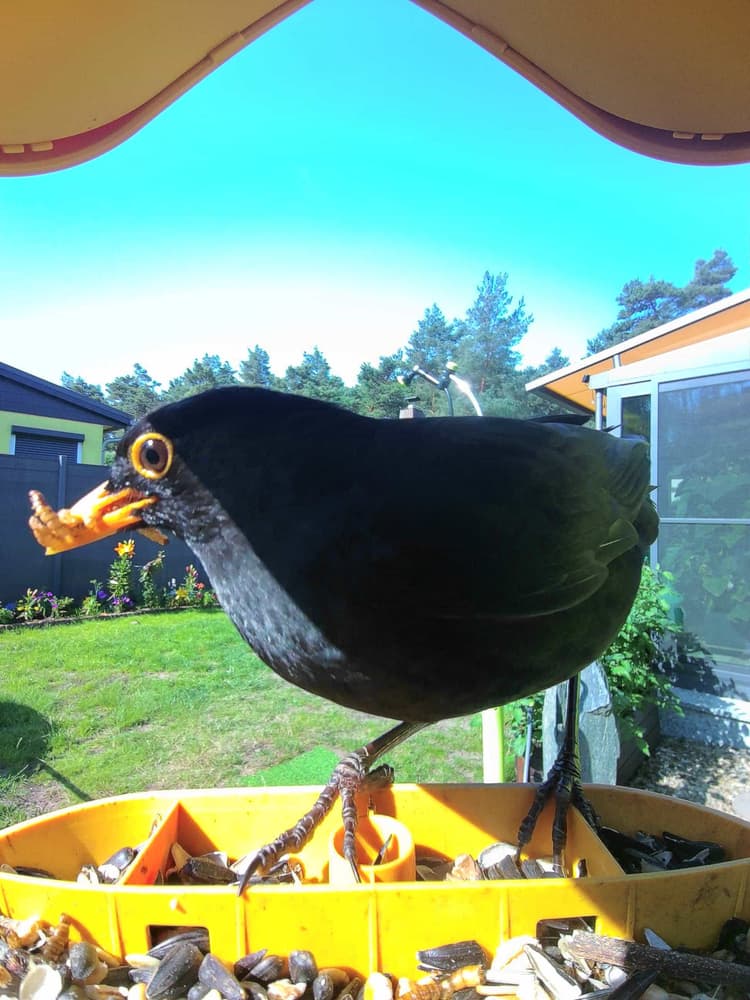
Male Common Blackbird
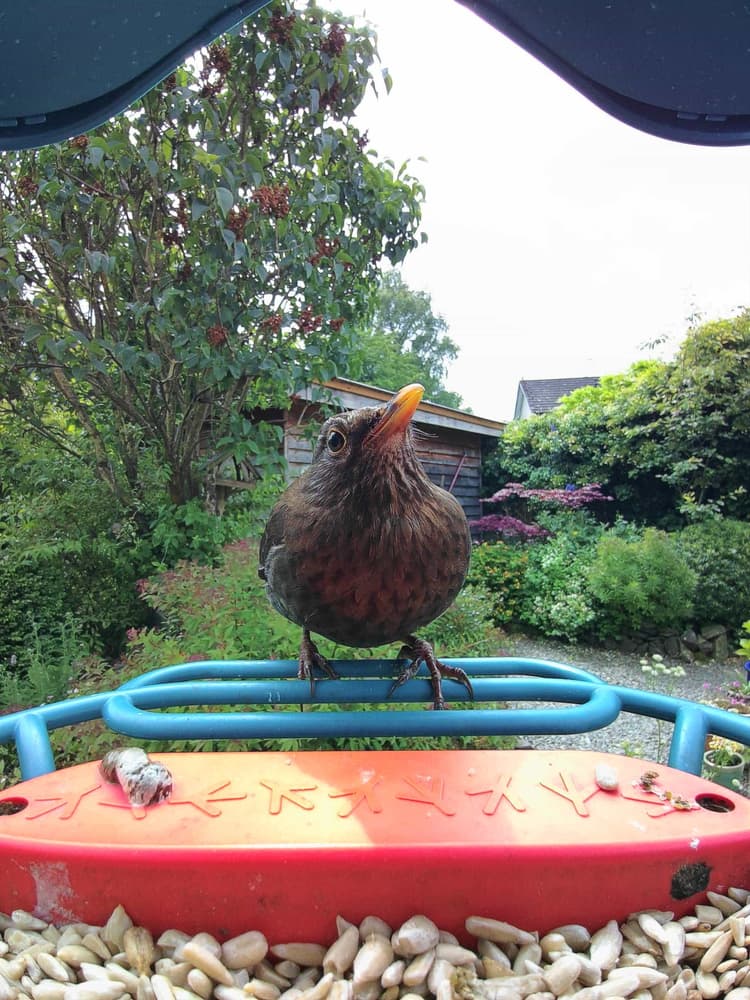
Female Common Blackbird
Juvenile
Juvenile blackbirds have brownish plumage, often with speckled or mottled patterns, aiding in their camouflage. Unlike adults, they lack a yellow eye-ring and their beak is darker. As they mature, they'll gradually attain adult coloration. Observing them in woodlands or gardens, particularly in spring and summer, is easier when they are most active.
Often mistaken for
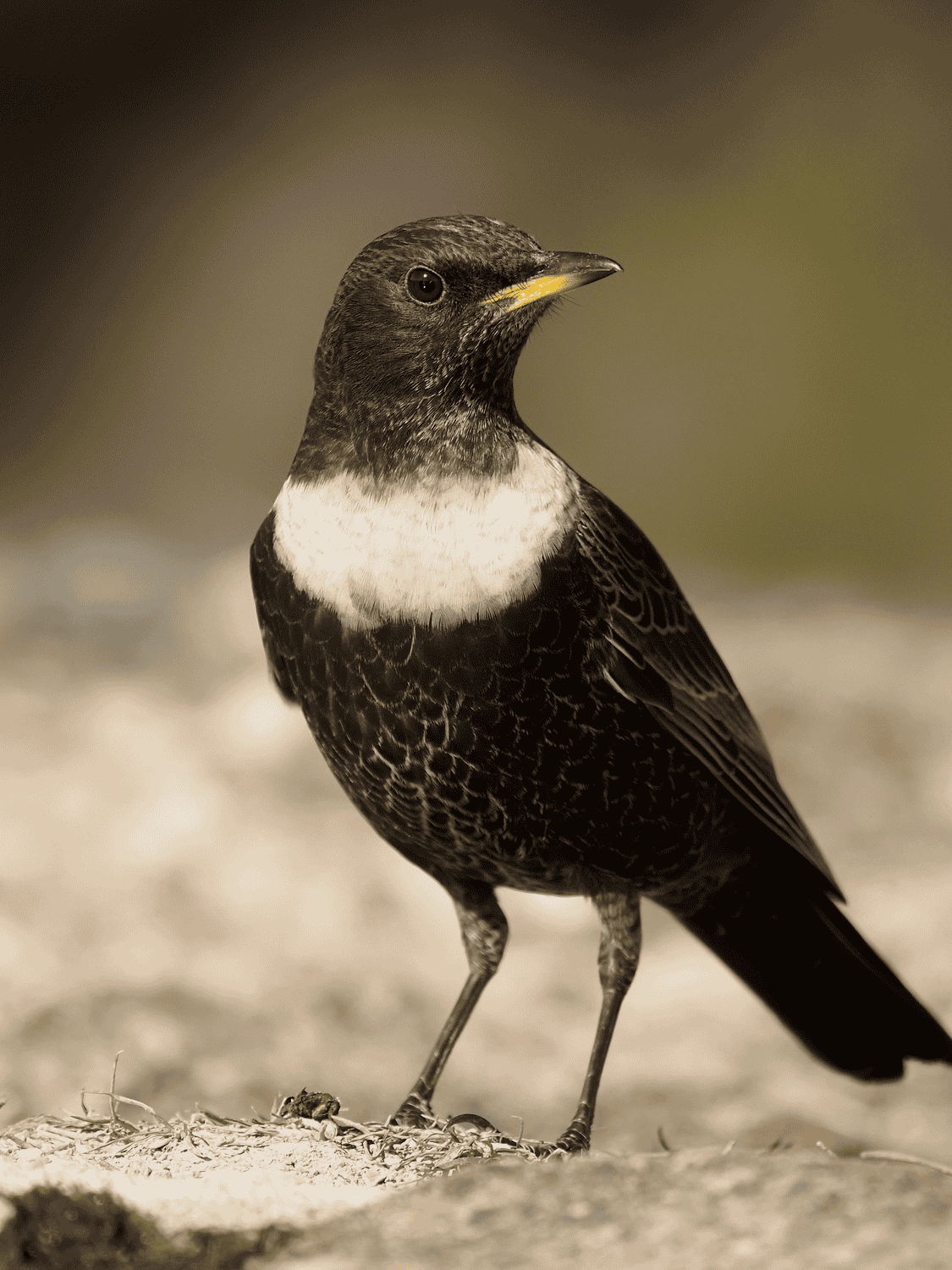
Ring Ouzel vs Common Blackbird
The Common Blackbird and the Ring Ouzel can look quite similar, but there are key differences. The Common Blackbird has an all-black plumage with a distinctive yellow eye-ring and bill. In contrast, the male Ring Ouzel features a more prominent white crescent on the chest and a slightly paler plumage. Females of both species are browner, but the Ring Ouzel's white chest crescent is still noticeable. Insider tip: Observe their habitat preferences; Common Blackbirds are often found in gardens and parks, while Ring Ouzels prefer upland areas.
Breeding and nesting habits of the common blackbird
Mating behaviors
Common blackbirds exhibit courtship behaviors that include singing by the male to attract a female. Males may perform visual displays and chase potential mates. Pair-bonding is often reinforced through mutual preening and feeding.
Nesting details
Common blackbirds build large cup-shaped nests in trees, bushes, or building walls. Nests are usually less than 4 meters off the ground. Constructed from dry grass and twigs, they are reinforced with mud and lined with fine grasses and stems.
Eggs and chick-rearing
Females typically lay 3-5 eggs per clutch. Incubation lasts around 12-14 days, primarily handled by the female. Both parents contribute to feeding the chicks, which fledge approximately 14 days after hatching. Gardens provide suitable habitats by offering abundant food sources and safe nesting sites in dense shrubbery or hedges.
What does a common blackbird like to eat?
Berries
Fruits
Insects
Seeds
Snails
Spiders
Worms
Natural diet
Eurasian Blackbirds have a diverse diet that changes throughout the year. They mainly consume earthworms, insects, and fruit. Additionally, they may eat snails and seeds. Blackbirds are known to forage on the ground, using short bursts of running or hopping to search for earthworms and insects. They also use their bill to turn over leaf litter to find food and can be observed foraging in trees and bushes where they might find fruit and insects.
Bird feeders
At bird feeders, blackbirds may consume a variety of food including seeds and unsalted peanuts. They might also eat fruits such as apples or berries that are provided. Offering mealworms can attract these birds, mimicking their natural preference for worms and insects.
Place a blackbird-friendly feeder
Blackbirds like open-style feeders. Whether it's a tray or a platform style, blackbirds need an ample perch area to comfortably feed. Place your feeders near natural cover like shrubs or trees. Blackbirds are ground-feeders, so if you can find a feeder with a removable tray or one close to the ground, even better.
Provide favorite snacks
Blackbirds enjoy a variety of foods. Peanuts, sunflower seeds, and raisins are particularly loved. This is where Bird Buddy seeds come into play. These seeds are recommended by experts because they're seasonally appropriate and extremely nutritious, offering the highest attraction rates.
Fun tricks to get them visit more often
Setting up a bird bath can change your yard into a blackbird haven! Blackbirds love to drink and bathe. This not only attracts them but also helps to keep their feathers in good condition. If you're lucky a sing-along might just be on the cards! Try to position the bath where it’s not immediately apparent to predators but where blackbirds, with their keen eyesight, will notice it.
Where can you find common blackbirds?
Based on Birdbuddy sighting data. The heatmap shows where Birdbuddy users have spotted this species.
Embed this map
This map shows the full native range based on scientific range data.
Primary habitat
The common blackbird primarily inhabits woodlands, gardens, and parks across Europe, Asia, and North Africa.
Additional range
It prefers temperate climates but can adapt to urban areas and surprisingly high altitudes in some mountainous regions.
Do they migrate?
The common blackbird exhibits diverse migratory behaviors, largely depending on its geographical location. In northern and eastern Europe, blackbirds are typically migratory. These birds generally leave their breeding areas in autumn, from September to November, heading to milder regions in western and southern Europe, such as the UK, France, Spain, and the Mediterranean. Once winter subsides, they return to their breeding grounds primarily from March to April. Conversely, in milder climates, such as the UK, Ireland, and parts of western Europe, blackbirds are often resident year-round. Here, the availability of food and moderate weather conditions support their permanent stay. In some regions of these areas, partial migration occurs where only a portion of the population migrates over short distances in response to local conditions. In summary, while the common blackbird may migrate in the colder regions of Europe, those in milder climates tend to stay year-round. Migration routes typically head southwest, avoiding the harsh winter, before returning northeast in spring. Factors such as food availability, weather, and habitat quality influence their specific movement patterns.
What is the role of common blackbirds in nature and how to protect them?
Conservation status
The common blackbird is classified as "Least Concern" by the International Union for Conservation of Nature. It boasts an extensive range, a growing population, and an estimated 10–500 million individuals. This robust status indicates that the species is common and not currently at risk of becoming vulnerable or endangered. While detailed conservation efforts are not necessary due to its thriving status, it's crucial to maintain habitat preservation to support its large population. No significant threats are currently known, ensuring its continued abundance in the wild.
Ecological role of common blackbirds
Its role in the ecosystem
The common blackbird, or the Eurasian Blackbird, plays a significant ecological role. Its feeding habits contribute to pest control as it preys on various insect species, including those that could potentially harm crops or disturb ecosystems. The bird's foraging behavior, characterized by a few steps or hops at a time before preying, makes it an efficient pest controller. Besides, the blackbird acts as a key agent in seed dispersal. Consuming berries and other fruits, it disperses plant seeds through excretion, aiding in plant propagations across its territory. This not only increases plant biodiversity but also influences the structure of plant communities. Moreover, its nesting habits, often in shrubs and hedges, and its frequent breeding—up to three broods a year with multiple chicks—mean it naturally contributes to maintaining thriving bird populations. Thus, the Eurasian Blackbird significantly supports balance within its ecosystem.
How to help protect common blackbirds
Preservation tips
Habitat preservation strategies
To aid common blackbird conservation, habitat preservation is key. Gardens, woodland, farmland and hedgerows should be preserved as blackbirds inhabit these spaces. Keep a variety of plants, fruits, and insects within this land to attract blackbirds. Avoid use of pesticides, which could diminish their food sources.
Community science initiatives
Community involvement can greatly impact blackbird conservation efforts. Start educational programs to spread awareness about the importance of blackbird conservation. Encourage citizens to report sightings, track blackbird populations and contribute to their habitat preservation. Participate in bird surveys to help scientists analyze their conservation status.