
Thrush
Thrush
Turdidae
Quick Identification guide
Quick Identification guide
- •
Typically plump-bodied with speckled or streaked underparts, often brown or gray in color
- •
Possesses a medium-length, slender beak ideal for foraging
- •
Features uniform coloration with subtle variations between the upperparts and underparts, typically leaning towards earthy tones
Description
Thrushes are not only awesome but they are incredibly important for the ecosystem as well! These migratory songbirds, of which there are some 174 species, are responsible for spreading the seeds of several plants. This contributes to dispersing numerous species and helping numerous ecosystems recover.
The thrush can weigh between 22to167grams and be from14.5to33centimeters tall.
Thrushes typically live for 11-12 years in the wild. Compared to related passerine birds, they have a longer lifespan. For instance, the common blackbird, a type of true thrush, usually lives for 2.4 years whilst the song thrush can live up to 10 years. Thus, thrushes generally live longer than their counterparts within the same family.
Did you know?
Most popular questions about thrush
How to recognise a thrush?
General appearance
Thrushes are songbirds known for their brown to blue-grey upperparts and white underparts often with spots or markings. They have medium to long tails, and their size varies from small to medium. Some species have orange or red underwings, visible in flight.
Male vs female
In many thrush species, males and females have similar plumage, making it difficult to distinguish between them. However, in some species, males may have more vivid coloration or distinctive markings compared to females. There's often sexual dimorphism in size, with males being slightly larger.
Juvenile
Juvenile thrushes can resemble their parents, but they usually have duller plumage and less clear markings or spots. They may also be slightly smaller in size until full maturity. Their bills tend to be shorter and their feathers softer and fluffier.
Often mistaken for
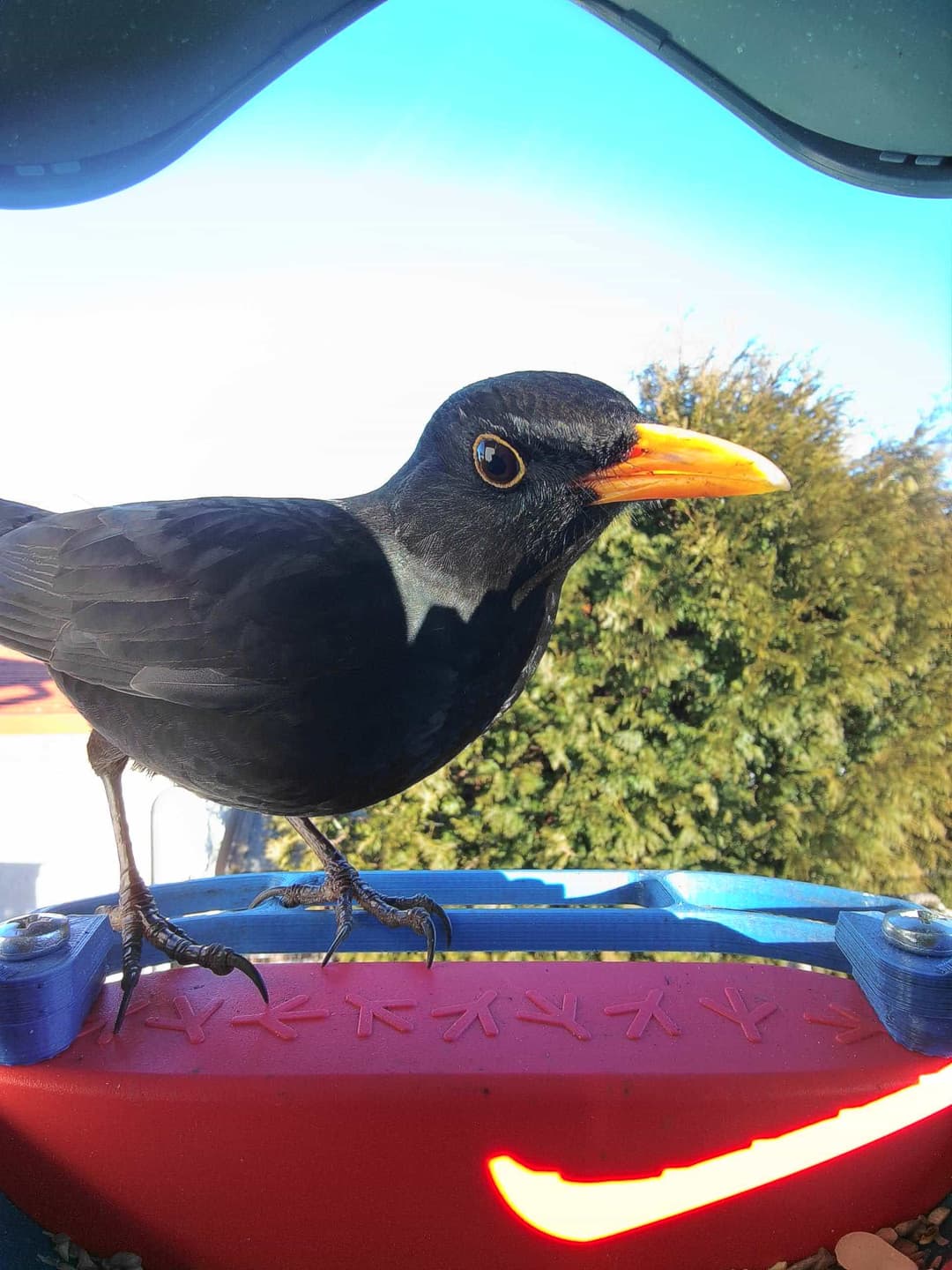
Common Blackbird vs Thrush
The Common Blackbird is similar in shape and size to a Thrush but is uniformly black for males and brown for females, unlike the spotted or barred pattern often seen in true Thrushes.
American Robin vs Thrush
The American Robin is often mistaken for a Thrush due to its size and shape. However, it is distinctly different with its bright orange-red breast and gray upper parts.

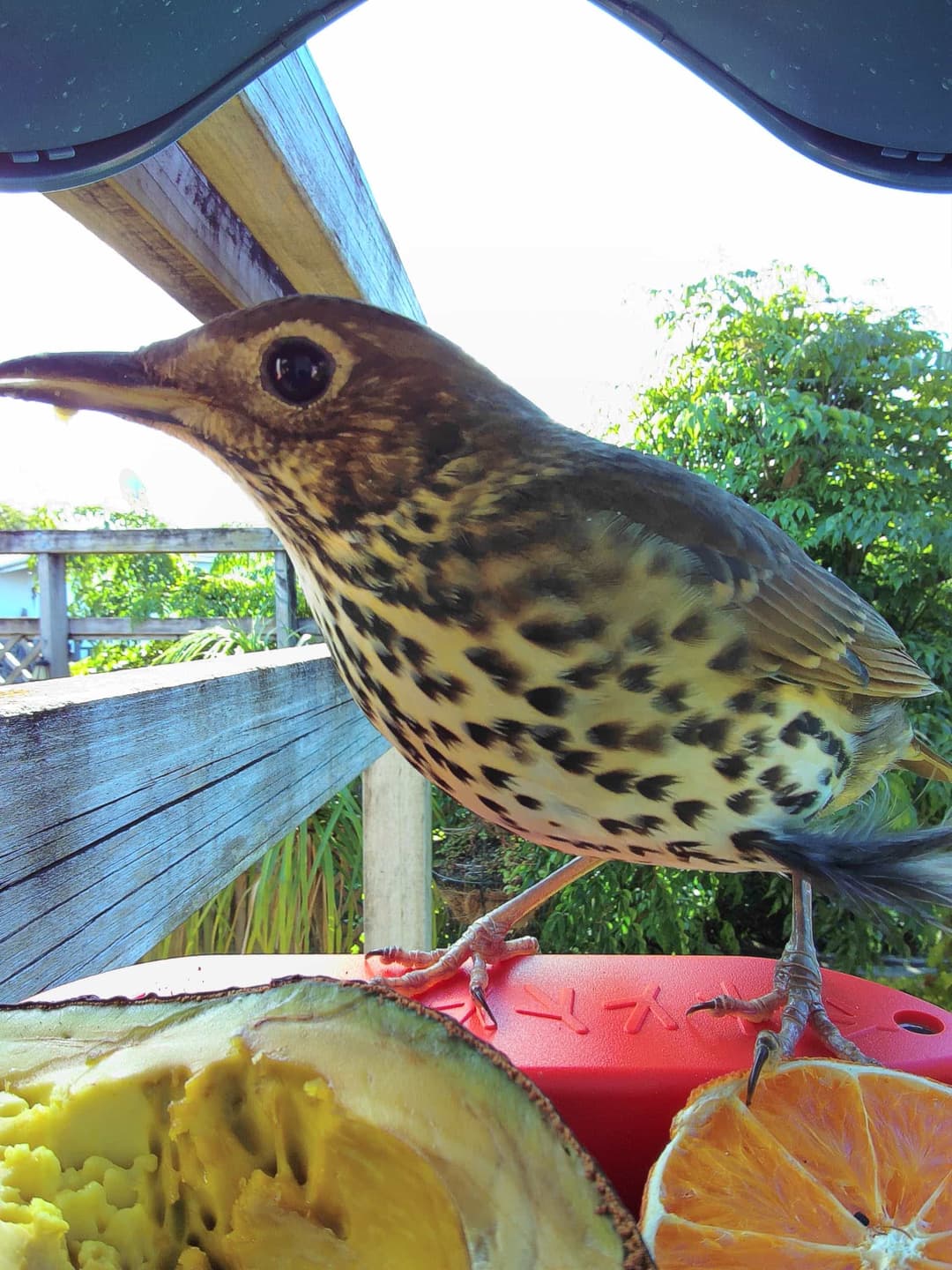
Song Thrush vs Thrush
The Song Thrush is very similar in appearance, having a brown back and spotted underparts, but it can be distinguished by its distinctive song and more uniform pattern.
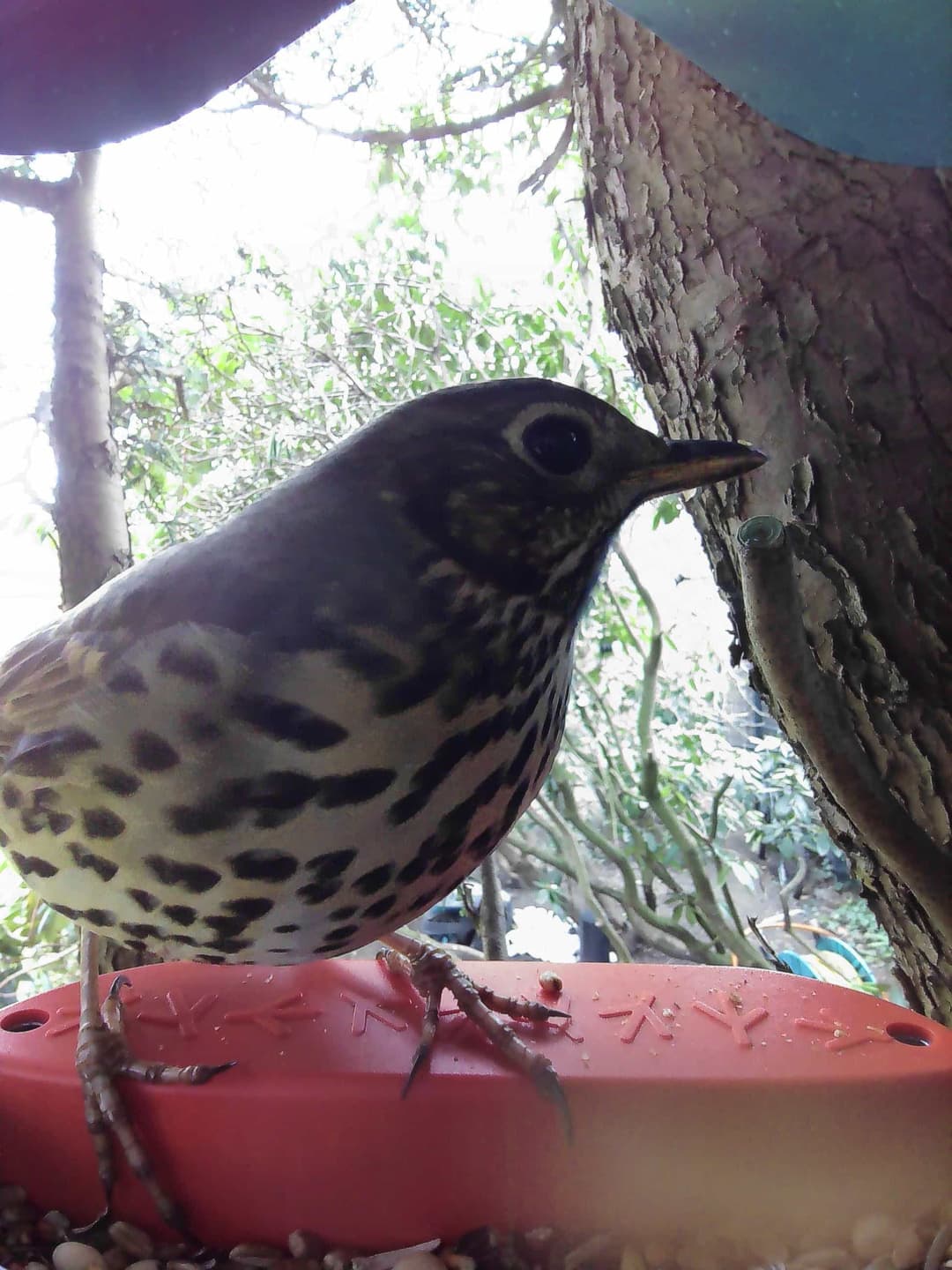
Mistle Thrush vs Thrush
The Mistle Thrush resembles other Thrushes with a similar coloration but is slightly larger with more heavily spotted breast and a louder, more melodious song.
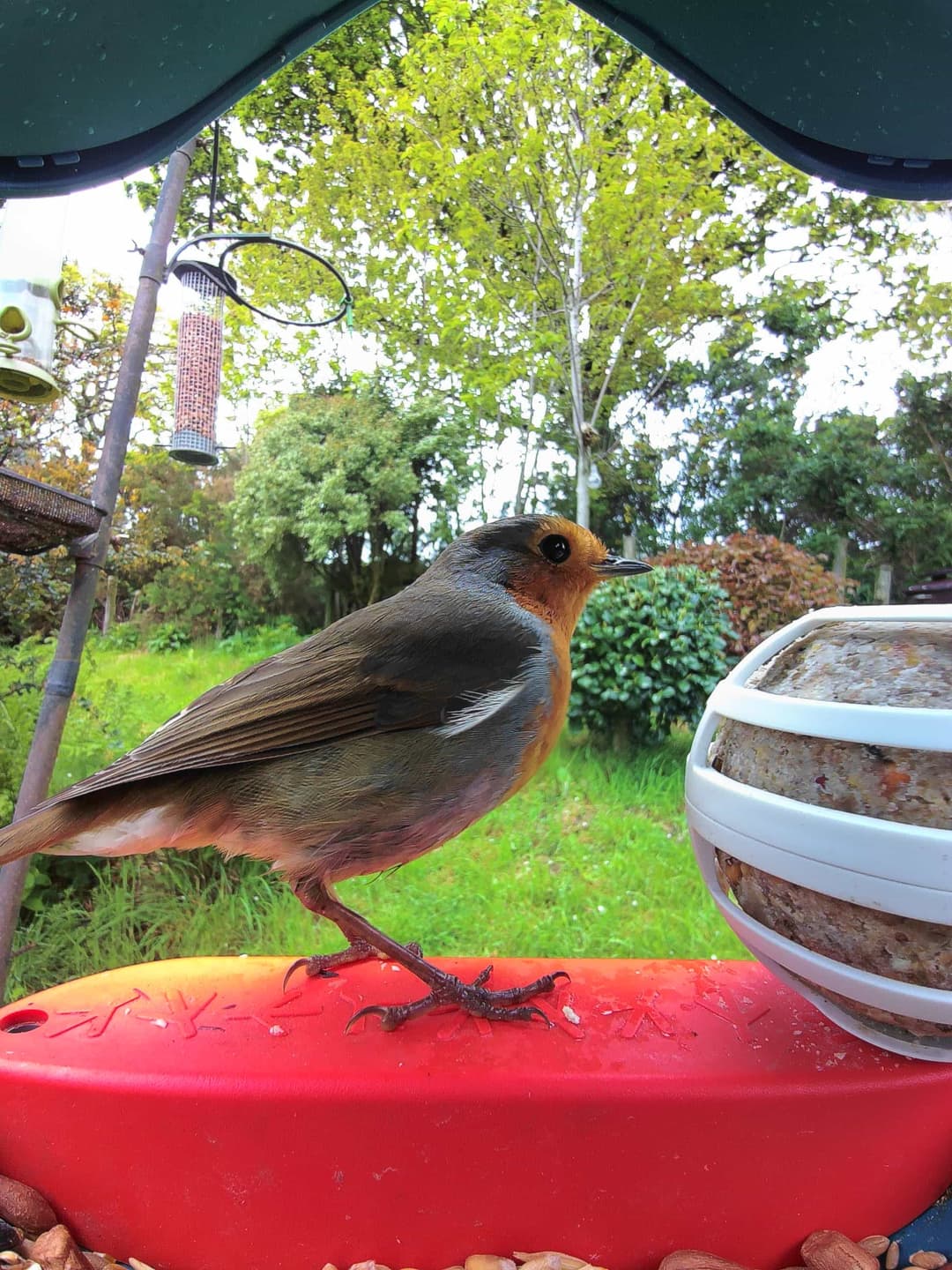
European Robin vs Thrush
The European Robin, while Thrush-like in body shape, is much smaller and distinguished by its red face and breast, contrasting with the normally spotted appearance of true Thrushes.
Hermit Thrush vs Thrush
The Hermit Thrush has similar morphology to other Thrushes but can be set apart by its reddish tail and characteristic melodious call.
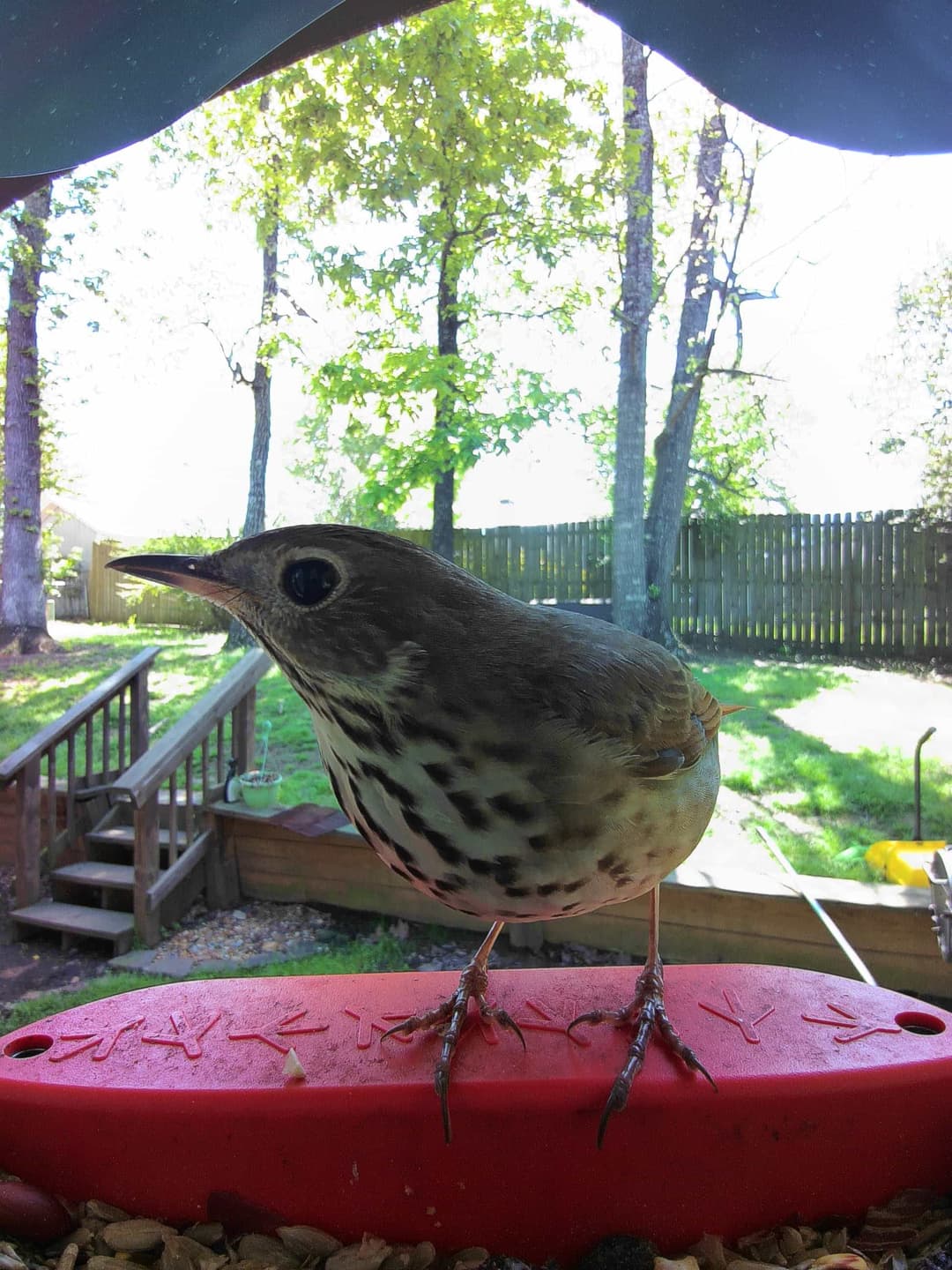
Swainson's Thrush vs Thrush
Swainson's Thrush looks similar to other Thrushes, with a brown back and lighter spotted breast, but it is distinguished by its buffy eye-rings and fluting song.
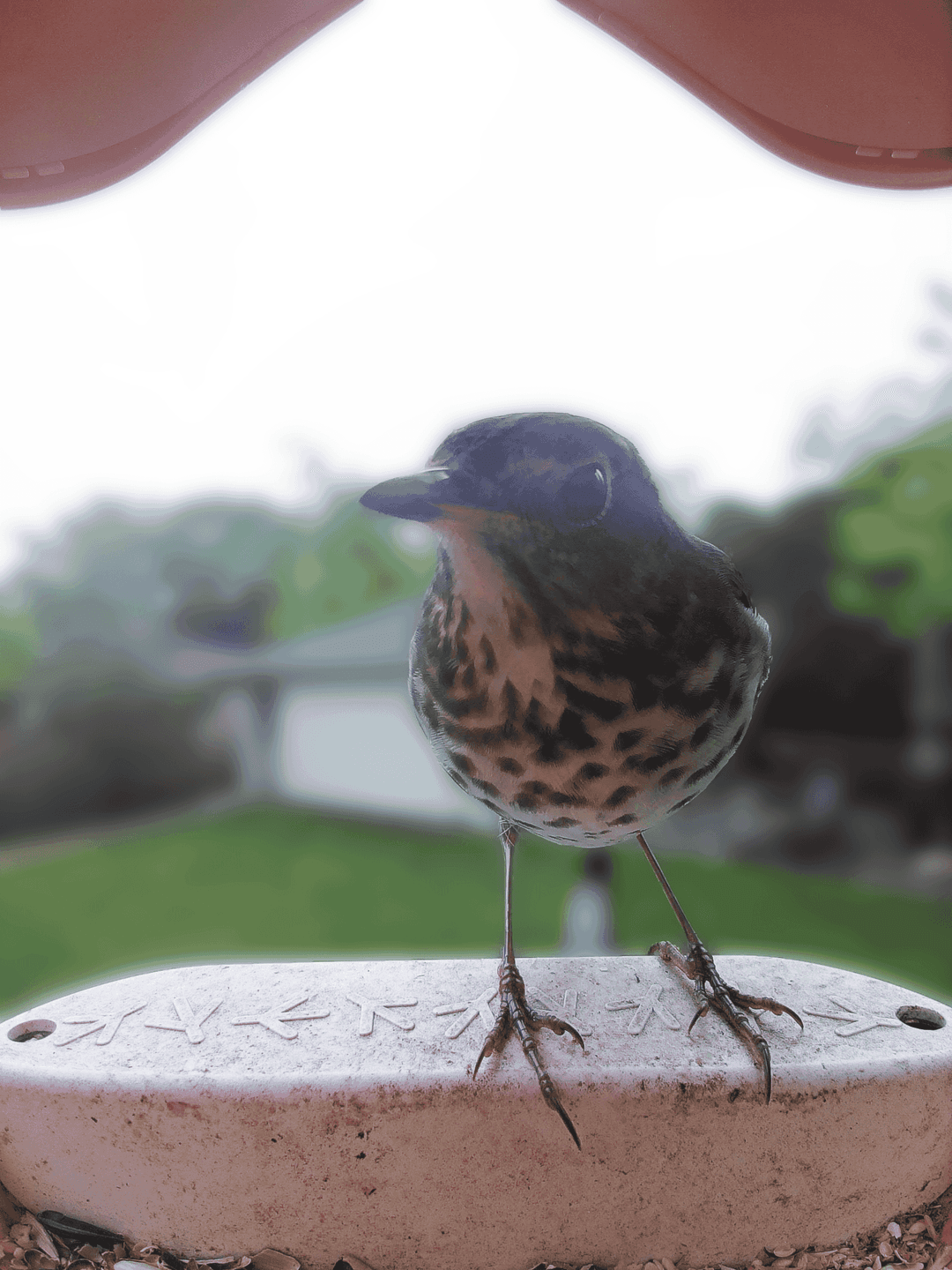
Veery vs Thrush
The Veery resembles other Thrushes in shape and size, with a more uniform, brownish coloring and an unmistakable downward-slurred call.
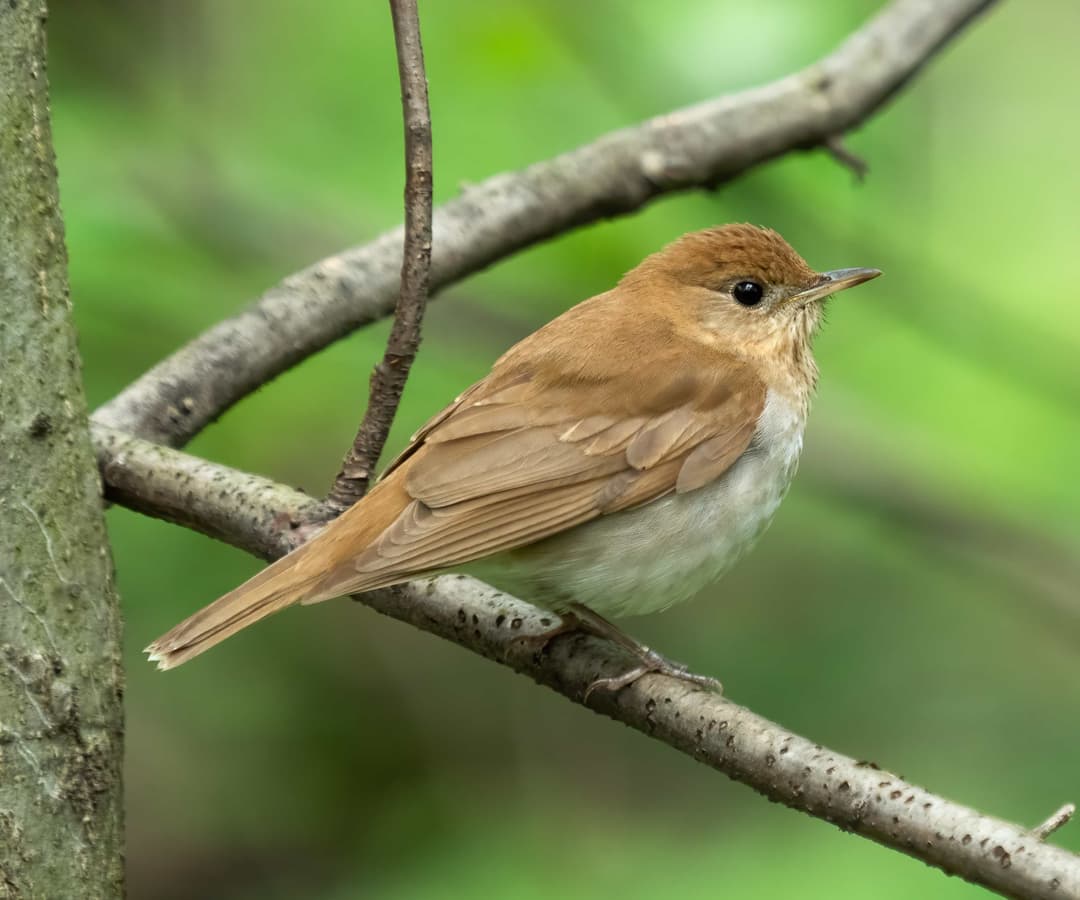
Wood Thrush vs Thrush
The Wood Thrush can be confused with other Thrushes due to its rust-colored upper parts and white, black-spotted underparts, but its song is more ethereal and flute-like.
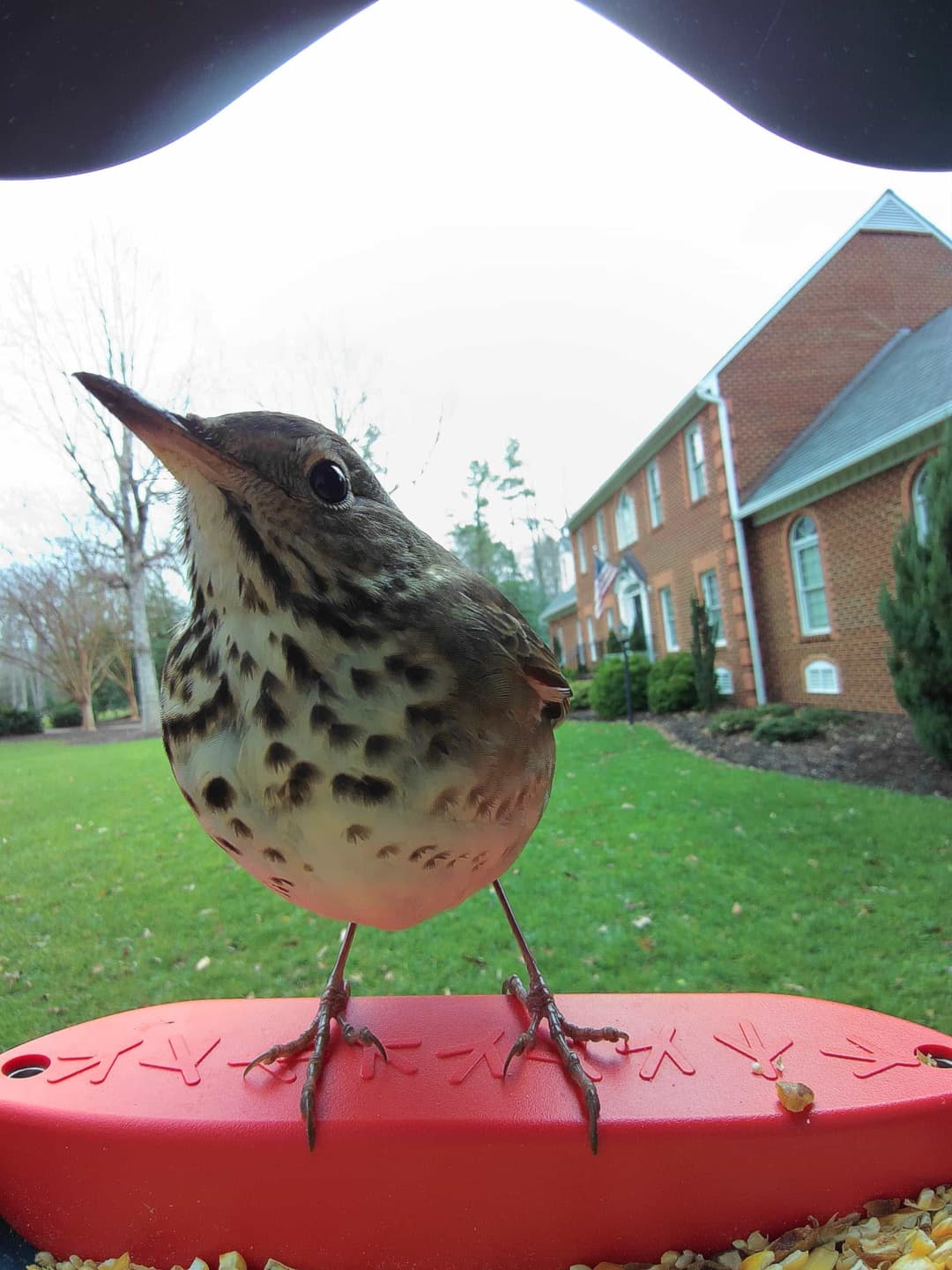
Varied Thrush vs Thrush
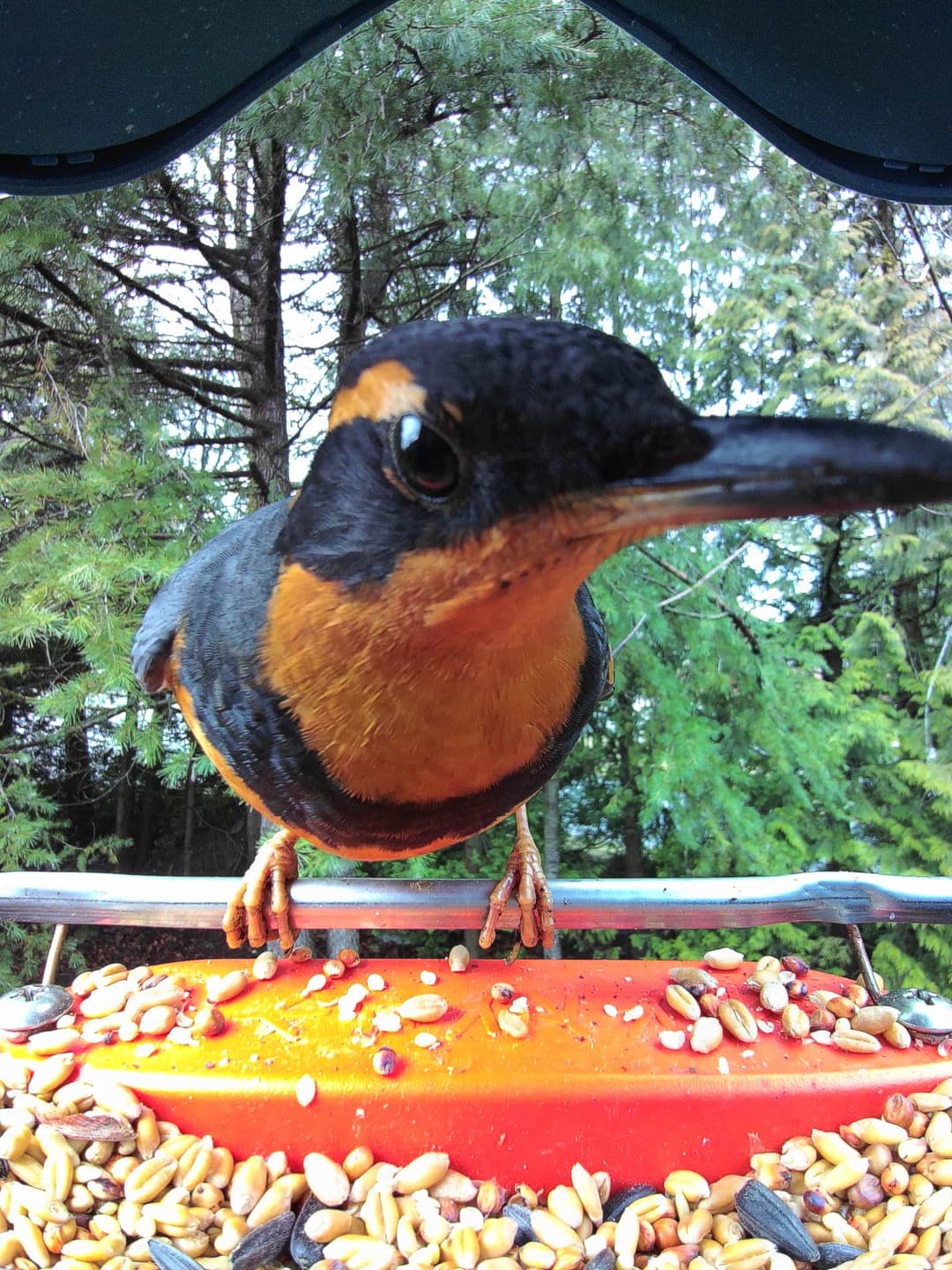
The Varied Thrush looks similar to the American Robin but is distinguished by its striking orange and black plumage and wing bars.
Breeding and nesting habits of the thrush
Mating behaviors
Thrushes engage in elaborate courtship displays, including singing and wing fluttering. Males often chase females and present food to attract them.
Nesting details
Thrushes build cup-shaped nests using grass, leaves, and mud. Nests are typically located in dense shrubs or trees. In gardens, providing thick vegetation or placing nest boxes can encourage nesting.
Eggs and chick-rearing
Females lay 3-5 eggs per clutch, incubating them for about two weeks. Both parents feed the chicks, which fledge after around 14 days. Adding fruit-bearing plants and maintaining insect-rich undergrowth supports feeding.
What does a thrush like to eat?
Berries
Fruits
Insects
Seeds
Small animals
Snails
Spiders
Worms
Natural diet
Thrushes primarily consume insects, worms, and other invertebrates. They forage on the ground and are known for their ability to find earthworms by sight and sound. In the summer, their diet is rich in protein sources like caterpillars, beetles, and spiders. During autumn and winter, thrushes adapt to the availability of food by eating more fruits and berries, such as holly, rowan, and blackberries.
Bird feeders
At bird feeders, thrushes are less commonly seen than other birds, but they may consume suet and various seeds if available. They are also attracted to raisins, sultanas, and chopped apples. Providing a variety of fruits can attract them, especially in colder months when natural food is scarcer.
Attracting thrushes with bird-friendly snacks
Thrushes are fond of worms, fruits, and insects. Indeed, serving these in your yard or feeder can make them quickly drop in for a wonderful meal. However, for best results, we highly recommend using Bird Buddy seeds. These seeds are carefully selected by experts for the season, making them irresistible to our feathered friends.
Choosing the right feeder for thrushes
Picking the right feeder for Thrushes can make a significant difference. Because Thrushes are ground-feeding birds, ground feeders are perfect. These types of feeders replicate their natural feeding environment, increasing the chance that they will feel at home in your yard.
Try these tricks to encourage thrushes
Adding some water features to your yard, like a birdbath or a pond, can attract Thrushes. They not only come for the food but also for the fresh water. A quiet and safe environment also ensures that Thrushes drop by your yard for a long visit and maybe even a sing-along! Ensure there are enough trees, shrubs, or hedges for the birds to take shelter.
Where can you find thrushes?
Primary habitat
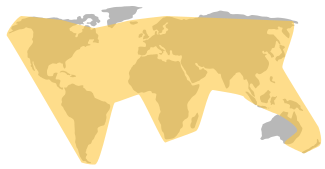
Thrushes typically inhabit wooded areas and forests in temperate regions, often gravitating towards dense undergrowth and shrubs.
Additional range
Their range may extend to gardens, parks, and similar urban spaces. Some species adapt to arctic and alpine conditions.
Do they migrate?
Thrushes encompass numerous species, some of which migrate while others do not. The American Robin, a thrush example, exhibits partial migration. Northern populations migrate to the southern United States or Mexico for winter, while southern populations remain largely stationary. Migration occurs from September to November and the return journey from March to April. The Swainson’s Thrush is highly migratory, breeding in North America and wintering in Central and South America. Migration routes typically follow the Pacific Flyway, with key stopovers in the Pacific Northwest and Central America. The Hermit Thrush migrates southward from breeding grounds in Canada and the northern U.S. to southern U.S. states through Central America, usually from September to November. It returns north between March and May. Both Swainson’s and Hermit Thrushes utilize wooded areas during migration. The Eurasian Song Thrush migrates from northern Europe and Asia to the Mediterranean region and North Africa. Migration occurs in autumn (September to November) with a return in early spring (March to May). Overall, thrush migration patterns vary by species, with timing and routes influenced by geographic location, available resources, and climate conditions.
What is the role of thrushes in nature and how to protect them?
Conservation status
The conservation status of thrushes varies by species, but many are relatively common, while some are vulnerable or endangered. Key threats include habitat loss, climate change, and predation by invasive species. Noteworthy conservation efforts focus on habitat preservation, restoration, and management, alongside monitoring population trends. For example, the wood thrush is considered near-threatened due to deforestation and climate change affecting its habitat. Conservationists advocate for sustainable forestry practices and protecting migratory corridors. Broadly, efforts emphasize maintaining healthy ecosystems and supporting biodiversity to ensure thrush populations remain stable.
Ecological role of thrushes
Its role in the ecosystem
Thrushes are birds known for their significant role in maintaining balance in ecological systems. One of the critical roles they play is in the form of pest control. They feed on various insects, slugs, and other invertebrates, acting as a natural way to control these populations and prevent them from wreaking havoc on vegetation. By doing so, thrushes help in maintaining the health, diversity, and productivity of ecosystems. Thrushes are also essential for seed dispersal. These birds have a varied diet that also includes fruits and berries, and while feeding, they inadvertently disperse the seeds of these plants. This dispersion enhances plant diversity and contributes to the renewal of forests and other habitats in which they're found. Finally, thrushes are an important source of food for larger predators, thus contributing to the ecosystem’s food chain. In summary, their main ecological significance lies in pest control, seed dispersal, and enrichment of biodiversity.
How to help protect thrushes
Preservation tips
Habitat preservation strategies
Support thrush conservation by preserving its habitat. Encourage responsible land use by reducing deforestation and promoting reforestation. Cultivate native plants that provide food and shelter necessary for thrush birds. Safeguard nesting sites to enable successful breeding and avoid disturbances, especially during nesting season.
Community science initiatives
Involve the community in citizen science projects, which can include local bird counts and monitoring. This contributes valuable data for long-term conservation plans. Educate the community about thrush species and why they’re important for ecosystems to raise awareness and support. Advocate for bird-friendly policies at local and national levels to help reduce threats faced by thrushes.