
European Robin
European Robin
Also known as: Robin, Robin Redbreast
Erithacus rubecula


Quick Identification guide
Quick Identification guide
- •
Distinctive for its bright orange-red face and chest, which stands out against the rest of its plumage
- •
Features a compact, plump body with a brown back and pale underparts
- •
Has a thin, pointed beak perfectly adapted for catching insects and other small prey
What does a European robin sound like?
The European robin is known for its melodious, flowing song comprised of high, thin, whistling notes often repeated several times, with pauses in-between. The song is variable and rich in tone. Their typical calls include a thin 'seep' and a more ticking 'tic' or 'tictic'. These sounds are primarily used for communicating threats or territory boundaries. The robin’s song is mainly heard during spring and summer, yet they also sing in winter, particularly at dawn and dusk.


Description
They say the robin redbreast, as it is also known, is the first to start singing in the morning and the last to stop. Don't let their cute appearance fool you, though; they are very territorial and can be a bit of a bully. They might even steal your desert if you leave it out on the picnic table for too long because they have quite the sweet tooth. Did you know that in the UK they are associated with Christmas because Victorian postmen wore red tunics and were called robin redbreasts because of it?
The European robin can weigh between 14to25grams and be from12.5to14centimeters tall.
The European robin typically has a lifespan of 1-2 years, but some live up to 10 years. Among related species, the American robin lives 2 years on average but can reach 14 years, while the Australasian robins may live over 10 years. On average, the European robin's lifespan is somewhat shorter than these related species.
Did you know?
Most popular questions about European robin
How to recognise a European robin?
General appearance
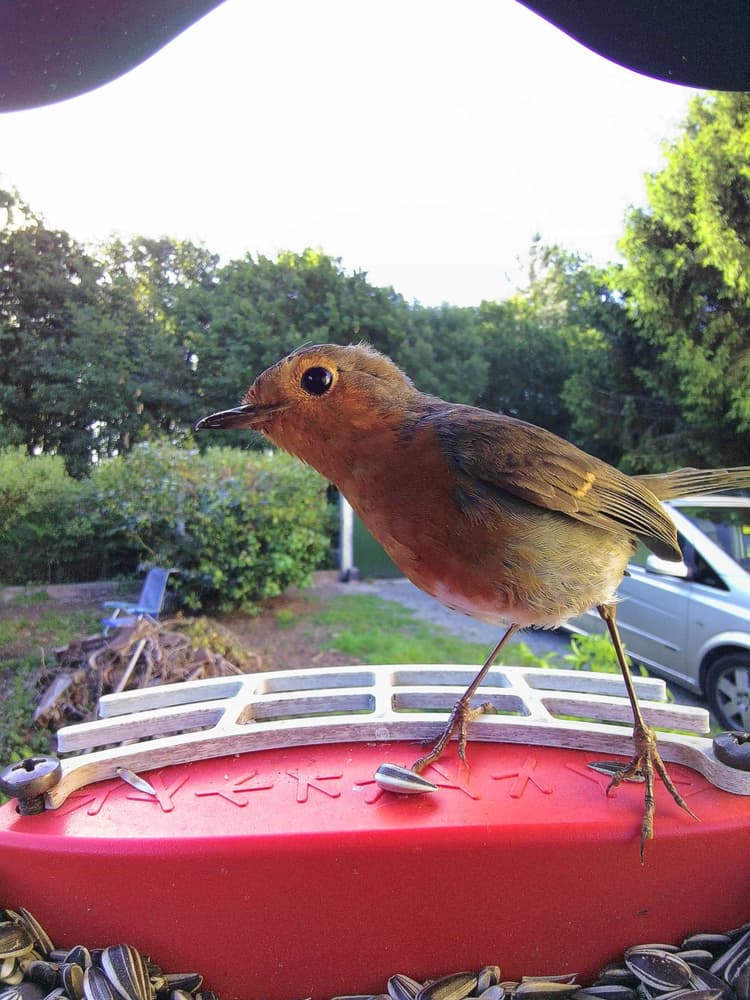
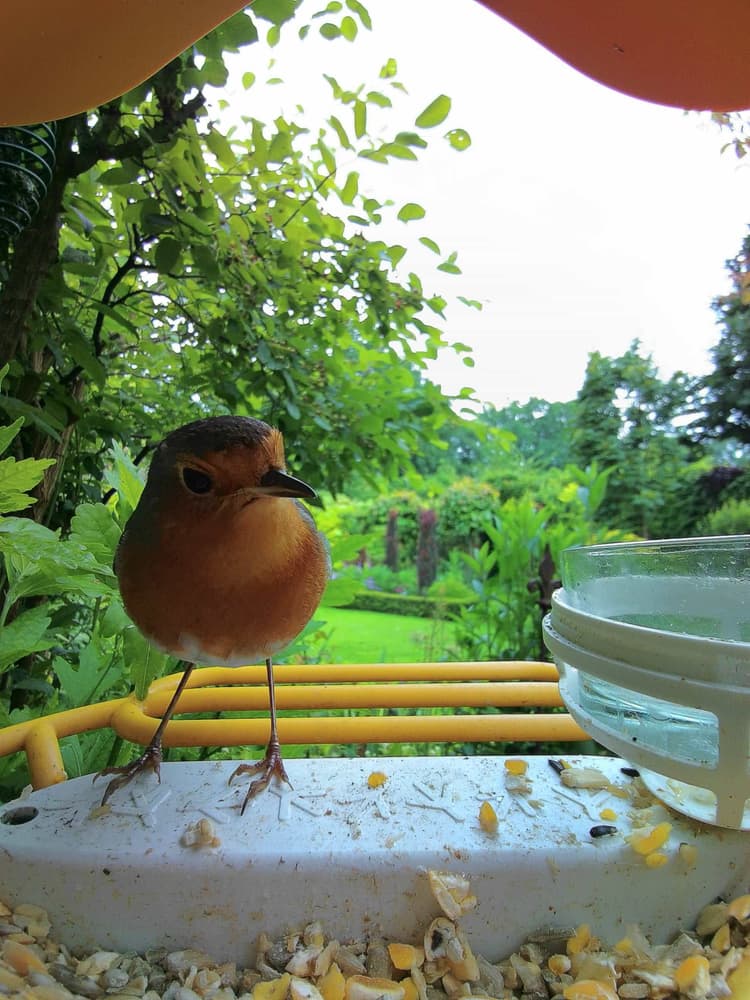
The European robin is a small bird, approximately 12.5–14.0 cm in length. It has a distinctive orange-red face and breast, with a contrasting grey line running from the eyes to the neck. Its upper parts and tail are olive-brown, while the belly is white. This characteristic coloration makes the robin easily recognizable in its habitats, which include gardens, woodlands, and parks.
Male vs female
Male and female European robins are visually similar, with no significant differences in plumage coloration or size. Both genders share the same vibrant orange-red breast and predominantly brown and white bodies. This lack of sexual dimorphism means that it can be challenging to distinguish between male and female robins just by appearance.
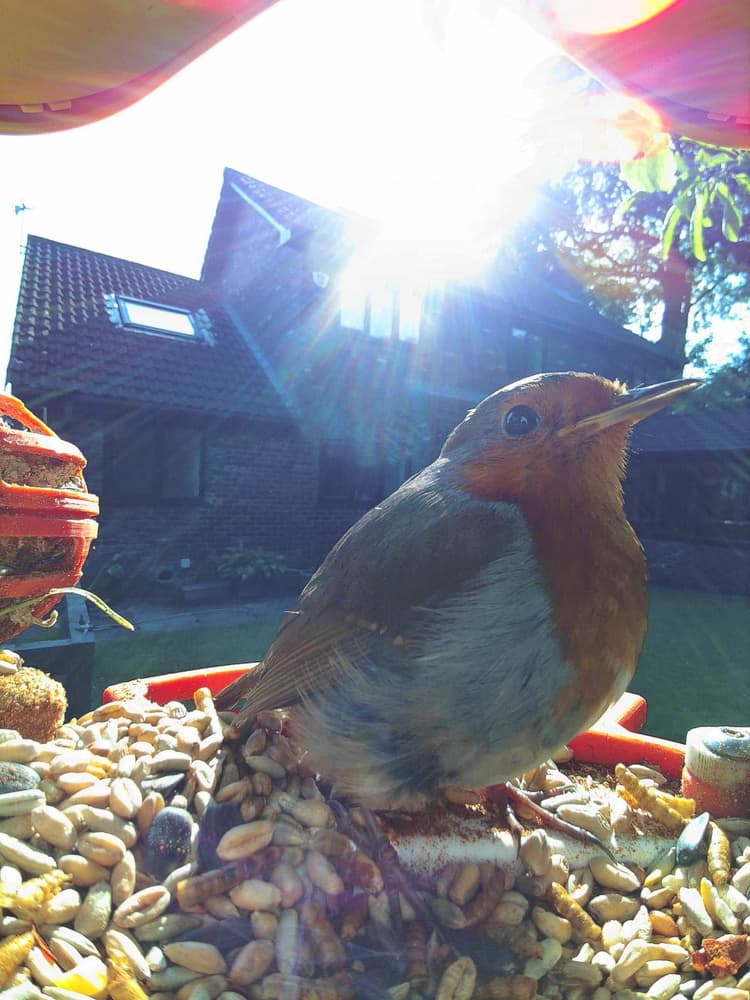
Male European Robin
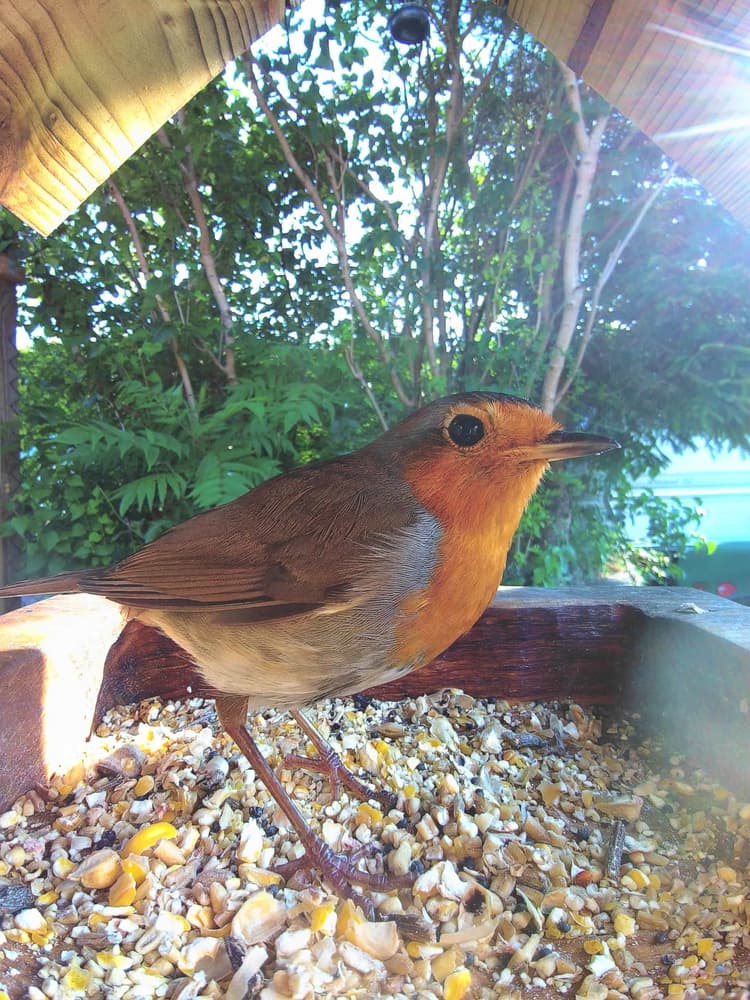
Female European Robin
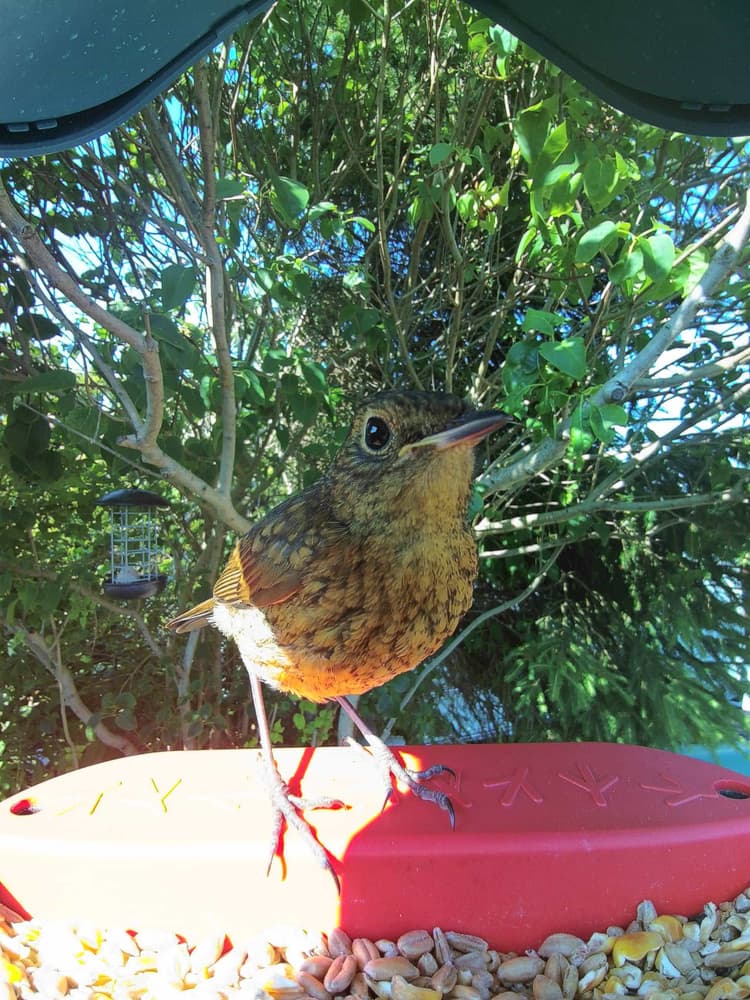
Juvenile
Juvenile robins are generally mottled with golden-brown spots instead of the striking orange-red breast seen in adults. This speckled appearance helps them stay camouflaged from predators. As they mature, the juveniles gradually develop the distinctive adult plumage. Seasonal variations do not significantly affect overall appearance, but molting can sometimes make the colors appear more subdued.
Often mistaken for
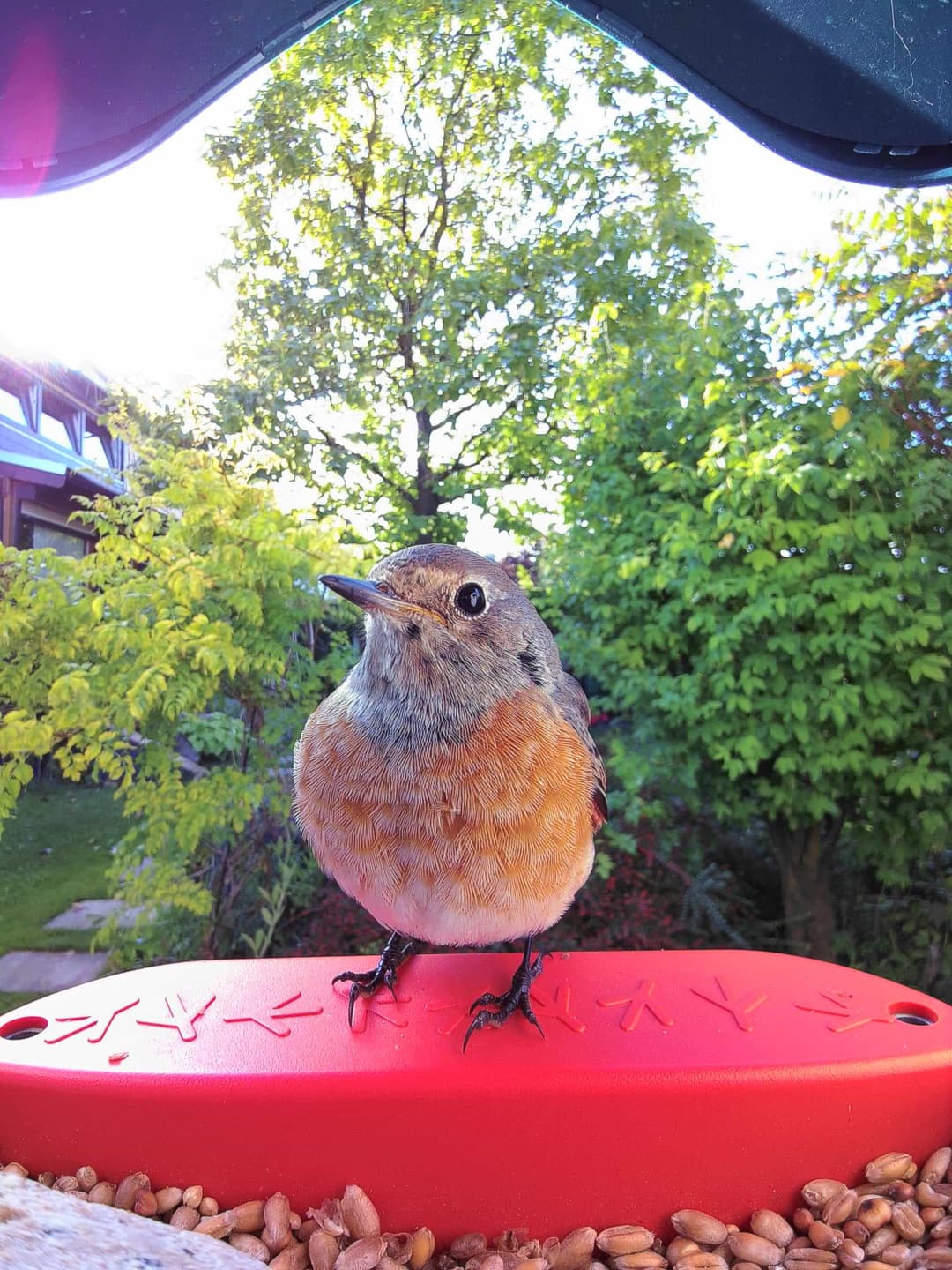
Common Redstart vs European Robin
The European Robin is easily distinguished from the Common Redstart by its warm orange-red face and breast, whereas the Common Redstart has a more vibrant orange coloration on its breast and lacks the robin's distinctive face pattern. The Common Redstart also has a striking black throat and face with a white forehead, which the robin lacks. Additionally, the Robin has an olive-brown back compared to the Redstart's bluish-grey.
American Robin vs European Robin
While both birds are known as robins, the European Robin is smaller and characterized by its orange-red face and chest without a sharp contrast. The American Robin is much larger and has a more defined black head and a darker orange belly. The European Robin's build is also more compact, and it has a distinctly different song, which is more melodious and less varied than the American Robin's.

Breeding and nesting habits of the European robin
Mating behaviors
European robins engage in courtship through singing and displays by males to attract females. Courtship feeding, where males bring food to females, is common during incubation.
Nesting details
Females build nests typically in low cavities, up to 5 meters high. They use tree stumps, root masses, banks, rock crevices, hollow trees, and human structures like walls and nest boxes. The nest is a cup of moss, leaves, and grass, lined with hair and plant fibers. To encourage garden nesting, provide dense shrubs and avoid regular disturbance.
Eggs and chick-rearing
Females lay 4-6 eggs, incubated for 13-14 days. Both parents feed the altricial chicks, which fledge after 14-16 days. Parents continue feeding fledglings for 3 weeks post-fledging. Ensuring a supply of insects and maintaining quiet, safe garden areas supports chick development.
What does a European robin like to eat?
Berries
Fruits
Insects
Nuts
Seeds
Snails
Spiders
Suet
Worms
Natural diet
European Robins primarily consume terrestrial insects such as beetles and ants. They also hunt other invertebrates like spiders and worms. In addition to insects, European Robins incorporate seeds and berries into their diet during the winter season as natural food sources become scarce.
Bird feeders
At bird feeders, European Robins are commonly attracted to mealworms, suet, and other insect-based foods. They might also consume fruit pieces such as apple slices or raisins, as well as seeds, particularly during colder months when their natural food sources are limited.
Favorite robin snacks
The European robin loves a good variety in their diet. Meal worms, fruits like apples and berries, and small seeds are among their favorites. A blend of seeds like those from Bird Buddy is a perfect choice, as they are specifically chosen by experts for the season.
Ideal feeder types
Robins appreciate feeders that are accessible and clear, so they can keep an eye out for danger while dining. A suspended tubular feeder with small perches is perfect for them. Be sure to keep it free from other birds’ leftovers which might obscure their view.
Fun tricks to attract robins
Believe it or not, European robins love a bit of music. You can use a soft, melodious bird call, played from your porch to draw their attention. Also, they are curious creatures, so adding some shiny beads or baubles to your feeder might just be the fun trick to bring them flocking.
Seeds recommendation - bird buddy
For best results to attract the European Robin to your yard or feeder, opt for Bird Buddy seeds. Not only are these seeds specifically chosen by experts for the season, but they also ensure the health and happiness of your feathered guests.
Where can you find European robins?
Based on Birdbuddy sighting data. The heatmap shows where Birdbuddy users have spotted this species.
Embed this map
This map shows the full native range based on scientific range data.
Primary habitat
The European robin prefers woodland, hedgerow, parks and gardens across Europe, west Asia, and North Africa.
Additional range
It often tolerates varied climates from temperate to Mediterranean and can inhabit urban areas and mountain regions, even up to 2000 meters altitude in European Alps.
Do they migrate?
The European robin displays varying migratory behaviors based on its geographical location. In general, robins in the northern parts of Europe, such as Scandinavia and Russia, are more likely to migrate, while those in milder climates, like the UK or Western Europe, tend to remain resident throughout the year. Migratory robins typically head southwest in the autumn, usually between September and November, seeking milder winter conditions. Their routes often lead them to Southern Europe, the Iberian Peninsula, and even North Africa. Key locations for overwintering include regions in Spain, Portugal, and northern Morocco. Upon return in the spring, typically from March to April, the robins retrace their path, moving northeast back to their breeding grounds. This partial migratory behavior ensures that robins take advantage of the seasonal abundance of insects and other food resources in their breeding areas while avoiding the harshest winter conditions. Resident robins, in contrast, adapt to local conditions and establish territories during the winter, benefiting from a relatively stable climate and year-round food supply provided by garden feeders and natural resources.
What is the role of European robins in nature and how to protect them?
Conservation status
The European robin is categorized as "Least Concern" by the International Union for Conservation of Nature. This status is due to its extremely large range, increasing population trend, and a substantial population size estimated between 130–201 million individuals, indicating that it is a common species. Key conservation efforts are not urgently needed given its stable status, and there are no significant threats endangering its population. The stability of its population highlights the lack of immediate conservation concerns for this species.
Ecological role of European robins
Its role in the ecosystem
European Robins play a significant role in ecosystems, serving as both pest controllers and seed dispersers. Their energetic foraging behavior, which involves purposeful hopping and wing-flicking, helps manage pest populations by consuming various insects and other small invertebrates harmful to crops or vegetation. This behavior not only controls pests but also contributes to soil aeration, which encourages plant growth and health. Furthermore, as these birds feed on fruits and berries, they aid in seed dispersal, promoting plant diversity and forest regeneration. They inadvertently transport seeds across territories through their droppings, thus enabling the establishment of plants in new areas. Equally, the European Robins' nesting habits benefit the ecosystem. By building nests in dense vegetation, they play a role in plant pollination and contribute to biodiversity by creating habitats for other species. Their highly territorial and reproductive habits play an essential role in their survival, which, in turn, aids the overall health of the ecosystem.
How to help protect European robins
Preservation tips
Habitat preservation for european robin
Initiate and implement plans for the preservation of native woodland and gardens, since European robins thrive in such environments. You should encourage growth of dense vegetation and shrubs as they provide good nesting sites for robins. Limit human activity in areas of high robin population to minimize disturbance. Endeavor to maintain a sustainable balance of insects, their primary food source, through organic gardening.
Community science initiatives for robin conservation
Foster community participation in robin conservation, starting with local schools and organizations. Implement monitoring programs that involve citizen scientists in data collection on robin populations and movements. Community birdwatch events can also enhance public interest and involvement. Propagate educational programs about the importance of robin conservation and how to make our surroundings more bird-friendly. Additionally, a community-led pesticide regulation can help maintain a healthy insect population which robin's diet relies on.