Spotted Dove or Mourning Dove?
Here's how to tell the difference
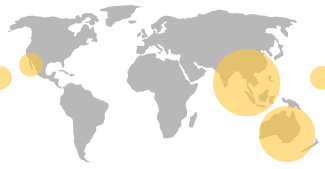
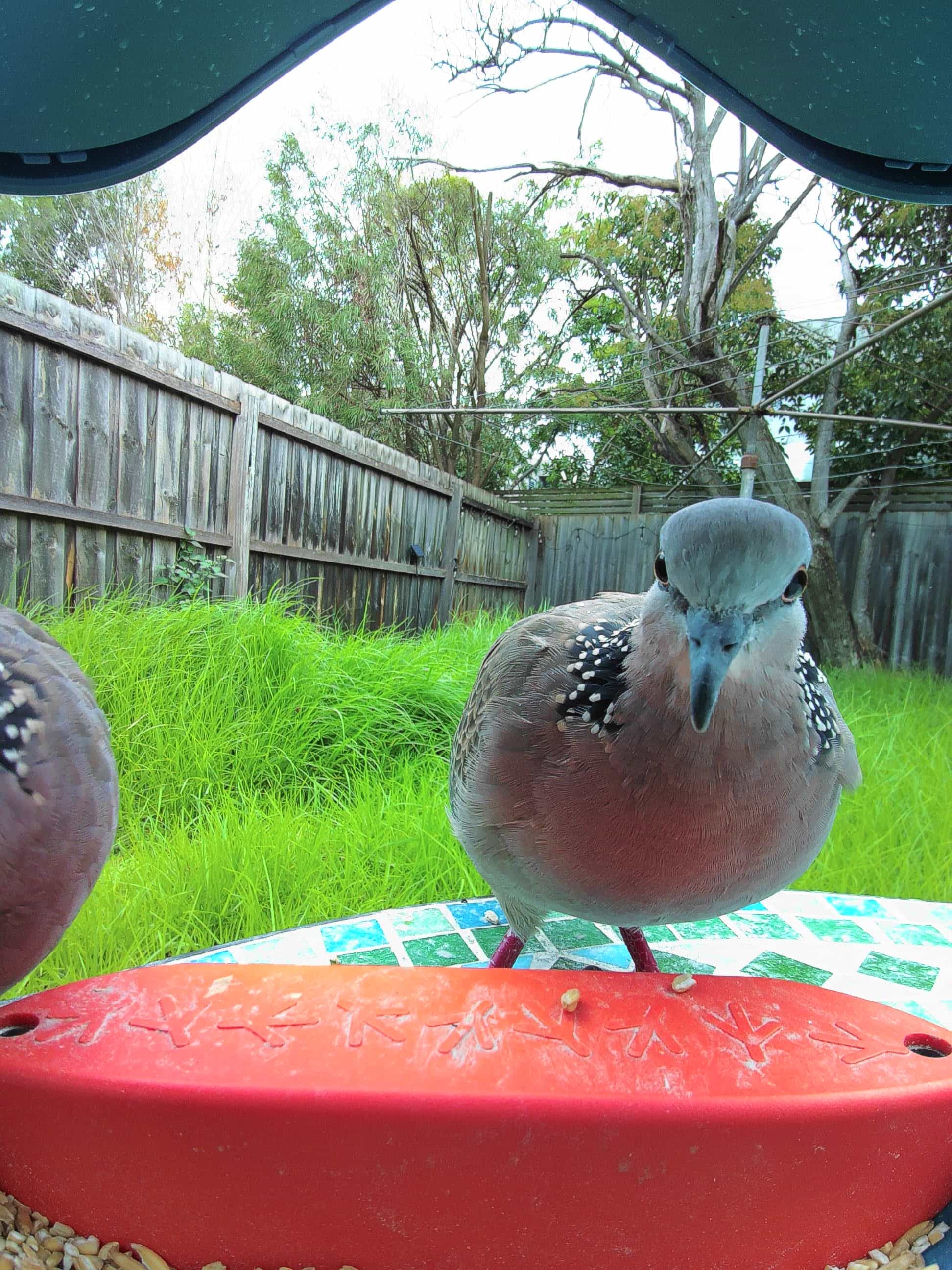


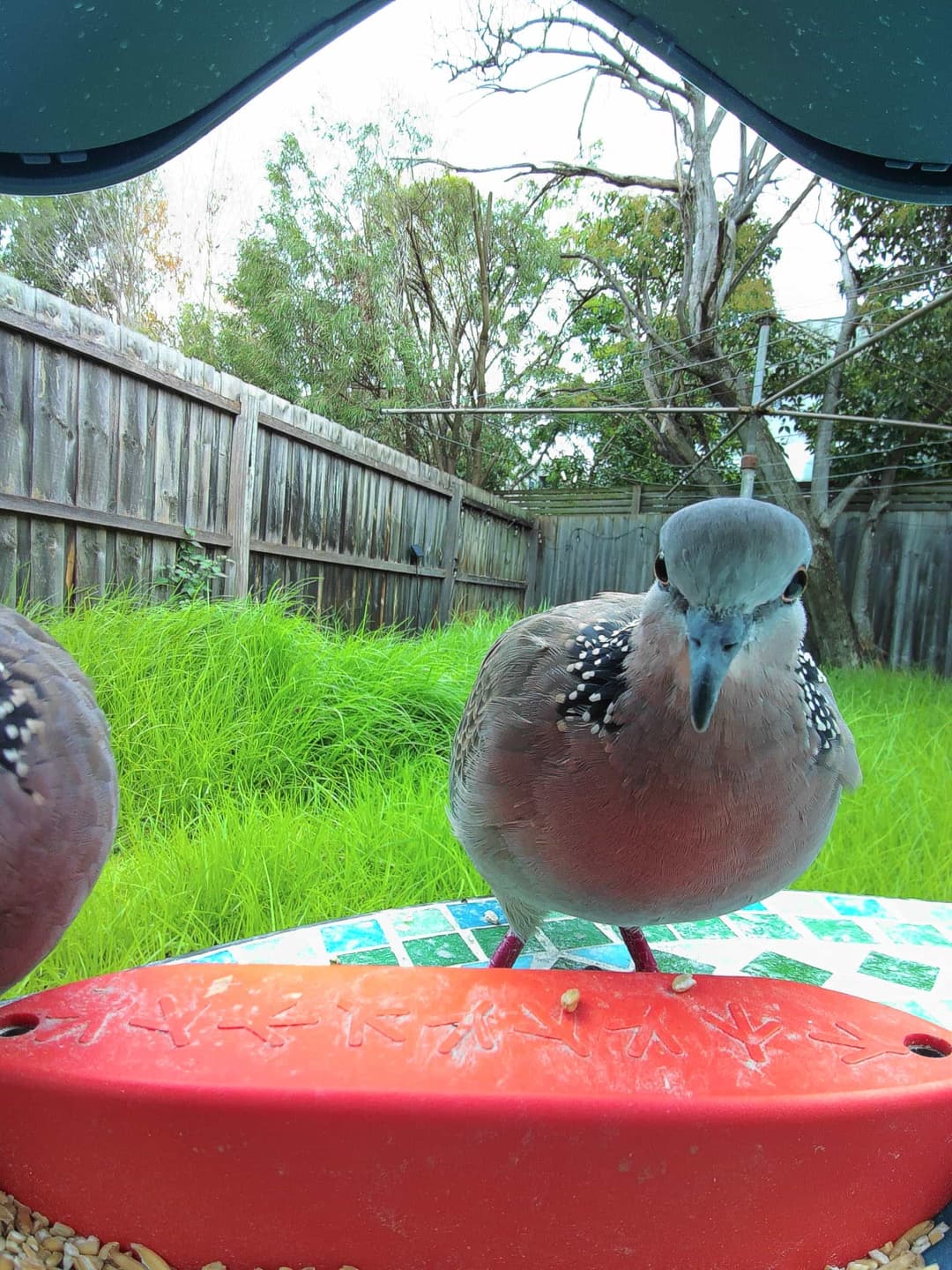
Spotted Dove
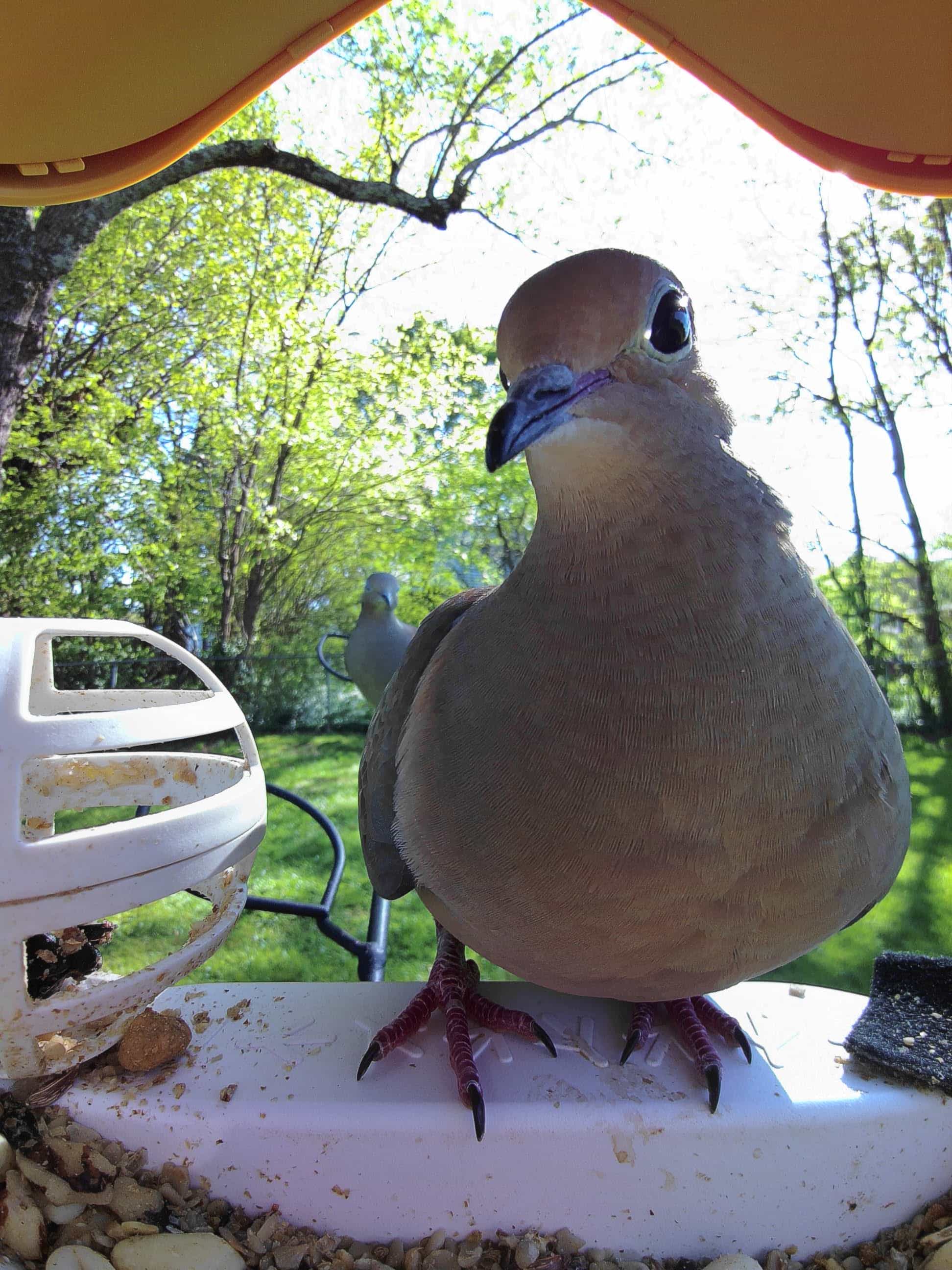


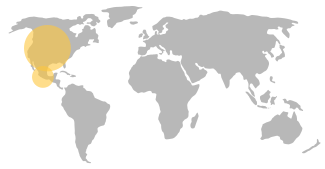
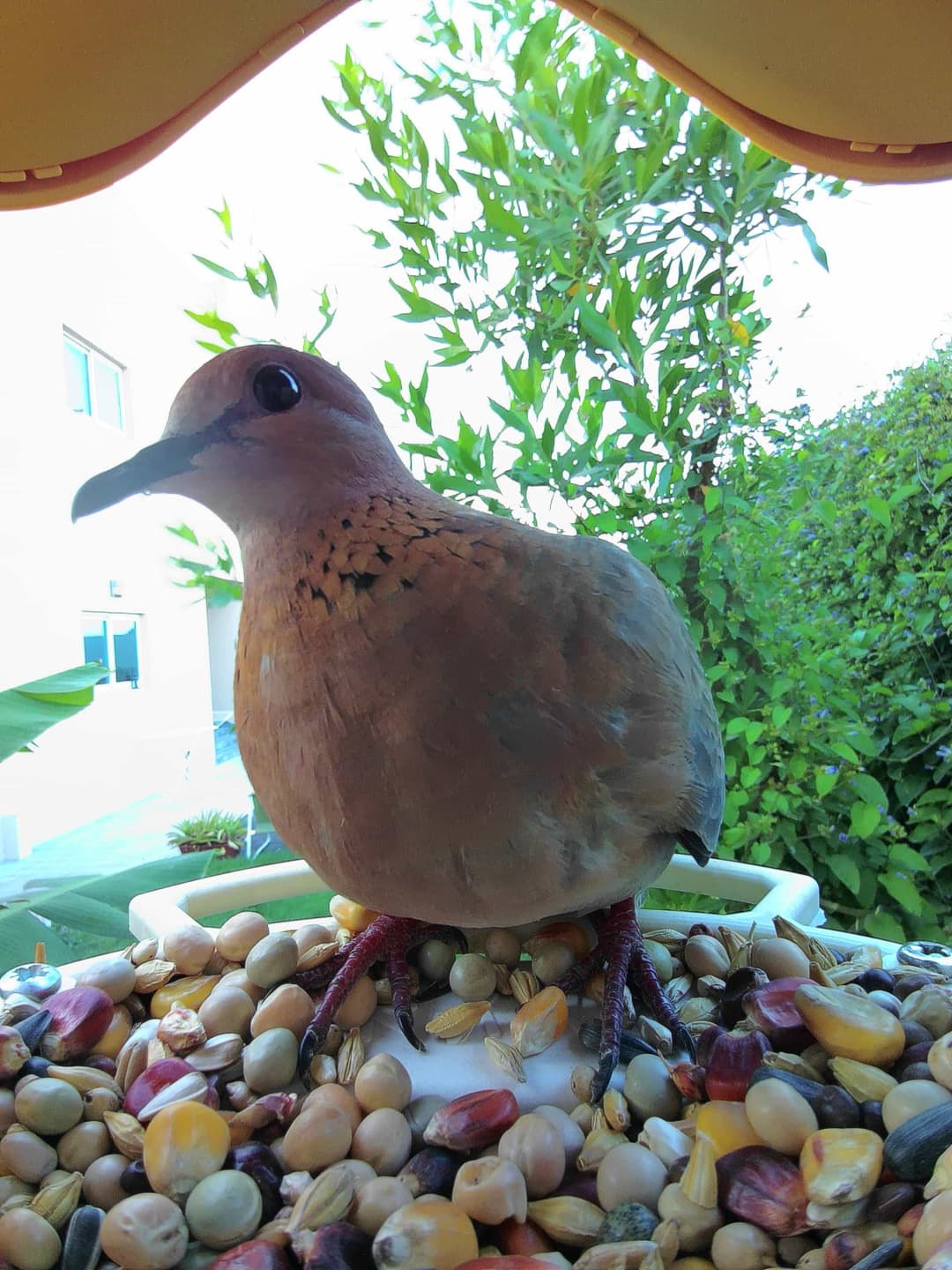
Mourning Dove
Spotted Dove
Spilopelia chinensis
Also known as: Mountain Dove, Pearl-Necked Dove, Lace-Necked Dove, Spotted Turtle-Dove
General appearance
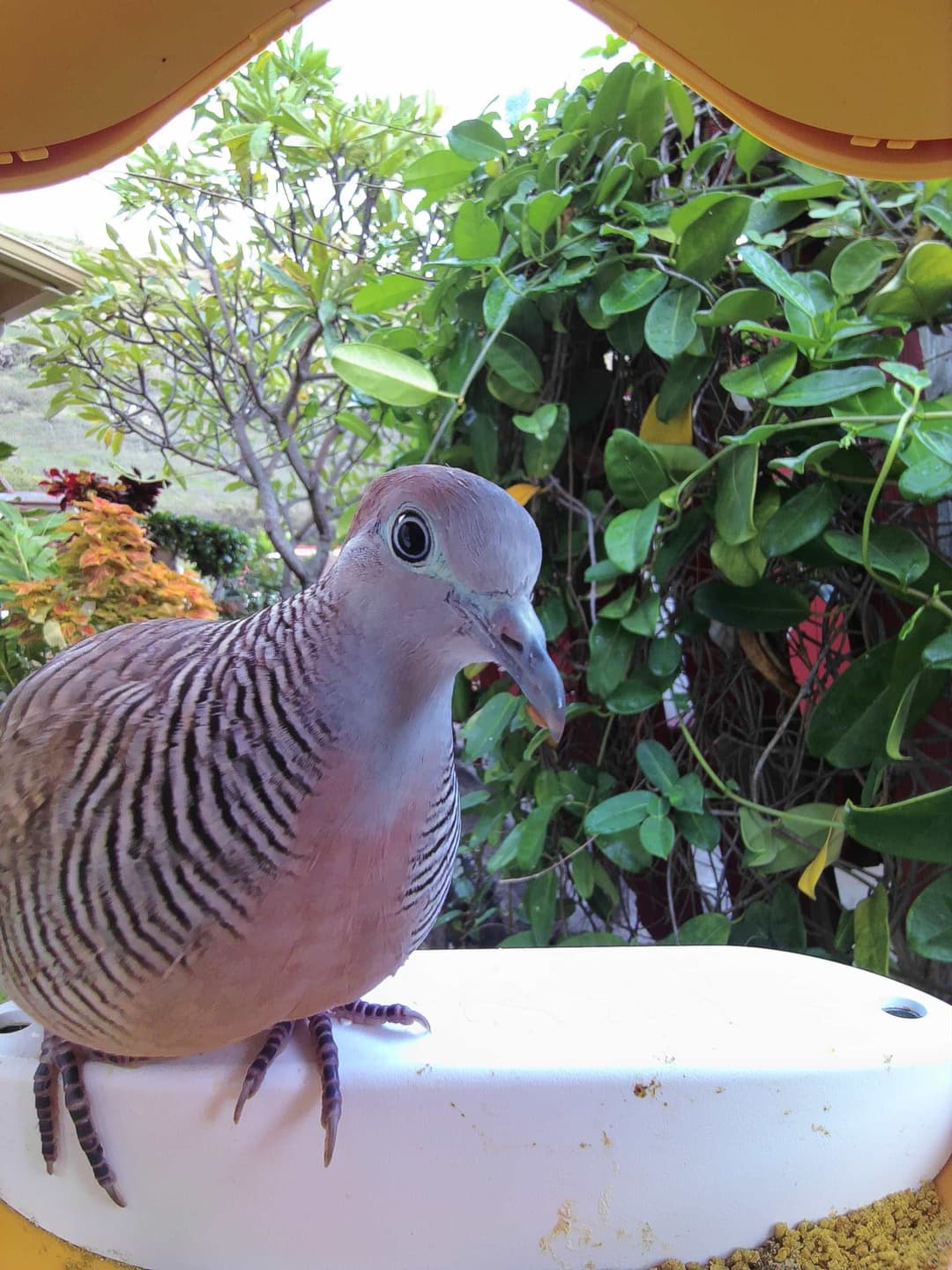
The Spotted Dove is an easily recognizable species. They range in size from 11-12 inches in length. The primary coloration of their plumage is a lovely light grey and pinkish below, with a distinctive black patch covered in white spots at the base of the throat.
Male vs female
Sexual dimorphism, which means observable differences in appearance between males and females, is not strongly present in spotted doves. Both males and females are similar in appearance. However, males may have slightly more vibrant colors and might be a bit larger than females.
Juvenile
Juvenile spotted doves display less vivid colorations than the adults, with a relatively plain, unspotted neck and pale undertail. They also lack the striking neck patch that is seen in adult spotted doves. Their coloration becomes progressively more similar to the adults as they mature.
Size
11.0 - 12.6 in/3.9 - 7.2 oz
There's more to learn about Spotted Dove
View full detailsMourning Dove
Zenaida macroura
Also known as: American Mourning Dove, Rain Dove, Turtle Dove, Carolina Pigeon, Carolina Turtledove
General appearance
The mourning dove is roughly the size of a crow, bearing characteristics of a long, pointed tail which is about 12', or 30 cm long. This tail displays white spots along its edge while in flight. The bird’s wings are adorned with black spots and its overall coloration exhibits hues of black, brown, gray, pink, tan, and white. The dove has a pointed, wedge-shaped tail.
Male vs female
The sexes of mourning doves can be distinguished by their coloration. Adult males generally have a pinkish tinge on their chests and a blue-gray tone on their crowns. However, the female doves are more dull and plain, predominantly appearing in a shade of brown.
Juvenile
Young mourning doves have a unique scaly appearance that can lead them to be confused with the Inca Dove or the Common Ground Dove. They do not possess the vivid coloring of the adults and generally appear more muted in color.
Size
9.1 - 13.4 in/3.0 - 6.0 oz
There's more to learn about Mourning Dove
View full detailsHow to tell the Spotted Dove from the Mourning Dove
Visual differences
The Spotted Dove (11-12 inches) is slightly smaller than the Mourning Dove (about 12 inches). Spotted Doves have a distinctive black patch with white spots at the throat, whereas Mourning Doves feature a long, pointed tail with white edges and black wing spots. Spotted Doves exhibit a light grey and pinkish hue, while Mourning Doves display a varied color palette including black, brown, gray, pink, and tan. Spotted doves lack notable sexual dimorphism, whereas male Mourning Doves have a pinkish chest and blue-gray crown compared to the more brownish females.
Key differences and behavior
Spotted Doves and Mourning Doves exhibit distinct behaviors. Spotted Doves engage in complex mating dances with cooing and aerial tricks, while Mourning Doves perform elaborate courtship displays involving noisy wingbeats and circular glides. Spotted Doves thrive in light woodlands and parks, often in Asia or urban areas like Southern California, whereas Mourning Doves prefer open and semi-open habitats across North America. Both species construct simple twig nests, but Mourning Doves nest slightly higher. Both species eat seeds, but the Mourning Dove's diet is 99% seeds, occasionally snails, while Spotted Doves include small insects and invertebrates. Despite their ability to adapt, Spotted Doves are expanding their range, contrasting with the Mourning Dove's preference for familiar habitats.
Still not sure? Here are more lookalikes!
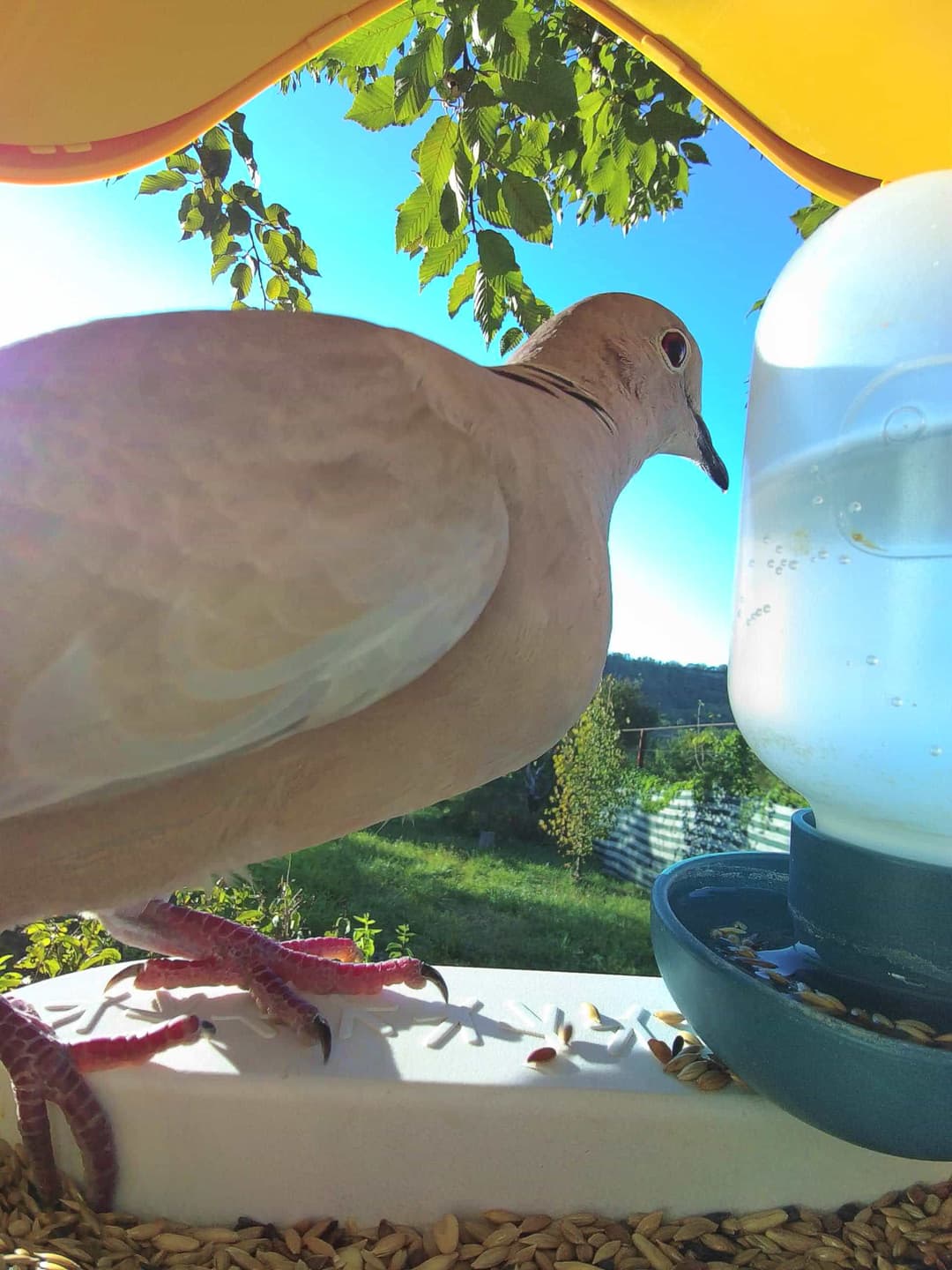
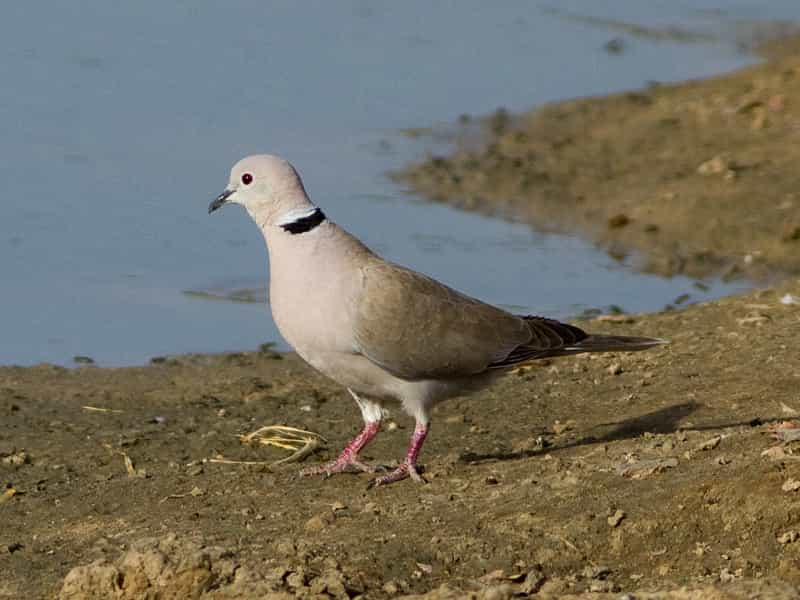
Spotted Dove vs Eurasian Collared Dove
Mourning Dove vs Eurasian Collared Dove

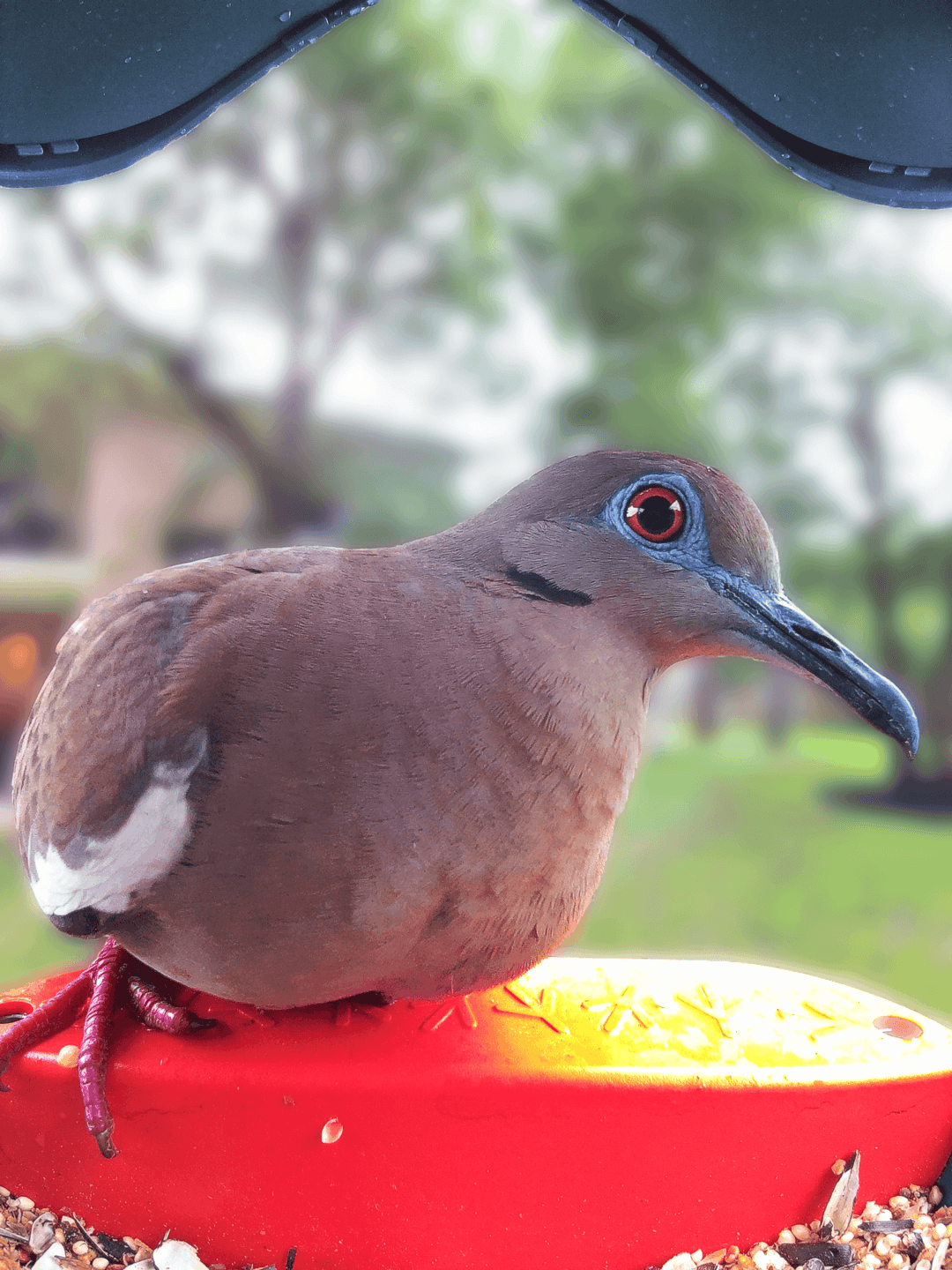
Mourning Dove vs White-Winged Dove
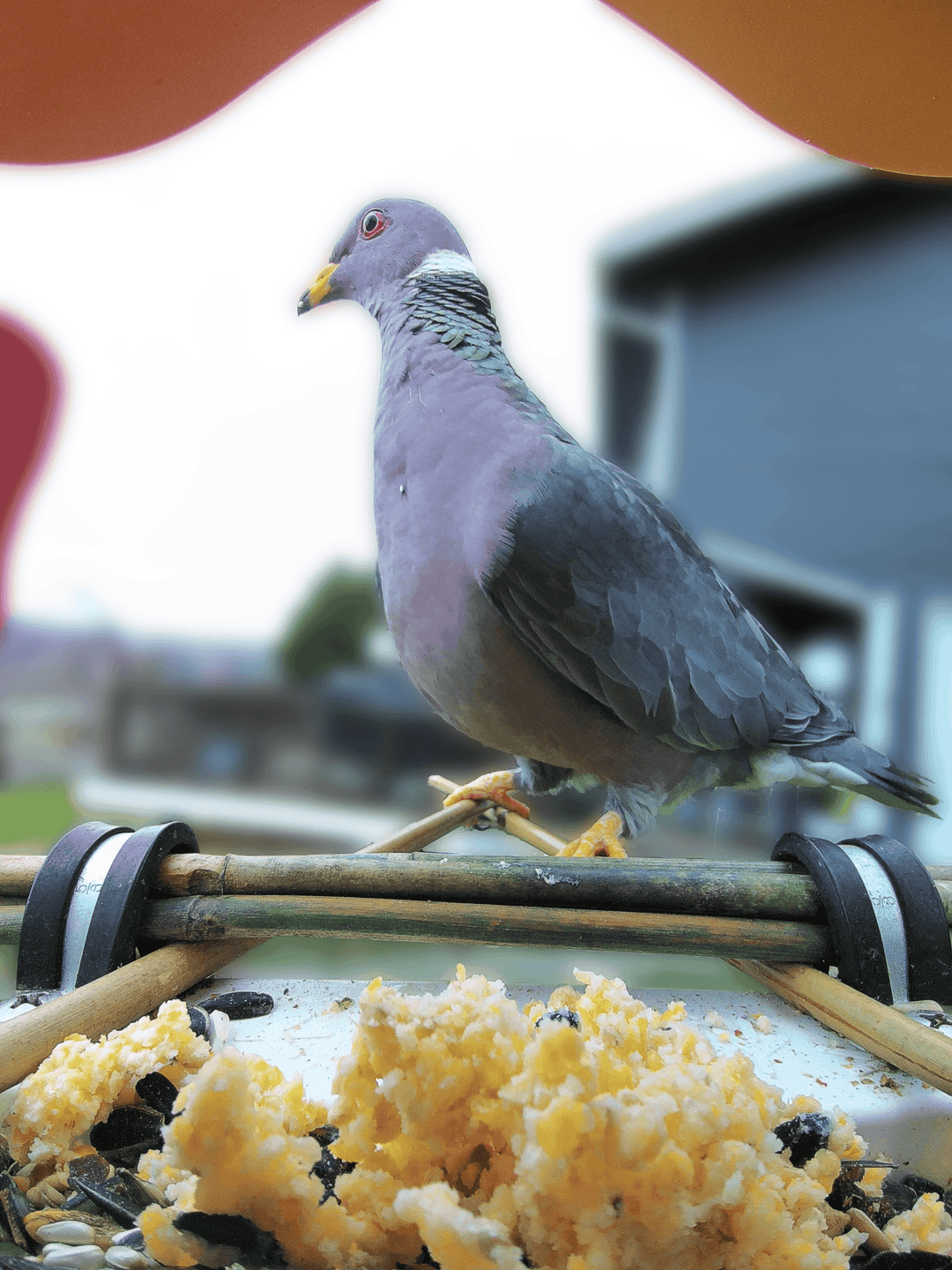
Mourning Dove vs Band-Tailed Pigeon
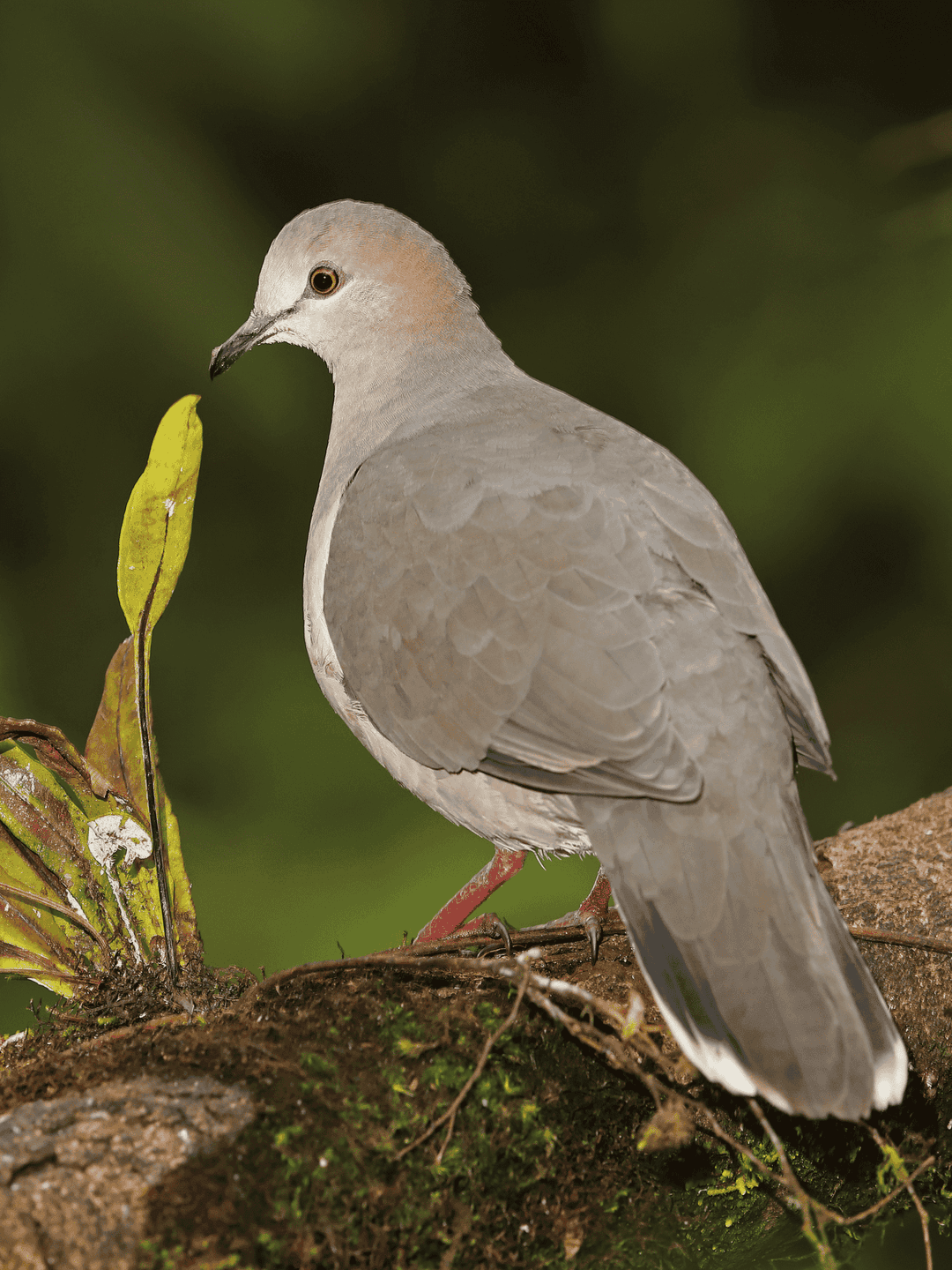
Mourning Dove vs White-Tipped Dove
Mourning Dove vs Common Ground-Dove
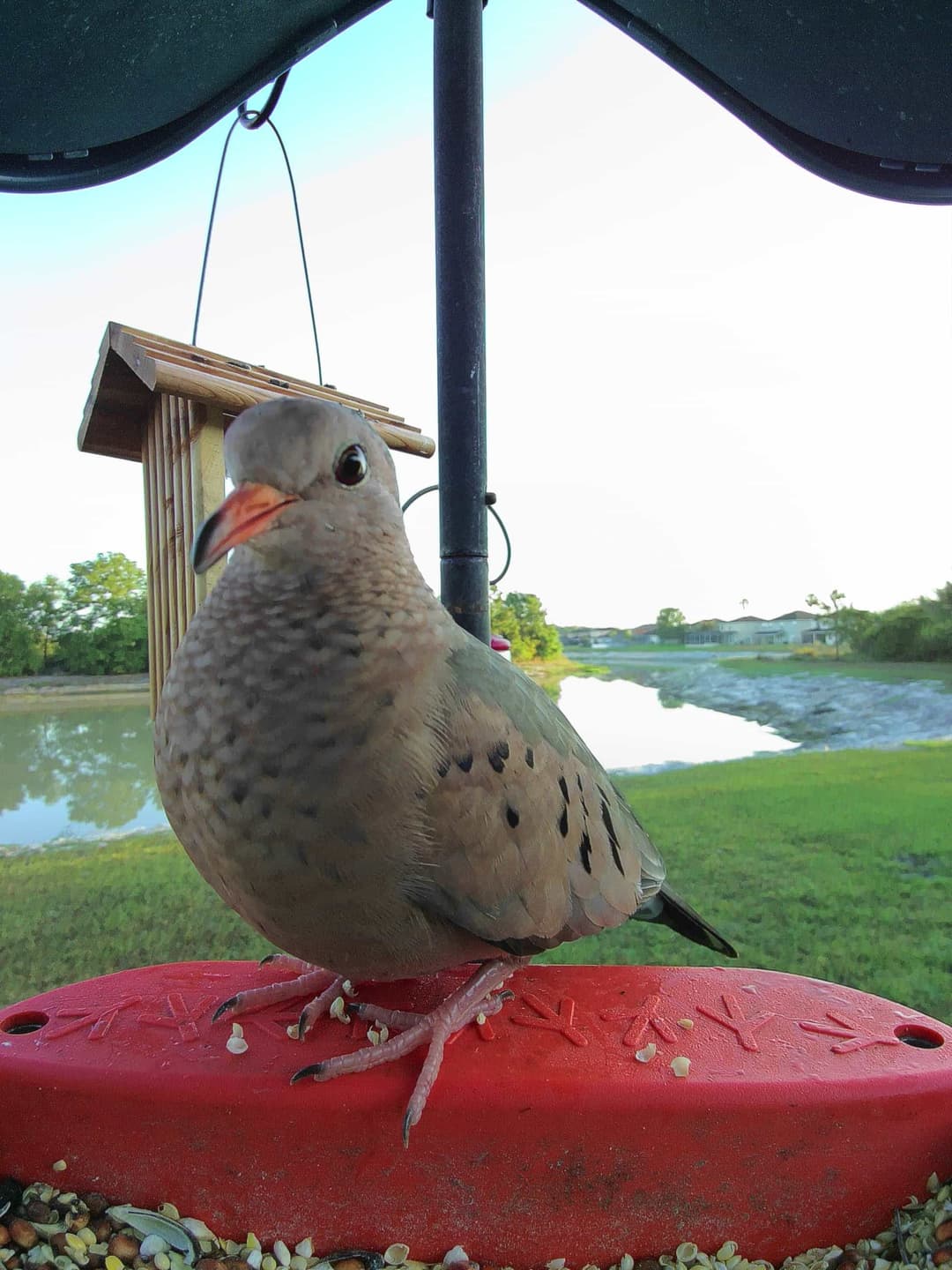
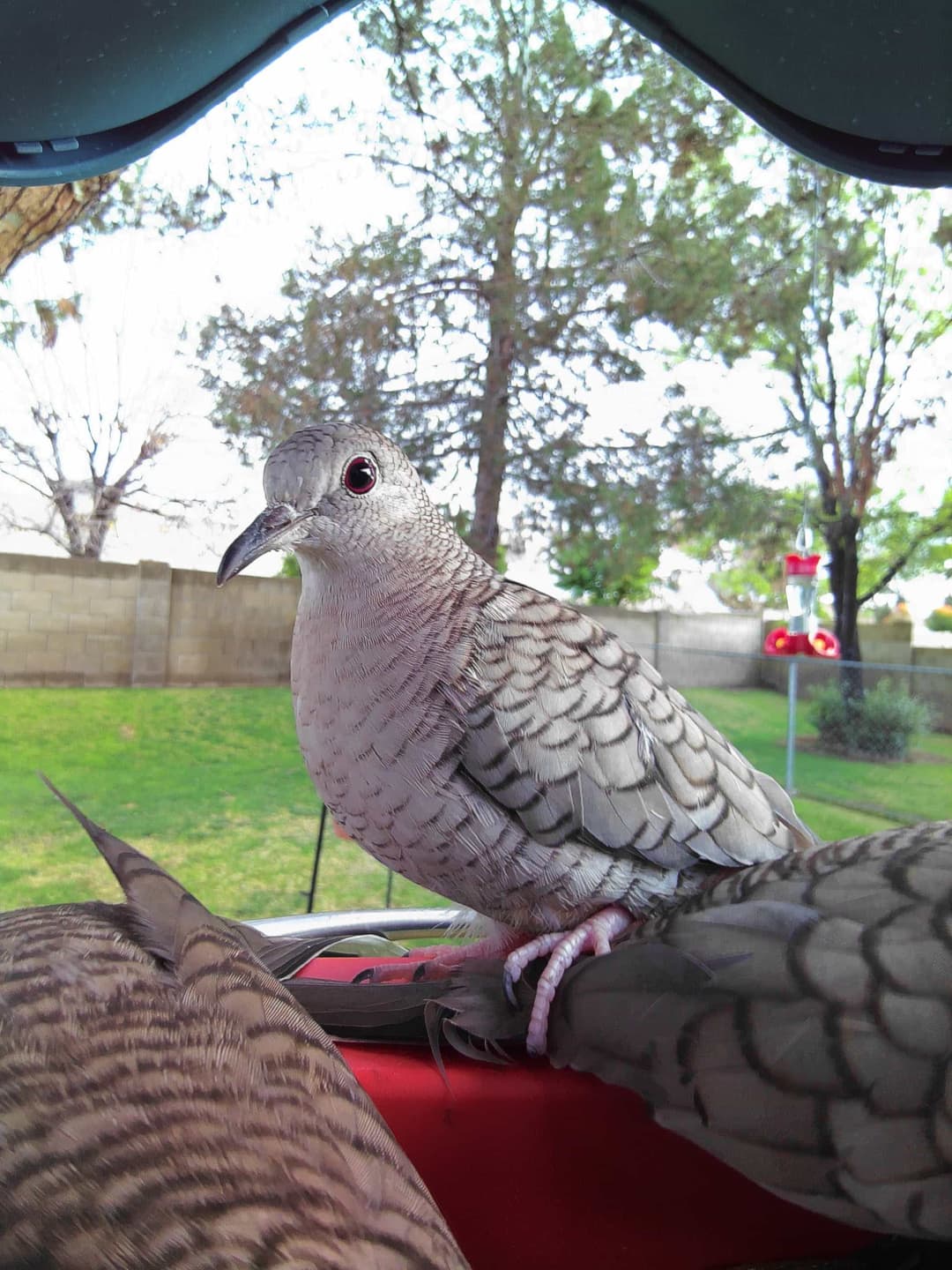
Mourning Dove vs Inca Dove
Spotted Dove vs [Select a bird]

[Select a bird]
Pick a bird to compare
Mourning Dove vs [Select a bird]
[Select a bird]
Pick a bird to compare