
White-Tipped Dove
White-Tipped Dove
Leptotila verreauxi


Quick Identification guide
Quick Identification guide
- •
Features a pale grayish-brown body with a subtle pinkish hue on the chest and upperparts
- •
Distinctive white-tipped tail contrasts with the otherwise uniformly colored back
- •
Displays a slender, slightly curved beak that complements its streamlined appearance
What does a white-tipped dove sound like?
The white-tipped dove's vocalizations carry a distinct deep, drawn-out, descending coo. It resonates at a lower pitch than the vast majority of pigeon and dove species. Its calls typically follow a flat, then rising pattern. The primary type of call is characterized as a "hoot".


Description
White-tipped doves are not only the most widespread dove in the Americas but they are also the most aggressive! These birds are loners that you won't catch in a flock anytime soon. When building their nest, the male is in charge of finding and bringing the nesting material and the female takes care of placing it.
The white-tipped dove can weigh between 154to237grams and be from25to31centimeters tall.
The white-tipped dove typically lives between 10 to 15 years in the wild. Comparatively, other dove species like Mourning doves have a similar lifespan averaging 10 years, and the ring-necked doves may live up to 15 years. Lifespan may increase when these doves are held in captivity.
Did you know?
Most popular questions about white-tipped dove
How to recognise a white-tipped dove?
General appearance
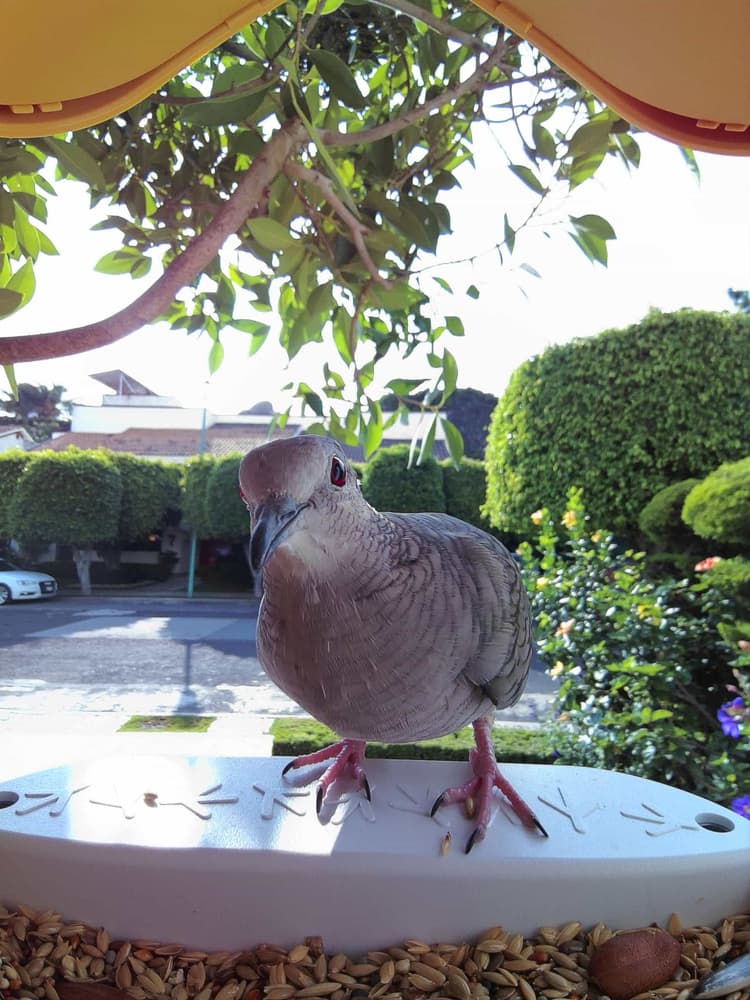
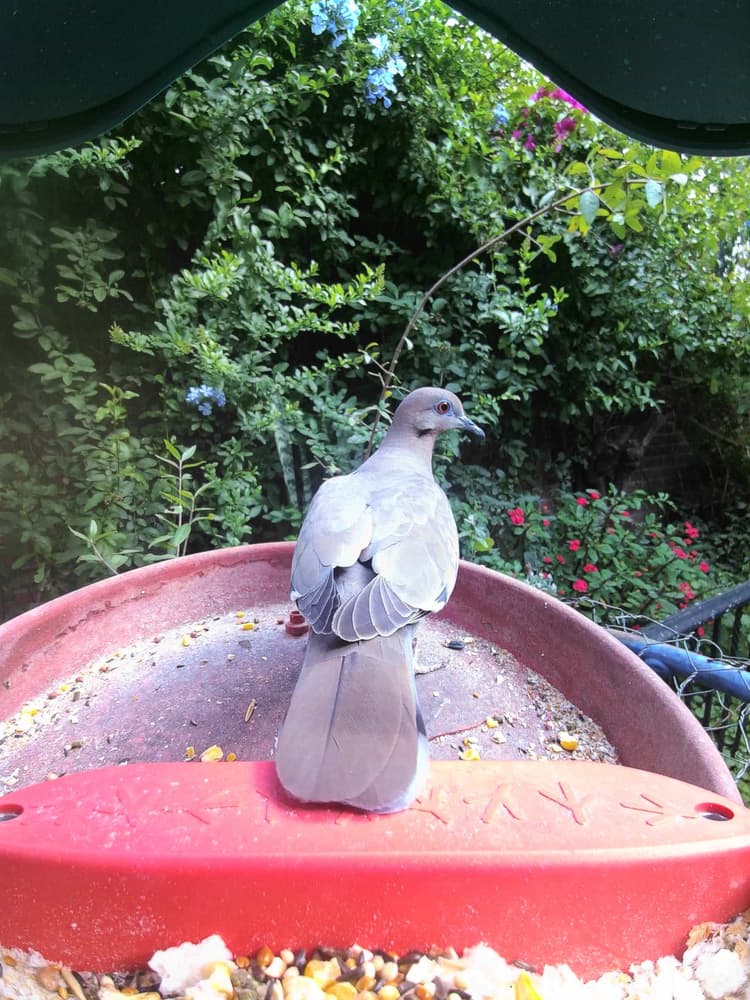
The white-tipped dove has a round body, short tail, and broadly rounded, short wings. Their overall coloration is black, brown, gray, red, and white. The chestnut color under the wings is rich and dark, shown prominently during flight. Their eyes are noticeably pale. The dove lacks the black ear spot and black spots on wings, characteristic of the Mourning Dove. Their size is about that of a crow or a robin.
Male vs female
There is no stark difference in the physical traits between male and female white-tipped doves. They both share similar coloration, body size, and shape. However, males may be slightly larger and have richer, more vibrant coloration during the mating season.
Juvenile
Juvenile white-tipped doves may exhibit more muted colors than adults, ultimately growing into their distinct adult plumage as they mature. Their size and body shape are smaller compared to adults but consistent with general dove characteristics of being round-bodied and shorter-tailed.
Often mistaken for
White-Winged Dove vs White-Tipped Dove
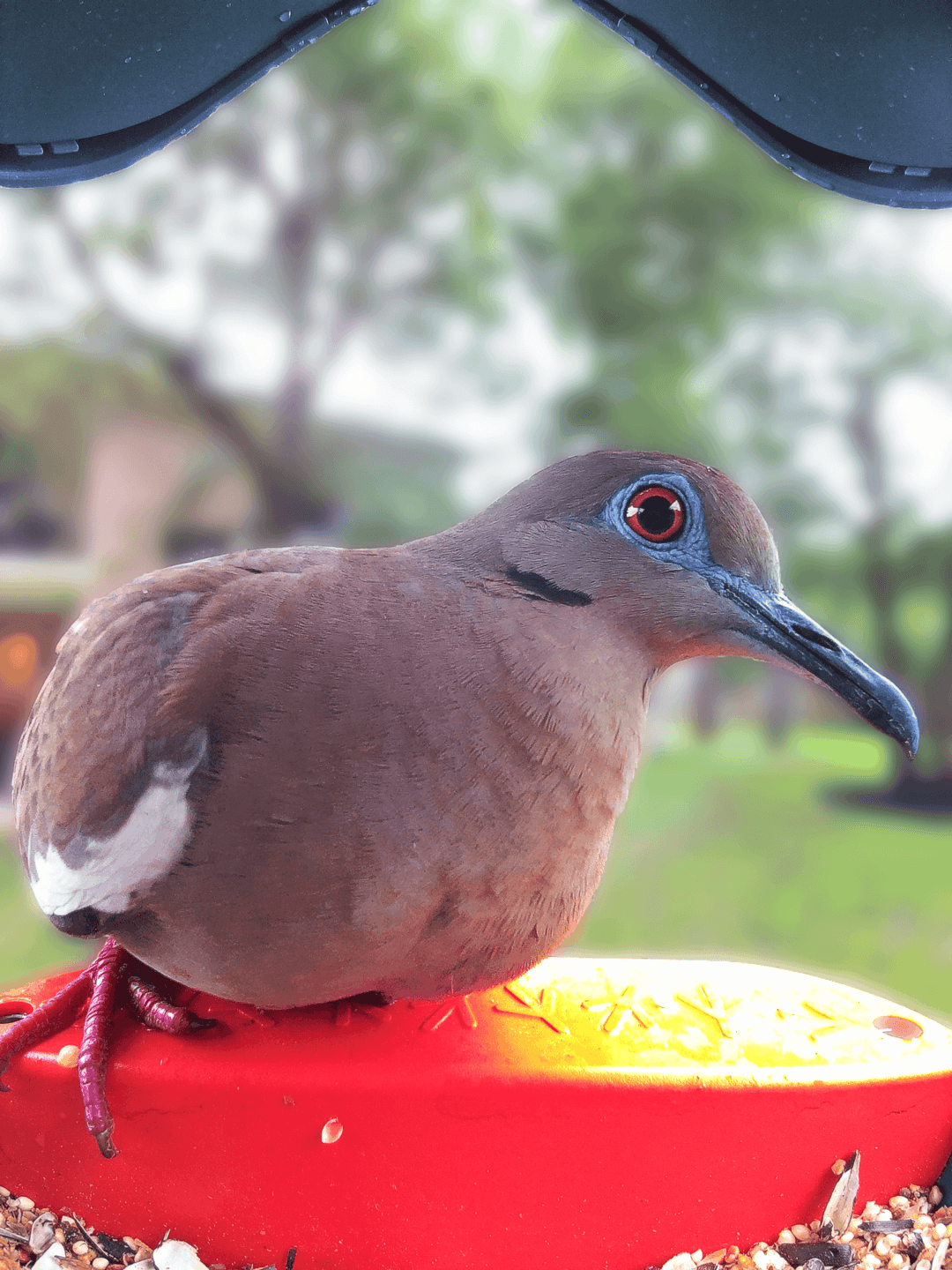
The White-Tipped Dove and White-Winged Dove have distinct features. The White-Tipped Dove is generally plumper with a more muted, pinkish-gray coloration and white tips on its wings, visible during flight. Its eye color is often reddish or brownish. In contrast, the White-Winged Dove features prominent white patches on its wings even when perched, and has a more slender body with a grayish-brown tone. It also has bright orange eyes. Listen for their calls: White-Tipped Doves have a soft, cooing sound, while White-Winged Doves produce a distinctive 'who-cooks-for-you' call. These differences are key to identifying them correctly in the wild.
Breeding and nesting habits of the white-tipped dove
Mating behaviors
The white-tipped dove engages in a simple courtship ritual where the male performs a low cooing sound to attract females. Often, the male will puff up his chest and engage in a brief chase or display to demonstrate his vigor and suitability as a mate.
Nesting details
White-tipped doves tend to nest in low bushes or trees, preferring a height that provides both concealment and accessibility. They construct simple, loosely formed nests using twigs, leaves, and other plant materials. They may occasionally nest in gardens with sufficient shrubbery, making it important to maintain thick foliage and provide a safe, predator-free environment.
Eggs and chick-rearing
The female typically lays two white eggs, which both parents incubate for about 14 days. Once hatched, the chicks are altricial, requiring feeding and warmth from the parents. Both parents partake in feeding the chicks with a nutrient-rich regurgitated substance known as 'pigeon milk' until they are ready to fledge about two weeks after hatching.
What does a white-tipped dove like to eat?
Berries
Fruits
Insects
Seeds
Snails
Natural diet
The white-tipped dove likely sustains itself primarily on seeds and berries, though its complete dietary habits are not thoroughly documented. It consumes many seeds, particularly those from grasses, mesquites, and elms. Additionally, the white-tipped dove feeds on various berries and fruits, such as those found on hackberry and prickly pear cactus plants. It's also possible that the dove supplements its diet with some insects.
Bird feeders
There is no specific data available regarding the white-tipped dove's habits at bird feeders. However, given its natural inclination towards seeds, especially from grasses and mesquites, it's reasonable to assume that the dove might frequent bird feeders offering similar seed mixes.
Attracting white-tipped doves to your yard
White-tipped doves are delightfully peaceful creatures that can add a serene quality to your yard. To charm them into gracing your bird feeders, ensure your garden is inviting enough. Plant native trees or shrubs, as these birds are attracted to vegetation that provides food and cover as hiding and nesting spots.
Providing tasty treats
White-tipped doves are especially fond of seeds, fruits, and berries. One recommended seed mix to attract these avian species is Bird Buddy seeds. They are expertly chosen for the season, ensuring the seeds are always fresh, nutritious, and appealing to doves.
Choosing the right feeder
In terms of feeders, white-tipped doves prefer platform feeders or large tube feeders with adequate perch space. Make sure the feeders are sizable and sturdy enough to accommodate these slightly larger birds. Additionally, the platform should have holes or a mesh bottom for water drainage to keep seeds dry.
Tricks to encourage visits
Song playback can lure white-tipped doves into your yard. Playing a recorded dove song, preferable to their species in areas where they naturally exist, can invite doves to stay for a sing-along. Remember, however, to use this method sparingly to avoid causing stress to the birds.
Providing a safe space
Lastly, keep the feeders clean and safe from neighbors' cats and other predators. A peaceful and secure yard will make the white-tipped doves more likely to drop by and stay longer.
Where can you find white-tipped doves?
Primary habitat
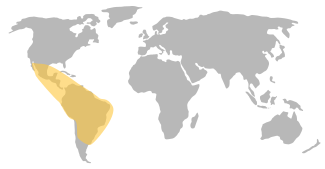
The white-tipped dove primarily inhabits shady woodlands and river thickets and is often found in dense low growth areas. It's most common in native woodland and second growth.
Additional range
Geographically, it ranges from Texas to Argentina. It is primarily found in Southern Texas but can adapt to many habitats. Nonetheless, it prefers drier or more open woods, typically avoiding unbroken rain forests.
Do they migrate?
The white-tipped dove is a permanent resident throughout its range, meaning it does not migrate and stays in one place all year. This bird is typically found in regions stretching from the southern United States through Mexico and Central America, down to parts of South America such as Brazil and Argentina. Being a permanent resident implies that the white-tipped dove has adapted to the environmental conditions of its habitat year-round, and does not embark on seasonal migrations like some other bird species. This behavior allows the white-tipped dove to establish stable territories and breeding sites within its preferred habitats, which include woodlands, forest edges, and scrub areas. Since they do not migrate, the white-tipped doves may rely on local food sources such as seeds and fruits throughout the year and adjust their behavior as needed to cope with any seasonal changes in their environment. Their non-migratory nature means there are no specific routes, timings, or key locations involved in any movement patterns, as their activity is generally confined to their home range.
What is the role of white-tipped doves in nature and how to protect them?
Conservation status
The white-tipped dove is common in undisturbed habitats in southern Texas, indicating a stable population in those areas. As long as these habitats are preserved, the species is not likely to be highly vulnerable to hunting pressure in the tropics. Key conservation efforts should focus on maintaining these natural habitats to ensure their continued resilience. Significant threats include habitat destruction, which could impact their populations if not managed. Overall, the species is not considered vulnerable or endangered at present.
Ecological role of white-tipped doves
Its role in the ecosystem
The White-tipped Dove plays a notable role in the ecosystem, contributing to both seed dispersal and pest control. By foraging mostly on the ground in woodland undergrowth and consuming a diet of seeds, berries and fruits, the dove aids in the dispersal of these plant species, ensuring their propagation throughout the environment. The seeds pass through the bird’s digestive system and are deposited in different locations, thus promoting diversity of plant life. Eating fruits and berries such as hackberries and prickly pear cactus, it also aids in the dispersal of these native plants, which in turn creates habitats that support other wildlife. Moreover, while the exact diet of the Dove is not well-known, the text suggests they may eat some insects, implying a role in pest control by helping to keep potential pest populations in check. Thus, the White-tipped Dove contributes to the overall health and biodiversity of its ecosystem.
How to help protect white-tipped doves
Preservation tips
Habitat preservation strategies
Preserve and restore the Dove's natural habitats consisting primarily of woodland and savannah. This includes actions such as limiting deforestation, controlling urban development in these areas, and implementing reforestation programs. Foster conservancy projects that create 'safe zones' for these doves, free from hunting and predation.
Community science initiatives
Promote community involvement through citizen science projects. These may involve monitoring dove populations, nest distributions, and reporting sightings. Provide education and awareness programs to enlighten local communities on the importance of the white-tipped dove to the ecosystem. Organize bird-watching events and workshops which also indirectly support local eco-tourism.