White-Winged Dove or Mourning Dove?
Here's how to tell the difference


White-Winged Dove


Mourning Dove
White-Winged Dove
Zenaida asiatica
General appearance
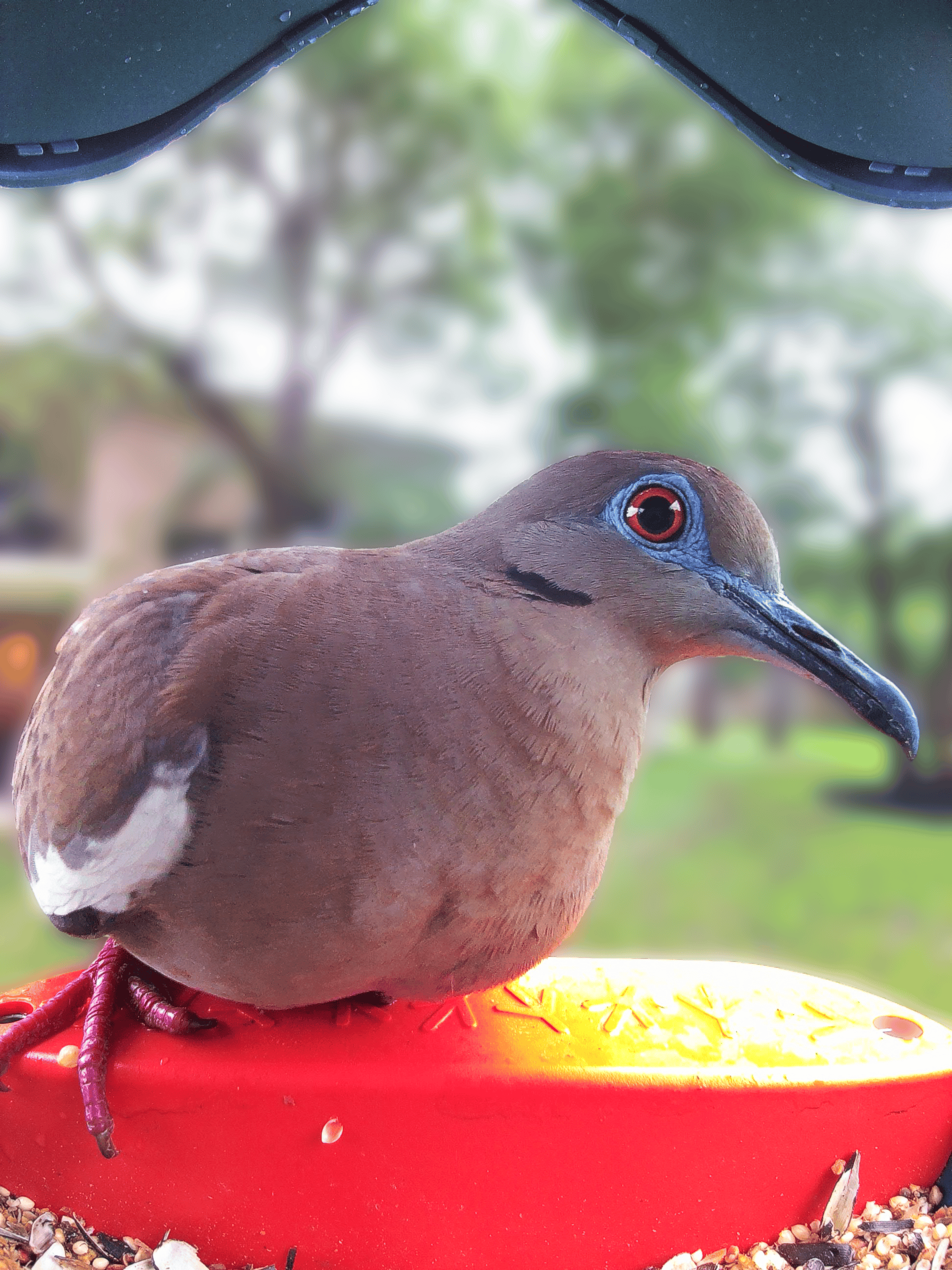
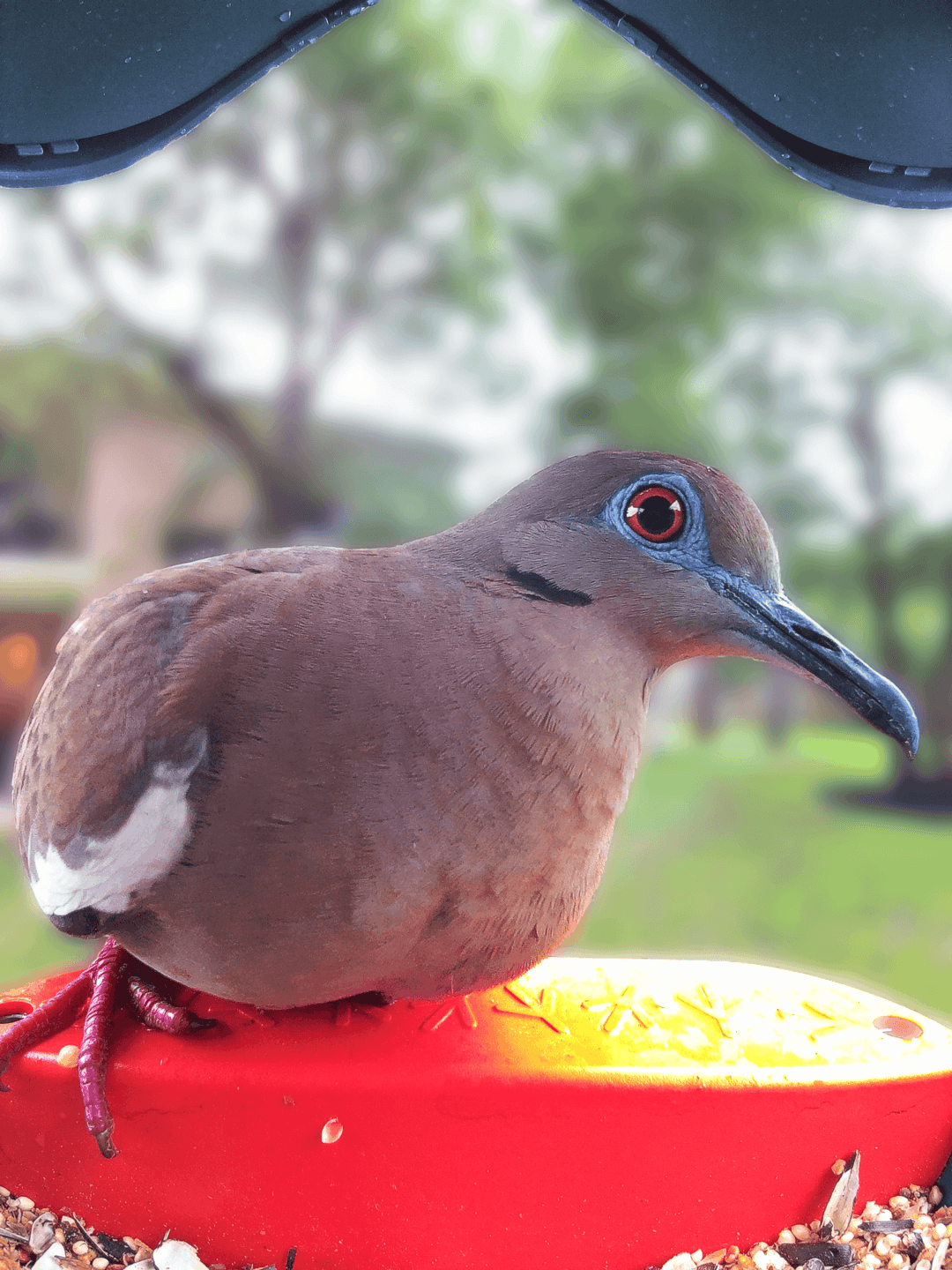
The White-winged Dove has a bulky body with short tail and measures approximately 12 inches or 30 cm in length, which is about the size of a crow. Its most distinctive characteristics are its big white wing patches and white tips on outer tail feathers. These features are most visible during flight. The dove has a broad, pointed wing shape and a rounded, square-tipped tail. The color varies from black, blue, brown, to gray and white.
Male vs female
Male and female White-winged Doves are similar in appearance. They both share the same unique coloration and physical traits, including the noticeable white markings on the wings and tail. Any differences between the genders are minimal and not easily discernible.
Juvenile
Juvenile White-winged Doves do not possess the vibrant and stark coloration seen in adults. Instead of the wide range of colors observed in adults, they are generally more brown, serving as a form of camouflage. However, as they grow and mature, they'll acquire the full array of adult coloration.
Size
11.0 - 11.8 in/4.4 - 6.6 oz
There's more to learn about White-Winged Dove
View full detailsMourning Dove
Zenaida macroura
Also known as: American Mourning Dove, Rain Dove, Turtle Dove, Carolina Pigeon, Carolina Turtledove
General appearance
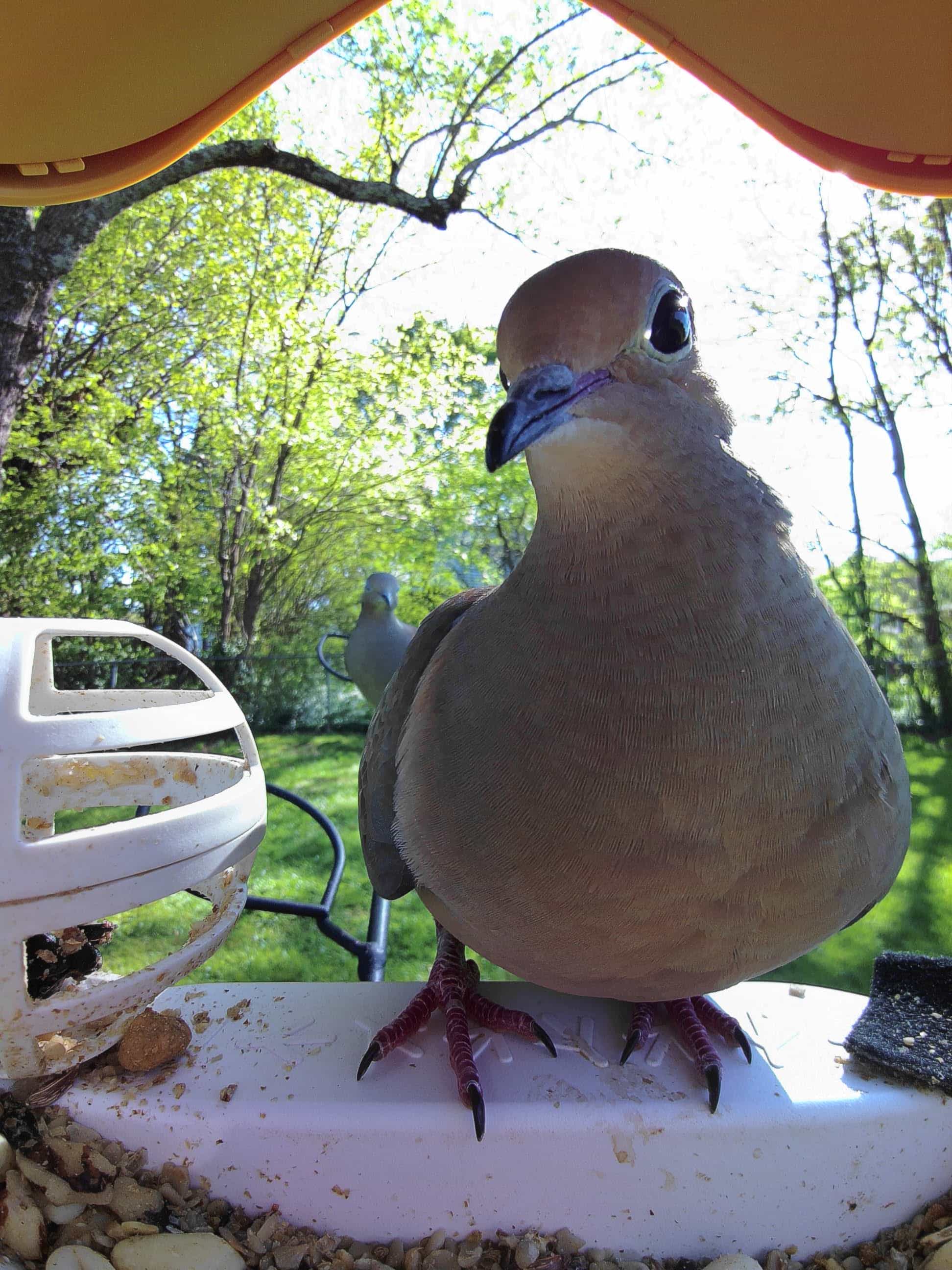
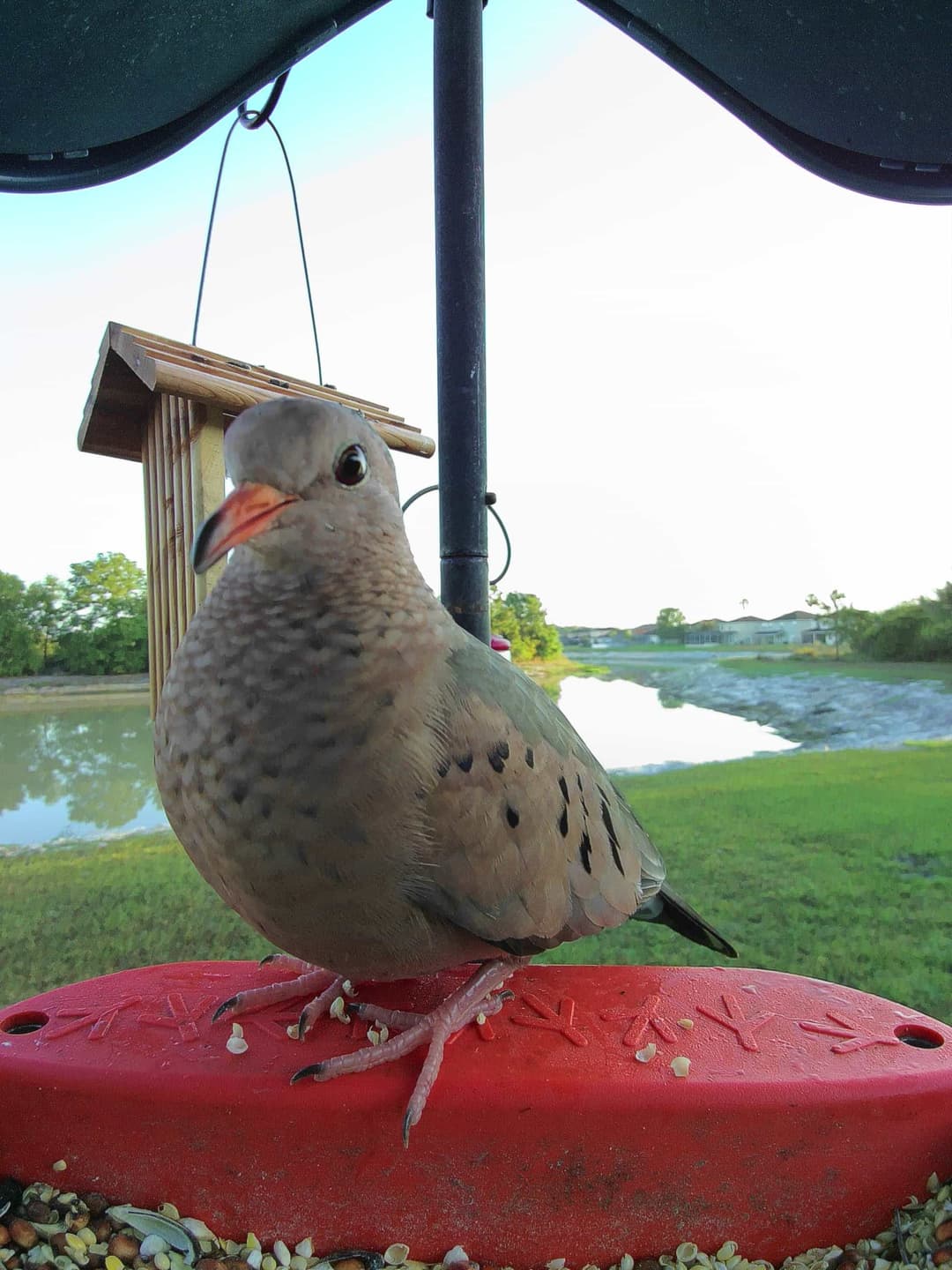
The mourning dove is roughly the size of a crow, bearing characteristics of a long, pointed tail which is about 12', or 30 cm long. This tail displays white spots along its edge while in flight. The bird’s wings are adorned with black spots and its overall coloration exhibits hues of black, brown, gray, pink, tan, and white. The dove has a pointed, wedge-shaped tail.
Male vs female
The sexes of mourning doves can be distinguished by their coloration. Adult males generally have a pinkish tinge on their chests and a blue-gray tone on their crowns. However, the female doves are more dull and plain, predominantly appearing in a shade of brown.
Juvenile
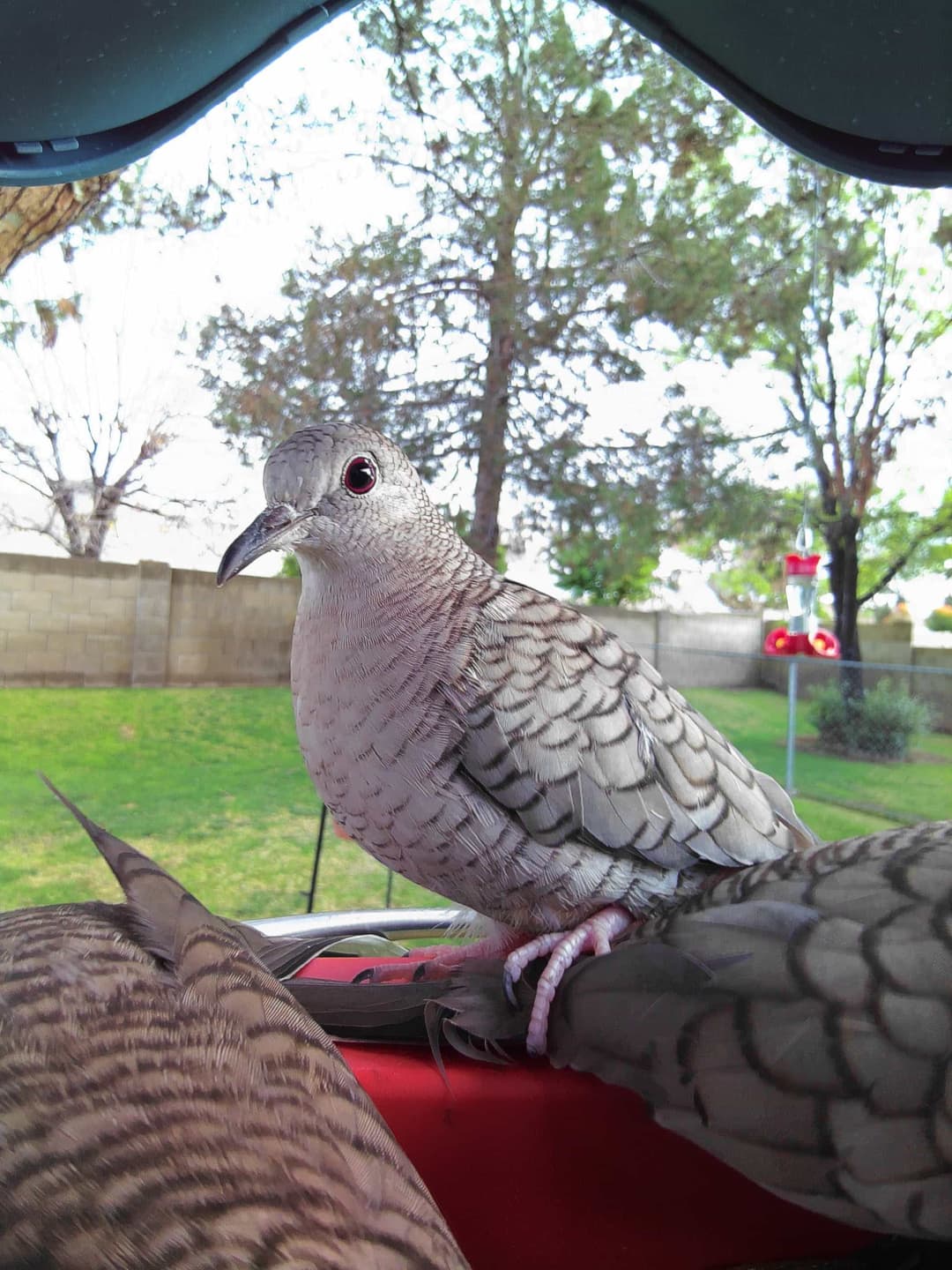
Young mourning doves have a unique scaly appearance that can lead them to be confused with the Inca Dove or the Common Ground Dove. They do not possess the vivid coloring of the adults and generally appear more muted in color.
Size
9.1 - 13.4 in/3.0 - 6.0 oz
There's more to learn about Mourning Dove
View full detailsHow to tell the White-Winged Dove from the Mourning Dove
Visual differences
The White-winged Dove (12 inches) has broad, pointed wings with distinct white wing patches and white tips on its square-tipped tail, appearing bulky. In contrast, the Mourning Dove (12 inches) exhibits black wing spots and a pointed, wedge-shaped tail with white edge spots. The White-winged features varied plumage colors including blue and gray, while the Mourning Dove displays pinkish and brown hues. The Mourning Dove's male has a pinkish chest and blue-gray crown, unlike the White-winged’s similar male and female coloring.
Key differences and behavior
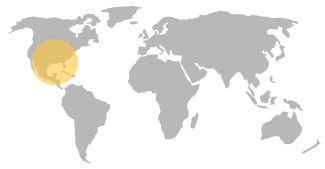
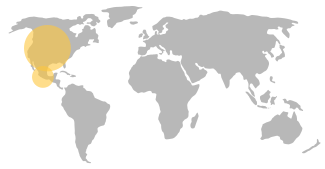
The White-Winged Dove and Mourning Dove differ significantly in behavior and habitat. White-Winged Doves prefer semi-open habitats in the U.S. Southwest and adapt well to urban settings, while Mourning Doves thrive in open and semi-open areas across North America, avoiding dense forests. White-Winged Doves exhibit cooing calls and aerial displays for mating, constructing crude stick nests, while Mourning Doves perform elaborate courtship flights and build flimsy twig nests. Dietary preferences vary, with White-Winged Doves enjoying cactus fruits and nectar, whereas Mourning Doves predominantly consume seeds, storing them in a pouch. Both species feed young with crop milk, but Mourning Doves frequently show a preference for cultivated grain seeds.
Still not sure? Here are more lookalikes!
White-Winged Dove vs Eurasian Collared Dove
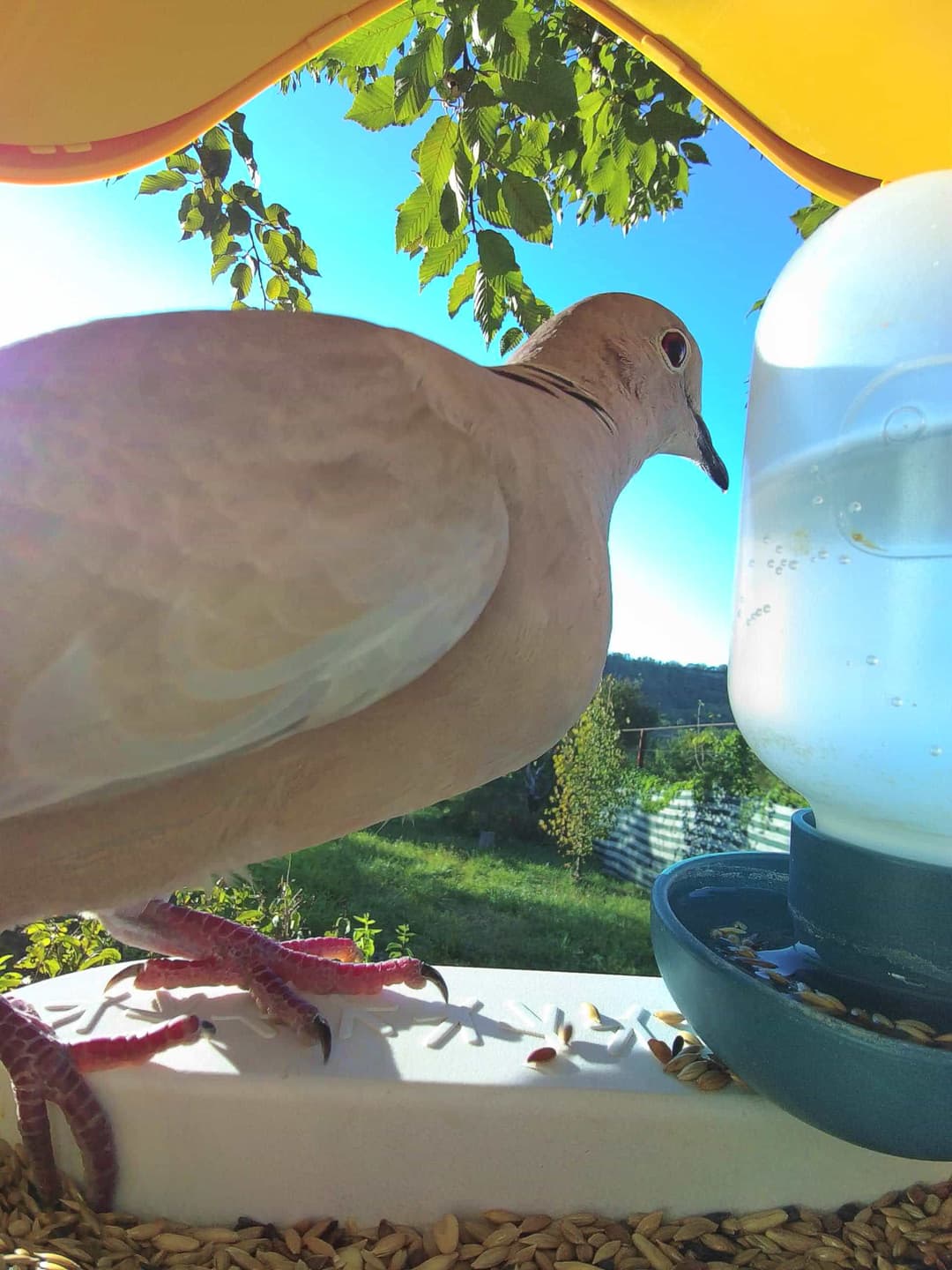
White-Winged Dove vs White-Tipped Dove
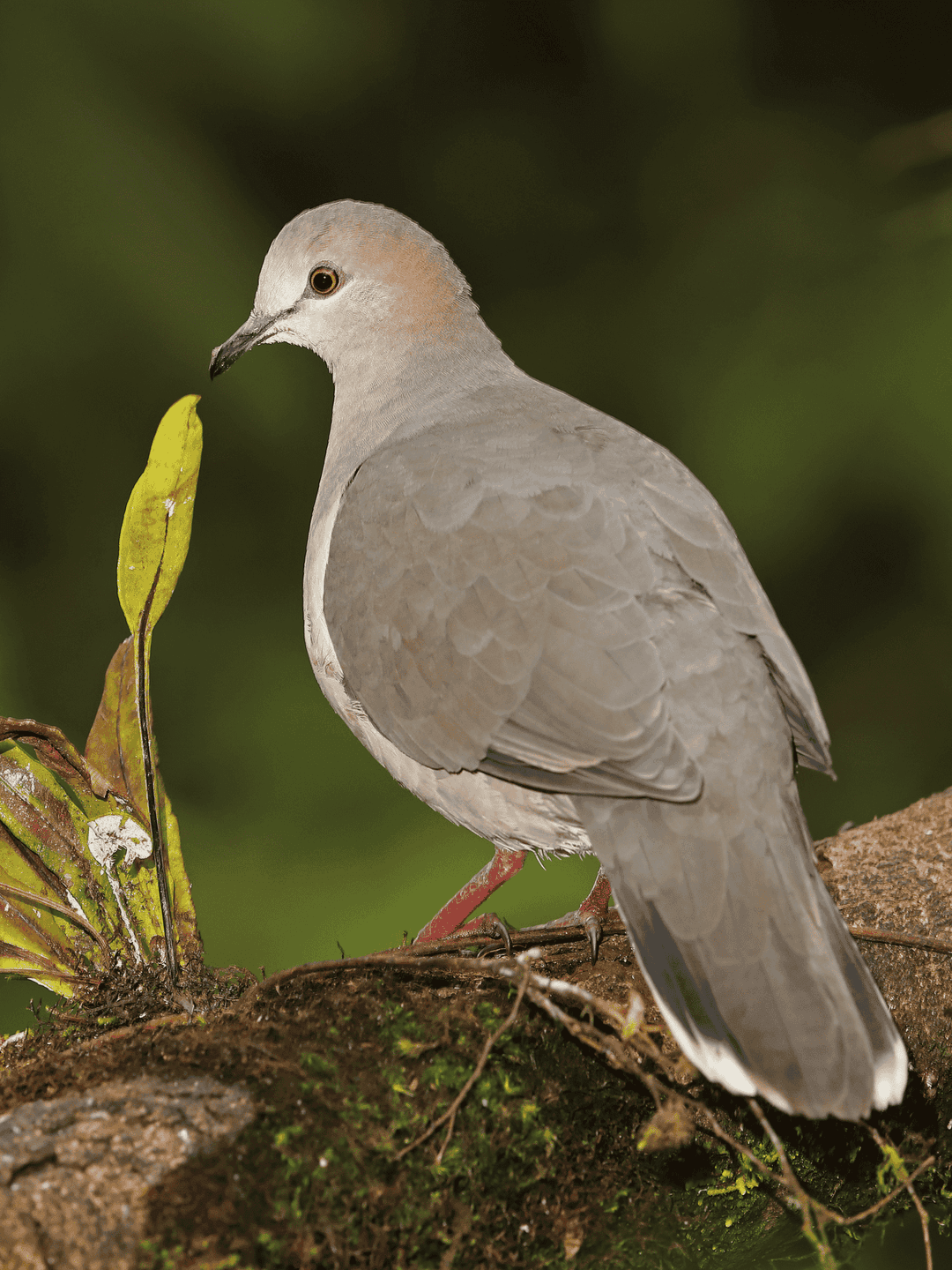
Mourning Dove vs Eurasian Collared Dove

Mourning Dove vs Band-Tailed Pigeon
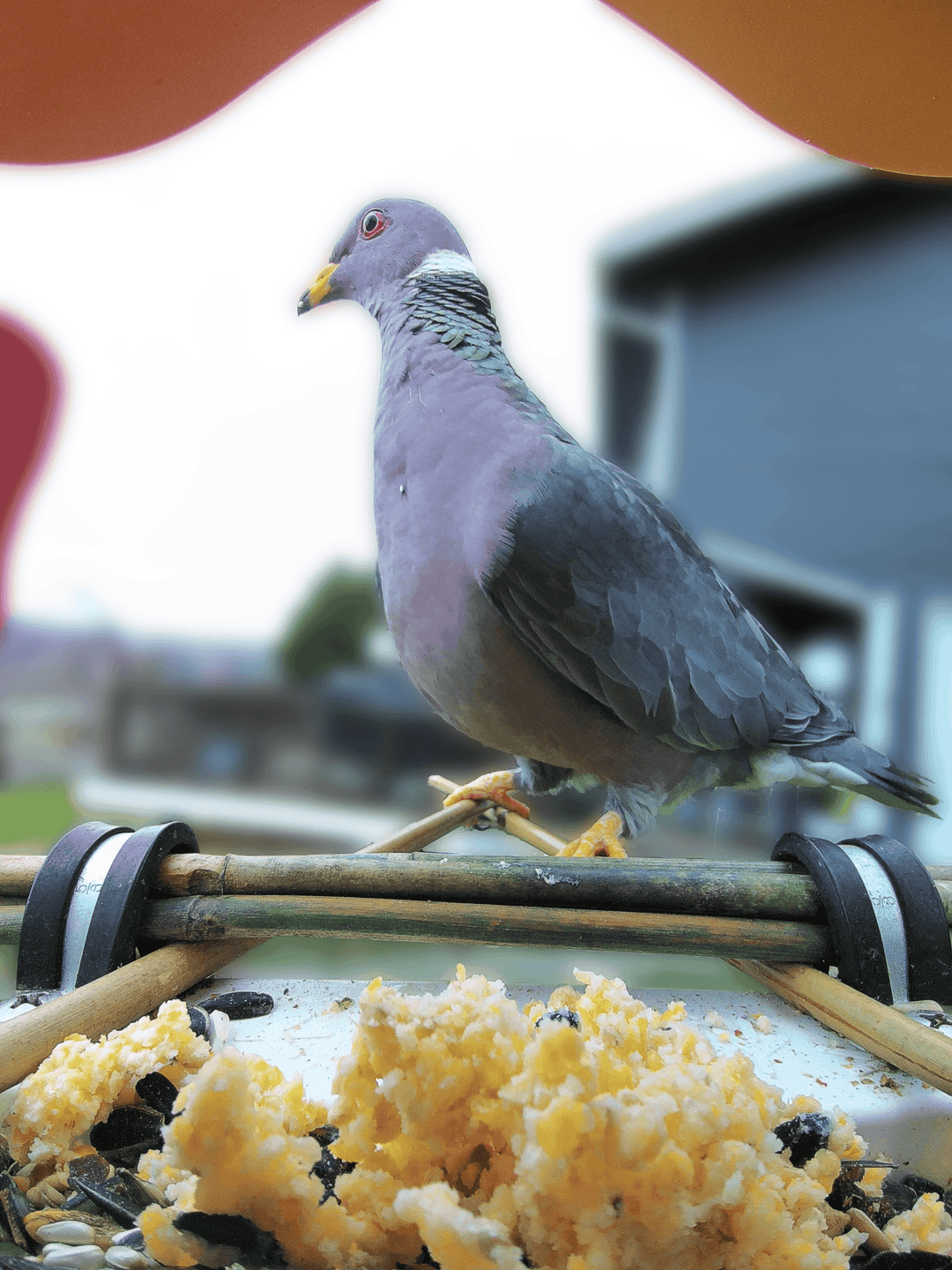
Mourning Dove vs White-Tipped Dove
Mourning Dove vs Common Ground-Dove
Mourning Dove vs Inca Dove
White-Winged Dove vs [Select a bird]

[Select a bird]
Pick a bird to compare
Mourning Dove vs [Select a bird]
[Select a bird]
Pick a bird to compare