
Zebra Dove
Zebra Dove
Also known as: Barred Ground Dove, Barred Dove
Geopelia striata


Quick Identification guide
Quick Identification guide
- •
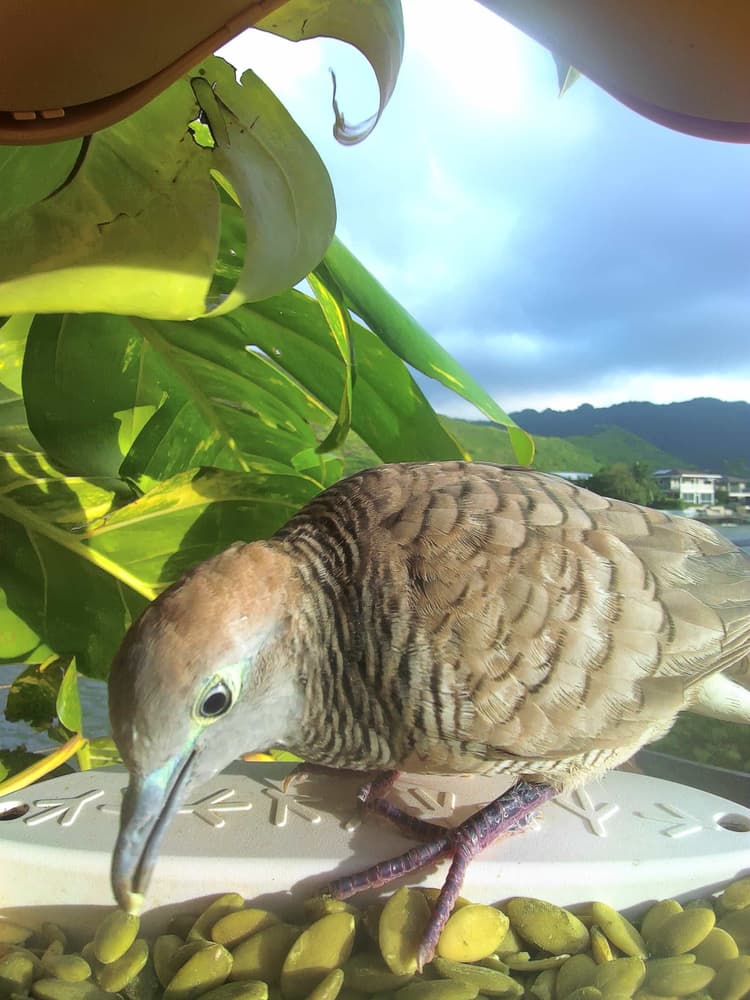
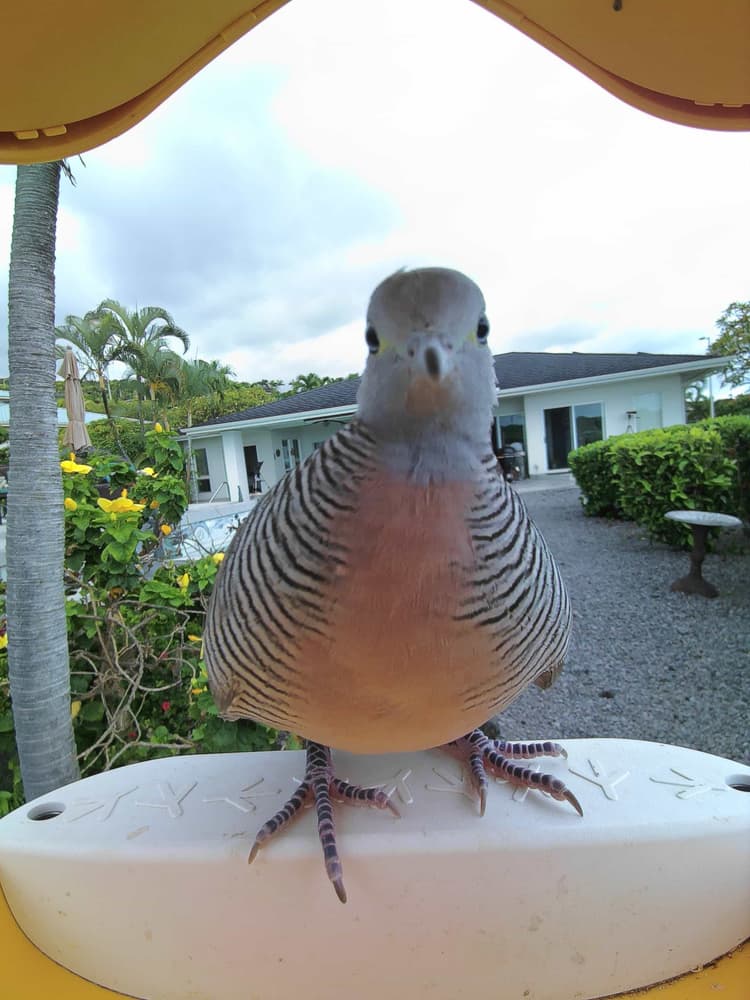
Features a slender body with a subtle brown and grey plumage adorned with delicate, bold black and white barring across the neck and chest
- •
Displays a bluish-gray head with pale, unbarred undertail, enhancing its distinctive zebra-like appearance
- •
Equipped with a small, slender beak and short legs, contributing to its overall delicate and graceful look
What does a zebra dove sound like?
The zebra dove, also known as the barred ground dove, emits a vocalization characterized by a soft and rhythmic cooing sound. The typical call is repetitive, consisting of a series of “coo-ooh” notes in varying pitches. Frequently used for bonding between pairs or marking territory, these sounds are melodious and soothing. Its song is made up of paired coos that can be represented as “hoo-oo, hoooo... hoo-oo, hoooo”. This song can last for several minutes, usually delivered from a conspicuous perch.


Description
Be careful not to trip over a zebra dove! These gorgeous birds' plumage allows them to camouflage seamlessly into the ground. Males are quite the dancers and perform an elaborate cooing and bowing display for females. Once she decides on a nesting site, she'll sit and begin cooing to attract males to help her build it!
The zebra dove can weigh between 50to72grams and be from20to22centimeters tall.
The zebra dove has an average lifespan of 5-10 years in the wild but can live up to 20 years in captivity. This is longer than its close relative, the mourning dove, which typically lives for 1-3 years in the wild. Comparatively, another related species, the diamond dove, can live for around 5-7 years in the wild and up to 15 years in captivity.
Did you know?
Most popular questions about zebra dove
How to recognise a zebra dove?
General appearance
The zebra dove is a small bird with distinctive black and white barring patterns on its neck and upper breast, resembling a zebra's stripes. Its overall body coloration is brown-grey, with a pinkish hue on the chest area. A thin white ring surrounds the eyes, and a black line runs from their bill through their eyes. They have long, slim wings and a pointed tail.
Male vs female
There are minimal differences between male and female zebra doves, with both sexes displaying similar physical traits. However, males are slightly larger and tend to have a more robust appearance. Males are also known for their distinct cooing sound, used during courtship rituals or as a territorial call.
Juvenile
Juvenile zebra doves have a more subdued color palette compared to adults. The characteristic black and white striping is less distinct, and their overall coloration is a duller brown. They lack the pinkish chest hue found in adults and have shorter wings. As they mature, their color becomes more vibrant, and the stripy pattern emerges clearly.
Breeding and nesting habits of the zebra dove
Mating behaviors
Zebra doves engage in courtship displays where males fan their tails and coo softly to attract females. Males may also offer food to females, a gesture that helps strengthen the pair bond.
Nesting details
Zebra doves typically build their nests in shrubs, trees, or on building ledges, using grass, twigs, and leaves. The nests are flat platforms that provide minimal support. They readily nest in gardens, preferring quiet areas. To attract them, plant dense shrubs and small trees and minimize disturbances.
Eggs and chick-rearing
The female usually lays two white eggs, which both parents incubate for about two weeks. After hatching, both parents feed the chicks with crop milk. The chicks fledge approximately 14 days later but continue to be fed by parents until they become independent.
What does a zebra dove like to eat?
Insects
Seeds
Spiders
Natural diet
Zebra doves primarily feed on small seeds, which they find on the ground. Their natural diet includes grass seeds, weed seeds, and grains, constituting the majority of their food intake. Additionally, they occasionally consume small invertebrates, such as insects and snails, providing them with necessary proteins.
Bird feeders
At bird feeders, zebra doves often eat mixed seeds, especially millet and small grains offered in feeder blends. They are also attracted to cracked corn and are likely to consume bread crumbs and other food scraps provided by humans in feeding areas.
Choosing the right feeder
Zebra doves appreciate open, platform-style feeders where they can forage freely. Make sure the feeder is at a height above ground where they feel safe, and away from places where predators might lurk. These small birds have small beaks, so they prefer mealworms, millet, and finely crushed corn.
Tempting with favorite snacks
Zebra doves love small seeds. Offering them 'Bird Buddy' seeds is a fantastic choice. These seeds are chosen by experts for the season. With its highly nutritious and easily digestible properties, it makes a favorite meal for zebra doves. Mixing these in with a little bit of grit will make your yard an irresistible spot to visit.
Attracting doves with fun tricks
Zebra Doves are known for their pleasant cooing song. You can purchase a zebra dove song recording and play it occasionally in your backyard. The friendly tune might just lure a few curious zebra doves. And with a few well-placed feeders, they may stick around long enough for a sing-along.
Where can you find zebra doves?
Primary habitat
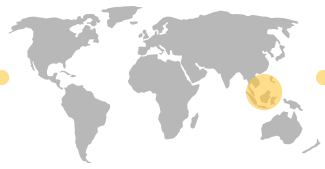
The zebra dove primarily inhabits Southeast Asia and adjacent regions. It prefers open environments such as farmland, parks, and gardens.
Additional range
Unexpectedly, this bird has also adapted to urban areas. Across the Pacific, including Hawaii, California, and Florida, introduced populations thrive.
Do they migrate?
The zebra dove (Geopelia striata) is generally a non-migratory bird that stays in one place throughout the year. Native to Southeast Asia, these birds are commonly found in Thailand, Malaysia, Indonesia, and the Philippines, where they inhabit open country, gardens, and urban areas. Instead of migrating, zebra doves are known for their sedentary lifestyle, often staying within the same general area where they find food and nesting sites. While they do not undertake long migratory journeys, zebra doves may perform localized movements in search of food or suitable habitats, especially if local conditions change. These movements are typically over short distances and do not follow the traditional migratory routes seen in many other bird species. Their adaptability to urban environments and various landscapes allows them to maintain year-round populations without the need for migration. As a species well-suited to tropical and subtropical climates, zebra doves thrive in stable conditions that do not necessitate seasonal relocation.
What is the role of zebra doves in nature and how to protect them?
Conservation status
The zebra dove is categorized as a species of "Least Concern," indicating it is common and not currently at significant risk of extinction. It thrives in urban areas, gardens, and open country across Southeast Asia and has been introduced to many other regions, including the Pacific Islands. Its adaptability to human-altered landscapes contributes to its stable population. However, habitat degradation and potential competition with invasive species pose localized threats. Conservation efforts are minimal due to its abundant status, but maintaining diverse landscapes can support its continued wellbeing.
Ecological role of zebra doves
Its role in the ecosystem
The zebra dove, also known as Barred Ground Dove, plays a fundamental role in ecosystem balance in areas where it is native, such as Southeast Asia or Australia. Being a frugivorous species, they are essential for seed dispersal. They consume various fruits, thus ingesting seeds which are later evacuated, aiding in the propagation of several plant species, some of which may not be viable for dispersal by other means. Moreover, this dove species also feeds on small insects and pests, providing natural pest control, which is particularly beneficial in maintaining the health of the ecosystem and reducing reliance on chemical pesticides in farms. By virtue of their diet and feeding habits, they help to control the population of potentially harmful bugs, and may even contribute to reducing the spread of certain diseases. Hence, the zebra dove significantly promotes biodiversity and overall ecosystem health.
How to help protect zebra doves
Preservation tips
Habitat preservation strategies
To conserve the zebra dove, enforce policies restricting destruction of its natural habitats, especially in areas of rapid urban development. Implement reforestation projects in areas affected by deforestation, creating ideal habitats for these birds. Provide legally protected status to areas highly populated by zebra doves, preventing harm and promoting biodiversity.
Community science initiatives
Engage communities in citizen science projects such as bird and habitat surveys. This fosters local interest and provides valuable data for conservation researchers. Run educational programs about the zebra dove and its ecosystem importance to raise public awareness and inspire active participation. Fund initiatives encouraging landowners to create bird-friendly spaces, like planting native trees or installing bird feeders.