Mourning Dove or White-Tipped Dove?
Here's how to tell the difference
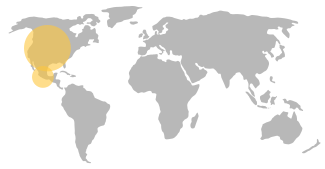
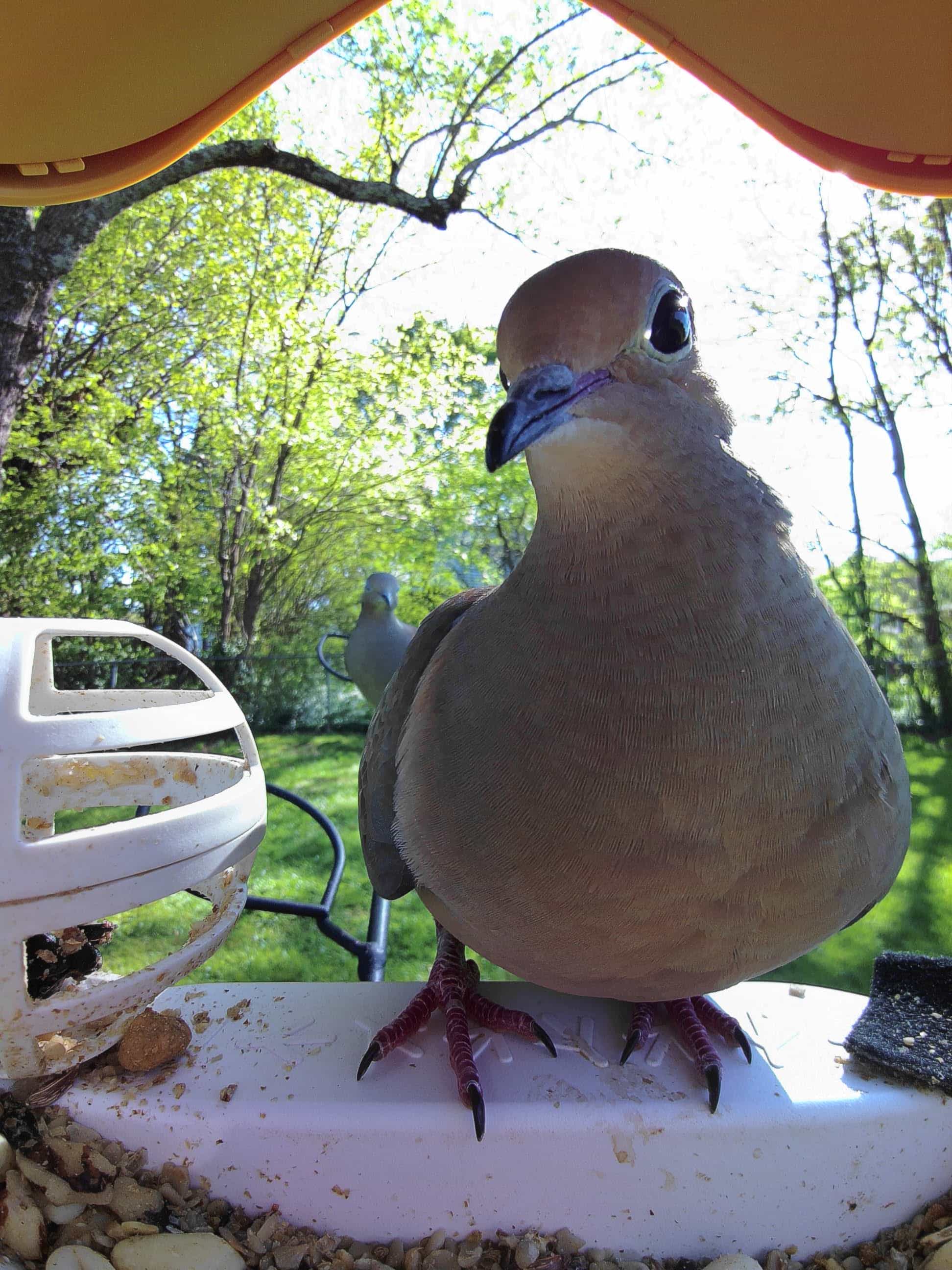


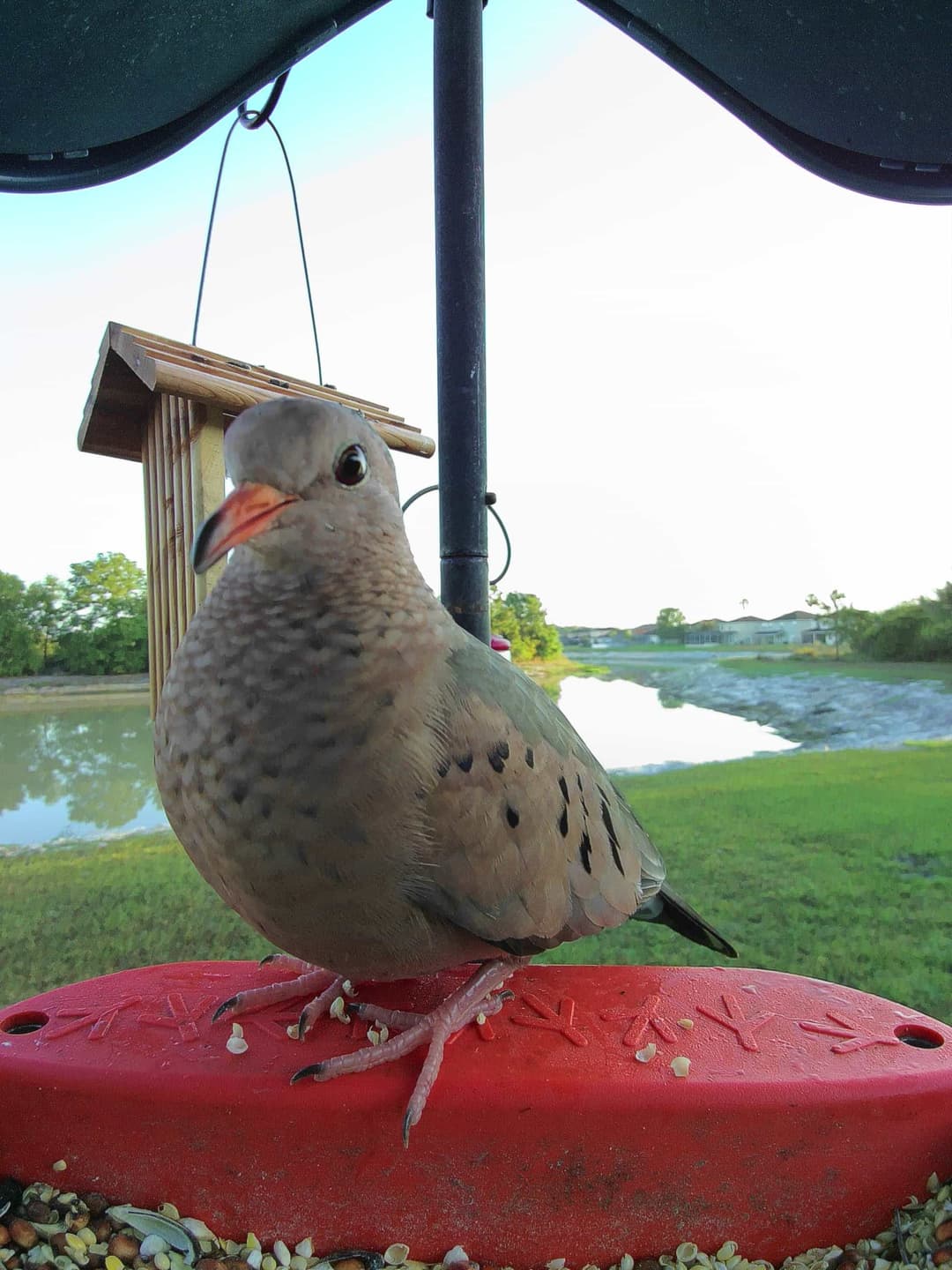
Mourning Dove
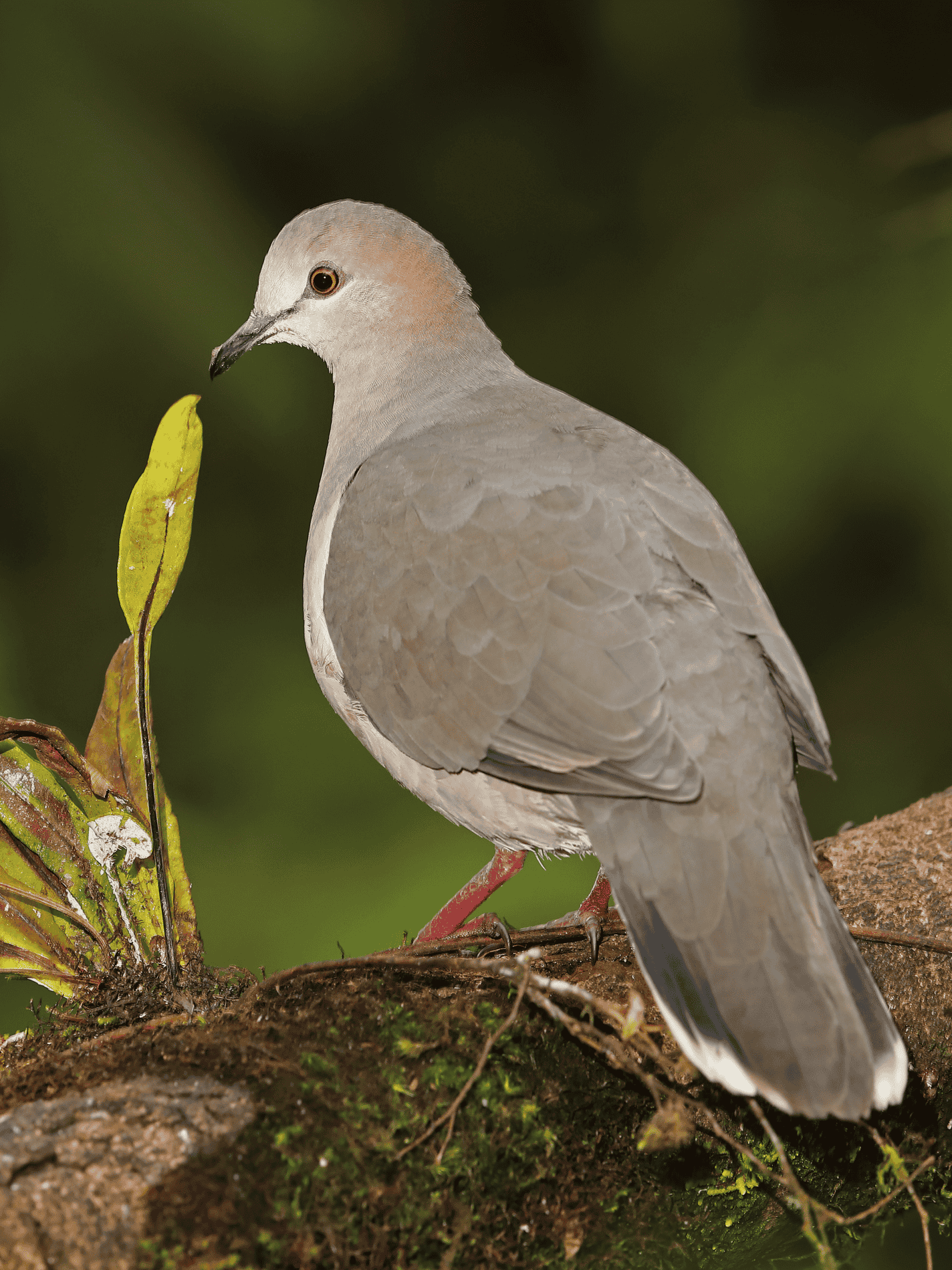


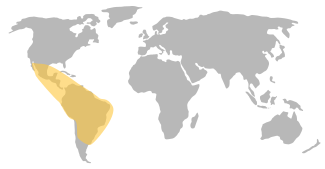
White-Tipped Dove
Mourning Dove
Zenaida macroura
Also known as: American Mourning Dove, Rain Dove, Turtle Dove, Carolina Pigeon, Carolina Turtledove
General appearance
The mourning dove is roughly the size of a crow, bearing characteristics of a long, pointed tail which is about 12', or 30 cm long. This tail displays white spots along its edge while in flight. The bird’s wings are adorned with black spots and its overall coloration exhibits hues of black, brown, gray, pink, tan, and white. The dove has a pointed, wedge-shaped tail.
Male vs female
The sexes of mourning doves can be distinguished by their coloration. Adult males generally have a pinkish tinge on their chests and a blue-gray tone on their crowns. However, the female doves are more dull and plain, predominantly appearing in a shade of brown.
Juvenile
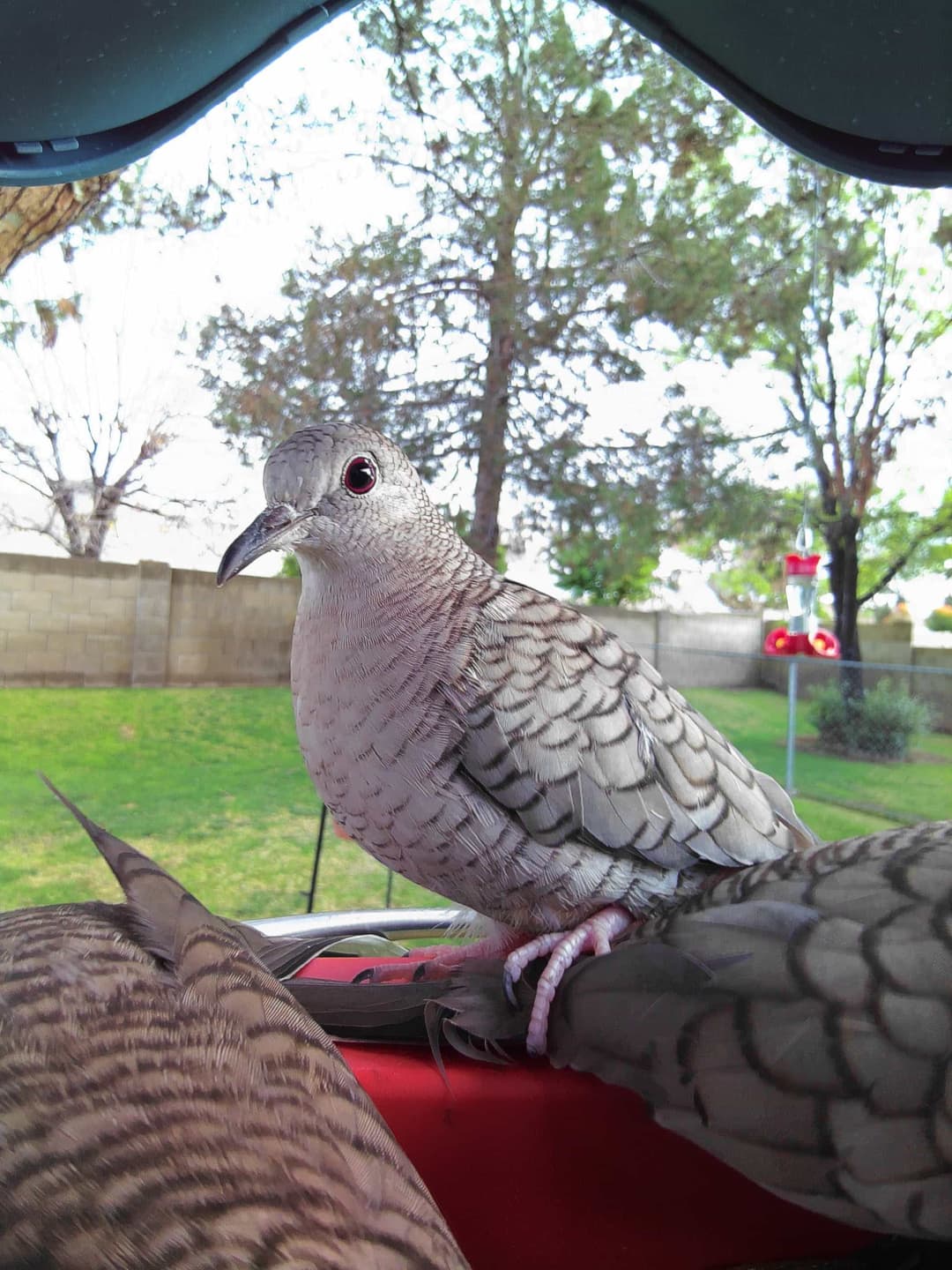
Young mourning doves have a unique scaly appearance that can lead them to be confused with the Inca Dove or the Common Ground Dove. They do not possess the vivid coloring of the adults and generally appear more muted in color.
Size
9.1 - 13.4 in/3.0 - 6.0 oz
There's more to learn about Mourning Dove
View full detailsWhite-Tipped Dove
Leptotila verreauxi
General appearance
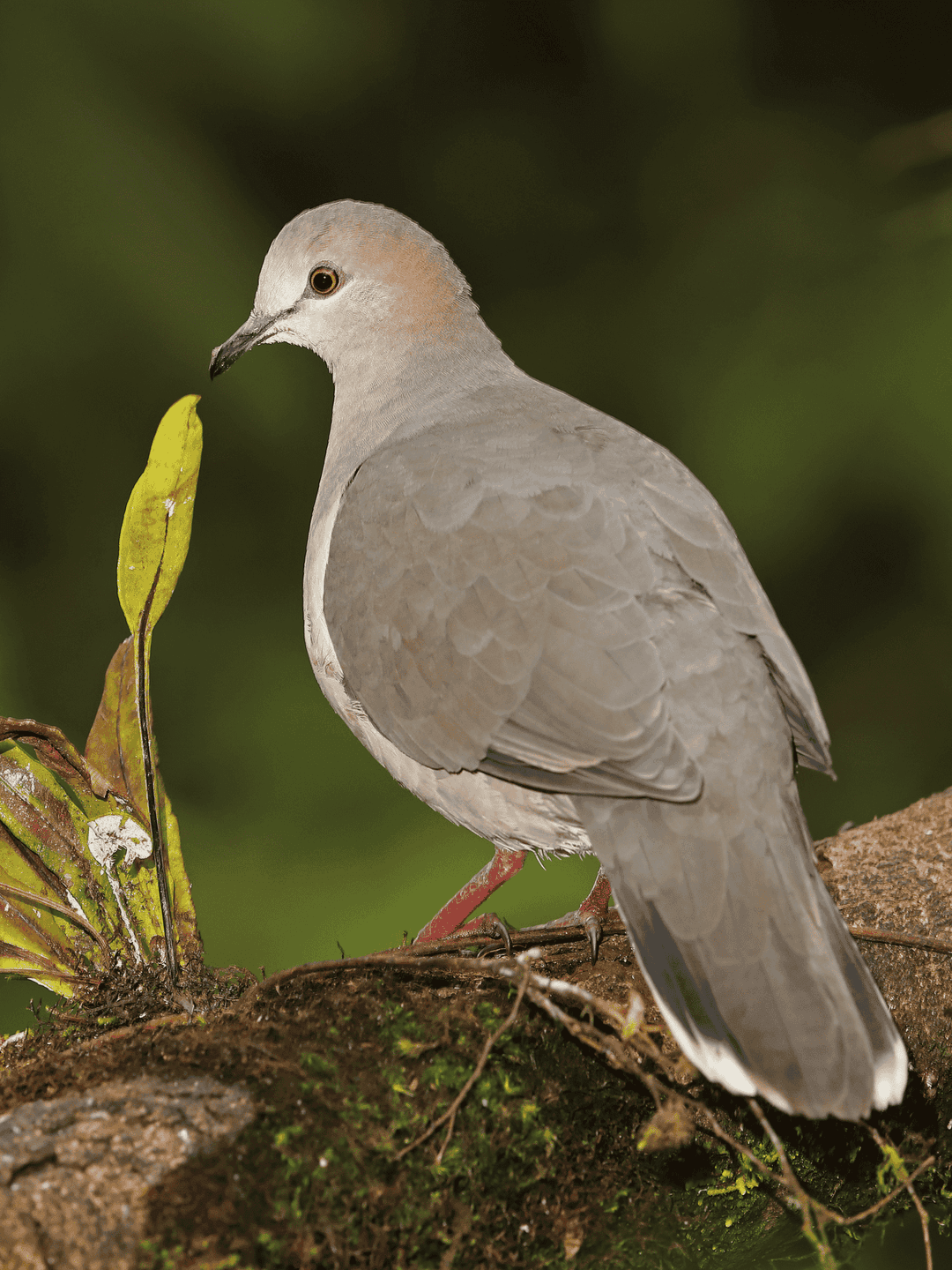
The white-tipped dove has a round body, short tail, and broadly rounded, short wings. Their overall coloration is black, brown, gray, red, and white. The chestnut color under the wings is rich and dark, shown prominently during flight. Their eyes are noticeably pale. The dove lacks the black ear spot and black spots on wings, characteristic of the Mourning Dove. Their size is about that of a crow or a robin.
Male vs female
There is no stark difference in the physical traits between male and female white-tipped doves. They both share similar coloration, body size, and shape. However, males may be slightly larger and have richer, more vibrant coloration during the mating season.
Juvenile
Juvenile white-tipped doves may exhibit more muted colors than adults, ultimately growing into their distinct adult plumage as they mature. Their size and body shape are smaller compared to adults but consistent with general dove characteristics of being round-bodied and shorter-tailed.
Size
9.8 - 12.2 in/5.4 - 8.4 oz
There's more to learn about White-Tipped Dove
View full detailsHow to tell the Mourning Dove from the White-Tipped Dove
Visual differences
The Mourning Dove is 9-13 inches long, with a pointed tail and black wing spots. Its plumage is a mix of black, brown, gray, pink, tan, and white. Males show pinkish chests and blue-gray crowns. In contrast, the White-Tipped Dove is 10-12 inches long, has a round body, short tail, and lacks black markings. With an overall black, brown, gray, red, and white coloration, it features chestnut underwings visible during flight. Pale eyes and consistent adult coloration distinguish it from the Mourning Dove's varied tones and age-related color changes.
Key differences and behavior
Mourning Doves and White-Tipped Doves exhibit distinct behaviors aiding field identification. Mourning Doves are gregarious, often seen in flocks, primarily occupying open and semi-open temperate areas of North America. Their diet is overwhelmingly seed-based, showcasing their capacity to store seeds in their crop. Conversely, White-Tipped Doves are solitary and aggressive, favoring shady woodlands and river thickets, particularly in Southern Texas to Argentina. Their diet includes seeds, berries, and potentially insects. Mourning Doves engage in elaborate aerial courtship displays and flimsy nest construction at varied heights, while White-Tipped Doves perform simple, ground-based rituals and build low nests. Both species share incubation and feeding duties, with chicks fed 'pigeon milk.' Despite similar sizes (10-12 inches), Mourning Doves exhibit a faster flight and communal behavior, contrasting with the White-Tipped's secluded lifestyle.
Still not sure? Here are more lookalikes!
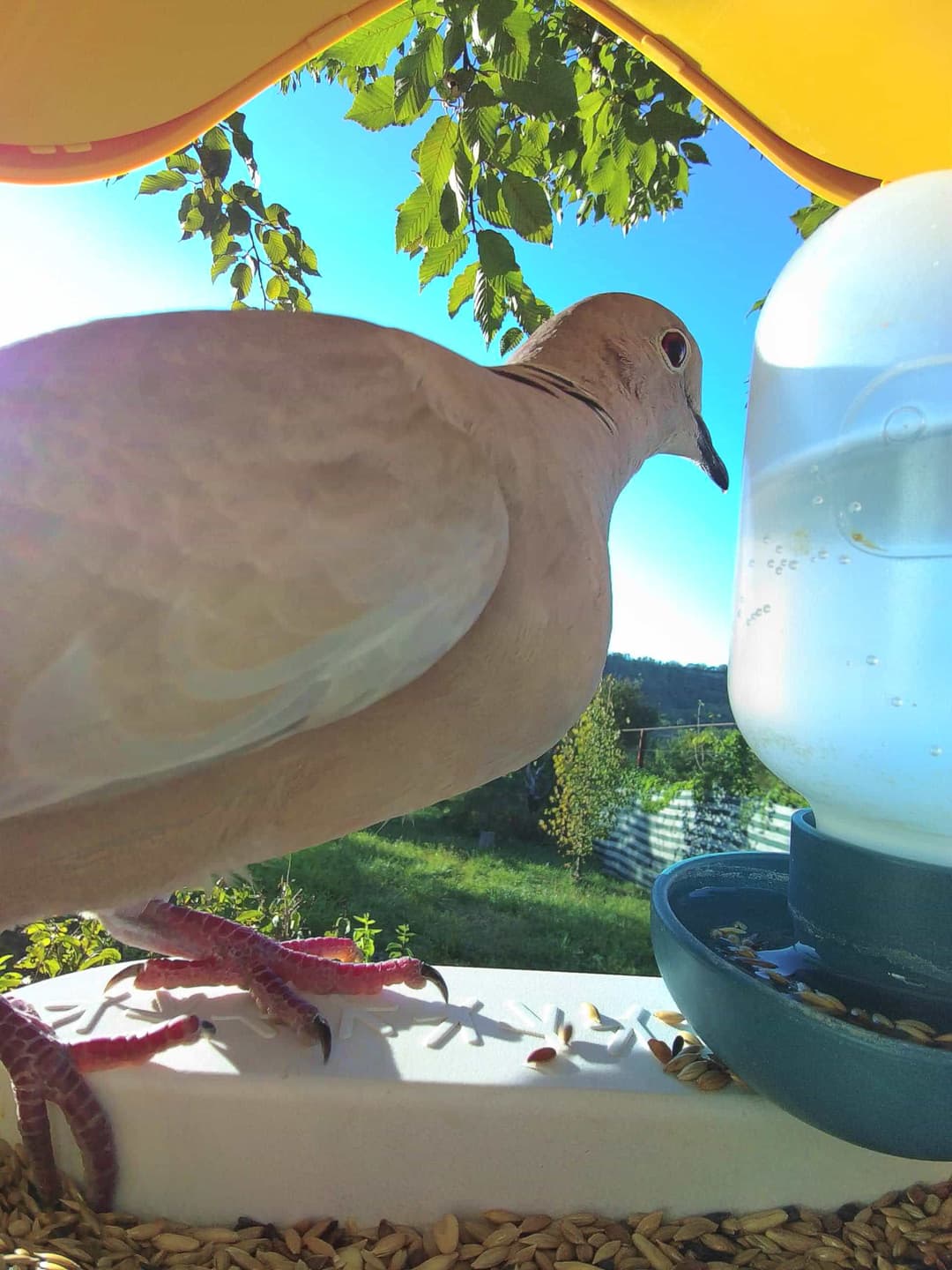
Mourning Dove vs Eurasian Collared Dove

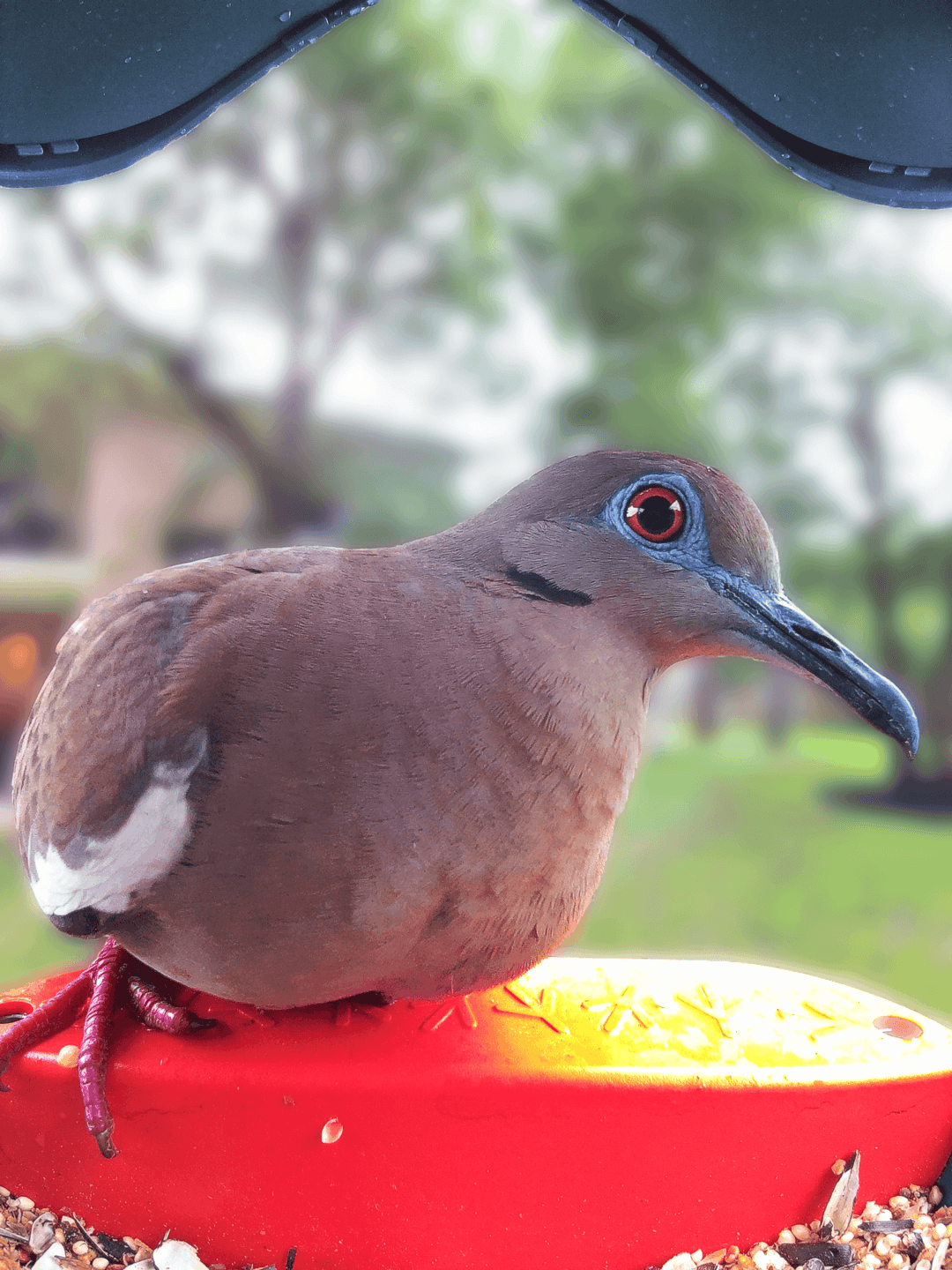
Mourning Dove vs White-Winged Dove
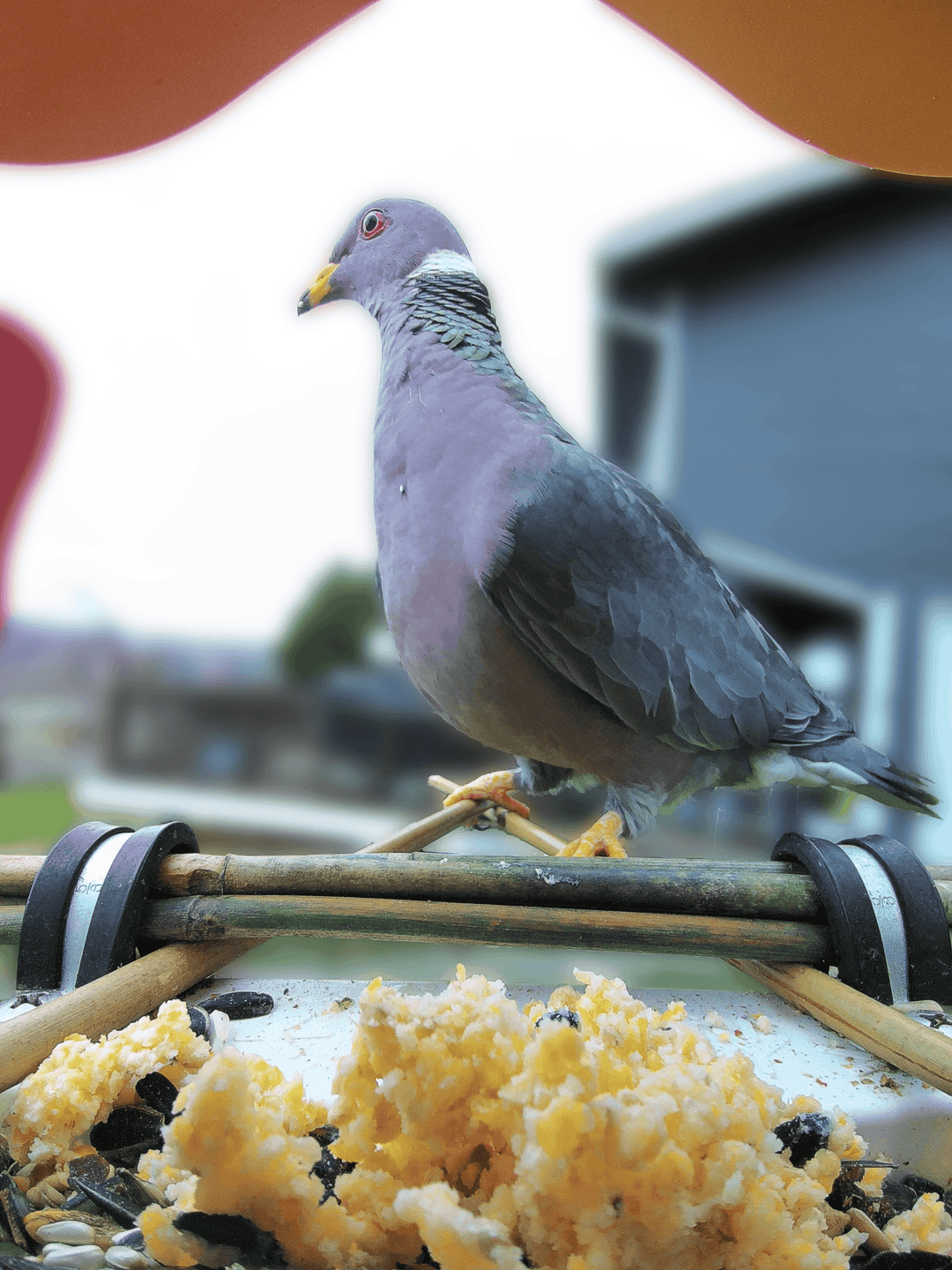
Mourning Dove vs Band-Tailed Pigeon
Mourning Dove vs Common Ground-Dove
Mourning Dove vs Inca Dove
White-Tipped Dove vs White-Winged Dove
Mourning Dove vs [Select a bird]

[Select a bird]
Pick a bird to compare
White-Tipped Dove vs [Select a bird]
[Select a bird]
Pick a bird to compare