Mourning Dove or Band-Tailed Pigeon?
Here's how to tell the difference
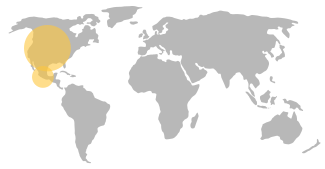
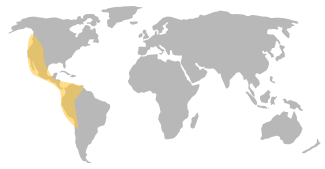
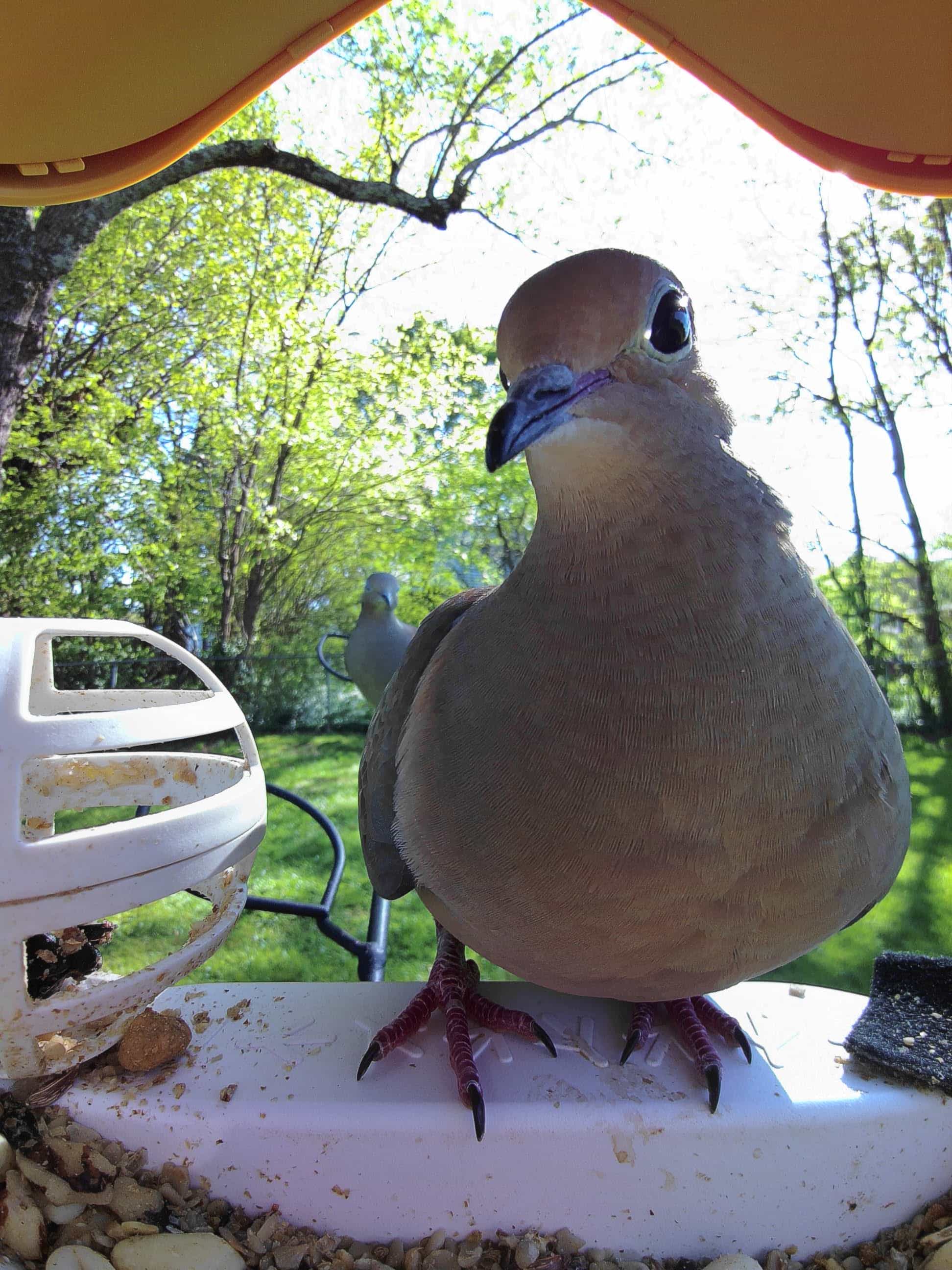


Mourning Dove
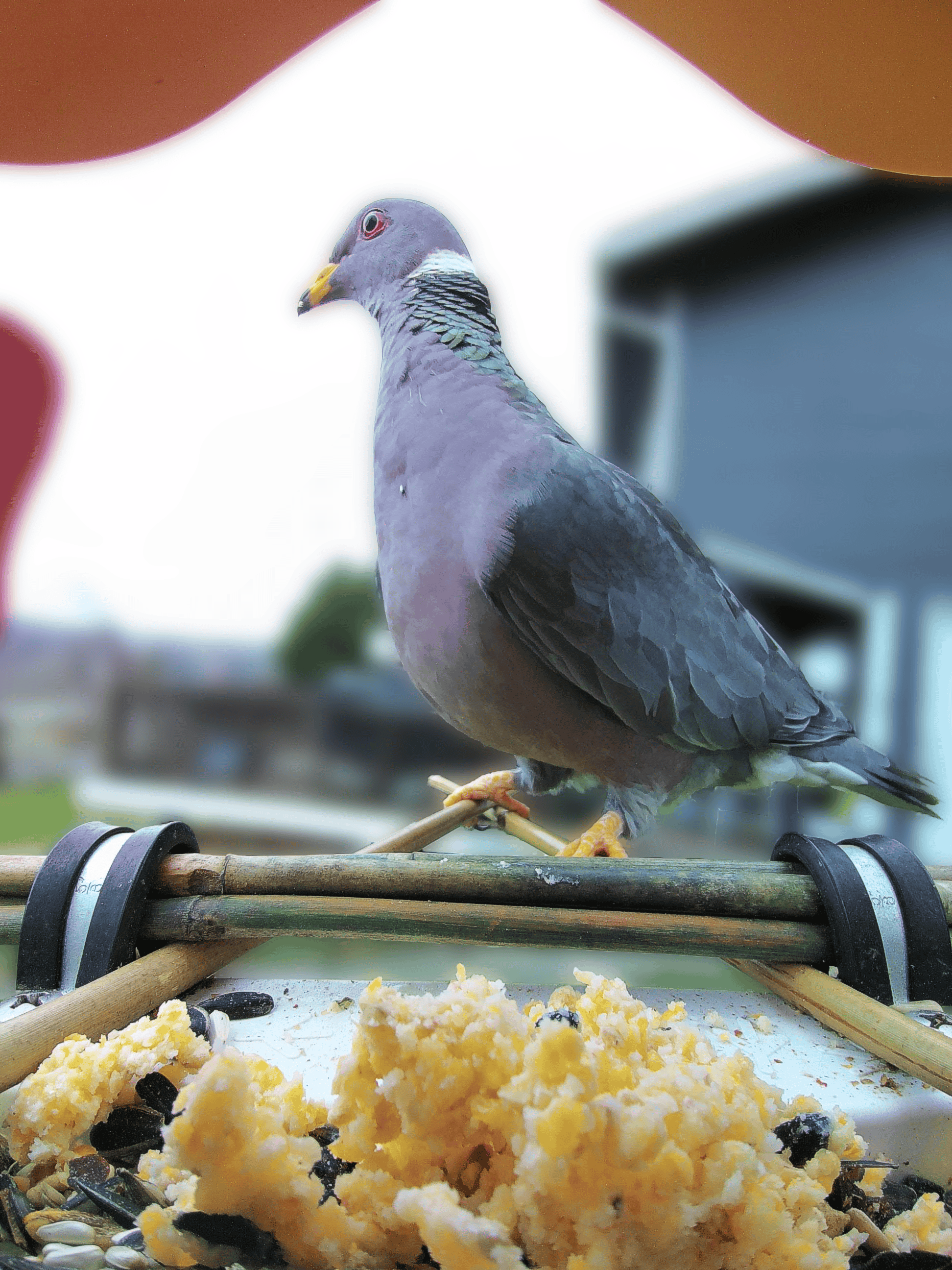


Band-Tailed Pigeon
Mourning Dove
Zenaida macroura
Also known as: American Mourning Dove, Rain Dove, Turtle Dove, Carolina Pigeon, Carolina Turtledove
General appearance
The mourning dove is roughly the size of a crow, bearing characteristics of a long, pointed tail which is about 12', or 30 cm long. This tail displays white spots along its edge while in flight. The bird’s wings are adorned with black spots and its overall coloration exhibits hues of black, brown, gray, pink, tan, and white. The dove has a pointed, wedge-shaped tail.
Male vs female
The sexes of mourning doves can be distinguished by their coloration. Adult males generally have a pinkish tinge on their chests and a blue-gray tone on their crowns. However, the female doves are more dull and plain, predominantly appearing in a shade of brown.
Juvenile
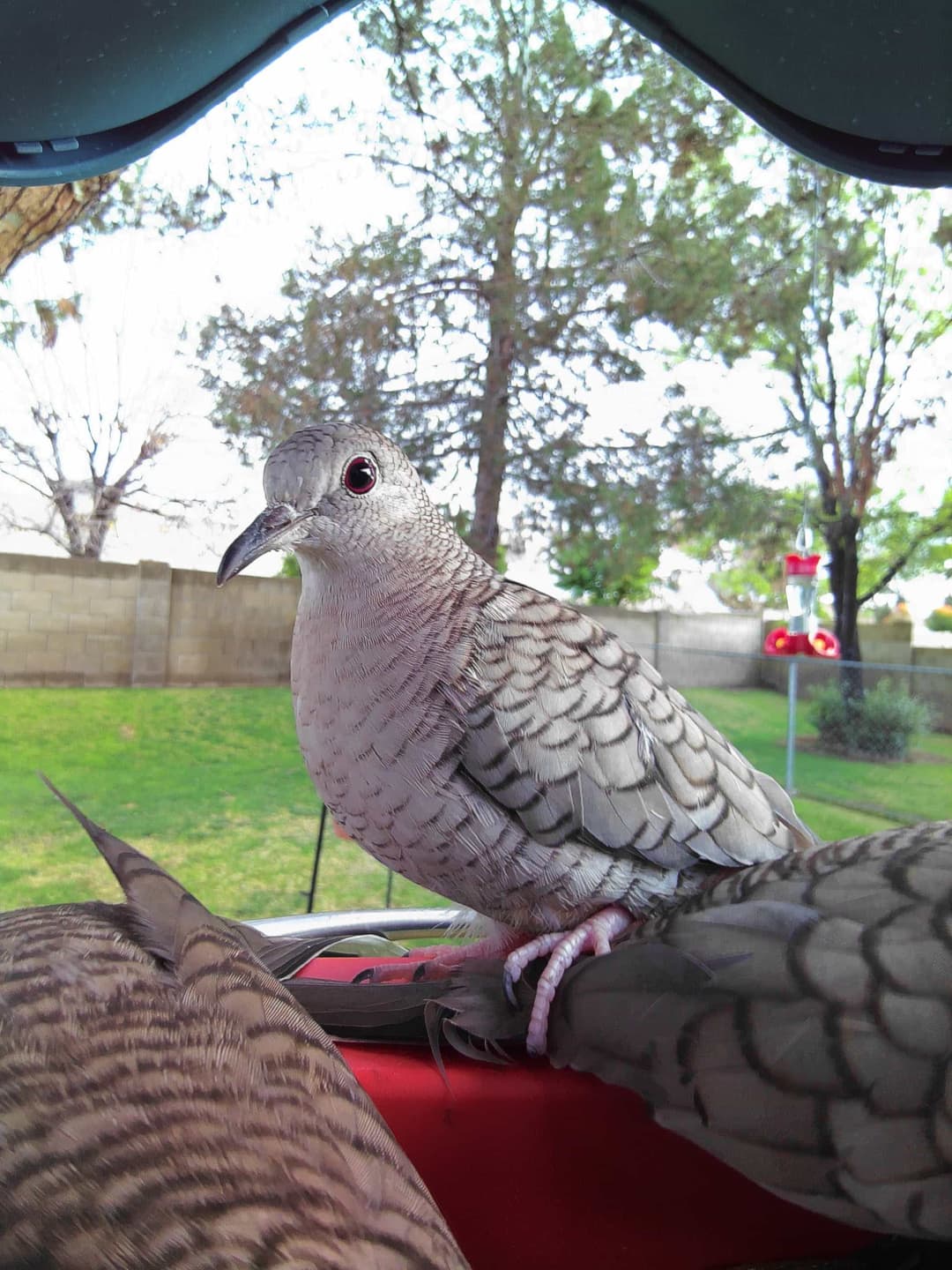
Young mourning doves have a unique scaly appearance that can lead them to be confused with the Inca Dove or the Common Ground Dove. They do not possess the vivid coloring of the adults and generally appear more muted in color.
Size
9.1 - 13.4 in/3.0 - 6.0 oz
There's more to learn about Mourning Dove
View full detailsBand-Tailed Pigeon
Patagioenas fasciata
General appearance
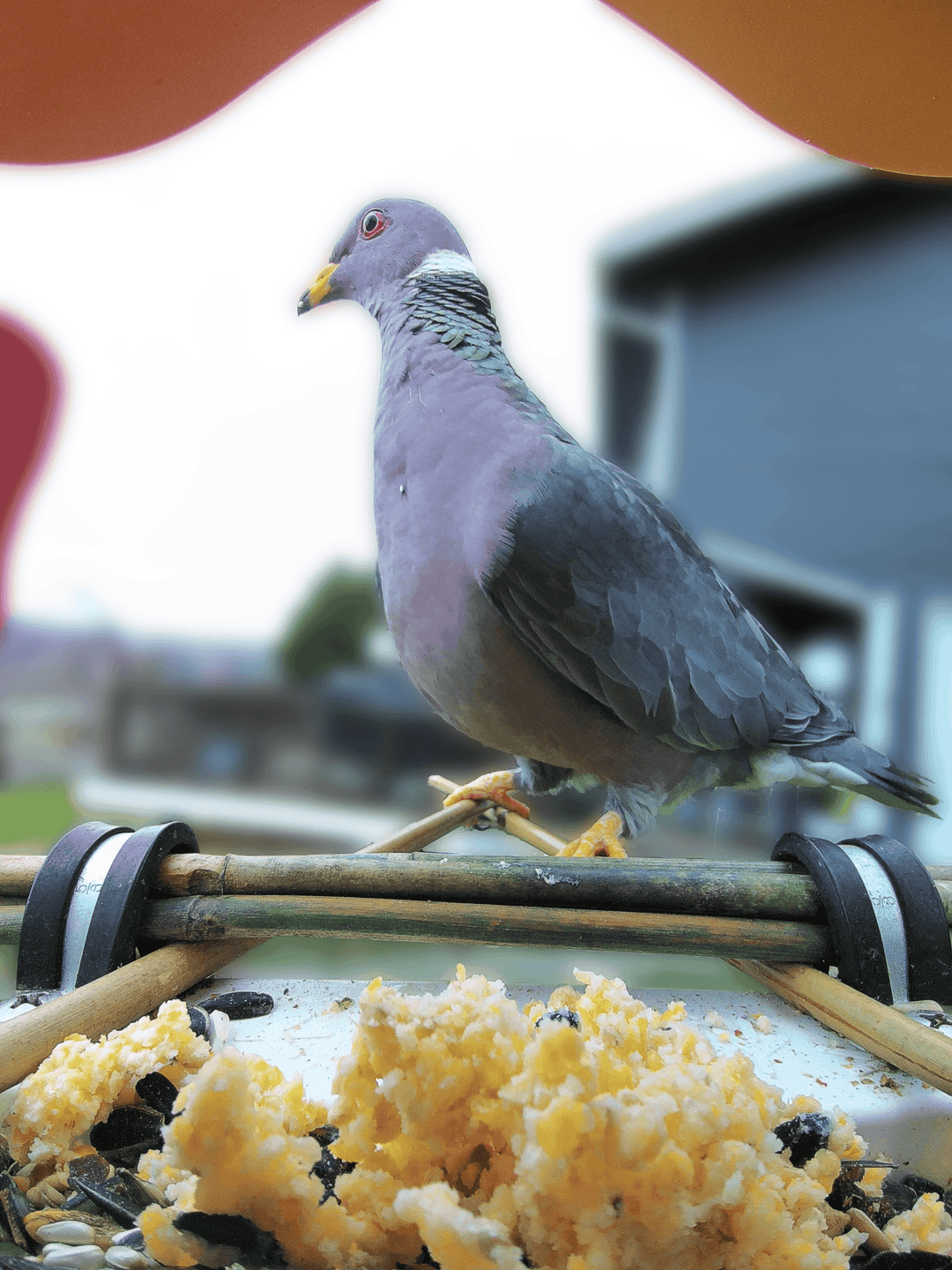
The band-tailed pigeon is a large, vibrant bird measuring around 14-15 1/2 inches or 36-39 cm. It showcases striking coloration, showcasing black, gray, purple, white, and yellow hues. A notable physical trait is the narrow white band across its nape. The bill base is yellow, while the tail possesses a broad gray band. The pigeon's head and chest are clothed in purplish-pink colors, and its neck displays hints of green iridescence.
Male vs female
There is no significant physical difference in color and size between male and female band-tailed pigeons that can be used for easy identification in the wild. Both genders exhibit similar coloration and physical features.
Juvenile
Juveniles of this species exhibit subtle differences compared to adults. They lack the distinguishing narrow white band across the nape which is a key characteristic of mature band-tailed pigeons. With time, as they mature, they will gradually acquire the vibrant adult coloration and physical traits.
Size
12.6 - 15.7 in/12.1 - 12.8 oz
There's more to learn about Band-Tailed Pigeon
View full detailsHow to tell the Mourning Dove from the Band-Tailed Pigeon
Visual differences
The Mourning Dove is smaller, weighing 3-6 oz and measuring 9-13 inches. It has a long, pointed tail with white-edged feathers and black-spotted wings. Males have a pinkish chest and blue-gray crown, while females are duller. The Band-Tailed Pigeon is larger, weighing 12-13 oz and measuring 14-15.5 inches, with a broad gray tail band, purplish-pink chest and head, and green neck iridescence. It features a narrow white nape band and a yellow bill base. The Mourning Dove's tail is more pointed, whereas the Band-Tailed's is broader with distinct coloration.
Key differences and behavior
The Mourning Dove, primarily inhabiting open and semi-open areas like farms and grasslands, contrasts with the Band-Tailed Pigeon, which prefers oak woodlands and mountain forests. Mourning Doves focus heavily on seeds, consuming 99% seeds, often feeding on the ground and storing extras in their crop. Conversely, Band-Tailed Pigeons have a varied diet of seeds, berries, and fruits, traveling up to three miles for food. While Mourning Doves typically build flimsy nests mostly in trees or shrubs, Band-Tailed Pigeons nest in loose colonies in trees, creating bulky stick platforms. Both species engage in elaborate male courtship displays, with Mourning Doves displaying more communal preening. The Mourning Dove's swift, direct flight contrasts with the Band-Tailed Pigeon's more purposeful foraging journeys. Both species utilize “crop milk” for feeding nestlings but differ in their habitat preferences and dietary breadth.
Still not sure? Here are more lookalikes!
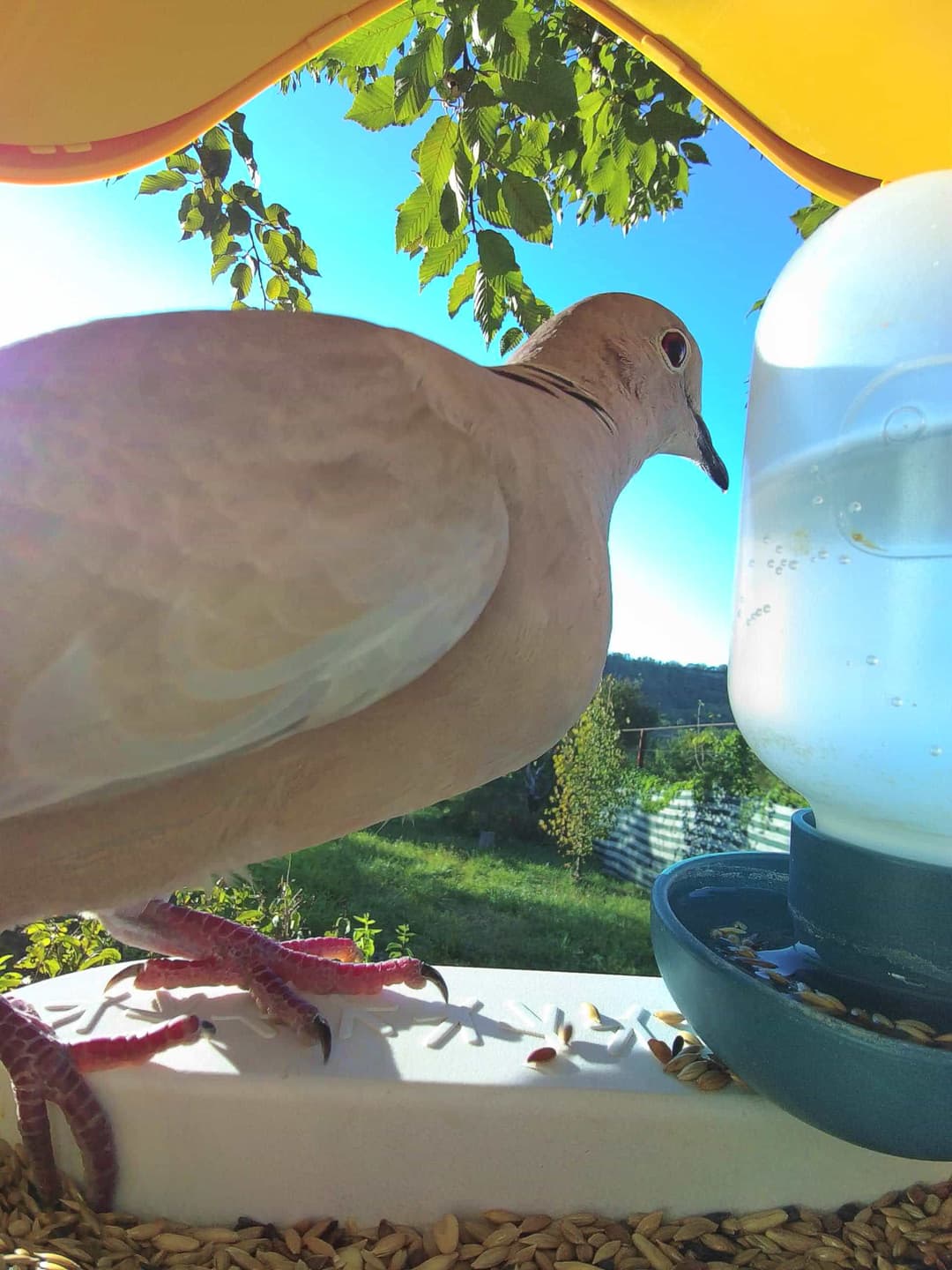
Mourning Dove vs Eurasian Collared Dove

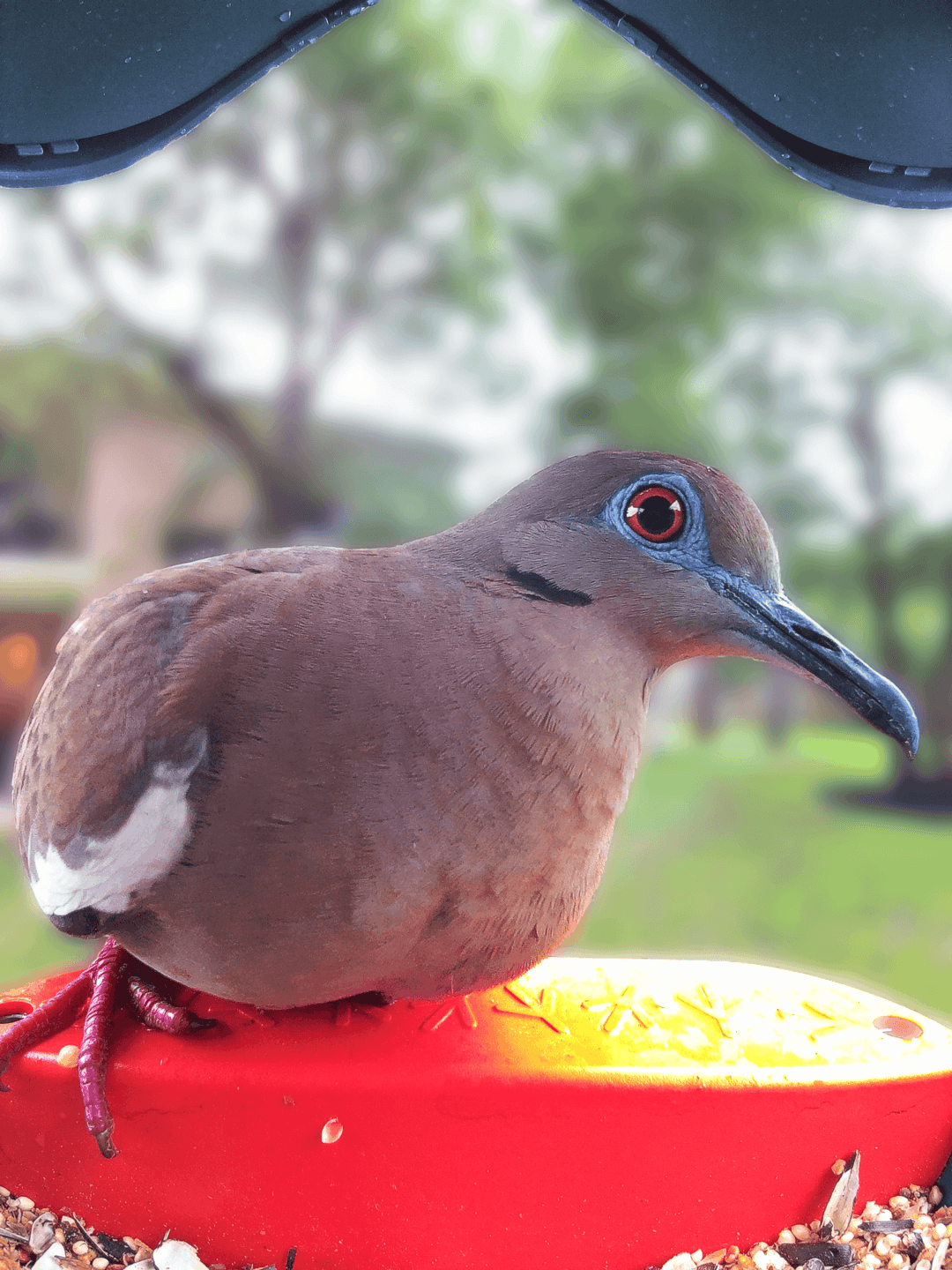
Mourning Dove vs White-Winged Dove
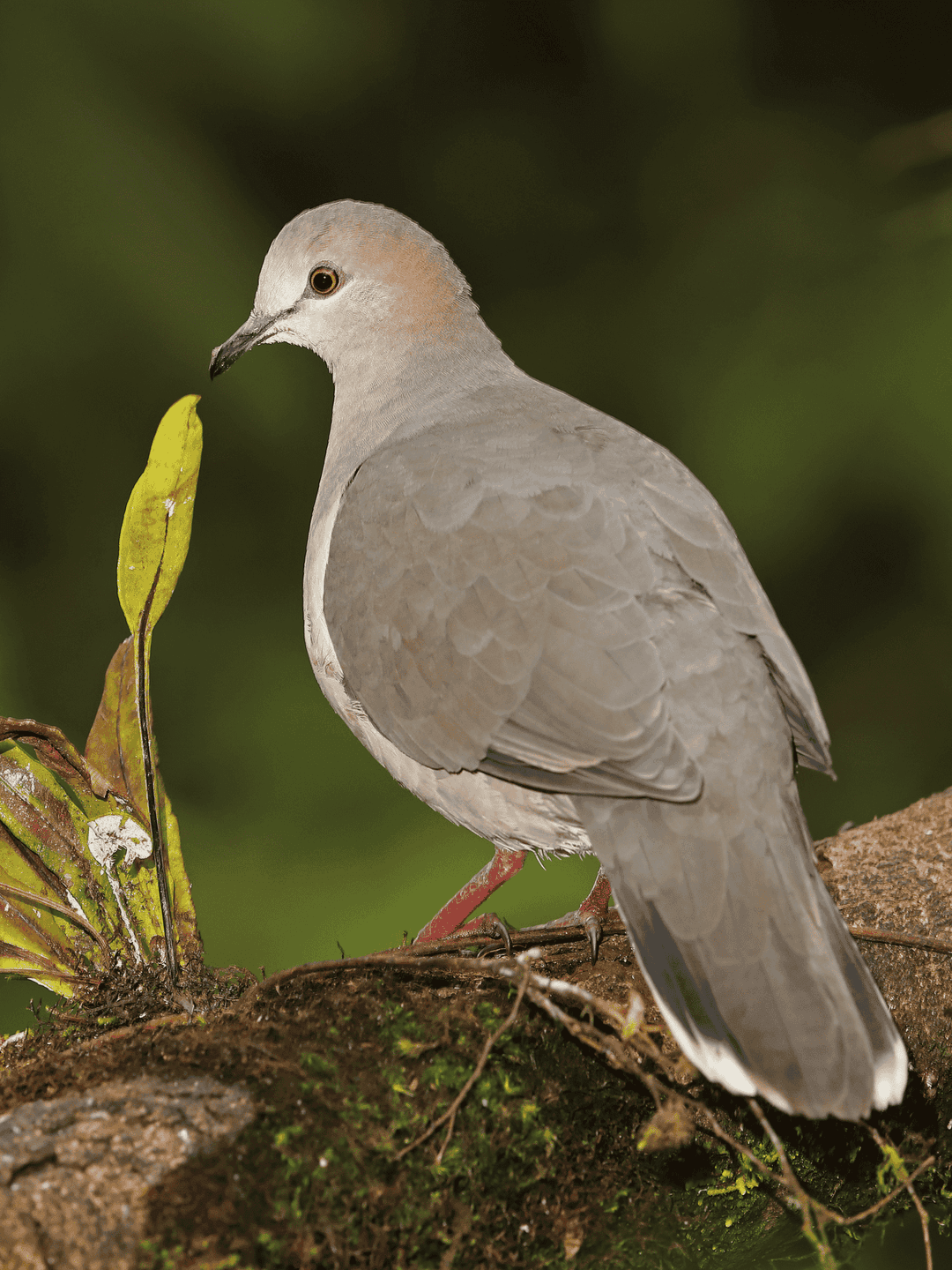
Mourning Dove vs White-Tipped Dove
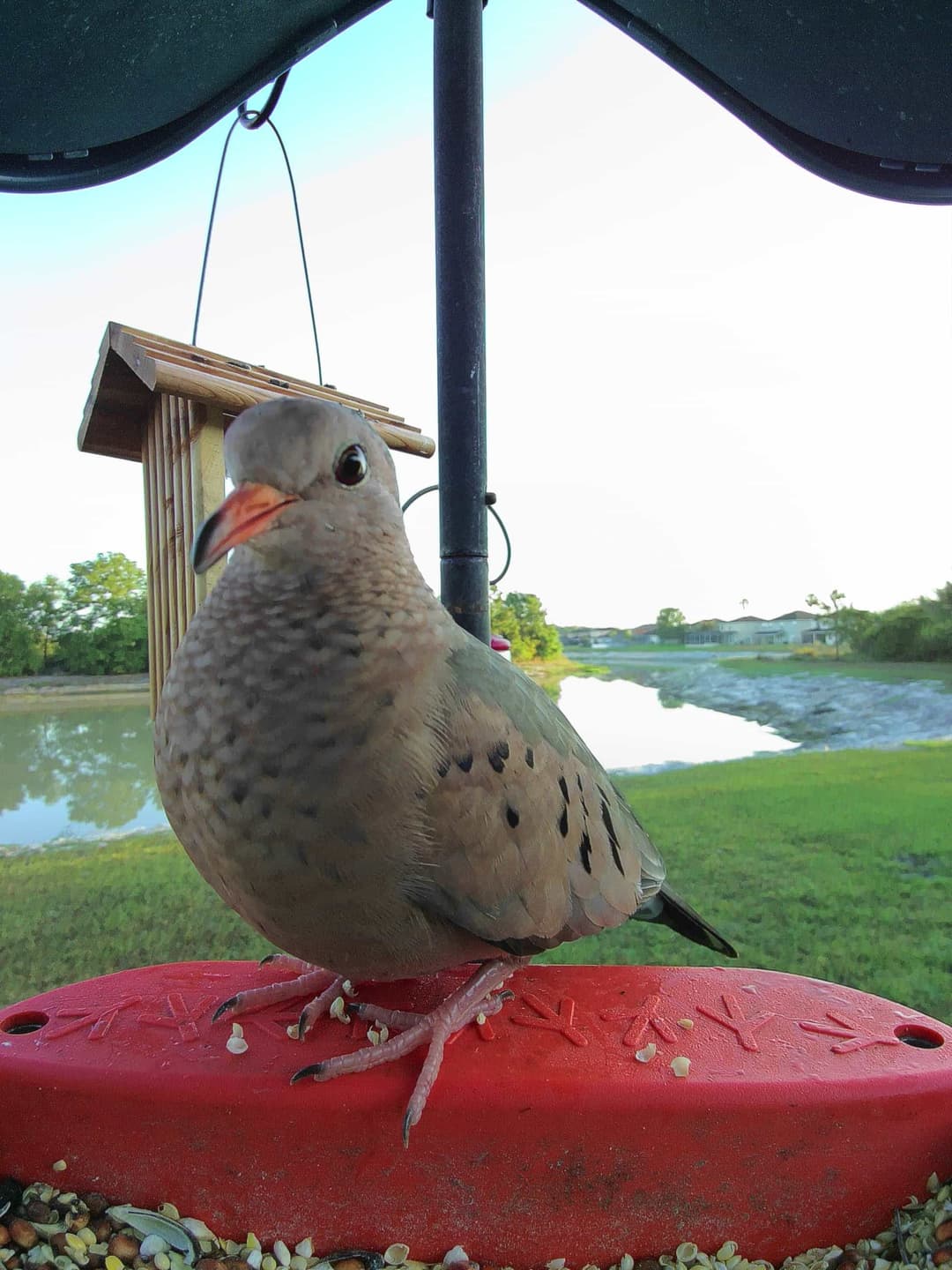
Mourning Dove vs Common Ground-Dove
Mourning Dove vs Inca Dove
Band-Tailed Pigeon vs Eurasian Collared Dove
Band-Tailed Pigeon vs White-Winged Dove
Mourning Dove vs [Select a bird]

[Select a bird]
Pick a bird to compare
Band-Tailed Pigeon vs [Select a bird]
[Select a bird]
Pick a bird to compare