
Eurasian Collared Dove
Eurasian Collared Dove
Streptopelia decaocto


Quick Identification guide
Quick Identification guide
- •
Features a pale, sandy-gray plumage that covers its entire body, providing a uniform appearance
- •
Displays a distinctive black collar on the nape of its neck, a key identifying feature
- •
Has a slender body and long tail, with broad, rounded wings contributing to its graceful flight silhouette
What does a Eurasian collared dove sound like?
The Eurasian collared dove typically produces a deep, rhythmic kuk-kooooo-kuk call, which heavily emphasizes the middle syllable. This call generally portrays a flat pattern and is categorized as a hoot type. Additionally, the dove can emit a harsh, mewing nasal call note, compared by many observers to the high-volume call of a Gray Catbird. Its vocalizations, therefore, blend unique elements of distinctness and familiarity.


Description
The collared dove is the woodpigeon's smaller and slightly more delicate-looking cousin. Their name comes from ancient myth! Decaocto is Latin for eighteen and, according to the Ancient Greeks, a maid once complained to the gods that she was paid the paltry sum of eighteen coins a year. To shame her mistress, Zeus created the collared dove!
The Eurasian collared dove can weigh between 140to180grams and be from29to30centimeters tall.
The typical lifespan of the Eurasian collared dove is 3-5 years in the wild, with some reaching up to 10-15 years in captivity. This is relatively long compared to other dove species, where the Mourning dove lives up to 1-3 years in the wild. Similarly, the Turtle dove has an average lifespan of 1-2 years only. However, Eurasian collared doves are outlived by Rock dove which can reach up to 20 years in captivity.
Did you know?
Most popular questions about Eurasian collared dove
How to recognise a Eurasian collared dove?
General appearance
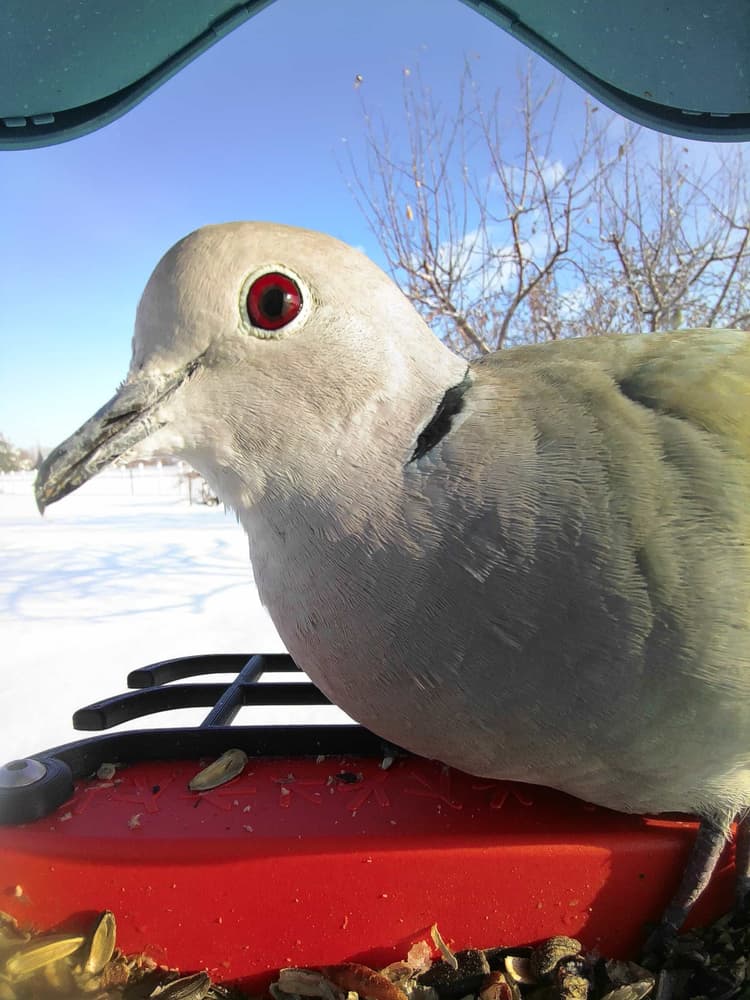
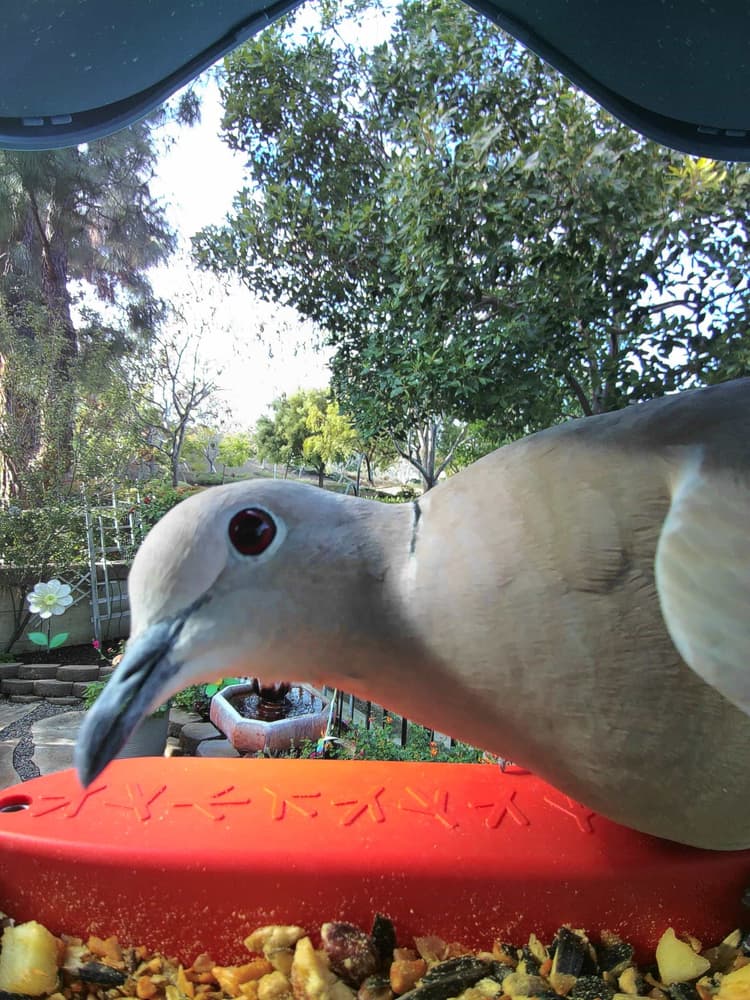
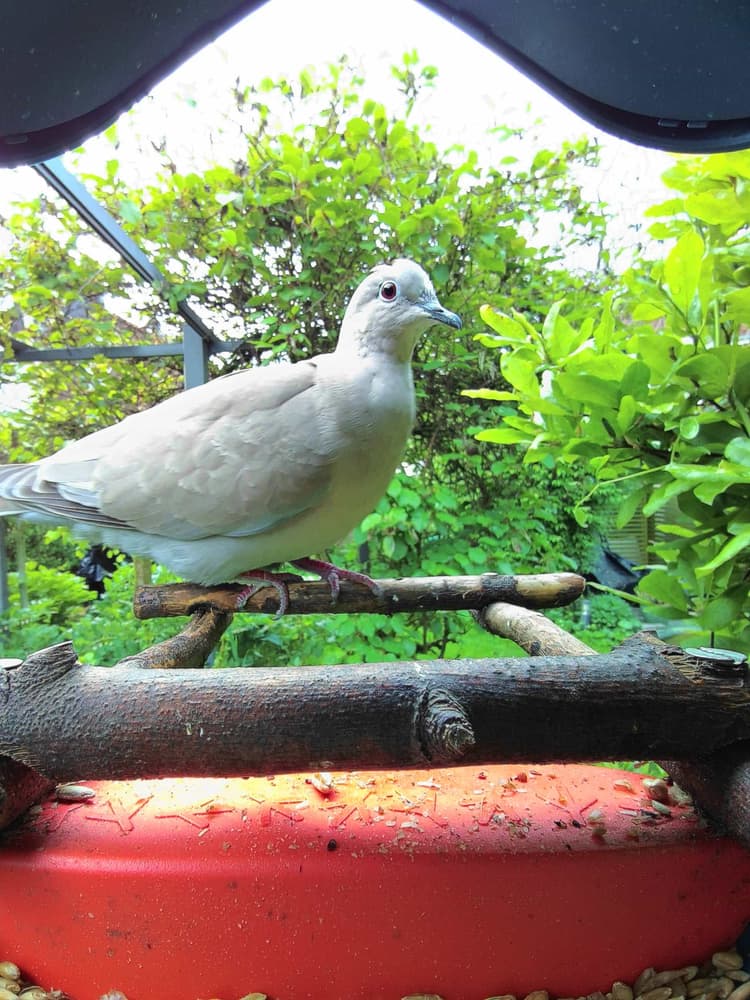
The Eurasian collared dove measures approximately 12 1/2 inches (32 cm) in length. Its predominant color is pale brown, with a distinctive narrow black ring around its neck. It has large white patches on its outer tail feathers. The species is darker than the domesticated Ringed-Turtle-Dove, especially on undertail coverts and wingtips. The size is roughly equivalent to that of a crow. The wings are of a broad and pointed shape, and the tail shape is generally rounded or square-tipped.
Male vs female
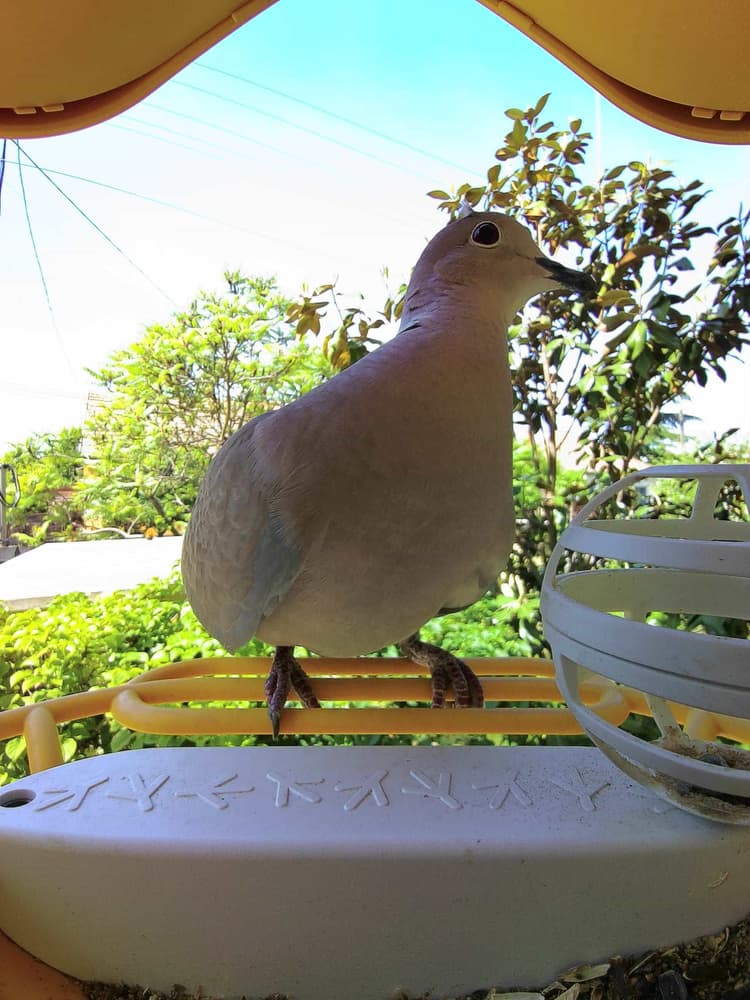
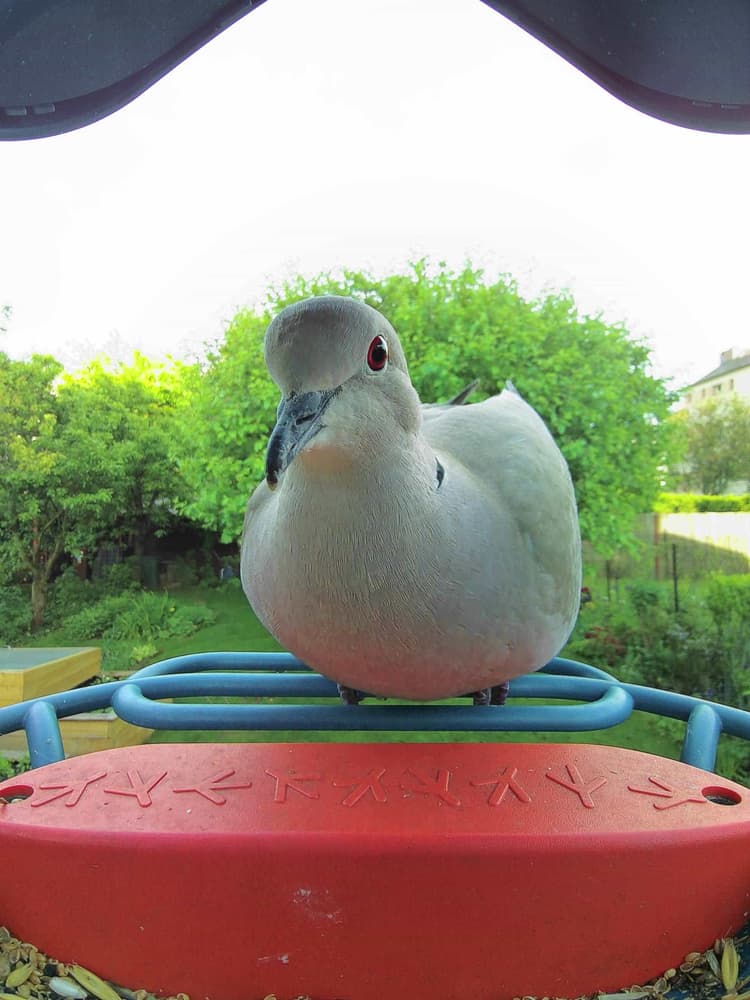
There are minimal noticeable differences between the sexes in the Eurasian collared dove. Both males and females exhibit similar features such as the black neck ring, pale brown body color, and white patches on the tail. Any variation is subtle and generally indistinguishable in the wild.
Male Eurasian Collared Dove
Male Eurasian Collared Dove
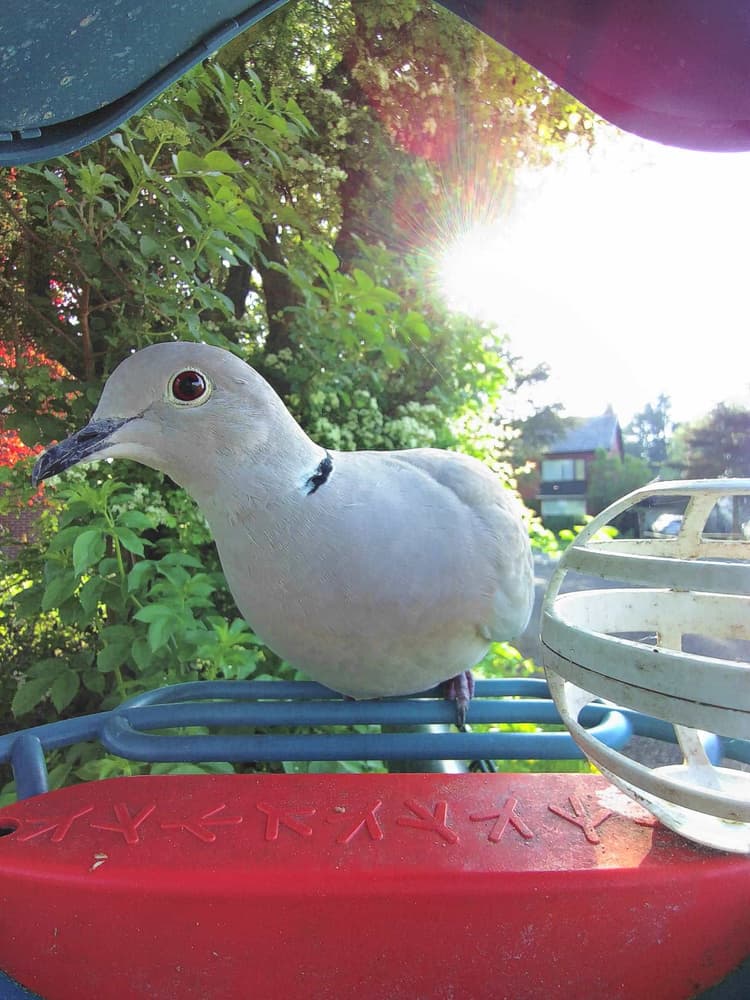
Female Eurasian Collared Dove
Juvenile
Juvenile Eurasian collared doves are similar in size and color to adults, but they may have slightly duller coloration. Recognizing them may be challenging due to their resemblance to adult birds until they attain their distinctive adult plumage.
Often mistaken for
Mourning Dove vs Eurasian Collared Dove
Eurasian Collared Doves are larger and bulkier than Mourning Doves. They have a distinctive black 'collar' around their neck that Mourning Doves lack. Mourning Doves possess a pointed tail with white edges, while Eurasian Collared Doves have square tails.

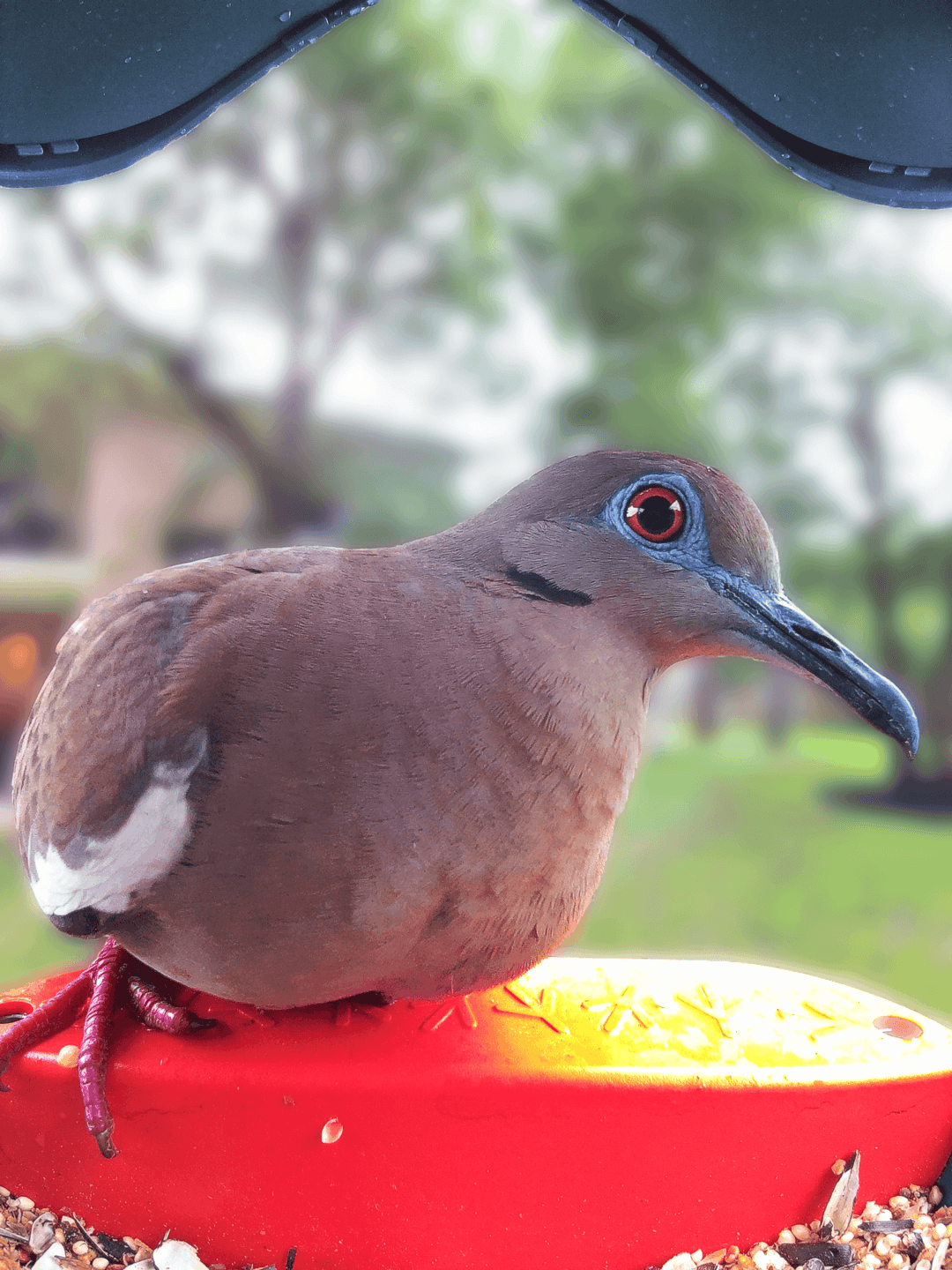
White-Winged Dove vs Eurasian Collared Dove
White-Winged Doves have a more robust build and a distinctive white wing patch not present on Eurasian Collared Doves. Additionally, they have a rounder tail with white corners, unlike the square tail of the Eurasian Collared Dove.
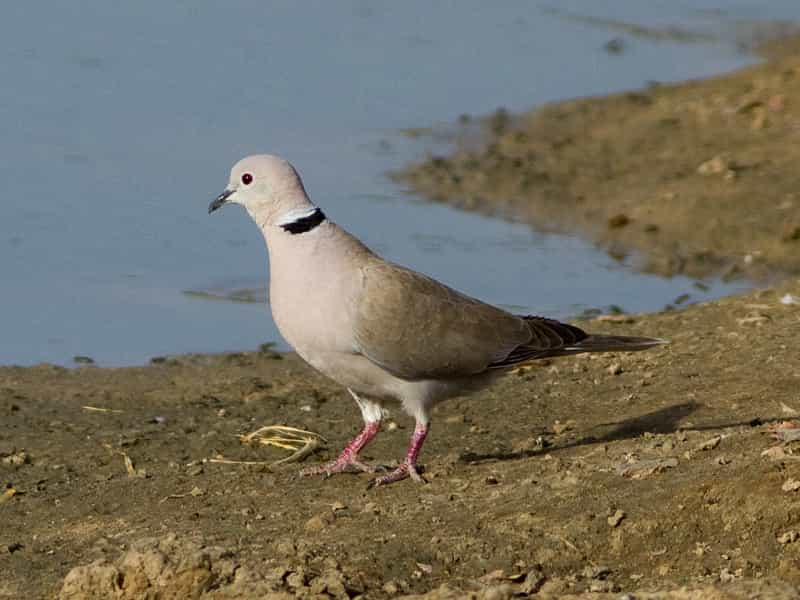
African Collared Dove vs Eurasian Collared Dove
The African Collared Dove is very similar but tends to be paler and smaller than the Eurasian Collared Dove. Both have a black collar, but subtle differences in plumage and their habitats can help in identification.
Breeding and nesting habits of the Eurasian collared dove
Mating behaviors
The male Eurasian collared dove displays by flying at a steep angle with noisy wingbeats, then spirals down with wings and tail spread, emitting a harsh call. He also attracts females through calling and a ritualized bowing display.
Nesting details
The male leads the female to potential nest sites, and she chooses the location. Nests are found in trees or shrubs and occasionally on manmade structures, typically 10-40' above ground. The nest is a flimsy platform made of sticks and twigs, with the male gathering materials and the female constructing it.
Eggs and chick-rearing
After mating, the female lays eggs in the prepared nest. Both parents share responsibilities like incubating the eggs and feeding the chicks. Eurasian collared doves are known to rear multiple broods per year. To attract them to gardens, provide tall trees or shrubs for nesting and avoid disturbances in these areas.
What does a Eurasian collared dove like to eat?
Berries
Insects
Plants
Seeds
Snails
Spiders
Natural diet
The Eurasian collared dove primarily consumes a diet consisting mostly of seeds, with additional intake of some berries and insects. In North America, the specific details of their diet are not yet well known. In Europe, they are known to feed on waste grain from many cultivated crops, alongside seeds from various plants. Their diet may also occasionally include some berries and small insects, with snails being consumed rarely.
Bird feeders
While feeding at bird feeders, Eurasian collared doves are known to consume bread crumbs and other foods provided by humans. This behavior indicates their adaptability to supplementary food sources made available in human-inhabited environments.
Choose the right food
Eurasian collared doves have a liking for seeds. Bird Buddy seeds have proven to be particularly enticing for them. These seeds are chosen by experts for the season, ensuring that the doves get the nutrition they need and also find it irresistible to stop by your feeder.
Set up a suitable feeder
A platform or tray feeder is ideal for these birds. Eurasian collared doves are larger than typical garden birds, so ensure your feeder is robust and spacious. Place the feeder in a quiet, open location, giving the doves a clear view of their surroundings for their safety.
Additional lures
Eurasian collared doves enjoy a variety of trees and shrubs. Planting these around your yard can make it a more attractive and comfortable space for them. Fresh water for drinking and bathing can also be a strong incentive for these birds to visit.
The singalong
If you want to enjoy the melodic cooing of these birds, give them a calm and quiet environment. Ensure there is less human intervention around their feeding time. A peaceful setting will encourage them to stay longer and perhaps treat you with their soothing music.
Where can you find Eurasian collared doves?
Based on Birdbuddy sighting data. The heatmap shows where Birdbuddy users have spotted this species.
Embed this map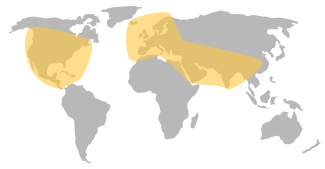
This map shows the full native range based on scientific range data.
Primary habitat
The Eurasian collared dove typically inhabits suburbs and farmland, especially those with a mixture of trees and open ground. It seems to thrive better in small towns than in larger cities.
Additional range
In its original Asian range, it's found in semi-open dry country with scattered trees and groves. They are versatile and adaptable, able to live in a variety of environments including wood edges and open country.
Do they migrate?
The Eurasian collared dove does not undergo regular migration; instead, it primarily remains in its resident habitats throughout the year. However, young birds have the tendency to disperse over long distances. This dispersal is a key factor in the species' ability to expand its populations into new areas. Unlike migratory birds that follow specific seasonal routes and timing, Eurasian collared doves spread gradually and opportunistically. Their dispersal has allowed them to significantly broaden their range, colonizing large areas across Europe, Asia, and even North America. This expansion is often facilitated by their adaptability to a variety of environments, including urban and suburban settings, agricultural lands, and parks, where they can find ample food resources. Key locations of dispersal and population growth include parts of Europe and North America, where the doves have established themselves over the past century. In summary, while Eurasian collared doves do not migrate in the traditional sense, the long-distance movements of younger birds enable the species to spread and occupy new regions effectively.
What is the role of Eurasian collared doves in nature and how to protect them?
Conservation status
The Eurasian collared dove is common in North America, having spread rapidly since its introduction. There are no significant conservation threats noted, and its interactions with native species are not fully understood, though no negative impacts have been observed. As a result, it is not considered vulnerable or endangered. Conservation efforts specifically targeting this species are minimal, likely due to its stable population and adaptability to various environments. Key focus areas may include monitoring its expansion and assessing any ecological impact on native species.
Ecological role of Eurasian collared doves
Its role in the ecosystem
The Eurasian collared dove (Streptopelia decaocto) holds ecological significance as both a participant in and contributor to its ecosystem. As seed dispersers, these doves aid in plant propagation by feeding on seeds and subsequently excreting them in different locations, supporting plant diversity and growth. Additionally, their feeding habits play a role in controlling pest populations. By consuming seeds and grains, the doves indirectly limit plant-feeding insect populations, although their impact is generally less direct than that of insectivorous birds. Eurasian collared doves also occupy a niche in the avian food web, serving as prey for raptors and other wildlife. As a highly adaptable species, they thrive in urban, suburban, and rural environments, showcasing resilience and ecological plasticity. Their presence and interactions illustrate complex ecological relationships where they contribute to seed dispersal, pest regulation, and biodiversity maintenance in human-altered landscapes.
How to help protect Eurasian collared doves
Preservation tips
Habitat preservation strategies
To support the conservation of the Eurasian collared dove, it's crucial to maintain and preserve their natural habitats. This includes places with access to food sources, such as agricultural fields, and nesting sites like trees and buildings. Avoid indiscriminate use of pesticides that can harm these birds directly or indirectly through their food chain. Incorporate environmentally-friendly farming practices to support a healthy ecosystem for the dove.
Community science initiatives
Community science initiatives are vital for the conservation of the Eurasian collared dove. Encourage local communities to participate in bird watching activities and record their observations in citizen science platforms. This helps in tracking the population and distribution of these birds. Also, organize community awareness programs about the importance of these species in maintaining biodiversity. Lastly, promote bird-friendly practices, such as keeping cats indoors and reducing window collisions.