
Laughing Dove
Laughing Dove
Also known as: Senegal Dove, Little Brown Dove
Spilopelia senegalensis


Quick Identification guide
Quick Identification guide
- •
Displays pale pinkish-brown plumage on the chest and underparts, with a mottled chestnut patch on the neck
- •
Features a long, graduated tail with broad dark banding and white tips
- •
Has a slim build, with a small head and a gracefully curved beak
What does a laughing dove sound like?
The laughing dove produces a series of low pitched, rhythmic cooing sounds, typically characterized by the iconic "coo-oo, coo, coo, coo". Its name comes from the distinctive 'laughing' sound intrinsic to its regular call. Its song, often heard at dawn and dusk, is a repetitious cooing sequence, generally considered soothing and pleasant. Apart from these, when alarmed, it also produces a short and abrupt "wo-wo-wo" sound.


Description
The laughing dove was named after its distinctive coo that sounds like laughter. Go figure! Their call is extremely musical and bubbly and you have a chance to hear it and catch a glimpse of them across a very wide range! During courtship they like to engage in a bowing display, showcasing not only their dancing chops but also their stunning copper-tipped neck feathers.
The laughing dove can weigh between 71to92grams and be from23to27centimeters tall.
The laughing dove typically has a lifespan of around 5-10 years in the wild. In comparison, other related species such as the turtle dove and the mourning dove have similar lifespans, typically living for 3-5 and 3-7 years, respectively. However, with optimal care in captivity, the lifespan of these species, including the laughing dove, can extend up to 15-20 years.
Did you know?
Most popular questions about laughing dove
How to recognise a laughing dove?
General appearance
Laughing doves are small birds with a long tail, identifiable by their warm brown-grey blush, distinctive scalloped collars, and a rufous hue in their feathers. They are the epitome of soothing aesthetics with blush-pink necks, blending into an ashy-grey mantle and a pale greyish belly. Their red-rimmed eyes are a key feature.
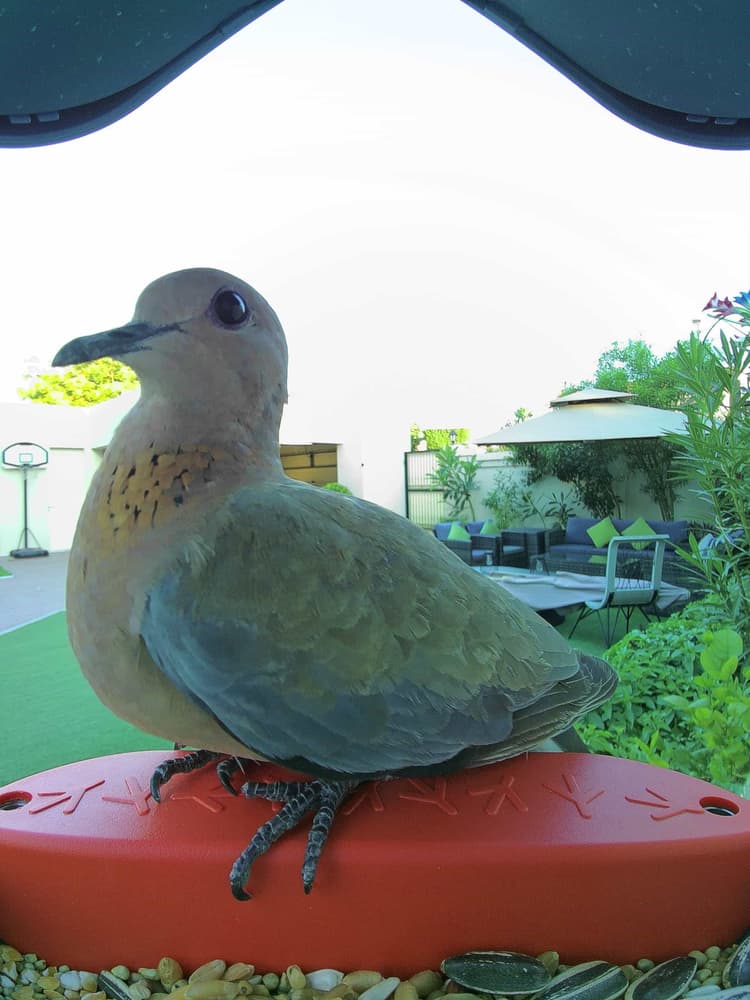
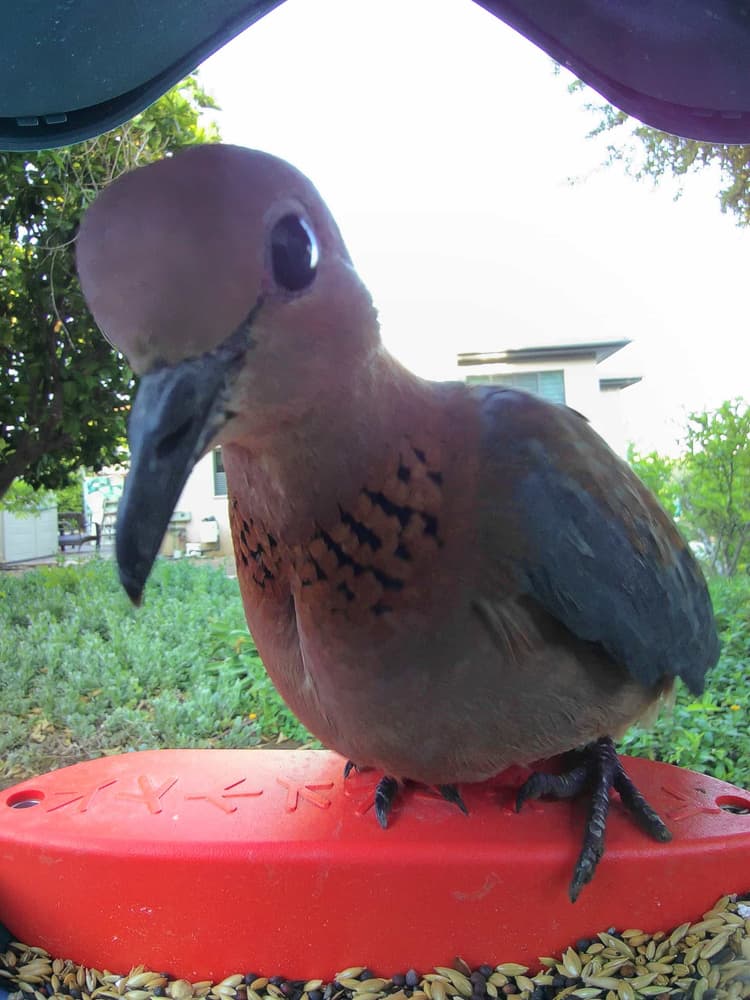
Male vs female
Males and females look very similar, making them difficult to distinguish. However, males tend to be slightly larger and may have a more vibrant collar around their neck, while females appear paler and smaller.
Juvenile
Juvenile laughing doves exhibit less contrast compared to adults. They feature a poorly developed collar and a lighter brown grey shade. As they grow older, their feathers will darken and the collar will become more distinct.
Often mistaken for
Mourning Dove vs Laughing Dove
The Mourning Dove is slightly larger than the Laughing Dove and has a distinctive pointed tail with white edges, whereas the Laughing Dove has a square tail. Mourning Doves also have a more muted brownish-gray color compared to the warmer sandy pink tones of the Laughing Dove.

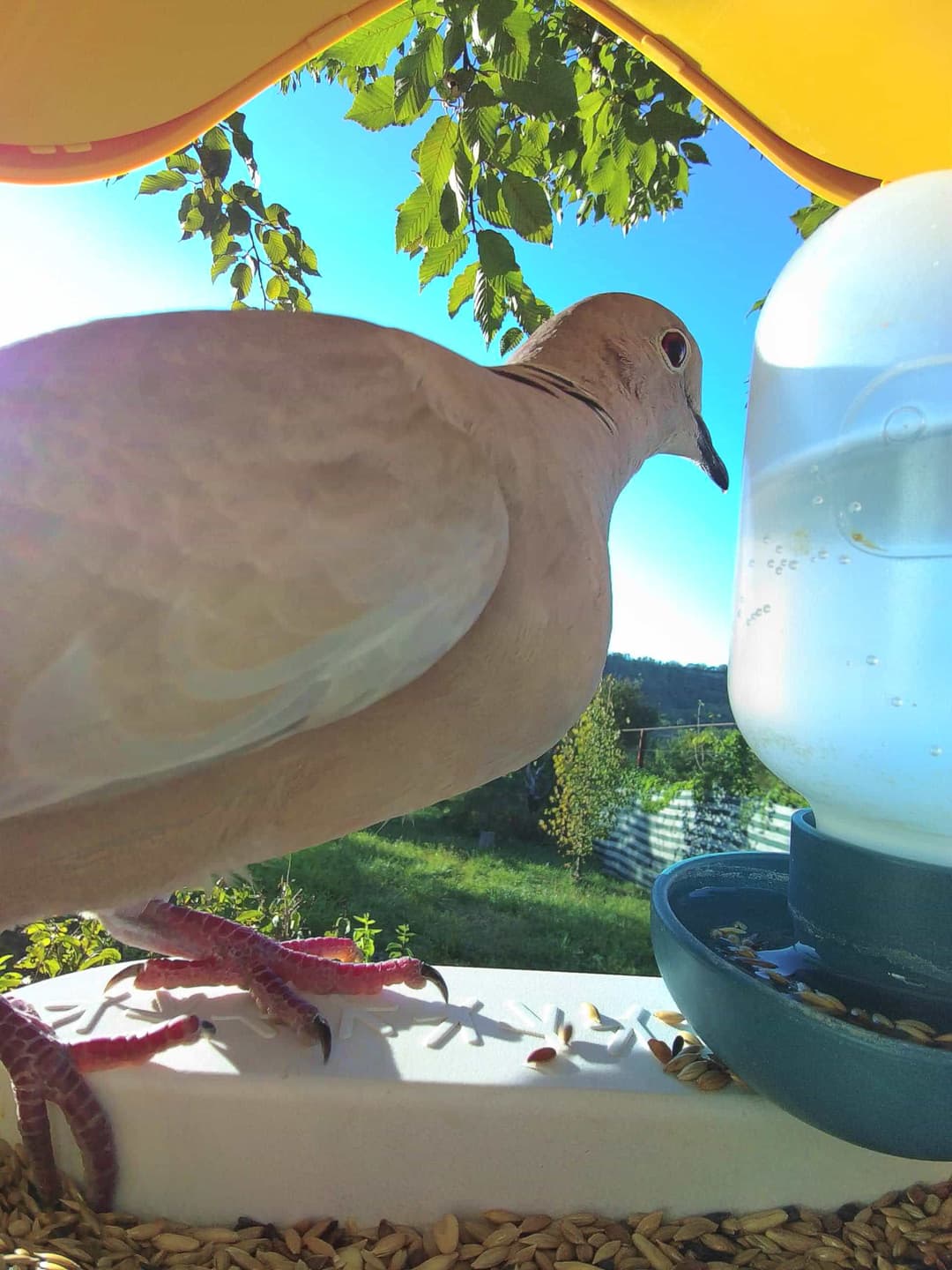
Eurasian Collared Dove vs Laughing Dove
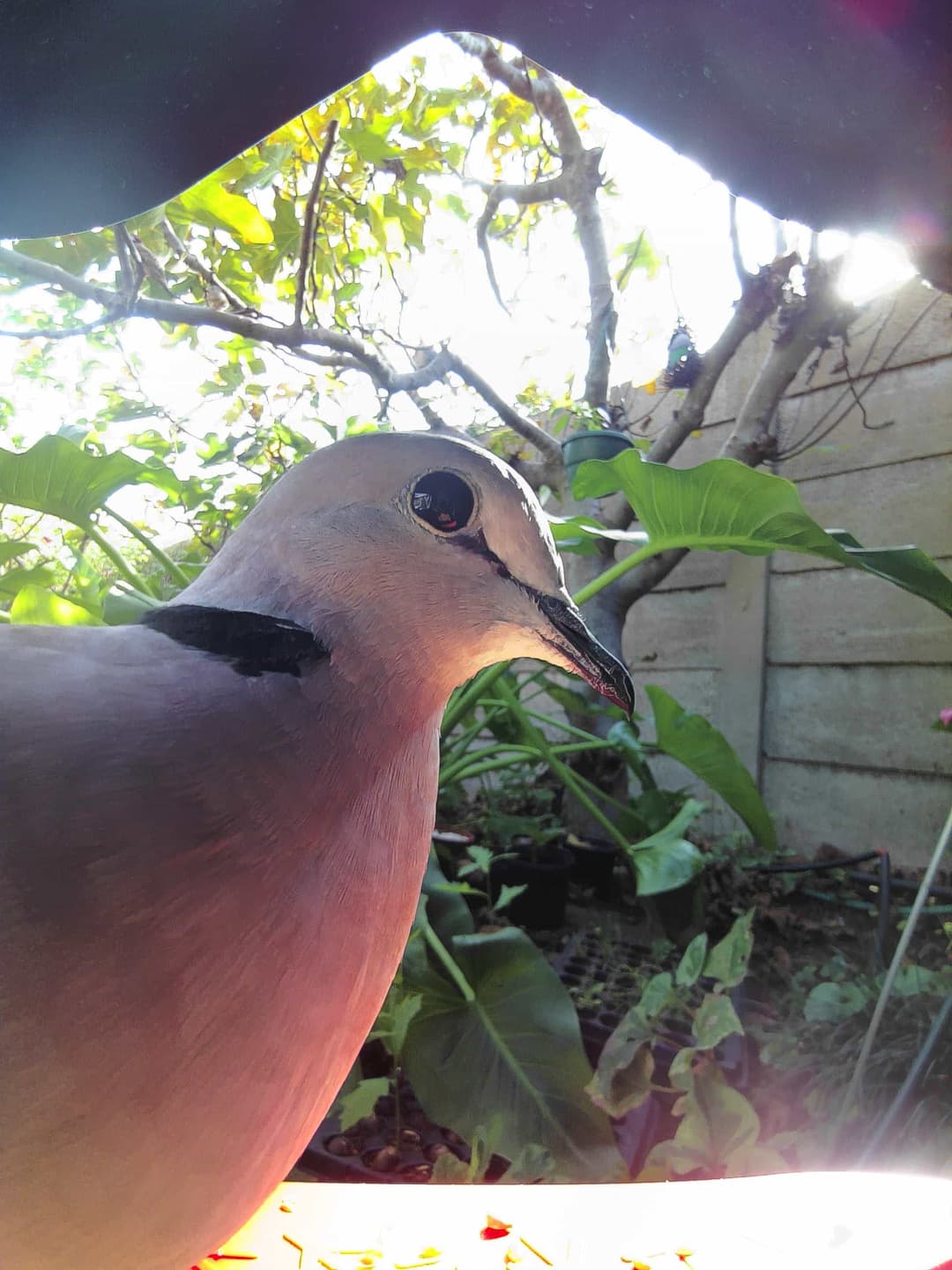
The Eurasian Collared Dove has a prominent black neck band and a more uniform pale gray color, while the Laughing Dove lacks the neck band and displays a rufous throat and breast with distinctive chequered black markings.
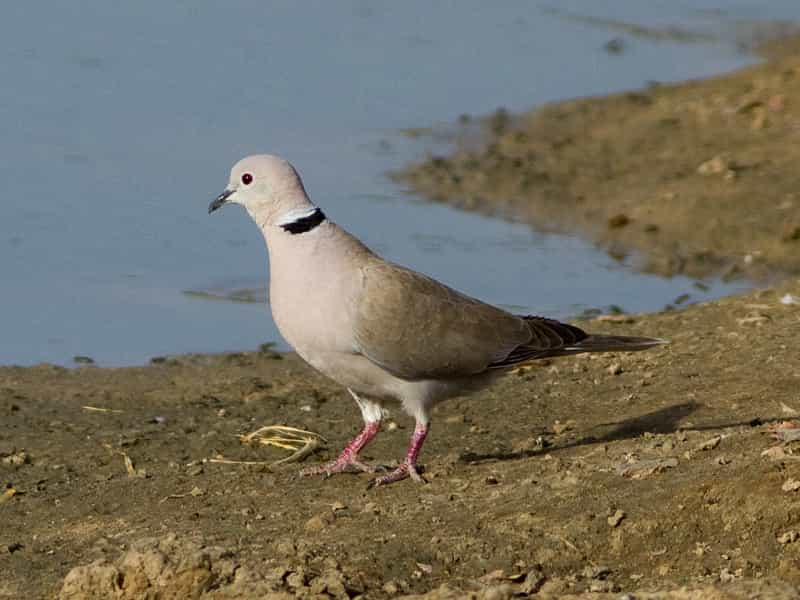
African Collared Dove vs Laughing Dove
Similar to the Eurasian Collared Dove, the African Collared Dove features a black neck ring and more consistent gray tones. In contrast, the Laughing Dove is rosier and has a spotted neck area rather than a solid collar.
Ring-Necked Dove vs Laughing Dove
The Ring-Necked Dove has a distinctive black neck ring and a more monochrome appearance, while the Laughing Dove lacks this ring and has a warm rufous coloration with a speckled pattern on the neck.
Zebra Dove vs Laughing Dove
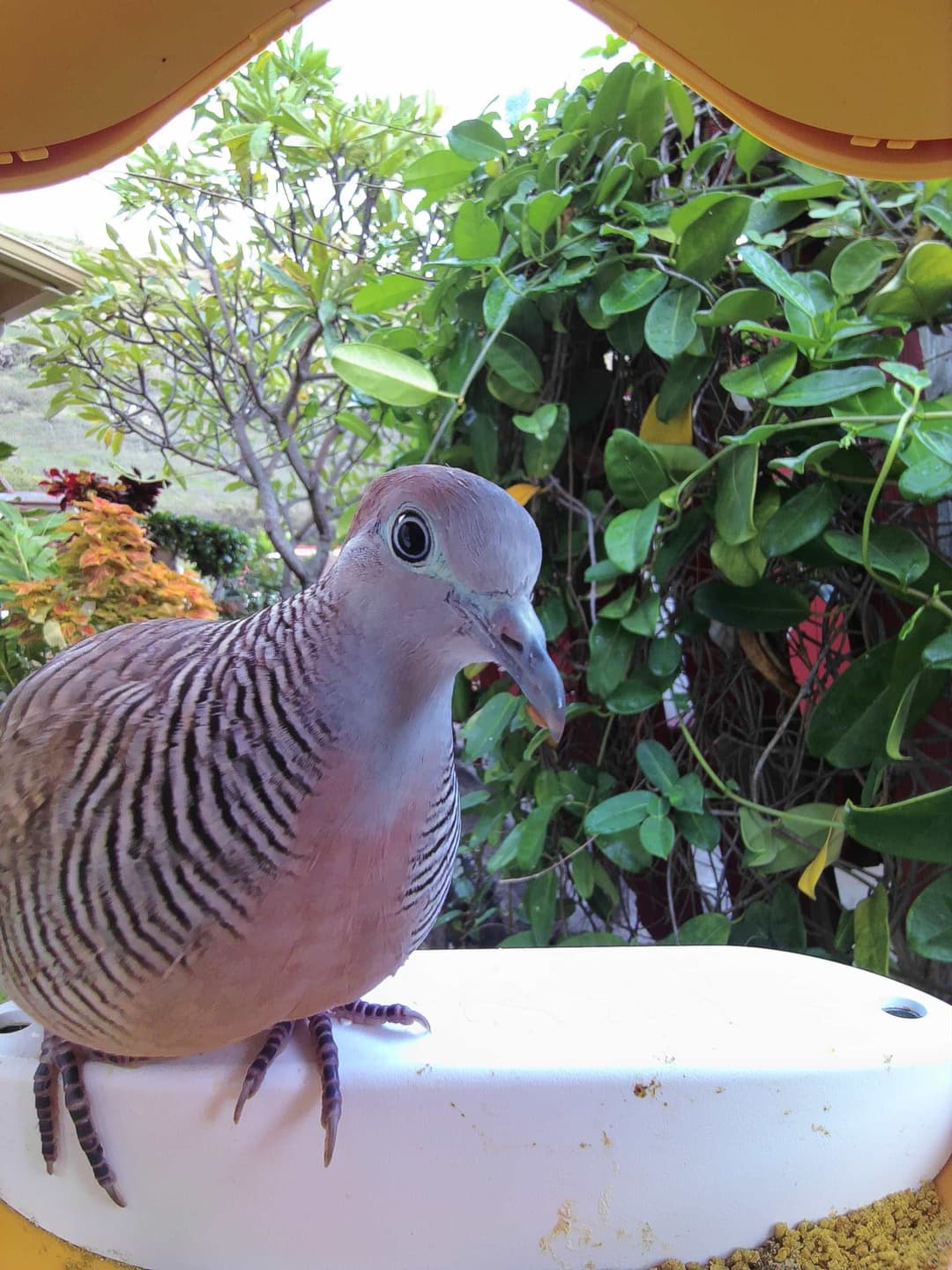
The Zebra Dove has distinctive black-and-white barring on its upperparts and underparts, unlike the Laughing Dove, which has a uniform pinkish coloration with dotted black and white patterns on the breast only.
Breeding and nesting habits of the laughing dove
Mating behaviors
Laughing doves engage in elaborate courtship displays where males puff out their chests and produce soft cooing sounds. The male may also perform a display flight while singing to attract a mate.
Nesting details
Laughing doves typically nest in trees, shrubs, or occasionally on building ledges. The nest is a simple platform of twigs. In gardens, providing dense shrubs or small trees can encourage nesting.
Eggs and chick-rearing
The female lays two white eggs, which both parents incubate for about 13-15 days. After hatching, chicks are fed a diet of regurgitated crop milk by both parents and fledge in 14-16 days.
What does a laughing dove like to eat?
Fruits
Insects
Seeds
Natural diet
The laughing dove primarily feeds on a variety of seeds from grasses and plants. It is known to forage on the ground, searching for seeds from weeds, cereals, and small plants. In addition to seeds, the diet includes small insects, such as termites and beetles, as well as small quantities of fruits and berries, which supplement its nutrition.
Bird feeders
At bird feeders, laughing doves commonly consume a variety of grains and seeds, particularly those found in typical seed mixes. They are fond of millet, cracked corn, and sunflower seeds. The doves may also eat bread crumbs or small cereal pieces, which are sometimes offered at feeders, although their primary preference remains seeds and grains.
Attracting the laughing dove
Laughing Doves are delightful birds known for their soft cooing sounds and elegant appearance. To attract these birds to your yard, make sure to create a friendly and welcoming space. Providing clean and readily available food and water sources is essential. The feeder should be safe, easy for them to navigate and preferably elevated from the ground to protect them from predators.
Favorite snacks and feeder types
Laughing Doves are quite open-ended when it comes to their diet. They enjoy a variety of seeds, fruits, and berries, but they are particularly fond of millet, sorghum and maize. As for feeders, they prefer tray or platform types, which allow them to feed comfortably. One preferably with side protection to enable them to feel safe while feeding.
Fun tricks and encouragements
Adding a birdbath or a water feature can entice the Doves to your yard; they enjoy a good dip now and then. Another trick is to play soft cooing sounds or dove songs as it also attracts their attention and encourages their presence.
Recommendation: bird buddy seeds
If you are looking for the best food to use, we highly recommend Bird Buddy seeds. These feed are expertly selected for each season, ensuring that your pretty visitors have balanced nutrition all year round, which makes them the perfect choice for attracting and keeping laughing doves happy and healthy.
Where can you find laughing doves?
Primary habitat
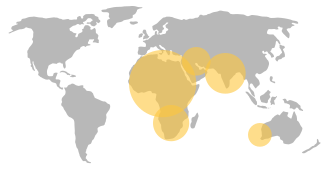
The Laughing Dove typically resides in arid areas such as deserts and semi-deserts, farmlands, open woodlands, and urban areas in parts of Africa, the Middle East, and the Indian subcontinent.
Additional range
Extraordinarily, this species has adapted to a wide variety of conditions and can also be found in unexpected environments like city centres and even high-altitude areas of up to 2000 meters.
Do they migrate?
The laughing dove is primarily a resident bird, meaning it does not migrate and stays in the same area year-round. It is widely distributed across sub-Saharan Africa, the Middle East, and parts of South Asia. These doves prefer open woodland, scrubland, and urban areas where they can find ample food and nesting opportunities. While laughing doves typically do not undertake long migrations, they may exhibit local movements in response to environmental conditions, such as availability of food and water. These movements are generally not extensive and involve short distances. Their sedentary nature is supported by their adaptability to various habitats and ability to thrive in proximity to human settlements, where they benefit from consistent food sources. Consequently, they are commonly found in gardens, farmland, and cities throughout their range, adjusting their locations slightly rather than following extensive migratory patterns.
What is the role of laughing doves in nature and how to protect them?
Conservation status
The laughing dove is classified as "Least Concern" on the conservation status scale, indicating it is common and not currently vulnerable or endangered. The species is widespread across Africa, the Middle East, and parts of South Asia, adapting well to human-altered environments. Significant threats include habitat loss due to urbanization and agriculture, though they have shown resilience in such conditions. There are no major conservation efforts specifically targeting this species, but general habitat preservation initiatives benefit their populations by maintaining biodiversity and ecological balance in regions they inhabit.
Ecological role of laughing doves
Its role in the ecosystem
The laughing dove, a small pigeon species inhabiting arid regions of Africa, Middle East and the Indian Subcontinent, plays a valuable role in its ecosystem. Its diet primarily consists of small seeds, fruits and insects, which contributes to pest control by maintaining the population of potential insect pests. Additionally, as a granivorous bird, the laughing dove assists in the process of seed dispersal. Seed dispersion enables plants to propagate and colonize new areas, thereby promoting biodiversity. Eating fallen fruits and seeds also aids in the decomposition process, returning nutrients back to the soil. Moreover, they are a source of prey for different predators, aiding in the food chain cycle. Their nesting habits occasionally result in the reuse of old nests, which reduces material waste in the environment. Understanding the ecological significance of species such as the laughing dove is crucial in conservation efforts and maintaining the health of our ecosystems.
How to help protect laughing doves
Preservation tips
Habitat preservation strategies
Support the conservation of the laughing dove by preserving its natural habitats, which include semi-desert regions, scrublands, and gardens. Prevent deforestation and rapid urbanization in regions where the bird resides. Encourage green initiatives such as tree planting and the creation of bird-friendly spaces in urban areas. Support wildlife protection policies and laws that safeguard the bird's habitat.
Community science initiatives
Contribute to community science initiatives aimed at monitoring and studying the laughing dove. Participate in bird count activities, report sightings, and promote awareness about the species. Schools and communities can create projects that study the bird’s behavior, migration patterns, and population size. Collaborate with local environmental groups and wildlife organizations to raise funds for research and conservation programs.