
White-Winged Dove
White-Winged Dove
Zenaida asiatica


Quick Identification guide
Quick Identification guide
- •
Distinguished by its soft gray-brown plumage with contrasting white wing patches visible in flight
- •
Features a short, square tail with prominent white tips
- •
Possesses a small head and thin black beak, contributing to a streamlined appearance
What does a white-winged dove sound like?
The white-winged dove typically has a unique drawn-out "hooo-hooo-ho-hooo" or "who-cooks-for-you" call pattern. This sound is falling and flat in nature. The dove's calls are classified as a type of hoot, which is considered odd when compared to other birds' vocalizations. It uses these vocal sounds to communicate with others in its species.


Description
These birds can suck and swallow water without moving their heads! They feed their young with a secretion called 'crop milk'. To produce it, parents will eat snails and bone fragments. Anything for the kids! White-winged doves had their 15 minutes of fame in the 1980s when they appeared in Stevie Nicks' song Edge of Seventeen.
The white-winged dove can weigh between 125to187grams and be from28to30centimeters tall.
The white-winged dove typically lives up to 21 years in the wild, though most do not surpass 15 years. This lifespan is comparable to that of related species like the mourning dove, which averages a 1.5-year lifespan due to predation, but can live up to 19 years in the wild. The white-winged dove's potential for a relatively long life is, significantly, subject to environmental factors and predation.
Did you know?
Most popular questions about white-winged dove
How to recognise a white-winged dove?
General appearance
The White-winged Dove has a bulky body with short tail and measures approximately 12 inches or 30 cm in length, which is about the size of a crow. Its most distinctive characteristics are its big white wing patches and white tips on outer tail feathers. These features are most visible during flight. The dove has a broad, pointed wing shape and a rounded, square-tipped tail. The color varies from black, blue, brown, to gray and white.
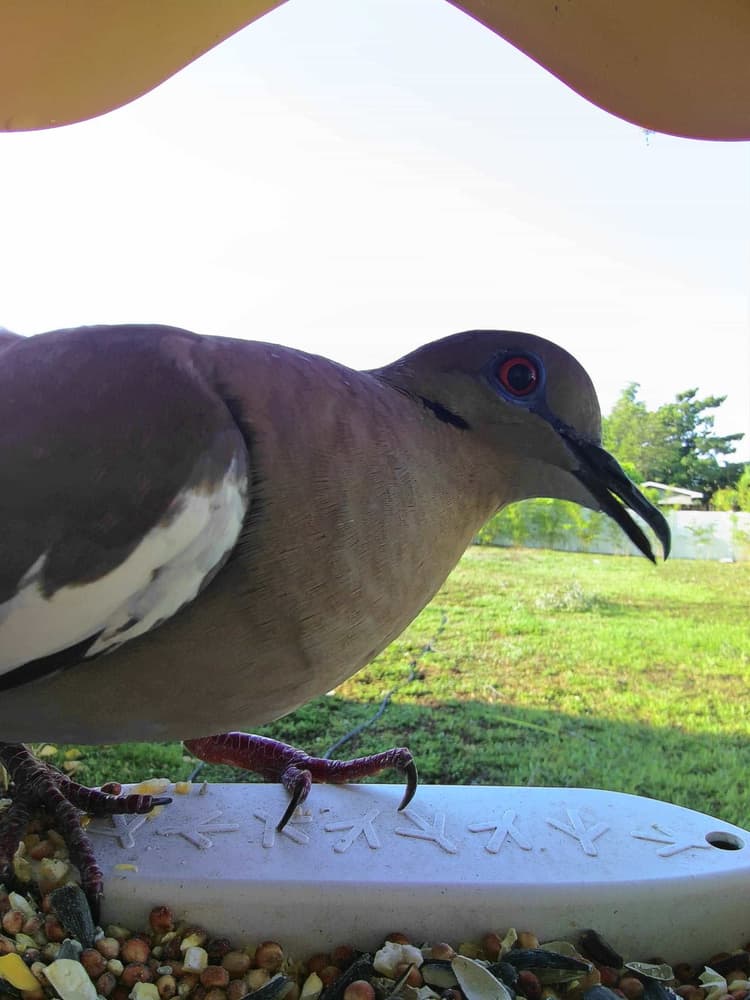
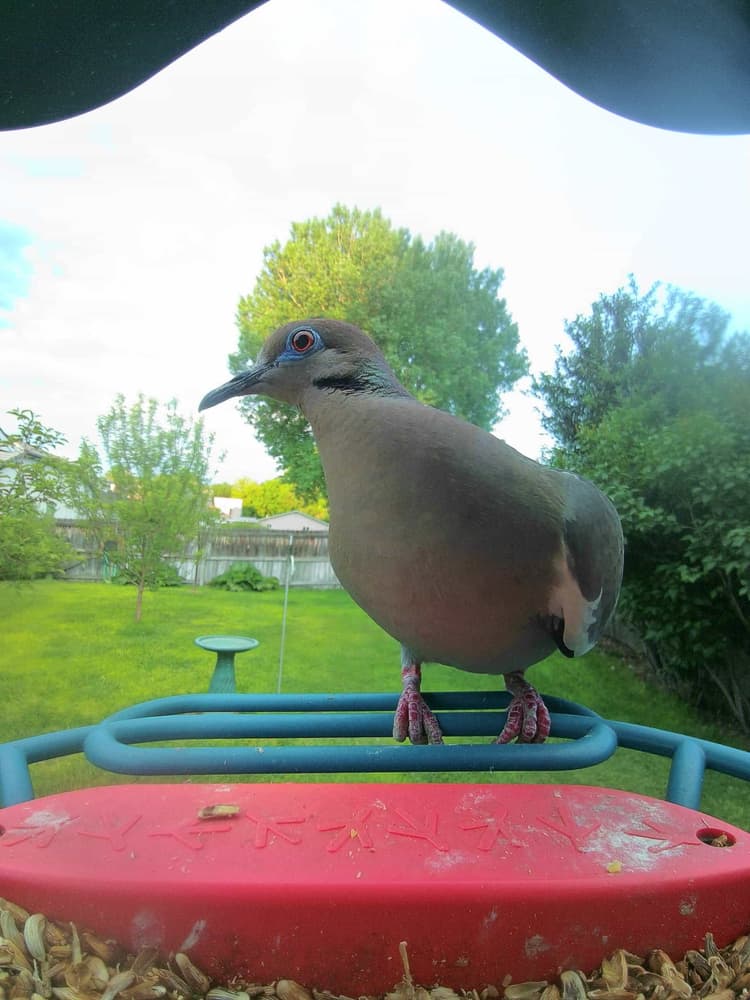
Male vs female
Male and female White-winged Doves are similar in appearance. They both share the same unique coloration and physical traits, including the noticeable white markings on the wings and tail. Any differences between the genders are minimal and not easily discernible.
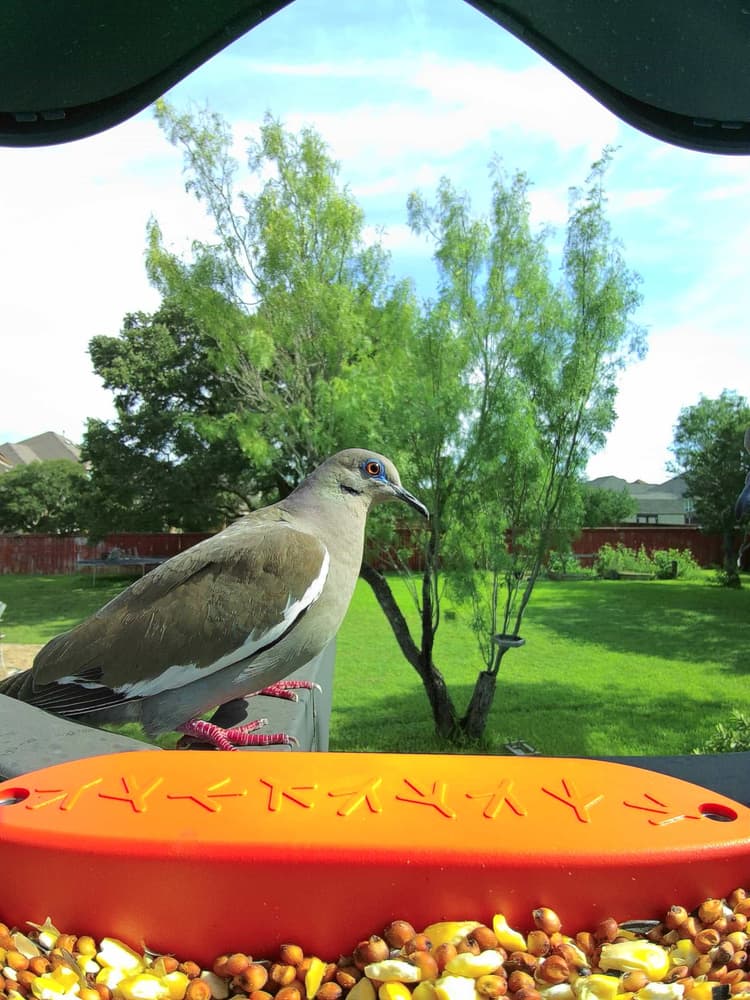
Male White-Winged Dove
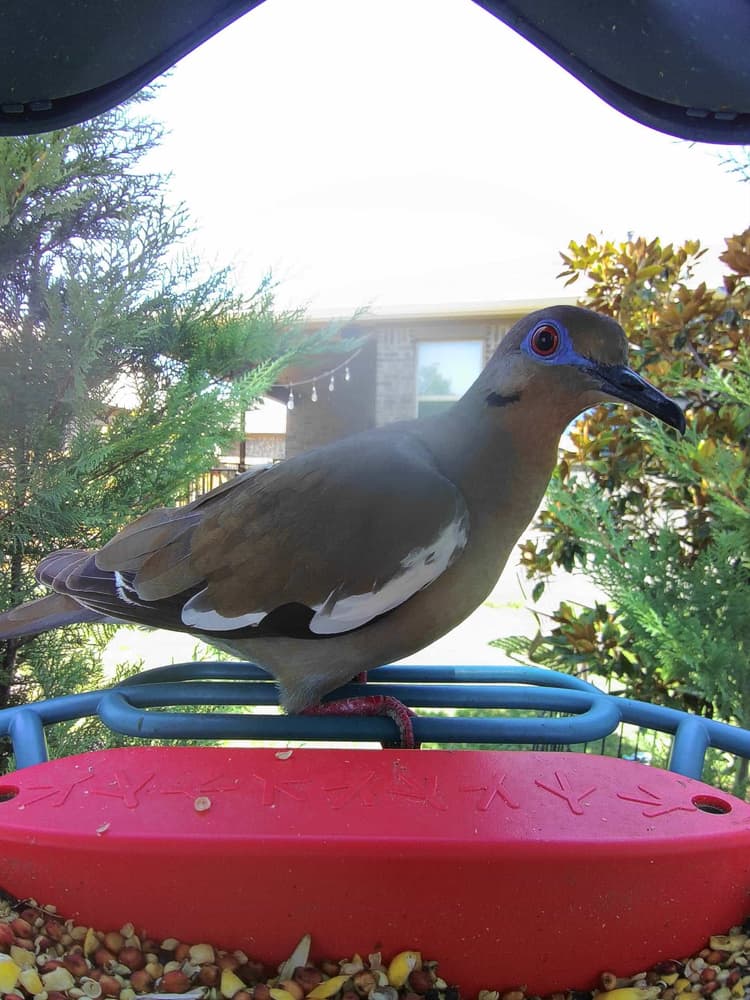
Female White-Winged Dove
Juvenile
Juvenile White-winged Doves do not possess the vibrant and stark coloration seen in adults. Instead of the wide range of colors observed in adults, they are generally more brown, serving as a form of camouflage. However, as they grow and mature, they'll acquire the full array of adult coloration.
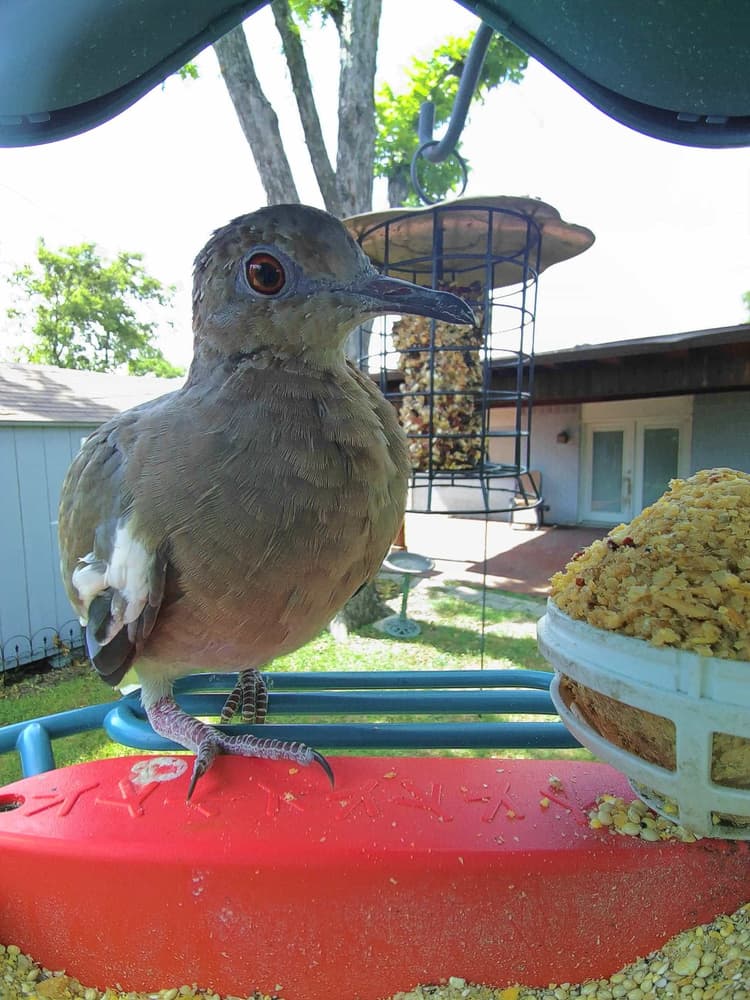
Often mistaken for
Mourning Dove vs White-Winged Dove
White-Winged Dove has a more prominent white edge on its wings and lacks the Mourning Dove's long, pointed tail with white edges. Mourning Doves are generally slimmer with a muted brown color, while White-Winged Doves are bulkier and may have a bluish orbital ring. In flight, look for broad white streaks on the wing of White-Winged Doves.

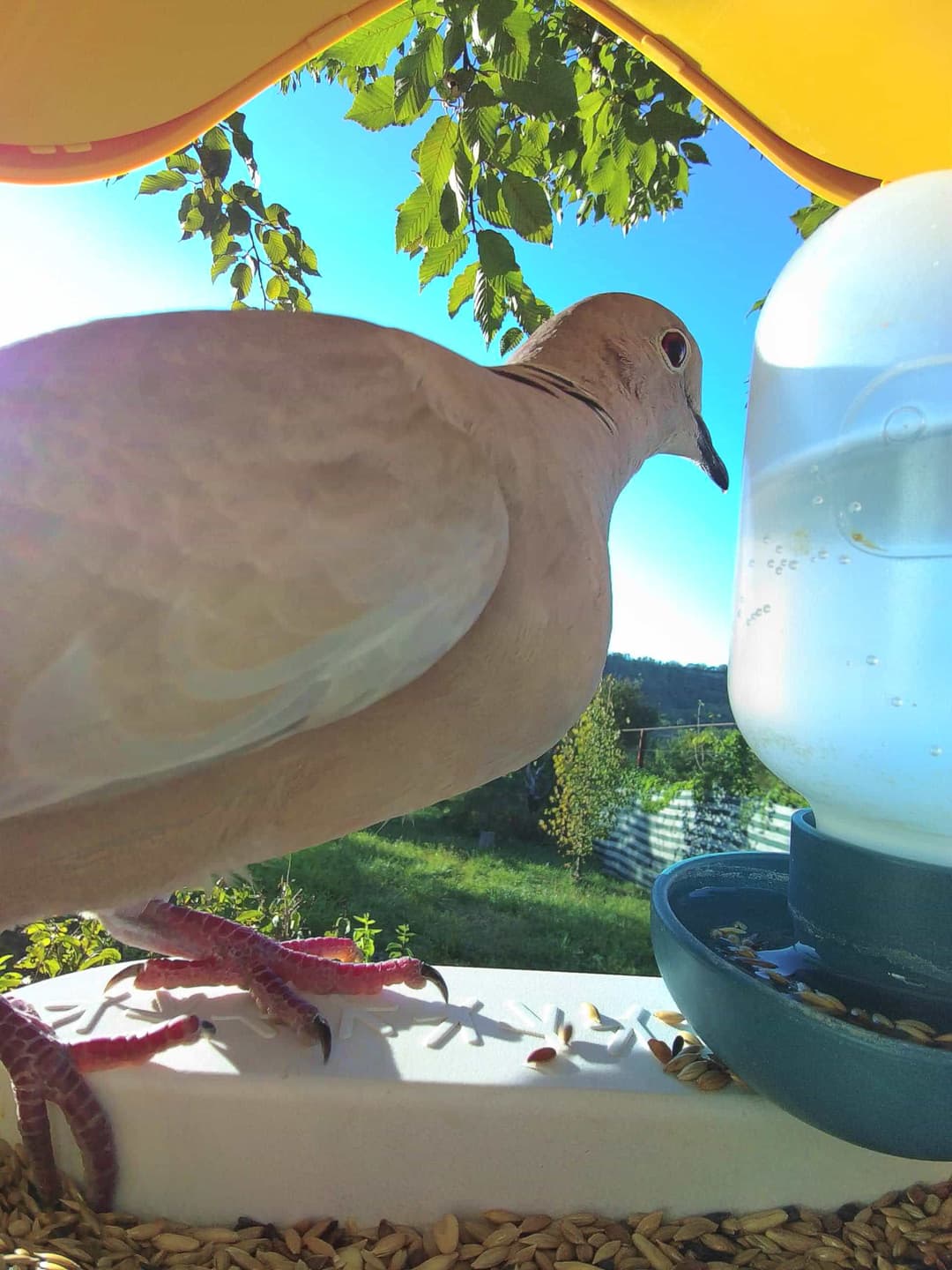
Eurasian Collared Dove vs White-Winged Dove
Eurasian Collared Doves have a distinctive black 'collar' on the back of their necks, which the White-Winged Dove lacks. Additionally, the White-Winged Dove features a more pronounced and continuous white bar on its wings. While both are similar in size, the Collared Dove is paler and less robust.
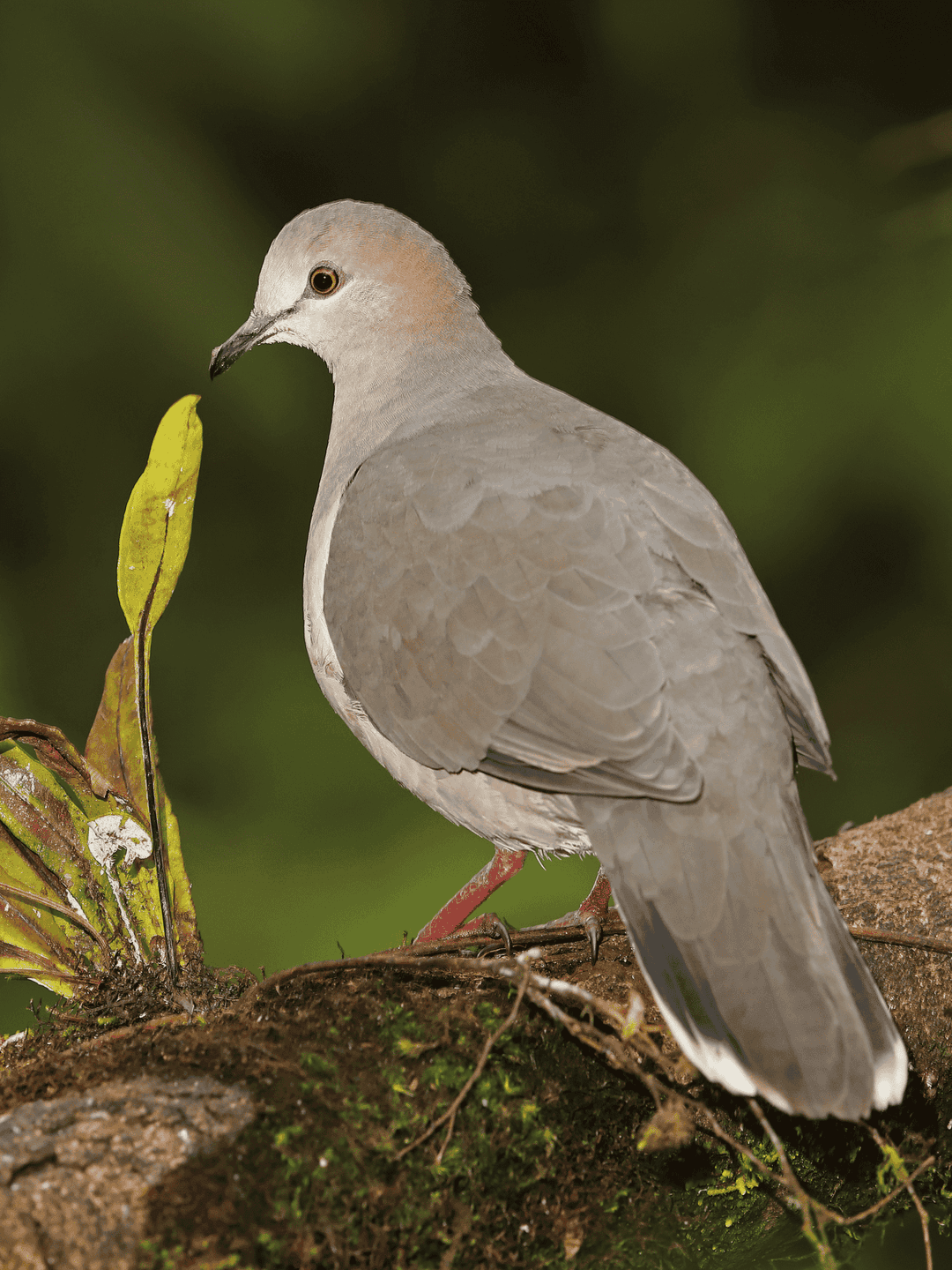
White-Tipped Dove vs White-Winged Dove
White-Tipped Doves are more uniformly brown and have a paler, grayer appearance compared to the White-Winged Dove. They lack the prominent white bands on the wings seen on White-Winged Doves. Look at the tail tips; as the name suggests, White-Tipped Doves have white tail tips, which can help differentiate them.
Breeding and nesting habits of the white-winged dove
Mating behaviors
White-winged doves engage in courtship displays that include cooing calls and aerial displays by males to attract females. The males perform a series of short flights followed by descents with noticeably audible wing sounds, showcasing fitness to potential mates.
Nesting details
White-winged doves typically build crude stick nests in trees or shrubs but can also adapt to urban settings, including gardens. Preferred nesting sites are in dense foliage that provides concealment. They often use twigs, grass, and leaves, which they arrange loosely. To attract them, maintain a variety of fruiting and flowering plants, and provide sheltered, dense areas for nesting.
Eggs and chick-rearing
Typically, females lay 1-2 white eggs per clutch. Incubation lasts about 14 days with both parents sharing the duty. Chicks fledge 13-18 days after hatching. Parents continue feeding their young crop milk for the first few days and gradually introduce regurgitated seeds. It's crucial to offer a consistent supply of food and water to support breeding success in garden habitats.
What does a white-winged dove like to eat?
Fruits
Nectar
Seeds
Natural diet
The white-winged dove primarily consumes a diet consisting mostly of seeds from various wild plants. Additionally, it feeds on some cultivated grains. When available, it may also eat acorns. The dove's diet includes fruits, with a preference for those of cactus, as well as smaller berries. Occasionally, it will visit large flowers, seemingly to consume nectar.
Bird feeders
At bird feeders, white-winged doves are commonly observed consuming seeds, particularly those from sunflower seeds, milo, millet, and cracked corn. Their adaptability allows them to take advantage of a variety of feeder offerings similar to their natural diet preferences.
Bring the white-winged dove to your yard
White-winged doves can provide beauty and song to any yard. Helping to attract them can be simple if you provide the right incentives. First, it's important to have the right feeder. White-winged doves prefer platform feeders where they can comfortably land and peck at the available food. Alternatively, you can also scatter some seeds on the ground to draw them in.
Feeding the white-winged dove
White-winged doves enjoy a variety of foods, but seeds are their absolute favorite. We recommend the Bird Buddy seeds as they are picked by experts for each season and have seen the best results in attracting these specific birds.
Fun tricks to get their attention
White-winged doves are drawn to water sources. You can implement a water feature such as a birdbath, or a simple dish filled with water would work just as well. This will not only attract them but also encourage them to stick around for a little longer. Position the water source in a quiet, raised spot for them to feel safe. And remember, keep it clean so they don't get sick!
Creating a dove-friendly yard
In addition to food and water, consider planting some dove-friendly plants in your yard. Pomegranates, figs, and Hackberries are some of the favorites of these doves. These little adjustments will make your yard a welcoming place for White-winged doves to visit and perhaps even call home.
Where can you find white-winged doves?
Based on Birdbuddy sighting data. The heatmap shows where Birdbuddy users have spotted this species.
Embed this map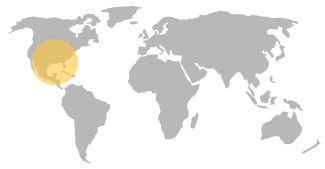
This map shows the full native range based on scientific range data.
Primary habitat
The white-winged dove occupies semi-open habitats in the southwest of the U.S., including native brushlands in Texas, southwest deserts, chaparral, and open oak woods.
Additional range
Adaptive to modified environments, they inhabit farmlands, suburbs, citrus groves, and grassland tree plantings. In winter, those north of Mexico are found primarily in towns.
Do they migrate?
The white-winged dove exhibits migratory behavior, especially for those nesting in the southwestern United States. These birds typically migrate south during the fall. Migration occurs early in both seasons, with most white-winged doves arriving on their breeding grounds by March and departing by September. Notably, some individuals remain throughout the winter north of the traditional migration route, particularly in suburban areas, indicating partial migratory behavior. The primary migration route involves moving from the southwestern U.S. to the south, with numerous birds migrating towards or staying along the Gulf Coast during winter. Additionally, Florida hosts mostly permanent resident populations of white-winged doves, suggesting that these do not partake in the broad migratory movements evident elsewhere. Some strays have been known to wander far north of their typical breeding range, showing irregular patterns likely driven by atypical weather or habitat conditions. Overall, the white-winged dove's migration involves large-scale southward movements from widespread breeding sites in the southwest to varying wintering grounds, particularly along the Gulf Coast, while maintaining resident populations in Florida.
What is the role of white-winged doves in nature and how to protect them?
Conservation status
The white-winged dove is currently common and not considered vulnerable or endangered. Originally affected by habitat clearing, it has adapted to altered environments and is now abundant, likely expanding its range northward. There are no significant conservation efforts necessary at present due to its stable population, and no notable threats are affecting its status. Its adaptability to different habitats has contributed to its resilience and growth in numbers.
Ecological role of white-winged doves
Its role in the ecosystem
The white-winged dove plays a significant part in its ecosystem with its feeding and breeding behavior. It feeds primarily on seeds, fruits, berries, cultivated grains, and occasionally acorns. This seed-eating role makes it a substantial contributor to seed dispersal, enabling the growth and proliferation of various plant species. Particularly in desert regions, the dove, often seen atop a giant saguaro cactus, consumes its fruit or flowers—which might indicate a contribution to pollination as well. Furthermore, its diverse diet can be seen to aid in pest control by limiting the proportions of certain plant species or insects. At the same time, the species' nesting habits can promote the stabilisation of ecological communities as it often reuses old nests or creates nests in thick thorny areas, not readily used by other species. Finally, the dove's multiple broods per year indicate a strong role in the food chain as prey to a variety of predators. By ensuring the existence and sustainability of these ecological interactions, the white-winged dove is shown to have a broad ecological impact.
How to help protect white-winged doves
Preservation tips
Habitat preservation strategies
Protect and restore the habitats of white-winged doves, particularly subtropics and desert regions. Work with landowners and local government entities to implement land management practices that favor the dove's native vegetation. Strict enforcement of regulations against illegal hunting and trading are necessary. Encourage development of green spaces within urban areas.
Community science initiatives
Engage citizens in bird counting exercises, such as yearly count of white-winged doves. Citizen scientists can assist in regular monitoring of the dove's populations. Host educational programs in schools and community centers to raise public awareness towards the importance of conserving wildlife and ecosystems. Promote the participation in tree-planting activities to improve bird habitats.