
Band-Tailed Pigeon
Band-Tailed Pigeon
Patagioenas fasciata


Quick Identification guide
Quick Identification guide
- •
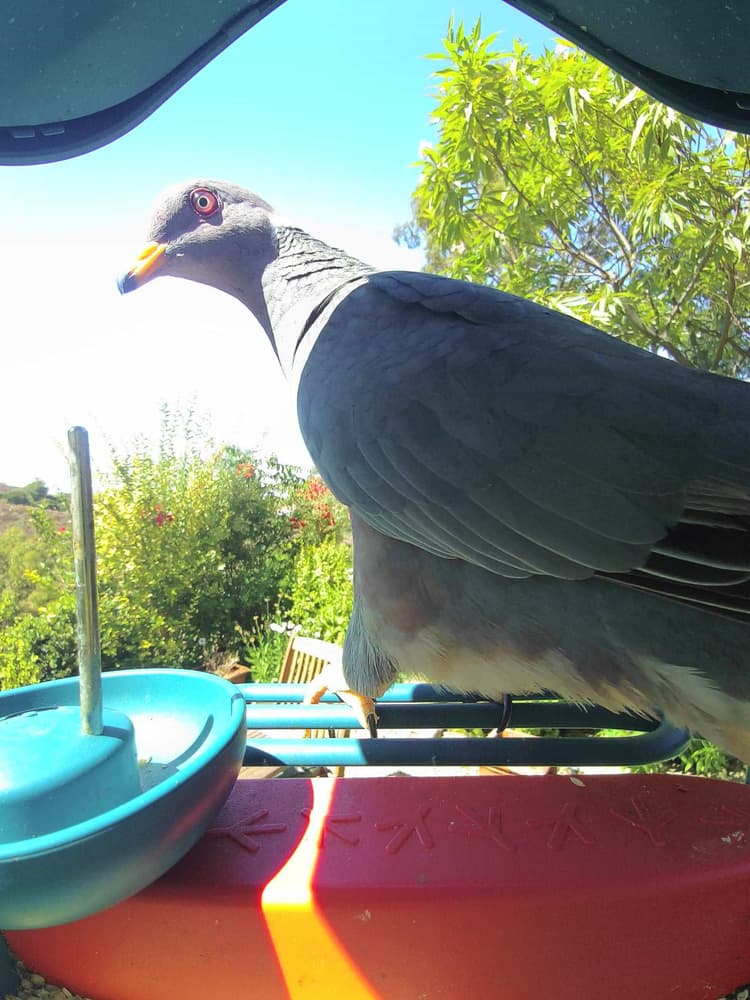
Large pigeon with a soft gray plumage and a distinctive white crescent on the back of its neck
- •
The tail is banded with a broad, dark tip, contrasting against the lighter gray
- •
Has a robust body and a rounded head with a short, slender bill typical of pigeons
What does a band-tailed pigeon sound like?
The band-tailed pigeon typically expresses deep, owl-like vocalizations, a distinct "whoo-hoo" sounding call. This call follows a flat, undulating pattern, which adds depth to its communication range. The pigeon also employs two primary types of calls for different circumstances. The common hoot for regular communication and a unique, more urgent scream for alarming situations. Furthermore, it's worth noting that the band-tailed pigeon doesn't have a diverse song range compared to other bird species. The pigeon's vocal repertoire primarily comprises these signature calls, making their sound quite recognizable.


Description
These guys really will go the extra mile for a bite to eat! They are known to travel about three miles from where they nest to where they feed. Did you know that all doves and pigeons can suck up and swallow water without raising their heads? Neat! They feed nestlings with something called crop milk, and because they don't depend on certain a food, their breeding season can be very, very, very long.
The band-tailed pigeon can weigh between 342to364grams and be from32to40centimeters tall.
The band-tailed pigeon typically has a lifespan of up to 15-16 years. This is comparatively longer than other pigeon species, including the rock pigeon, which usually lives for about 3-5 years. In some cases, band-tailed pigeons have been known to live for as long as 20 years, demonstrating their relative longevity within the pigeon family.
Did you know?
Most popular questions about band-tailed pigeon
How to recognise a band-tailed pigeon?
General appearance
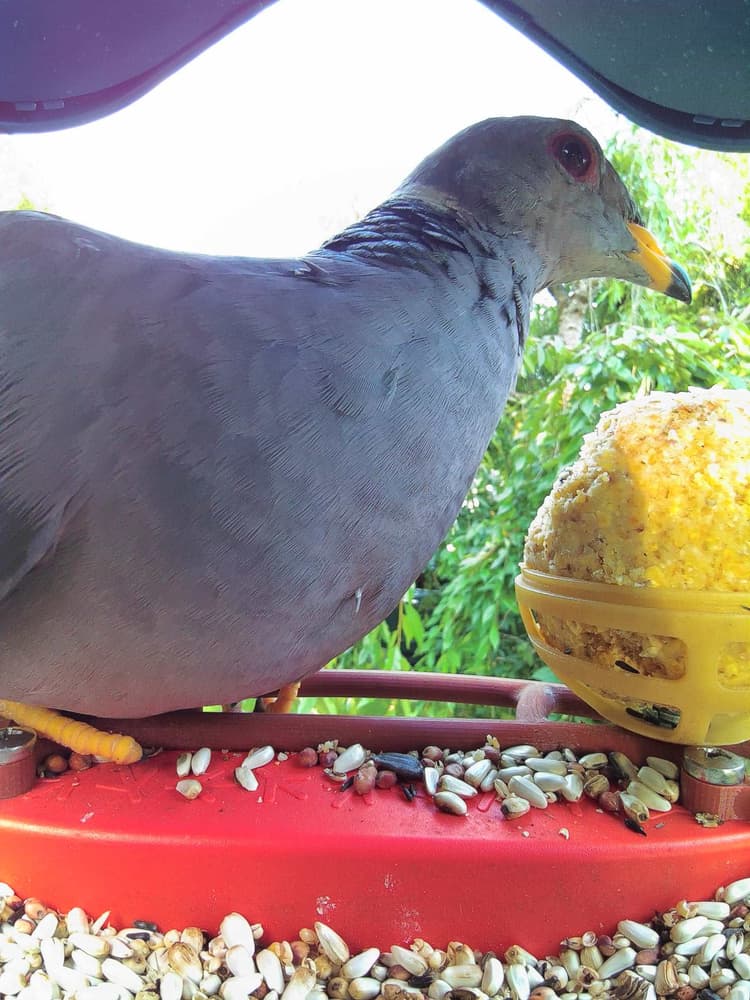
The band-tailed pigeon is a large, vibrant bird measuring around 14-15 1/2 inches or 36-39 cm. It showcases striking coloration, showcasing black, gray, purple, white, and yellow hues. A notable physical trait is the narrow white band across its nape. The bill base is yellow, while the tail possesses a broad gray band. The pigeon's head and chest are clothed in purplish-pink colors, and its neck displays hints of green iridescence.
Male vs female
There is no significant physical difference in color and size between male and female band-tailed pigeons that can be used for easy identification in the wild. Both genders exhibit similar coloration and physical features.
Juvenile
Juveniles of this species exhibit subtle differences compared to adults. They lack the distinguishing narrow white band across the nape which is a key characteristic of mature band-tailed pigeons. With time, as they mature, they will gradually acquire the vibrant adult coloration and physical traits.
Often mistaken for
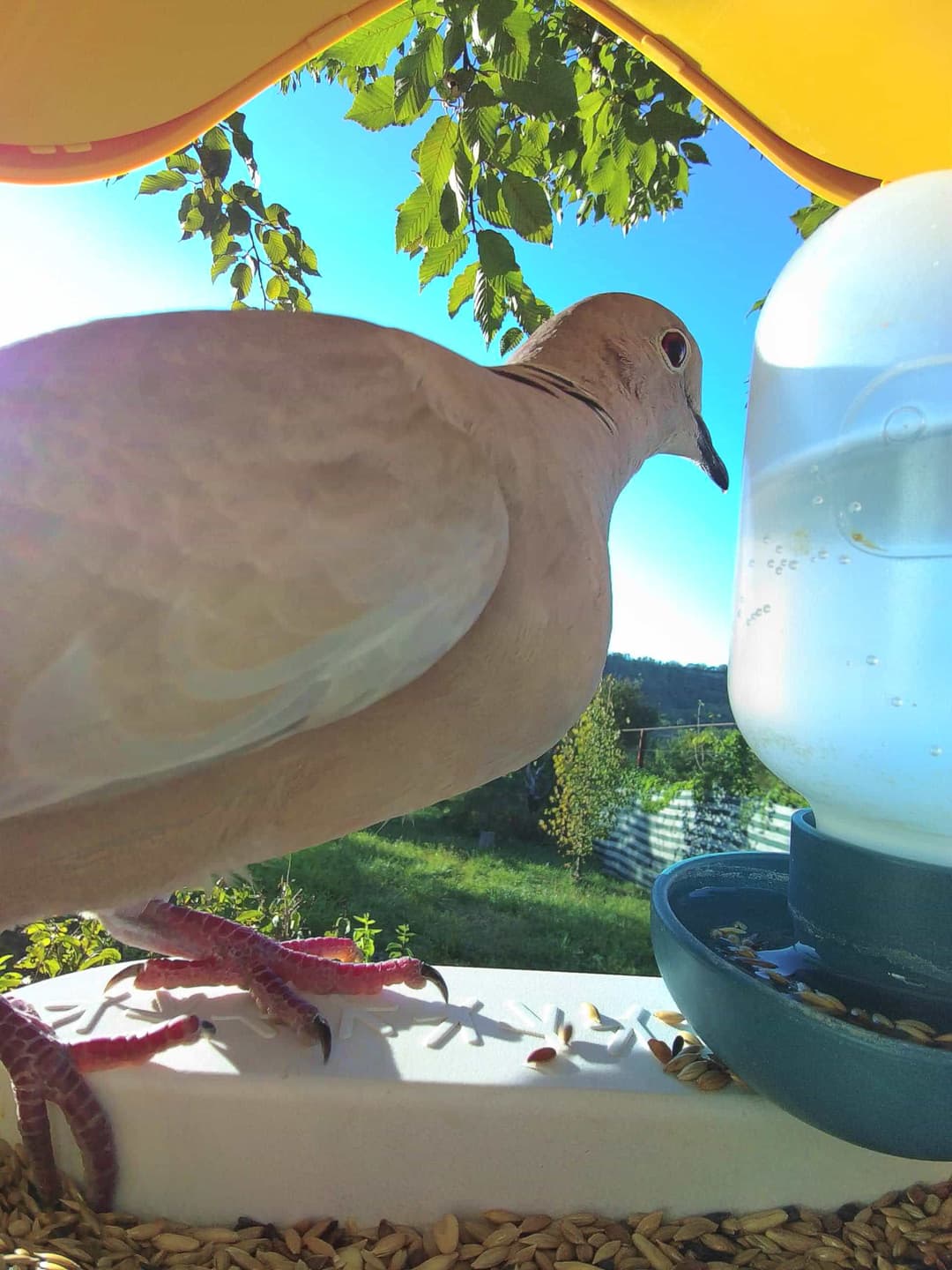
Eurasian Collared Dove vs Band-Tailed Pigeon
Band-Tailed Pigeon is generally larger and plumper with a distinctive dark band across its tail. It has a dark head and pale gray body, compared to the Eurasian Collared Dove’s creamy-gray overall look and black collar. Look for the yellow feet of the Band-Tailed Pigeon.
Mourning Dove vs Band-Tailed Pigeon
The Mourning Dove is slimmer and has a long, thin tail with white edges, unlike the broader banded tail of the Band-Tailed Pigeon. Mourning Doves have a more brownish coloration, while Band-Tailed Pigeons display a more consistent gray with a pale underbelly and yellow legs.

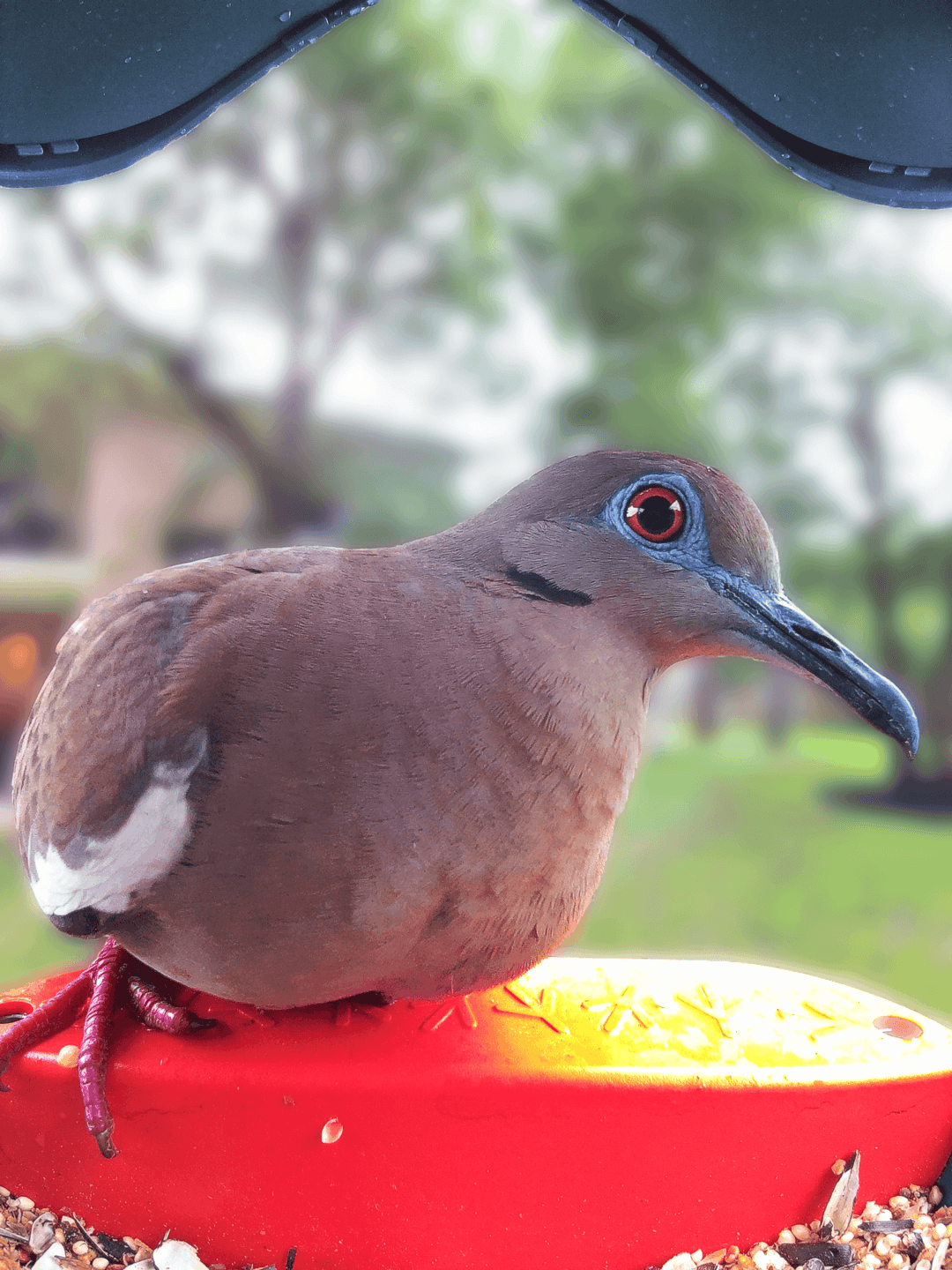
White-Winged Dove vs Band-Tailed Pigeon
While both have similar grayish coloring, the Band-Tailed Pigeon has a characteristic dark band on the tail and yellow legs, as opposed to the White-Winged Dove’s white wing bars. The White-Winged Dove’s eyes and skin around them are orange-red, differing from the Band-Tailed Pigeon.
Breeding and nesting habits of the band-tailed pigeon
Mating behaviors
In courtship, the male band-tailed pigeon exhibits a display by flying up and gliding in a wide circle. During this glide, he gives a wheezing call and flutters his wings towards the end. On a perch, the male puffs up his chest and neck, lowers and spreads his tail, while cooing.
Nesting details
Band-tailed pigeons often nest in loose colonies. They choose sites in coniferous or deciduous trees, usually 15-40 feet above ground, although sometimes higher or lower. Preferred locations include the fork of a horizontal branch or at the base of a branch against the trunk. Nests are bulky but loosely-built platforms made of sticks, and the male provides materials while the female builds the nest.
Eggs and chick-rearing
After the nest is constructed, the female lays eggs, though specific numbers are not detailed. Both parents participate in rearing the chicks, ensuring they are fed and protected until they are ready to leave the nest.
What does a band-tailed pigeon like to eat?
Fruits
Insects
Plants
Seeds
Natural diet
The band-tailed pigeon's natural diet primarily consists of seeds, berries, and fruits. They often consume acorns, pine nuts, and the seeds of various trees such as oaks. These pigeons also eat juniper berries and manzanita fruits when available. They may occasionally consume insects and small invertebrates, but they are predominantly herbivorous.
Bird feeders
At bird feeders, band-tailed pigeons are attracted to a variety of seeds and grains. They often consume cracked corn, sunflower seeds, and millet. While less common than smaller birds, they can be frequent visitors where large platform feeders are provided, as these can accommodate their size and feeding behavior.
Tempt with tasty treats
Band-tailed pigeons can't resist certain snacks. Top of their list are Bird Buddy seeds, which are specifically chosen by experts for the different seasons. Placing a generous amount of these seeds in your yard or feeder will definitely attract these birds. They're also big fans of fruits like cherries, grapes, and berries. Remember, a well-fed pigeon, is a happy visitor!
Feeders that attract
Not all feeders are created equally in the eyes of the Band-tailed pigeons. They prefer large, platform feeders where they have plenty of space to eat comfortably. Moreover, these birds are naturally cautious, so consider placing the feeder in a quiet, safe location away from the hustle and bustle. For a bonus, add a bird bath. Band-tailed Pigeons love to bathe and preen, making it a great strategy to encourage longer visits.
Location is key
Creating a pigeon-friendly environment is more than just about food and feeders. A blend of evergreen and deciduous trees, as well as bushes and shrubs, makes your yard attractive to the Band-tailed pigeon as these provide them with natural sources of food and safe nesting spots. Position feeders near these areas to really catch their attention!
Fun tricks for interaction
Song time! Yes, you heard it right. If you're fortunate enough to have a Band-tailed pigeon visit, you can try to interact by mimicking their cooing sound or playing recorded birdcalls. Remember not to overdo it as excess can be distressing to them, but the odd call here and there can be another fun way to encourage their visits.
Where can you find band-tailed pigeons?
Primary habitat
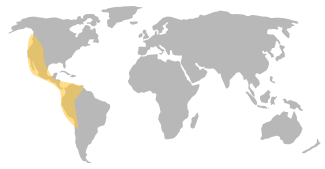
The band-tailed pigeon primarily inhabits oak woodlands, foothills, chaparrals, and mountain forests. Its habitat is mainly wooded or semi-open, adjusting to changes in food supplies.
Additional range
Its range includes coastal and mountainous regions, pine-oak woods, and fir forests. It may also be found foraging along streams in lowland deserts and is increasingly typical in suburban areas on the Pacific Coast.
Do they migrate?
The band-tailed pigeon exhibits partial migratory behavior, being present all year in some regions, particularly along the Pacific Coast. In these areas, they are often permanent residents due to the consistent availability of food and suitable habitat. However, in other parts of their range, such as the northwestern coast and the southwestern interior, they are mainly summer residents. During the breeding season, they relocate to these areas where conditions are favorable for nesting and raising young. The migration of band-tailed pigeons is influenced by food availability, and they are known to be nomadic, forming flocks that concentrate in regions where food supplies are abundant. This behavior can make their migration patterns somewhat unpredictable. Their range extends from southern British Columbia through the western United States and into parts of Mexico. Occasionally, strays from these migratory movements have been spotted reaching as far as the Atlantic Coast, although these occurrences are rare. The timing and exact routes of migration can vary, but typically, birds will move from their breeding grounds to areas with more reliable food sources as seasons change, mainly influenced by local environmental conditions.
What is the role of band-tailed pigeons in nature and how to protect them?
Conservation status
The band-tailed pigeon experienced significant declines due to overhunting but showed recovery with protective measures. However, its population has been decreasing in recent decades due to new threats, suggesting it is potentially vulnerable. Key conservation efforts focus on habitat preservation and management, as well as monitoring population trends. Significant threats include habitat loss, disease, and possibly climate change, which contribute to their ongoing decline. Continued conservation efforts are essential to prevent the species from becoming endangered.
Ecological role of band-tailed pigeons
Its role in the ecosystem
The band-tailed pigeon is a significant part of the ecosystem. It contributes to pest control by occasionally feeding on insects, though this is not a major part of its diet. Its primary diet consists of nuts, seeds, and berries, which leads to its key ecological role of seed dispersal, especially those of elderberries, manzanitas, junipers, and wild grapes. Consuming and subsequently passing these seeds in different locations helps in the proliferation of these plants, ensuring the survival and diversity of forest flora. Moreover, its habit of foraging in flocks even during breeding season may aid in collective ground aeration, indirectly impacting soil health. The pigeon's nesting behavior in colonies could contribute to maintaining a balance in the number of certain tree insects by driving them away or feeding on them. Finally, by feeding on acorns, these pigeons could influence oak tree populations and potentially shape the landscape by which trees dominate.
How to help protect band-tailed pigeons
Preservation tips
Habitat preservation strategies
Promote policies that protect the band-tailed pigeon's natural habitats like forests and woodland areas. This may involve advocating for stricter logging restrictions, supporting reforestation projects, and encouraging the use of sustainable agriculture practices. Promote land preservation by supporting or participating in trusts or conservation easements. Enhancing the availability of the pigeon's primary food sources, including acorns and berries, is vital. Encourage safe pesticide use practices.
Community science initiatives
Engage community in science initiatives to monitor and track population trends of the band-tailed pigeon. Citizen science projects such as bird counting can yield valuable data about the species' local population size and their migration patterns. Organise educational programs and workshops to improve public awareness about the threatened status of these pigeons and ways community members can contribute to their survival. Motivate locals to create backyard habitats that provide natural food sources and shelter to these birds.