
Mourning Dove
Mourning Dove
Also known as: American Mourning Dove, Rain Dove, Turtle Dove, Carolina Pigeon, Carolina Turtledove
Zenaida macroura


Quick Identification guide
Quick Identification guide
- •
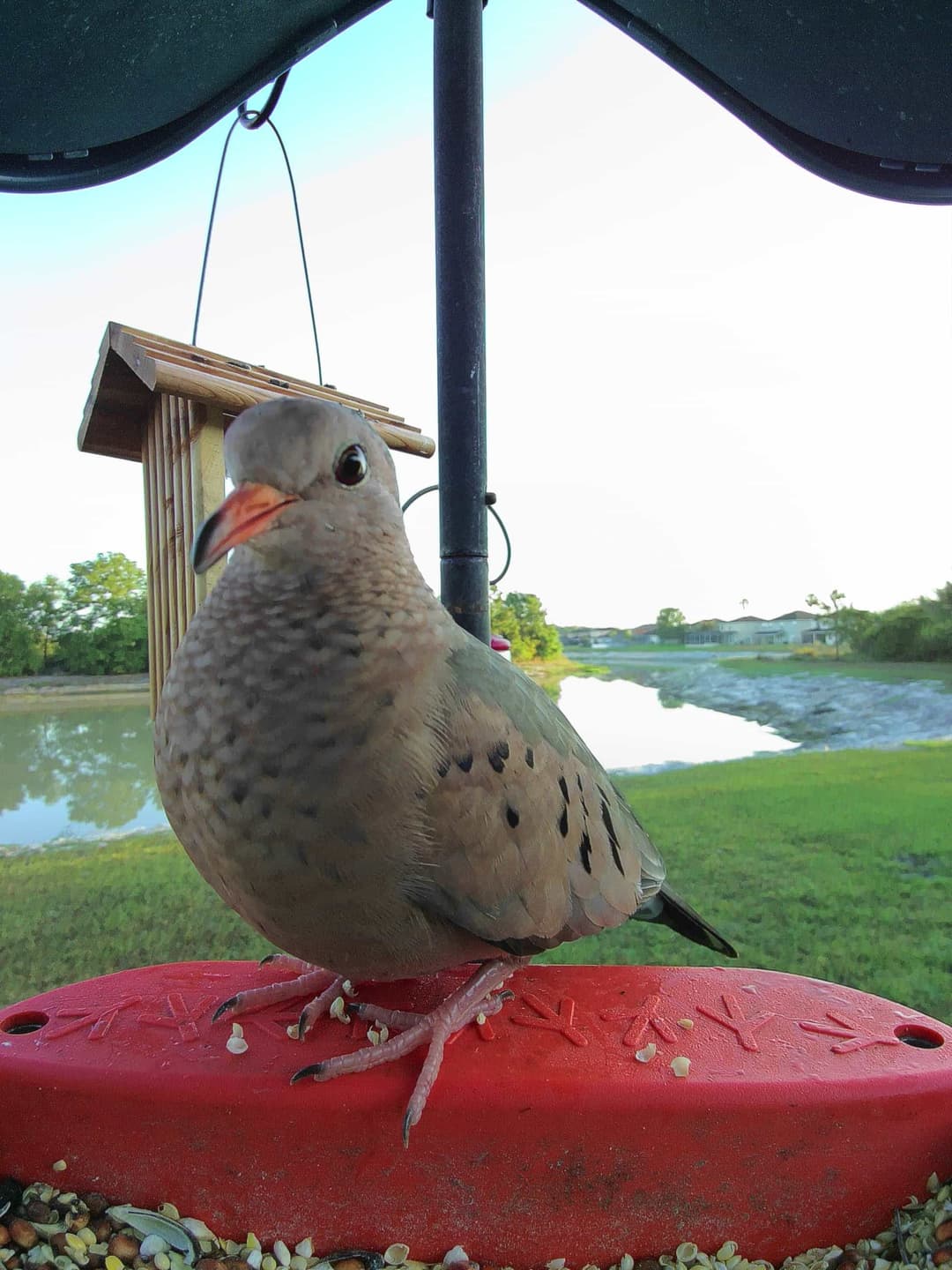
Displays a slender, elongated body with a long, pointed tail featuring white edges
- •
Its soft brown plumage is complemented by a few black spots on the wings
- •
A small head with a delicate pinkish hue and a subtle black mark under the eye are distinctive features
What does a mourning dove sound like?
The mourning dove's vocalizations are characterized by its low, mournful coo-ah followed by three coos. This unique call pattern is projected in a falling, flat, yet undulating manner. Despite its melancholic tone, the dove's hoot type call is nonetheless captivating and distinct, reinforcing its colloquial name.


Description
Did you know that a mourning dove can reach speeds of up to 55 miles an hour? All that flying around requires energy and they get it by eating lots and lots of seeds! What they can't eat immediately, they store in their crop, a special pouch in their throat. The record for seeds stored in a crop on a single day is 17,200 bluegrass seeds!
The mourning dove can weigh between 86to170grams and be from23to34centimeters tall.
The typical lifespan of a mourning dove is 1-3 years in the wild. Their maximum lifespan can reach up to 30 years, although this is rare. Relative to their species family, Columbidae, such as the popular Rock Pigeon with a shorter average lifespan of 3-5 years, mourning doves tend to live slightly shorter lives. However, their lifespan greatly varies depending on exposure to predation and disease.
Did you know?
Most popular questions about mourning dove
How to recognise a mourning dove?
General appearance
The mourning dove is roughly the size of a crow, bearing characteristics of a long, pointed tail which is about 12', or 30 cm long. This tail displays white spots along its edge while in flight. The bird’s wings are adorned with black spots and its overall coloration exhibits hues of black, brown, gray, pink, tan, and white. The dove has a pointed, wedge-shaped tail.
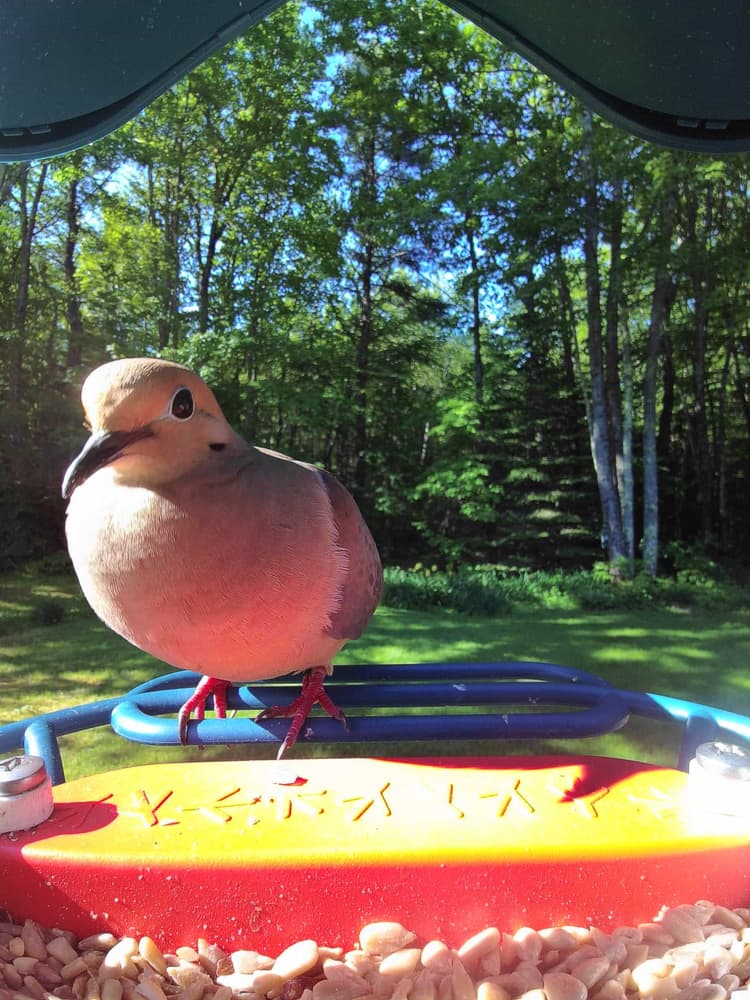
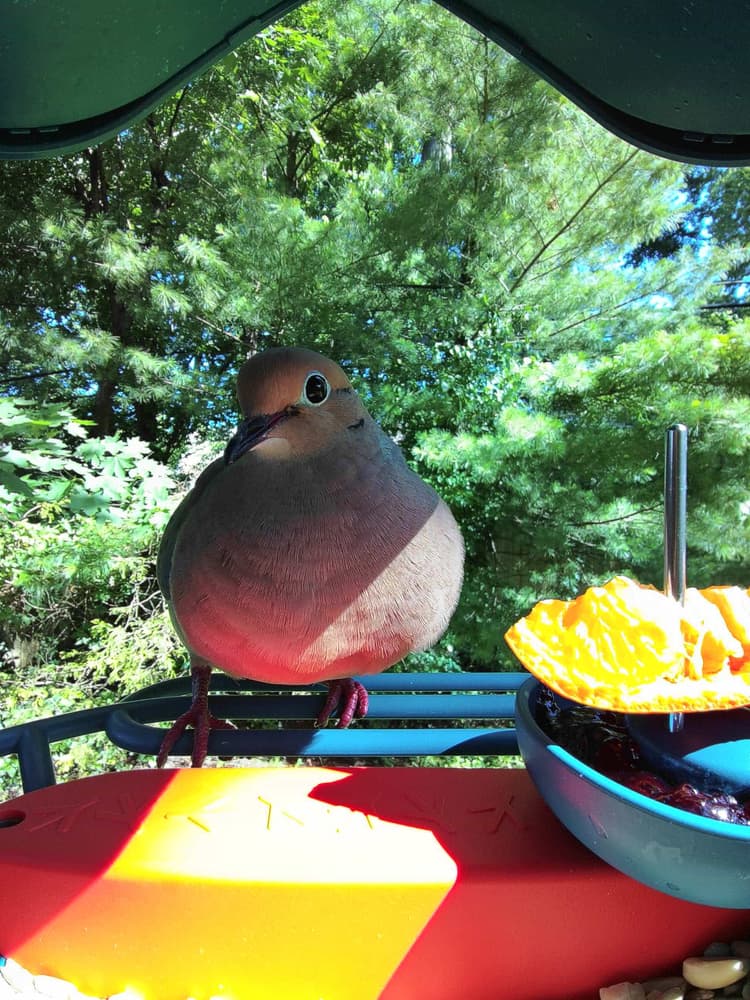
Male vs female
The sexes of mourning doves can be distinguished by their coloration. Adult males generally have a pinkish tinge on their chests and a blue-gray tone on their crowns. However, the female doves are more dull and plain, predominantly appearing in a shade of brown.
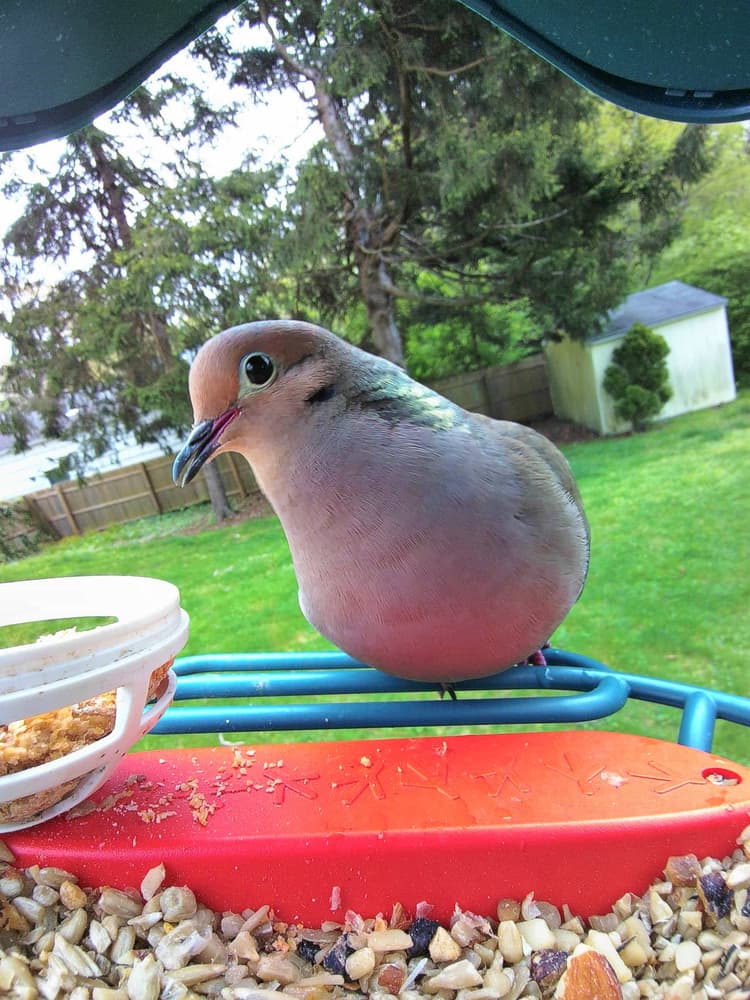
Male Mourning Dove
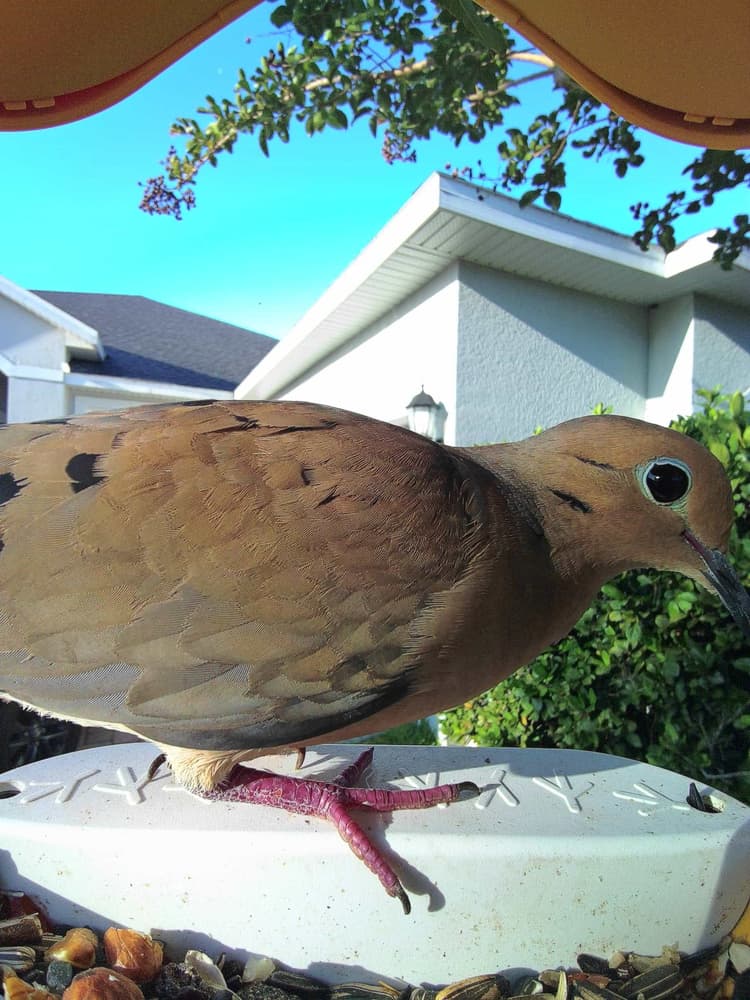
Female Mourning Dove
Juvenile
Young mourning doves have a unique scaly appearance that can lead them to be confused with the Inca Dove or the Common Ground Dove. They do not possess the vivid coloring of the adults and generally appear more muted in color.
Often mistaken for
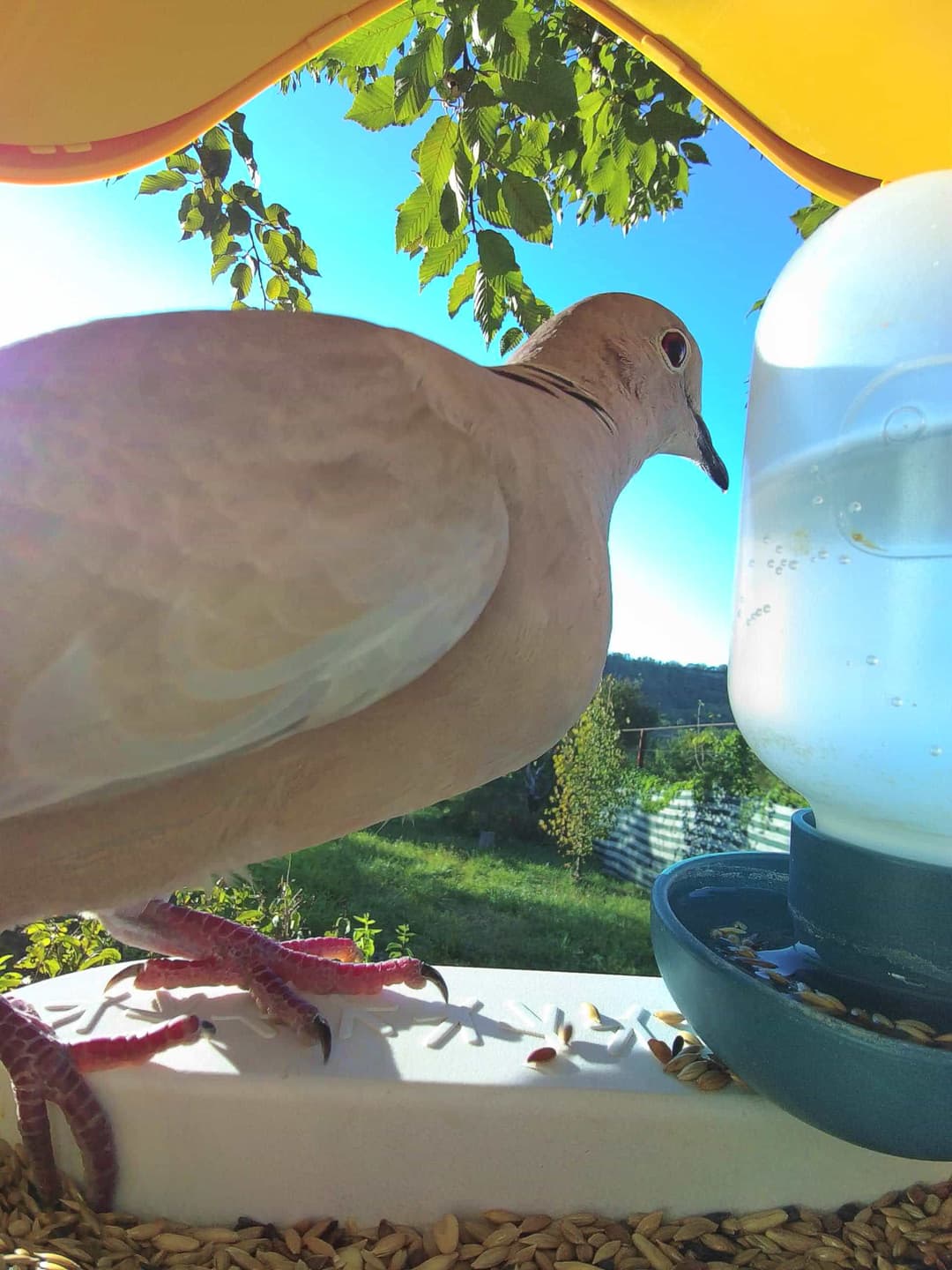
Eurasian Collared Dove vs Mourning Dove
The Eurasian Collared Dove is larger and bulkier than the Mourning Dove. It has a distinctive black 'collar' around the nape, distinguishing it from the Mourning Dove's slender neck without markings.
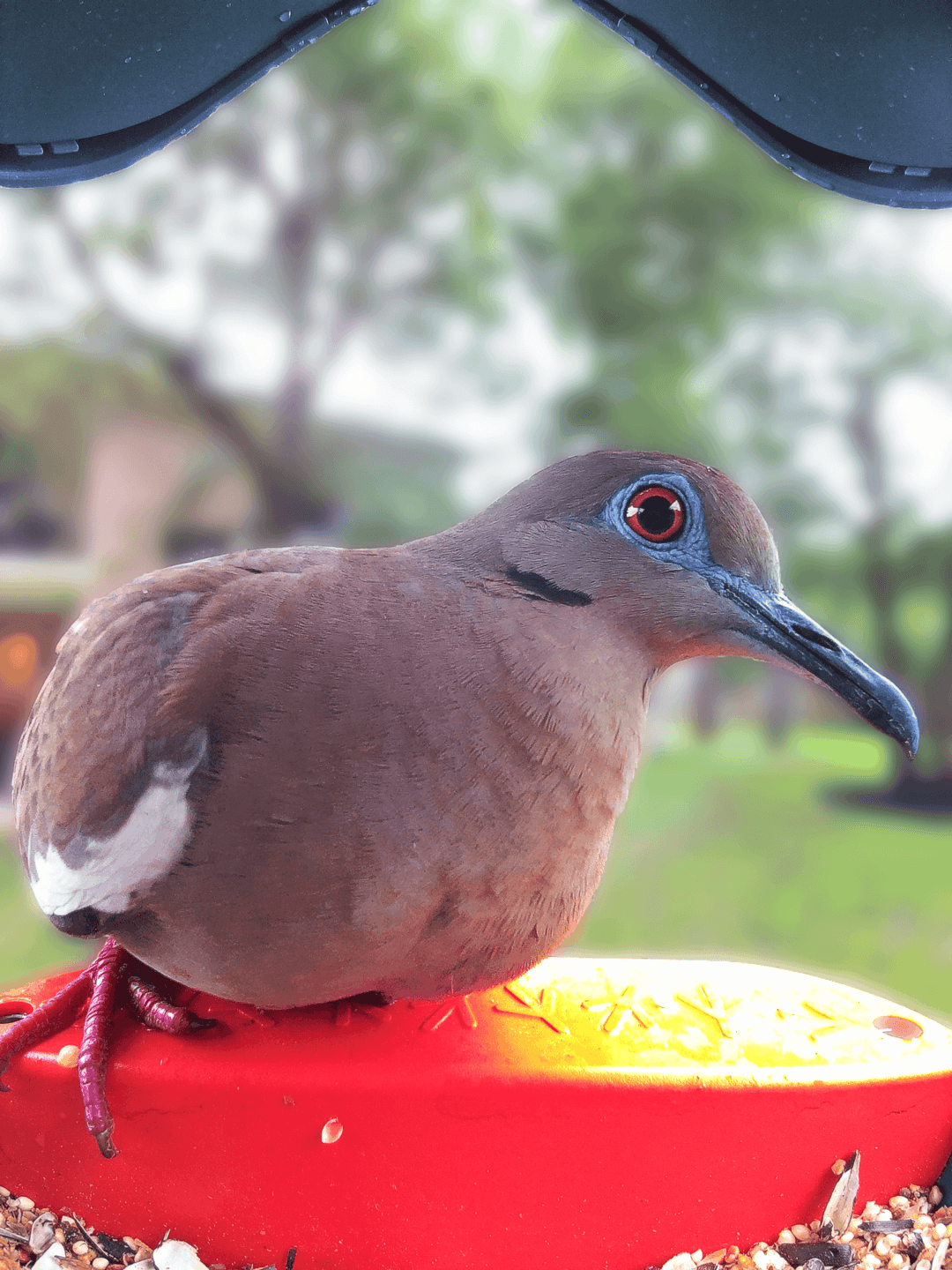
White-Winged Dove vs Mourning Dove
White-Winged Doves have a bright white patch on their wings, visible in flight, unlike the Mourning Dove. They are also generally larger and have a more squared tail compared to the Mourning Dove's pointed tail.
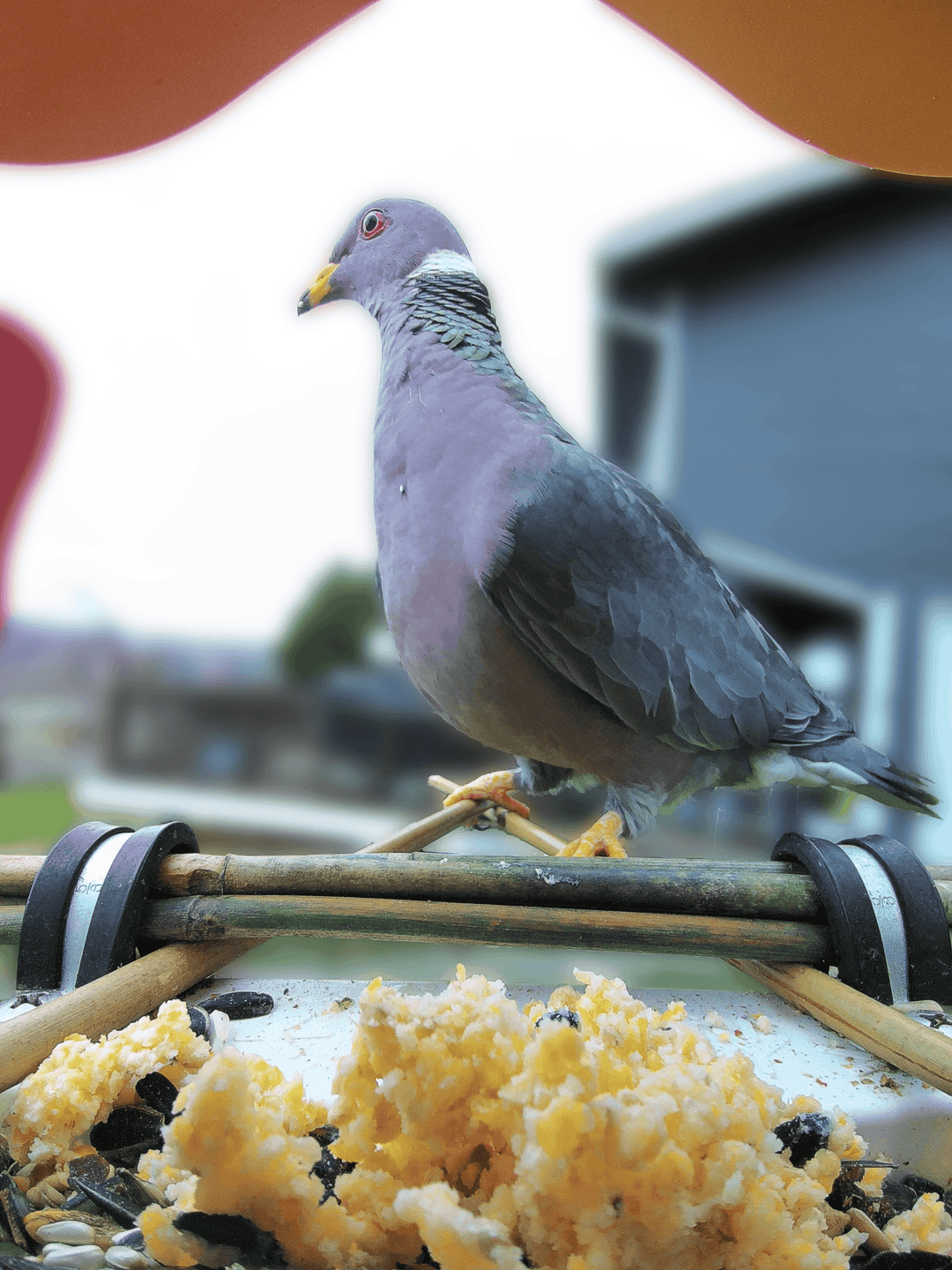
Band-Tailed Pigeon vs Mourning Dove
Band-Tailed Pigeons are significantly larger than Mourning Doves. They have a noticeable white band at the end of their tail and a greenish sheen around their nape, unlike the Mourning Dove's muted tones.
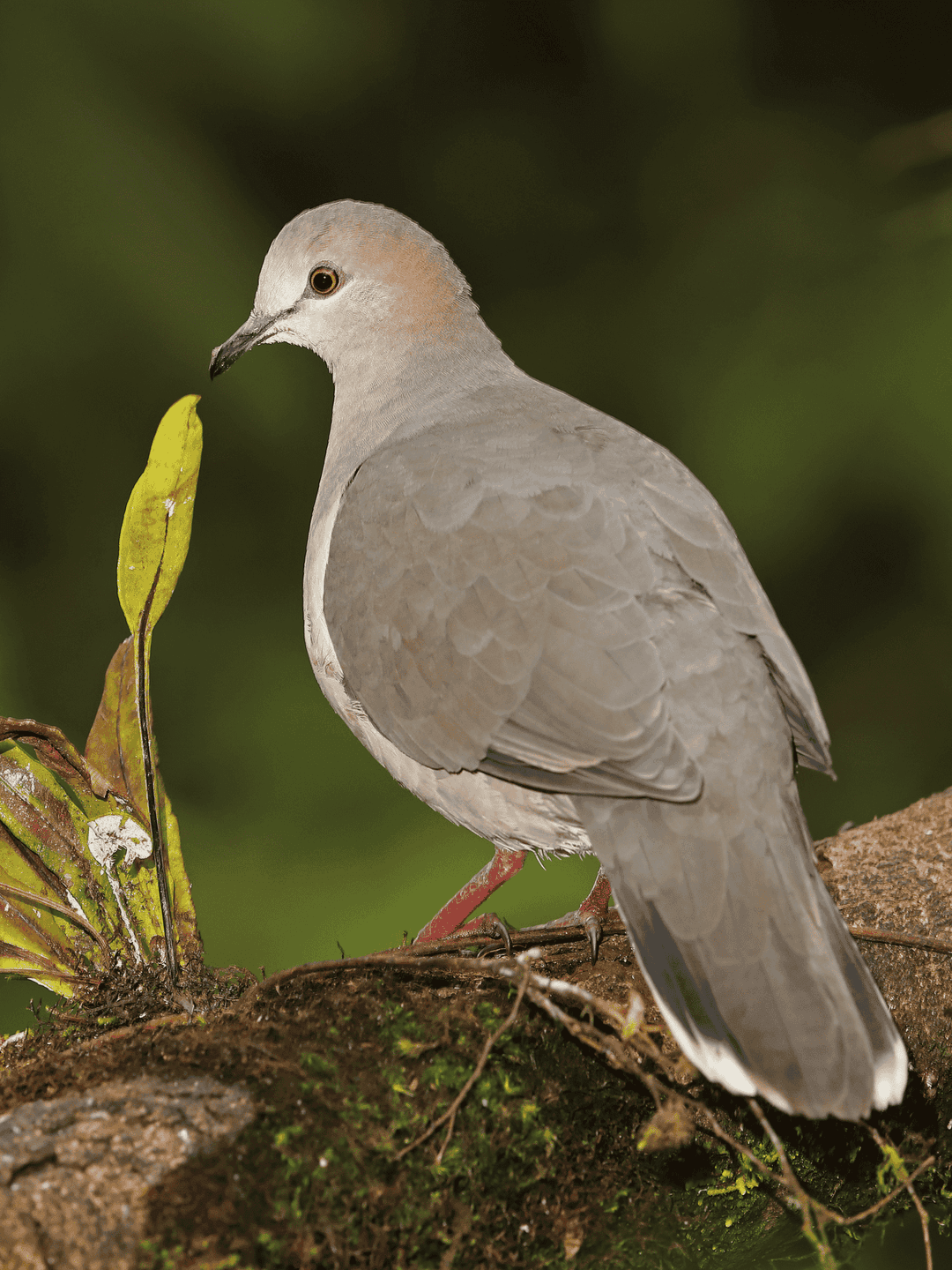
White-Tipped Dove vs Mourning Dove
White-Tipped Doves are bulkier and have a distinctive white edging on their wings when seen in flight, unlike the Mourning Dove's solid wing color. Their tails are also shorter and square-tipped.
Common Ground-Dove vs Mourning Dove
The Common Ground-Dove is smaller than a Mourning Dove. It lacks the Mourning Dove's long pointed tail and has scaly patterning on its upperparts, making it appear more delicate.
Inca Dove vs Mourning Dove
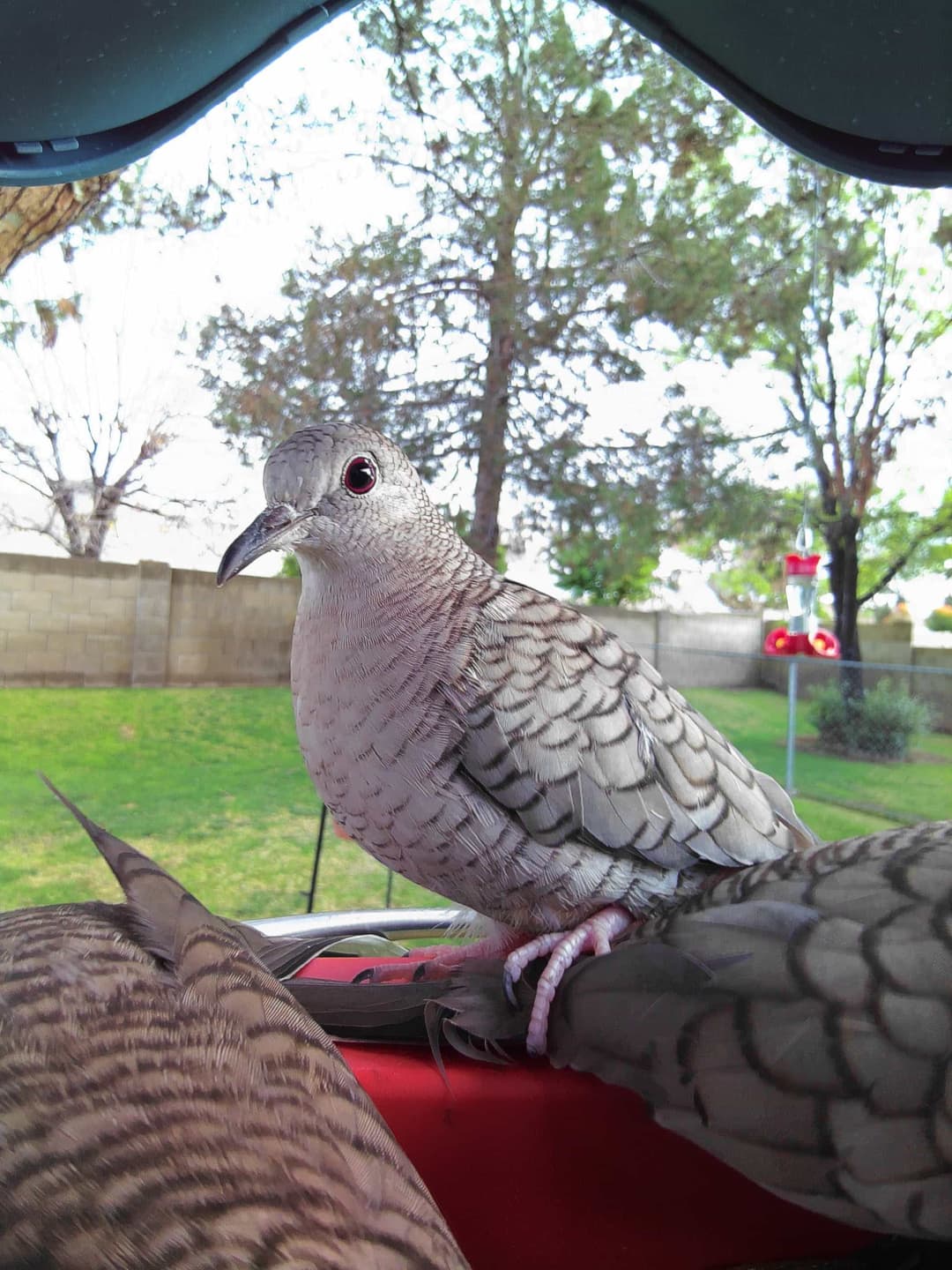
Inca Doves are smaller with a scaled appearance on their feathers, unlike the smooth plumage of a Mourning Dove. They also have long tails with distinct white edges visible in flight, unlike the Mourning Dove.
Breeding and nesting habits of the mourning dove
Mating behaviors
During courtship, the male engages in an elaborate display by flying with noisy wingbeats, transitioning into a long circular glide with wings spread and slightly bowed. On the ground, he approaches the female with a stiff posture, chest puffed out, while bowing and cooing emphatically. Mated pairs may reinforce their bond by preening each other's feathers.
Nesting details
The male leads the female to potential nesting sites, but the female makes the final choice. Nests are typically located in trees or shrubs, occasionally on the ground or building ledges. Nests are generally low, below 40 feet, but can be up to 100 feet high. They are flimsy platforms made of twigs, with the male gathering materials and the female constructing the nest.
Eggs and chick-rearing
Mourning doves typically lay two eggs. Both parents share the responsibility of incubating the eggs and feeding the chicks once they hatch. The chicks, or squabs, are fed a secretion known as 'crop milk' produced by both parents. The chicks fledge after about two weeks, though they may remain dependent on their parents for food for some time.
What does a mourning dove like to eat?
Seeds
Snails
Natural diet
The mourning dove predominantly consumes seeds, which constitute 99% of its diet. It shows a preference for seeds from cultivated grains, grasses, ragweeds, and various other plants. Occasionally, its natural diet includes snails and very rarely any insects.
Bird feeders
At bird feeders, mourning doves enjoy seeds commonly provided, such as millet and cracked corn. Their preference aligns with the availability of cultivated grain and grass seeds often found in birdseed mixes.
Create an inviting environment
To attract mourning doves to your yard or feeder, start by providing plenty of open space on the ground for them to forage, making sure it’s free from predators. Keep in mind that mourning doves prefer to dine on the ground beneath elevated feeders, so ensure that your feeders disperses seeds onto the ground.
Provide their favorite treats
Mourning doves are particularly fond of seeds. Fill your feeder with a mix of Bird Buddy seeds, expertly chosen for the season to guarantee you the best results. Offering a diverse seed mix will greatly increase your chances of attracting these delightful little birds to your backyard.
Add extra perks
Mourning doves have unique eating habits, such as swallowing grit to aid in the digestion of hard seeds. Providing a shallow dish of small gravel could offer them the 'grit' they need and could be an additional lure to your yard.
Keep the food coming
Remember, mourning doves tend to eat quickly, filling their crop with seeds to digest while resting. To encourage frequent visits, make sure your feeders are constantly stocked with the seeds they like.
Where can you find mourning doves?
Based on Birdbuddy sighting data. The heatmap shows where Birdbuddy users have spotted this species.
Embed this map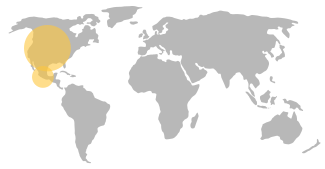
This map shows the full native range based on scientific range data.
Primary habitat
The mourning dove primarily inhabits open and semi-open locations in temperate parts of North America. This includes farms, towns, open woods, roadsides, and grasslands.
Additional range
It is prevalent in places with both trees and open ground, known as edge habitats, and occasionally in treeless areas. Unexpectedly, it also frequents suburban areas, farmland, prairies, and deserts, while avoiding unbroken forests.
Do they migrate?
The mourning dove exhibits partial migratory behavior. While some individuals remain in their breeding range throughout the winter, primarily in the southern parts, many from northern areas migrate southwards as fall approaches. This migration is typically conducted during the day and in flock formations, providing increased safety and efficiency. The migration route for mourning doves generally takes them from northern regions of the United States and southern Canada to southern destinations, including the southern U.S., Mexico, and Central America. The precise timing of migration varies, but typically begins in late summer to early fall, reaching a peak in September. Return migration to northern breeding grounds usually occurs from February through April. Key staging areas along the route include open fields, agricultural areas, and forest edges, which provide ample feeding opportunities and resting stops. Mourning doves don’t follow a specific migratory corridor like some other bird species, as their migration can be more dispersed across various landscapes. This adaptability supports their thriving populations and extensive range during both breeding and non-breeding seasons.
What is the role of mourning doves in nature and how to protect them?
Conservation status
The mourning dove is a common species, thriving especially in man-altered habitats. Its population has likely increased with the settlement and development of North America. It is not considered vulnerable or endangered. Key conservation efforts focus on managing hunting practices, as the mourning dove is a popular game bird. Significant threats are minimal, as the species adapts well to urban and suburban environments. Overall, the mourning dove's adaptability and robust numbers ensure its stable conservation status.
Ecological role of mourning doves
Its role in the ecosystem
The Mourning Dove plays a significant role in maintaining the balance in the ecosystem. It primarily contributes through seed dispersal, as its diet consists of 99% seeds. This makes the dove crucial in spreading the seeds of many types of plants, including cultivated grains, grasses, and ragweeds, promoting plant propagation and forest regeneration. Furthermore, their rapid breeding rate, with a single pair potentially raising five to six broods each year, allows for the control of insect populations. Although rare, Mourning Doves do occasionally consume snails and insects, thus participating in pest regulation. Additionally, the doves act as prey for numerous predators, aiding in the food chain. Mourning Doves, therefore, significantly contribute to ecosystem dynamics through their eating habits, propagation, and as a food source for other species.
How to help protect mourning doves
Preservation tips
Conservation efforts
Mourning dove conservation requires preservation and enhancement of their habitats. First, preserve areas with a mix of open land and trees, ideal for roosting, feeding, and nesting. Planting shrubs and small trees can also be beneficial. Target invasive and non-native species which threaten the dove's natural habitat. Use managed hunting to control population levels and ensure a healthy and sustainable dove population. Second, introduce community science initiatives. Organize local groups to monitor mourning dove populations, tracking changes and identifying threats. Participate in national bird counts, submit findings to databases like eBird. Education is also key, raise awareness about the importance of preserving these species and their habitats. Fundraisers or local events can support such efforts. Implementing these strategies will contribute to the successful conservation of the mourning dove.