
Common Ground-Dove
Common Ground-Dove
Columbina passerina


Quick Identification guide
Quick Identification guide
- •
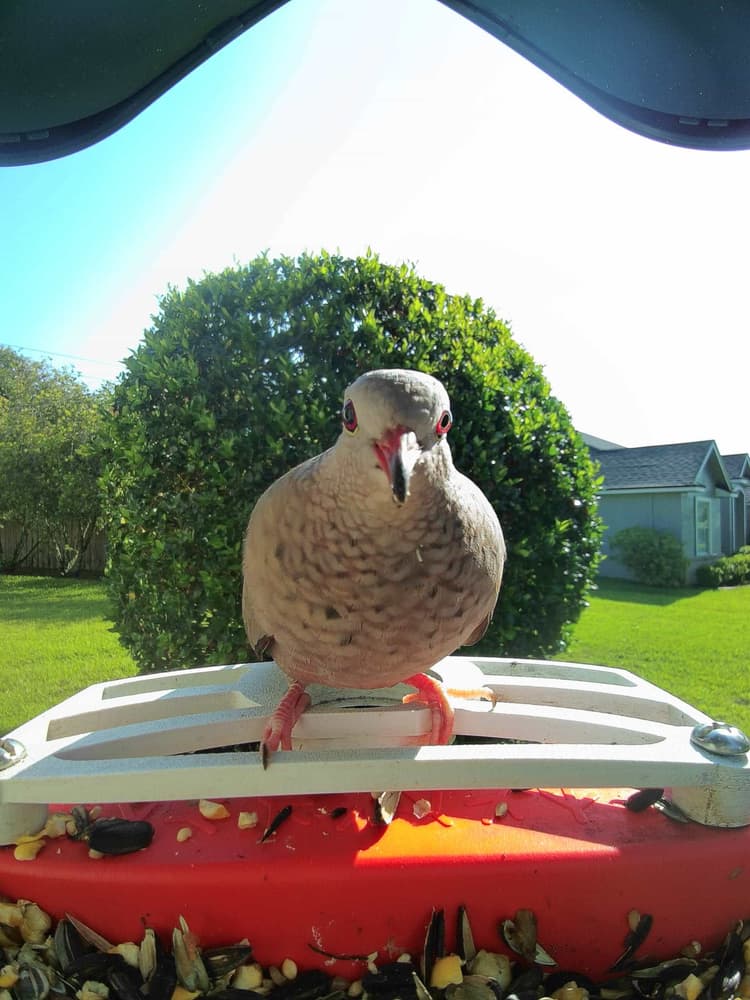
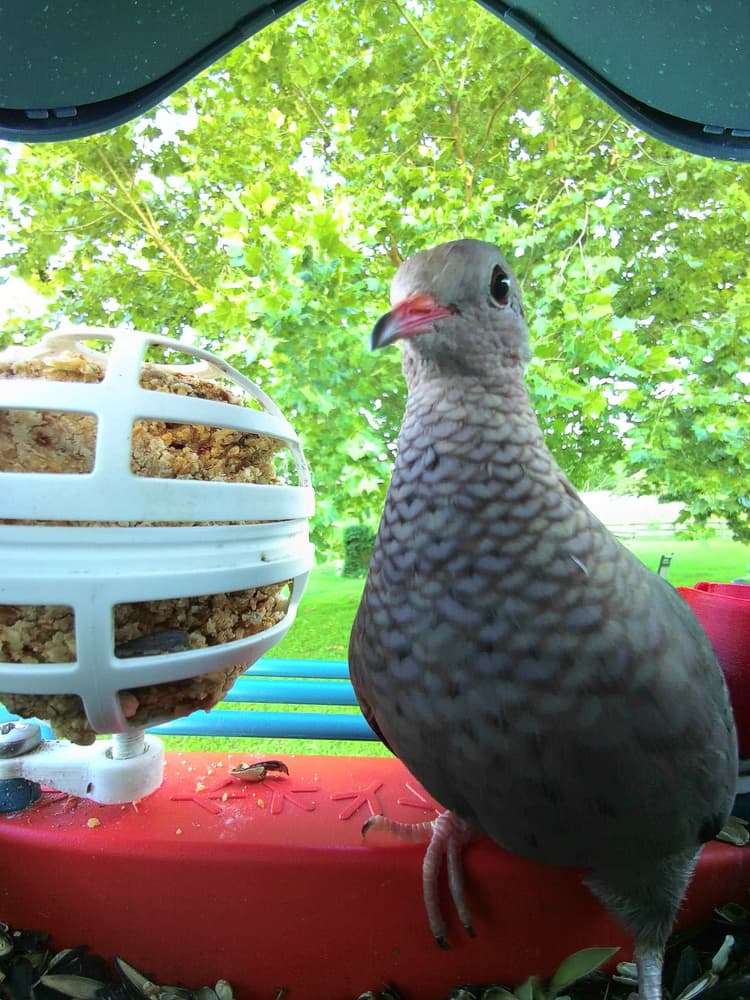
Features a small, rounded body with scaly-patterned plumage predominantly in shades of gray and brown
- •
Possesses a short, slender beak that is characteristic of its ground-foraging lifestyle
- •
Displays pale pink hues on the chest and face, adding a subtle touch of color to its otherwise understated appearance
What does a common ground-dove sound like?
The common ground-dove vocalizes soft cooing notes. It produces a melody in the pattern of 'coo-oo, coo-oo, coo-oo,' characterized by a rising inflection at the end of each coo. These sounds are considered its call, categorized under the 'hoot' call type due to the soft, low, and somewhat owl-like sounds it produces. Its gentle coos and hoots are quite distinctive and exemplify the typical sounds associated with the dove species.
Call
Audio by G. McGrane


Description
The common ground-dove is one of the world's smallest pigeons! It's about the size of a song sparrow. Now that's a tiny dove! As its name suggests, it nests and feeds on the ground. It needs to eat about 2,500 seeds a day to maintain its mass. So it's a good thing it's got a two-lobed crop – a special pocket in its oesophagus to store seeds in. It is also called the moaning dove and tobacco dove.
The common ground-dove can weigh between 28to40grams and be from15to18centimeters tall.
The common ground dove typically lives for 1-3 years in the wild. Relative to other pigeons and doves, this is in the lower range. For instance, the Mourning Dove has an average lifespan of 1.5 years but can live up to 7 years old in the wild. This difference is largely due to survival strategies and threats each species encounters.
Did you know?
Most popular questions about common ground-dove
How to recognise a common ground-dove?
General appearance
The common ground-dove has a small and short-tailed physique, measuring around 6 1/2 inches in length. They typically feature a scaly pattern on their chest and head. Their bill has a pink base and their wings often display a bright rusty red. When in flight, their short black tail reveals pale corners.
Male vs female
The sex of the common ground-dove is not distinctively distinguishable. Both males and females share similar physical traits such as short-rounded tails and short-rounded wings. However, the males may have more vibrant coloration across the wings. The color variations include black, brown, grey, pink, and red.
Juvenile
Juvenile common ground-doves may initially have a short tail and also display the characteristic scaly pattern. Over time, their tail grows and they adopt the standard appearance of the adult ground dove. Juveniles are similar in size to a sparrow, while adult ground doves are about the size of a robin.
Often mistaken for
Mourning Dove vs Common Ground-Dove
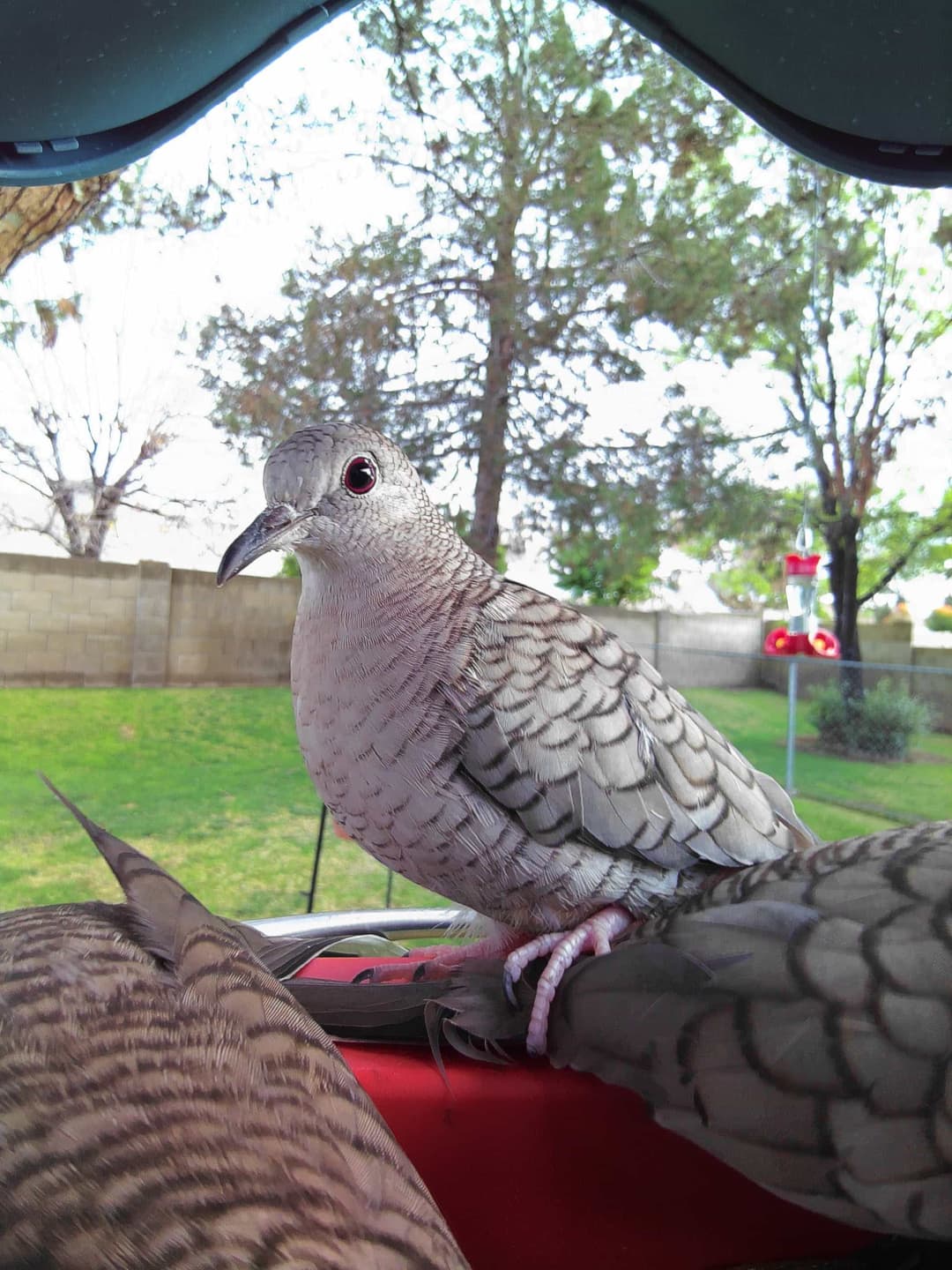
The Common Ground-Dove is smaller, measuring about 6.5 inches compared to the Mourning Dove's 12 inches. It has a chunky body, short tail, and a distinctive scaly pattern on the head and chest. The Mourning Dove is more slender with a long, tapered tail and features a soft gray color, while Common Ground-Dove is more brown with pinkish underparts.

Inca Dove vs Common Ground-Dove
The Common Ground-Dove can be differentiated from the Inca Dove by its size and color. Common Ground-Dove is smaller, has more rufous wings, and a scaly pattern on the breast and head. In contrast, the Inca Dove is larger with a longer tail and prominent scaled plumage all over, giving it a grayish appearance. Also, Inca Doves generally have a more prominent wing clatter during flight.
Breeding and nesting habits of the common ground-dove
Mating behaviors
In courtship, males perform a display involving stiff steps, puffing out their chest, and bowing their head while cooing. Multiple males may vie for a single female's attention. Mated pairs often sit close together and engage in mutual preening.
Nesting details
Nests are flat and flimsy platforms made of sticks. They may be located on the ground, in shrubs, or low trees, typically 3-12 feet up in a horizontal branch fork. Nest construction is likely a joint effort by both sexes.
Eggs and chick-rearing
No specific details on eggs and chick-rearing practices are provided. However, suitable nesting habitats can be encouraged in gardens by ensuring the presence of shrubs or low trees with horizontal branches and gentle ground cover to accommodate nesting preferences.
What does a common ground-dove like to eat?
Berries
Insects
Seeds
Snails
Natural diet
The common ground-dove primarily feeds on a variety of seeds. It especially prefers seeds from grasses and weeds, but its diet also includes waste grain found in farm fields. Additionally, the dove will consume small fruits and berries, as well as some insects, though seeds remain its main food source.
Bird feeders
The common ground-dove may occasionally visit bird feeders, where it is likely to consume commercially available birdseed mixes. These mixes often include seeds that mimic its natural diet, such as millet, cracked corn, and other small seeds. However, its preference for seeds found in its natural habitat is stronger.
Attracting ground-doves: favorite snacks
Common Ground-Doves are typically attracted to a variety of grains and seeds. While they enjoy a wide range, Bird Buddy seeds have been proven to be highly attractive to these birds because they are chosen by experts for the season, ensuring they are the most appealing.
Suitable feeders for common ground-doves
Ground-Doves, as their name implies, prefer to feed on the ground. A platform feeder or tray feeder placed near the ground or on a low pedestal would be ideal. Make sure it's easily visible and not in high-traffic areas to avoid scaring them away.
Fun tricks to attract ground-doves
To tempt the Ground-Doves to your yard even more, ensure you have some open, sandy or dusty areas for them to take dust baths. Providing a water source, like a bird bath, would also be appreciated. To really seal the deal, you can play soft cooing sounds that are similar to the Ground-Dove's song to potentially attract a sing-along friend!
Where can you find common ground-doves?
Primary habitat
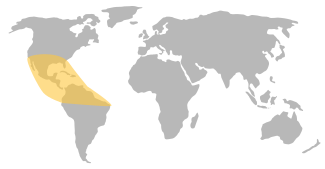
The common ground-dove predominantly inhabits semi-open habitats, including farms, orchards, wood edges, and roadsides with low brush and grass. These environments provide cover and food resources.
Additional range
In the southeast, the common ground-dove is found in brushy fields and the understory of open pine woods. Meanwhile in the southwest, it is seen in similar environments as well as in ranch yards, and mesquite thickets along streams.
Do they migrate?
The common ground-dove is generally a permanent resident across most of its range, but its patterns change slightly in the southwest where it is more common in the summer. This behavior indicates a regular migration towards the south in these regions. Specifically, in parts of the southwestern United States, the common ground-dove appears to move southward during the cooler months, suggesting some migratory behavior in response to seasonal changes. Although the exact routes and key locations are not extensively documented, this suggests that individuals or populations in these areas migrate from the southwestern U.S. such as parts of Arizona and possibly southern California, towards more southern areas that provide milder winter conditions. The timing likely coincides with the transition between summer and fall, moving back north as temperatures rise in the spring. Overall, while many common ground-doves exhibit sedentary habits, those in the southwest are subject to periodic migrations influenced by regional climate conditions, emphasizing a migration primarily driven by local ecological factors rather than long-distance or consistent seasonal routes.
What is the role of common ground-doves in nature and how to protect them?
Conservation status
The common ground-dove has experienced a significant decline in many areas, particularly in the southeast, leading to concerns about its conservation status. Although not currently classified as endangered, its status could be seen as vulnerable due to these declines. The exact reasons for the decline are not well understood, but habitat loss and environmental changes are potential threats. Conservation efforts may focus on habitat preservation and monitoring population trends to better understand and mitigate further declines.
Ecological role of common ground-doves
Its role in the ecosystem
The Common Ground-Dove contributes significantly to its ecosystem in a number of ways. As bird species go, it is an avid seed eater, feeding primarily on grass, weed seeds, and waste grain from farm fields. Through their feeding habits, these birds assist in seed dispersal, aiding plant diversity and growth. Their diet also extends to small fruits, berries and reportedly, some insects, thereby playing a role in pest control. In addition, their nesting habits offer new environmental niches for other species. As these birds create nests on the ground, shrubs or trees, habitats are diversified, benefiting various ecological community structures. Finally, the Common Ground-Dove's breeding cycle, producing 2-3 broods annually and sometimes even 4, means it plays a significant role in maintaining its bird population, which is crucial for certain predatory species for whom these doves may serve as a food source.
How to help protect common ground-doves
Preservation tips
Habitat preservation strategies
Preserve the common ground-dove's habitats such as grasslands, sandy areas, and shrublands. Limit the destruction of these environments caused by human activities like construction and agriculture. Launch tree planting initiatives in regions previously inhabited by ground-doves. Encourage the usage of bird-friendly pesticides and organic farming practices to reduce chemical pollution, harmful to these doves.
Community science initiatives
Promote participatory community science initiatives. Involve local communities in data collection about dove population sizes and movements. This can be helpful in designing conservation strategies. Conduct educational programs in schools and community centers to raise awareness about the importance of conserving ground-doves. Collaborate with birdwatching groups and nature clubs to monitor the ground-dove population and its habitats actively.