
Inca Dove
Inca Dove
Also known as: Mexican Dove
Columbina inca


Quick Identification guide
Quick Identification guide
- •
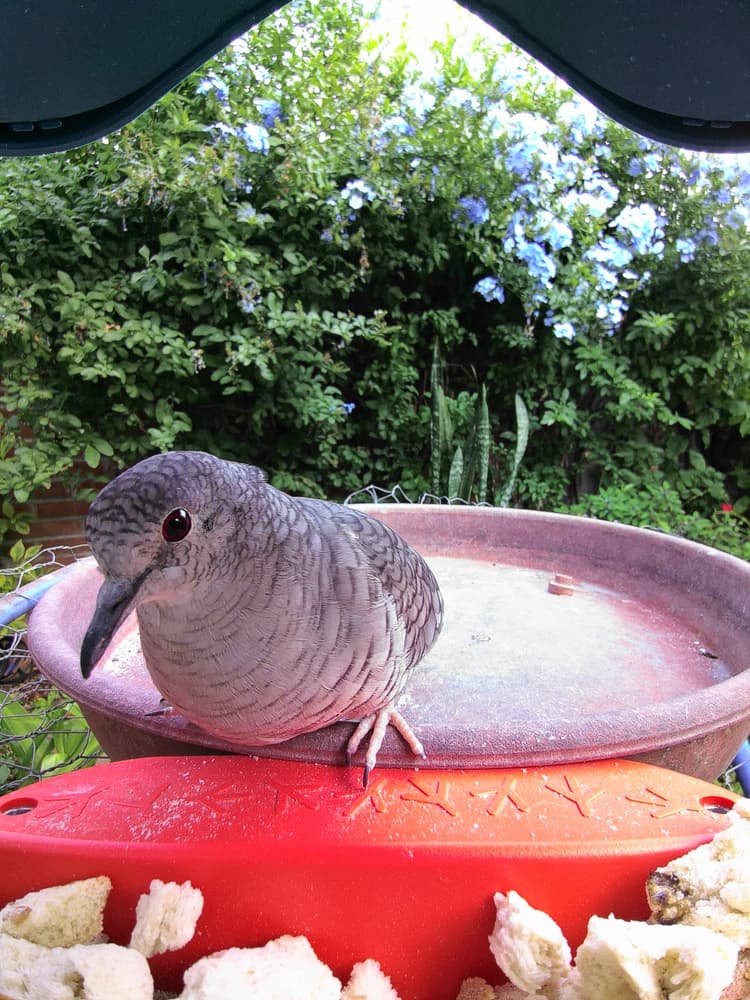
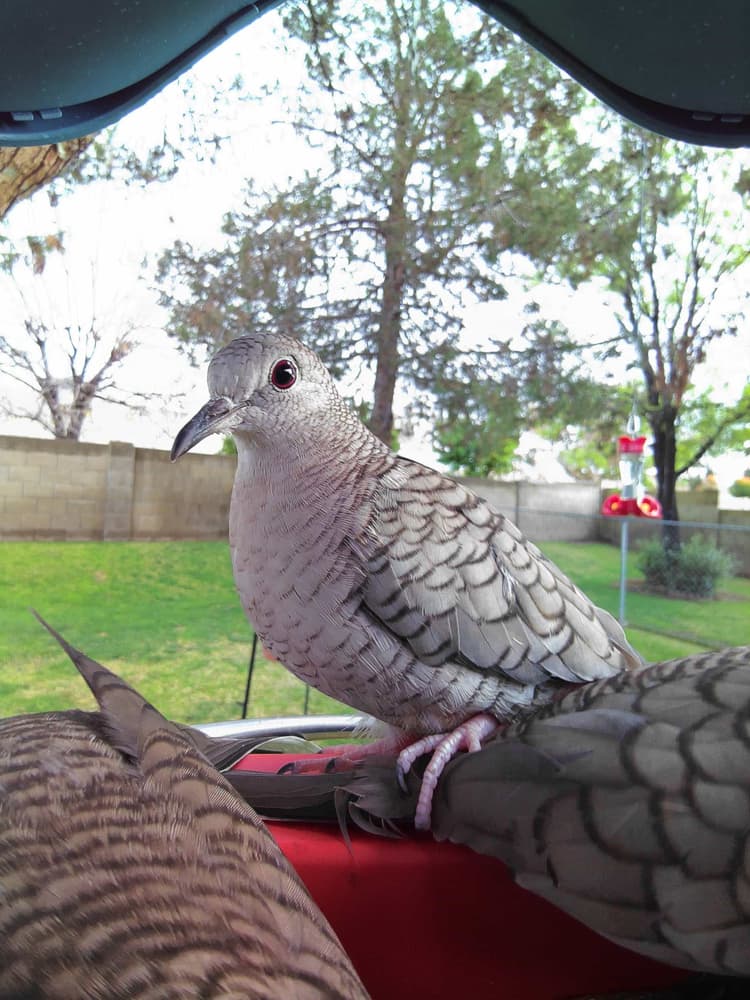
Compact dove with scaly feather patterns across the light gray to buff-colored body
- •
Displays a long, slender tail with distinct white edges visible in flight
- •
Possesses a small, rounded head with a thin, dark beak
What does an Inca dove sound like?
The Inca dove has a distinctive vocalization characterized by a soft 'coo-coo' or 'no-hope' sound, commonly repeated. Its typical call pattern is flat and undulating. The most known type of call by this bird is the hoot. Therefore, their songs and calls are identified by these unique, repetitive sounds, comprised of gentle cooing and hooting, emitting a calming, rhythmic ambiance.


Description
Inca doves don't love the cold and they've come up with an ingenious solution: it's called pyramid roosting and it's exactly what it sounds like. They will huddle together and one on top of the other, making a dove pyramid to keep warm. Wonder how they're feeling? Hint: look at their eyes. Their red eyes become brighter when the bird feels threatened!
The Inca dove can weigh between 30to58grams and be from18to23centimeters tall.
The typical lifespan of an Inca dove in the wild is up to 7 years. This species tends to have a shorter lifespan compared to other dove species. For instance, the adjacent Mourning dove typically lives up to 10 years, and Ringed Turtle Doves can live up to 20 years in captivity. Despite this, surviving Inca doves have been known to live as long as 15 years with extensive and proper care.
Did you know?
Most popular questions about Inca dove
How to recognise an Inca dove?
General appearance
The Inca dove has a distinctive small body that is 20 cm long and has a long tail. The overall coloration is a mix of black, brown, gray, and red, with a dark scaly pattern covering its body. The rounded wings produce a dry rattle sound upon takeoff while presenting a rusty red feather display. Additionally, this dove possesses white outer tail feathers and a square-tipped, long tail.
Male vs female
There are no significant physical distinctions between male and female Inca doves. Both sexes share the same body size, coloration, and distinctive tail and wing features. Females may appear slightly lighter in color, but this is often not a reliable trait for identification.
Juvenile
The juvenile Inca Dove looks comparable to the adult, but exhibits a somewhat scaly appearance. Its resemblance to the Mourning Dove's juvenile stage can lead to misidentification. However, distinguishing features for young Inca doves include their long tails in comparison to the short tails of Common Ground Doves. Further, they display a red wing flash in flight.
Often mistaken for
Mourning Dove vs Inca Dove
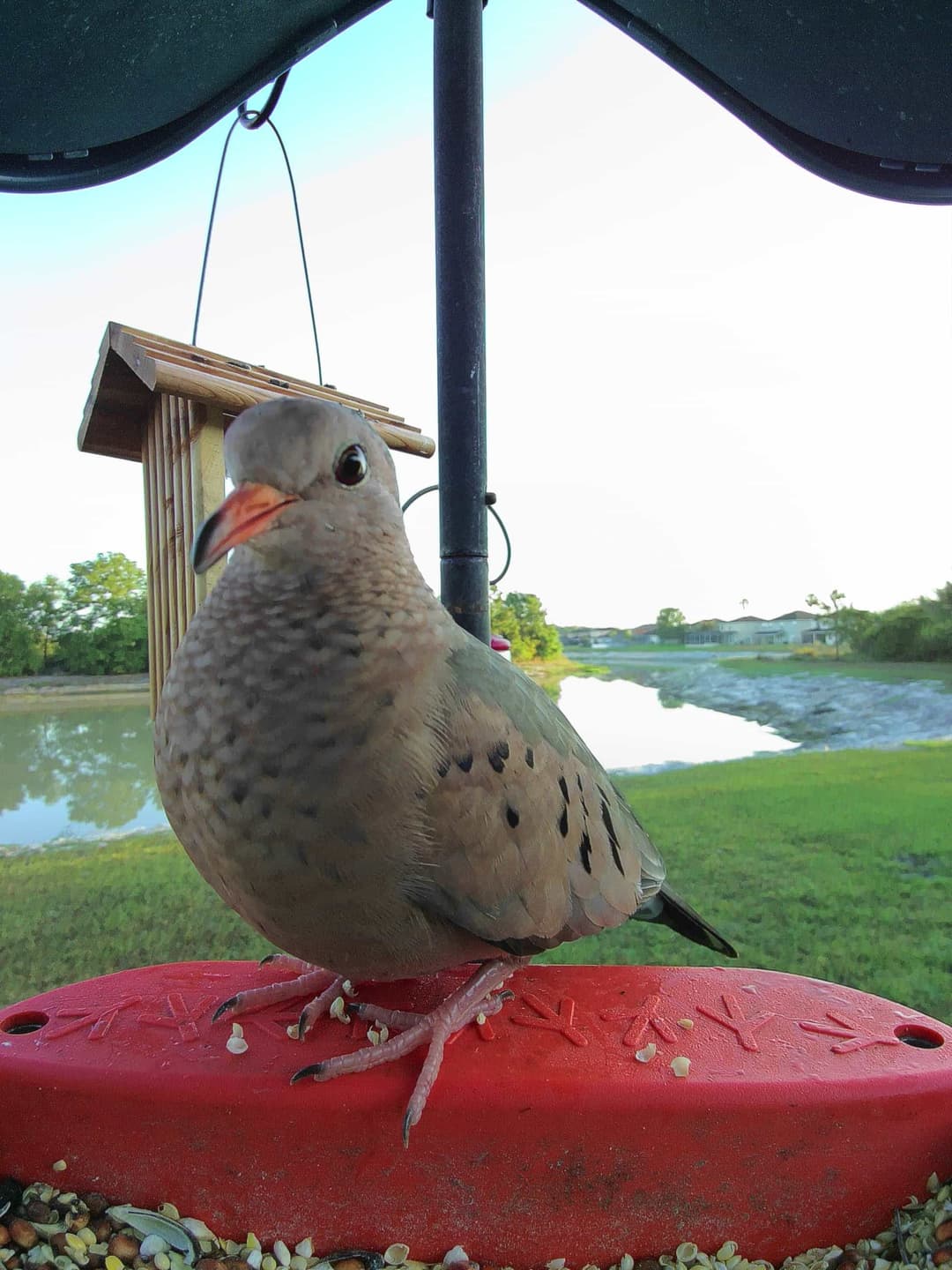
Inca Doves are smaller and have a scaly appearance on neck and upper parts, unlike Mourning Doves, which have smooth feathers. Mourning Doves are larger, with a long pointed tail and a pinkish hue. Inca Doves show distinctive rufous in the wings when flying.

Common Ground-Dove vs Inca Dove
Inca Doves are slightly larger with a scaly plumage pattern across the body, whereas Common Ground-Doves are smaller and appear more uniformly brown. Inca Doves have a longer tail and display rufous wing patches during flight, which the Common Ground-Dove lacks.
Breeding and nesting habits of the Inca dove
Mating behaviors
Inca doves engage in courtship displays that include cooing calls and mutual preening. The male performs a dance to attract the female, often featuring bowing and tail fanning.
Nesting details
Inca doves build small, flat nests made of twigs and grasses. They often select locations in trees, shrubs, or even on building ledges. These birds are known to nest in gardens, favoring quiet areas with ample cover.
Eggs and chick-rearing
The female lays two white eggs, which both parents incubate for about two weeks. Upon hatching, both parents participate in feeding the chicks a diet of regurgitated crop milk and seeds until they fledge at around 14-16 days.
What does an Inca dove like to eat?
Seeds
Natural diet
The Inca dove primarily feeds on a variety of seeds. It consumes seeds from waste grain and grass seeds, which are abundant in its natural habitat. On occasion, the Inca dove may also consume fruits, including those from cacti.
Bird feeders
At bird feeders, Inca doves commonly consume birdseed provided by humans. This includes a mix of various seeds that mimic their natural diet.
To attract inca doves: building their ideal environment
To attract these lovely creatures, make sure your outdoor environment is inviting for them. They love areas with lots of low bushes and thick understory. Additionally, providing a source of water like a birdbath can make it extra appealing, as they are native to desert environments and appreciate access to water.
Favorite snacks of inca doves
These birds enjoy a diet primarily made up of seeds and grains. Feed them seeds from both native trees and grasses, but for best results, we recommend Bird Buddy seeds. Expertly chosen for the current season, these seeds have what it takes to become a favorite snack for the Inca doves, drawing them frequently to your yard or feeder.
Choosing the right feeder
The feeder type is also important to attract these birds. They prefer feeding from the ground or from flat platform feeders. Choose feeders with small perches as they seldom use feeders requiring perching. Scatter some Bird Buddy seeds on these feeders to catch their attention.
Fun tricks to make them stay longer
Inca doves are known for their calming cooing sounds. To enjoy a hearty sing-along, try playing some softly cooing bird calls to imitate their sound. This could make them feel at home, prompting longer stays in your garden or backyard.
Where can you find Inca doves?
Primary habitat
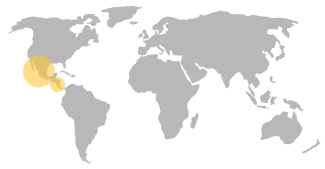
The Inca dove primarily inhabits areas around human dwellings in the United States, especially where green lawns and tree plantings are present.
Additional range
These birds can also endure desert yards or highly urbanized areas, provided there is access to water. Occasionally, they nest away from human habitations, favoring lowland streams or rivers.
Do they migrate?
The Inca dove is primarily a permanent resident, which means it generally stays in one place throughout the year without undertaking long-distance migrations. However, it does exhibit some limited movements, especially in the fall and winter. During these seasons, Inca doves occasionally wander northward beyond their usual range. These northward movements are not true migrations; instead, they are irregular expansions where some birds stray into new territories. Over time, if these birds find suitable breeding conditions and habitats, they may remain and eventually contribute to expanding the species' range. There is no specific migration route, timing, or key locations associated with Inca dove movements, as they are more opportunistic and varied rather than following a defined migratory pattern. This behavior helps them adapt to different environmental conditions, facilitating gradual range expansion. In summary, while the Inca dove is mostly sedentary, occasional northward wandering can occur, contributing to its range expansion over time.
What is the role of Inca doves in nature and how to protect them?
Conservation status
The Inca dove is common and not currently considered vulnerable or endangered. It is abundant and expanding its range northward, indicating a stable and potentially increasing population. Key conservation efforts are unnecessary at this time due to its adaptability to urban and suburban environments. There are no significant threats currently impacting the species on a wide scale, though habitat degradation and urbanization in specific areas could pose localized challenges. Overall, the species thrives in its current habitats, showing no immediate signs of decline.
Ecological role of Inca doves
Its role in the ecosystem
The Inca dove plays an integral role in maintaining the balance within its ecosystem. As it consumes a wide variety of seeds, including waste grain and birdseed, it helps control the potential overgrowth of these plants. This attribute is beneficial, especially when it comes to invasive plant species. Alongside consuming seeds, these birds also contribute to seed dispersal. As Inca doves move from place to place, they unintentionally spread seeds in their droppings, aiding in the distribution and propagation of certain plant species. This seed dispersal process benefits the plant diversity and overall health of the ecosystem. Furthermore, the Inca dove's unique feeding behavior, foraging on the ground, may help in the aerating the soil, benefiting plant growth. In terms of urban environments, Inca doves also contribute to cities' cleanliness by feeding on birdseed, effectively limiting excess seed waste. These birds' tendency of raising multiple broods a year also helps maintain its population stability which is crucial to avoid dramatic fluctuations within the food chain.
How to help protect Inca doves
Preservation tips
Habitat preservation strategies for inca dove
Emphasize preserving and restoring the Inca dove's natural habitat. This includes urban parks, subtropical scrublands and areas with scattered trees. Ensure anti-deforestation policies are in place and enforced. Promote landscaping in urban areas that favor small trees and shrubs, which are conducive to Inca dove nesting.
Community science initiatives for inca dove conservation
Engage the community in citizen science projects focused on monitoring Inca dove populations and nesting habits. Encourage reporting of Inca dove sightings and nest locations. Providing educational programs about the Inca dove and its ecological role can help build support for conservation efforts. Recognize and leverage Citizen Scientist platforms to collect and distribute data on Inca doves.