Ring-Necked Dove or Mourning Dove?
Here's how to tell the difference


Ring-Necked Dove


Mourning Dove
Ring-Necked Dove
Streptopelia capicola
Also known as: Cape Turtle Dove, Half-Collared Dove
General appearance
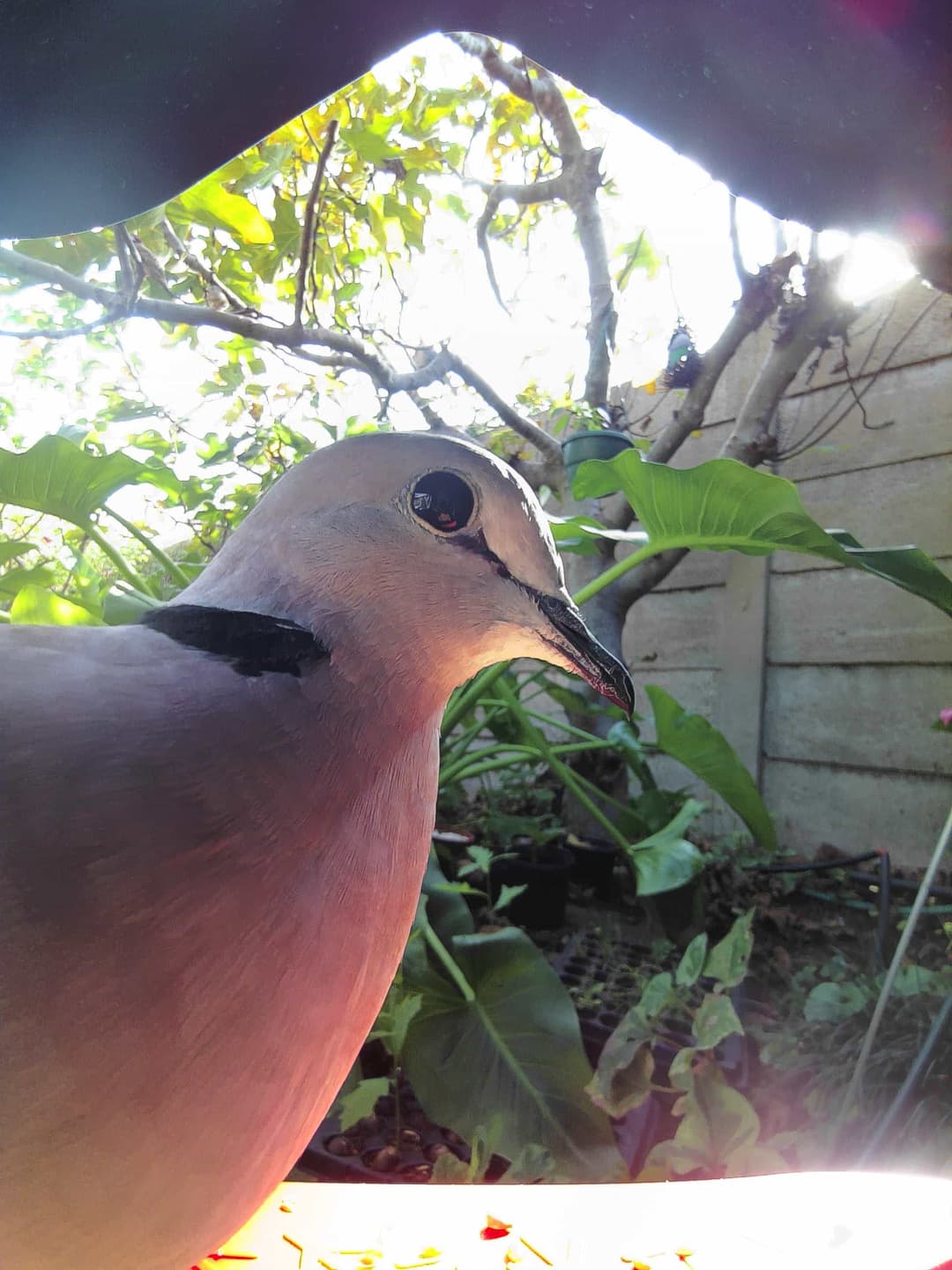
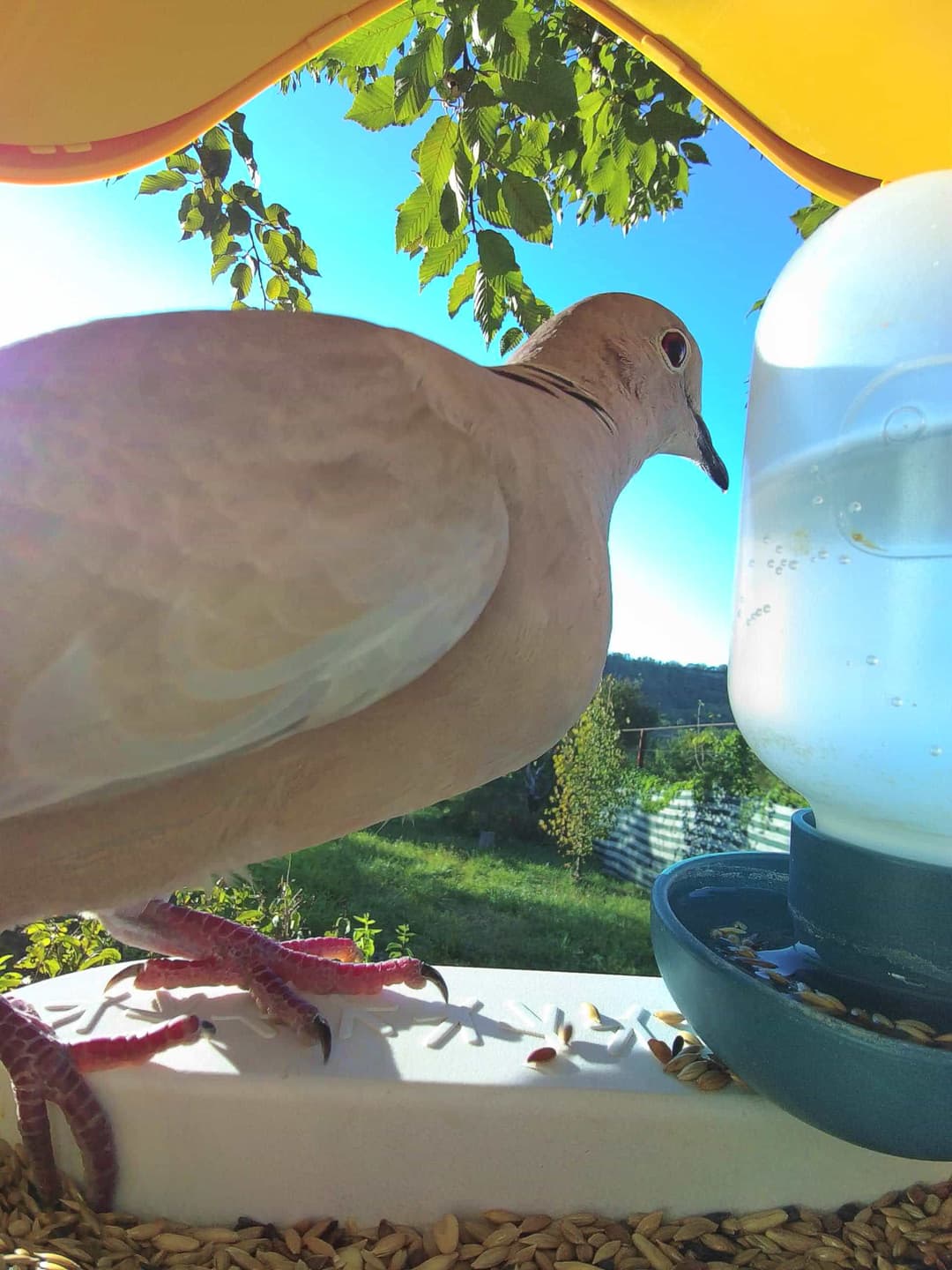
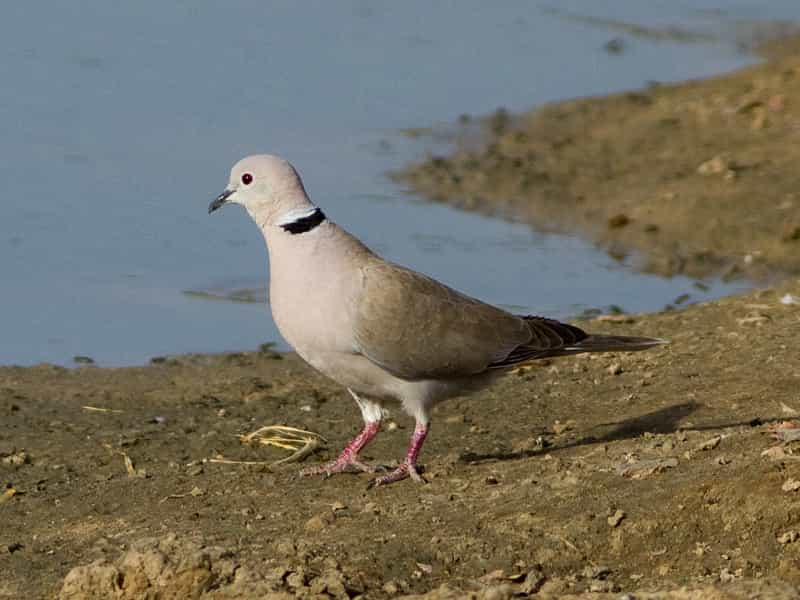
The ring-necked dove, often also called the Cape turtle dove or half-collared dove, stands out with its soft grey-beige plumage, underlined by a thin, black neck ring. Adults are around 25-26.5 cm in length and have broad, bright white edges on their long, pointed tail feathers. It has black eyes, red feet and legs, plus a black beak.
Male vs female
Male and female ring-necked doves look incredibly alike, both sporting the same, pale grey-brown coloration and diagnostic black ring around their neck. Subtle differences are noted in size, with males being slightly larger and usually exhibiting more robust neck rings, compared to the narrower band seen on the females.
Juvenile
Juvenile ring-necked doves possess an overall grey color, more washed out than the adults, and lack the distinctive neck ring. Their bill is more greyish, gradually turning to black as they mature, and their eye color is initially a dull brown, later changing to their iconic black. The tail feathers are also less pointy in their younger years.
Size
9.8 - 10.4 in/3.7 - 7.1 oz
There's more to learn about Ring-Necked Dove
View full detailsMourning Dove
Zenaida macroura
Also known as: American Mourning Dove, Rain Dove, Turtle Dove, Carolina Pigeon, Carolina Turtledove
General appearance
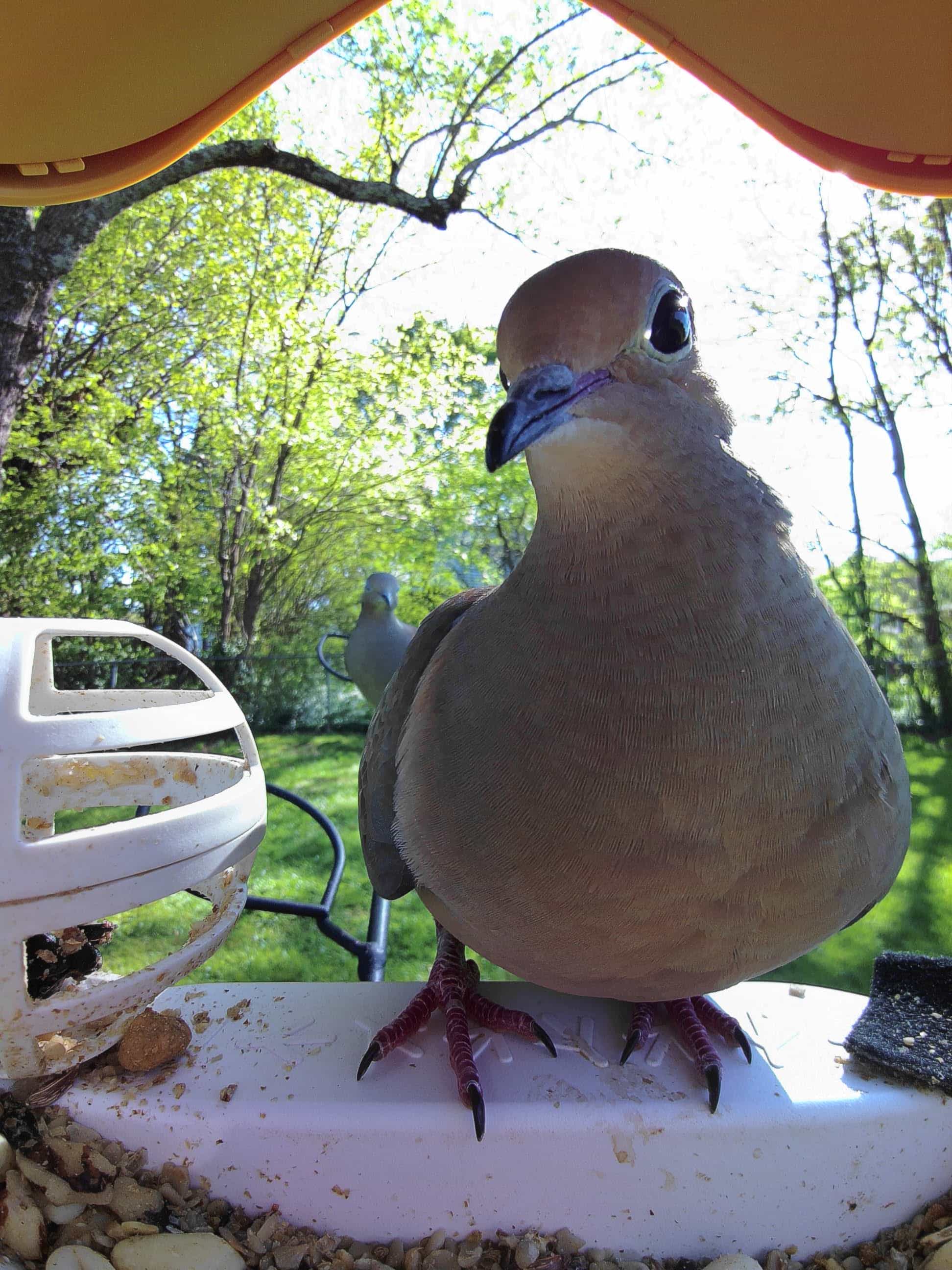
The mourning dove is roughly the size of a crow, bearing characteristics of a long, pointed tail which is about 12', or 30 cm long. This tail displays white spots along its edge while in flight. The bird’s wings are adorned with black spots and its overall coloration exhibits hues of black, brown, gray, pink, tan, and white. The dove has a pointed, wedge-shaped tail.
Male vs female
The sexes of mourning doves can be distinguished by their coloration. Adult males generally have a pinkish tinge on their chests and a blue-gray tone on their crowns. However, the female doves are more dull and plain, predominantly appearing in a shade of brown.
Juvenile
Young mourning doves have a unique scaly appearance that can lead them to be confused with the Inca Dove or the Common Ground Dove. They do not possess the vivid coloring of the adults and generally appear more muted in color.
Size
9.1 - 13.4 in/3.0 - 6.0 oz
There's more to learn about Mourning Dove
View full detailsHow to tell the Ring-Necked Dove from the Mourning Dove
Visual differences
The Ring-Necked Dove is slightly smaller, at 9.8-10.4 inches, and has soft gray-beige plumage with a distinct thin black neck ring. Its tail is long and pointed with bright white edges. The Mourning Dove is 9.1-13.4 inches long, has a slender build with hues of black, brown, gray, pink, tan, and a distinctive pointed tail with white spots. Mourning Doves have black spots on their wings, while Ring-Necked Doves feature black eyes and beaks with red legs. The sexes of Mourning Doves differ, while Ring-Necked Doves look alike.
Key differences and behavior
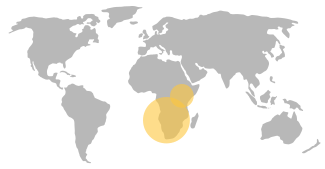
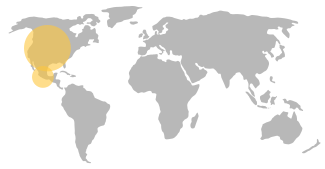
The Ring-Necked Dove and Mourning Dove differ notably in behavior, habitat, and diet. The Ring-Necked Dove, found primarily in South Africa, prefers savannas and woodlands, often near water, while the Mourning Dove inhabits temperate North American regions, favoring open and semi-open areas. The Ring-Necked Dove is noisy, known for its "How's father?" cooing, and exhibits head-bobbing movements when walking. In contrast, the Mourning Dove is known for silent, high-speed flights up to 55 mph and elaborate aerial courtship displays. Both species primarily consume seeds, but the Ring-Necked Dove occasionally eats fruits and insects, whereas seeds make up 99% of the Mourning Dove's diet. In nesting, both species share incubation duties, but Mourning Doves uniquely produce 'crop milk' for their young.
Still not sure? Here are more lookalikes!
Ring-Necked Dove vs Eurasian Collared Dove
Ring-Necked Dove vs African Collared Dove
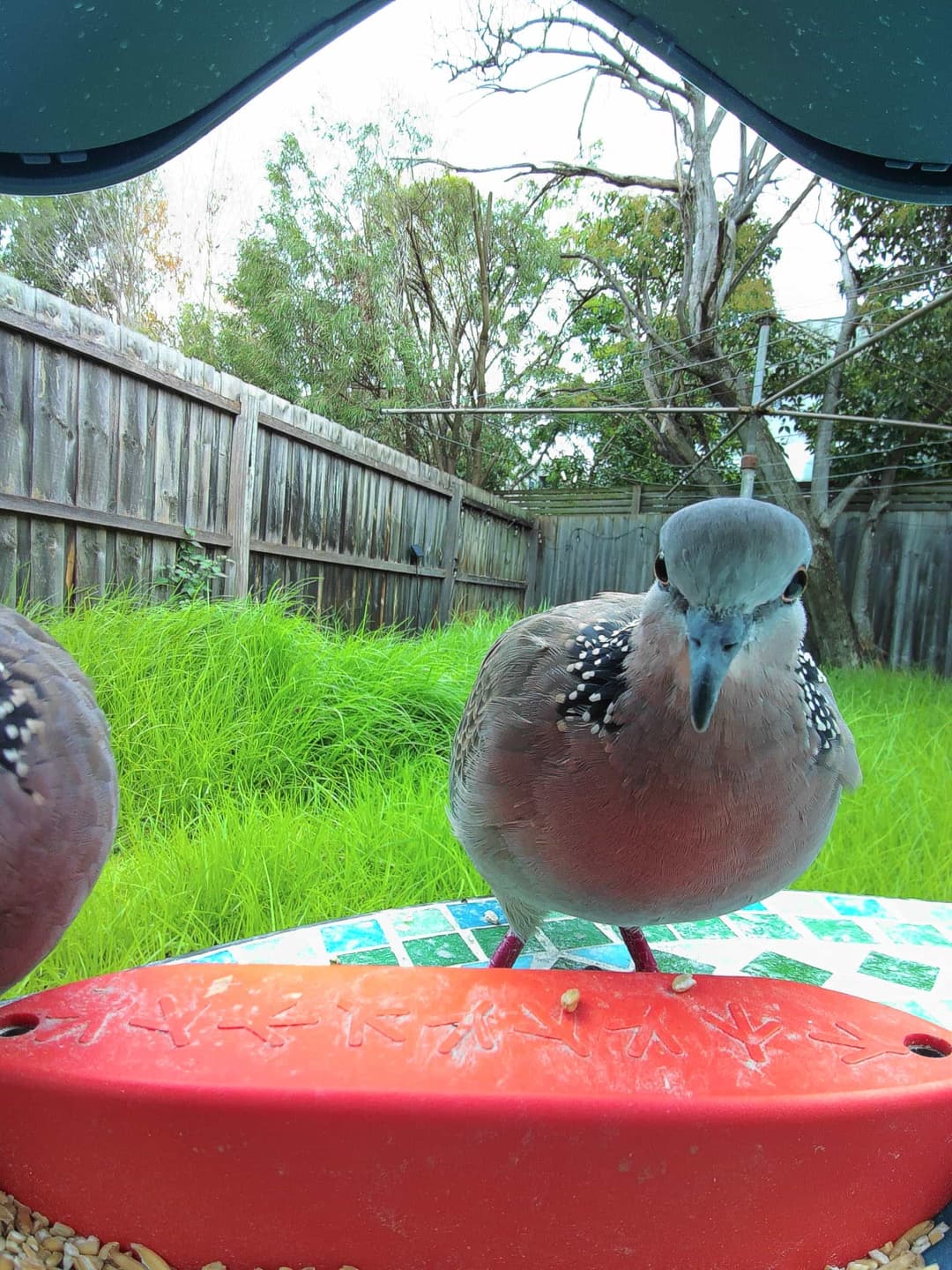
Mourning Dove vs Eurasian Collared Dove

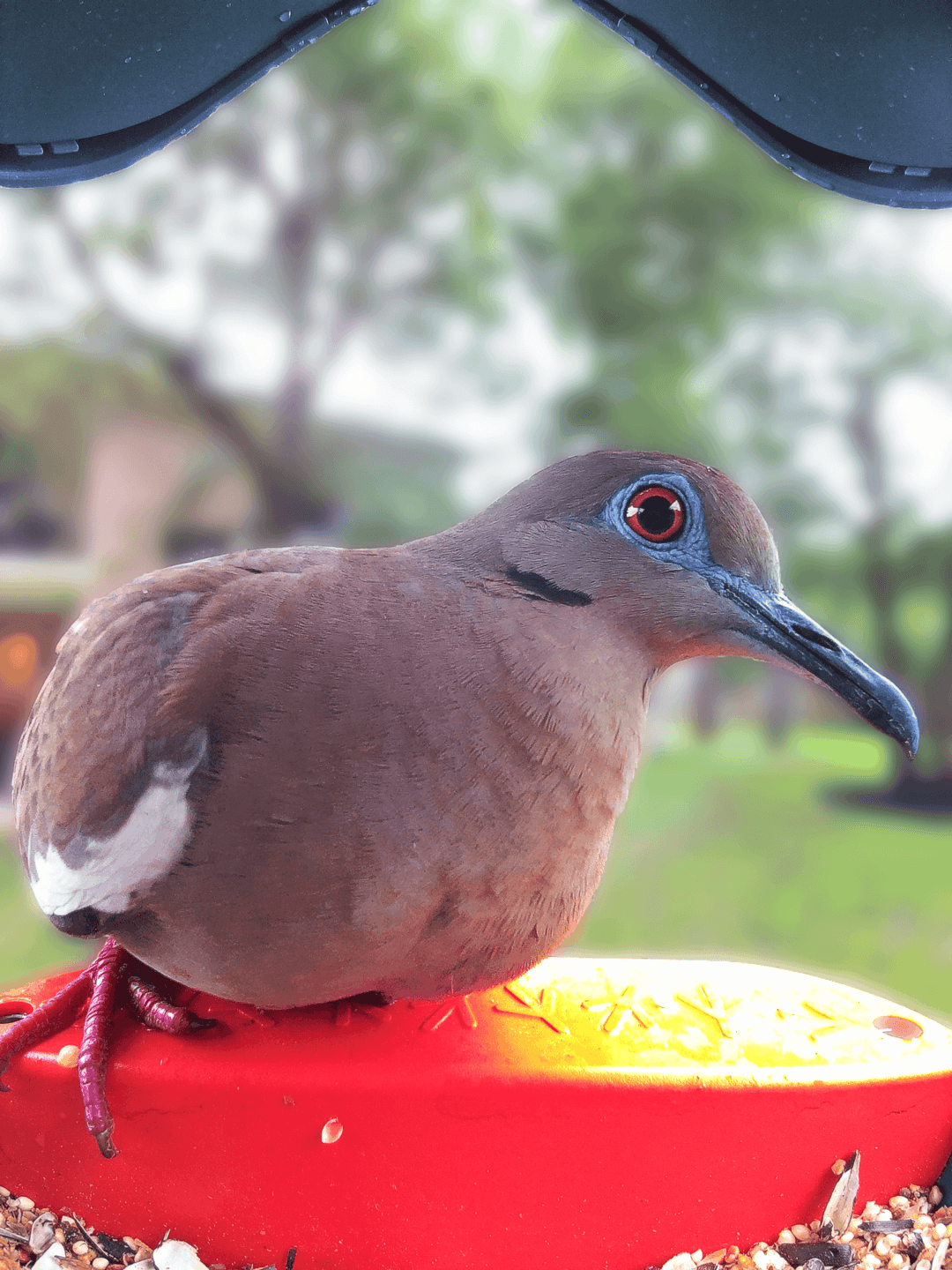
Mourning Dove vs White-Winged Dove
Mourning Dove vs Band-Tailed Pigeon
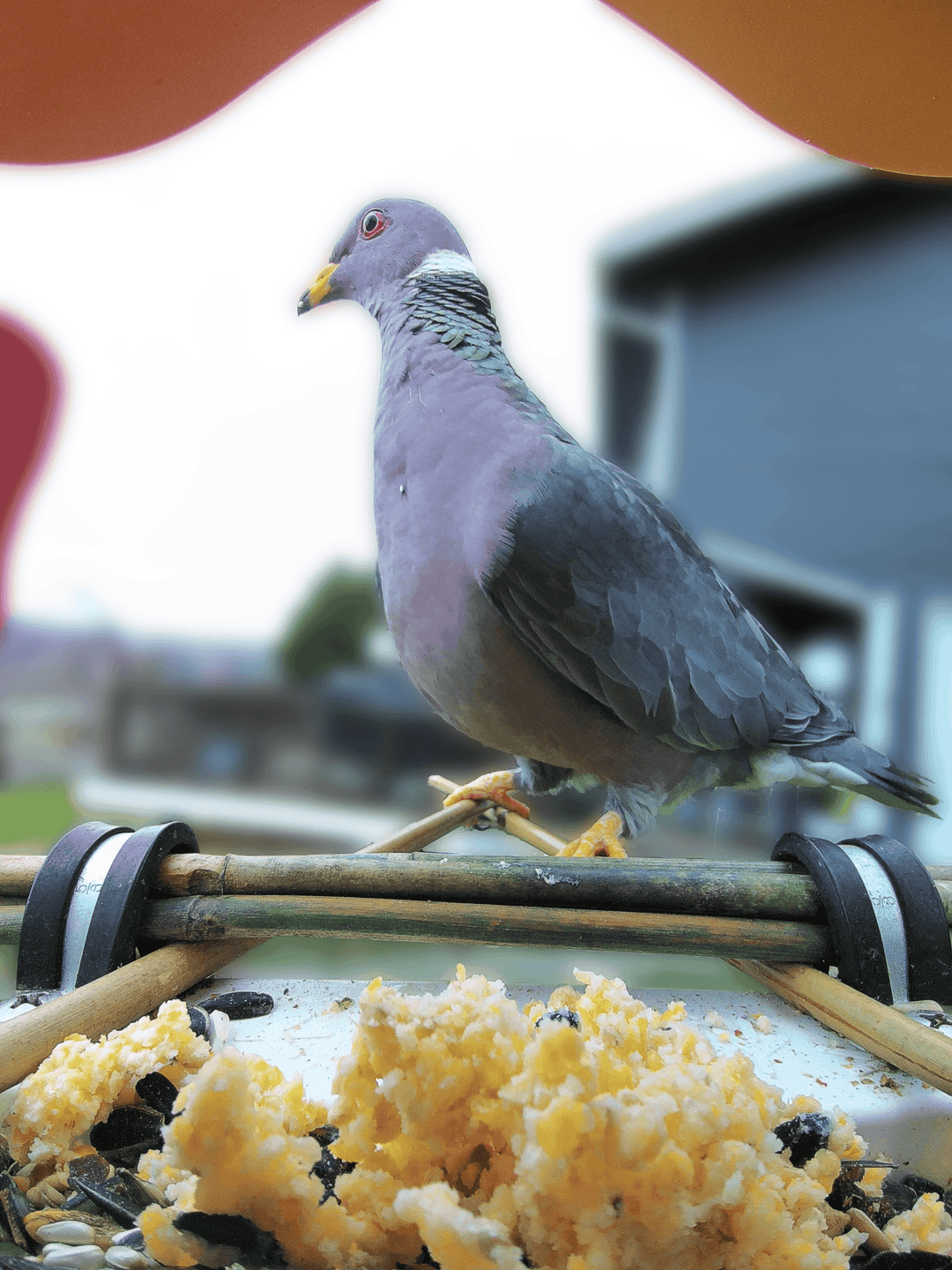
Mourning Dove vs White-Tipped Dove
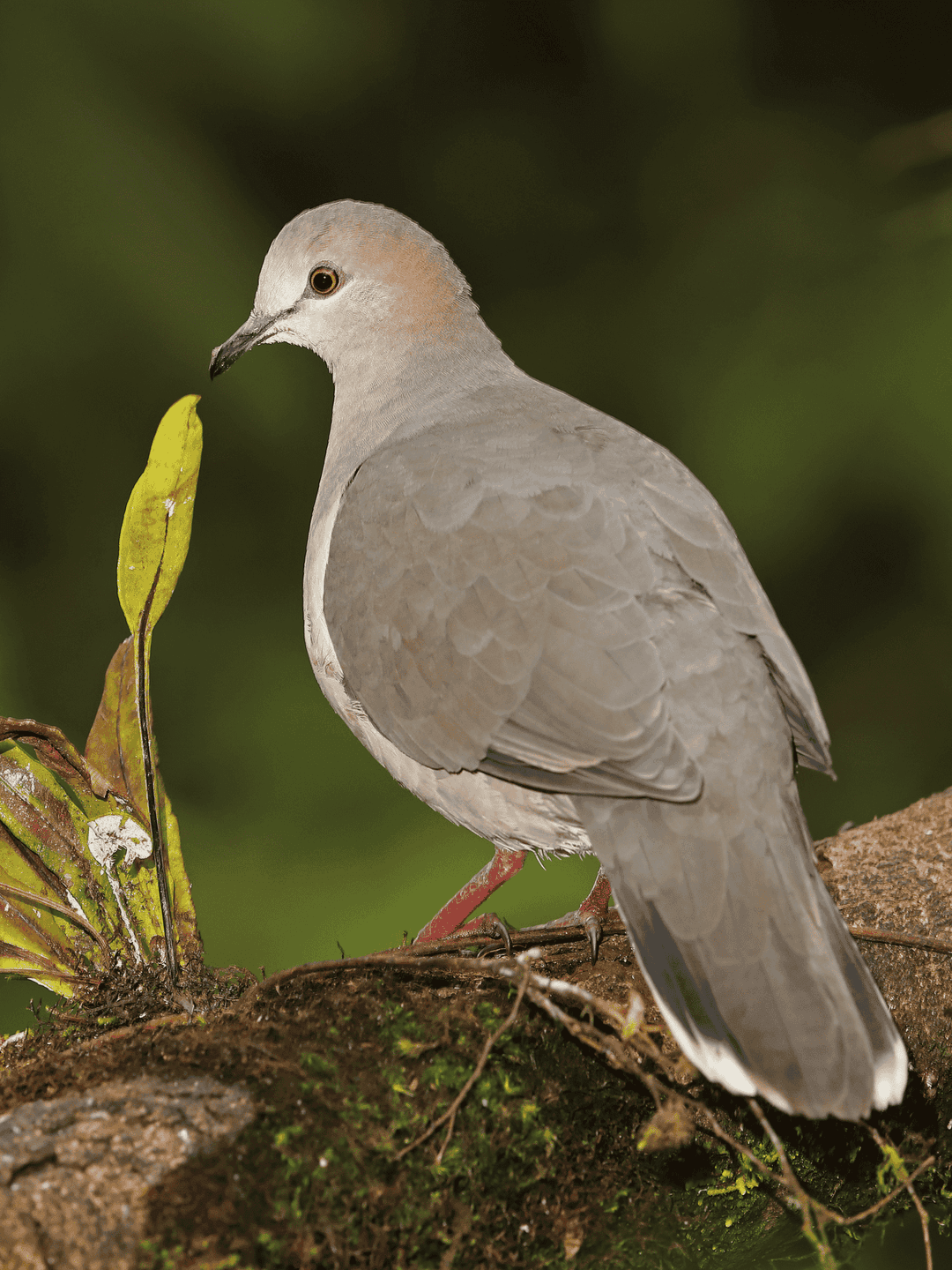
Mourning Dove vs Common Ground-Dove
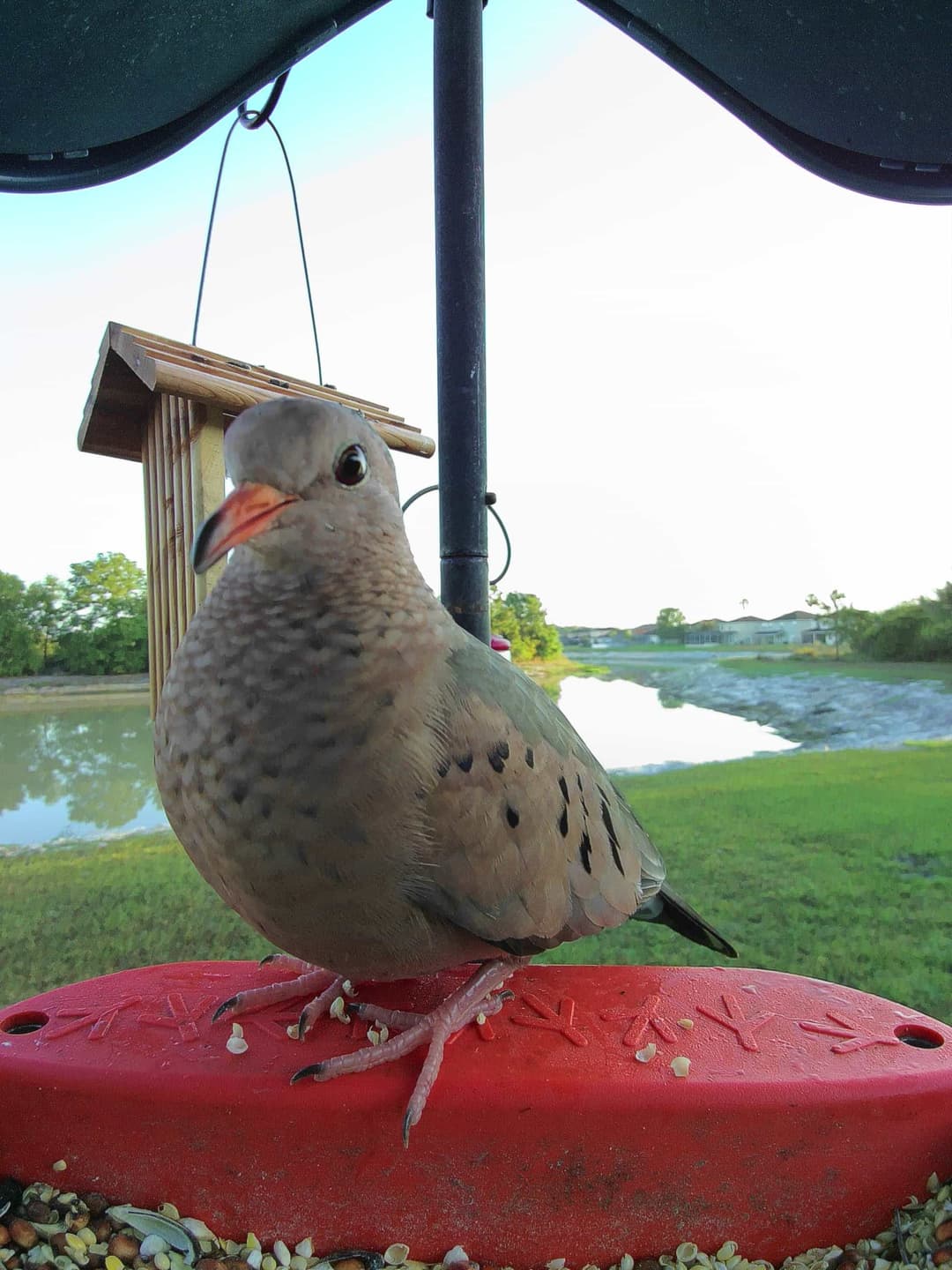
Mourning Dove vs Inca Dove
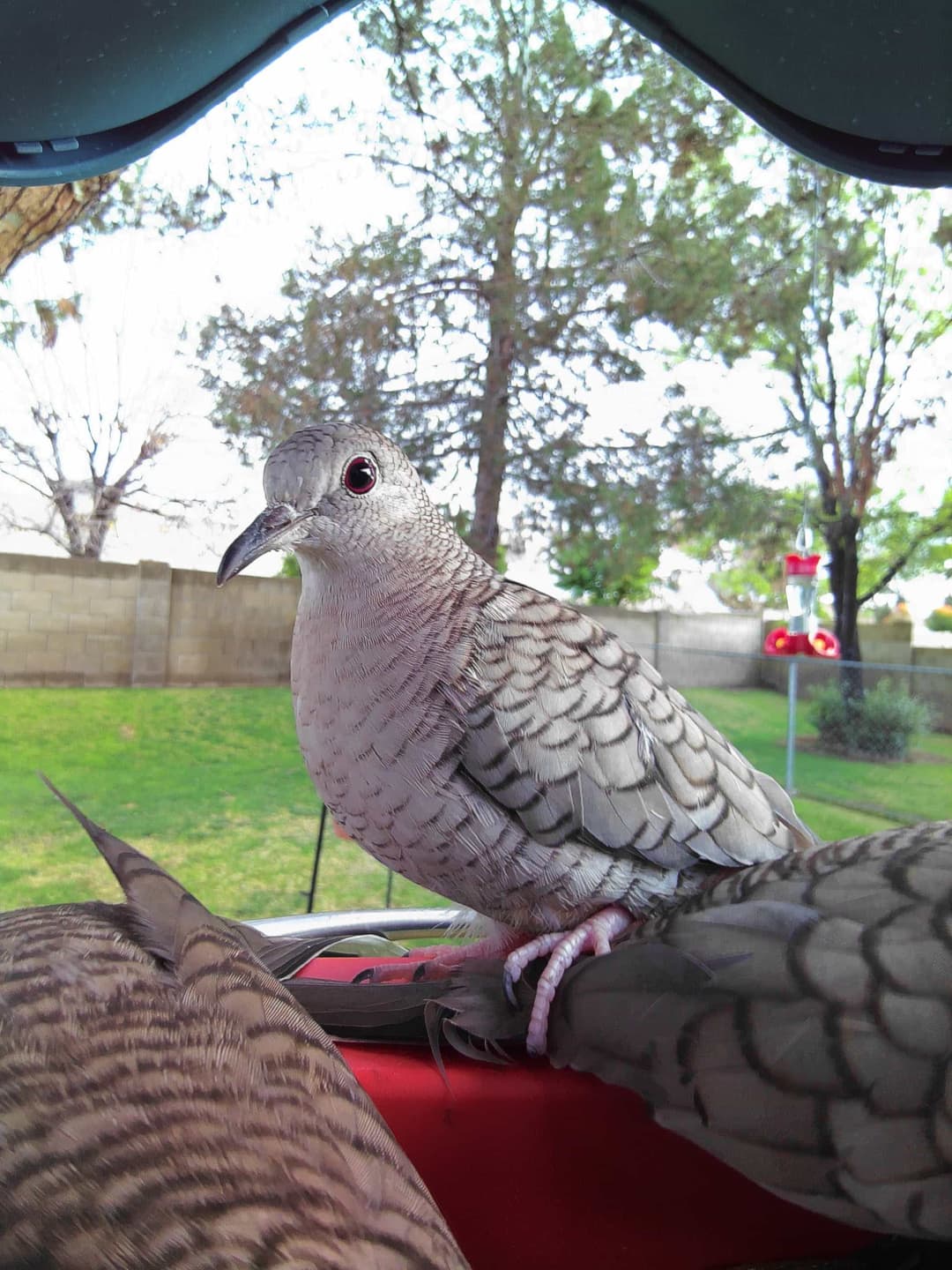
Ring-Necked Dove vs [Select a bird]

[Select a bird]
Pick a bird to compare
Mourning Dove vs [Select a bird]
[Select a bird]
Pick a bird to compare