Ring-Necked Dove or Eurasian Collared Dove?
Here's how to tell the difference
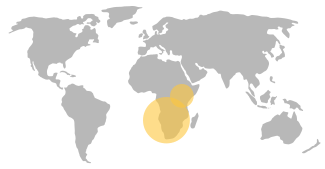


Ring-Necked Dove
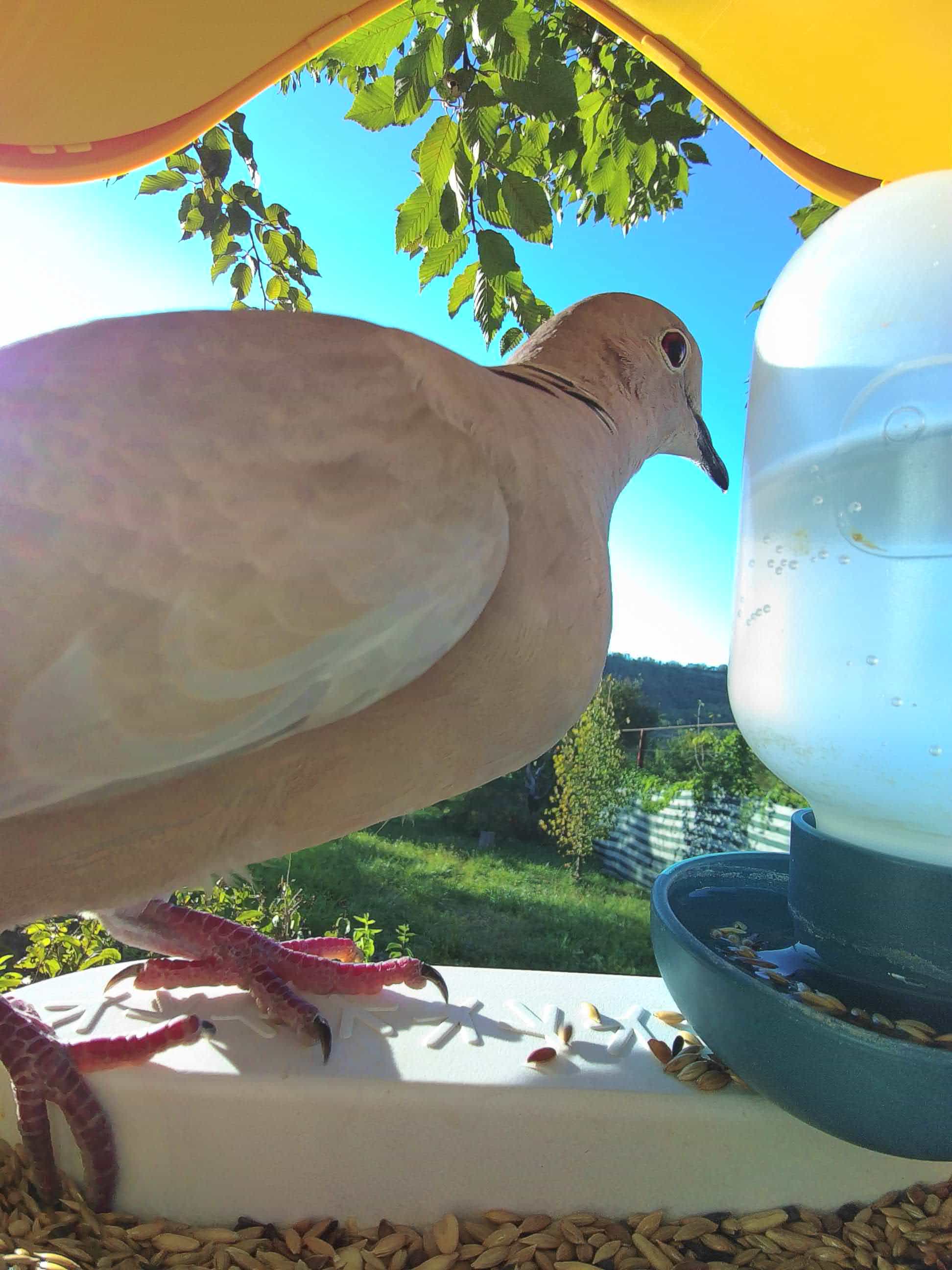


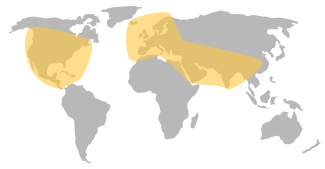
Eurasian Collared Dove
Ring-Necked Dove
Streptopelia capicola
Also known as: Cape Turtle Dove, Half-Collared Dove
General appearance
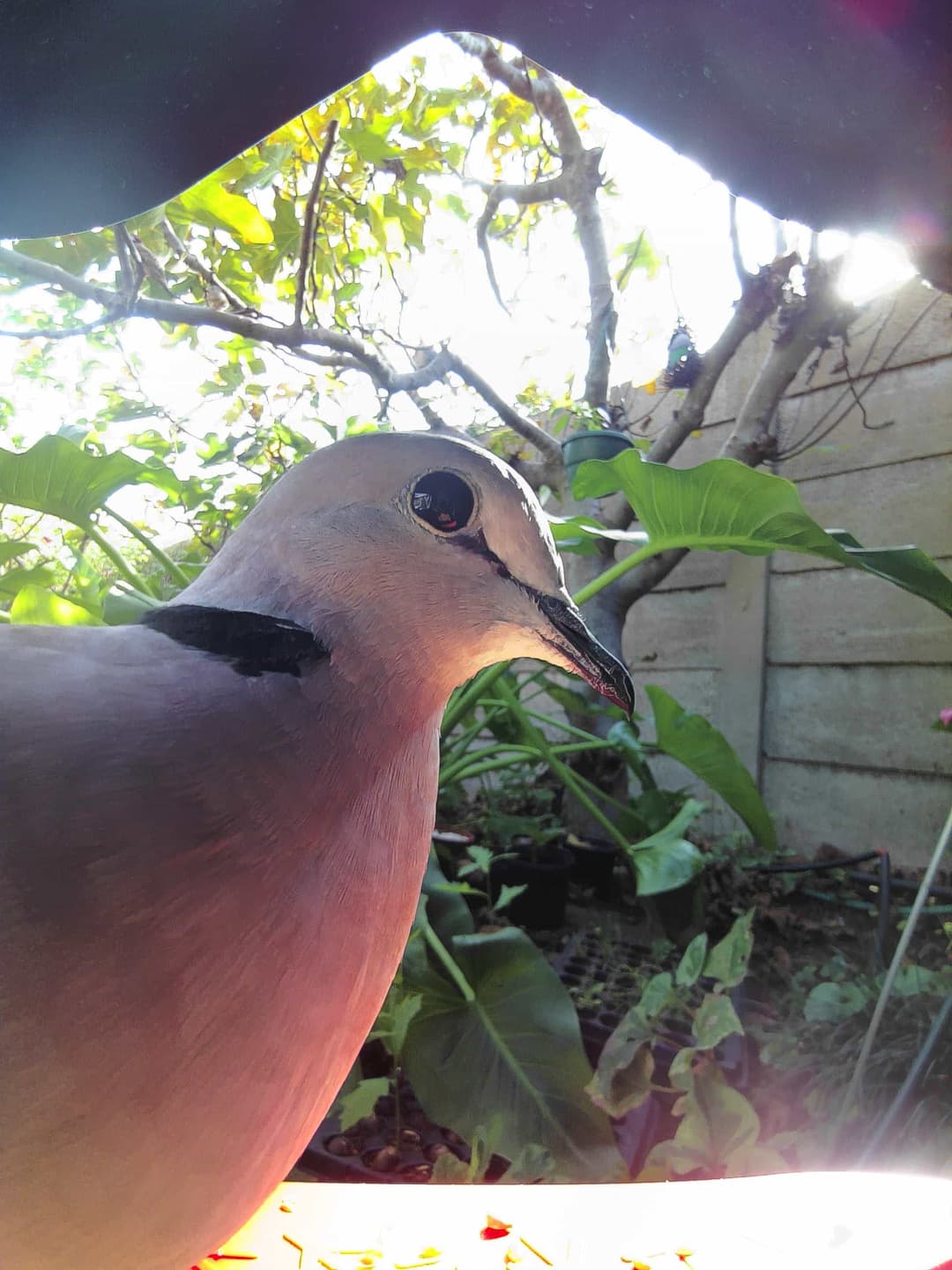
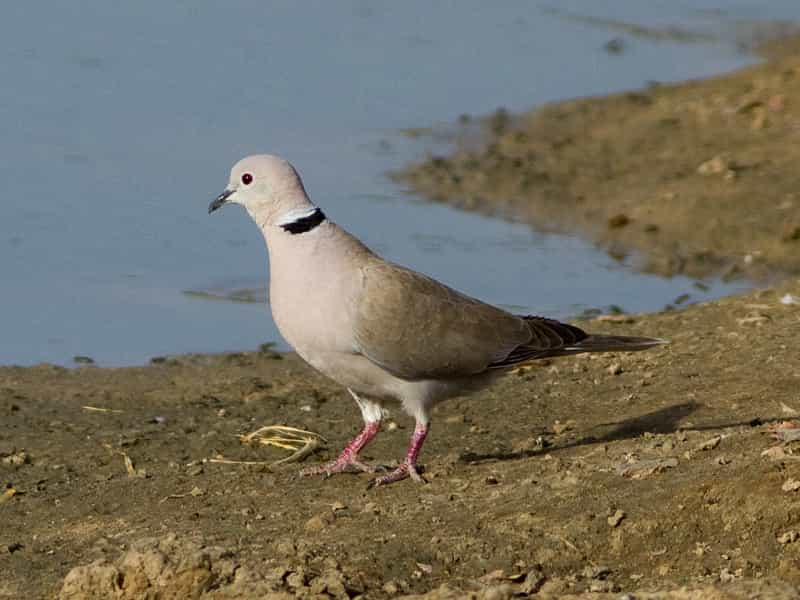
The ring-necked dove, often also called the Cape turtle dove or half-collared dove, stands out with its soft grey-beige plumage, underlined by a thin, black neck ring. Adults are around 25-26.5 cm in length and have broad, bright white edges on their long, pointed tail feathers. It has black eyes, red feet and legs, plus a black beak.
Male vs female
Male and female ring-necked doves look incredibly alike, both sporting the same, pale grey-brown coloration and diagnostic black ring around their neck. Subtle differences are noted in size, with males being slightly larger and usually exhibiting more robust neck rings, compared to the narrower band seen on the females.
Juvenile
Juvenile ring-necked doves possess an overall grey color, more washed out than the adults, and lack the distinctive neck ring. Their bill is more greyish, gradually turning to black as they mature, and their eye color is initially a dull brown, later changing to their iconic black. The tail feathers are also less pointy in their younger years.
Size
9.8 - 10.4 in/3.7 - 7.1 oz
There's more to learn about Ring-Necked Dove
View full detailsEurasian Collared Dove
Streptopelia decaocto
General appearance
The Eurasian collared dove measures approximately 12 1/2 inches (32 cm) in length. Its predominant color is pale brown, with a distinctive narrow black ring around its neck. It has large white patches on its outer tail feathers. The species is darker than the domesticated Ringed-Turtle-Dove, especially on undertail coverts and wingtips. The size is roughly equivalent to that of a crow. The wings are of a broad and pointed shape, and the tail shape is generally rounded or square-tipped.
Male vs female
There are minimal noticeable differences between the sexes in the Eurasian collared dove. Both males and females exhibit similar features such as the black neck ring, pale brown body color, and white patches on the tail. Any variation is subtle and generally indistinguishable in the wild.
Juvenile
Juvenile Eurasian collared doves are similar in size and color to adults, but they may have slightly duller coloration. Recognizing them may be challenging due to their resemblance to adult birds until they attain their distinctive adult plumage.
Size
11.4 - 11.8 in/4.9 - 6.3 oz
There's more to learn about Eurasian Collared Dove
View full detailsHow to tell the Ring-Necked Dove from the Eurasian Collared Dove
Visual differences
The Ring-Necked Dove is smaller, measuring 9.8 to 10.4 inches, compared to the 11.4 to 11.8 inches of the Eurasian Collared Dove. The Ring-Necked Dove has a soft grey-beige plumage with bright white tail edges, while the Eurasian Collared Dove is pale brown with large white patches on its outer tail feathers. Both have a black neck ring, but the Eurasian Collared Dove's plumage is slightly darker. The Ring-Necked Dove has black eyes and a black beak, whereas features might vary slightly in the Eurasian Collared Dove.
Key differences and behavior
The Ring-Necked Dove (Streptopelia capicola) and the Eurasian Collared Dove (Streptopelia decaocto) differ in behavior and habitat. The Ring-Necked Dove, native to South Africa, prefers moist woodlands and savannas, often near water, while the Eurasian Collared Dove thrives in suburban and farmland areas globally. Ring-Necked Doves are known for their head-bobbing walk and communal roosting near water, whereas the Eurasian Collared Dove is more adaptable to urban settings, thriving better in small towns. Both species are seed-eaters but differ in nesting; Ring-Necked Doves build loose platforms low in trees or structures, and Eurasian Collared Doves construct flimsy nests higher up, rearing multiple broods. Courtship in Ring-Necked Doves involves elaborate displays, while Eurasian Collared Doves use steep flights and bowing rituals. Both species exhibit strong pair bonds and parental care, sharing incubation and feeding duties.
Still not sure? Here are more lookalikes!
Ring-Necked Dove vs Mourning Dove

Ring-Necked Dove vs African Collared Dove
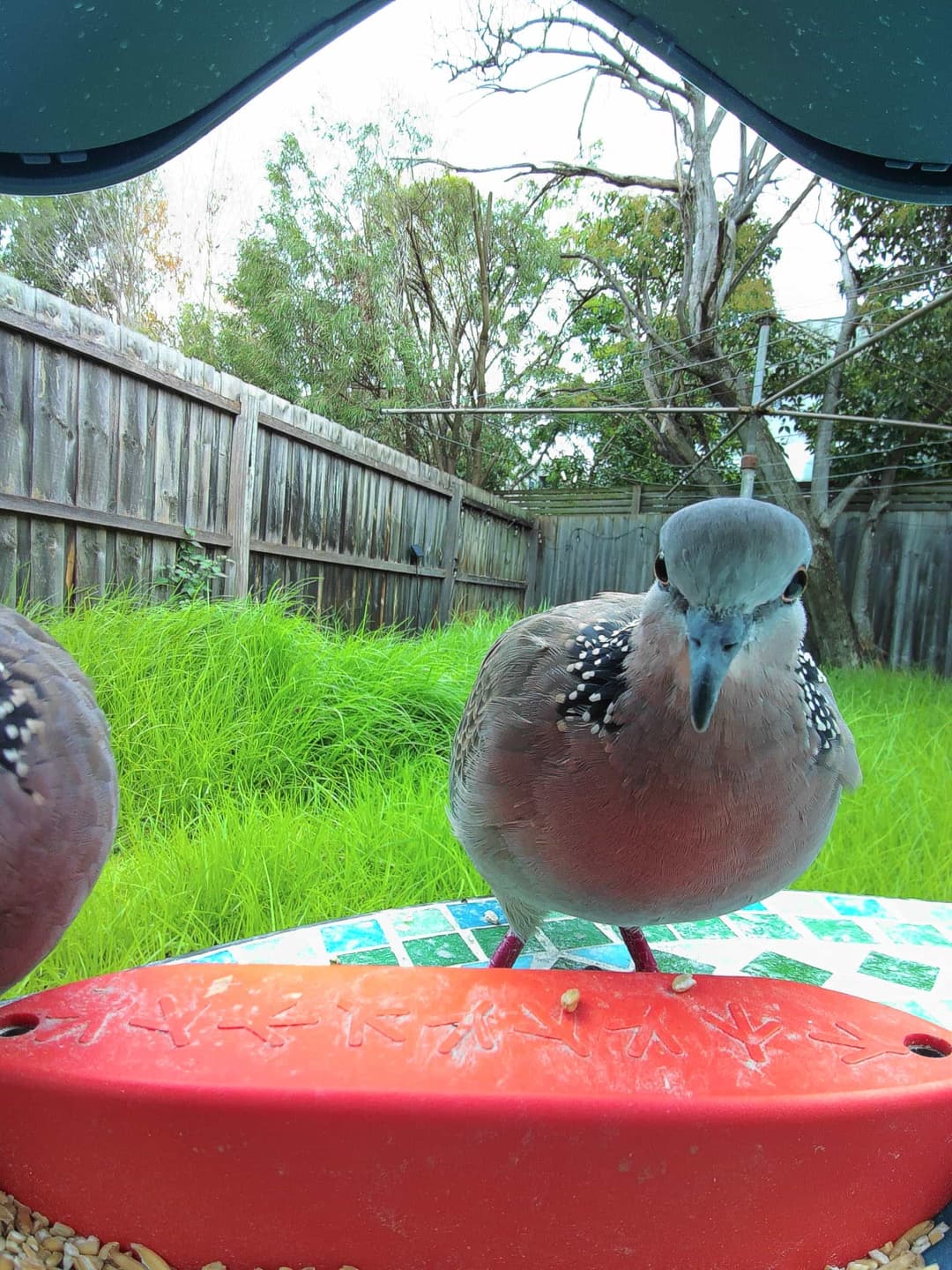
Eurasian Collared Dove vs Mourning Dove
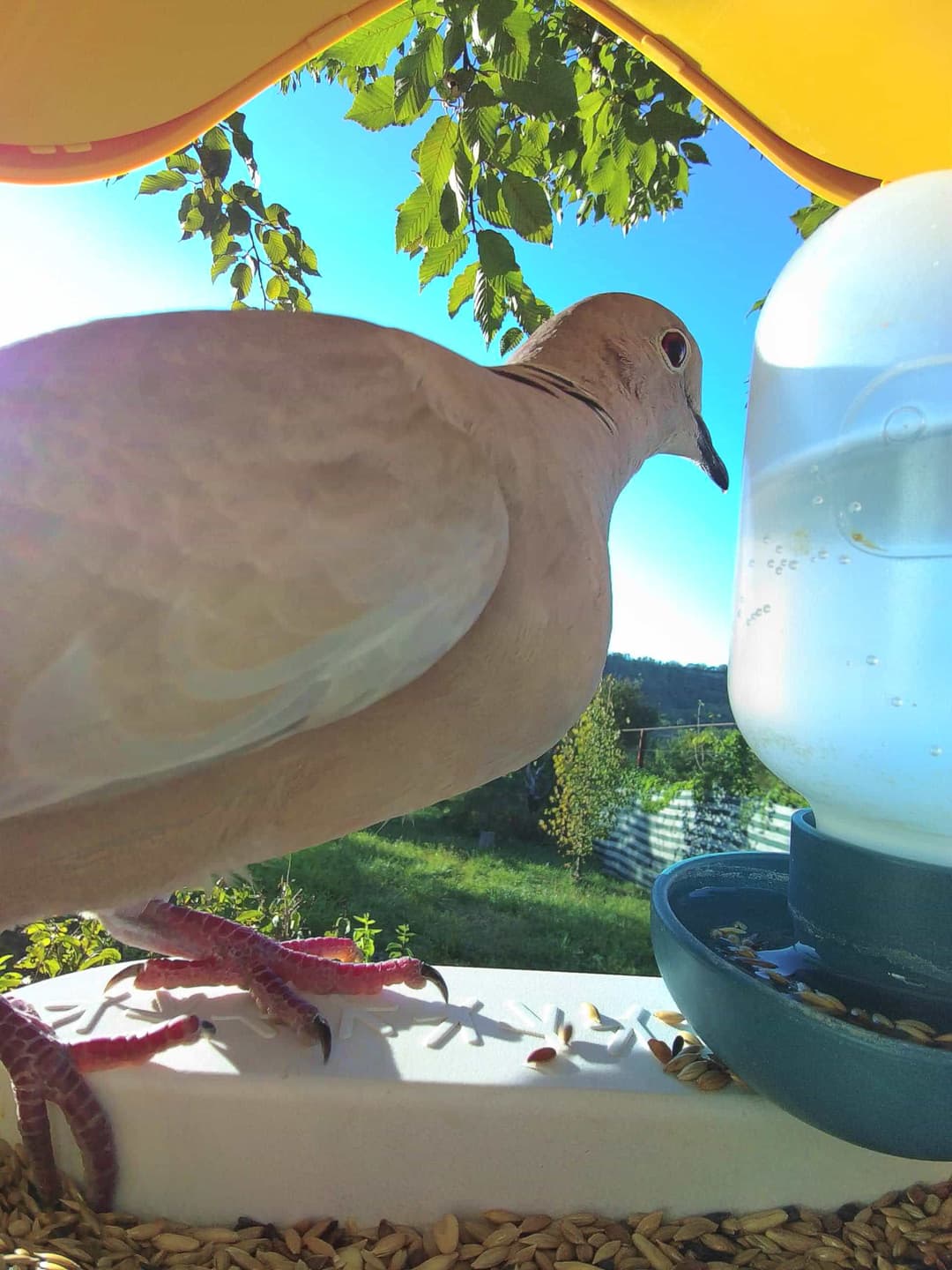
Eurasian Collared Dove vs White-Winged Dove
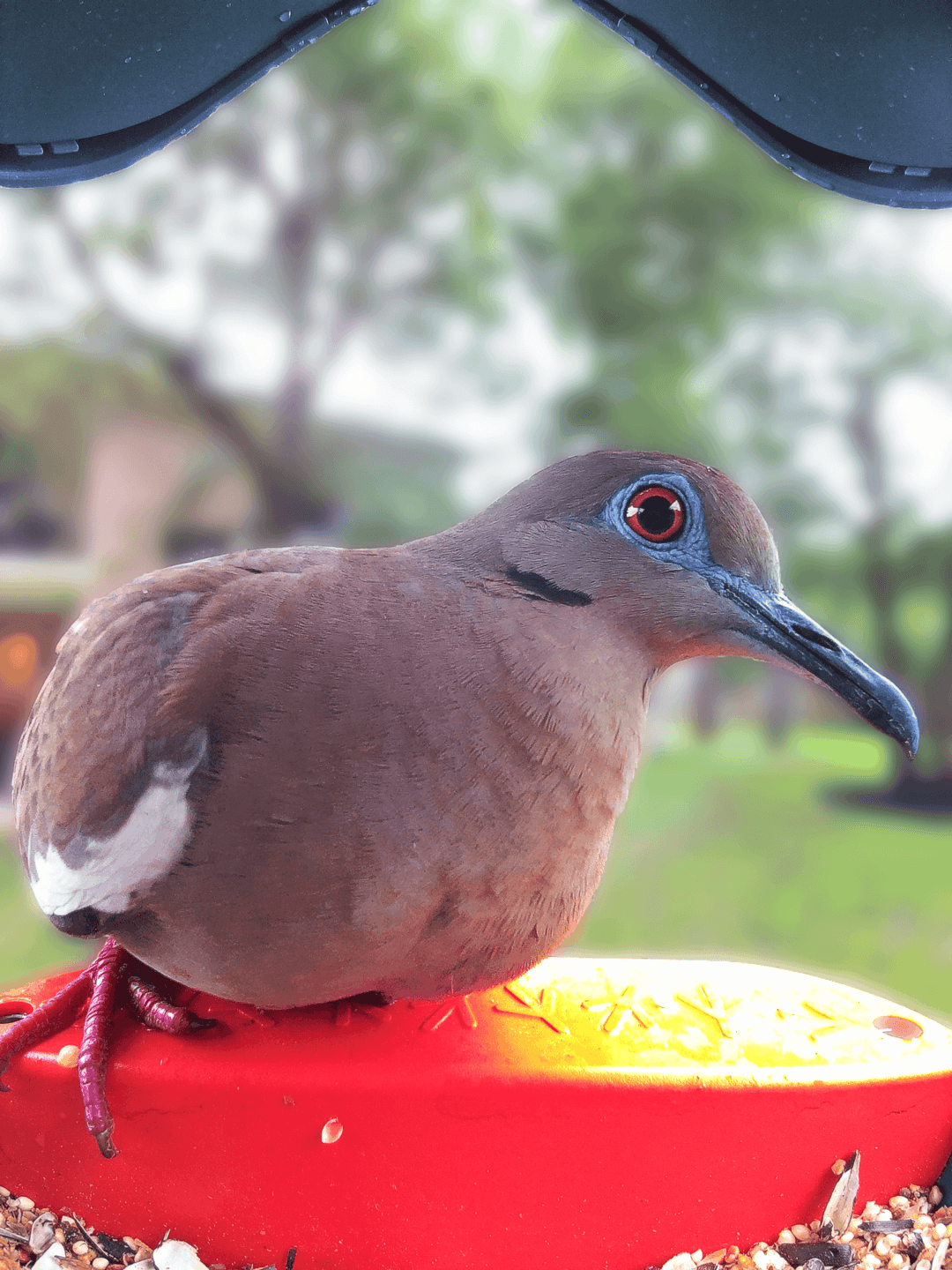
Eurasian Collared Dove vs African Collared Dove
Ring-Necked Dove vs [Select a bird]

[Select a bird]
Pick a bird to compare
Eurasian Collared Dove vs [Select a bird]
[Select a bird]
Pick a bird to compare