
Ring-Necked Dove
Ring-Necked Dove
Also known as: Cape Turtle Dove, Half-Collared Dove
Streptopelia capicola


Quick Identification guide
Quick Identification guide
Male
- •
pale grey body with a slightly pinkish tinge on the lower chest
- •
Distinctive black collar on the back of the neck, creating a ringed appearance
- •
Dark wingtips contrasting the otherwise lighter wings
Female
- •
pale grey body similar to the male, but typically slightly duller overall
- •
Subtle black collar on the neck, which may be less pronounced
- •
Dark wingtips with a softer contrast against the lighter wings
What does a ring-necked dove sound like?
The ring-necked dove typically vocalizes a delicate, mournful, cooing song consisting of five parts - coo-COO-coo, followed by a pause, then a final coo-COO. Its call, a soft 'hoo', is often mistaken for an owl. Males use these melodic calls to establish territory or attract mates, especially during breeding season. Interactions between doves can lead to a variety of other unique cooing patterns.


Description
Did you know that ring-necked doves bob their heads back and forth as they walk? Maybe they've got their favourite song stuck in their heads! These noisy birds are a familiar soundtrack in their hometown, especially when a bunch of them gather to roost, drink and bathe. Being close to water is a must! Did you know that some think their song sounds like either 'How's father?' or 'Work harder!'
The ring-necked dove can weigh between 106to200grams and be from25to26.5centimeters tall.
The ring-necked dove typically lives for 10 to 15 years in the wild. In captivity, its lifespan can extend up to 20 years. These birds have a relatively long life compared to other dove species, many of which live for only 5 to 10 years. Their close relative, the Eurasian collared-dove, has a similar lifespan, reaching up to 17 years in the wild and in captivity.
Did you know?
Most popular questions about ring-necked dove
How to recognise a ring-necked dove?
General appearance
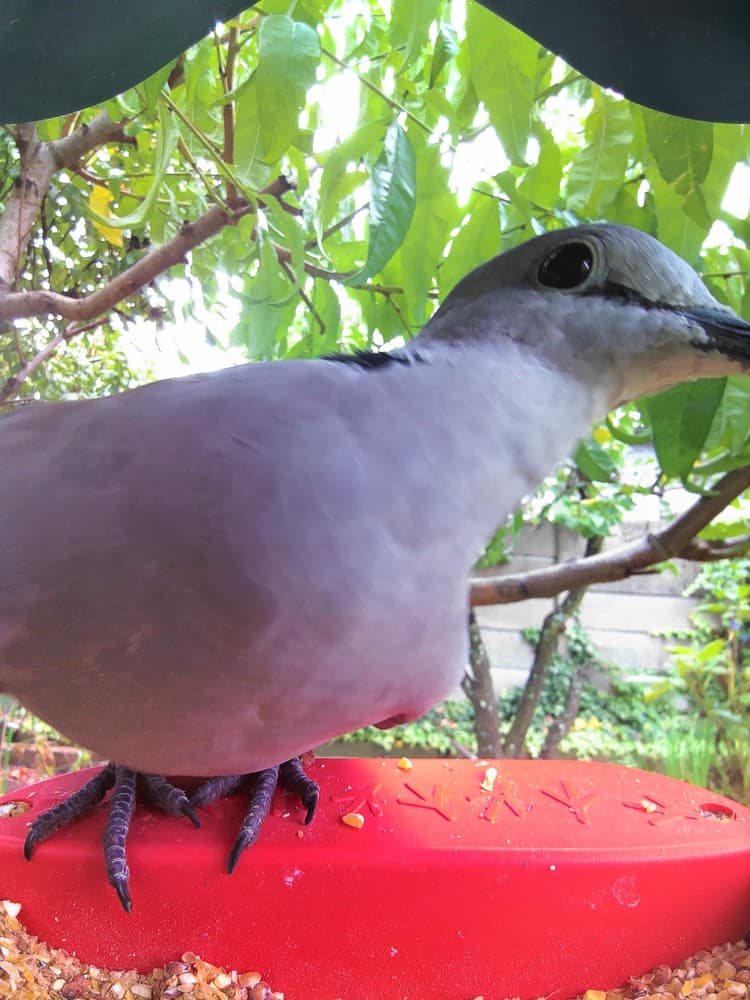
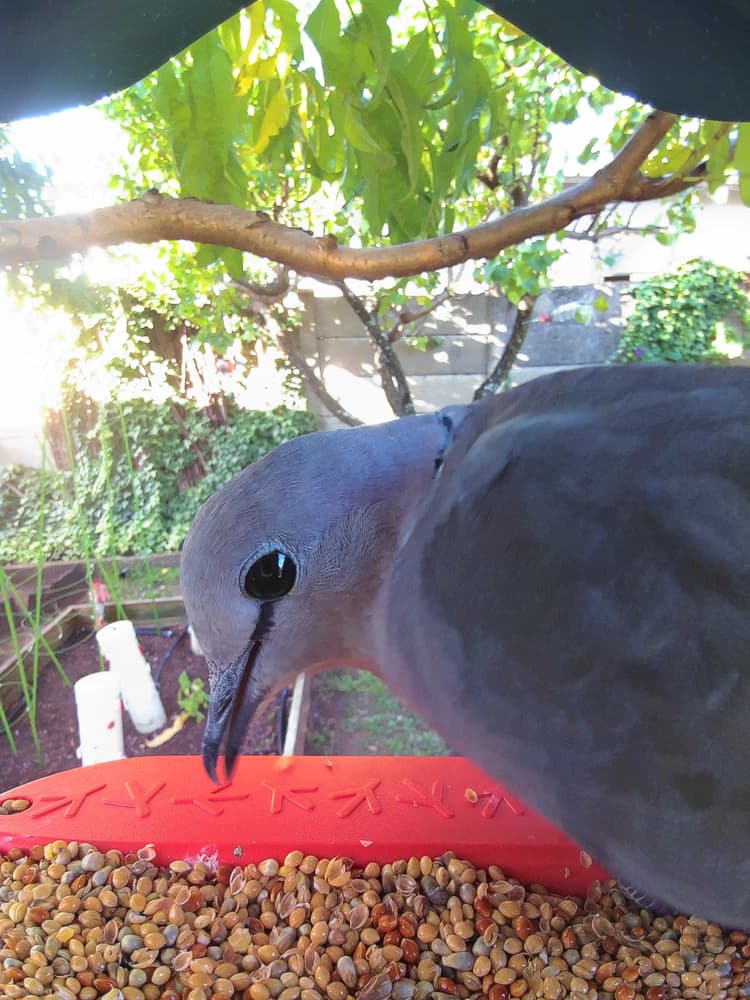
The ring-necked dove, often also called the Cape turtle dove or half-collared dove, stands out with its soft grey-beige plumage, underlined by a thin, black neck ring. Adults are around 25-26.5 cm in length and have broad, bright white edges on their long, pointed tail feathers. It has black eyes, red feet and legs, plus a black beak.
Male vs female
Male and female ring-necked doves look incredibly alike, both sporting the same, pale grey-brown coloration and diagnostic black ring around their neck. Subtle differences are noted in size, with males being slightly larger and usually exhibiting more robust neck rings, compared to the narrower band seen on the females.
Juvenile
Juvenile ring-necked doves possess an overall grey color, more washed out than the adults, and lack the distinctive neck ring. Their bill is more greyish, gradually turning to black as they mature, and their eye color is initially a dull brown, later changing to their iconic black. The tail feathers are also less pointy in their younger years.
Often mistaken for
Mourning Dove vs Ring-Necked Dove
The Mourning Dove is similar in shape and size to the Ring-Necked Dove but has a more muted grey-brown plumage and lacks the distinct collar marking.

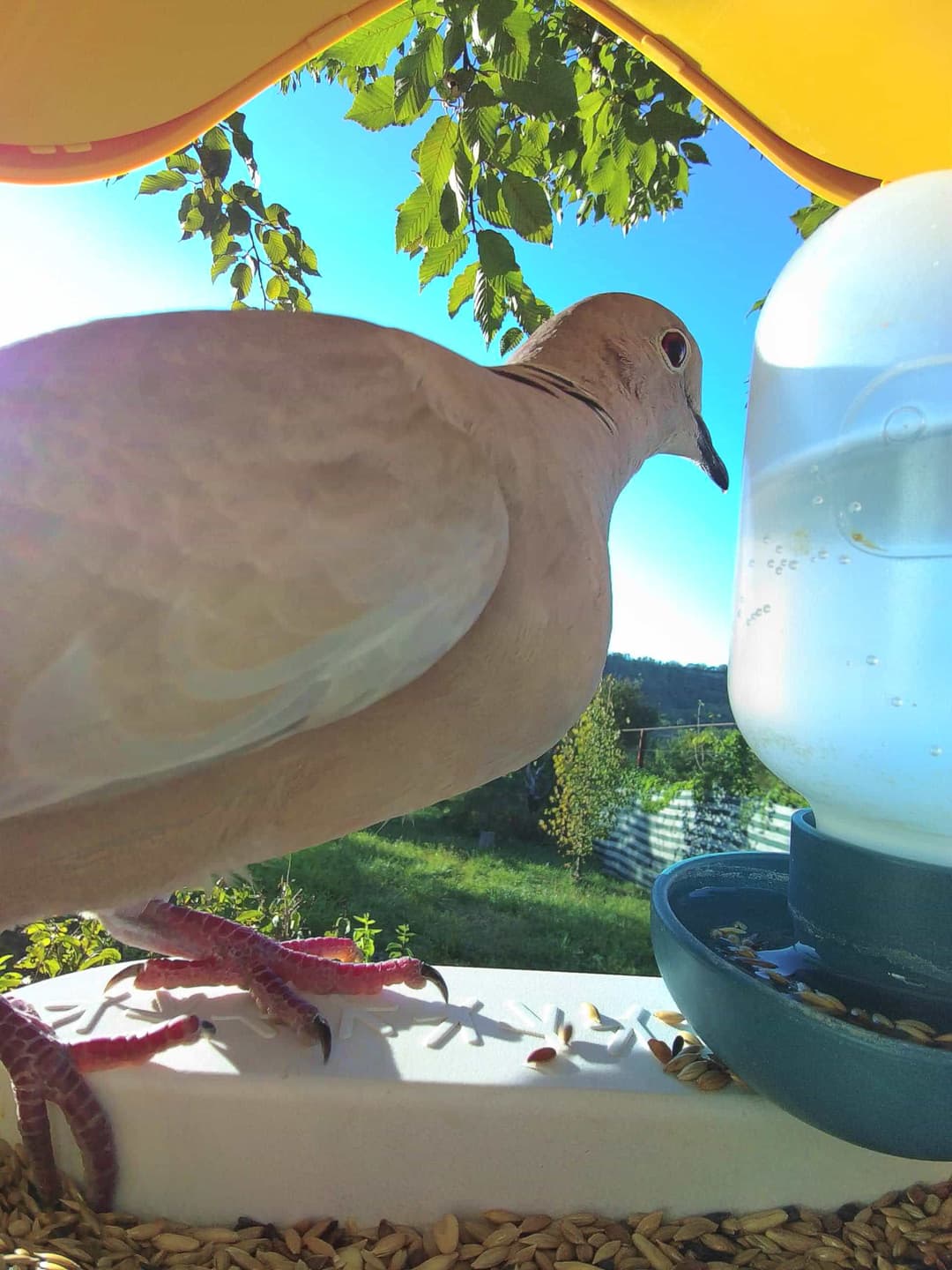
Eurasian Collared Dove vs Ring-Necked Dove
The Eurasian Collared Dove resembles the Ring-Necked Dove in size and the presence of a black collar but has lighter, pinkish-grey plumage.
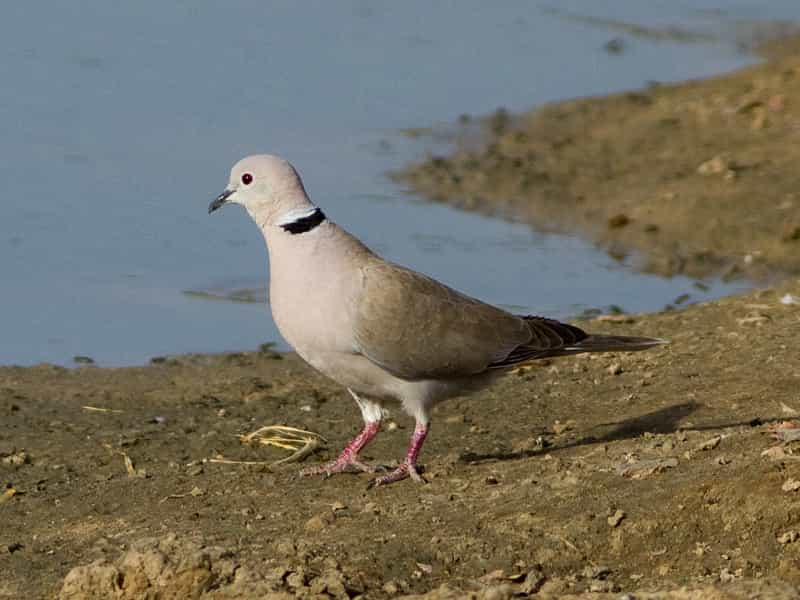
African Collared Dove vs Ring-Necked Dove
The African Collared Dove is similar to the Ring-Necked Dove with its size and black collar, but it displays a paler, sandy-brown plumage.
Spotted Dove vs Ring-Necked Dove
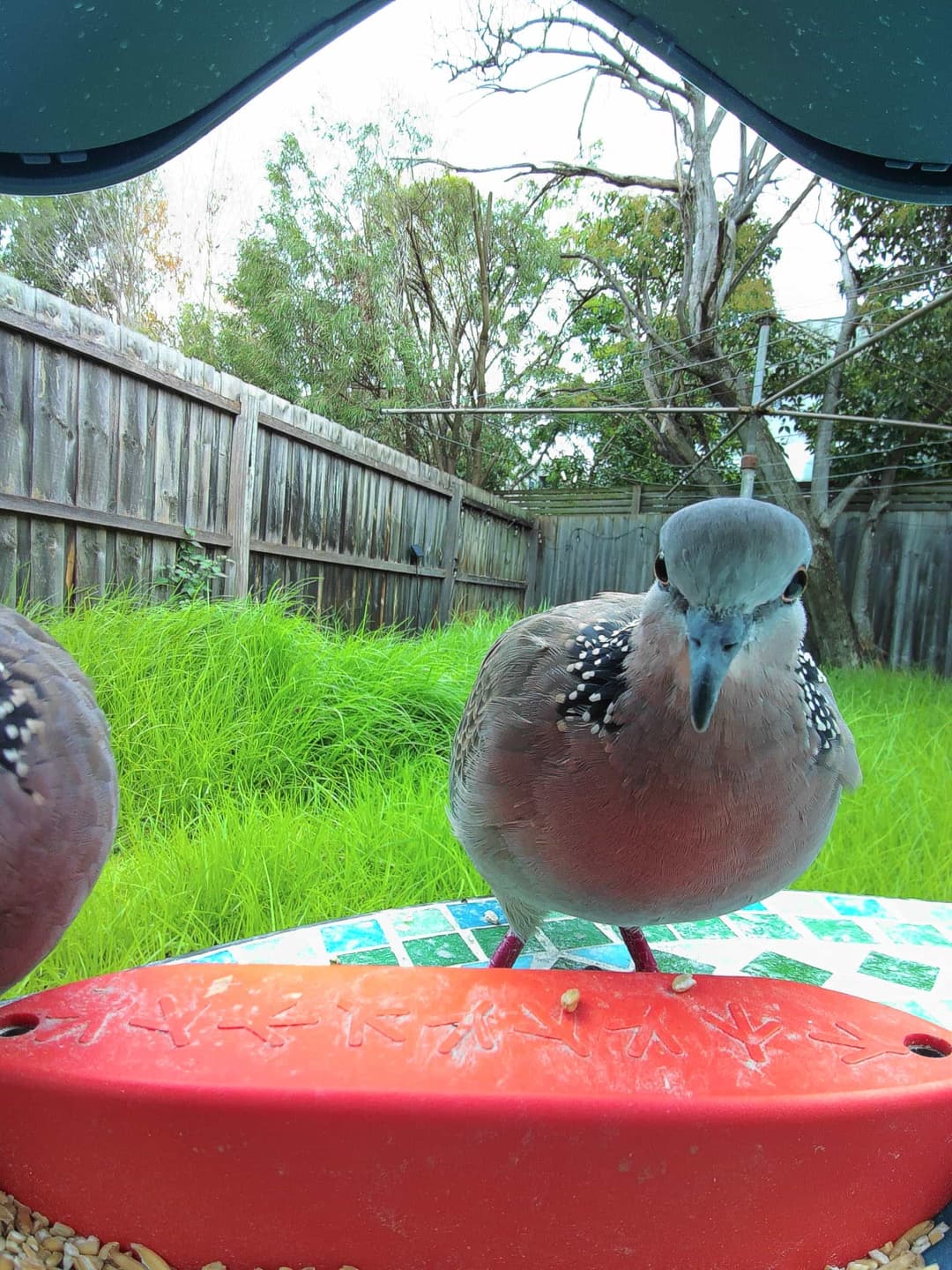
The Spotted Dove is similar to the Ring-Necked Dove but can be distinguished by its spotted neck pattern and brownish plumage.
Breeding and nesting habits of the ring-necked dove
Mating behaviors
The ring-necked dove engages in a series of vocal coos and displays of fanning its tail feathers to attract a mate. Males perform aerial acrobatics and courtship feeding as part of their mating rituals.
Nesting details
The species typically builds its nest in trees, bushes, or even man-made structures. Nests are constructed with twigs, leaves, and grass, forming a loose platform. In gardens, creating a dense shrub or tree cover can help provide a suitable nesting habitat.
Eggs and chick-rearing
The ring-necked dove usually lays two eggs per clutch. Incubation lasts about 14-16 days, and both parents share this duty. After hatching, both parents feed the chicks with regurgitated food for approximately two weeks until they fledge.
What does a ring-necked dove like to eat?
Fruits
Insects
Nectar
Plants
Seeds
Worms
Natural diet
The ring-necked dove primarily feeds on a diet composed of seeds, which are a major component. They also consume small fruits and berries when available in their natural habitats. The birds forage mostly on the ground, picking up seeds from grasses and other plants. They occasionally eat small insects and snails, supplementing their diet with protein, especially when breeding.
Bird feeders
At bird feeders, ring-necked doves are commonly attracted to grains and seeds. They tend to favor millet, cracked corn, and sunflower seeds, which are regularly offered in birdseed mixes. These birds are ground feeders, so platform feeders or scattered seed on the ground is ideal for attracting them to backyard feeding stations.
Get the right feeder
Using the right type of feeder is crucial for attracting ring-necked doves. They are platform feeders that prefer to eat off flat surfaces, so opt for a platform or tray feeder. Make sure it’s sturdy and large enough for them to comfortably land and sit on. You can hang them from a branch or position them on a stand. Make sure the feeder is in a quiet and safe spot away from busy areas and predators.
Choose the right food
Ring-necked doves enjoy a diet of seeds, fruits and berries. Bird Buddy seeds are a fantastic choice. These are chosen by experts for the season, hence they can offer the most nutritional benefit for the birds. Apart from seeds, consider adding sunflower seeds, millets, or cracked corn to your offering. Fresh fruit cut into small pieces can also be a hit. A consistent supply of food will improve your chances of turning your place into a routine stop for them.
Provide fresh water
Like all birds, ring-necked doves need fresh water for drinking and bathing. A birdbath or any shallow container filled with clean water will do. Place it near your feeder but not too close to avoid food contamination. Remember to change the water regularly.
Create a dove-friendly environment
Ring-necked doves prefer a peaceful and quiet environment. Planting some trees or bushes not only provides them with shelter but also places to perch and nest. If you also play soft sounds or bird songs, you might find the doves staying for a sing-along.
Where can you find ring-necked doves?
Primary habitat
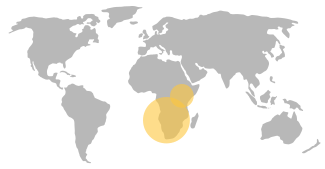
The ring-necked dove predominantly inhabits South Africa. It prefers Savannas, subtropical forests, moist woodlands, and semi-desert regions.
Additional range
Additionally, it has shown resilience occupying non-traditional areas such as urban and suburban environments, adapting well to the presence of humans.
Do they migrate?
The ring-necked dove, also known as the Cape turtle dove, is predominantly non-migratory and tends to stay in one location throughout the year. It is widely distributed across sub-Saharan Africa and largely adapts well to a variety of habitats, including savannas, woodlands, and even urban areas. However, some local movements may occur in response to changing environmental conditions, such as the availability of food and water. These movements are generally short-range and not considered true migration. In regions where rains are seasonal, ring-necked doves might shift to areas with more abundant resources when their local environment becomes less hospitable due to drought or food scarcity. Overall, the ring-necked dove is more likely to engage in dispersal or nomadic behaviors rather than long-distance migration, maintaining flexible strategies to cope with environmental variations without adhering to specific migratory routes or schedules.
What is the role of ring-necked doves in nature and how to protect them?
Conservation status
The ring-necked dove is classified as a species of "Least Concern" by conservation organizations, indicating it is relatively common and not currently at risk of extinction. It is widely distributed across sub-Saharan Africa and has adapted well to various habitats, including urban areas. Key threats are limited but can include habitat destruction and climate change. Conservation efforts focus on habitat preservation and monitoring population trends. The species' adaptability to different environments generally helps mitigate severe threats, contributing to its stable conservation status.
Ecological role of ring-necked doves
Its role in the ecosystem
The ring-necked dove (Streptopelia capicola) holds an important position in ecosystem dynamics by serving as a biocontrol agent and seed disperser. Its diet primarily consists of various pests, including insects and small invertebrates, thus helping in pest control making it valuable to agriculture and limiting potential damage. Moreover, being granivorous (seed-eating) it facilitates seed dispersal, helping in regeneration and spread of plant species. These seeds often pass through the bird's digestive tract unharmed, landing in different areas in the dove’s droppings. The ring-necked dove could also serve as an ecological indicator, showing the presence or absence of certain environmental conditions. Furthermore, it forms part of the food chain, acting as prey for many predatory birds and animals. These ecological roles make the ring-necked dove an significant species in maintaining overall ecosystem health and balance.
How to help protect ring-necked doves
Preservation tips
Habitat preservation
To support the conservation of the ring-necked dove, habitat preservation is crucial. As these birds prefer open habitats, efforts can be made to maintain or create such environments. This includes proper management of agricultural lands, parks, and gardens. Avoid unnecessary use of pesticides that can harm their food sources.
Community science initiatives
Engagement in community science initiatives plays a crucial role in supporting bird conservation. These initiatives can include participation in bird counting events, reporting sightings of the ring-necked dove, and sharing information on their habits and habitats. This data can be used to track population trends and inform conservation efforts.