Ring-Necked Dove or African Collared Dove?
Here's how to tell the difference
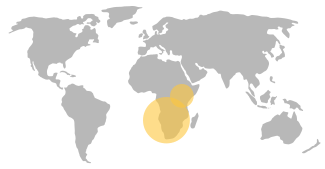


Ring-Necked Dove

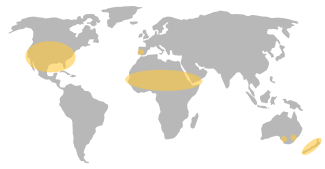
African Collared Dove
Ring-Necked Dove
Streptopelia capicola
Also known as: Cape Turtle Dove, Half-Collared Dove
General appearance
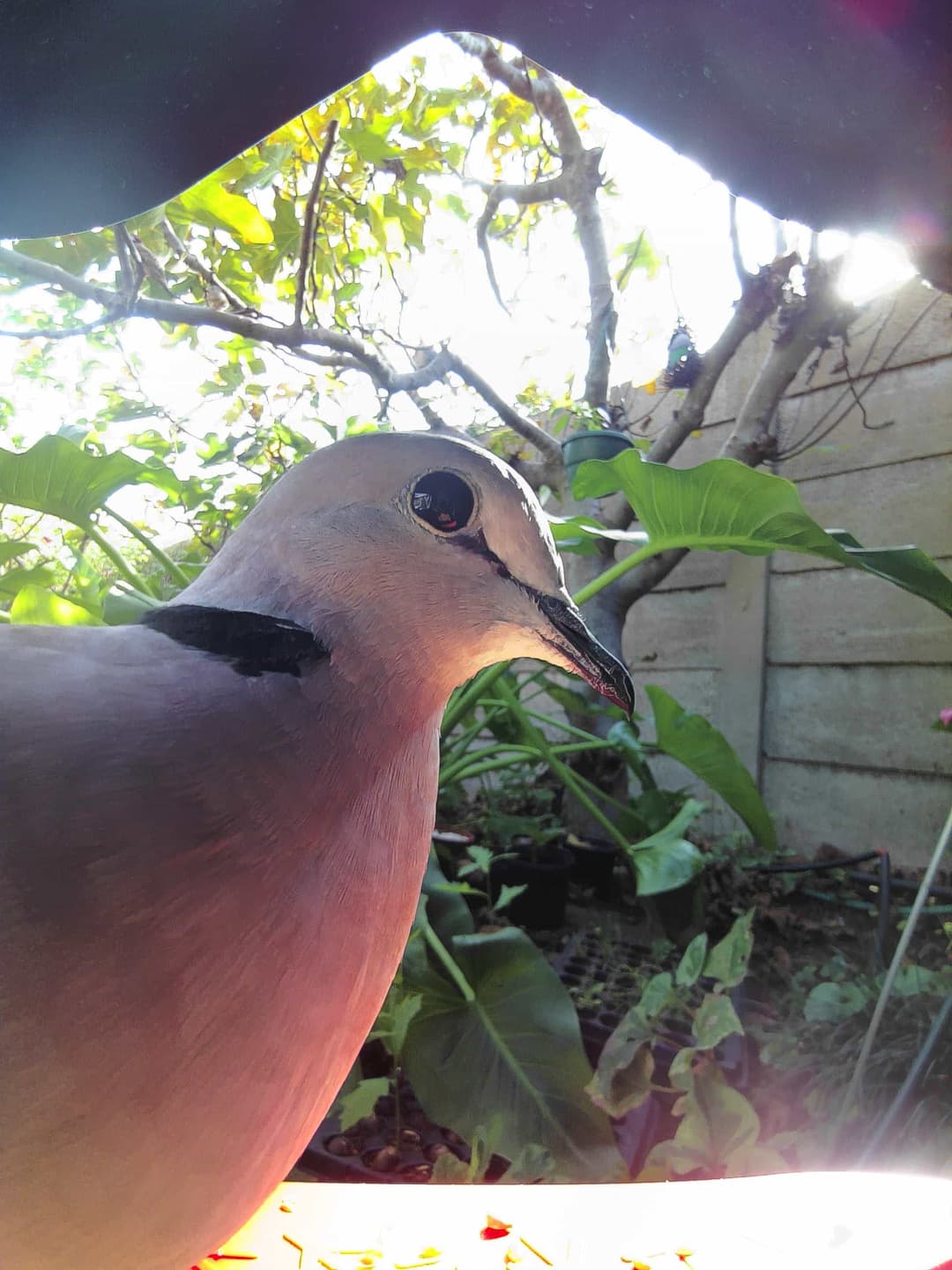
The ring-necked dove, often also called the Cape turtle dove or half-collared dove, stands out with its soft grey-beige plumage, underlined by a thin, black neck ring. Adults are around 25-26.5 cm in length and have broad, bright white edges on their long, pointed tail feathers. It has black eyes, red feet and legs, plus a black beak.
Male vs female
Male and female ring-necked doves look incredibly alike, both sporting the same, pale grey-brown coloration and diagnostic black ring around their neck. Subtle differences are noted in size, with males being slightly larger and usually exhibiting more robust neck rings, compared to the narrower band seen on the females.
Juvenile
Juvenile ring-necked doves possess an overall grey color, more washed out than the adults, and lack the distinctive neck ring. Their bill is more greyish, gradually turning to black as they mature, and their eye color is initially a dull brown, later changing to their iconic black. The tail feathers are also less pointy in their younger years.
Size
9.8 - 10.4 in/3.7 - 7.1 oz
There's more to learn about Ring-Necked Dove
View full detailsAfrican Collared Dove
Streptopelia roseogrisea
General appearance
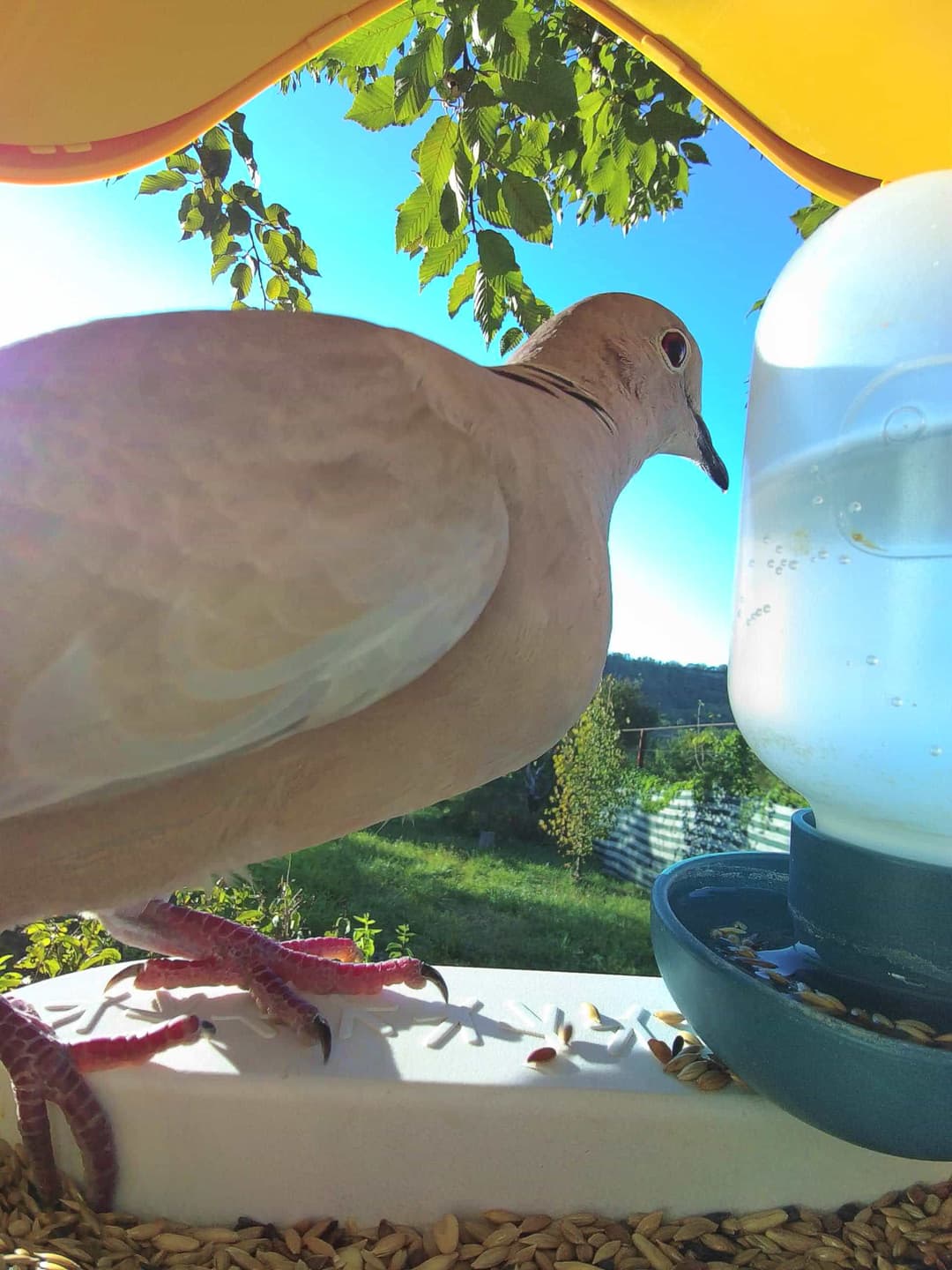
The African Collared-Dove is slightly smaller than the Eurasian Collared-Dove. They generally possess a light grey feather coat with distinctive black semi-circular line on the back of their neck, giving them their collared name. It is difficult to distinguish them from the Eurasian variety as their appearance in the wild is rare.
Male vs female
Males and females are similar in appearance, making it difficult to differentiate between sexes based on visual features. Both genders strut the same light grey coloration with contrasting black neck collars. Size and behavior patterns may sometimes provide clues, but visual identification remains challenging.
Juvenile
Juvenile African Collared-Doves resemble adults but lack the characteristic black collar. Their plumage is slightly duller than adults and they feature less distinct markings. With age, they develop the collar and their feather coloring shifts towards the grey hue distinctive of the species.
Size
9.8 - 10.6 in/4.6 - 5.9 oz
There's more to learn about African Collared Dove
View full detailsHow to tell the Ring-Necked Dove from the African Collared Dove
Visual differences
The Ring-Necked Dove (10-10.5 in) has soft grey-beige plumage with a distinct thin black neck ring, black eyes, and a black beak. Its long tail feathers have bright white edges. In contrast, the African Collared Dove (9.8-10.6 in) features a light grey coat and a similar black neck collar but lacks the bright white tail edges. Both species have similar weight ranges. Visual differences mainly lie in the Ring-Necked Dove's white-edged tail, and the slightly lighter overall tone of the African Collared Dove.
Key differences and behavior
The Ring-Necked Dove and African Collared Dove exhibit distinct behaviors that aid in field identification. Both species form large, sociable groups, but Ring-Necked Doves are particularly noisy with identifiable coos. African Collared Doves are more accepting of human presence. Both inhabit similar habitats like savannas and woodlands; however, Ring-Necked Doves are more adaptable to urban settings. They both nest in flimsy twig structures and share parental duties, though Ring-Necked Doves include elaborate courtship displays with fanning tails, while African Collared Doves perform aerial loops. Diets are seed-based for both, though Ring-Necked Doves frequently forage on the ground and include more fruits and insects, especially when breeding. African Collared Doves rely more on ground foraging for seeds. Both visit feeders, favoring similar seeds.
Still not sure? Here are more lookalikes!
Ring-Necked Dove vs Mourning Dove

Ring-Necked Dove vs Eurasian Collared Dove
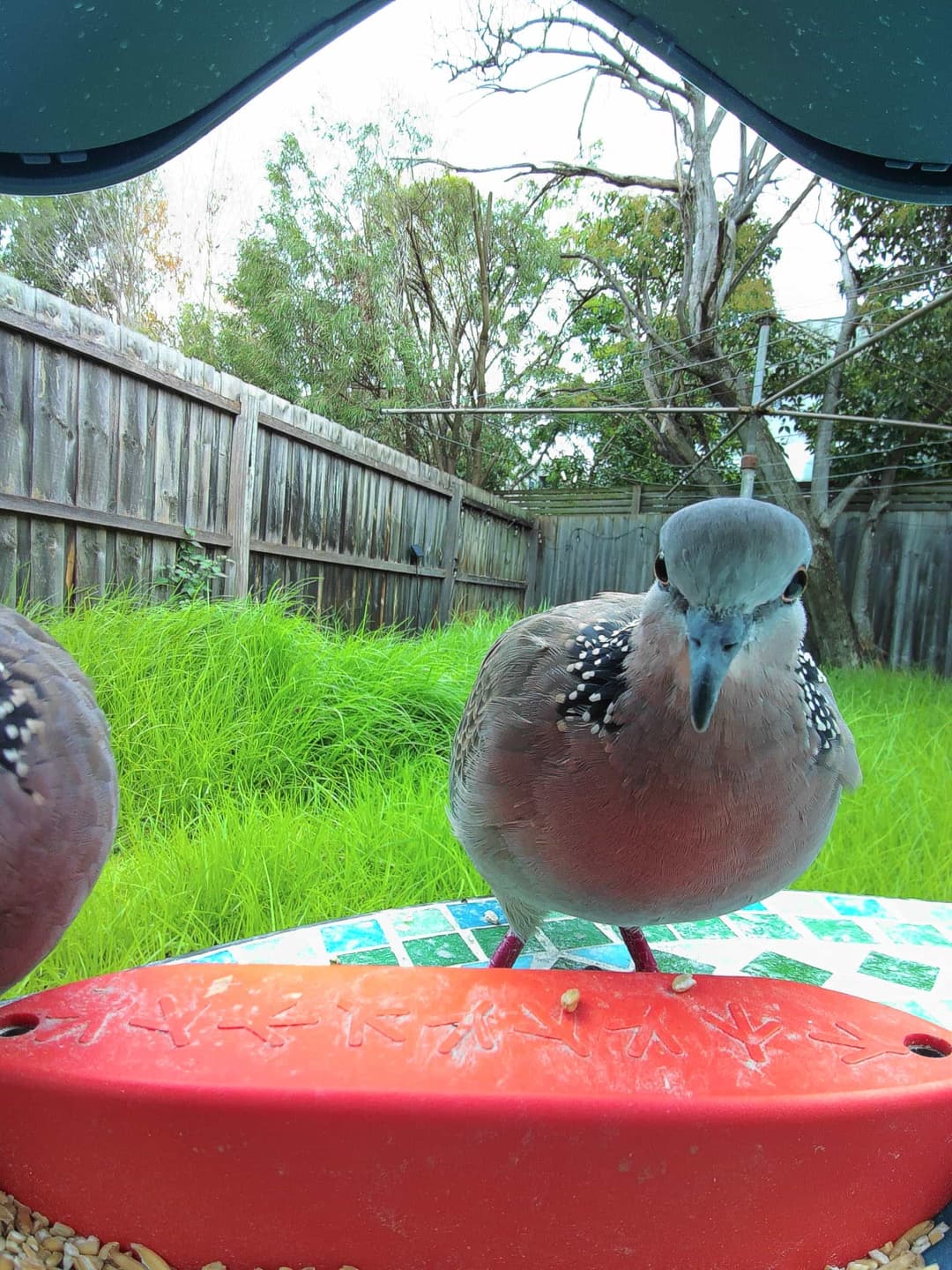
African Collared Dove vs Eurasian Collared Dove
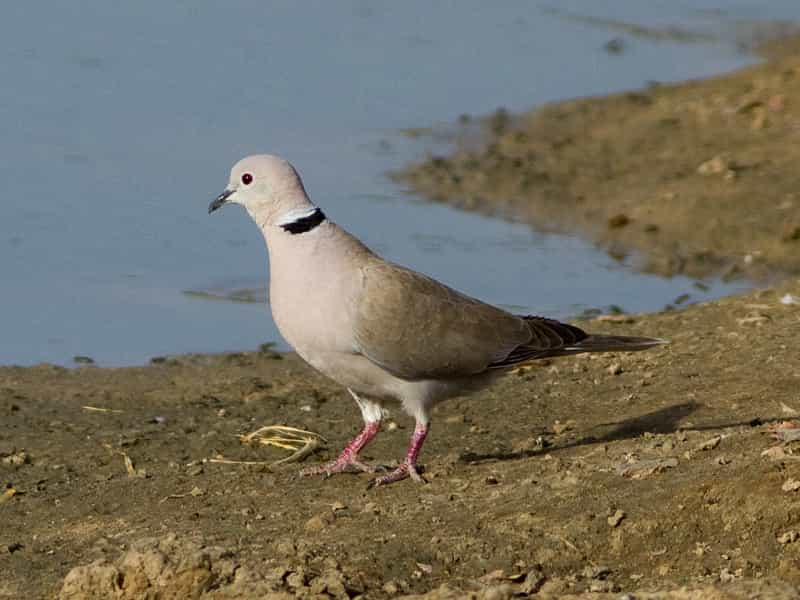
African Collared Dove vs Mourning Dove
African Collared Dove vs White-Winged Dove
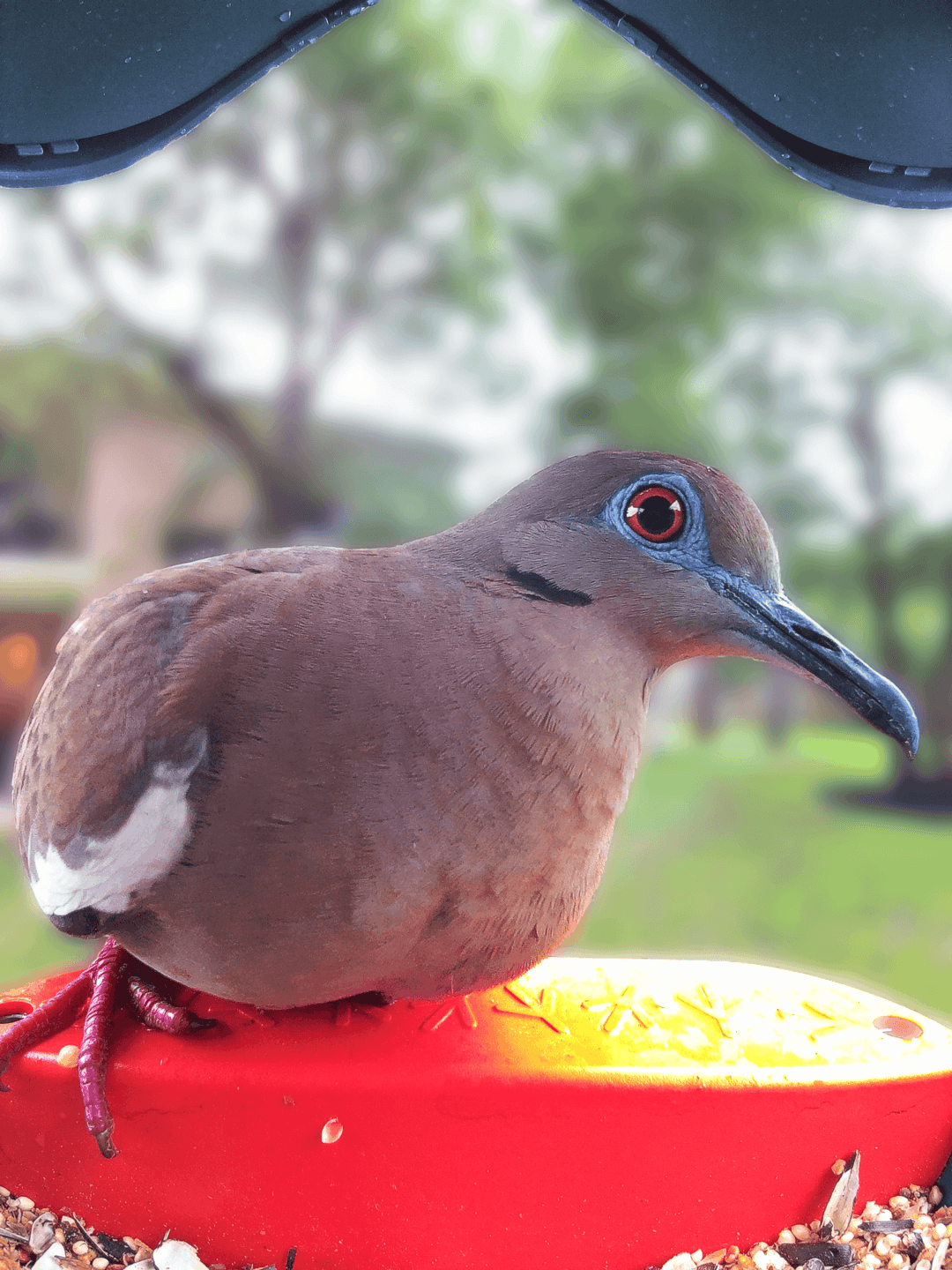
Ring-Necked Dove vs [Select a bird]

[Select a bird]
Pick a bird to compare
African Collared Dove vs [Select a bird]
[Select a bird]
Pick a bird to compare