Ring-Necked Dove or Spotted Dove?
Here's how to tell the difference
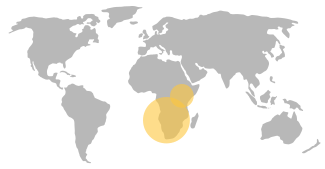


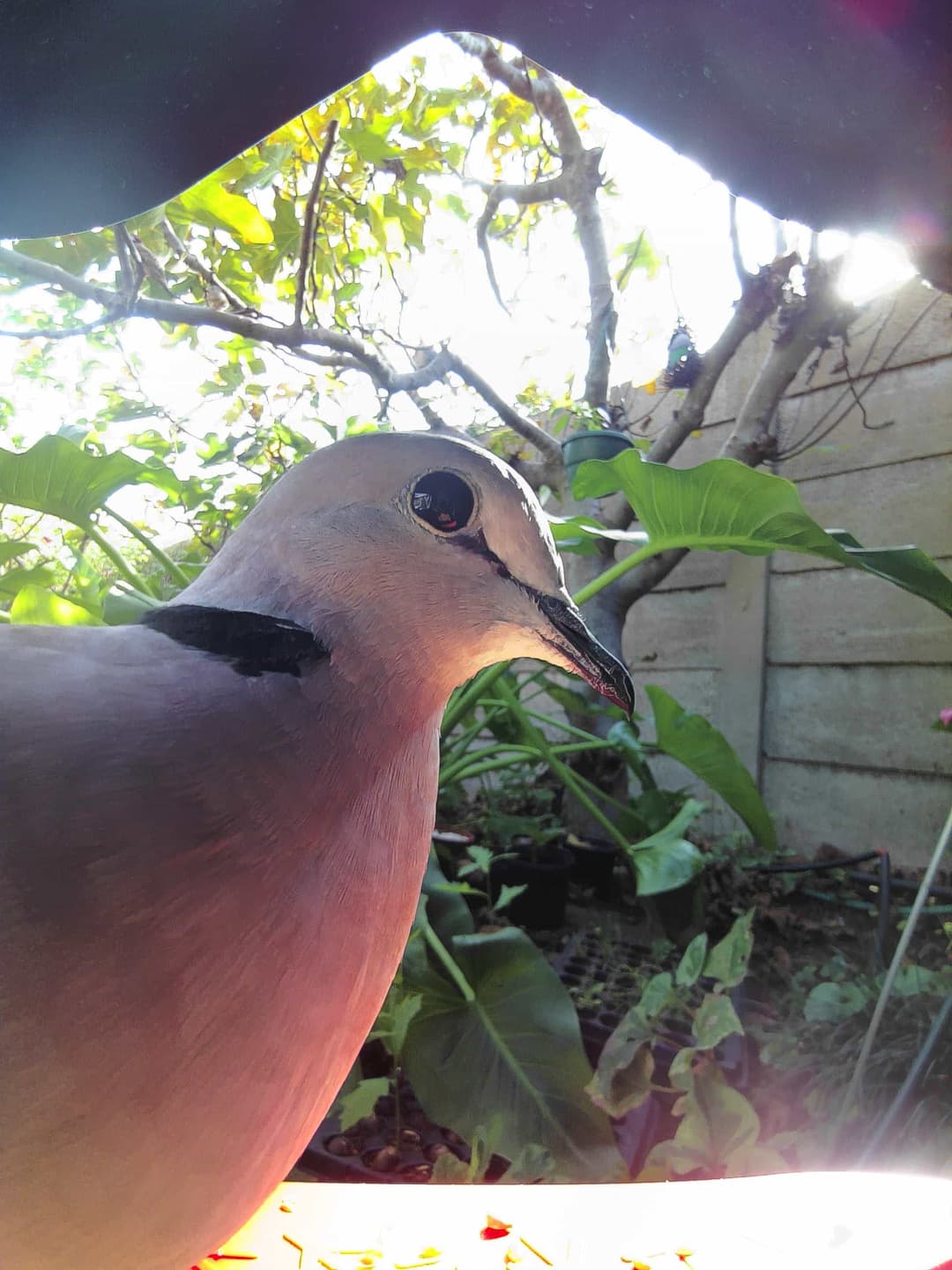
Ring-Necked Dove
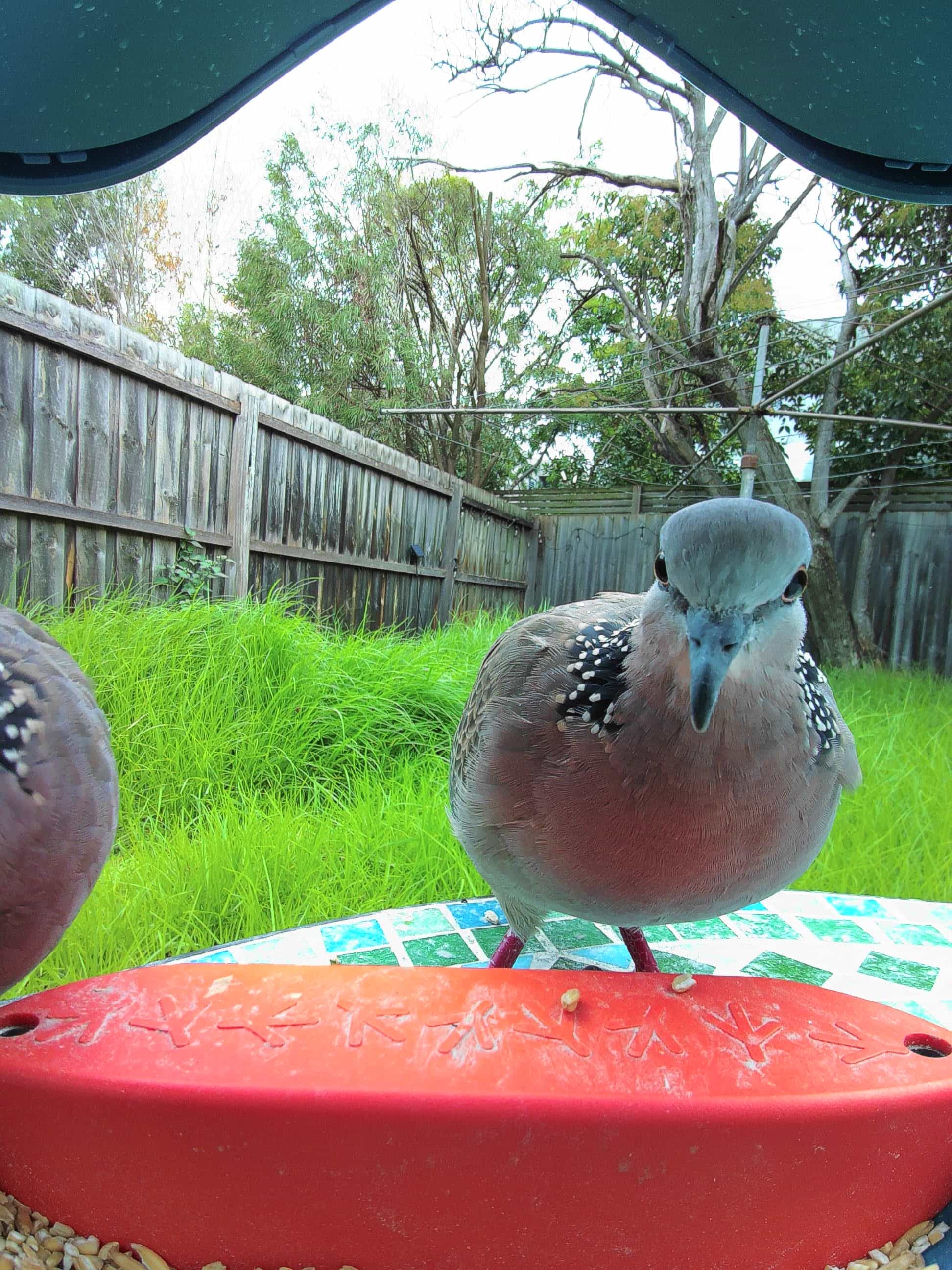


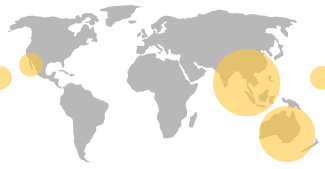
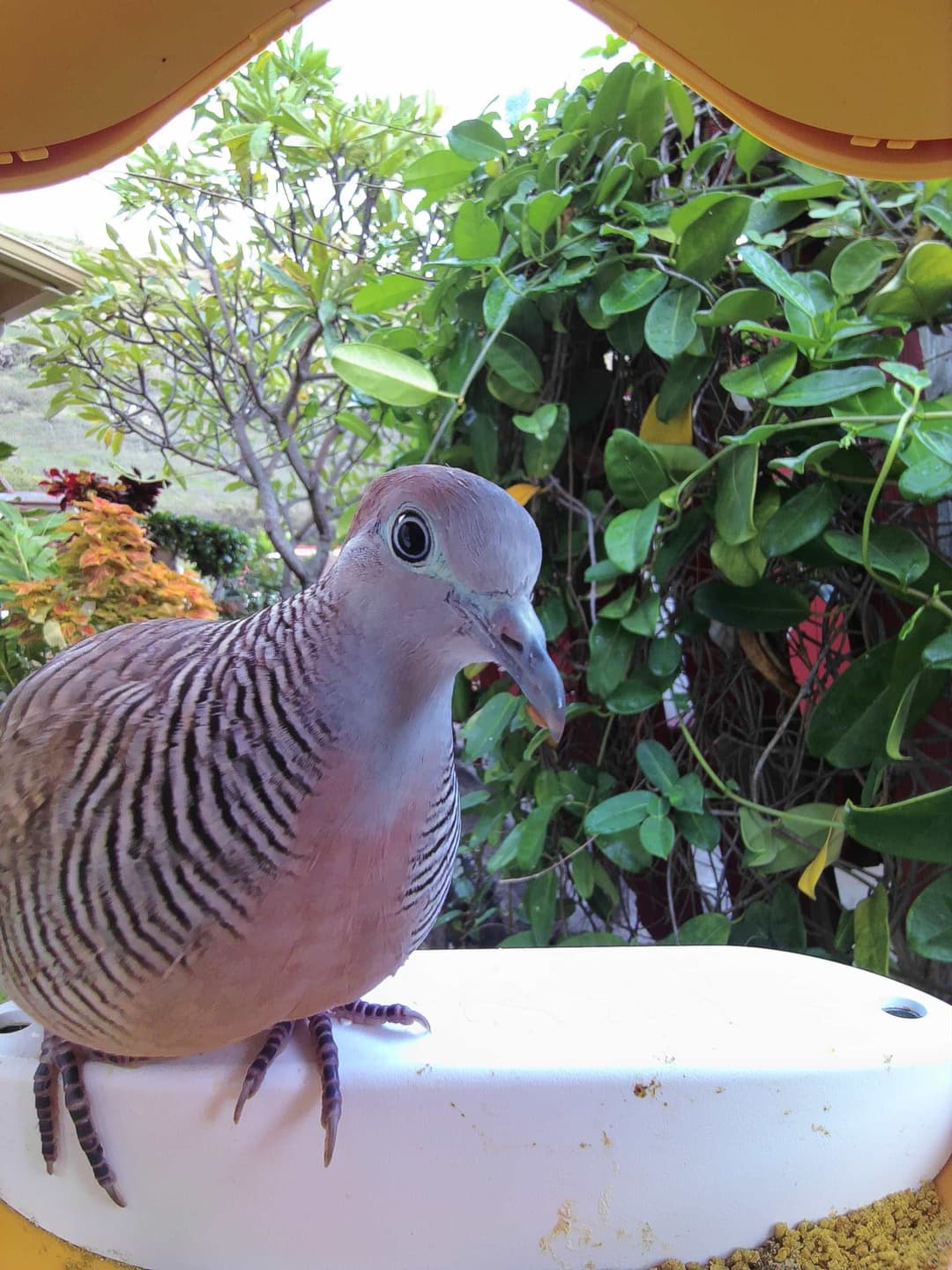
Spotted Dove
Ring-Necked Dove
Streptopelia capicola
Also known as: Cape Turtle Dove, Half-Collared Dove
General appearance
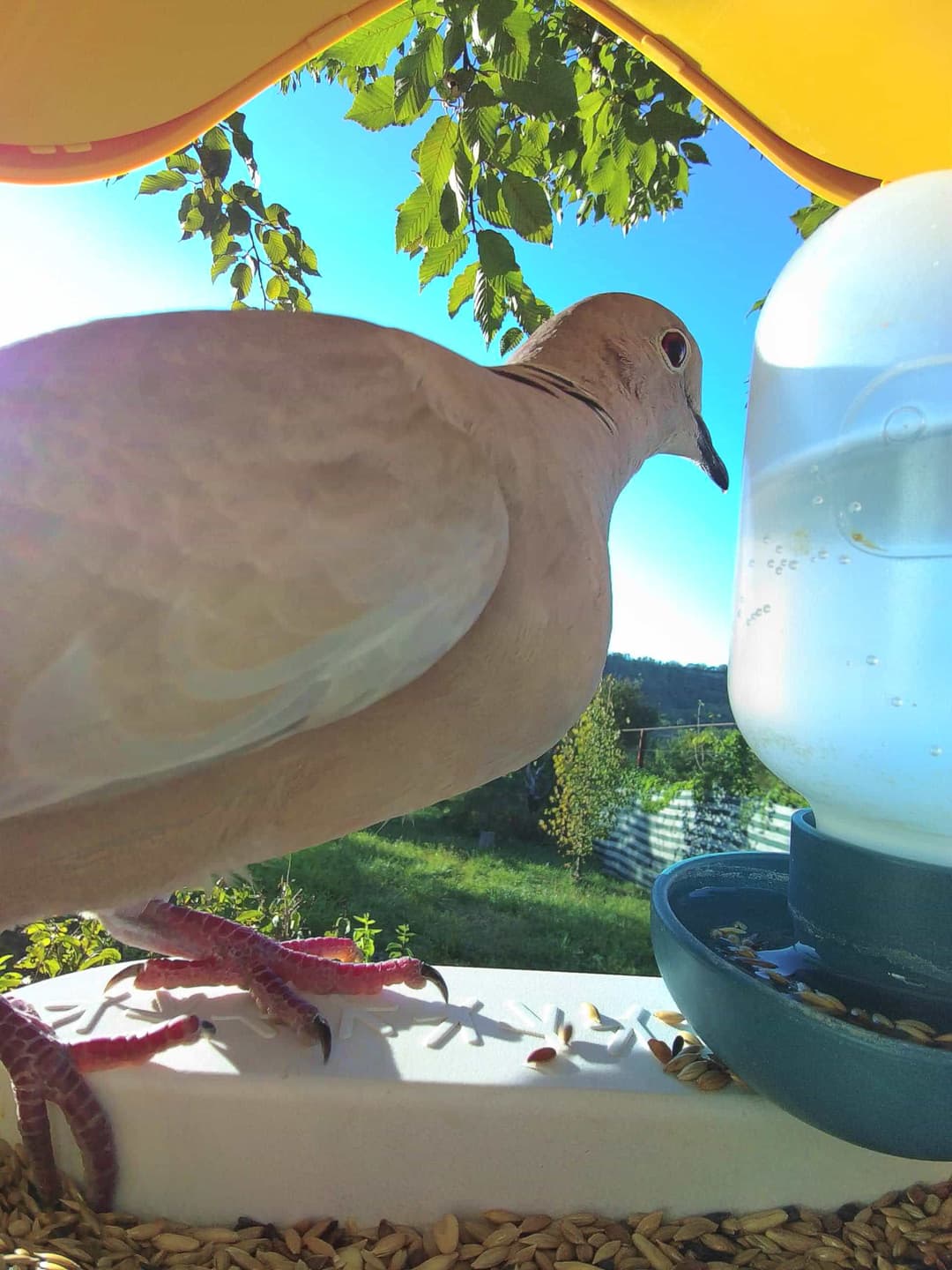
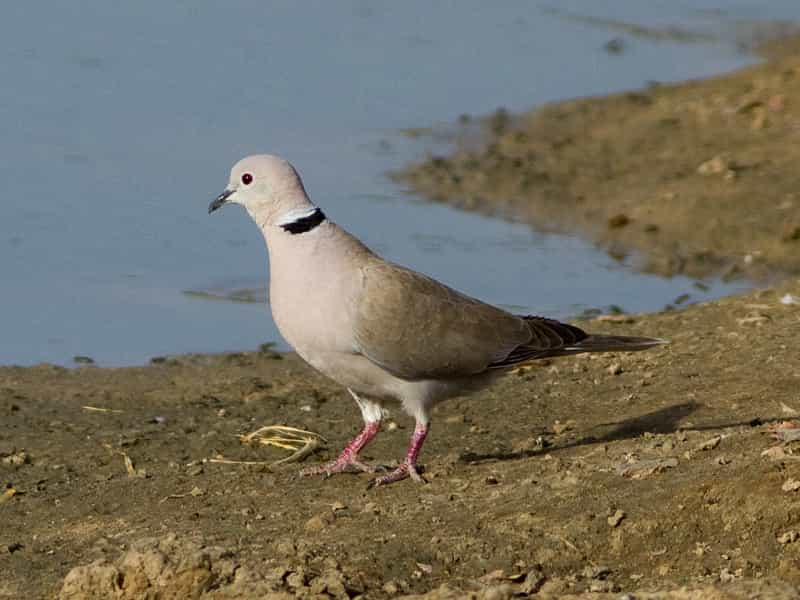
The ring-necked dove, often also called the Cape turtle dove or half-collared dove, stands out with its soft grey-beige plumage, underlined by a thin, black neck ring. Adults are around 25-26.5 cm in length and have broad, bright white edges on their long, pointed tail feathers. It has black eyes, red feet and legs, plus a black beak.
Male vs female
Male and female ring-necked doves look incredibly alike, both sporting the same, pale grey-brown coloration and diagnostic black ring around their neck. Subtle differences are noted in size, with males being slightly larger and usually exhibiting more robust neck rings, compared to the narrower band seen on the females.
Juvenile
Juvenile ring-necked doves possess an overall grey color, more washed out than the adults, and lack the distinctive neck ring. Their bill is more greyish, gradually turning to black as they mature, and their eye color is initially a dull brown, later changing to their iconic black. The tail feathers are also less pointy in their younger years.
Size
9.8 - 10.4 in/3.7 - 7.1 oz
There's more to learn about Ring-Necked Dove
View full detailsSpotted Dove
Spilopelia chinensis
Also known as: Mountain Dove, Pearl-Necked Dove, Lace-Necked Dove, Spotted Turtle-Dove
General appearance
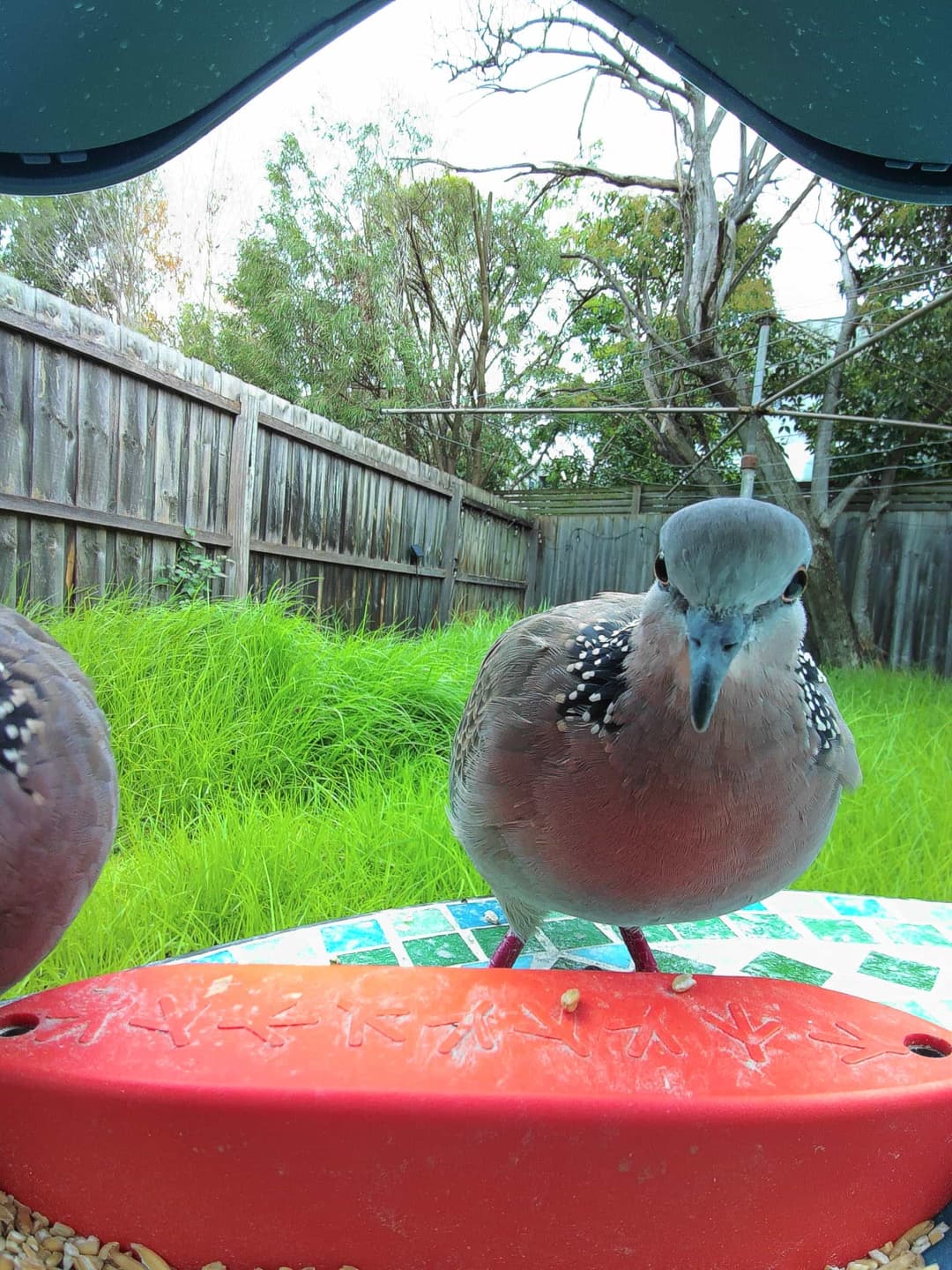
The Spotted Dove is an easily recognizable species. They range in size from 11-12 inches in length. The primary coloration of their plumage is a lovely light grey and pinkish below, with a distinctive black patch covered in white spots at the base of the throat.
Male vs female
Sexual dimorphism, which means observable differences in appearance between males and females, is not strongly present in spotted doves. Both males and females are similar in appearance. However, males may have slightly more vibrant colors and might be a bit larger than females.
Juvenile
Juvenile spotted doves display less vivid colorations than the adults, with a relatively plain, unspotted neck and pale undertail. They also lack the striking neck patch that is seen in adult spotted doves. Their coloration becomes progressively more similar to the adults as they mature.
Size
11.0 - 12.6 in/3.9 - 7.2 oz
There's more to learn about Spotted Dove
View full detailsHow to tell the Ring-Necked Dove from the Spotted Dove
Visual differences
The Ring-Necked Dove is slightly smaller, measuring 9.8-10.4 inches, compared to the Spotted Dove's 11-12 inches. The Ring-Necked Dove features soft grey-beige plumage with a distinct thin black neck ring, while the Spotted Dove displays light grey and pinkish plumage with a distinctive black patch covered in white spots at the throat. The Ring-Necked Dove has a black beak and red legs, whereas the Spotted Dove's specific leg and beak colors are less notable. Overall, spotting a neck ring versus a spotted throat patch is key for identification.
Key differences and behavior
Ring-necked doves and spotted doves exhibit distinct behaviors and adaptations. Ring-necked doves (9.8-10.4 inches) often bob their heads while walking and are very vocal, particularly around water sources in South Africa. In contrast, spotted doves (11-12.5 inches) extend their range across Asia, favoring wooded and urban setups. While both species court through cooing and display behaviors, ring-necked males perform aerial displays, whereas spotted males display chest puffing and fanned tails. Both species nest simply but ring-necked doves often prefer trees and man-made structures, while spotted doves utilize horizontal branches. In terms of diet, both species primarily consume seeds but will eat insects; they adapt well to eating from bird feeders. Ring-necked doves tend to gather noisily in groups, while spotted doves are noted for their expanding range due to adaptability.
Still not sure? Here are more lookalikes!
Ring-Necked Dove vs Mourning Dove

Ring-Necked Dove vs Eurasian Collared Dove
Ring-Necked Dove vs African Collared Dove
Spotted Dove vs Mourning Dove
Spotted Dove vs Eurasian Collared Dove
Ring-Necked Dove vs [Select a bird]

[Select a bird]
Pick a bird to compare
Spotted Dove vs [Select a bird]
[Select a bird]
Pick a bird to compare