Laughing Dove or Mourning Dove?
Here's how to tell the difference


Laughing Dove


Mourning Dove
Laughing Dove
Spilopelia senegalensis
Also known as: Senegal Dove, Little Brown Dove
General appearance
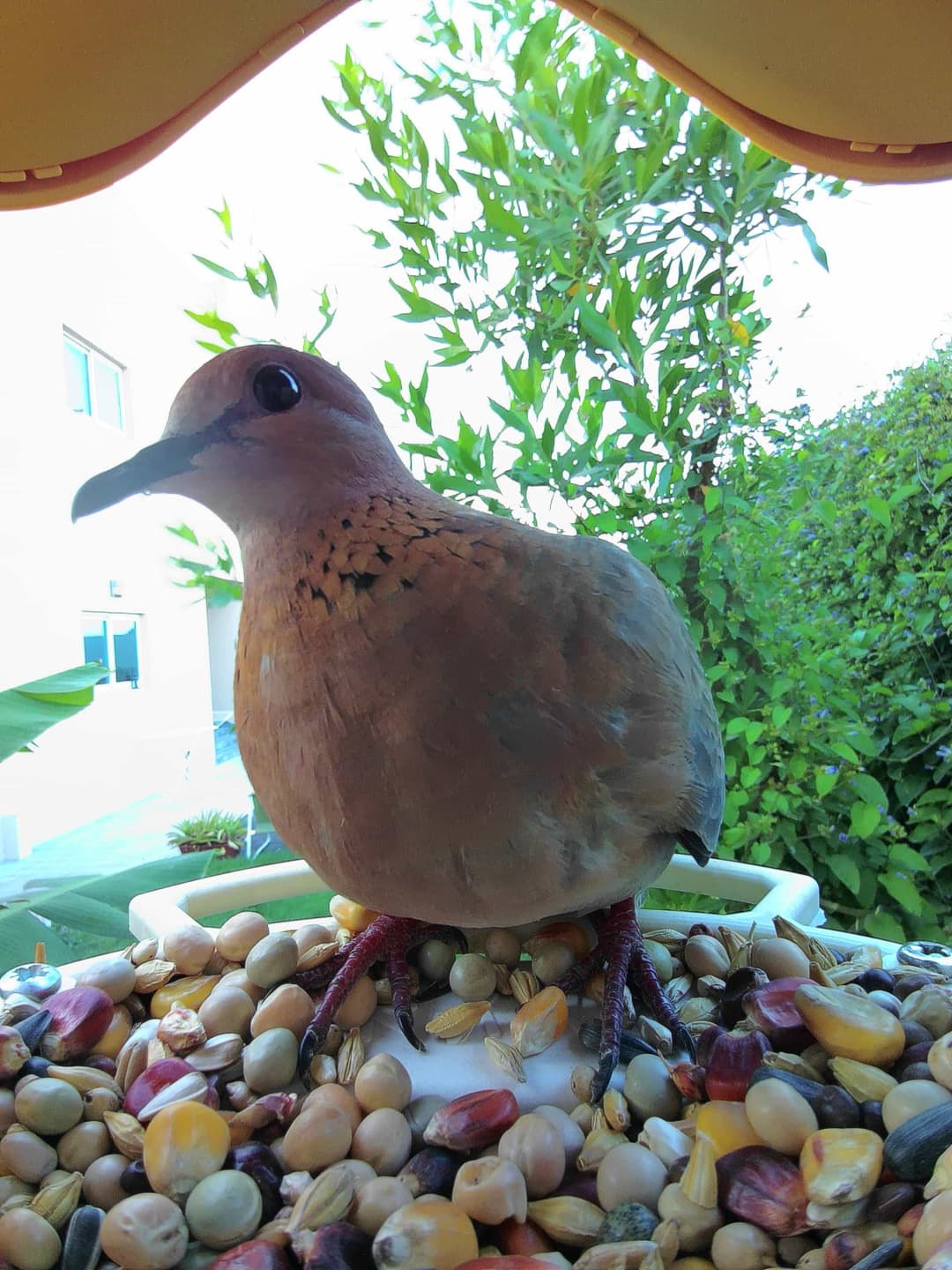
Laughing doves are small birds with a long tail, identifiable by their warm brown-grey blush, distinctive scalloped collars, and a rufous hue in their feathers. They are the epitome of soothing aesthetics with blush-pink necks, blending into an ashy-grey mantle and a pale greyish belly. Their red-rimmed eyes are a key feature.
Male vs female
Males and females look very similar, making them difficult to distinguish. However, males tend to be slightly larger and may have a more vibrant collar around their neck, while females appear paler and smaller.
Juvenile
Juvenile laughing doves exhibit less contrast compared to adults. They feature a poorly developed collar and a lighter brown grey shade. As they grow older, their feathers will darken and the collar will become more distinct.
Size
9.1 - 10.6 in/2.5 - 3.2 oz
There's more to learn about Laughing Dove
View full detailsMourning Dove
Zenaida macroura
Also known as: American Mourning Dove, Rain Dove, Turtle Dove, Carolina Pigeon, Carolina Turtledove
General appearance
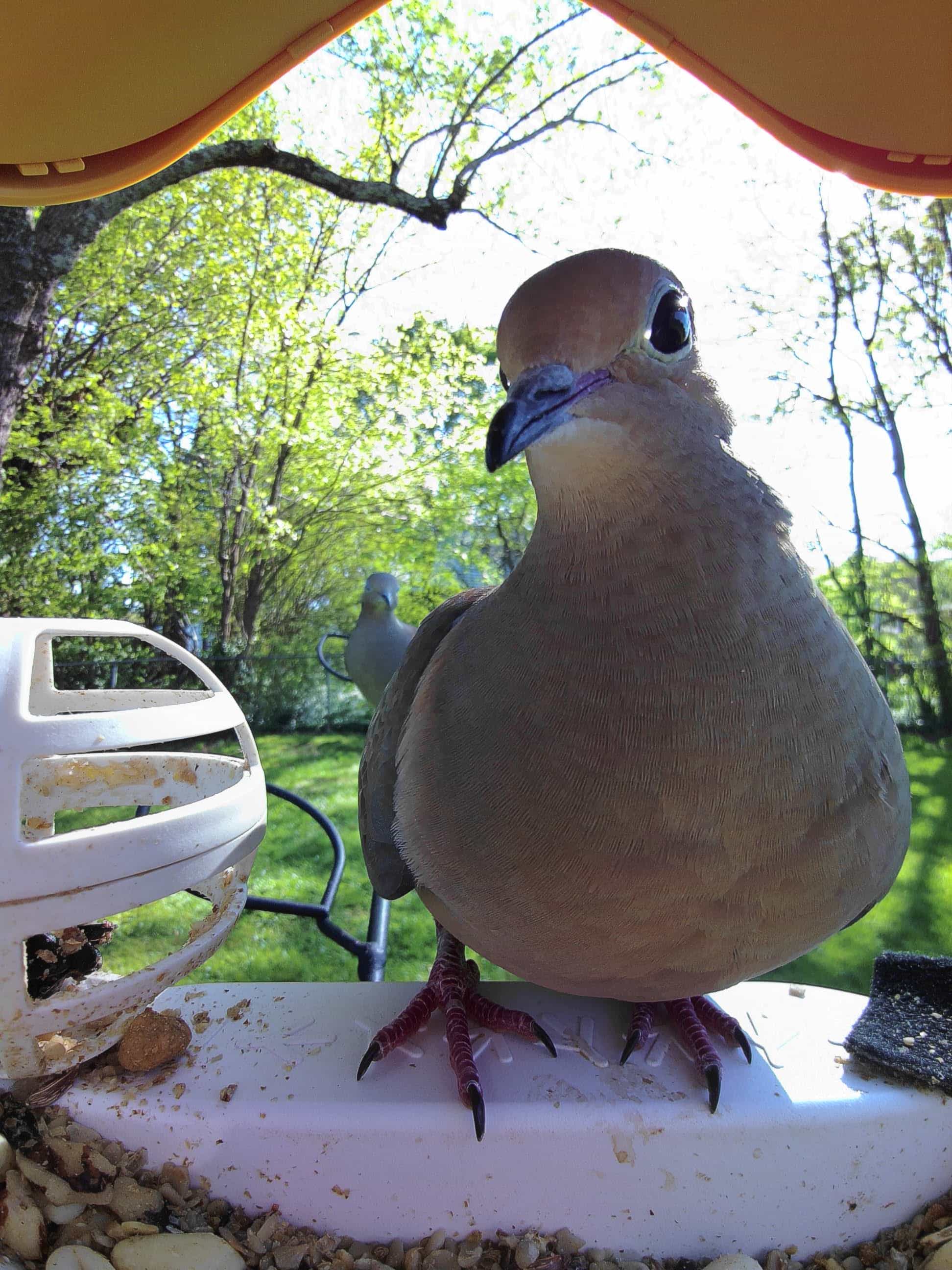
The mourning dove is roughly the size of a crow, bearing characteristics of a long, pointed tail which is about 12', or 30 cm long. This tail displays white spots along its edge while in flight. The bird’s wings are adorned with black spots and its overall coloration exhibits hues of black, brown, gray, pink, tan, and white. The dove has a pointed, wedge-shaped tail.
Male vs female
The sexes of mourning doves can be distinguished by their coloration. Adult males generally have a pinkish tinge on their chests and a blue-gray tone on their crowns. However, the female doves are more dull and plain, predominantly appearing in a shade of brown.
Juvenile
Young mourning doves have a unique scaly appearance that can lead them to be confused with the Inca Dove or the Common Ground Dove. They do not possess the vivid coloring of the adults and generally appear more muted in color.
Size
9.1 - 13.4 in/3.0 - 6.0 oz
There's more to learn about Mourning Dove
View full detailsHow to tell the Laughing Dove from the Mourning Dove
Visual differences
Laughing Doves are smaller (9-10.6 inches, 2.5-3.2 ounces) than Mourning Doves (9-13 inches, 3-6 ounces). Laughing Doves have a warm brown-gray color with rufous-hued, copper-tipped neck feathers, and red-rimmed eyes, while Mourning Doves exhibit a mix of brown, gray, and tan with black wing spots. Laughing Doves feature a scalloped collar, unlike the Mourning Dove's blue-gray crown and pinkish chest. Mourning Doves have a pointed wedge-shaped tail with white edges, larger than the Laughing Dove's long, plain tail. Both lack prominent sexual dimorphism.
Key differences and behavior
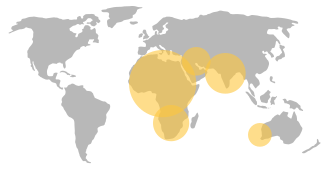
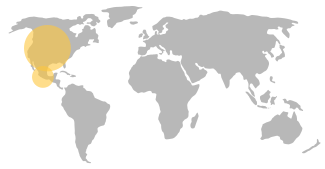
The Laughing Dove and Mourning Dove differ notably in behavior and habitat preferences. Laughing Doves thrive in arid regions of Africa, the Middle East, and South Asia, adapting to varied environments, including urban areas, while Mourning Doves favor temperate spaces in North America, like farms and open woods. Laughing Doves exhibit an elaborate courtship, often featuring chest-puffing and cooing. Mourning Doves engage in courtship flights with noisy wingbeats and mutual preening. Both doves nest in trees or on ledges, but Laughing Doves make simpler twig platforms. Diets mainly consist of seeds, but Laughing Doves supplement with insects and fruits, whereas Mourning Doves focus strictly on seeds. Laughing Doves weigh about 2.5-3.2 oz (23-27 cm long), whereas Mourning Doves are heftier at 3-6 oz (23-34 cm long).
Still not sure? Here are more lookalikes!
Laughing Dove vs Eurasian Collared Dove
Mourning Dove vs Eurasian Collared Dove

Mourning Dove vs White-Winged Dove
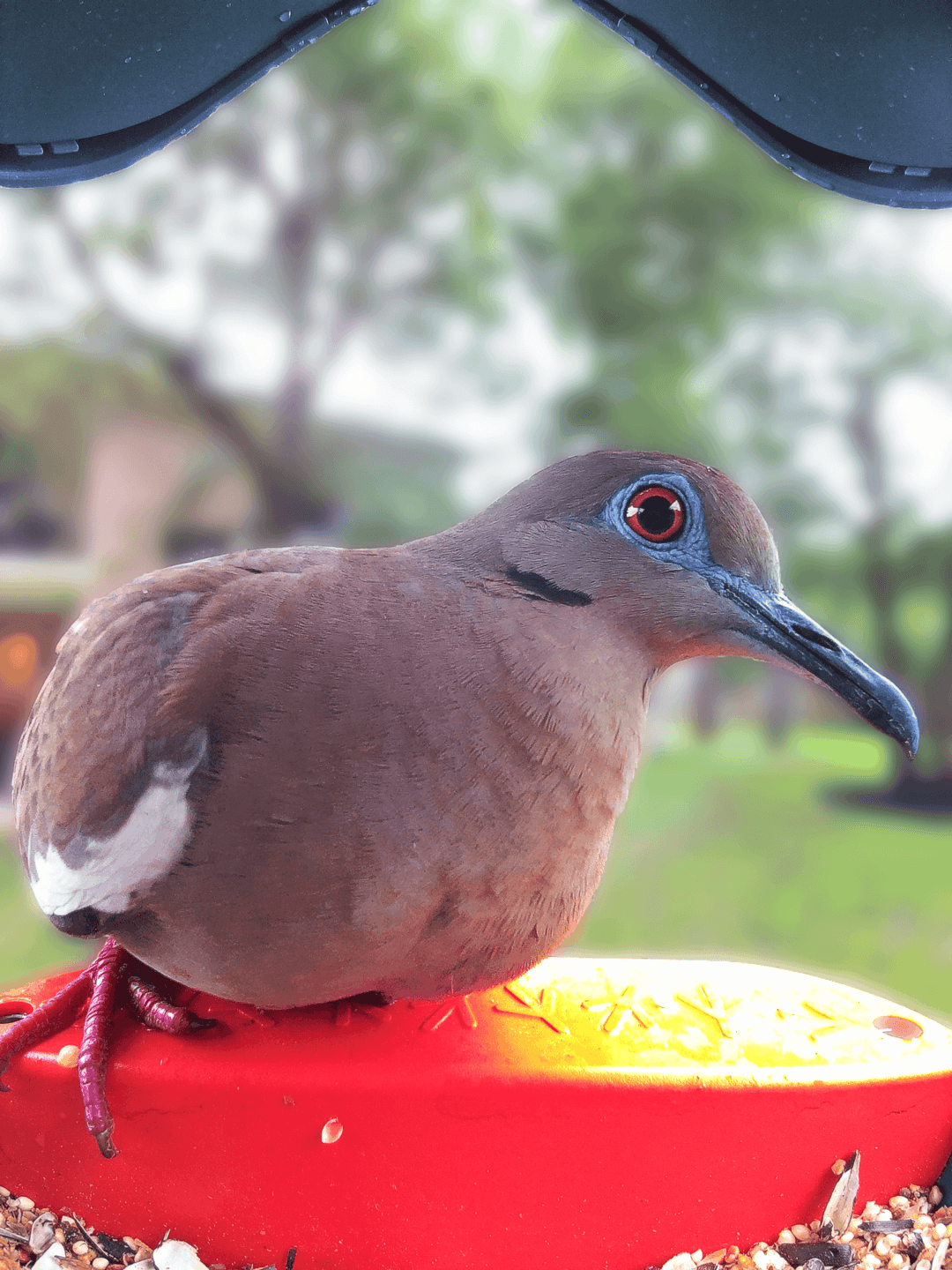
Mourning Dove vs Band-Tailed Pigeon
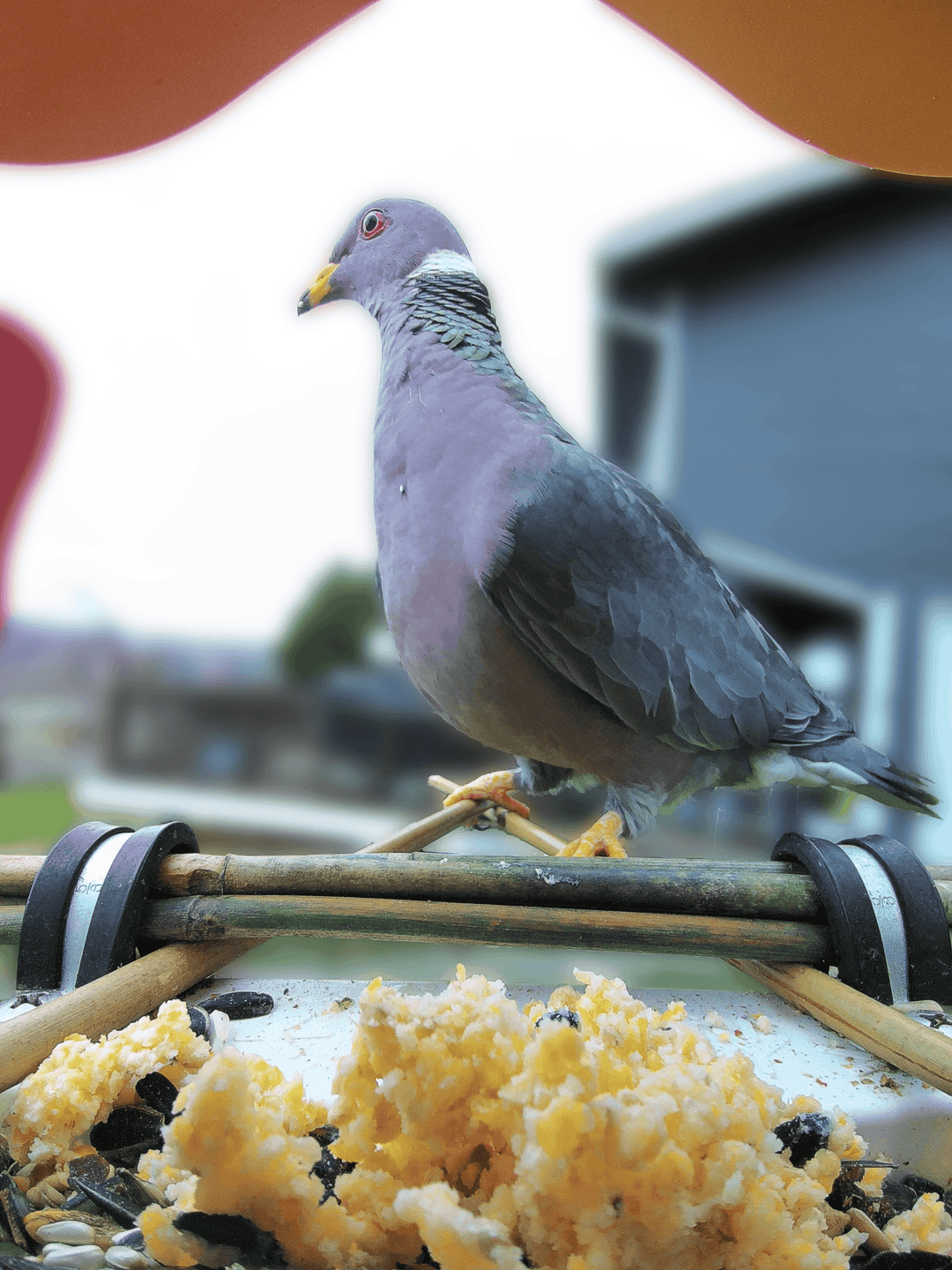
Mourning Dove vs White-Tipped Dove
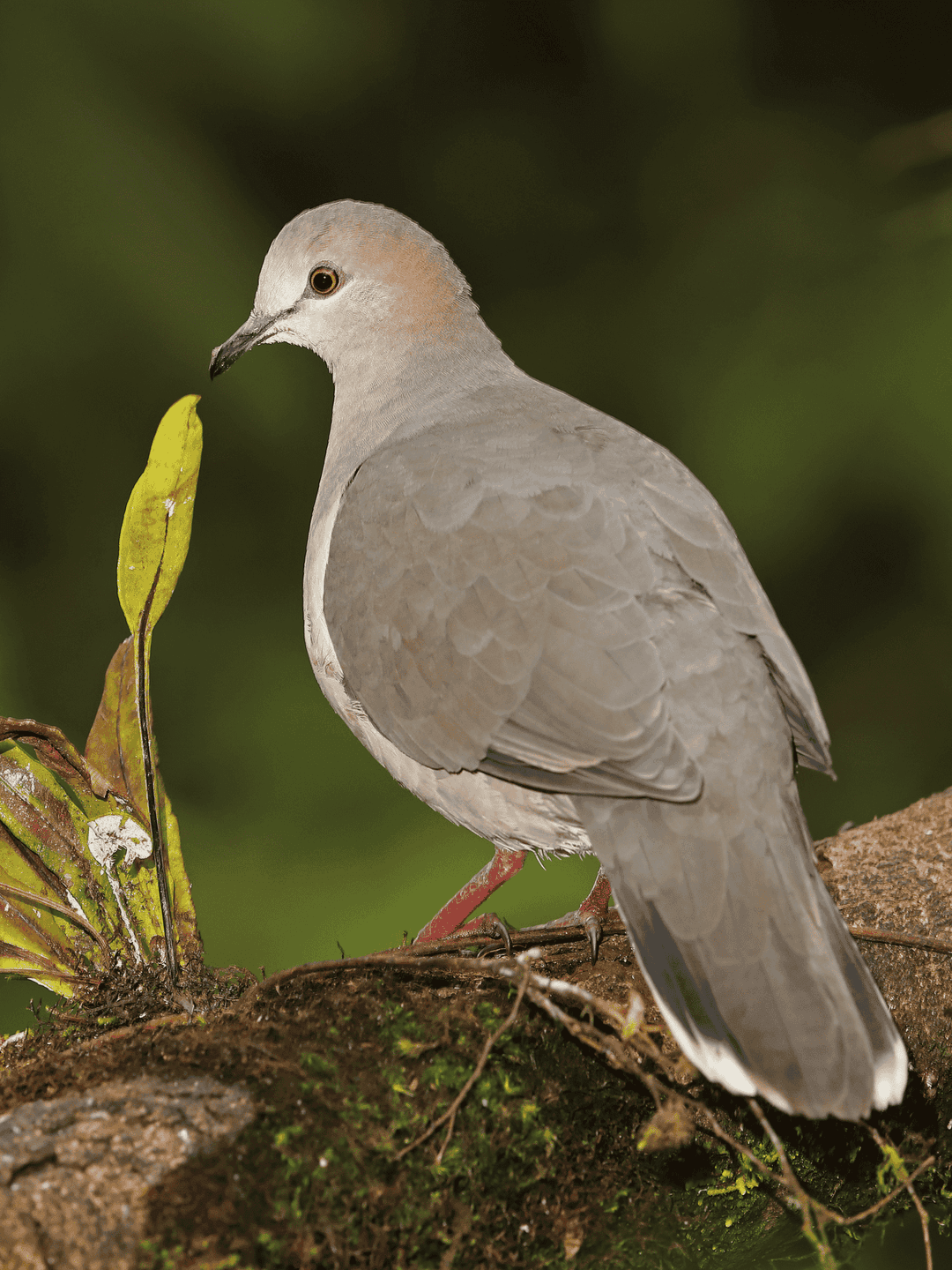
Mourning Dove vs Common Ground-Dove
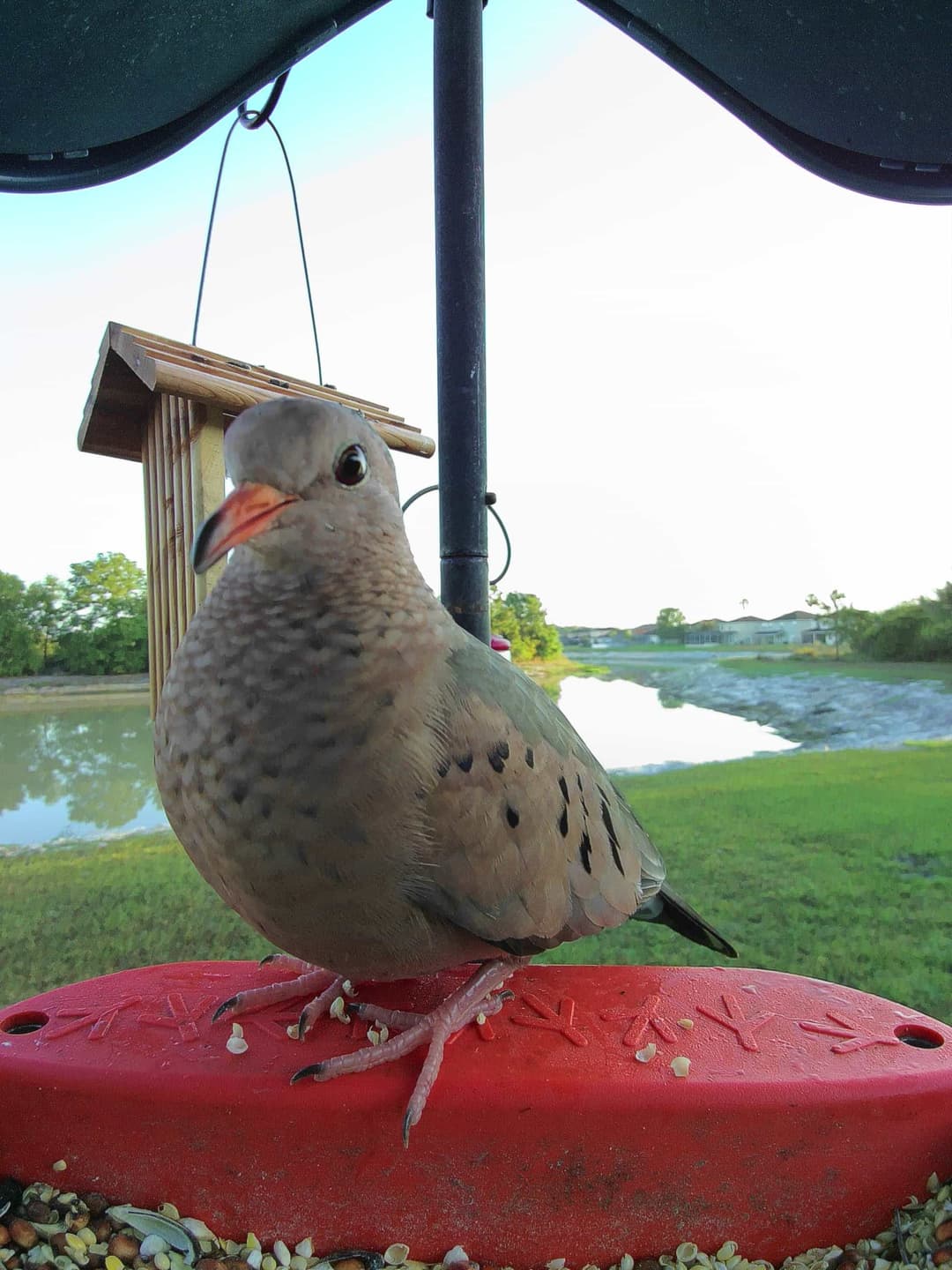
Mourning Dove vs Inca Dove
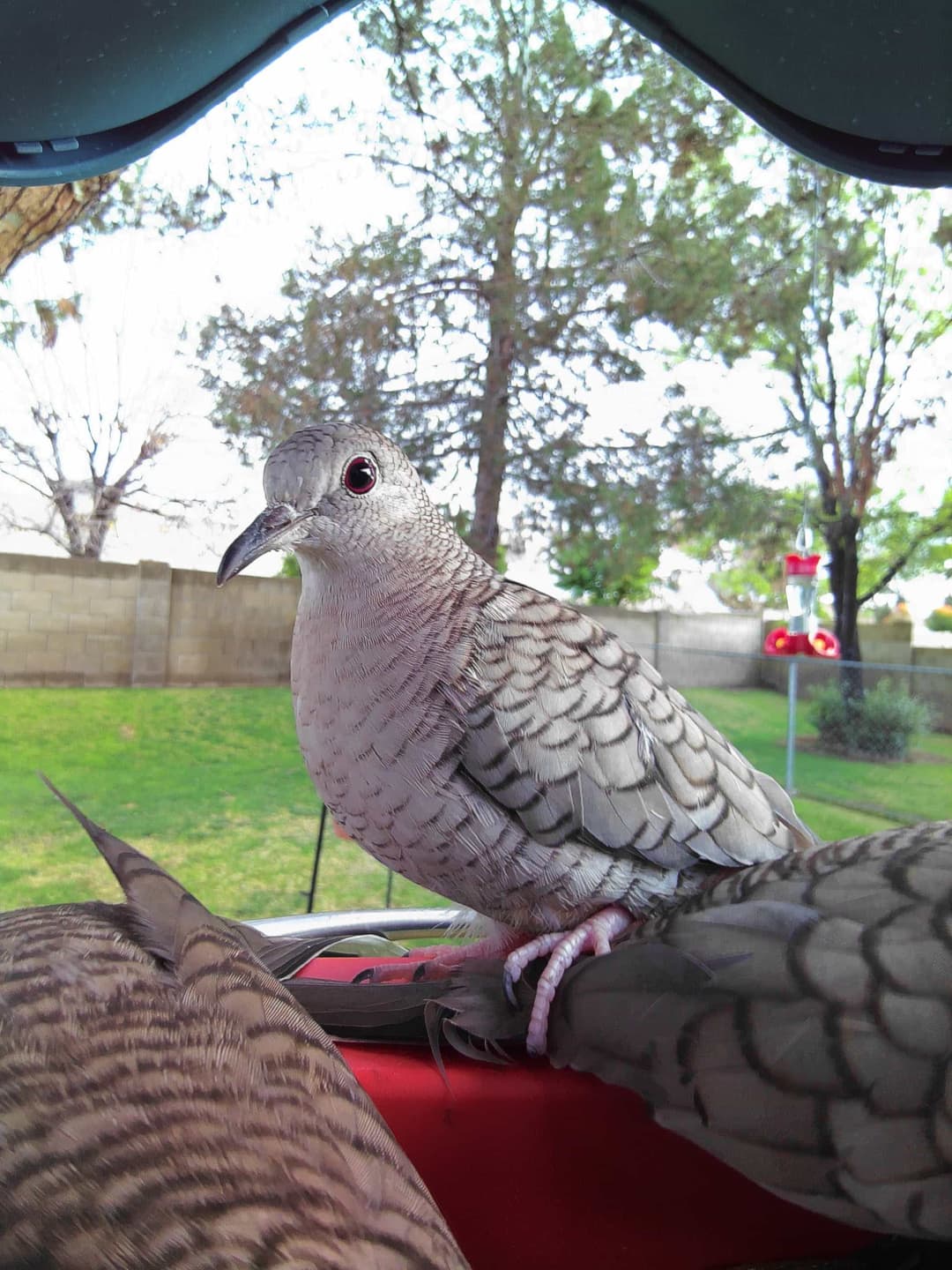
Laughing Dove vs [Select a bird]

[Select a bird]
Pick a bird to compare
Mourning Dove vs [Select a bird]
[Select a bird]
Pick a bird to compare