Laughing Dove or Ring-Necked Dove?
Here's how to tell the difference
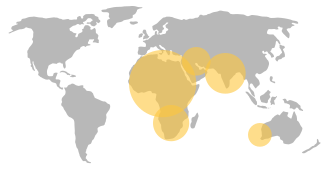


Laughing Dove


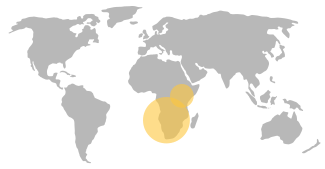
Ring-Necked Dove
Laughing Dove
Spilopelia senegalensis
Also known as: Senegal Dove, Little Brown Dove
General appearance
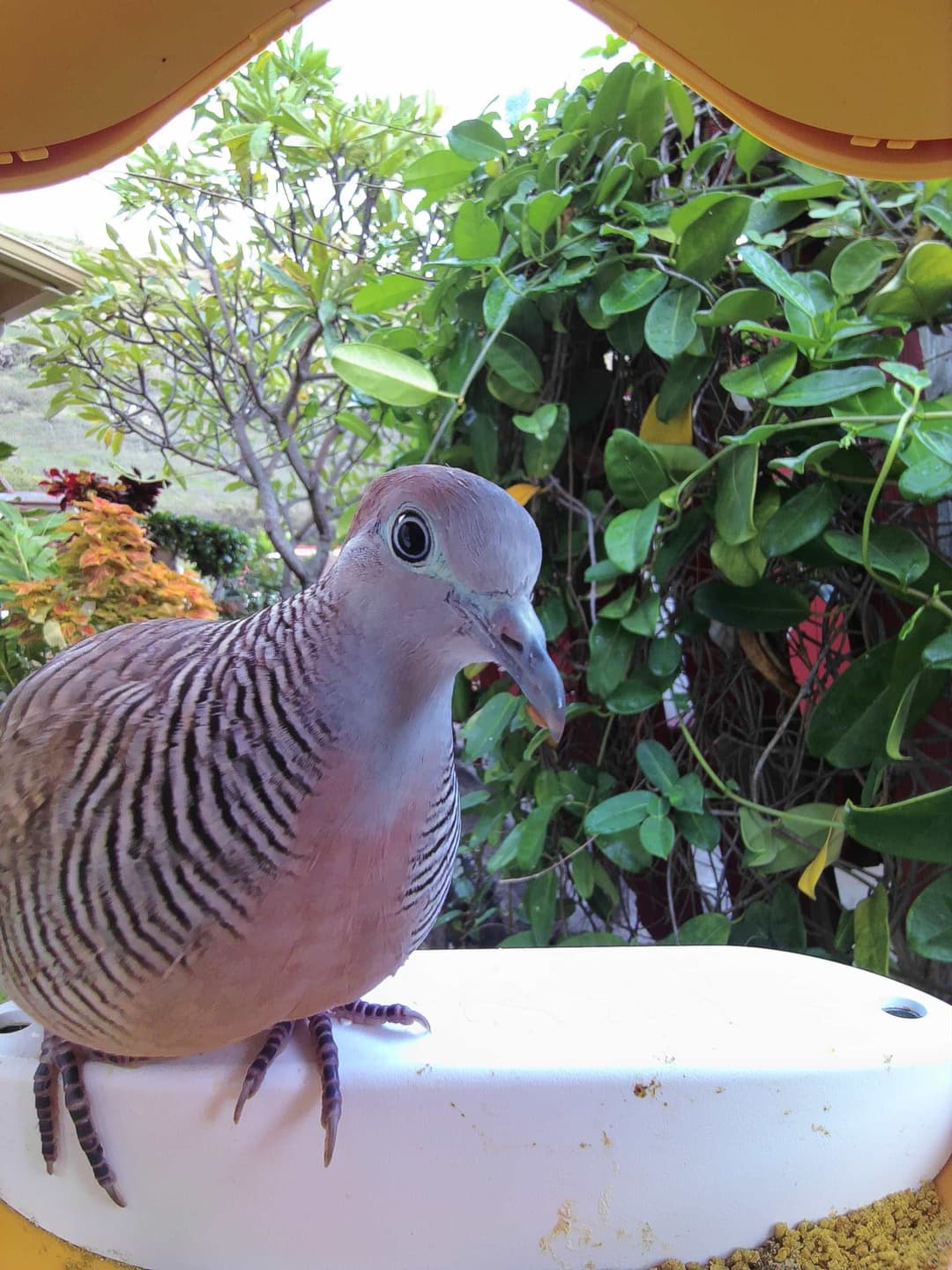
Laughing doves are small birds with a long tail, identifiable by their warm brown-grey blush, distinctive scalloped collars, and a rufous hue in their feathers. They are the epitome of soothing aesthetics with blush-pink necks, blending into an ashy-grey mantle and a pale greyish belly. Their red-rimmed eyes are a key feature.
Male vs female
Males and females look very similar, making them difficult to distinguish. However, males tend to be slightly larger and may have a more vibrant collar around their neck, while females appear paler and smaller.
Juvenile
Juvenile laughing doves exhibit less contrast compared to adults. They feature a poorly developed collar and a lighter brown grey shade. As they grow older, their feathers will darken and the collar will become more distinct.
Size
9.1 - 10.6 in/2.5 - 3.2 oz
There's more to learn about Laughing Dove
View full detailsRing-Necked Dove
Streptopelia capicola
Also known as: Cape Turtle Dove, Half-Collared Dove
General appearance
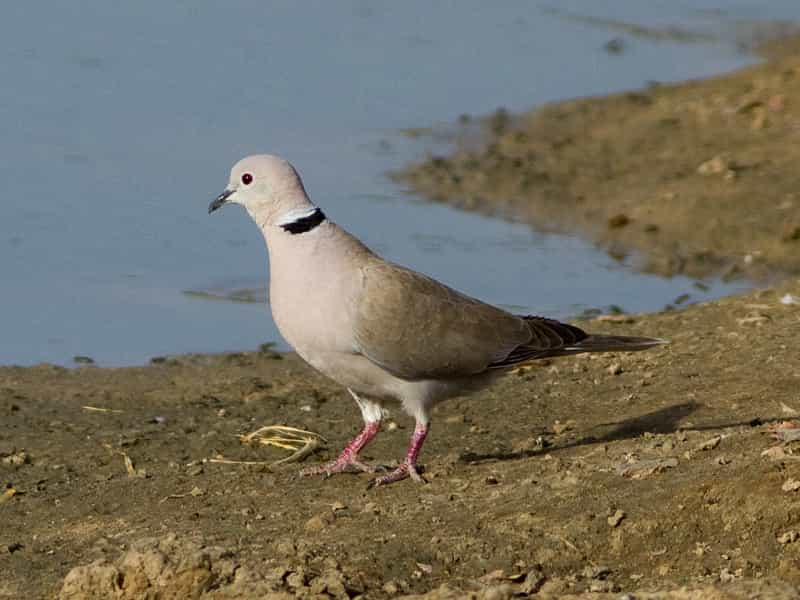
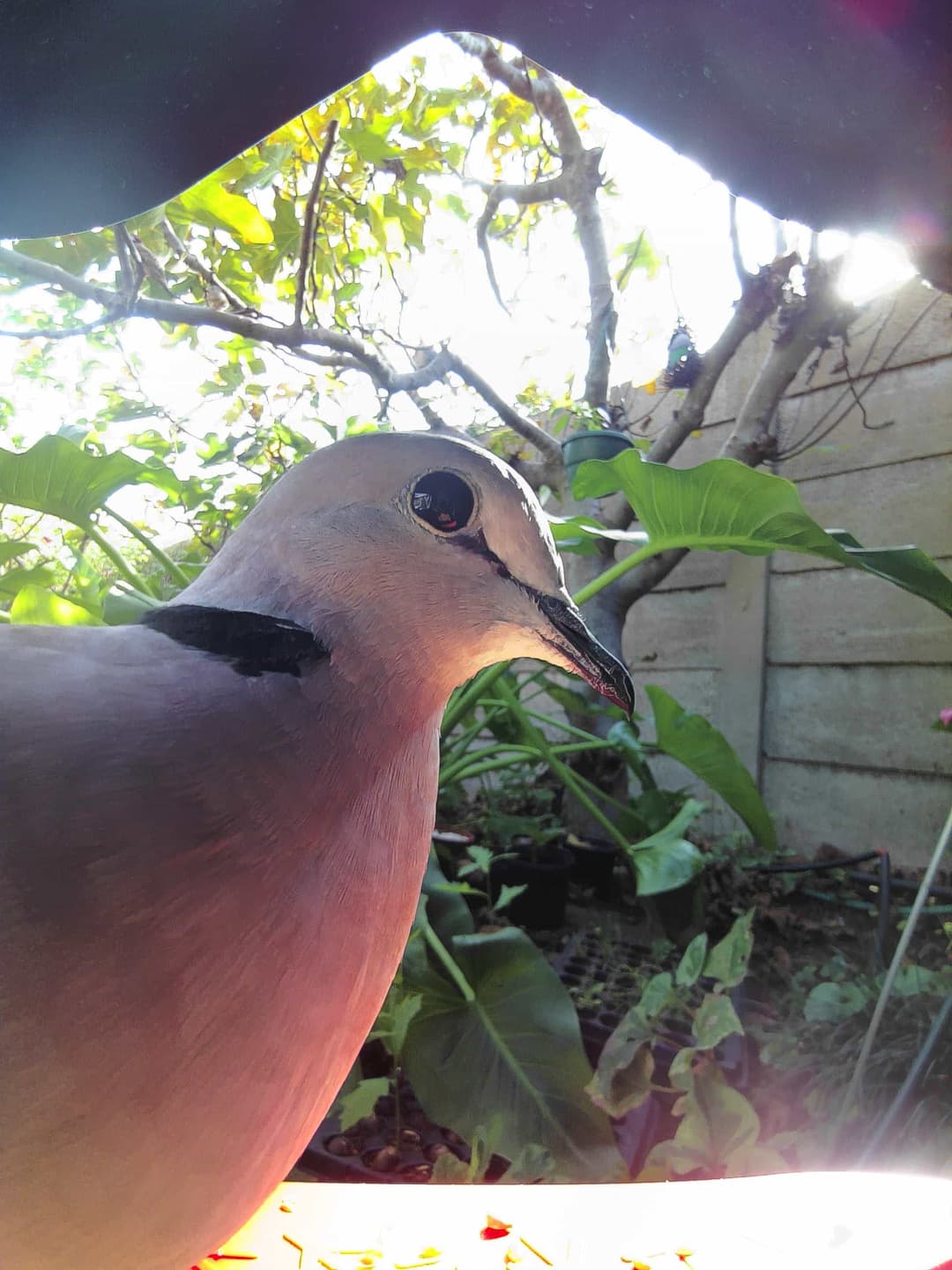
The ring-necked dove, often also called the Cape turtle dove or half-collared dove, stands out with its soft grey-beige plumage, underlined by a thin, black neck ring. Adults are around 25-26.5 cm in length and have broad, bright white edges on their long, pointed tail feathers. It has black eyes, red feet and legs, plus a black beak.
Male vs female
Male and female ring-necked doves look incredibly alike, both sporting the same, pale grey-brown coloration and diagnostic black ring around their neck. Subtle differences are noted in size, with males being slightly larger and usually exhibiting more robust neck rings, compared to the narrower band seen on the females.
Juvenile
Juvenile ring-necked doves possess an overall grey color, more washed out than the adults, and lack the distinctive neck ring. Their bill is more greyish, gradually turning to black as they mature, and their eye color is initially a dull brown, later changing to their iconic black. The tail feathers are also less pointy in their younger years.
Size
9.8 - 10.4 in/3.7 - 7.1 oz
There's more to learn about Ring-Necked Dove
View full detailsHow to tell the Laughing Dove from the Ring-Necked Dove
Visual differences
The Laughing Dove is smaller, weighing 2.5-3.2 oz (23-27 cm long), with a warm brown-grey plumage. It features a distinctive scalloped collar and a rufous hue, with blush-pink necks and red-rimmed eyes. In contrast, the Ring-Necked Dove is larger, weighing 3.7-7 oz (25-26.5 cm long), displaying soft grey-beige plumage and a thin black neck ring. It has broad, bright white edges on its tail feathers, black eyes, and a black beak, creating a more contrasting appearance.
Key differences and behavior
Laughing Doves and Ring-Necked Doves, both adept at adapting to human environments, differ notably in behavior and habitat preferences. Laughing Doves prefer arid and semi-arid regions, whereas Ring-Necked Doves are typically found near water sources in savannas and subtropical forests. For courting, Laughing Doves engage in chest-puffing and soft cooing, compared to the vocal coos and acrobatics of Ring-Necked Doves. In feeding, both species primarily consume seeds, but Laughing Doves may also eat insects more frequently while Ring-Necked Doves feed near ground and include snails when breeding. Lastly, Ring-Necked Doves are heavier (3.7–7.1 oz) and are slightly longer (9.8–10.4 in) than Laughing Doves (2.5–3.2 oz, 9.1–10.6 in), influencing their respective energetic displays.
Still not sure? Here are more lookalikes!
Laughing Dove vs Mourning Dove
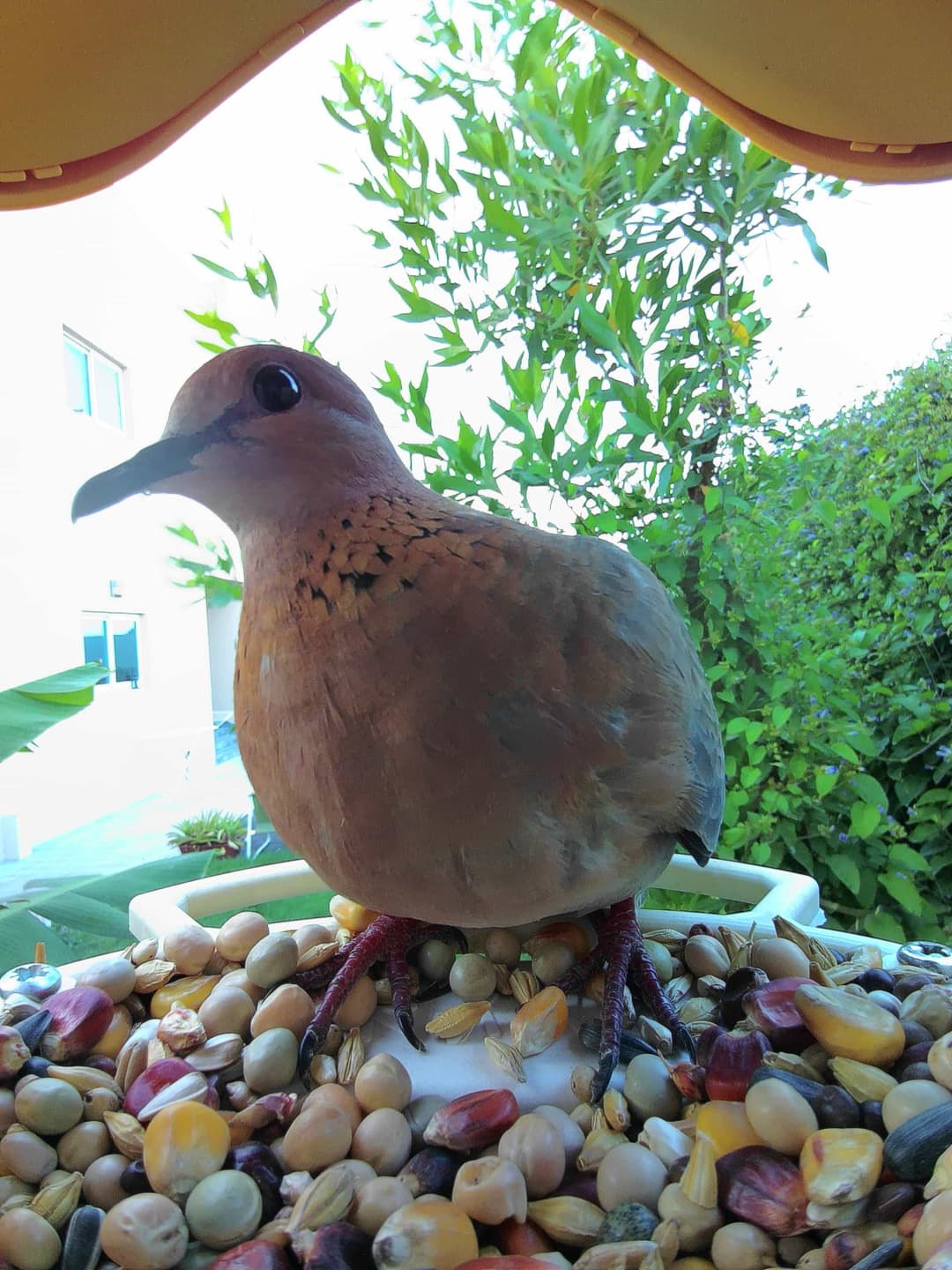

Laughing Dove vs Eurasian Collared Dove
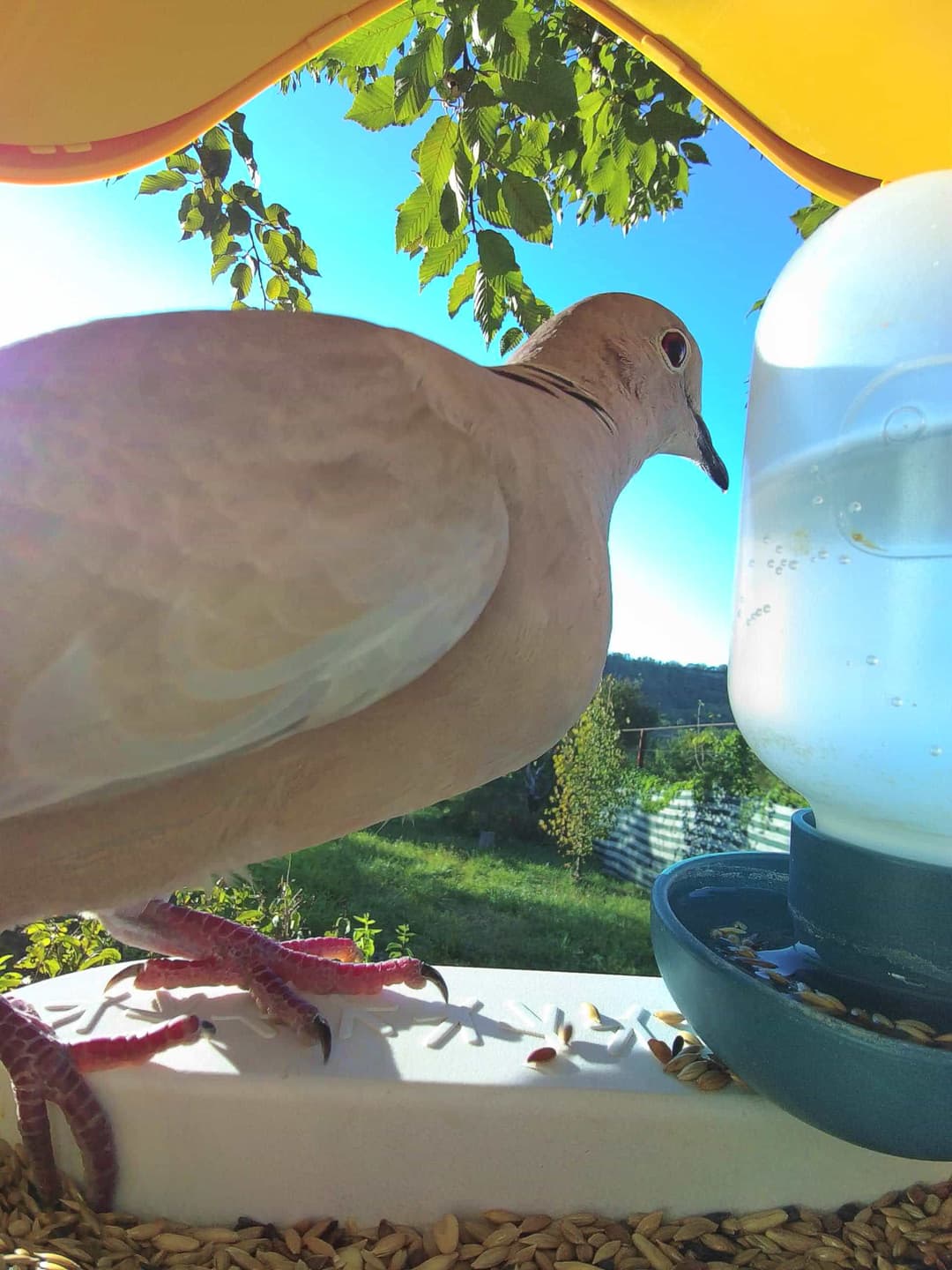
Ring-Necked Dove vs Mourning Dove
Ring-Necked Dove vs Eurasian Collared Dove
Ring-Necked Dove vs African Collared Dove
Laughing Dove vs [Select a bird]

[Select a bird]
Pick a bird to compare
Ring-Necked Dove vs [Select a bird]
[Select a bird]
Pick a bird to compare