
Common Bulbul
Common Bulbul
Also known as: Black-Eyed Bulbul, Brown Bulbul, Brown-Capped Geelgat, Common Garden Bulbul, Garden Bulbul, White-Vented Bulbul
Pycnonotus barbatus

Quick Identification guide
Quick Identification guide
- •
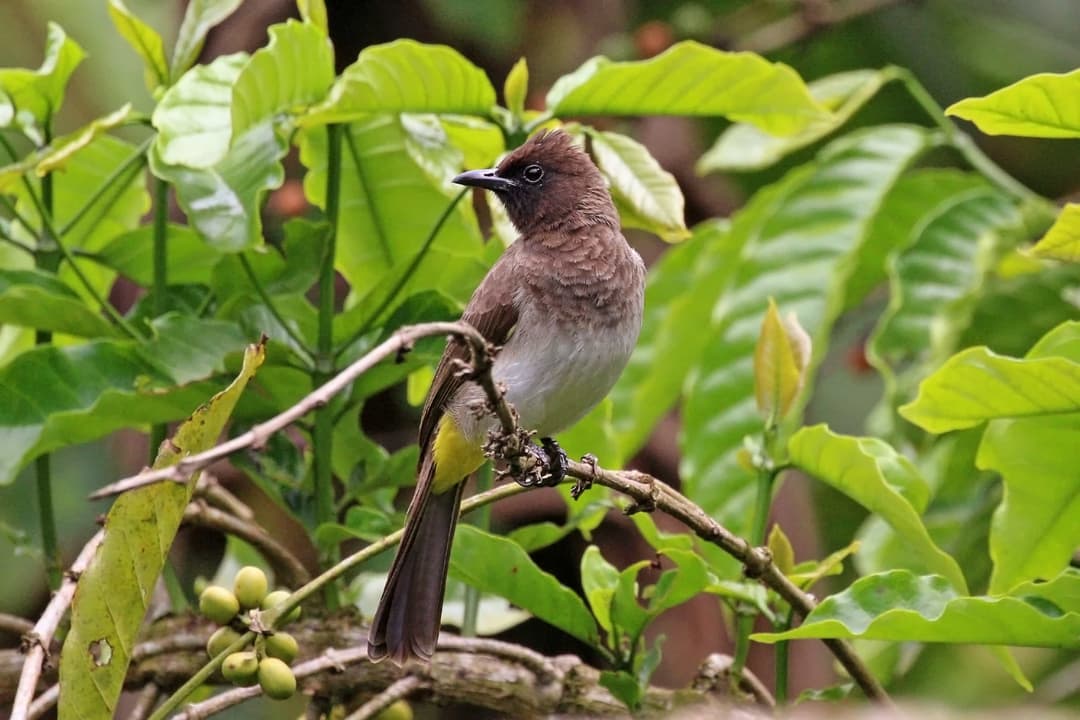
The Common Bulbul has a uniformly dark brown back and paler underparts with a slightly yellowish tinge
- •
Features a small crest on its head, adding to its distinctive profile
- •
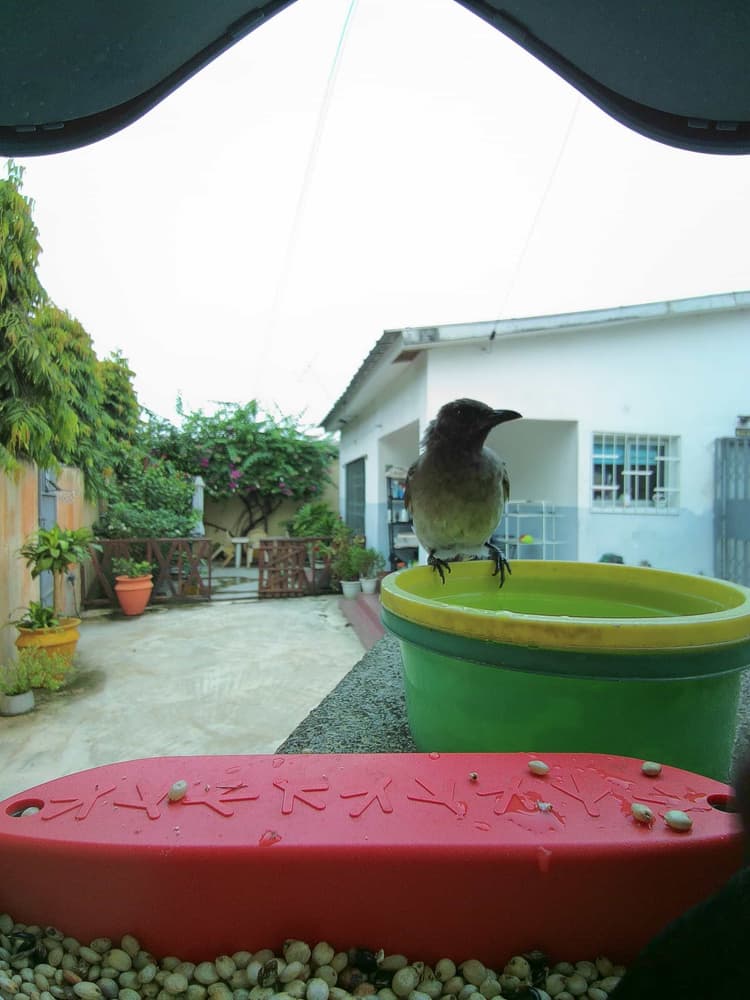
Displays a dark, slightly hooked beak and striking white eye-ring
What does a common bulbul sound like?
The Common Bulbul vocalizes a variety of whistles, squeaks, and chirps, featuring a distinctively hollow "puk" or "poo-ee" call. Medleys of clipped chirps and cheerily varied phrases make up its song; these tunes are frequently and melodically repeated. Additionally, the Common Bulbul also effectively mimics other bird species, often incorporating these imitations into its diverse soundscape.

Description
Common bulbuls live for the spotlight. When males sing, they like to pick the most prominent spot at the top of a bush and sing their little hearts out. They are otherwise active and energetic birds as well... And noisy! Jacobin cuckoos seem to think they are pretty neat, too, and it is not uncommon for common bulbuls to find an extra egg in their nest every now and again.
The common bulbul can weigh between 29to49.5grams and be from15to20centimeters tall.
The Common Bulbul typically lives up to 11 to 12 years. This lifespan is short compared to some mid-sized birds like crows or gulls that can live for 20 years or more. However, it fares better than smaller birds like sparrows, which usually only live up to 5 years. Factors affecting this span include predation, disease, and habitat changes.
Did you know?
Most popular questions about common bulbul
How to recognise a common bulbul?
General appearance
The common bulbul, or Pycnonotus barbatus, is a small passerine bird characterized by a compact body, short neck, and long tail. Its primary coloration is a drab brown on the wings and back, transitioning to a lighter shade on the underparts. The bird has a striking black head, complemented by a patch of yellow under its tail and a thin white eye ring.
Male vs female
Males and females of the common bulbul have very similar appearances, making them difficult to distinguish in the wild. Both have the same size and coloration, with no prominent sexual dimorphism. However, during breeding season, male bulbuls often display more aggressive and distinctive behaviors, such as competitive singing and aerial displays.
Juvenile
Juvenile common bulbuls are similar in appearance to the adults, but generally bear a softer, duller coloration. Their feather edges may also be slightly fluffier and less defined than in mature individuals. Over time, as they mature, their coloring gradually darkens to match that of adults.
Often mistaken for
Himalayan Bulbul vs Common Bulbul
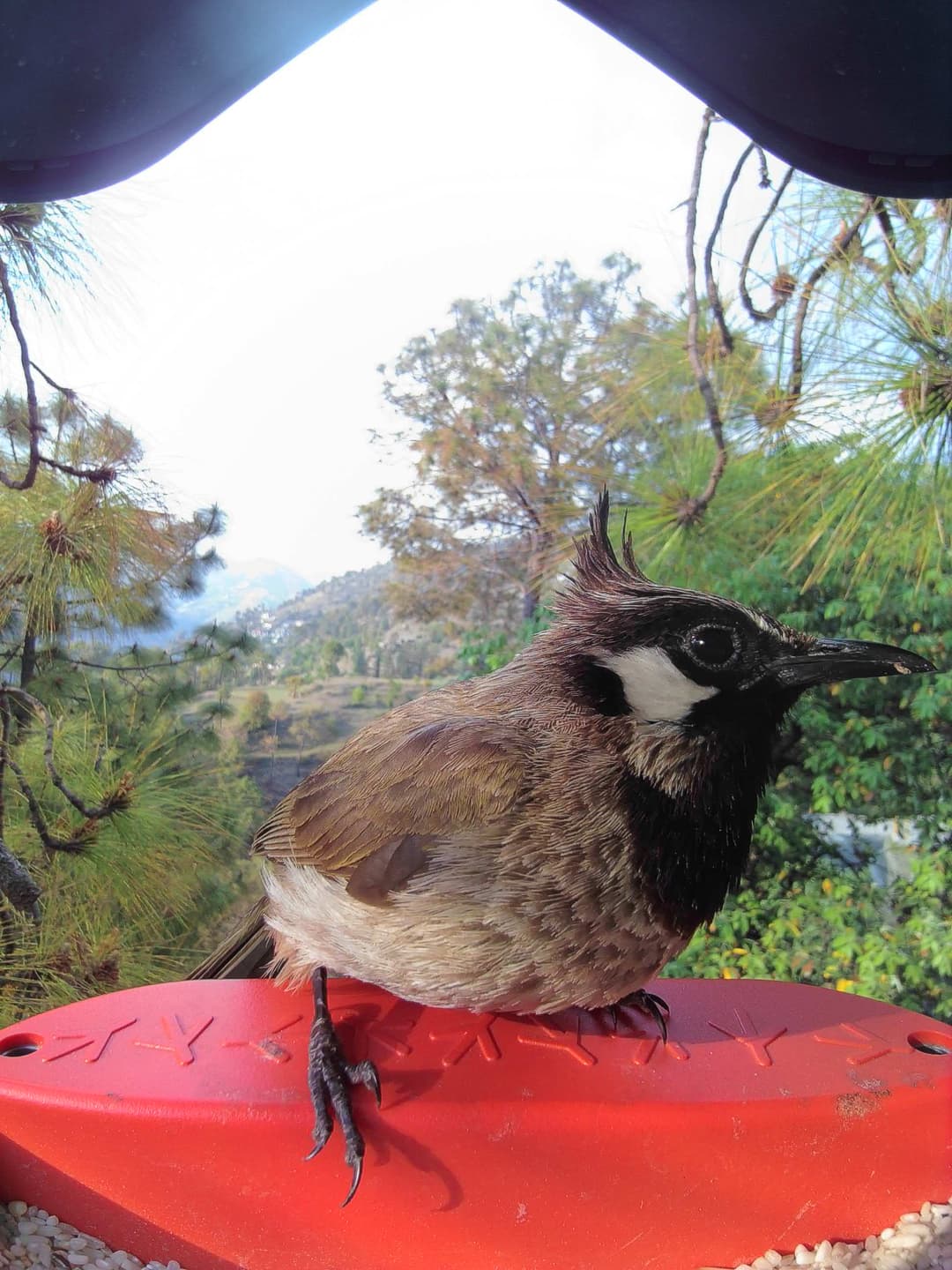
The Himalayan Bulbul shares similar body shape and size with the Common Bulbul but can be distinguished by its unique crested head and brown back.
African Red-Eyed Bulbul vs Common Bulbul
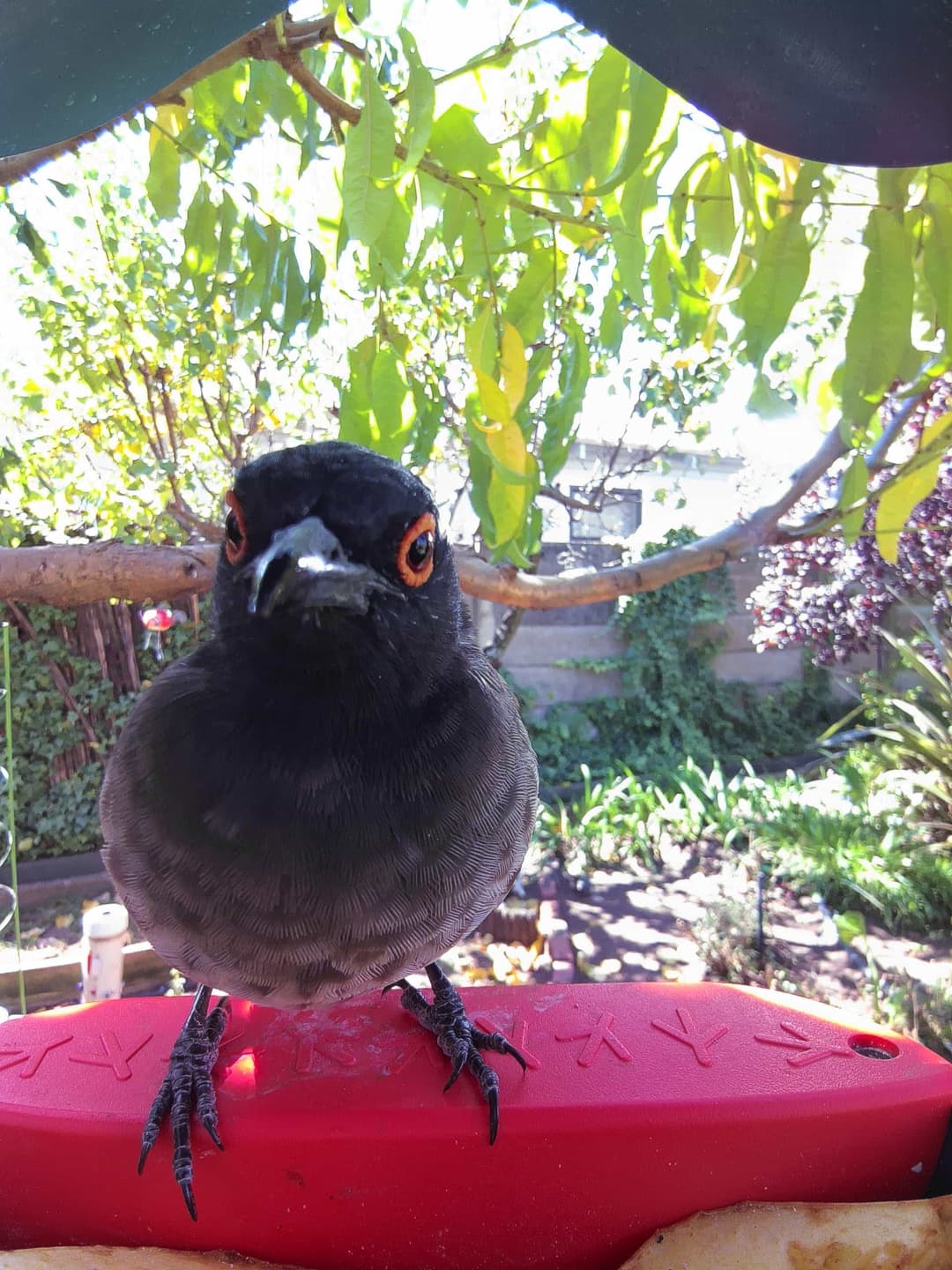
This bulbul resembles the Common Bulbul in shape but can be recognized by its striking red eye-rings, giving it a distinct appearance.
Cape Bulbul vs Common Bulbul
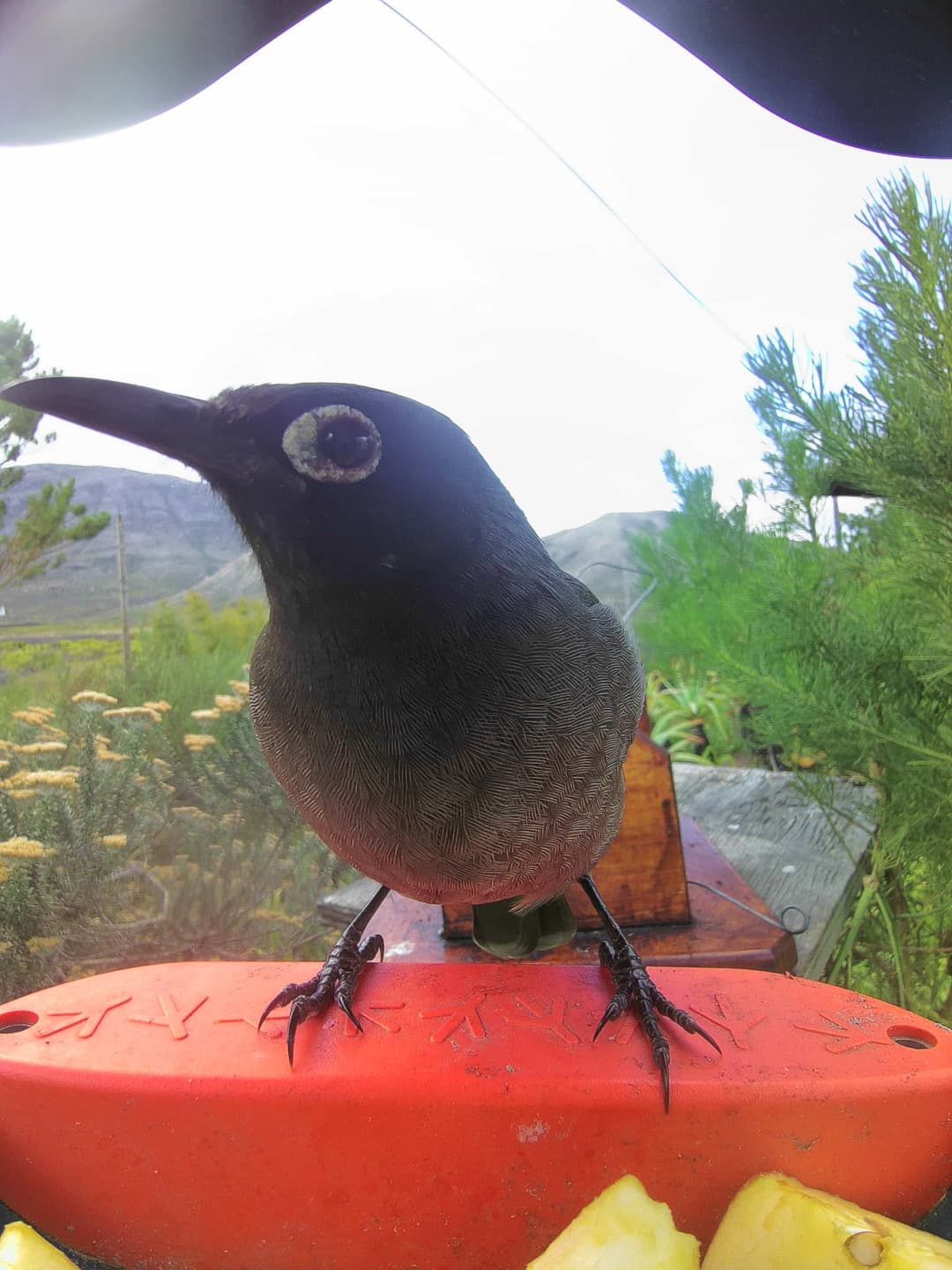
The Cape Bulbul has a similar body structure to the Common Bulbul, but it is differentiated by a white eye ring and a more uniform color.
Dark-Capped Bulbul vs Common Bulbul
While similar in shape and size to the Common Bulbul, the Dark-Capped Bulbul can be recognized by its dark cap and lighter underparts.
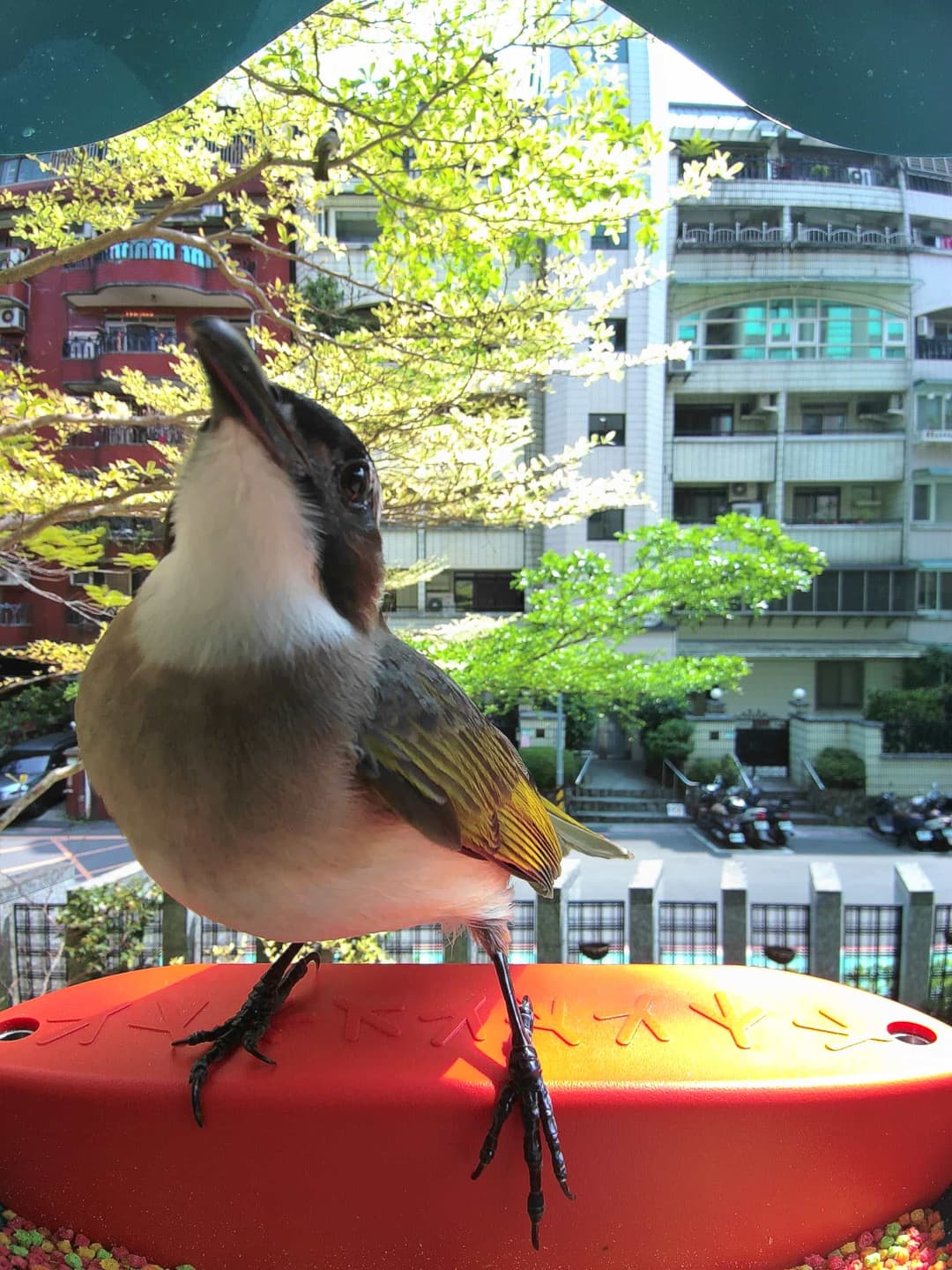
Light-Vented Bulbul vs Common Bulbul
This species can be mistaken for the Common Bulbul due to its similar body structure but can be distinguished by its light-colored vent area and unique face markings.
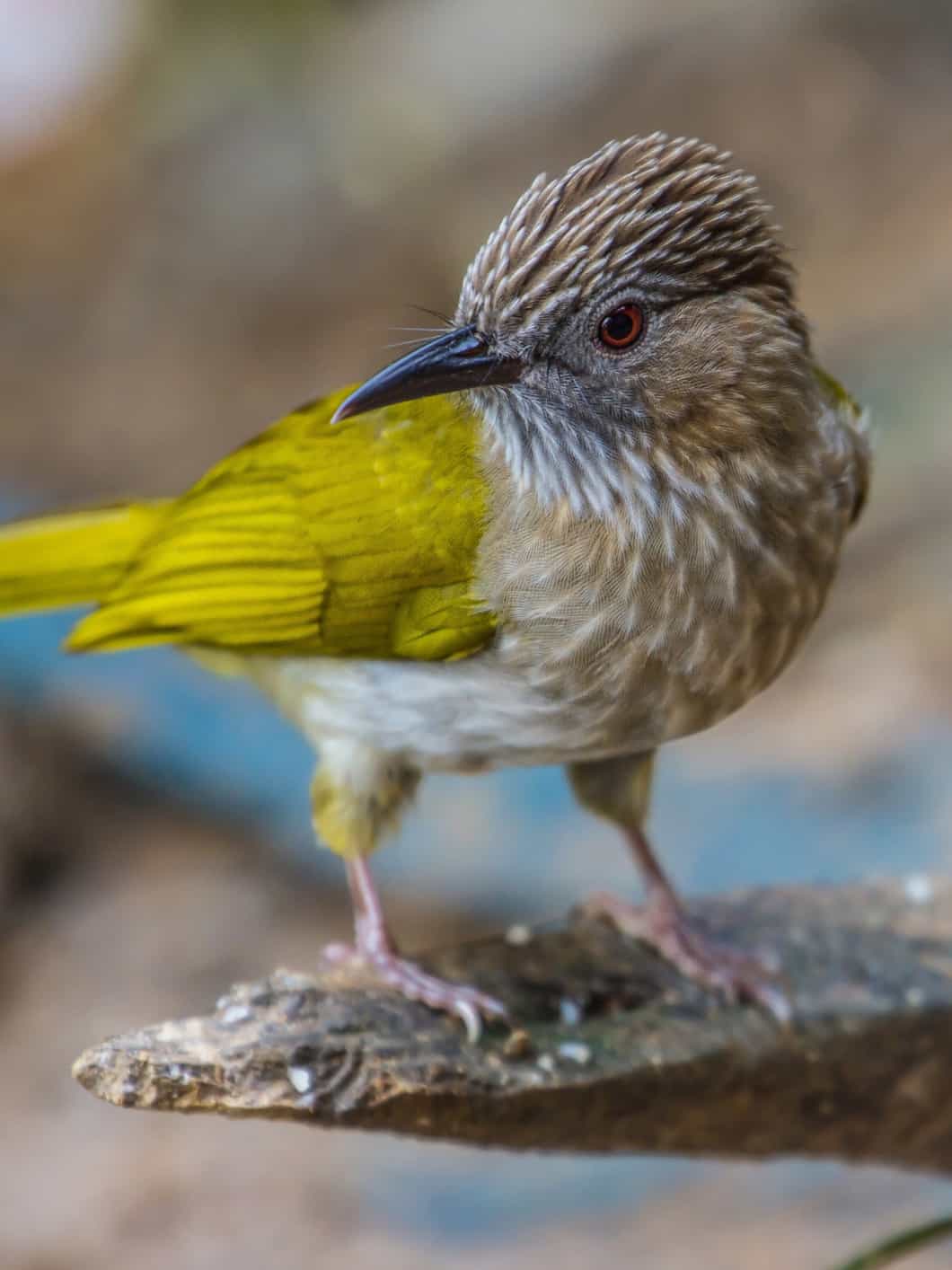
Mountain Bulbul vs Common Bulbul
The Mountain Bulbul shares a resemblance with the Common Bulbul but is typically found at higher elevations and has more pronounced streaking on its underparts.
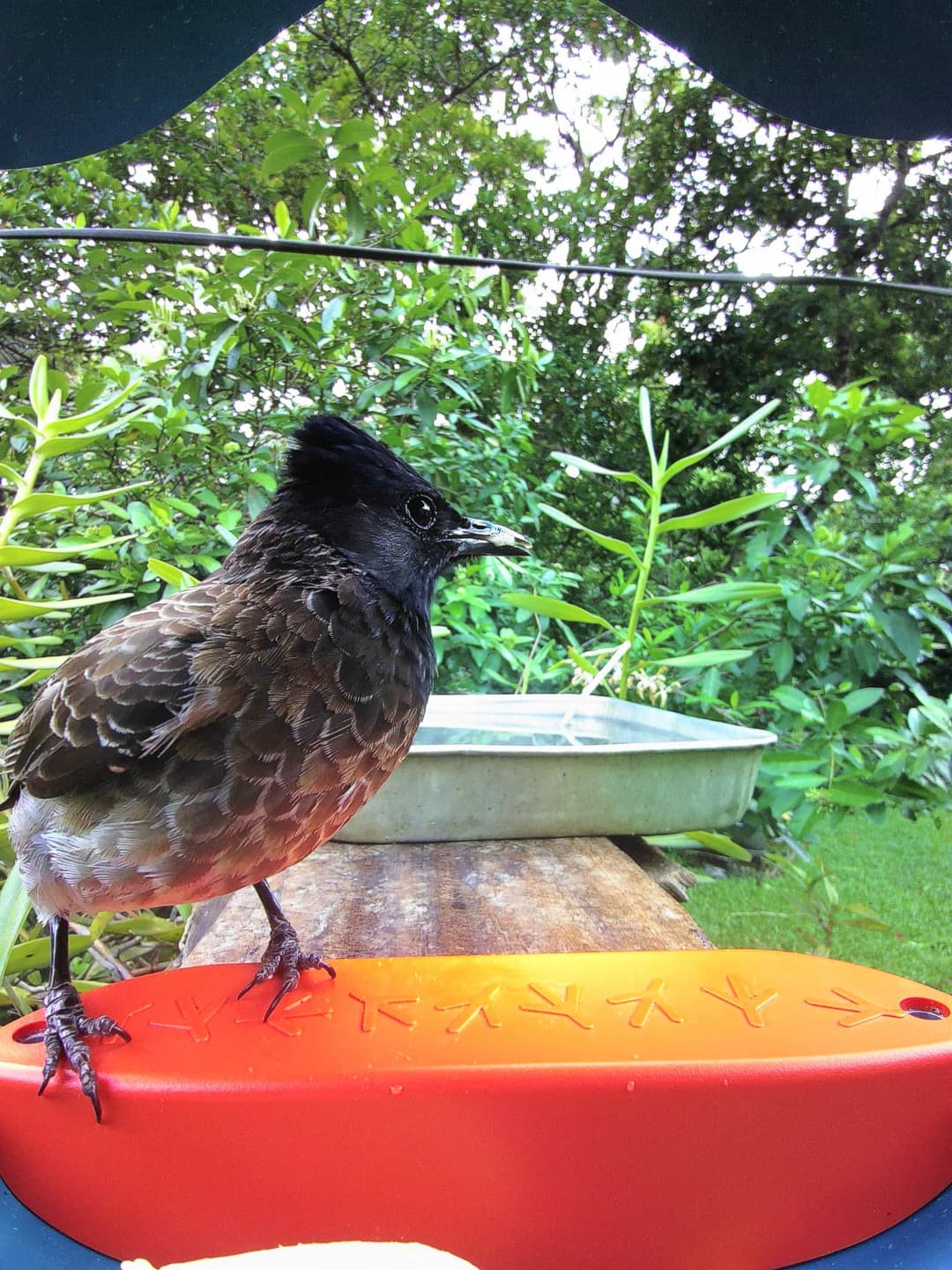
Red-Vented Bulbul vs Common Bulbul
This bulbul looks similar to the Common Bulbul but can be recognized by its contrasting red vent and darker overall plumage.
Red-Whiskered Bulbul vs Common Bulbul
While both bulbuls have a similar body shape, the Red-Whiskered Bulbul can be distinguished by its white cheek patches and red 'whiskers' below the eye.
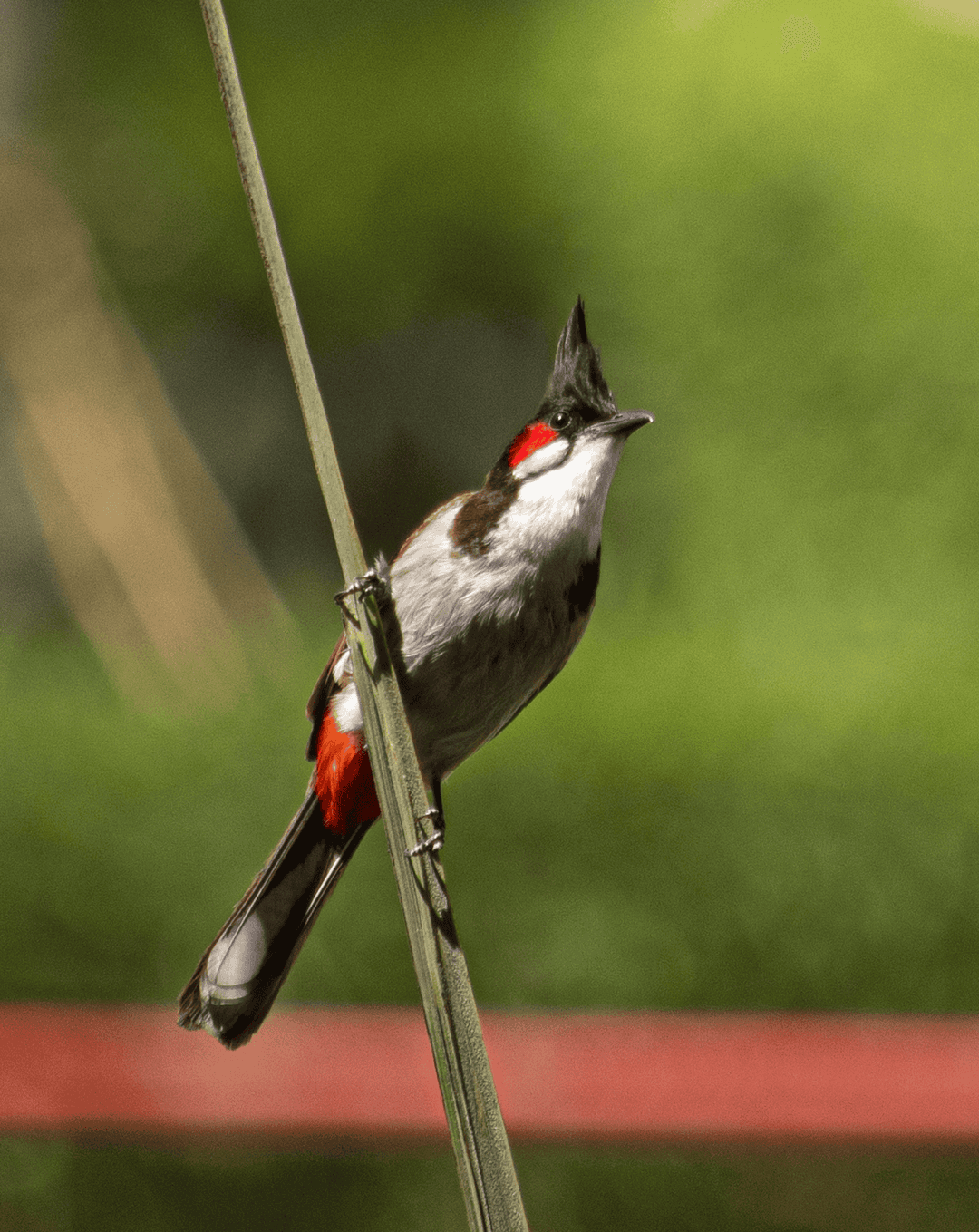
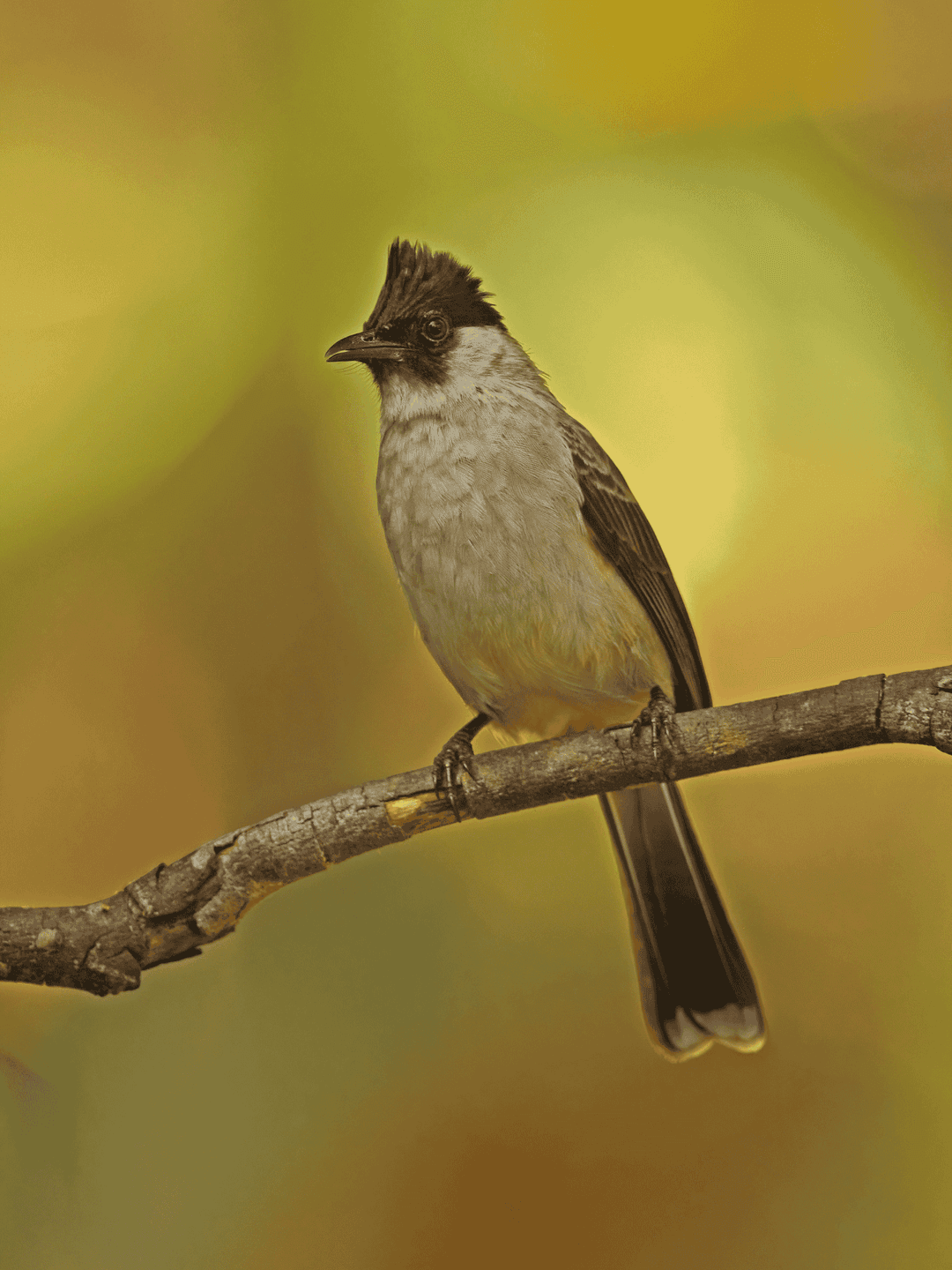
Sooty-Headed Bulbul vs Common Bulbul
Resembling the Common Bulbul, the Sooty-Headed Bulbul can be identified by its sooty-colored head and lighter underparts.
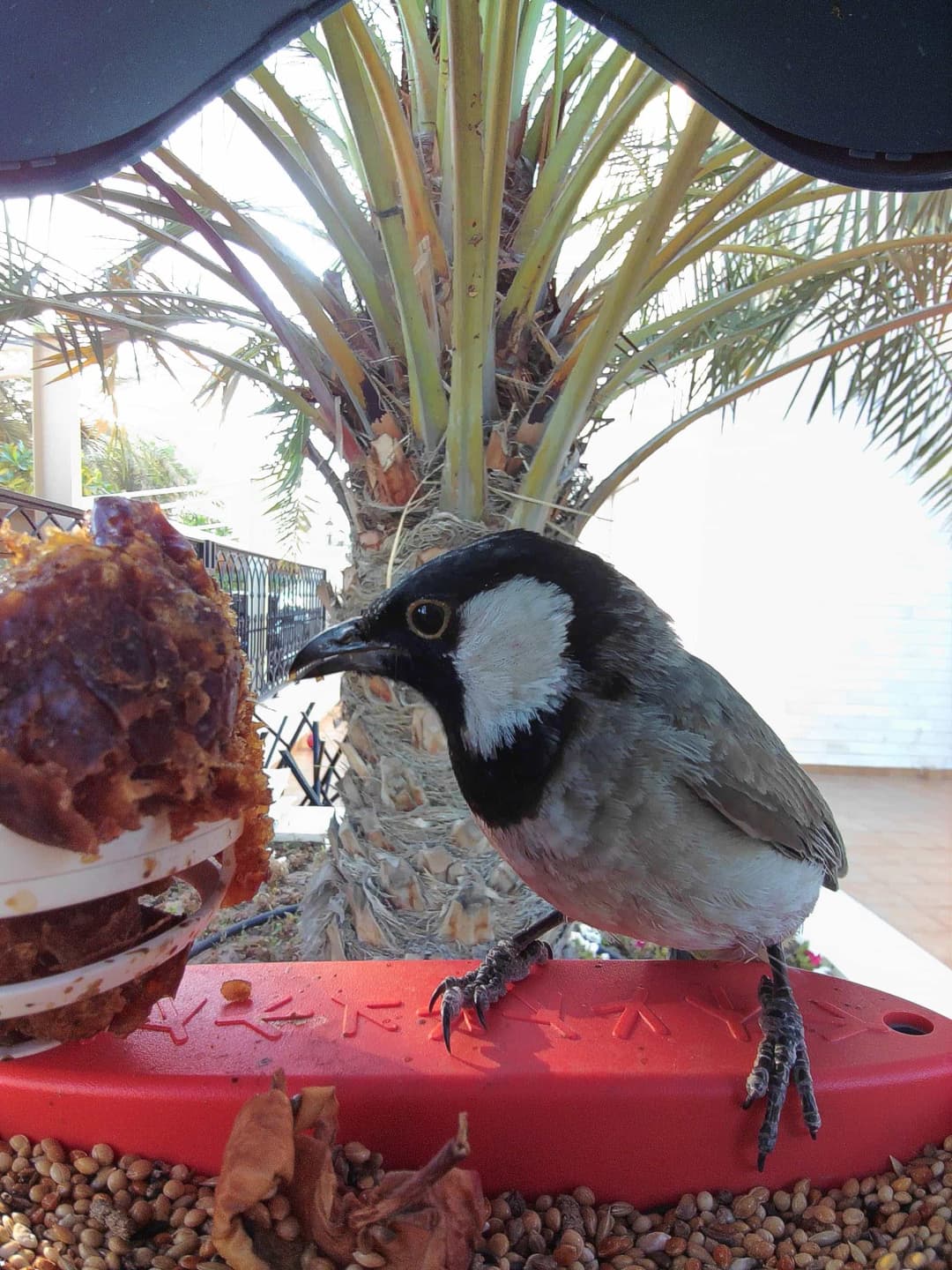
White-Eared Bulbul vs Common Bulbul
The White-Eared Bulbul can be mistaken for the Common Bulbul but has a distinctive white ear patch that sets it apart.
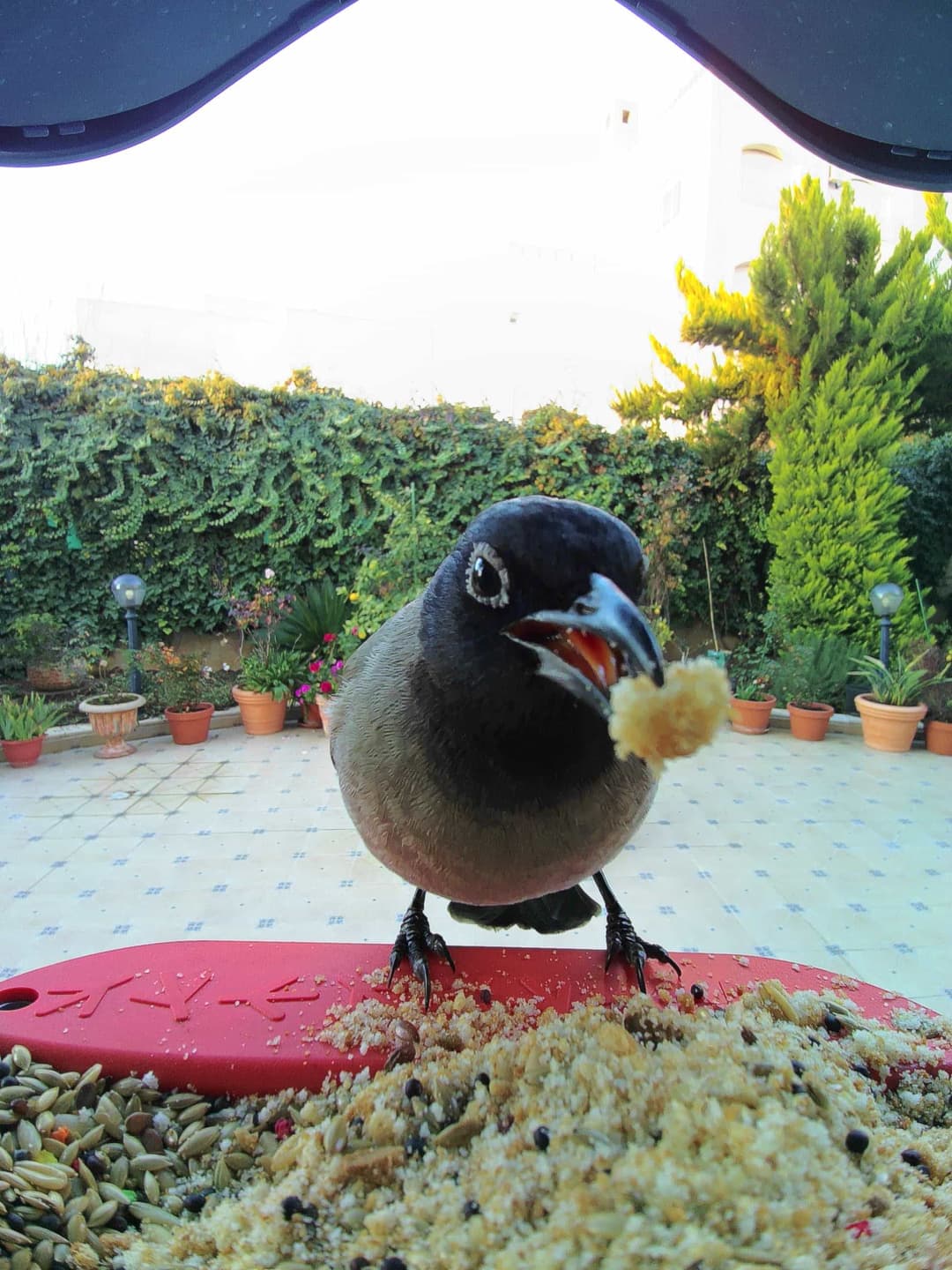
White-Spectacled Bulbul vs Common Bulbul
This bulbul resembles the Common Bulbul in shape but differs with a noticeable white eye ring that gives it a spectacled appearance.
Breeding and nesting habits of the common bulbul
Mating behaviors
Common bulbuls engage in courtship displays involving vocalizations and dance-like movements to attract mates. Males often sing prominently to establish territory and attract females.
Nesting details
They prefer nesting in shrubbery or small trees, often in gardens. Nests are cup-shaped made from twigs, grasses, and leaves, lined with softer material like feathers.
Eggs and chick-rearing
Females lay 2-3 eggs, which are incubated for about 11-14 days. Both parents feed the chicks, who fledge within two weeks. To support nesting in gardens, provide dense shrubs and avoid pesticides.
What does a common bulbul like to eat?
Flowers
Fruits
Insects
Nectar
Seeds
Small animals
Spiders
Natural diet
The common bulbul primarily feeds on a variety of fruits and berries. It consumes figs, olives, and other soft, fleshy fruits available in its habitat. It also eats insects, such as beetles and caterpillars, providing an important protein source. Nectar from flowers and small invertebrates are additional components of its diet, depending on availability.
Bird feeders
At bird feeders, the common bulbul is attracted to foods like chopped fruits, including apples and pears. It may also consume seed mixes that have a higher fruit or nut content. Offering mealworms or suet can also attract these birds, as they supplement their protein intake at feeders.
Invite the common bulbul with their favorite meals
The common bulbul is an omnivore and will enjoy snacks of small fruits, seeds, insects, and nectar. Consider filling your feeder with Bird Buddy seeds, as they are expert-chosen for the season and can appeal to the taste preferences of these birds.
Select the best bulbul-friendly feeder
Bulbuls prefer feeders that offer them some protection, so opt for ones that are partially enclosed or have shelter over them. Suet and nibble feeders can also work well. Choose a feeder that is easy to clean to maintain good bird health.
Create a welcoming environment for the common bulbul
Bulbuls love to bathe, so consider adding a bird bath or shallow water features to your yard. Also, you can attract these birds with fruit trees and other plants that produce berries or nectar. Keep the area quiet since they enjoy serene environments.
Call them for a sing-along
The best trick to getting bulbuls to feel welcome is by playing bulbul bird calls. Since bulbuls are highly vocal creatures, they will likely respond to the calls. Remember not to play the calls too loudly or too frequently to avoid causing stress to the birds.
Where can you find common bulbuls?
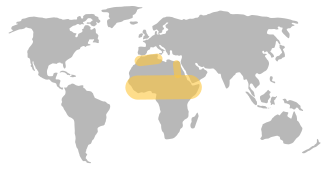
Primary habitat
Common bulbuls are primarily found in open woodland, savanna, and shrubland spreading across Africa south of Sahara.
Additional range
While they prefer warm climates, they can also adapt to human-altered environments, such as cultivated lands and urban gardens.
Do they migrate?
The common bulbul is typically a resident bird, meaning it generally does not migrate and tends to stay in the same area throughout the year. This species is widely distributed across sub-Saharan Africa, inhabiting a range of environments from woodlands to gardens and even urban areas. Its strong adaptability to different habitats allows it to remain in one place rather than undertaking long migrations. During seasonal changes, common bulbuls may exhibit some local movements, particularly in response to food availability or environmental conditions, but these are not long-distance migrations. They might shift slightly within their preferred region to exploit food resources more effectively or avoid harsh weather conditions. In summary, the common bulbul does not partake in the typical migratory behavior seen in many other bird species. It remains year-round within its established territories, making only minor local movements as necessary.
What is the role of common bulbuls in nature and how to protect them?
Conservation status
The common bulbul is categorized as "Least Concern" by the IUCN, indicating it is a common species with a stable population. This bird is widely distributed across sub-Saharan Africa and adapts well to various habitats, including urban areas. Key threats include habitat loss due to deforestation and human development, but these threats are not significantly impacting its overall numbers. Conservation efforts are not specifically targeted at this species due to its robust population, but broader initiatives for habitat preservation benefit it indirectly. The common bulbul’s adaptability plays a crucial role in its current conservation status.
Ecological role of common bulbuls
Its role in the ecosystem
The common Bulbul, scientifically named Pycnonotus barbatus, plays a significant role in its ecosystem, notably contributing towards pest control and seed dispersal. Belonging to the family Pycnonotidae, this bird feeds on various insects, caterpillars and other arthropods, regulating their population within its habitat. This pest-control activity indirectly supports the wellbeing of various plant species and contributes to natural biodiversity. Furthermore, like many other birds, the common Bulbul is a viable agent of seed dispersal. It consumes a wide array of fruits and subsequently excretes the seeds over broad areas, fostering the propagation and spatial distribution of several plant species. This is crucial for the survival and diversity of flora, aiding in forest regeneration and growth of new plant colonies, thus enhancing ecosystem resilience. Therefore, the ecological health and sustainability of the habitats in which the common Bulbul thrives can be significantly attributed to its dietary behaviors.
How to help protect common bulbuls
Preservation tips
Habitat preservation strategies
Preserving the common bulbul's habitat involves protecting the bird's natural environment. Advocate for policies that reduce deforestation and land degradation, especially in primary forest areas where these birds are predominantly found. Develop local conservation projects aiming at rejuvenating destroyed habitats. Restoration of native plants can provide the appropriate nesting materials and shelter necessary for the common bulbul.
Community science initiatives
Data collection and monitoring can help in the conservation of the common bulbul. Encourage community participation in birdwatching and count initiatives, using applications that log sightings. These data can help scientists track changes in the common bulbul population and habitat. Education programs about the common bulbul's role in the ecosystem can also prompt wider conservation efforts.