
Cape Bulbul
Cape Bulbul
Also known as: Cape Geelgat
Pycnonotus capensis

Quick Identification guide
Quick Identification guide
- •
Features a dark, sleek body with rich brown plumage, offering a subdued yet elegant appearance
- •
Distinctively has a white eye-ring that contrasts against its dark face and eyes
- •
Possesses a thin, slightly curved black beak and a small, rounded tail tipped with yellow

Description
This noisy, mohawked little bird can be found in pairs or small flocks. Males and females look alike, so if wanting to spot one of these beautiful birds be on the lookout for the distinctive bright yellow of their undertail feathers. Apparently, Jacobin cuckoos, known brood parasites, also think they’re pretty neat, as they often choose them as hosts!
The cape bulbul can weigh between 28to47.5grams and be from19to21centimeters tall.
The Cape Bulbul typically lives up to 11 years in the wild, which is similar to the lifespan of related species like the Common Bulbul. Factors influencing its longevity include habitat, diet, predation, and disease. Like other bulbuls, it experiences high mortality rates in its first year but can have a longer lifespan in captivity.
Did you know?
Most popular questions about cape bulbul
How to recognise a cape bulbul?
General appearance
The Cape Bulbul, known scientifically as Pycnonotus capensis, is a bird species endemic to the Fynbos biome in South Africa. It is relatively small-sized about 20 cm long, distinguished by its glossy black plumage with an olive-yellowish underbelly. This small bird has a neat black crest, a dark brown eye surrounded by a narrow white eye-ring, and a long slender bill. It's characteristic tail is bulbous and displays prominent white tips and edges.
Male vs female
Male and female Cape Bulbuls appear identical with no significant sexual dimorphism. Both sexes share the same greenish-yellow underparts and distinctive olive-black upperparts. Differences in size or colour can't be reliably used to distinguish males from females.
Juvenile
Juvenile Cape Bulbuls resemble the adult birds but their plumage is less glossy. Additionally, the white edges on the feathers of their wings and tails are broader than in adults. Over time, as they mature, they acquire the glossy adult plumage and their white feather edges become as thin as those of mature birds.
Often mistaken for
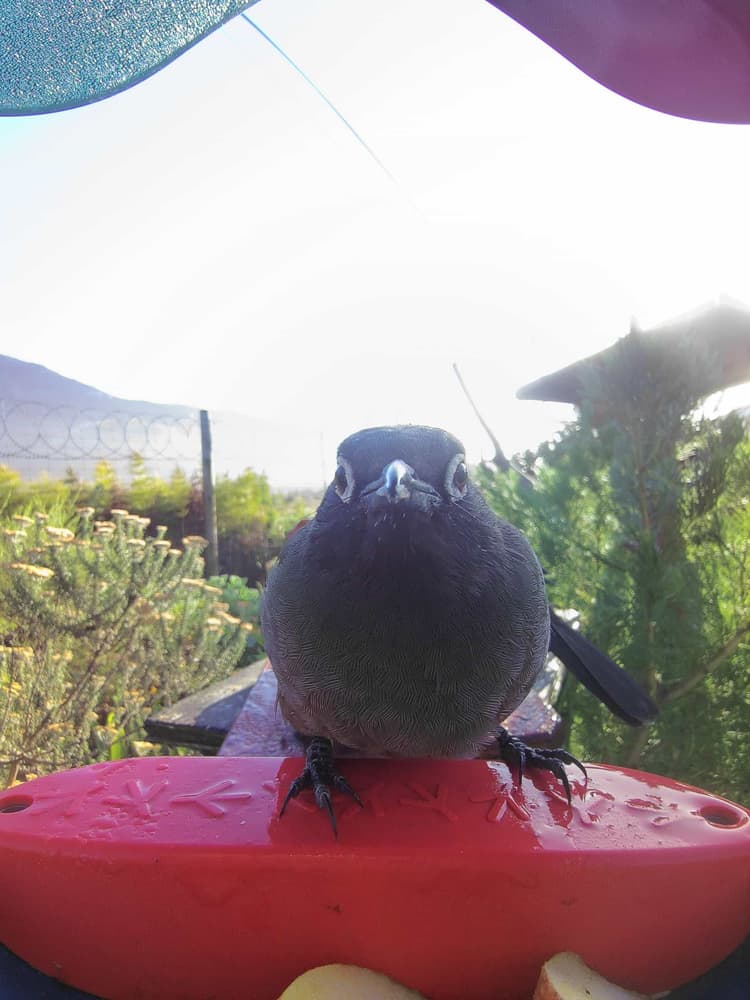
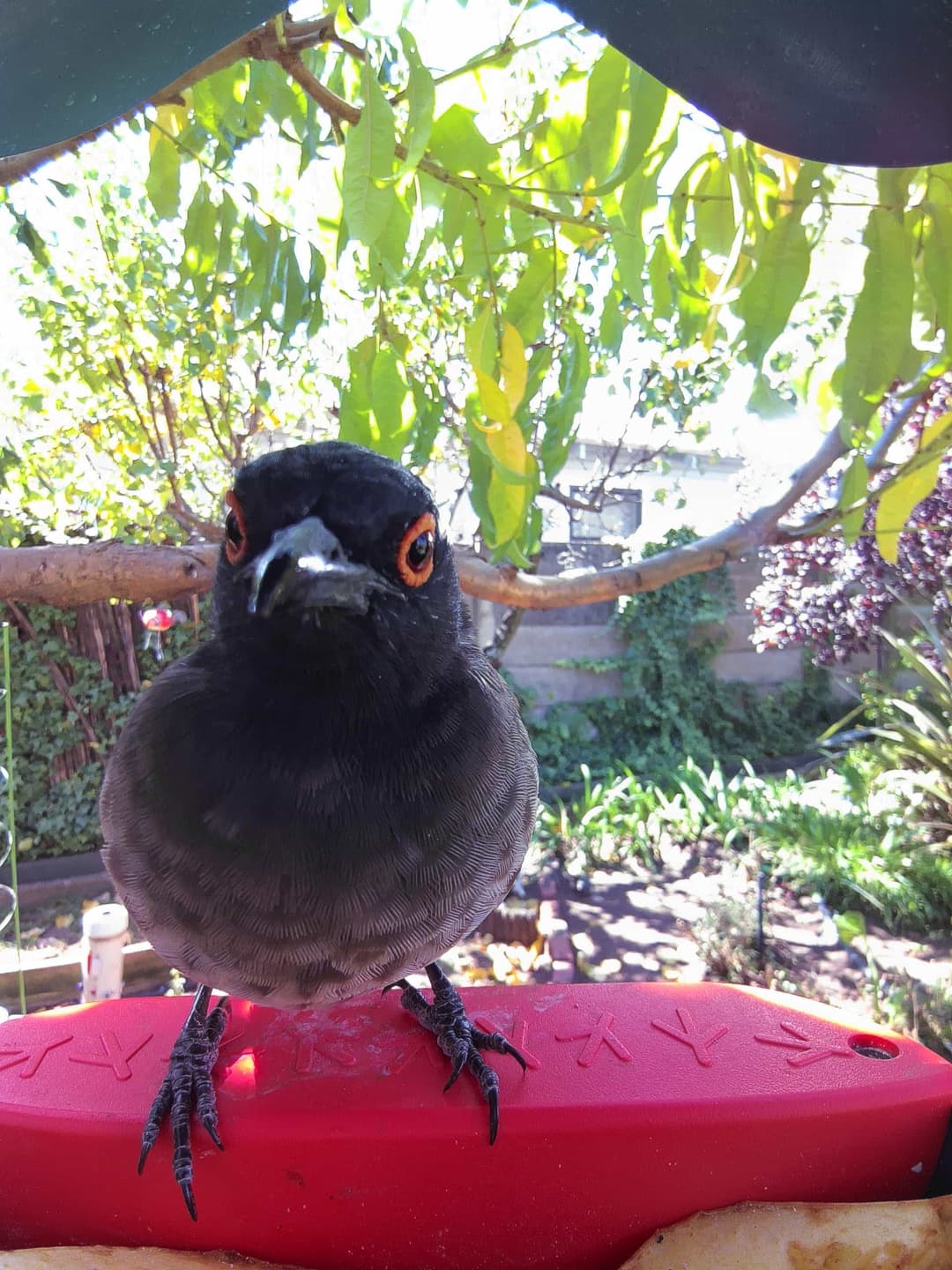
African Red-Eyed Bulbul vs Cape Bulbul
The African Red-Eyed Bulbul resembles the Cape Bulbul in general shape and size but can be distinguished by its distinctive red eye-ring.
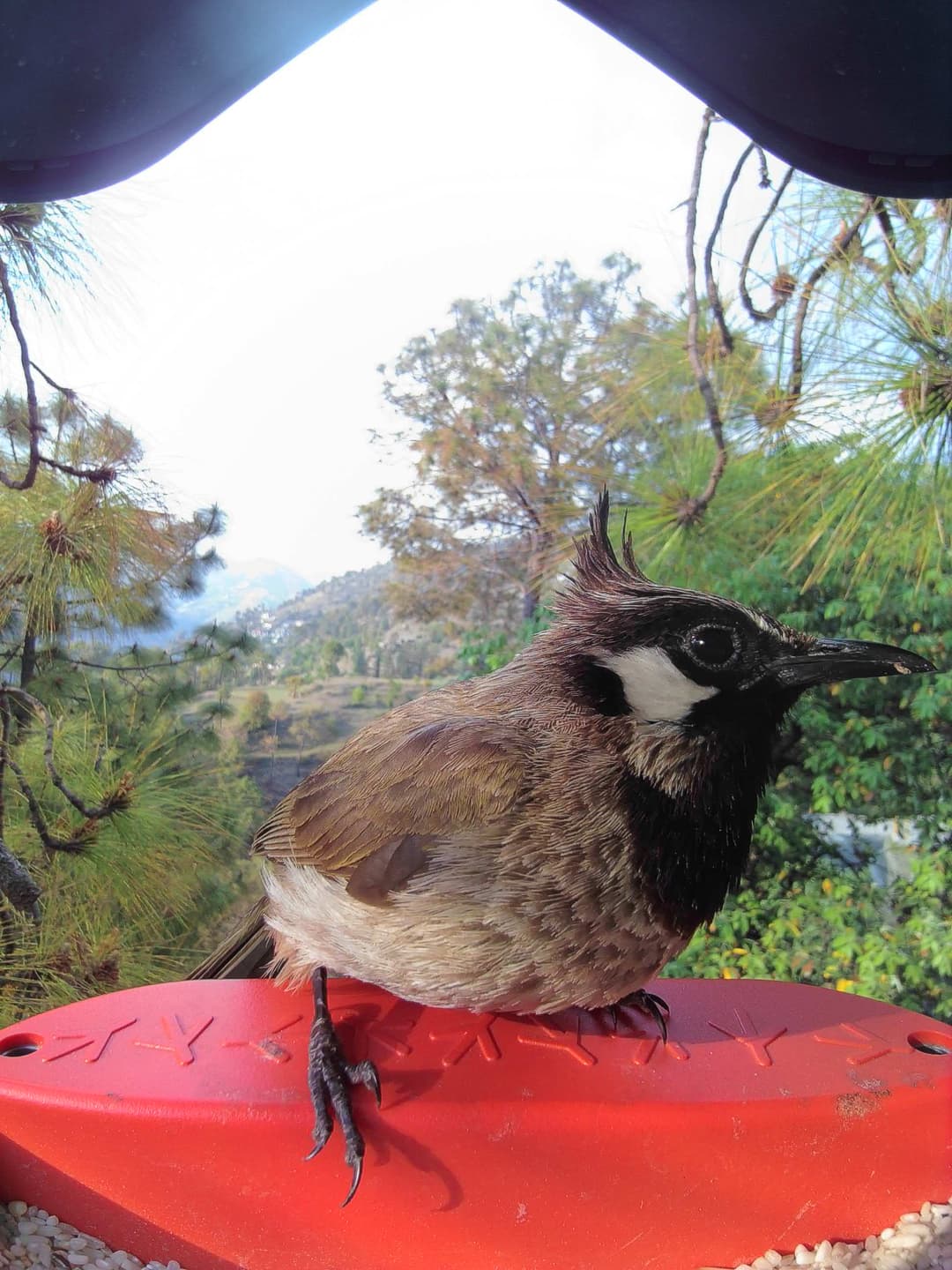
Himalayan Bulbul vs Cape Bulbul
The Himalayan Bulbul resembles the Cape Bulbul but has a distinctive black crest and white cheek patch that set it apart.
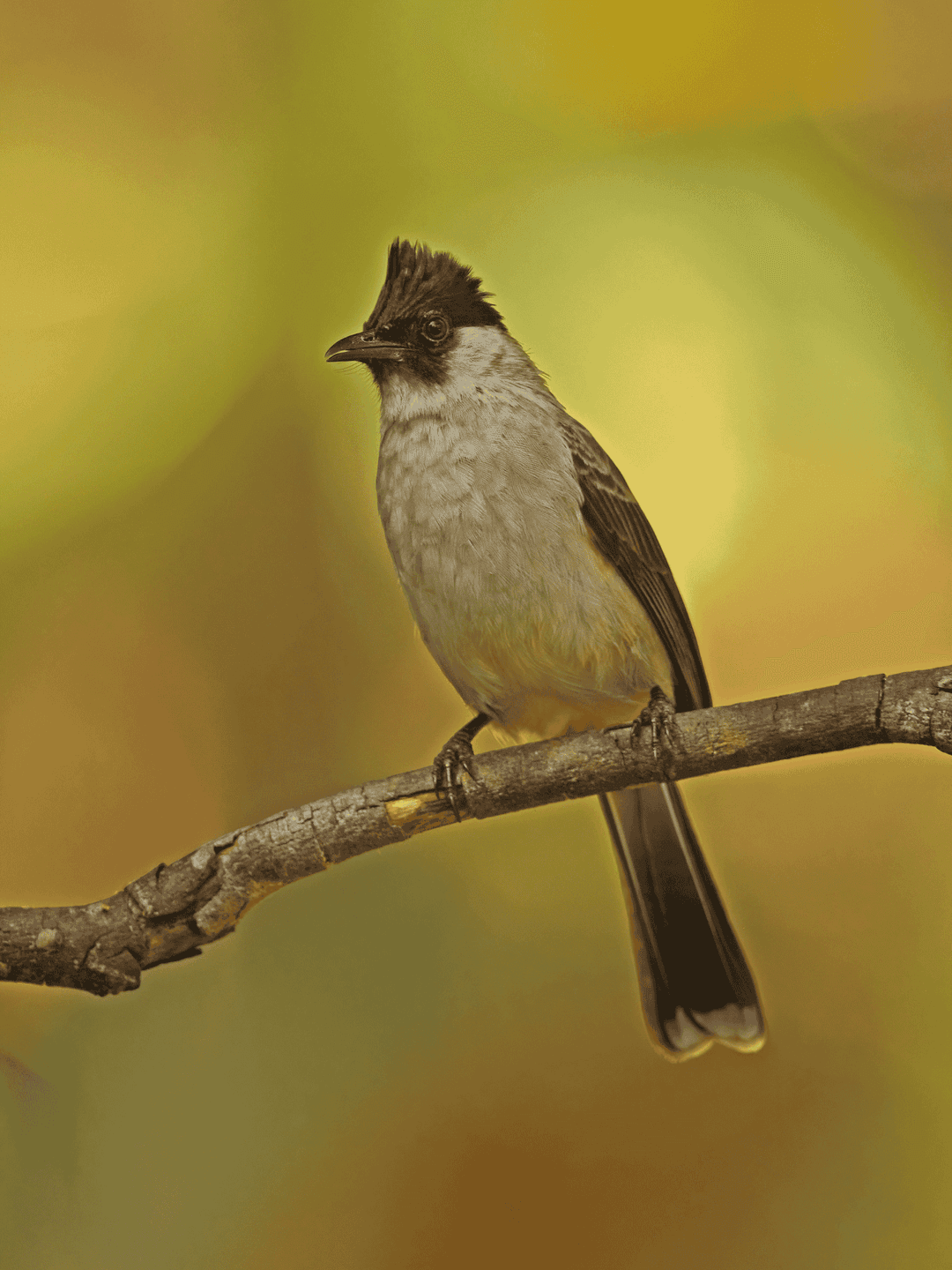
Sooty-Headed Bulbul vs Cape Bulbul
The Sooty-Headed Bulbul looks similar to the Cape Bulbul but features a darker head and a white throat patch.
White-Spectacled Bulbul vs Cape Bulbul
The White-Spectacled Bulbul has a similar body shape to the Cape Bulbul but can be identified by the white eye-ring around its eyes.
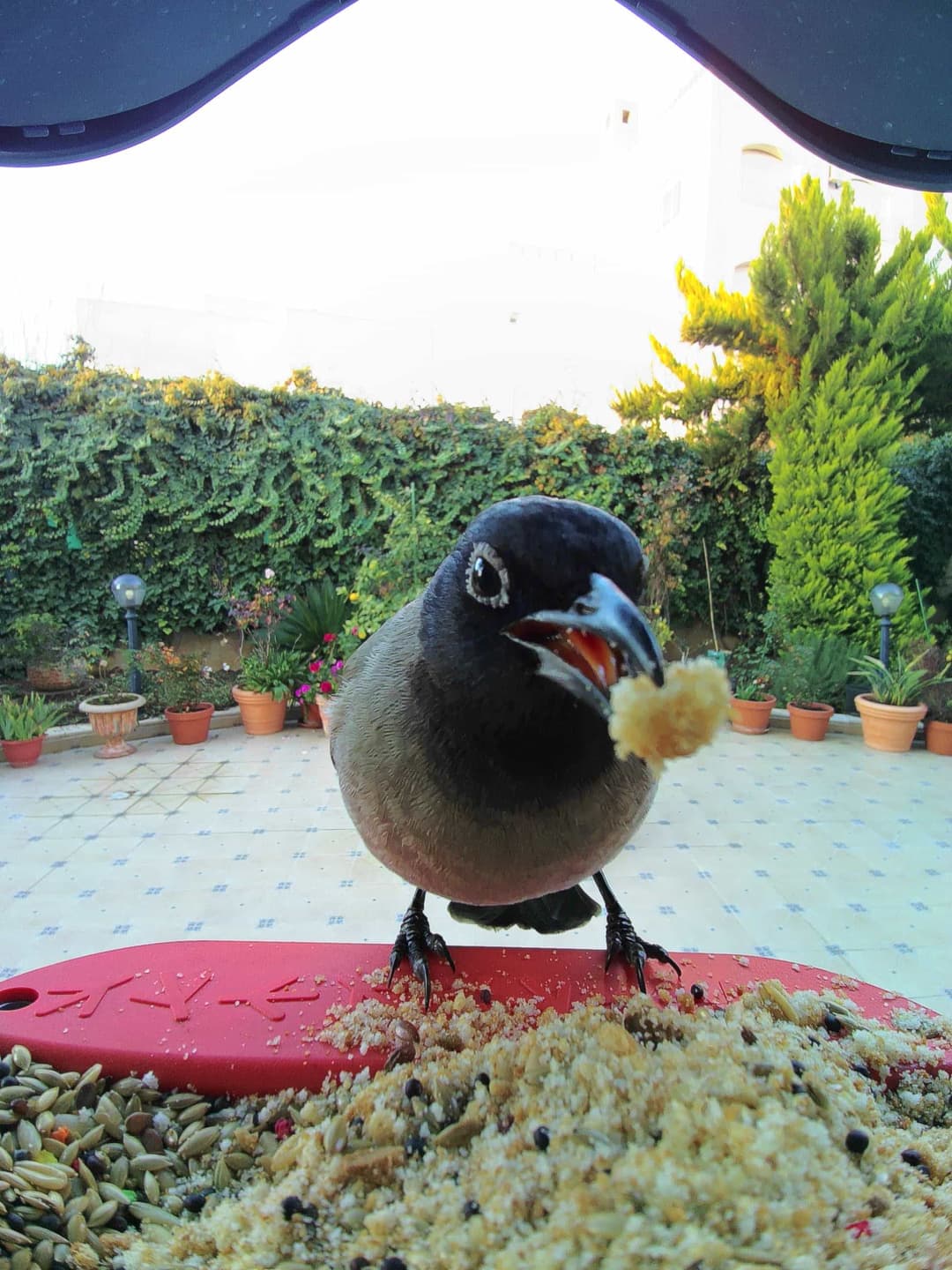
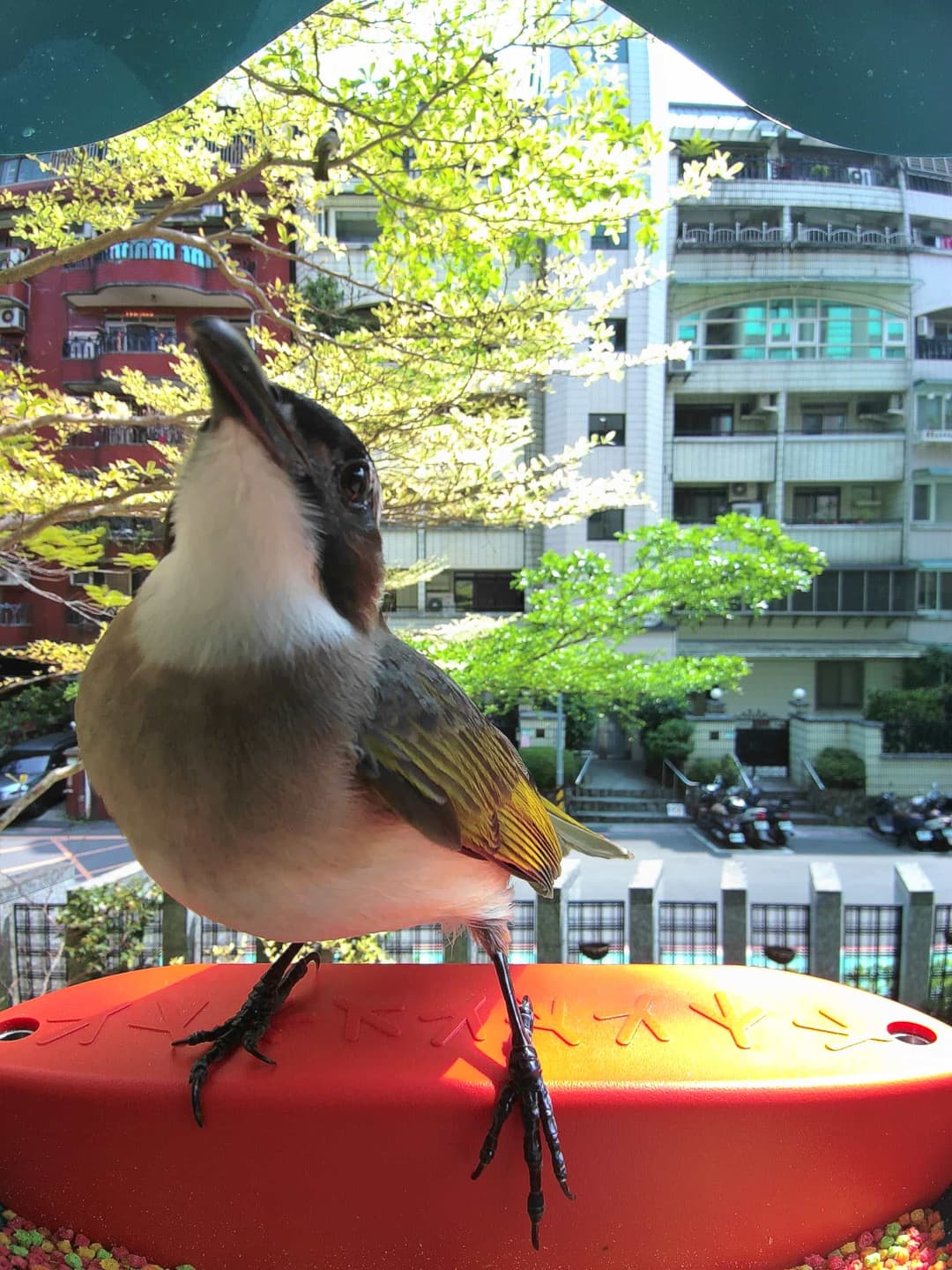
Light-Vented Bulbul vs Cape Bulbul
The Light-Vented Bulbul resembles the Cape Bulbul but has a distinct light vented patch and a more pronounced cheek pattern.
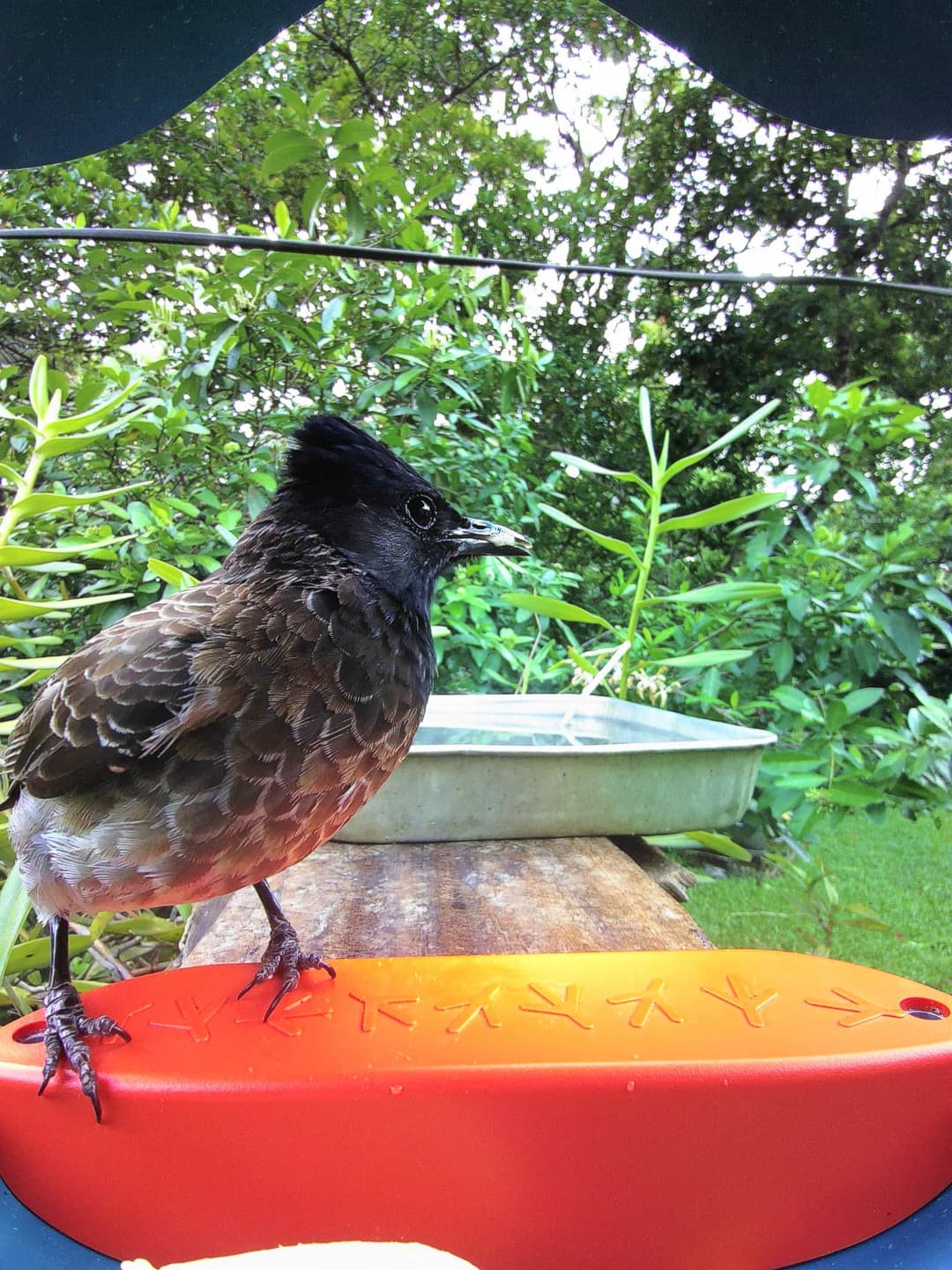
Red-Vented Bulbul vs Cape Bulbul
The Red-Vented Bulbul is similar in shape to the Cape Bulbul but is easily recognizable by its red vent which is absent in the Cape Bulbul.
Breeding and nesting habits of the cape bulbul
Mating behaviors
Cape bulbuls engage in elaborate courtship displays that include vocalizations and physical gestures. Males often sing to attract females, and successful pair bonds are established through mutual preening.
Nesting details
Nests are typically built in dense shrubbery or trees. The structure is cup-shaped, made from twigs, grass, and leaves, bound together with spider silk. If nesting in gardens, maintaining native plants and providing shrubs can attract these birds.
Eggs and chick-rearing
Females lay 2-3 eggs, which are incubated for about two weeks. Both parents participate in feeding the chicks, providing insects and fruit. Fledging occurs after approximately 14 days, with continued parental support until independence.
What does a cape bulbul like to eat?
Berries
Fruits
Insects
Nectar
Seeds
Natural diet
The Cape bulbul primarily feeds on a variety of fruits, berries, and insects. Common fruits include figs and other soft, fleshy fruits. They also consume small invertebrates such as caterpillars, beetles, and ants, which provide essential proteins. The Cape bulbul's diet is opportunistic and may vary seasonally, taking advantage of available resources.
Bird feeders
At bird feeders, the Cape bulbul may consume offerings such as sliced fruits, especially bananas and apples. They are also attracted to nectar solutions, similar to those provided for sunbirds. Occasionally, they may sample bits of suet or even small seeds, though they primarily prefer fruit-based foods.
Favorite snacks for cape bulbul
The Cape Bulbul is highly fond of fruits like apples, berries, and pears. Seeds are also a great choice, especially those from 'Bird Buddy' which are selected by experts for the season, ensuring the highest quality and best results.
Ideal feeders for cape bulbul
Cape Bulbul prefers open feeders where they can perch and have a good view of the surroundings. Hanging feeders filled with 'Bird Buddy' seeds are a great choice. Providing a mix of suet feeders and seed feeders can provide them with a variety of foods, attracting them more easily.
Encouraging the cape bulbul to visit
Ensure the feeders are placed in a quiet and safe location, preferably near shrubs or trees where the bird can retreat if it feels threatened. You could also consider creating a bird-friendly garden by planting native plants that Cape Bulbul is attracted to. Creating a bird-friendly bath or a small water feature will also attract these birds.
Fun tricks for cape bulbul visits
Try playing soft bird songs to attract the Cape Bulbul. They are known to be responsive to sounds and may even honor you with a delightful sing-along. Realize, however, that birds, just like people, have different attitudes and preferences, so this trick may not work every time. But when it does, you're in for a sweet serenade.
Where can you find Cape bulbuls?
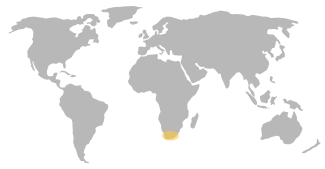
Primary habitat
The Cape bulbul primarily inhabits shrublands and fynbos vegetation of South Africa's southwest coastal region.
Additional range
Additionally, it also occupies broad-leaved woodland and urban gardens, adapting well to domestic or urban environments.
Do they migrate?
The Cape bulbul is primarily a non-migratory, resident bird species. It is endemic to the southwestern regions of South Africa, particularly thriving in the fynbos, coastal shrublands, gardens, and urban areas within its range. Rather than undertaking long migratory journeys, Cape bulbuls tend to stay within their localized territories throughout the year. They may exhibit some local movements in search of food or due to environmental factors, but these movements are typically limited and do not constitute true migration. The Cape bulbul's adaptability to varied habitats allows it to maintain residency even when local conditions fluctuate. As a result, there are no specific migration routes, timings, or key locations associated with this species, unlike migratory birds that undertake regular, seasonal journeys. Their consistent presence throughout the year makes them a common sight in their native regions, contributing to their role in seed dispersal and the maintenance of local biodiversity.
What is the role of Cape bulbuls in nature and how to protect them?
Conservation status
The Cape bulbul is currently classified as a species of "Least Concern" due to its stable and common population within its native range in South Africa. It inhabits shrublands, coastal thickets, and gardens, exhibiting adaptability to modified environments. Key conservation efforts are not urgently required, given its stable status, but habitat destruction and land-use changes could pose future threats. Monitoring these potential threats remains important to ensure long-term stability. Conservationists focus on maintaining natural habitats and managing urban growth to safeguard the species' habitat and food sources.
Ecological role of Cape bulbuls
Its role in the ecosystem
The Cape bulbul is a powerhouse in its ecosystem! As insectivorous birds, their appetite focuses on pesky bugs, hence playing a crucial role in pest control. Their robust diet not only includes insects, but also fruit and nectar. This proclivity for a diverse diet aids in seed dispersal, making bulbul a dedicated gardener of the wild.But that's not all! These 'Eco-Superheroes' also contribute to maintaining a balance in vegetation by feeding on undesirable alien plant seeds, thus actively aiding in biodiversity conservation. Furthermore, their unique nesting habits promotes decomposition, turning dead plant matter into nutrient-rich soil. What a remarkable blend of functionality and eco-friendly characteristics! The Cape bulbul showcases nature's elegant equilibrium, emphasising why every creature, no matter how small, matters in the vast tapestry of life.
How to help protect Cape bulbuls
Preservation tips
Habitat preservation strategies
Ensure protection of forested habitats vital to the Cape bulbul, particularly Fynbos and Karoo regions. Implement strict laws against deforestation and initiate reforestation programs. Maintain a balanced ecosystem by supporting the growth of native flora which provides nourishment and nesting sites for the birds.
Community science initiatives
Encourage local communities to monitor Cape bulbul populations and collect data. Organize education programs about the importance of the species and how to contribute to its conservation. Provide platforms like mobile apps for community members to report sightings. Develop ecotourism initiatives which can support financial income for the local community while promoting the conservation of the Cape bulbul.