
African Red-Eyed Bulbul
African Red-Eyed Bulbul
Also known as: Black-Fronted Bulbul
Pycnonotus nigricans


Quick Identification guide
Quick Identification guide
- •
Recognizable by its vivid red eyes set against a dark, sleek head
- •
Features a contrasting black face mask and white underparts with a yellow vent
- •
Displays a medium, slender body with a straight, slightly curved beak


Description
Did you know African red-eyed bulbuls, white-eared bulbuls, Himalayan bulbuls, common bulbuls and white-spectacled bulbuls form a superspecies? That means they have a common ancestor but are still too distinct to belong to the same species! These loud birds are known for their fluty call, and their penchant for hanging around water. You are most likely to see them going about their business in pairs or small groups.
The African red-eyed bulbul can weigh between 21.5to37.5grams and be from19to21centimeters tall.
The African red-eyed bulbul typically lives for up to 11 years. This lifespan is significantly longer than many related species, such as the common bulbul, which usually live up to around 2-3 years. However, in captivity, these bulbuls often exceed their wild counterparts, living for an extended period that exceeds their average lifespan. Their age can vary depending on the care and conditions provided.
Did you know?
Most popular questions about African red-eyed bulbul
How to recognise an African red-eyed bulbul?
General appearance
The African red-eyed bulbul is characterized by its medium size, nearly 20-25 cm in length, and its distinctive khaki-grey plumage. Easily noticeable are its crimson-red eyes, which aptly offers its name. It also has a distinct thin black crest above its eyes, giving it a capped appearance. Its tail and wings are darker, almost black. This species does not have significant seasonal variations.
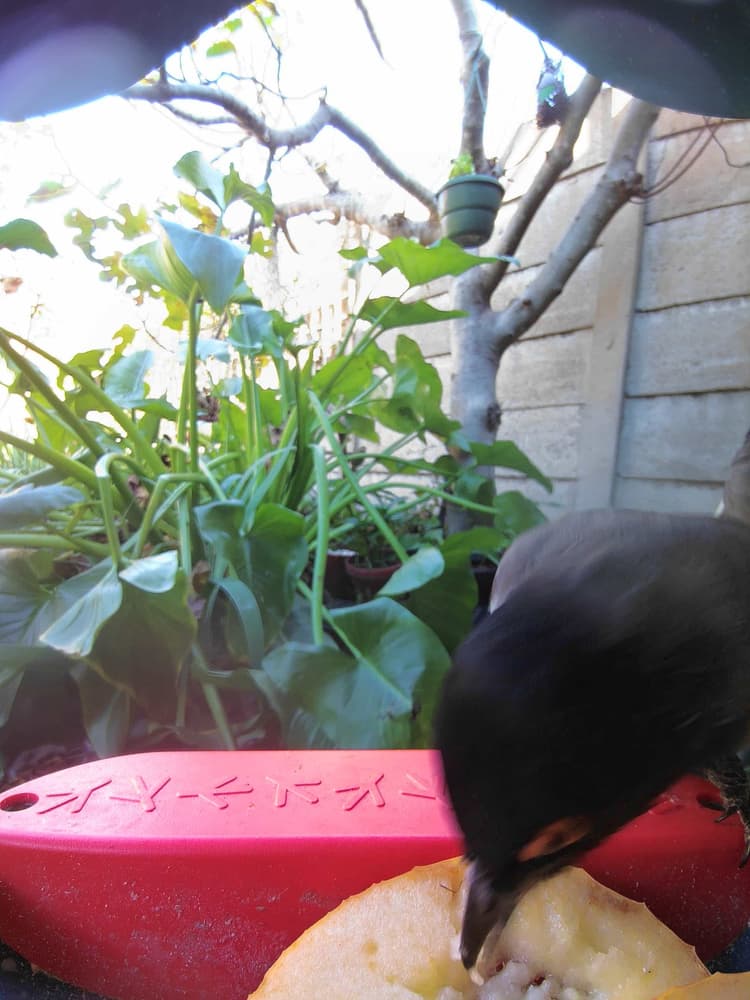
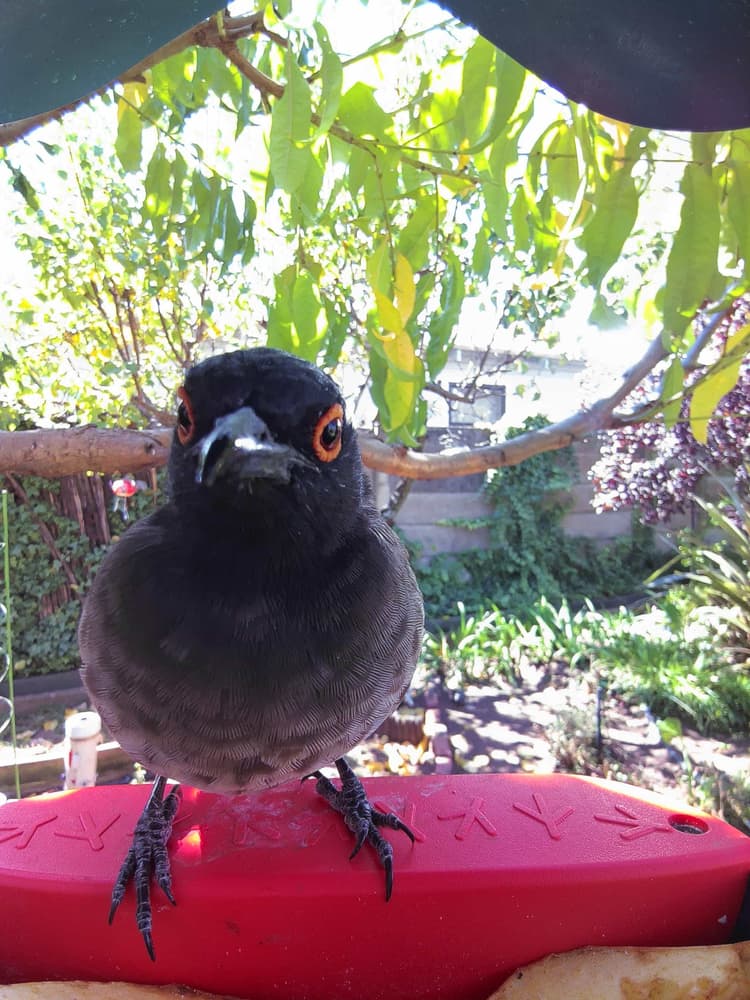
Male vs female
Both male and female African red-eyed bulbuls share similar external features, making sexual dimorphism in this species less distinct. The males tend to be slightly larger in size compared to females. However, their coloration, red eye, and capped appearance are consistent across both genders. This feature makes it a bit challenging to distinguish between the sexes in the wild.
Juvenile
Juvenile African red-eyed bulbuls lack the vibrant coloration seen in adults. They have duller grey-brown plumage and their eyes are not yet the characteristic red, instead they have brownish eyes. Their crest is less pronounced, and it takes a few months until they acquire the distinctive adult features.
Often mistaken for
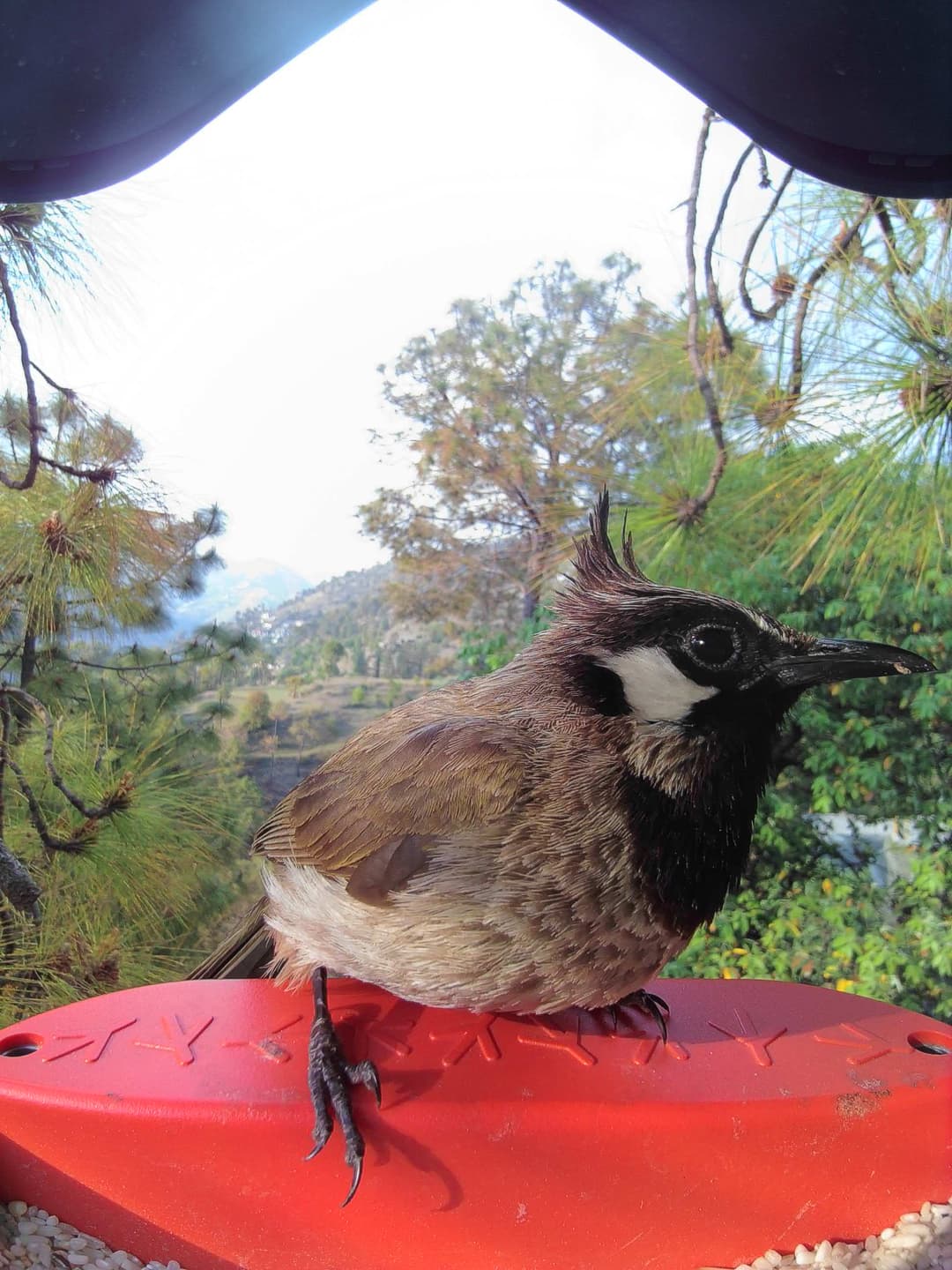
Himalayan Bulbul vs African Red-Eyed Bulbul
The Himalayan Bulbul has a black crest and white cheeks, which are absent in the African Red-Eyed Bulbul. Additionally, it lacks the characteristic red eye ring.
Dark-Capped Bulbul vs African Red-Eyed Bulbul
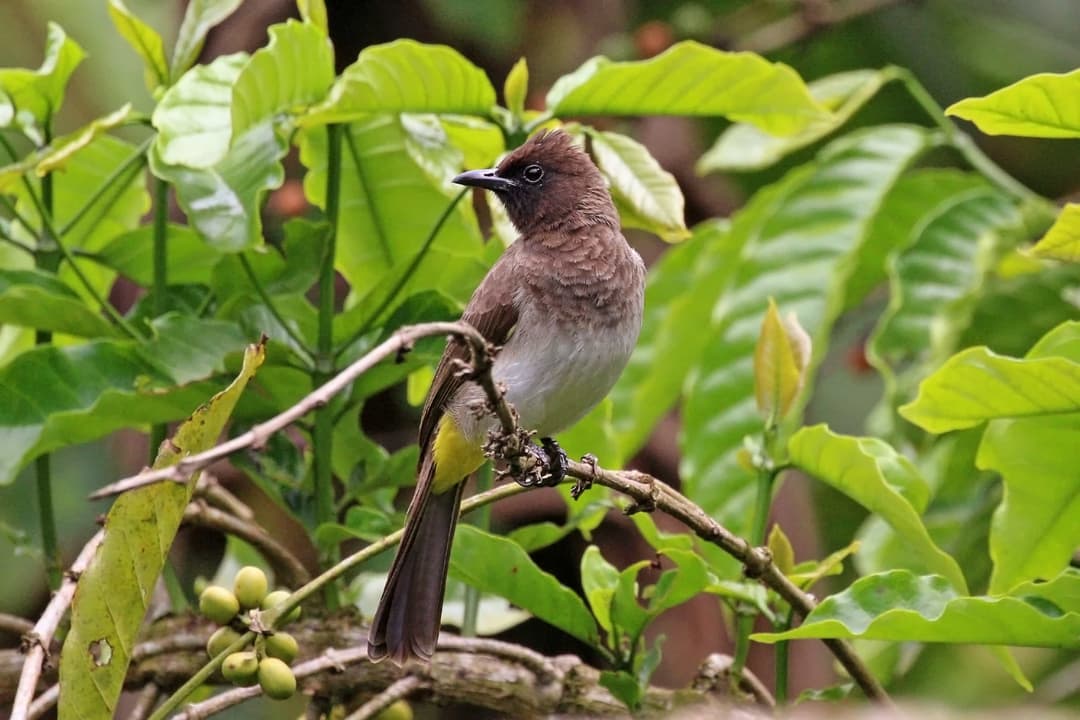
The Dark-Capped Bulbul has a distinct darker cap, whereas the African Red-Eyed Bulbul does not have this feature. There is also a difference in calls and song patterns.
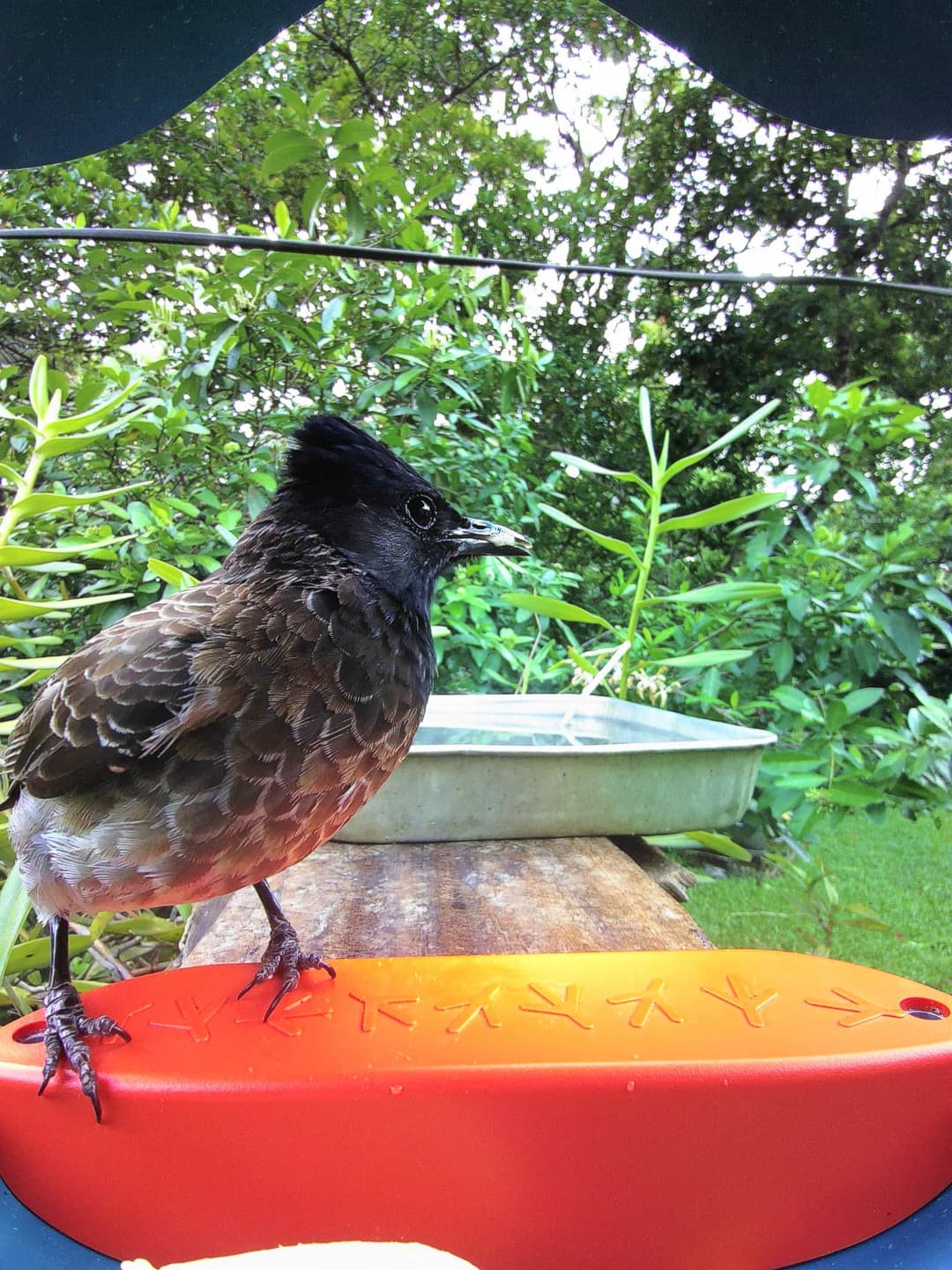
Red-Vented Bulbul vs African Red-Eyed Bulbul
The Red-Vented Bulbul has a conspicuous red patch under its tail which the African Red-Eyed Bulbul lacks. The plumage is also darker compared to the African Red-Eyed Bulbul's brownish tone.
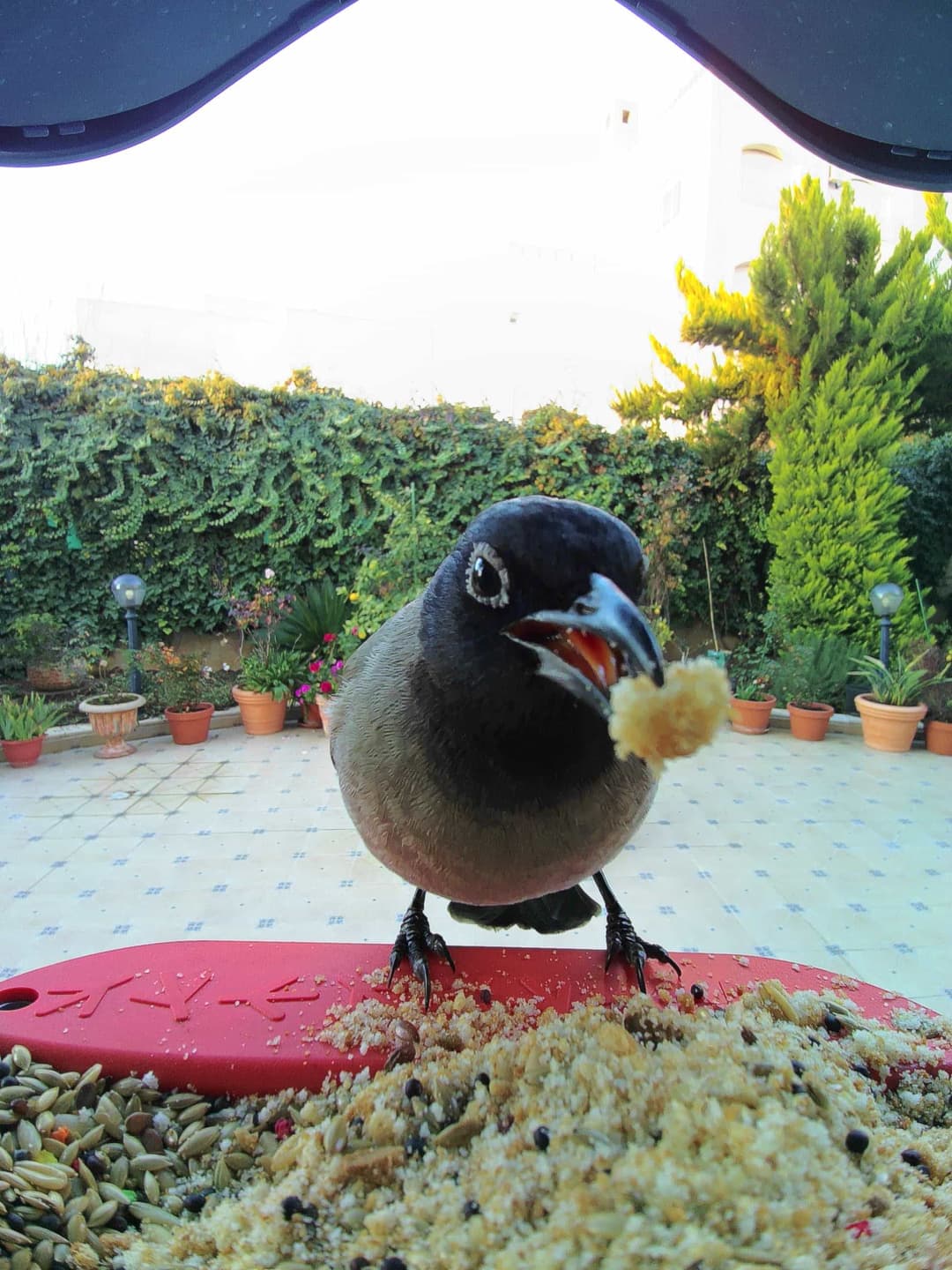
White-Spectacled Bulbul vs African Red-Eyed Bulbul
The White-Spectacled Bulbul has a striking white ring around the eyes, unlike the african red-eyed bulbul which has a red eye ring. This bird also has a yellow undertail that's not present in the african red-eyed bulbul.
Breeding and nesting habits of the African red-eyed bulbul
Mating behaviors
The African red-eyed bulbul engages in elaborate courtship displays, which include singing and posturing to attract a mate. Males often perform flight displays and vocalizations to establish territory and appeal to females.
Nesting details
They typically nest in shrubs or trees, preferring forks or dense foliage to conceal nests. Nest materials include twigs, roots, and grass. Bulbuls also nest in gardens if suitable shrubs are available, providing dense, native plants encourages nesting.
Eggs and chick-rearing
Females lay 2 to 3 eggs, incubating them for about 12 days. Both parents participate in feeding the chicks, which fledge approximately two weeks after hatching. In gardens, offering a safe, predator-free environment facilitates successful rearing.
What does an African red-eyed bulbul like to eat?
Berries
Fruits
Insects
Nectar
Natural diet
The African red-eyed bulbul primarily feeds on fruits, which form a significant part of its diet. It enjoys a variety of berries and small fruits from native shrubs and trees. In addition to fruits, this species consumes seeds and small insects. The bulbul can often be seen foraging in flowering plants, consuming nectar and aiding in pollination.
Bird feeders
At bird feeders, the African red-eyed bulbul is commonly attracted to offerings of sliced fruits such as apples, bananas, and oranges. It may also eat raisins and other dried fruits provided by bird enthusiasts. The bulbul will occasionally try suet and other protein-rich foods intended for insect-eating birds but shows a preference for sweet and fruity items.
Favorite snacks
To attract the African red-eyed bulbul, start by offering their favorite food. They tend to enjoy a diet of berries, insects, and nectar. However, the Bird Buddy seeds are a standout option. Chosen by experts for the season, these seeds are bound to attract our bulbuls and keep them coming back for more.
Feeder types
These birds prefer a platform or a hanging feeder. They enjoy feeders where they can sit and eat comfortably, so ensure the feeder is steady. Allowing them seeing their surroundings while they eat also makes them feel safe. Installing a feeder with these characteristics will certainly invite them into your yard.
Fun tricks
To make your yard even more enticing, add bird-friendly landscaping. Bushes and trees that produce berries can create a natural feeding area for bulbuls. Also, consider installing a bird bath. Bulbuls enjoy bathing and drinking fresh water. This will encourage them to linger, sing and maybe even stay around for longer periods.
Where can you find African red-eyed bulbuls?
Primary habitat
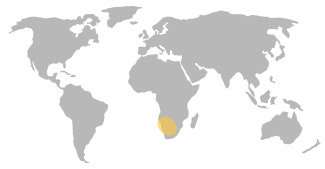
The African red-eyed bulbul prefers savannas, riverine woodlands, and arid scrublands in southern Africa, including Namibia, Botswana, Zimbabwe, and northern South Africa. It thrives in areas with dry, warm climates.
Additional range
This species can also adapt to urban environments and gardens, showing surprising resilience in modified landscapes, provided there are ample food sources and some vegetation for shelter.
Do they migrate?
The African red-eyed bulbul is generally a sedentary bird, meaning it typically does not undertake long-distance migrations. It is primarily found in southern Africa, including countries like Namibia, Botswana, Zimbabwe, and South Africa, as well as parts of Angola and Zambia. This species tends to stay within its range year-round. These birds are adaptable and inhabit a variety of environments, such as arid savannas, open woodlands, and areas with scattered trees and shrubs. They are well-suited to their habitat and thus do not need to migrate for food or breeding purposes, as some other bird species do. Local movements may occur in response to seasonal changes in food availability, but these are not considered migrations. During dry seasons, they may shift to areas where water and food resources are more readily available, such as near human settlements or along rivers. Their sedentary nature is largely due to their adaptability and the relatively stable conditions within their habitat range.
What is the role of African red-eyed bulbuls in nature and how to protect them?
Conservation status
The African red-eyed bulbul is currently classified as "Least Concern" by the IUCN, indicating it is relatively common and not facing immediate threats of extinction. The bird thrives in various habitats, including savannas and shrublands. Despite its stable population, potential threats include habitat loss due to agricultural expansion and urbanization. Conservation efforts focus on habitat preservation and monitoring population trends to ensure its continued stability. Overall, the species does not face significant threats at present, benefiting from its adaptability to different environments.
Ecological role of African red-eyed bulbuls
Its role in the ecosystem
The African red-eyed bulbul significantly contributes to the overall health of its ecosystem. As omnivores, these birds help manage pest populations by feeding on a variety of insects, reducing the numbers of potential garden pests and insects that cause damage to plants and crops. Therefore, they contribute to biological control and increase crop productivity. Also, they play a crucial role in seed dispersal. African red-eyed bulbuls consume a wide range of fruits, and the seeds from these fruits pass through their digestive system unharmed. These excreted seeds facilitate the growth of different plant species in new locations, promoting biodiversity. Furthermore, by controlling insect populations and dispersing seeds, African red-eyed bulbuls also indirectly influence the nutrient cycle in their ecosystems. Therefore, the ecological significance of African red-eyed bulbuls is multifaceted, benefiting the ecosystem at several levels.
How to help protect African red-eyed bulbuls
Preservation tips
Habitat preservation strategies
The African red-eyed bulbul thrives in well-forested regions. Protect these habitats by combating deforestation; promote sustainable logging and farming practices. Preserve existing woodland areas, including urban green spaces. Establish conservation areas where these bird species are protected and their habitats are maintained.
Community science initiatives
Engage local communities and schools in conservation efforts. Conduct citizen science programs where locals can report sightings, aiding population tracking. Education campaigns to raise awareness about the importance of the African red-eyed bulbul and its role in ecosystems can bolster conservation efforts. Encourage community-based reforestation and conservation farming initiatives.