
Dark-Capped Bulbul
Dark-Capped Bulbul
Also known as: Tricolored Bulbul
Pycnonotus tricolor
Quick Identification guide
Quick Identification guide
Male
- •
dark soot-grey head with a distinctive black cap
- •
pale underparts that contrast with the dark head
- •
A slender built body with yellowish vent feathers
Female
- •
dark soot-grey head with a similar black cap as the male
- •
light grey to white underparts with a yellowish wash on the vent
- •
Slightly slimmer body, otherwise identical to male visual traits
What does a dark-capped bulbul sound like?
The dark-capped bulbul's vocalizations are characterized by a variety of melodious warbling sounds, trills, and whistles. Its typical call is a sharp "pit-pit," often followed by a tuneful "ceep-ceep". The song is rather pleasant and full, punctuated by calls and mimicry. It's commonly heard at daybreak, and often includes imitations of other bird species. Their calls are vital for declaring territory and expressing alarm signals.
Description
Dark-capped bulbuls believe in staying hydrated: they don't like to go without a drink for too long, and are most often found near water. They are little winged acrobats, flying in agile twists and turns, and often hanging upside down from tree branches to forage for their favourite snacks.
The dark-capped bulbul can weigh between 29to49.5grams and be from15to20centimeters tall.
The Dark-capped Bulbul typically lives up to 11 years in the wild. This is comparable to related species such as the Common Bulbul, which has a similar lifespan. Like most songbirds, the Dark-capped Bulbul’s high mortality rate in its first year impacts its overall average lifespan. Despite this, those that reach adulthood have a higher chance of surviving longer, possibly surpassing a decade in life.
Did you know?
Most popular questions about dark-capped bulbul
How to recognise a dark-capped bulbul?
General appearance
Dark-capped bulbuls have a blackish-brown upper body and light-grayish underparts. Their tails and wings are brown, while their heads bear a pronounced dark cap. They boast a distinctive red undertail, and sharp yellow eyes with an elegant black eye ring. They are generally medium-sized, averaging about 20cm in length.
Male vs female
Male and females Dark-capped bulbuls exhibit no noticeable sexual dimorphism in their physical appearance. Both sexes share the same distinct coloration and size. Thus, it's challenging to identify the sex visually in the wild.
Juvenile
Juvenile dark-capped bulbuls are similar to adults albeit a more modest and less contrasting coloration. Their caps are more brown than black, and their underparts are more whitish. Additionally, their eyes are brownish before maturing to the adult's distinctive yellow. Juveniles also lack the crimson-red undertail seen in adults.
Often mistaken for
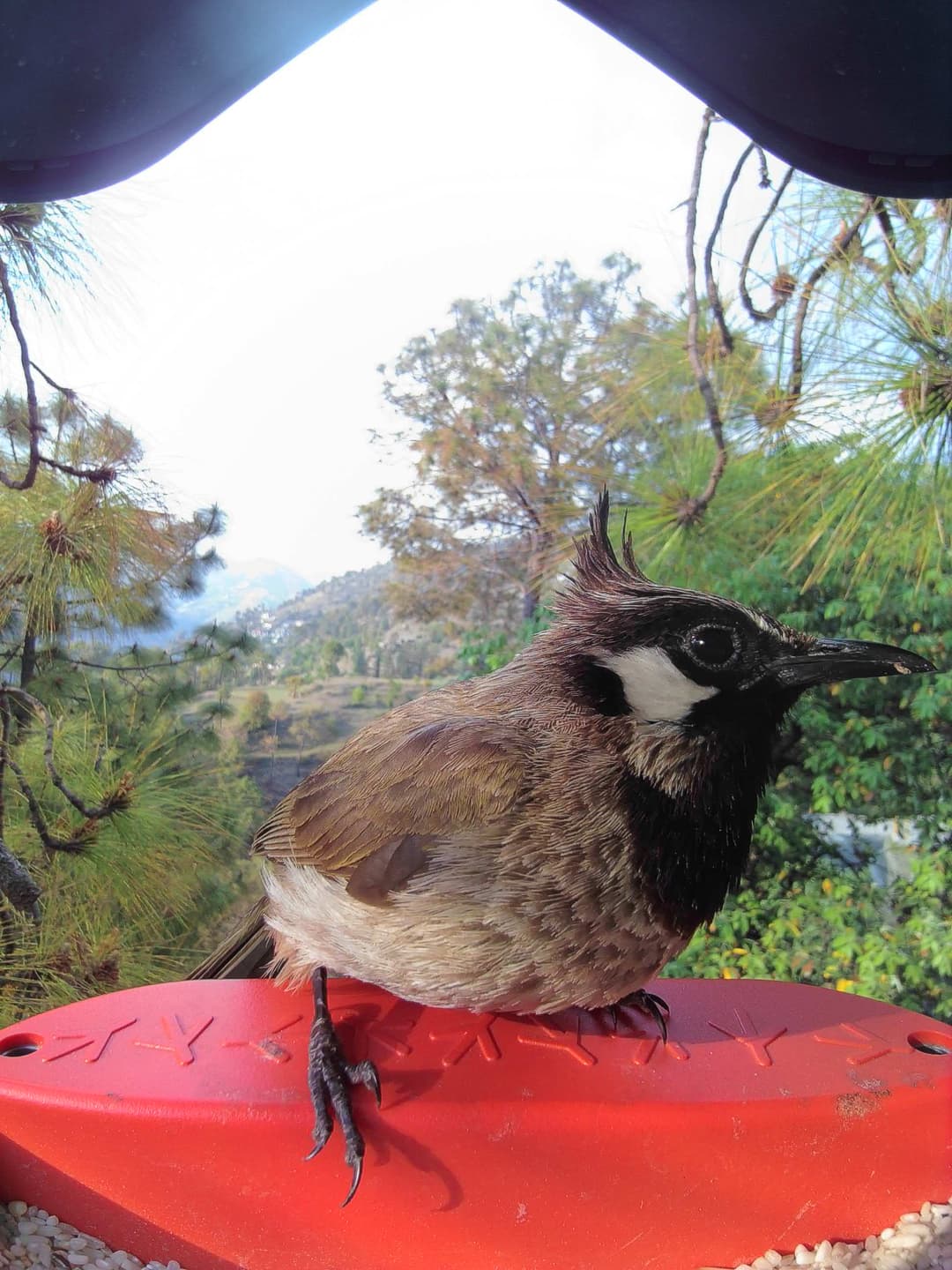
Himalayan Bulbul vs Dark-Capped Bulbul
Both the Dark-Capped Bulbul and the Himalayan Bulbul have a similar body shape and coloration, with distinct caps on their heads. However, the Himalayan Bulbul has a distinctly white face with a black crown and a more contrasting belly coloration.
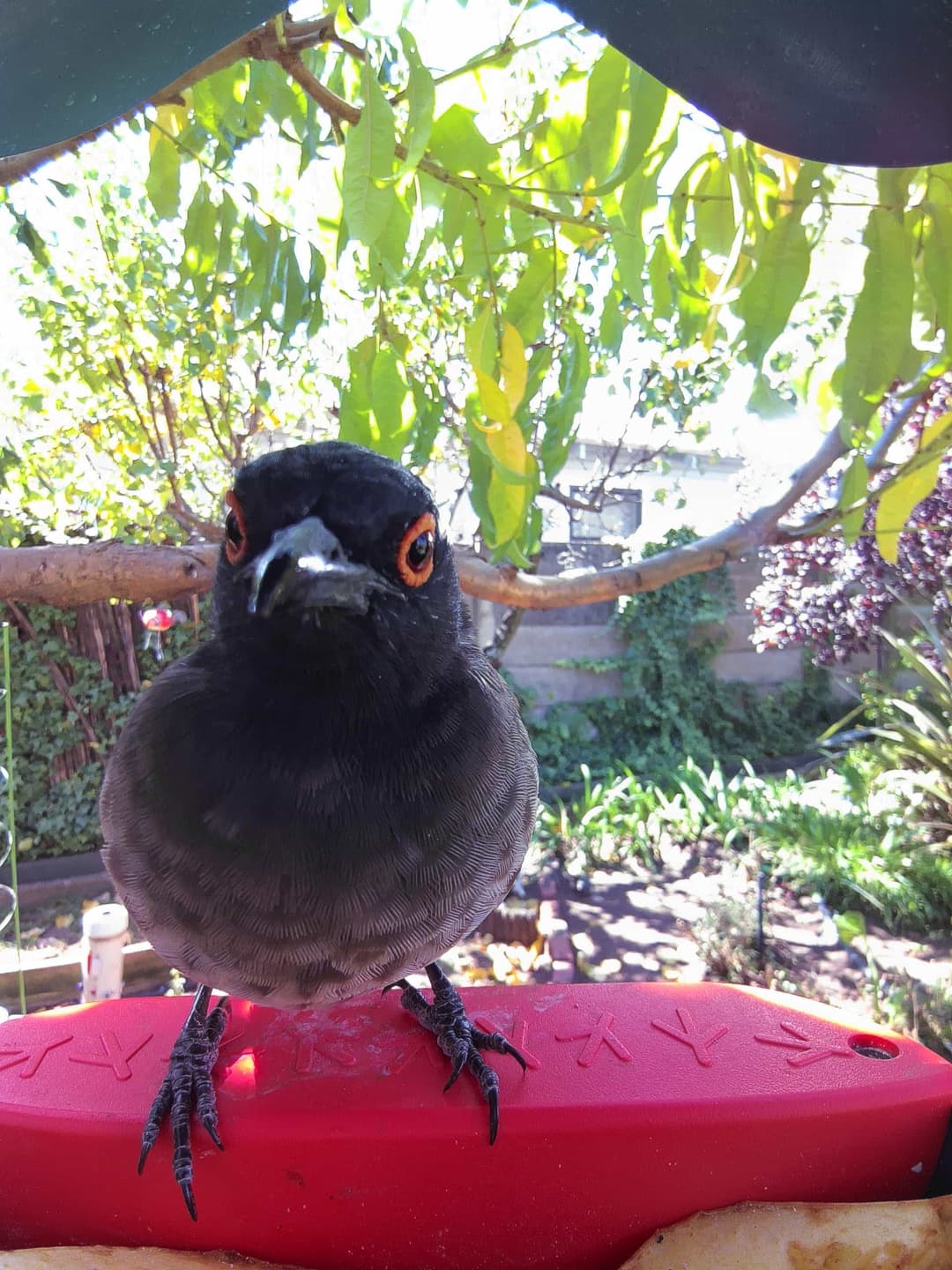
African Red-Eyed Bulbul vs Dark-Capped Bulbul
The African Red-Eyed Bulbul shares a similar overall coloration with the Dark-Capped Bulbul but can be distinguished by its characteristic red eye-ring.
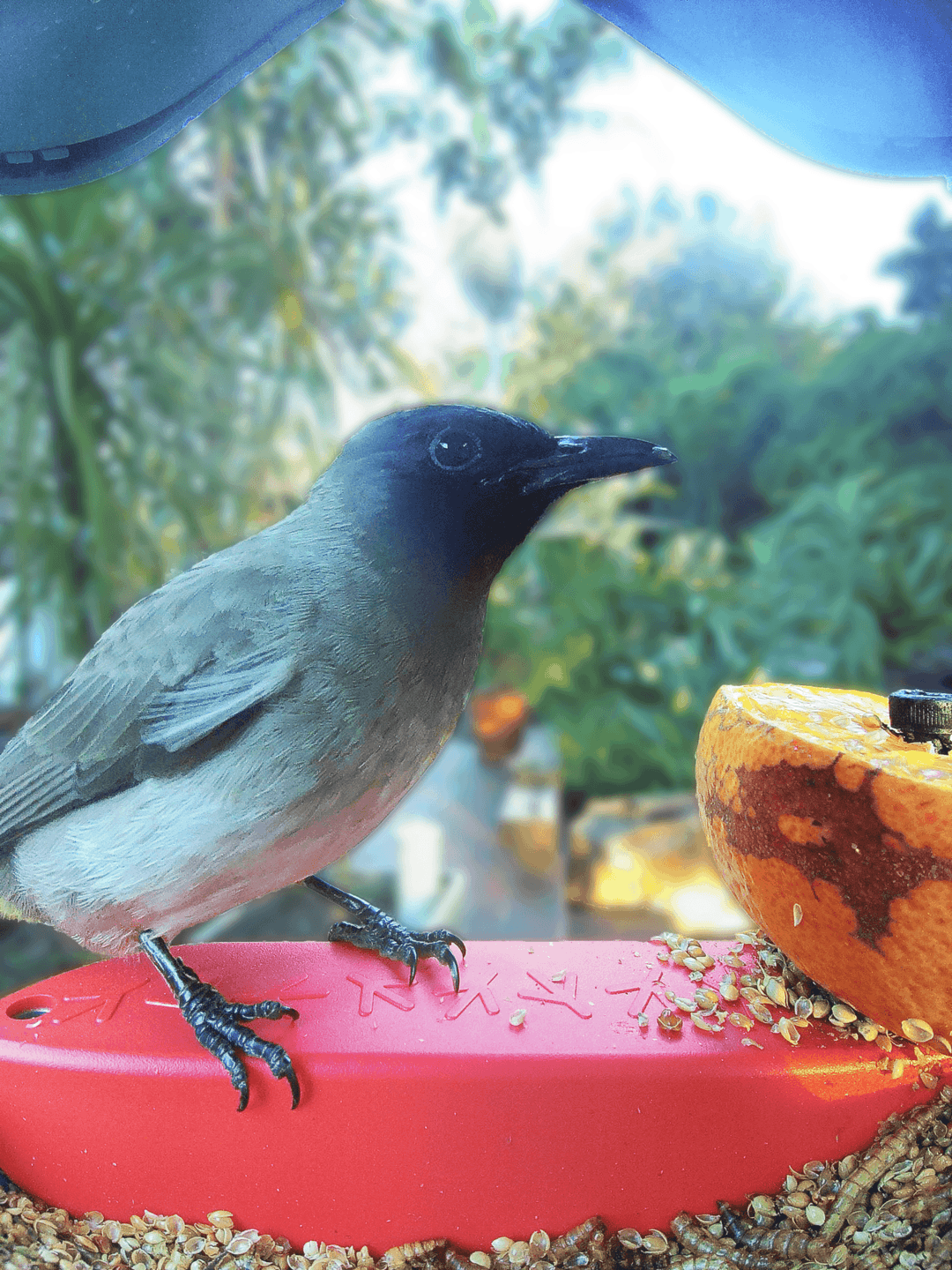
Common Bulbul vs Dark-Capped Bulbul
While the Common Bulbul resembles the Dark-Capped Bulbul in terms of body shape and plumage, the Common Bulbul often lacks the distinctive dark cap that gives the latter its name.
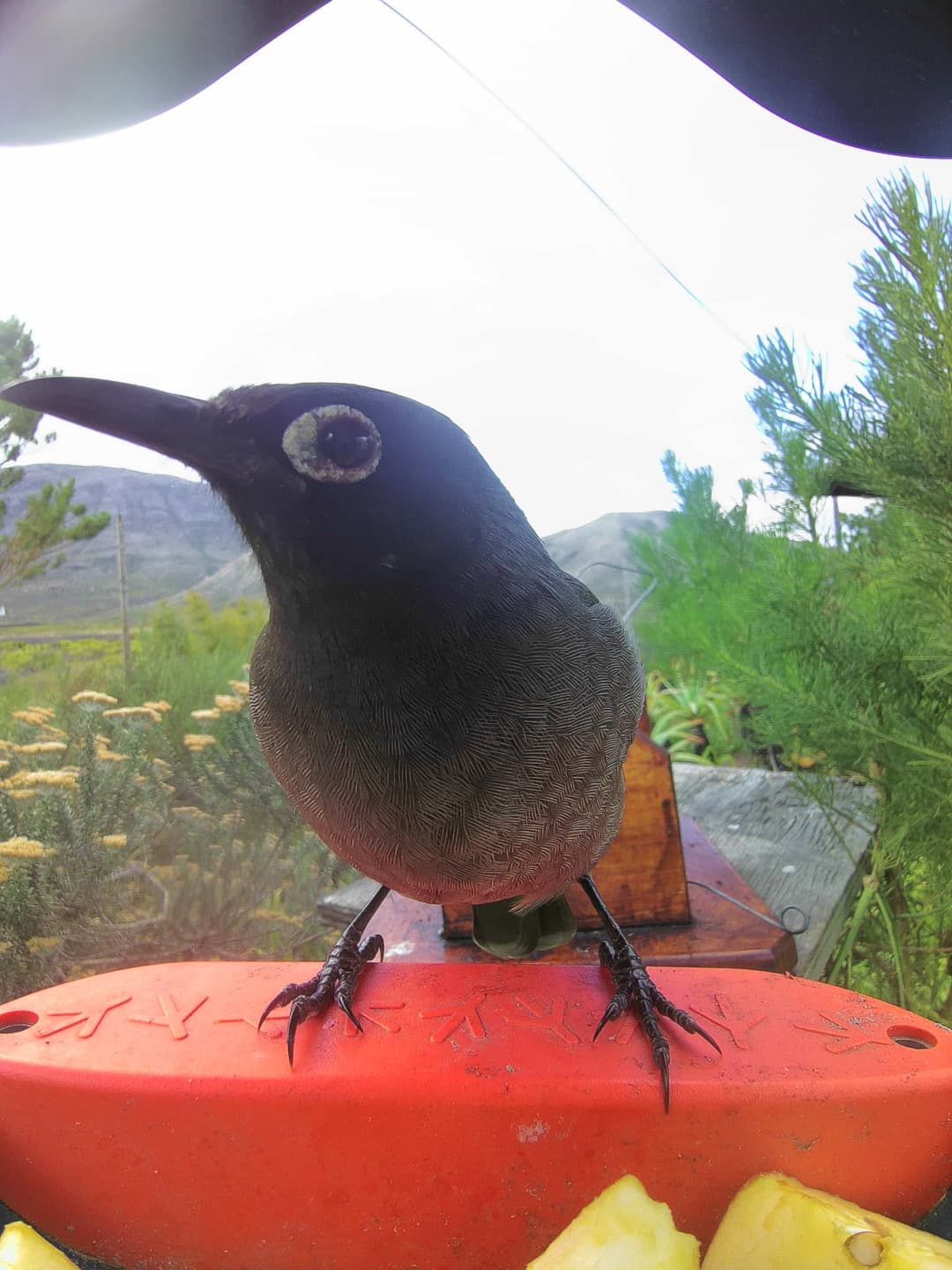
Cape Bulbul vs Dark-Capped Bulbul
Similar in appearance to the Dark-Capped Bulbul, the Cape Bulbul has a pale eye-ring and a somewhat different coloration across its belly.
Breeding and nesting habits of the dark-capped bulbul
Mating behaviors
The dark-capped bulbul engages in vocal courtship displays. Males sing extensively to attract females and may perform a fluttering flight followed by repeated bowing.
Nesting details
Dark-capped bulbuls typically build their nests in bushes or trees, sometimes in gardens, using materials like twigs, leaves, and grasses. Nests are cup-shaped and relatively small.
Eggs and chick-rearing
Females lay 2-3 eggs, which both parents incubate. The chicks are fed by both parents and fledge approximately two weeks after hatching. In gardens, providing dense shrubs can offer suitable nesting sites.
What does a dark-capped bulbul like to eat?
Berries
Flowers
Fruits
Insects
Nectar
Seeds
Small animals
Spiders
Natural diet
The dark-capped bulbul primarily feeds on fruits, seeds, and nectar. It is commonly found consuming berries from various shrubs and small trees. Additionally, it eats insects like beetles, ants, and caterpillars, which provide a source of protein. The dark-capped bulbul has also been known to feed on small invertebrates and occasionally, flower petals.
Bird feeders
At bird feeders, the dark-capped bulbul often consumes fruits such as apples, bananas, and grapes that are left out by bird enthusiasts. It is also known to eat commercially available bird seed mixes, especially those containing sunflower seeds. Additionally, sugar water or nectar solutions provided in special feeders can attract these birds, mimicking their natural nectar sources.
Invite dark-capped bulbuls with the right meals
The first step to attracting dark-capped bulbuls to your yard is by offering them their favorite snacks. They love a diet of seeds, fruits and small insects. Therefore, fill your feeder with a variety of Bird Buddy seeds - these seeds are chosen by experts for the season, which ensures they're the best to attract bulbuls to your feeder. They also love bananas and berries. Occasionally insert small insects in their diet to keep it diverse.
The appropriate feeders and atmosphere
Dark-capped Bulbuls prefer feeders that imitate the natural feeding habits. A tray feeder or a platform feeder would be an ideal choice. These types of feeders allow the birds to see the food from all angles and provide space for them to perch while eating. It's also advisable to place the feeder near shrubs or in a quiet part of the yard as these birds are quite shy. Quench their thirst by providing a bird bath as well as they relish clean, fresh water.
Fun tricks to encourage dark-capped bulbuls to sing along
Dark-capped Bulbuls are known for their beautiful melodious songs, but enticing them to start a sing-along can be quite a task. Try playing a soft bird-song recording to pique their curiosity. Keep the yard cats-free as cats scare them off. Maintain a consistent supply of food, clean water, and a safe space, and you'll get a chance to enjoy their enchanting harmony in your yard!
Where can you find dark-capped bulbuls?
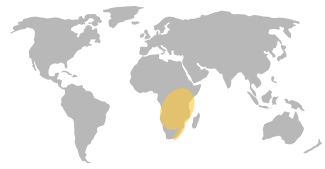
Primary habitat
The dark-capped bulbul primarily habitates in woodland edges, gardens and forests, located in southeastern Africa.
Additional range
It expands its range to arid regions, with a preference for moderate climates; however, it can occasionally be found in tropical rainforests.
Do they migrate?
The dark-capped bulbul does not typically migrate. It is considered a resident species, meaning it usually stays in the same area throughout the year. This bird is commonly found in sub-Saharan Africa, particularly in regions such as South Africa, Zimbabwe, Botswana, Namibia, and Mozambique, as well as parts of East Africa. The dark-capped bulbul inhabits a variety of environments, ranging from woodlands and savannas to urban gardens and parks. Its adaptability to different habitats contributes to its non-migratory behavior. These birds generally maintain territorial ranges with ready access to food sources like fruits, insects, and nectar, reducing the need for seasonal migration. While the dark-capped bulbul may occasionally exhibit local movements in response to food availability or environmental conditions, these movements are not considered long-distance migrations. Instead, they are more accurately described as local or altitudinal shifts, depending on changes in resources or breeding conditions within their resident range.
What is the role of dark-capped bulbuls in nature and how to protect them?
Conservation status
The dark-capped bulbul is classified as a species of least concern by conservation organizations, indicating it is common and not currently at risk of extinction. This bird is widespread across sub-Saharan Africa and adapts well to both wild and human-altered environments. While it faces some threats from habitat loss and urbanization, these are not significant enough to impact the overall population. There are no major conservation efforts specifically targeting this species, as its stable population does not necessitate urgent protective measures. However, ongoing habitat protection benefits the dark-capped bulbul alongside other species.
Ecological role of dark-capped bulbuls
Its role in the ecosystem
The Dark-capped Bulbul (Pycnonotus tricolor) plays a significant role in maintaining ecological balance because of its dual role in pest control and seed dispersal. As a largely frugivorous bird, it aids in the dissemination of seeds across wide geographical areas through its eating habits, thereby encouraging plant diversity and proliferation. Additionally, the Dark-capped Bulbul assists in pest control within its ecosystem. It consumes a variety of insects, which helps control the population of these potentially harmful pests that can damage crops and other vegetation. But, not just about the balance of the ecosystem if disrupted, darker-capped bulbuls have a significant impact. Overall, this bird contributes to the diversity, health, and resilience of its ecosystem.
How to help protect dark-capped bulbuls
Preservation tips
Habitat preservation strategies
Supporting the conservation of the dark-capped bulbul requires strategic preservation of its natural habitat. Protect, reforest and preserve indigenous vegetation, as these birds live and breed in a various range of habitats. Resist activities that would lead to deforestation and habitat destruction on the whole. Encourage laws and policies to protect the bulbul's habitat at government level.
Community science initiatives
Involve community in bird watching initiatives to monitor the dark-capped bulbul population. Encourage educational initiatives about the importance of the bird species and their role in local ecosystems. Collaborate with local institutions to initiate citizen science projects aimed at bird conservation. Public participation in such initiatives is key in conservation efforts.