
Red-Whiskered Bulbul
Red-Whiskered Bulbul
Also known as: Crested Bulbul
Pycnonotus jocosus


Quick Identification guide
Quick Identification guide
- •
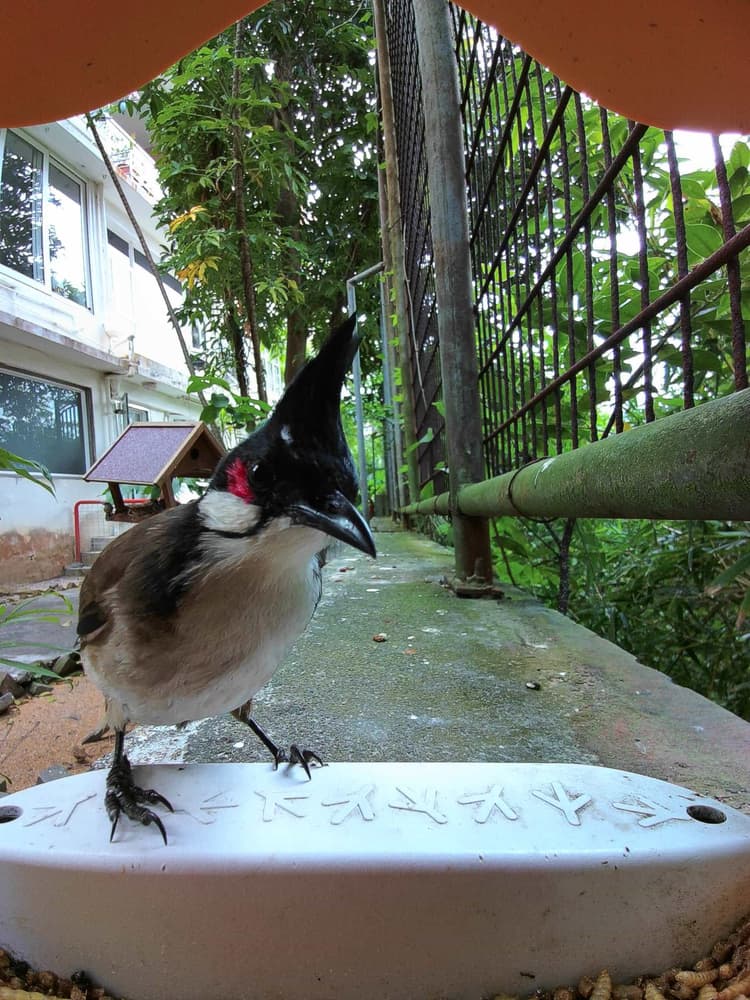
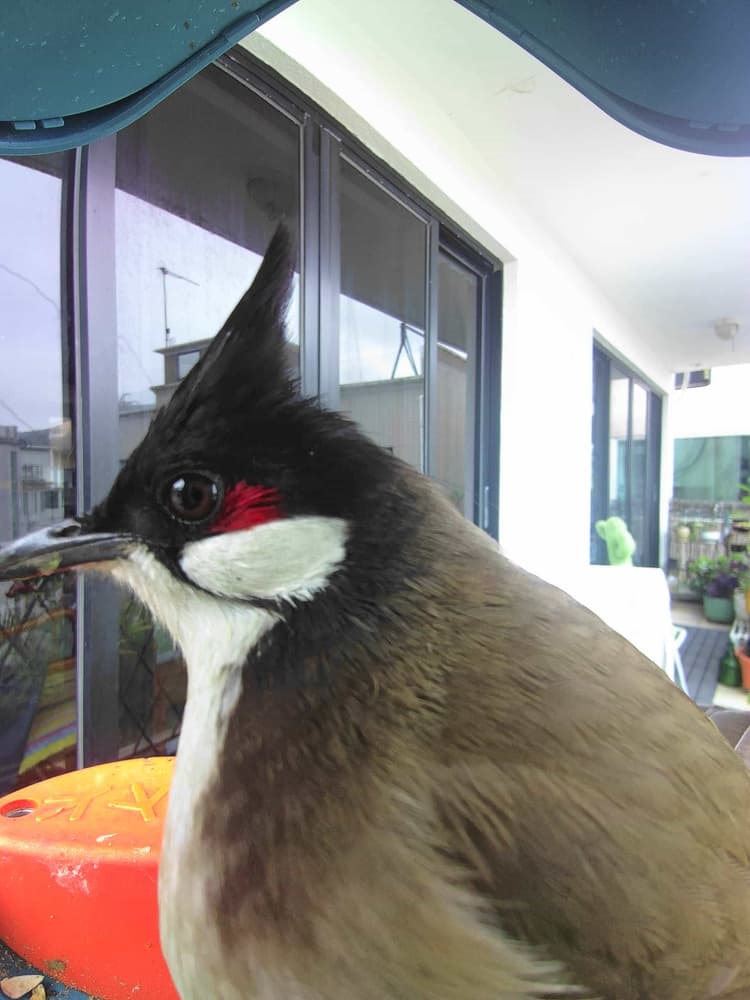
Recognizable by its white cheek patch accented by a distinctive red whisker mark near the bottom
- •
Features a pointed black crest atop its head, giving it a unique profile
- •
Possesses dark brown upperparts with white underparts, and a distinctive red vent
What does a red-whiskered bulbul sound like?
The red-whiskered bulbul's vocalizations are diverse, marked by various chattering notes and a unique whistled "queekey" sound. These calls pattern in a falling, rising, and undulating manner, producing distinctive bird songs. The bird employs different calls including chirps or chips, and whistles, exhibiting an impressive range of sounds in its communication repertoire.


Description
Did you know that the red-whiskered bulbul's call allegedly sounds like, 'pleased to meet you'? Likewise! Well, if you get to meet it, that is. This loud and sociable bird isn't the easiest to spot and is usually more often heard than seen. But it does have a habit of frequenting urban gardens, so it looks like it's your lucky day!
The red-whiskered bulbul can weigh between 24to30grams and be from17to23centimeters tall.
The red-whiskered bulbul typically lives for about 11 years in the wild. Compared to its close relative, the red-vented bulbul which lives approximately 5 years on average in the wild, the red-whiskered bulbul has a notably longer lifespan. This variation can be attributed to differences in predation, disease exposure, and environmental stresses faced by these species in their respective habitats.
Did you know?
Most popular questions about red-whiskered bulbul
How to recognise a red-whiskered bulbul?
General appearance
The Red-whiskered bulbul is a distinctive bird approximately 20cm in size, about the size of a Robin. It exhibits broad, rounded wings, and its tail can be notched, rounded or square-tipped. Most noticeable are its black crest, and a pair of red and white 'whiskers' or patches on the cheeks. The bird primarily showcases a black, brown, grey and white color palette, with red undertail coverts.
Male vs female
Male and female Red-whiskered bulbuls are similar in appearance, with both sexes displaying the same coloration and patterns. Hence, visually, it might be challenging to distinguish between males and females.
Juvenile
Juvenile Red-whiskered bulbuls resemble the adults in size but have less prominent 'whiskers' and their coloration is generally more subdued. The red undertail coverts may not be as vibrant as in adults. Their crest is less developed, giving them a more rounded appearance.
Breeding and nesting habits of the red-whiskered bulbul
Mating behaviors
In Florida, the red-whiskered bulbul's breeding season spans from February to June. Their courtship involves subtle displays where one bird approaches another, fluttering its wings and bowing. Both birds participate in repeatedly raising and lowering their crests during these displays. Despite their courtship, these birds are relatively tolerant of other bulbuls near their nesting sites.
Nesting details
Red-whiskered bulbuls typically nest low in shrubs, vines, or small trees, generally 2 to 8 feet above ground. Nests are well-concealed and placed in the fork of branches. Constructed as a cup using grass, weeds, rootlets, and casuarina needles, the outside is often decorated with paper, plastic, and bark. These elements may help camouflage the nest.
Eggs and chick-rearing
While specific details about their egg laying and chick-rearing practices are not provided, bulbuls typically lay small clutches of eggs. Parents share the responsibility of incubating eggs and feeding the chicks. To attract these birds to gardens, maintain areas with dense shrubbery and small trees for shelter and nest building.
What does a red-whiskered bulbul like to eat?
Berries
Flowers
Fruits
Insects
Nectar
Plants
Scraps
Spiders
Natural diet
The red-whiskered bulbul primarily feeds on a variety of berries, small fruits, and insects. Due to its small bill, it tends to consume larger fruits only after they become overripe or if they’ve been punctured by other birds. In regions like Florida, its diet includes berries and fruits from Brazilian pepper, figs, lantana, jasmine, among others. Additionally, the bird takes nectar and consumes pieces of flowers and green shoots of vegetation, supplementing its diet with many insects.
Bird feeders
At bird feeders, the red-whiskered bulbul might be attracted to offerings that reflect its natural diet. These can include soft fruits and berries, such as grapes and bananas, especially if they are overripe. Sugar water or nectar can also appeal to the bulbul, mimicking the nectar it would naturally consume from flowers.
Use the right feeder
Red-whiskered bulbuls are fond of feeders that mimic nature. A tube feeder containing Bird Buddy seeds would be a great choice as they are easy for this particular bird species to cling onto. Additionally, having a Bird bath or a bubbler nearby your feeder also aids in attracting them.
Use the right feed
Bird Buddy seeds are the best feed to use to attract Red-whiskered bulbuls. These seeds are a favorite of the bulbuls and are selected expertly based on the season ensuring there's always something the bulbuls will enjoy.
Plant shrubs or small trees
Bulbuls are attracted to greenery and enjoy foraging for insects, sipping nectar, and eating fruit. Planting bushes or small trees such as bottlebrush, fig trees or silk cotton tree in your yard can provide them with additional food source, attractive nesting sites and encourages them to visit more often.
Regularly clean your feeder
Keep in mind that Red-whiskered bulbuls, like many bird species, are attracted to clean feeders. Be sure to clean and refill your bird feeders regularly to ensure they are always fresh and inviting.
Provide shelter
Providing a safe, covered area in your yard or garden will also help attract Red-whiskered bulbuls. They prefer locations where they have coverage from predators but still plenty of visibility. Consider places such as birdhouses or dense shrubs.
Where can you find red-whiskered bulbuls?
Primary habitat
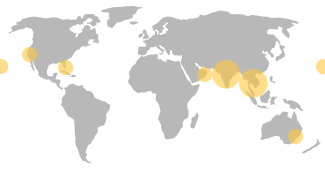
The red-whiskered bulbul's primary habitat is suburbs with exotic fruiting trees in North America, found only in residential areas with various exotic trees and shrubs that offer berries and small fruits all year round.
Additional range
In its native range in southern Asia, the bulbul is found on forest edges, semi-open areas, and towns.
Do they migrate?
The red-whiskered bulbul is generally a sedentary bird, meaning it does not undertake long migrations and largely stays in one place throughout the year. Native to the tropical and subtropical regions of Asia, including India and Southeast Asia, this species tends to inhabit a variety of environments such as gardens, forests, and urban areas. While the red-whiskered bulbul does not migrate in the traditional sense, it may exhibit some local movements in response to food availability or environmental conditions. These movements are typically short-range and do not follow the structured routes or schedules typical of migratory species. Despite being non-migratory, the red-whiskered bulbul has successfully expanded its range through human introduction to various locations worldwide, including the United States (notably in Florida), Australia, and several islands in the Indian and Pacific Oceans. In these areas, they have adapted well to local conditions without needing to migrate. Overall, the species' adaptability and sedentary nature contribute to its stable populations in both native and introduced habitats.
What is the role of red-whiskered bulbuls in nature and how to protect them?
Conservation status
The red-whiskered bulbul is currently listed as a species of least concern due to its stable population and adaptability to various environments. In areas like Florida, it does not significantly compete with native bird species, suggesting minimal local ecological threat. Globally, however, habitat loss and trapping for the pet trade pose risks to its populations. Conservation efforts focus on habitat protection and regulating trade to prevent declines. Despite these threats, the species remains common in its native and many introduced ranges.
Ecological role of red-whiskered bulbuls
Its role in the ecosystem
The red-whiskered bulbul plays a significant role within the ecological system, contributing to both seed dispersal and pest control. Its diet, which consists of both insects and a wide variety of small fruits, contributes to these roles. The bird feeds on insects like pests limiting their population, hence providing a form of natural pest control. The red-whiskered bulbul also helps in pollination as it sips nectar and eats pieces of flowers. The consumption of small fruits aids in the dispersion of seeds. As the bird travels, often in flocks, it passes the seeds within its droppings, enhancing the distribution of various plant species across its range. Therefore, this species contributes vitally to the maintaining of biodiversity and the balance within its ecosystem.
How to help protect red-whiskered bulbuls
Preservation tips
Habitat preservation strategies for red-whiskered bulbul
Implement rigorous forestry management to preserve and restore the natural habitats of the red-whiskered bulbul. Discourage deforestation, promote the replanting of indigenous trees, and regulate intrusions into these habitats. Monitor and control invasive species that may pose a threat to the species.
Community science initiatives for red-whiskered bulbul conservation
Promote local community involvement in bird watching and population monitoring programs. Organize educational campaigns about the red-whiskered bulbul, highlighting their role in the ecosystem and the threats they face. Foster community-led rehabilitation projects for injured or rescued bulbuls. Encourage citizen reporting of any illegal activities affecting the species.