
White-Eared Bulbul
White-Eared Bulbul
Also known as: White-Cheeked Bulbul, Iraqi Bulbul
Pycnonotus leucotis


Quick Identification guide
Quick Identification guide
- •
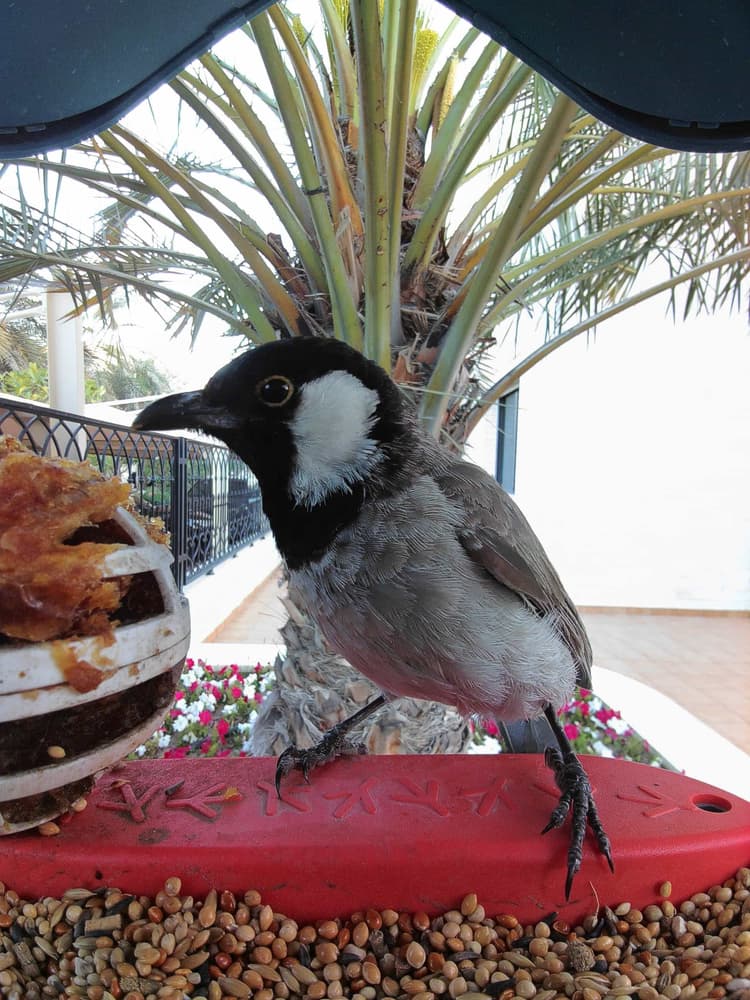
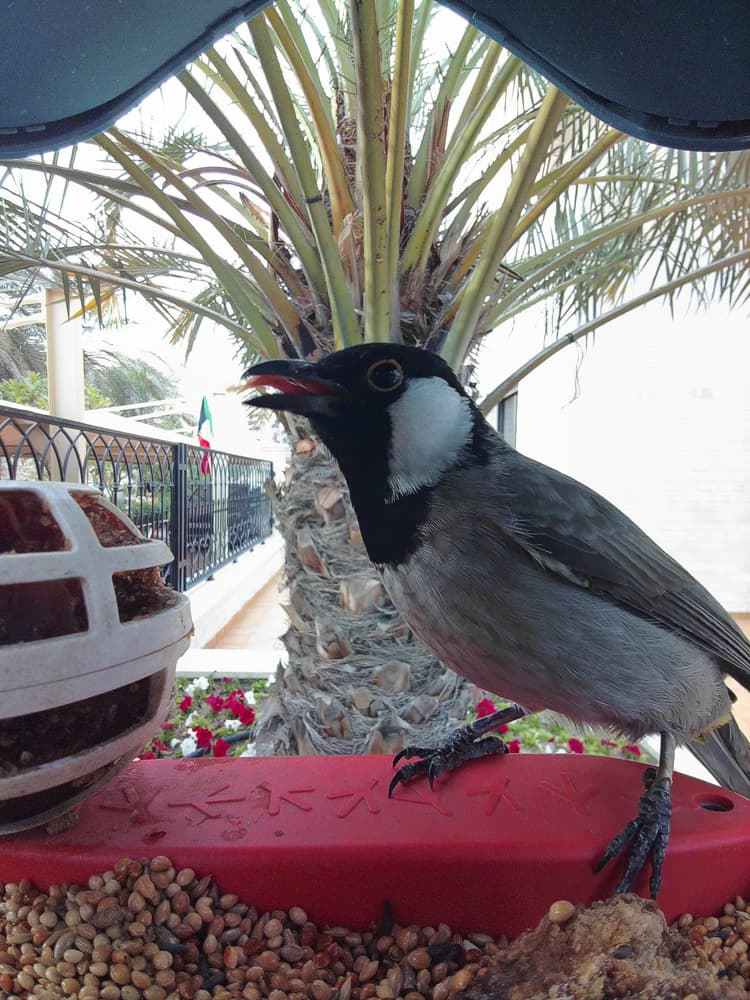
Features a distinctive white patch around the ears, contrasting with its dark brown head
- •
Exhibits soft gray-brown plumage on the body, with whitish underparts
- •
Possesses a short, rounded beak and a black patch running from the beak to the eyes


Description
White-eared bulbuls don't seem to think that three is a crowd at all. During breeding season, adults are often spotted going about their daily business as a trio! These plump little birds are a common sight in cities and towns and form flocks of up to 20 or 30 outside breeding season.
The white-eared bulbul can weigh between 18to35grams and be from17.5to19centimeters tall.
The white-eared bulbul typically lives up to 11 years in the wild. This is similar to related species, such as the Red-whiskered Bulbul and the Red-vented Bulbul, which have average lifespans of about 11 years as well. This lifespan can be influenced by factors like predation and disease.
Did you know?
Most popular questions about white-eared bulbul
How to recognise a white-eared bulbul?
General appearance
The white-eared bulbul, identifiable by a white patch around its ear, has a predominantly dark grey body, with a light underbelly. The bird has a white-tipped tail, and a lighter colored tuft of feathers on its throat with a sharp, pointed beak, typical of bulbul species.
Male vs female
Males and females of the white-eared bulbul species are similar in appearance, exhibiting little sexual dimorphism. Both have similar coloration and physical traits; key differences are difficult to discern without closer observation or expert knowledge.
Juvenile
Juvenile bulbuls resemble adults but have a more subdued color scheme. The distinctive white patch around the ear is less prominent compared to adults and develops gradually as they mature.
Often mistaken for
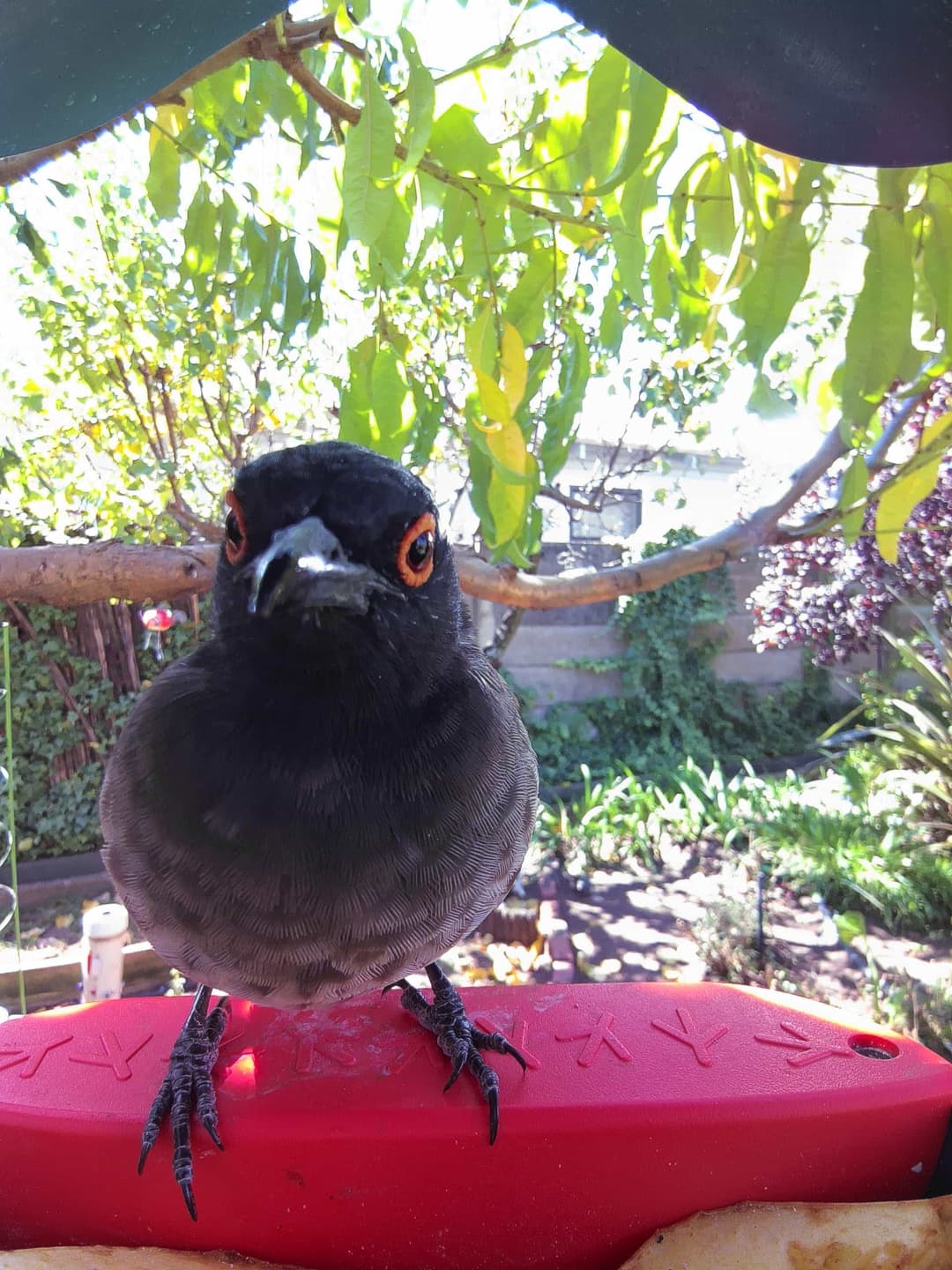
African Red-Eyed Bulbul vs White-Eared Bulbul
The African Red-Eyed Bulbul can be distinguished from the White-Eared Bulbul by its prominent red eye-ring, lacking the white ear patch, and having a darker plumage overall.
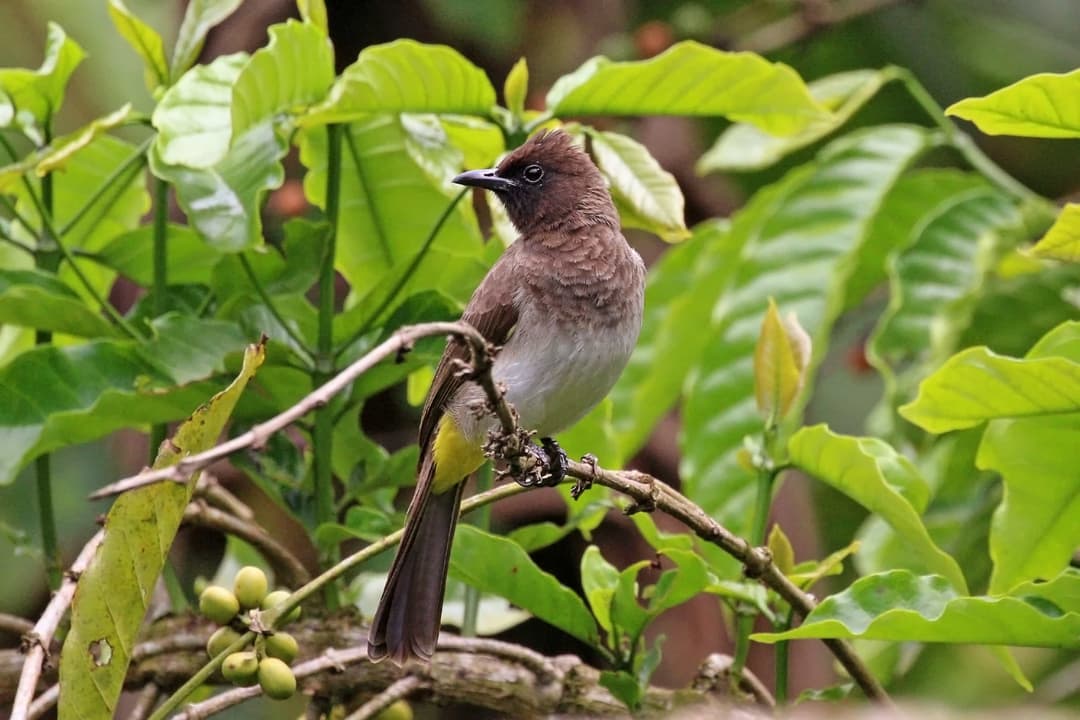
Dark-Capped Bulbul vs White-Eared Bulbul
Dark-Capped Bulbul may appear similar due to its general body shape and size, but it has a dark cap and lacks the distinct white ear patch of the White-Eared Bulbul.
Light-Vented Bulbul vs White-Eared Bulbul
The Light-Vented Bulbul is distinguished by its prominent white vents and lack of a white ear patch, unlike the White-Eared Bulbul.
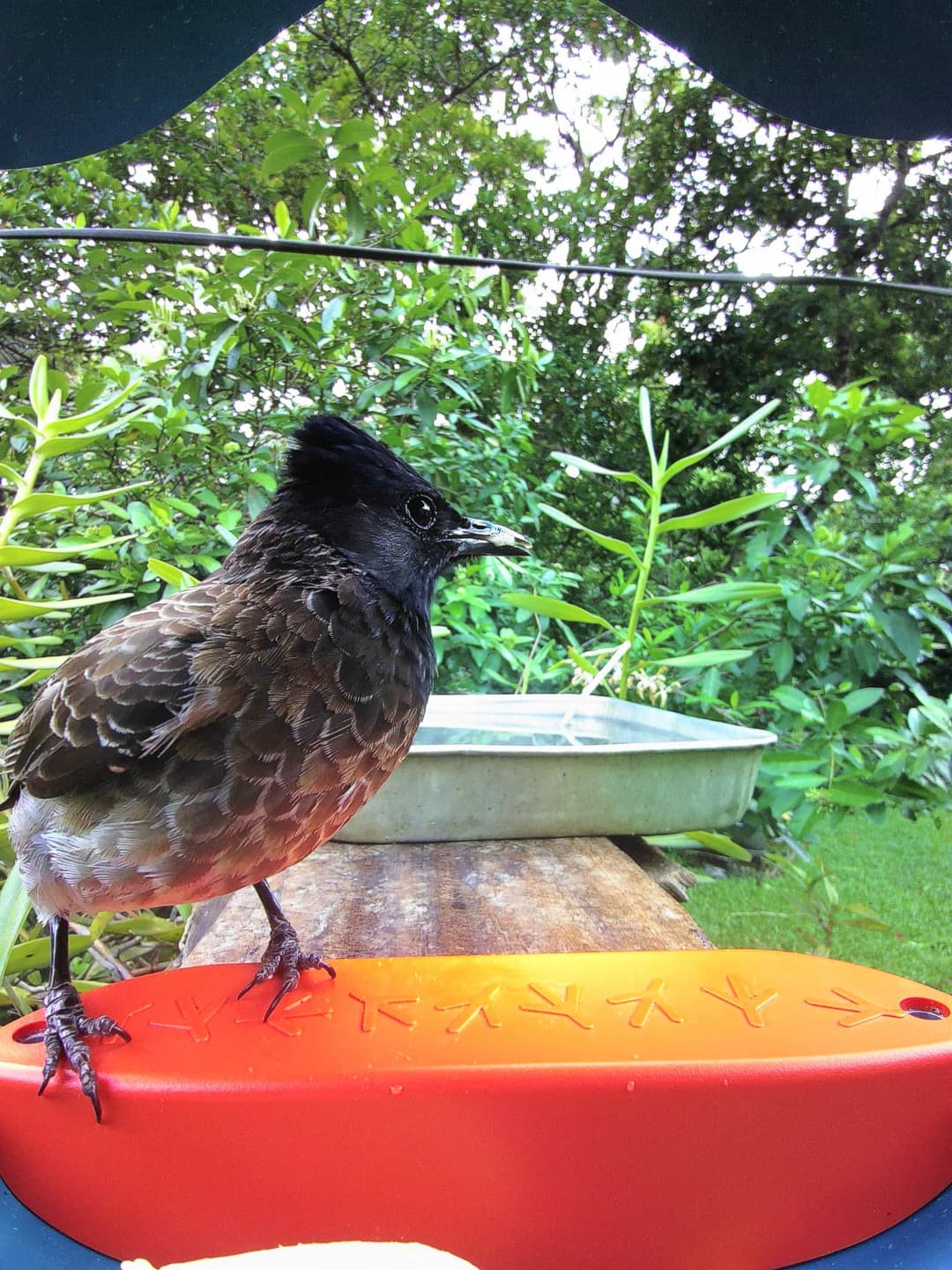
Red-Vented Bulbul vs White-Eared Bulbul
Red-Vented Bulbul has a distinctive red vent and lacks the white ear patch present in the White-Eared Bulbul.
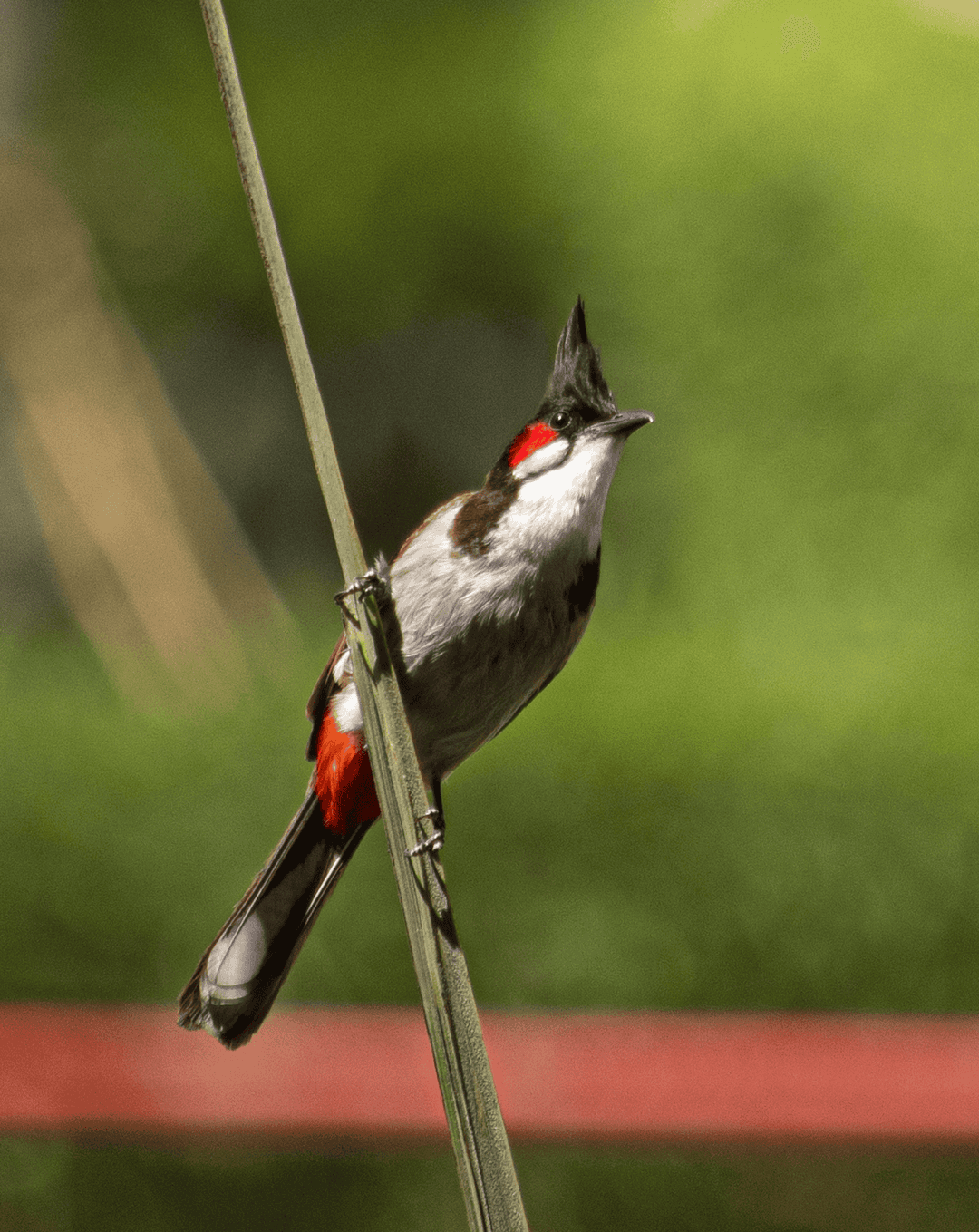
Red-Whiskered Bulbul vs White-Eared Bulbul
The Red-Whiskered Bulbul features prominent red tufts beside its cheeks and lacks the white ear patch seen on the White-Eared Bulbul.
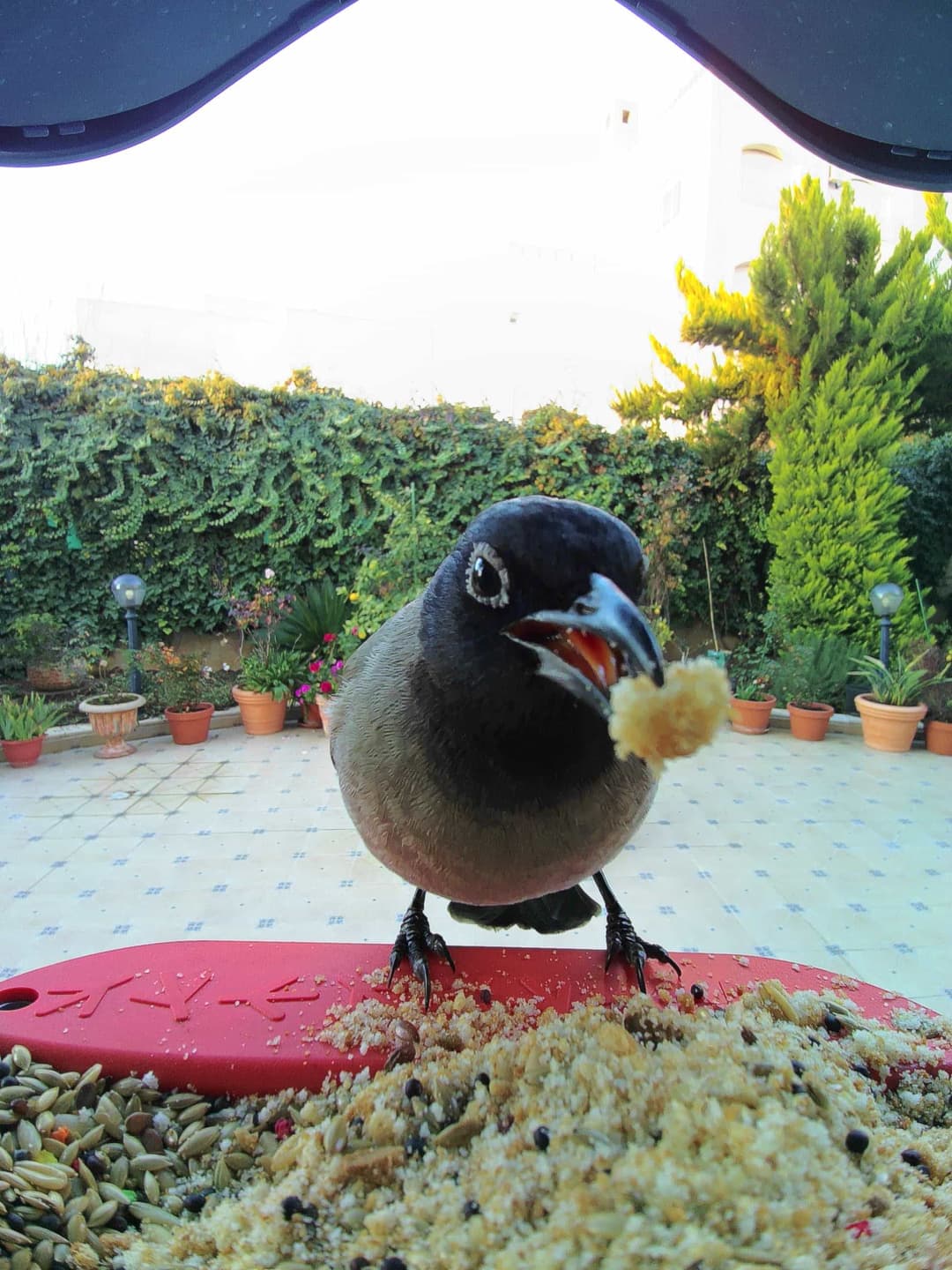
White-Spectacled Bulbul vs White-Eared Bulbul
The White-Spectacled Bulbul resembles the White-Eared Bulbul but has a distinct white eye-ring rather than a white ear patch.
Breeding and nesting habits of the white-eared bulbul
Mating behaviors
White-eared bulbuls exhibit courtship displays that include singing and fluttering flights to attract mates. Males often present food to females as part of the bonding process.
Nesting details
Nesting occurs in shrubs or small trees, often near human habitation, including gardens. Nests are cup-shaped, made from grass, leaves, and other soft materials. To encourage nesting in gardens, plant dense shrubs and provide a water source.
Eggs and chick-rearing
Females lay 2-4 eggs per clutch. Both parents incubate the eggs and feed the chicks. The young fledge in about 14 days, during which time adults provide constant care, including feeding insects and fruit.
What does a white-eared bulbul like to eat?
Fruits
Insects
Nectar
Plants
Natural diet
The white-eared bulbul primarily feeds on fruits, such as berries and figs, and supplements its diet with nectar and flowers from various plants. It also consumes insects and small invertebrates, which provide essential proteins and nutrients, especially during breeding seasons. The bulbul’s diet varies depending on its habitat, and it adapts to the availability of food sources throughout the year.
Bird feeders
At bird feeders, white-eared bulbuls commonly consume a variety of offerings including seeds, especially sunflower seeds. They are also attracted to fruits provided by bird enthusiasts, such as apple slices or banana chunks. Bulbuls may visit feeders stocked with suet or bread pieces, especially in urban areas where natural foods are less available. Their adaptable nature allows them to exploit human-provided food sources effectively.
Feeding favourites
White-eared bulbuls love fruits the most, like figs, berries, apples, pears, and grapes. Bird Buddy seeds are indeed a perfect choice, as they are selected by experts for each season, ensuring the most nutritious and appealing meal for these lovely birds.
Feeder tips
Choose feeders with ample perch space, since bulbuls are social birds and often show up in pairs or groups. A platform or tray feeder would work best. Ensure you clean the feeder regularly to maintain hygiene and avoid disease spread.
Fun tricks
To tempt these musical birds into your yard, try adding a birdbath or water feature. The sound of running water is often irresistible to birds. Also, providing plenty of dense shrubs or trees for them to hide and nest in can make your yard an attractive home for the white-eared bulbul.
Where can you find white-eared bulbuls?

Sunny scrublands of south asia
The sun-drenched scrublands and semi-desert regions of South Asia are where the white-eared bulbul chirps joyfully. The dry climate peppers the landscape with delicate, thorny acacia shrubs, amongst which our feathered friend flutters dynamically.
Unexpected urban explorer
Bulbuls love fruits and flowers, so they surprisingly adapt well to urban parks and gardens. Here, amidst the drama of city hustle, they craft nests, turning metropolitan cities into their unexpected, lively jungle-groove hangouts.
Do they migrate?
The white-eared bulbul (Pycnonotus leucotis) is generally a sedentary bird, meaning it tends to stay in one place throughout the year rather than undertaking long-distance migrations. It is commonly found in a range of habitats, including scrublands, gardens, and agricultural areas across the Middle East and South Asia, notably in countries like Iran, Pakistan, India, and parts of Afghanistan. While the white-eared bulbul may exhibit some local movements in search of food, water, or suitable breeding sites, these are not considered true migrations. Instead, they are generally short-distance, localized movements that are influenced by environmental conditions rather than a seasonal migratory pattern. These birds are highly adaptable and have adjusted well to human-altered landscapes. Their ability to thrive in diverse environments—ranging from urban areas to arid regions—further reduces the need for long-distance movements. Consequently, the white-eared bulbul remains mostly within its established range throughout the year, maintaining a stable presence in its preferred habitats.
What is the role of white-eared bulbuls in nature and how to protect them?
Conservation status
The white-eared bulbul is classified as "Least Concern" by the IUCN, indicating that it is common and not currently at risk of extinction. The species thrives in a variety of habitats, including gardens and urban areas, which helps maintain stable populations. However, habitat loss due to urbanization and agricultural expansion can pose threats. No major conservation efforts are specifically targeted at this bird, but its ability to adapt to changing environments has so far mitigated significant declines. Conservation efforts generally focus on habitat preservation to ensure its continued abundance.
Ecological role of white-eared bulbuls
Its role in the ecosystem
The White-Eared Bulbul is an integral part of an ecosystem, making important contributions in several areas. Primarily, they play a crucial role in controlling pests, as their diet mainly consists of insects which might be detrimental to agricultural crops or plants. This naturally occurring pest control helps to reduce the spread of pests, thus enabling healthier plant growth. In addition to this, White-Eared Bulbuls are vital in seed dispersion. They consume various fruits and excrete the seeds in different locations, thus assisting in the propagation of numerous plant species. This activity ultimately promotes plant biodiversity and ecosystem stability. Overall, the presence of the White-Eared Bulbul contributes towards a balanced and productive ecosystem.
How to help protect white-eared bulbuls
Preservation tips
Habitat preservation strategies
Protect the white-eared bulbul's natural environments such as gardens, cultivated areas, and forests from deforestation and urbanization. Promote reforestation initiatives in deforested areas. Strictly observe and implement laws against hunting and capturing these birds, as they can lead to a decrease in their population.
Community science initiatives
Engage the local community in tracking the white-eared bulbul's population and monitoring changes. Educate the public about the bird's ecological importance and the detrimental effects of its habitat loss. Involve the community in initiatives such as birdwatching events, conservation fundraisers, and habitat cleanups. Partner with local schools and universities to encourage research on the species, its habits, and its needs.