
Mountain Bulbul
Mountain Bulbul
Also known as: Green-Winged Bulbul, McClelland's Bulbul, McClelland's Rufous-Bellied Bulbul, Mountain Streaked Bulbul, Rufous-Bellied Bulbul
Ixos mcclellandii
Quick Identification guide
Quick Identification guide
- •
Features an olive-green body with a slightly duller brownish tail and wing edges
- •
Boasts a distinctive pale head with a well-defined, pale throat and eyebrow stripe
- •
Displays a moderately long tail and a slender, slightly curved beak suitable for its feeding habits
What does a mountain bulbul sound like?
The mountain bulbul's vocalizations are distinctive, often characterized by a loud, clear, and melodious whistle. The whistle often consists of several syllables, alternating in pitch. The bird also makes a variety of chattering and trilling calls. There are regional variations, with some populations having a single, monotonous song while others produce more complex, multi-note melodies.
Description
Don't let mountain bulbuls' appearance fool you; these large and noisy birds can actually be pretty shy! Not when they are with their buddies, though. When flocks of them go around feeding, they are incredibly chatty and call non-stop. They live up to their name, living at altitudes between 2,624 and 8,497 feet!
The mountain bulbul can weigh between 27to41grams and be from21to24centimeters tall.
The typical lifespan of the mountain bulbul is not well-documented but related species, like the Red-vented Bulbul, can live up to 11 years. Comparatively, other bulbuls can live between 2.5 years - such as, the Straw-headed Bulbul, and up to 20 years, like the Black bulbul. However, these lifespans for bulbuls can vary greatly due to factors such as predation and habitat loss.
Did you know?
Most popular questions about mountain bulbul
How to recognise a mountain bulbul?
General appearance
Mountain bulbuls are medium-sized birds averaging 20 cm in length. They possess distinct black and olive feathers, with their underparts a light yellow and white chin. The bird has a sturdy, hefty beak that is black, and their feet are also black. They have a distinct characteristic square-ended tail with white tips.
Male vs female
There is little sexual dimorphism in the Mountain Bulbul species, which means males and females have similar appearances. Both sexes have the same coloration and size, making it difficult to differentiate between genders based on physical traits alone. Any distinction usually occurs in subtle behavioral differences.
Juvenile
Juvenile Mountain Bulbuls have the same basic coloration as adults, but their feathers may appear duller compared to adult bulbuls. The lighter underparts of juveniles can often be a streaked brown compared to the strong yellow in adults. Juveniles also possess a lesser-developed white tip at the end of the tail, which becomes more prominent as they mature.
Often mistaken for
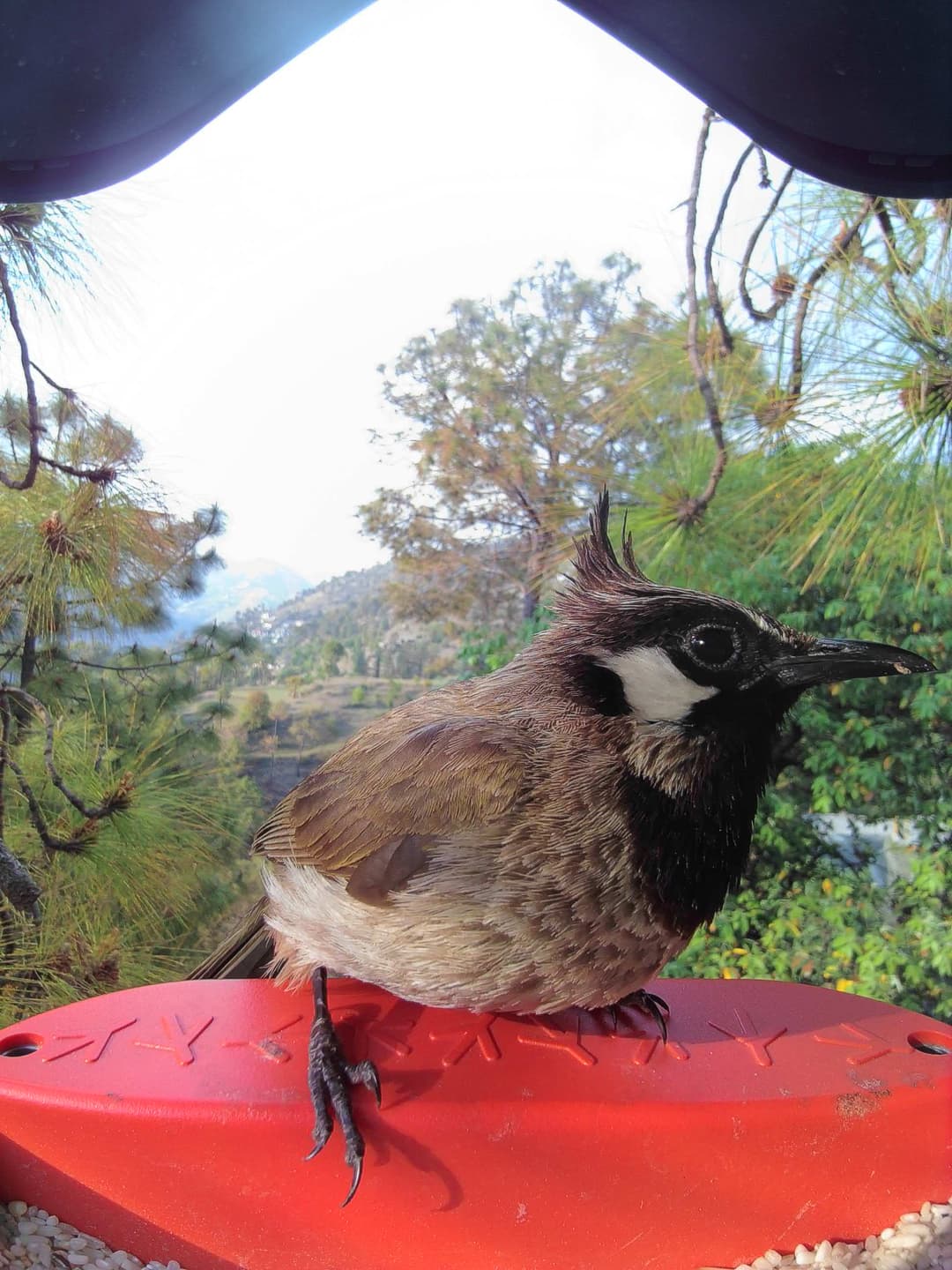
Himalayan Bulbul vs Mountain Bulbul
The Himalayan Bulbul resembles the Mountain Bulbul in shape and size but can be distinguished by its distinct white cheek and throat patches, along with a black crest and mask-like pattern.
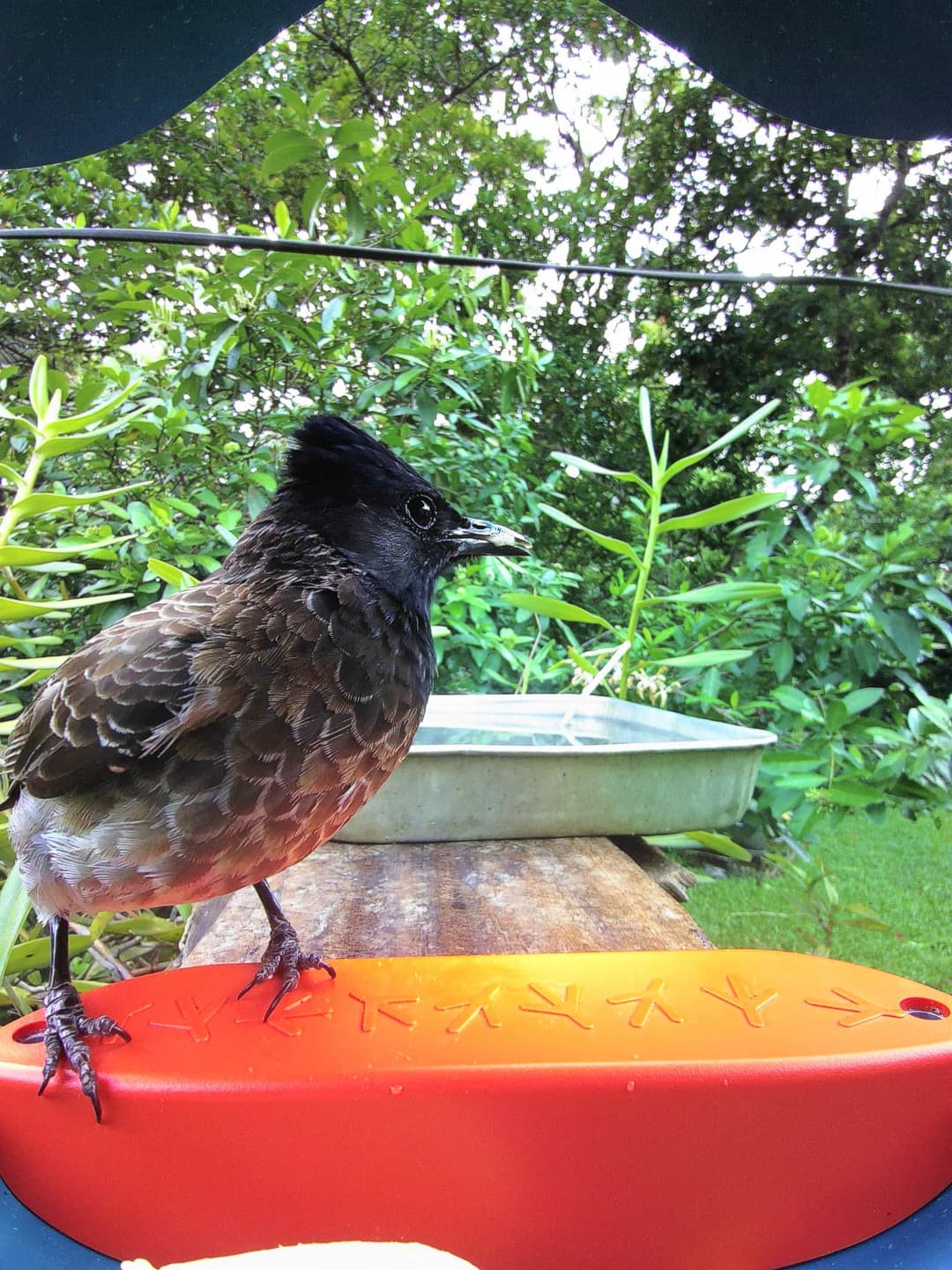
Red-Vented Bulbul vs Mountain Bulbul
The Red-Vented Bulbul shares similarities in structure but has a prominent red vent and lacks the olive plumage found in the Mountain Bulbul.
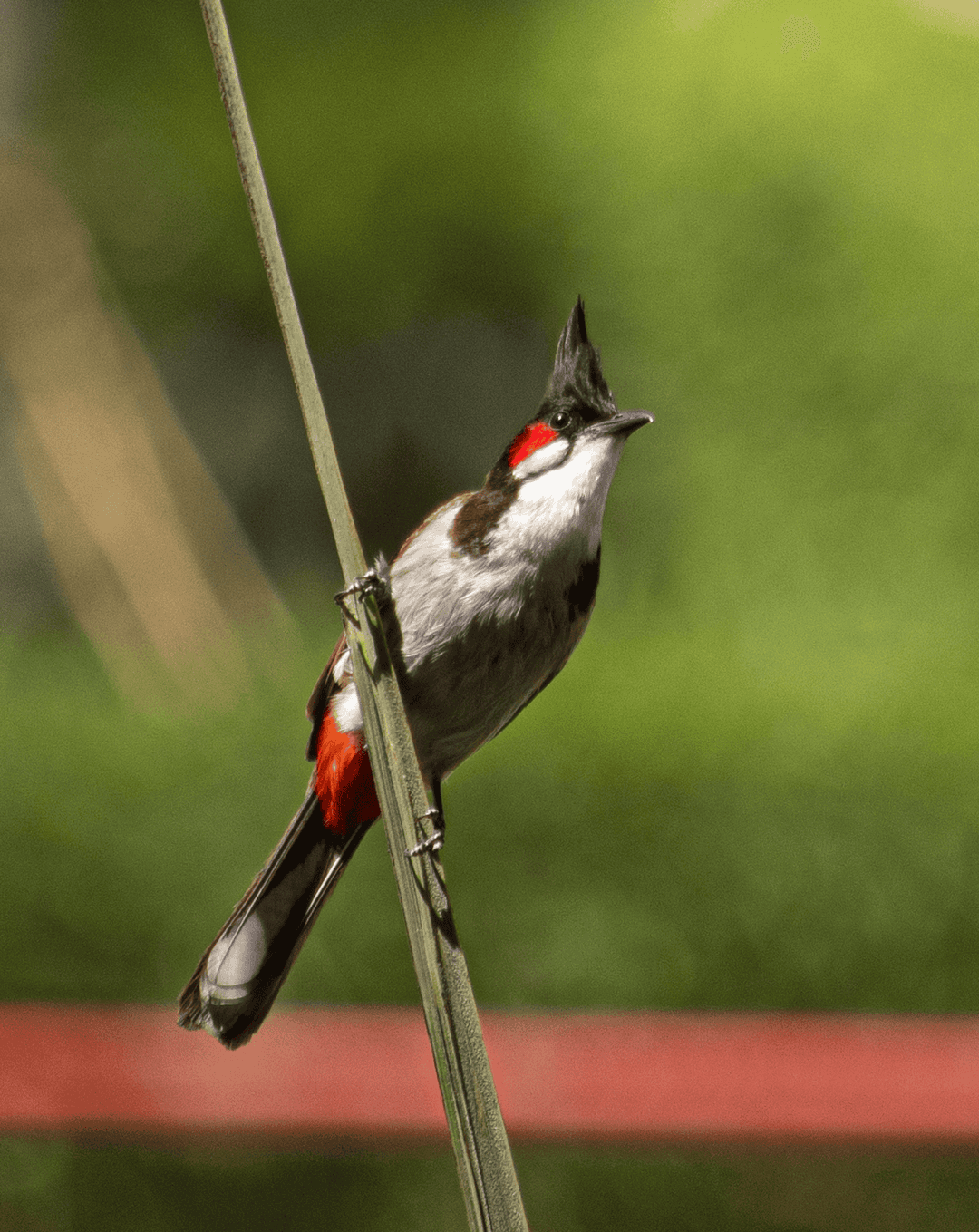
Red-Whiskered Bulbul vs Mountain Bulbul
Similar in shape to the Mountain Bulbul, the Red-Whiskered Bulbul is easily distinguished by its white cheek patches and red ear patch.
Breeding and nesting habits of the mountain bulbul
Mating behaviors
Mountain bulbuls engage in lively displays and vocalizations during courtship, which helps establish pair bonding. Males often showcase their vibrant plumage and agility in flight to attract females.
Nesting details
These birds typically build cup-shaped nests in dense foliage, often utilizing shrubs and small trees in forested areas. They weave nests using twigs, leaves, and grasses, providing camouflage and protection.
Eggs and chick-rearing
The female lays 2-3 eggs per clutch, which both parents incubate. After hatching, chicks are fed a diet rich in insects and fruits, with both parents sharing the responsibility of feeding and protecting the young.
What does a mountain bulbul like to eat?
Berries
Fruits
Insects
Nectar
Natural diet
The mountain bulbul primarily feeds on a diverse range of fruits, berries, and small invertebrates. Its diet includes insects such as caterpillars, beetles, and spiders, as well as fruits from various native trees and shrubs. The bird is often seen foraging high in the canopy of forested areas, where it can find an abundant supply of its natural food sources.
Bird feeders
Mountain bulbuls occasionally visit bird feeders, especially those located near forested areas. They are attracted to feeders that offer fruits like apples, bananas, and berries. Additionally, they may consume seeds, particularly softer ones, and suet, especially during the colder months when natural food supplies are scarce. The presence of water sources nearby can also attract these birds to garden feeders.
Attract the mountain bulbul with bird buddy seeds
To tempt the lovely Mountain Bulbul to your yard or feeder, the first thing you need to do is provide quality feed. We recommend Bird Buddy seeds, extensively chosen by experts to match the seasonal needs of these birds. This feed is not only nourishing but also irresistibly tempting for the Bulbuls.
Set up favoured feeders in your yard
Mountain Bulbuls prefer open tray feeders where they can easily spot seeds. Therefore, try to install these feeders in quiet and safe locations in your yard, away from predators and heavy human activity. By having these feeders, you increase your chances of attracting an audience of Bulbuls.
Encourage them with a sing-along set up
Bulbuls are known for their melodious calls, and they can stay for a sing-along! Try setting up some bits of nature that bulbul like, such as some small bells or wind chimes that emit soft sounds when blown by the wind. This could produce a sing-along environment that could prove irresistibly charming for the Bulbuls.
Where can you find mountain bulbuls?

Primary habitat
The mountain bulbul primarily inhabits warm, subtropical or tropical moist montane forests in Asia.
Additional range
Unexpectedly, this bird can occasionally be found in lower altitude habitats including gardens and plantations.
Do they migrate?
The mountain bulbul is largely a resident bird, meaning it does not exhibit significant migratory behavior. Found primarily in parts of South and Southeast Asia, the species inhabits a range of montane forests and wooded areas across countries like India, Nepal, Bhutan, Myanmar, Thailand, Laos, Vietnam, and southern China. While the mountain bulbul is mostly non-migratory, it may engage in altitudinal movements. These seasonal shifts occur when birds move to lower elevations during colder months to escape harsh weather conditions at higher altitudes. Such movements are not true migrations but are rather localized adjustments to seasonal changes in habitat conditions. Specific migratory routes or key stopover locations are not characteristic of the mountain bulbul due to its residency and altitudinal shifts rather than long-distance migration. Instead, these birds focus on maintaining their ecological niche within subtropical or tropical moist montane forests. The timing of their altitudinal movements is in conjunction with seasonal weather patterns, migrating to suitable environments as needed to sustain their food sources and habitat preferences.
What is the role of mountain bulbuls in nature and how to protect them?
Conservation status
The mountain bulbul is classified as a species of Least Concern, indicating that it is relatively common and not currently at risk of extinction. Key conservation efforts are not prominently targeted at this species due to its stable population. However, habitat destruction, particularly from deforestation for agriculture and urbanization, poses potential threats to its habitat. Conservation efforts focusing on preserving forest ecosystems indirectly benefit the mountain bulbul by maintaining its natural habitat. Continued monitoring of its population and habitat is essential to ensure it remains outside of vulnerable or endangered status.
Ecological role of mountain bulbuls
Its role in the ecosystem
The Mountain Bulbul is an important bird species in its ecosystem, playing several critical roles. Its major ecological role in pest control comes from its diet, which consists primarily of insects. This appetite for insects helps control harmful insect populations, suppressing potential infestations, and contributing to balanced environments. As a frugivore, the Mountain Bulbul also plays a critical role in seed dispersal. By feeding on fruits and excreting seeds in different locations, it aids in the propagation of various plant species, ultimately enhancing plant diversity and forest regeneration. This also helps to maintain healthy soils and encourage the creation of wildlife habitats. In a nutshell, the Mountain Bulbul's ecological contributions significantly aid in the sustenance and health of its ecosystem.
How to help protect mountain bulbuls
Preservation tips
Preserve mountain bulbul’s habitat
Preserve and expand the mountain bulbul's mountain and forest habitats by implementing stringent land-use regulations. Advocate for government policies that prohibit deforestation and promote responsible forestry practices. Support reforestation projects to restore degraded habitats. Encroachments into these habitats, such as construction or agriculture, should be regulated or even prohibited in key areas.
Promote community science initiatives
Encourage community engagement in conservation efforts by initiating or participating in citizen science campaigns. This can include recording of sights and sounds for scientific study, contributing to bird counts, and monitoring nesting activity. Engage local communities in education programs about the mountain bulbul and its importance to the ecosystem, as informed and engaged communities are more likely to participate proactively in its preservation.