
Sooty-Headed Bulbul
Sooty-Headed Bulbul
Pycnonotus aurigaster
Quick Identification guide
Quick Identification guide
- •
Features a sooty black head that contrasts strikingly with its lighter body
- •
Presents a white to grey body with hints of yellow or orange around the vent area
- •
Displays a slender, slightly curved beak ideal for picking fruits and insects
What does a sooty-headed bulbul sound like?
The sooty-headed bulbul is known for its melodious and varied vocalizations. Its typical call, often heard at dawn, is a rich, bubbly 'splink-splink' or 'piu-piu' sound. The bird's song is a loud, fluting whistle, often with complex combinations of notes and mimicry of other birds. Singing is mainly performed by males, and it can be continuous, rhythmic, or broken into shorter phrases.
Description
If you're looking for a happy-go-lucky bird, the sooty-headed bulbul is it! How so? Just have a listen to these adorable and chatty birds' cheerful song! You don't have to go far, either, since these little guys are a common sight in towns! You are most likely to spot them either in a pair or a small flock.
The sooty-headed bulbul can weigh between 40to50grams and be from19to21centimeters tall.
The Sooty-headed Bulbul typically lives for around 11 years. This is relatively long compared to some related species, like the Red-whiskered Bulbul and the White-eared Bulbul, which usually live up to 5 and 10 years, respectively. However, some Bulbuls like the hill blackeye can live up to 15 years.
Did you know?
Most popular questions about sooty-headed bulbul
How to recognise a sooty-headed bulbul?
General appearance
The Sooty-Headed Bulbul is a medium-sized bird, approximately 20 cm in length. The principal characteristic of the specie is its black-colored head, leading towards the nape. The color gradually transforms into a smoky grey down the back, while the underparts, including the chest, belly, and undertail, are creamy-white. The specie has a pointed black crest, a conspicuous white iris around the eyes, and stout, medium length, black bill. There are no distinct seasonal variations in the appearance.
Male vs female
Both males and females look almost identical, making it particularly challenging to distinguish them. Both sexes share the identical characteristic blacks, grays, and whites coloring. The voice might be helpful in distinguishing between the sexes, as typically males have a louder and more varied song than females.
Juvenile
Juvenile Sooty-Headed Bulbuls are discernable thanks to their more muted coloring. They exhibit duller hues, lacking the sharp contrast between the black, grey and white seen in adults. They don’t have the pointy crest feature until they attain maturity. Their iris is brownish as compared to the stark white in adults.
Often mistaken for
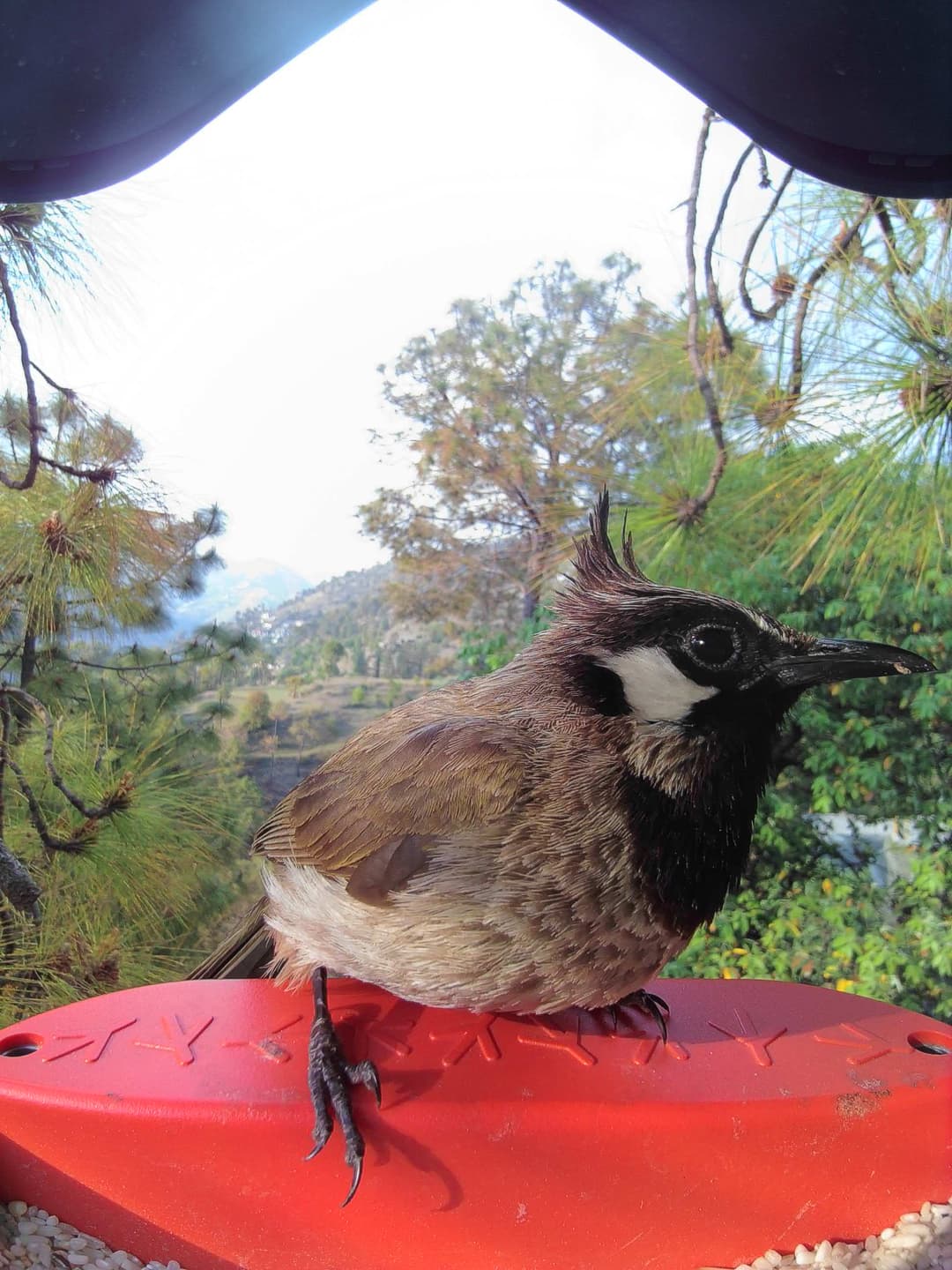
Himalayan Bulbul vs Sooty-Headed Bulbul
The Himalayan Bulbul shares a similar shape and size with the Sooty-Headed Bulbul, but it has distinctive white cheeks and a dark crown.
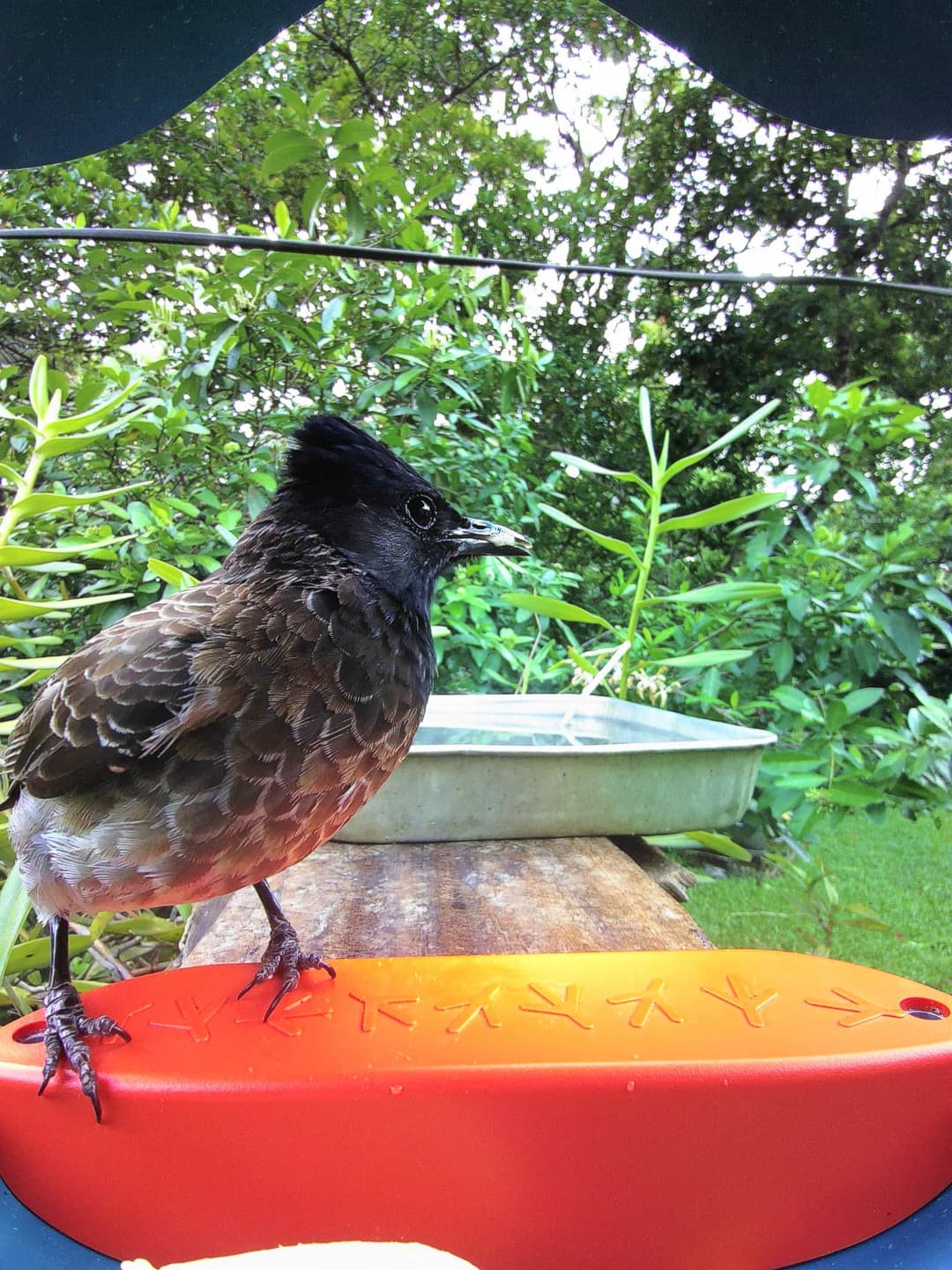
Red-Vented Bulbul vs Sooty-Headed Bulbul
This bird resembles the Sooty-Headed Bulbul in size and profile, but it has a distinctive red vent, which the Sooty-Headed Bulbul lacks.
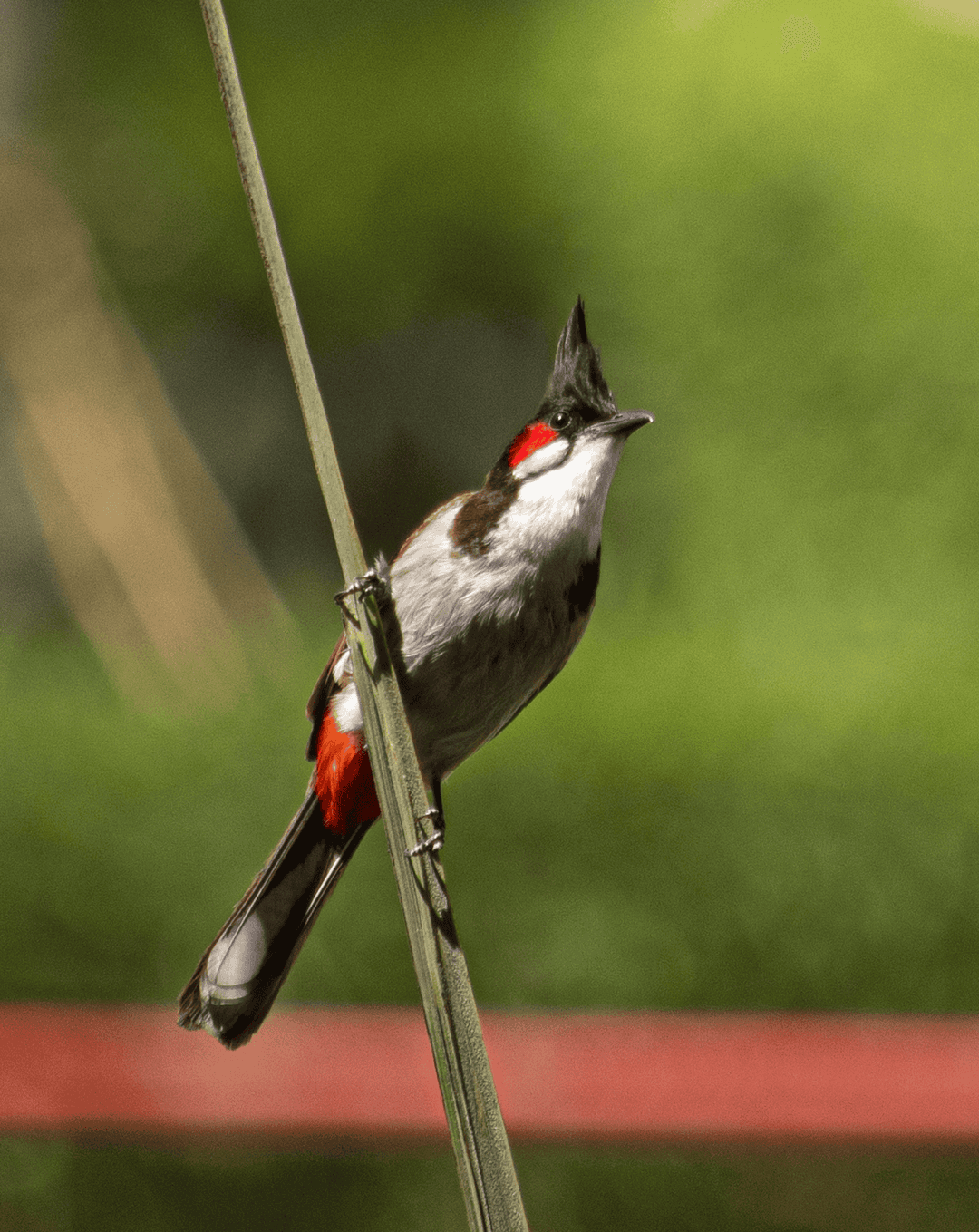
Red-Whiskered Bulbul vs Sooty-Headed Bulbul
The Red-Whiskered Bulbul is similar in shape and size to the Sooty-Headed Bulbul, but it features a notable red patch on its face and lacks the characteristic sooty head.
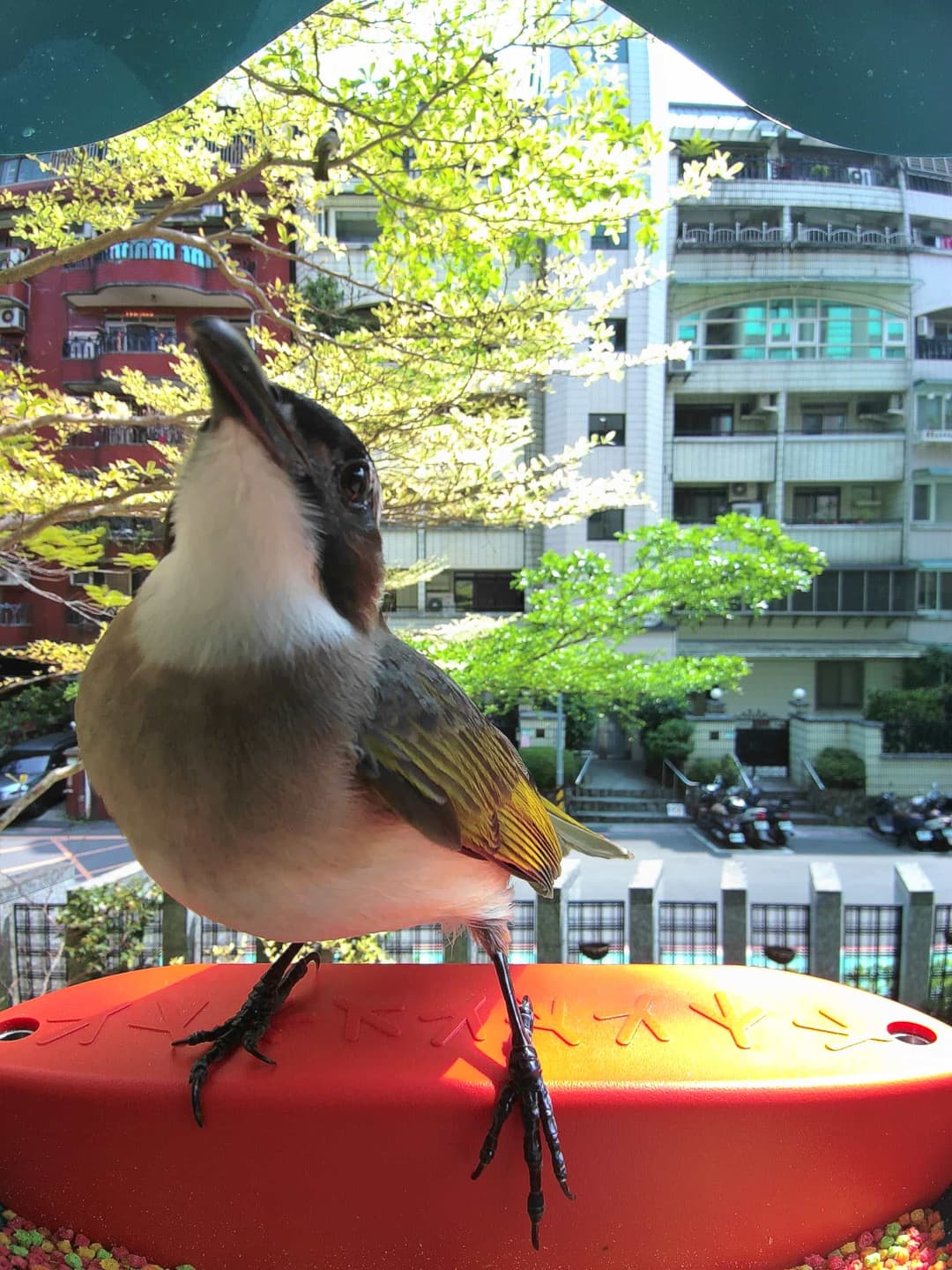
Light-Vented Bulbul vs Sooty-Headed Bulbul
The Light-Vented Bulbul has a similar silhouette to the Sooty-Headed Bulbul but is distinguished by its lighter head and absence of a sooty crown.
Breeding and nesting habits of the sooty-headed bulbul
Mating behaviors
The sooty-headed bulbul engages in elaborate courtship displays that include vocal calls and aerial displays. Males often flutter wings and present food to females as a sign of affection.
Nesting details
Nests are typically placed in dense foliage within gardens or forests. They use materials such as twigs, leaves, and grass. Providing native shrubs and small trees can create an appealing habitat for nesting.
Eggs and chick-rearing
The female lays 2-4 eggs per clutch. Both parents incubate the eggs and feed the hatchlings with insects and fruit. Providing additional food sources and minimizing disturbances can support chick development.
What does a sooty-headed bulbul like to eat?
Berries
Flowers
Fruits
Insects
Nectar
Plants
Spiders
Natural diet
The sooty-headed bulbul primarily feeds on a variety of fruits, which constitute a major part of its natural diet. Commonly consumed fruits include figs, berries, and other small, soft fruits available in its habitat. It also eats nectar from flowers, which provides essential energy. Insects, such as caterpillars and beetles, are part of its diet, particularly during the breeding season when additional protein is crucial for chick development.
Bird feeders
At bird feeders, sooty-headed bulbuls are attracted to offerings that mimic their natural diet. They enjoy fruits like sliced bananas, apples, and papayas. Additionally, they might be seen consuming nectar from feeders, particularly those designed to attract nectar-loving birds. While not their primary choice, they may occasionally accept seeds or small pieces of bread offered by bird enthusiasts.
Feeder types preferred by the sooty-headed bulbul
The Sooty-Headed Bulbul appreciates a shallow tray feeder, which allows them to easily eat bird seeds while also feeling secure. It's important to place the feeder in a quiet area, safe from predators, so the birds feel confident approaching.
Favorite snacks of the sooty-headed bulbul
The Sooty-Headed Bulbul enjoys fruit, especially ripe bananas and cherries. They are also known to enjoy insects. One of their favorite seeds, however, is Bird Buddy seeds. These seeds are chosen by experts for the season and have shown to yield the best results in attracting these beautiful songbirds.
Tips and tricks to entice the sooty-headed bulbul
Create an inviting space by providing fresh water and plenty of perching spots near the feeder. Having a birdbath nearby is an added bonus as these birds enjoy playing in water. You could even play recordings of Sooty-Headed Bulbul calls to attract them to your feeder. They are known for their melodious tune and may even stay for a sing-along!
Where can you find sooty-headed bulbuls?

Primary habitat
The sooty-headed bulbul primarily inhabits subtropical and tropical moist lowland forests, shrublands, plantations and rural gardens.
Additional range
Its range extends from eastern India and Bhutan, throughout Southeast Asia, to Java and Bali. It has adapted to urban environments and can also be found in heavily degraded former forest.
Do they migrate?
The sooty-headed bulbul (Pycnonotus aurigaster) is generally a resident bird, meaning it does not migrate and tends to stay within its range throughout the year. This species is found across various parts of Southeast Asia, including Indonesia, Thailand, Vietnam, southern China, and the Malay Peninsula. Its habitat consists of open forests, gardens, and cultivated areas, where it adapts well to human-altered environments. As a non-migratory bird, the sooty-headed bulbul's movements are largely local and influenced by food availability rather than seasonal migration patterns. It may exhibit some short-distance dispersal behaviors in search of food, but these do not constitute true migration. Overall, the sooty-headed bulbul maintains consistent territories and can often be observed in the same locales year-round, making it a stable presence in its native environments. This resident behavior allows it to establish familiar foraging areas and breeding sites, contributing to its adaptability and resilience in the face of environmental changes.
What is the role of sooty-headed bulbuls in nature and how to protect them?
Conservation status
The sooty-headed bulbul is classified as "Least Concern" by the IUCN, indicating it is currently a common species. It inhabits a wide range across Southeast Asia, adapting well to urban environments. Key threats include habitat destruction due to agricultural expansion and urban development. Additionally, illegal trapping for the pet trade poses risks in certain regions. Conservation efforts focus on habitat protection and monitoring population trends, but specific, large-scale initiatives are relatively limited given its stable status. Continued habitat preservation is essential to maintain its population stability in the future.
Ecological role of sooty-headed bulbuls
Its role in the ecosystem
The Sooty-headed Bulbul, Pycnonotus aurigaster, plays a significant role in maintaining the balance of the ecosystem. As an omnivore, it feeds on insects and small fruits, helping control the population of pests which is essential for plant health and productivity. Moreover, this bird species acts as an effective agent of seed dispersal. When they feed on fruits, their digestive system does not completely destroy the seeds. Hence, the seeds are spread through their droppings as they move from place to place. This process enhances the growth and distribution of vegetation in different areas. Improved vegetation promotes a well-balanced environment by increasing the diversity and stability of habitats. It also aids in combating soil erosion and improves the quality of the air by absorbing carbon dioxide. Therefore, the existence of the sooty-headed bulbul is crucial in ensuring ecological equilibrium.
How to help protect sooty-headed bulbuls
Preservation tips
Habitat preservation strategies
Protect the native habitats like wildlife reserves and forests where the sooty-headed bulbul lives. Prevent deforestation and the clearance of scrubland which are crucial areas for the bulbul's nesting and feeding. Implement strict laws against illegal logging, hunting or trapping of these birds. Promote replanting and regeneration initiatives to restore their natural habitats.
Community science initiatives
Involve the community in citizen science projects to monitor sooty-headed bulbul populations and gather comprehensive data on their behaviors and needs. Educate people and raise awareness about the importance of conserving the species and its habitat. Encourage schools to include nature study in their curriculum focusing on local species like the bulbul. Get local leaders to champion conservation efforts and mobilize resources towards bulbul protection.